Unknown's avatar

Blue Ray the Blue Jay…An Addendem to the Last Posting

Didn’t I just write about the serious interest one of our local blue jays had for our blueberries? Well, his interest got him into serious trouble so I just had to relate the adventures we had today with Blue Ray the Blue Jay.

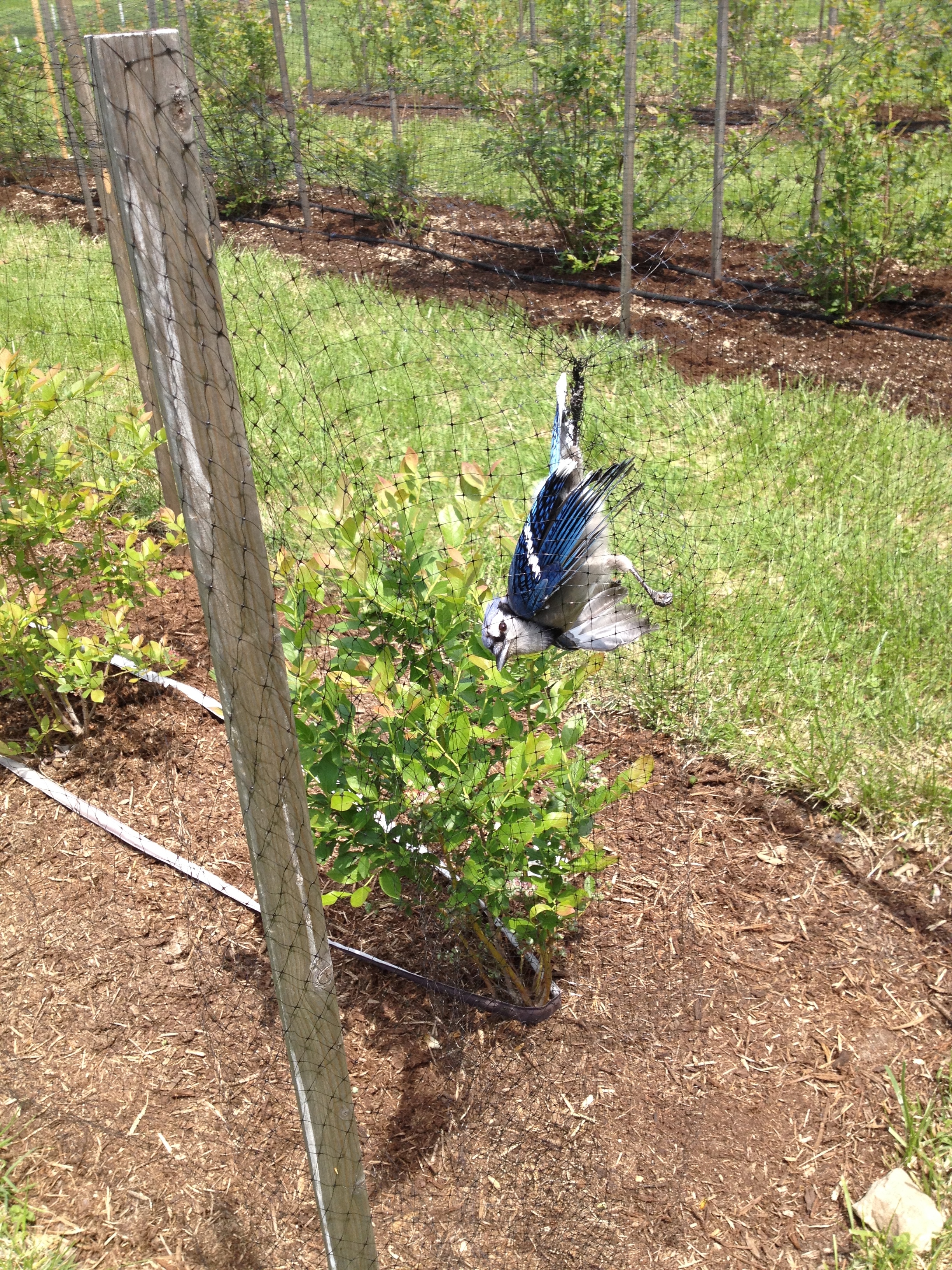
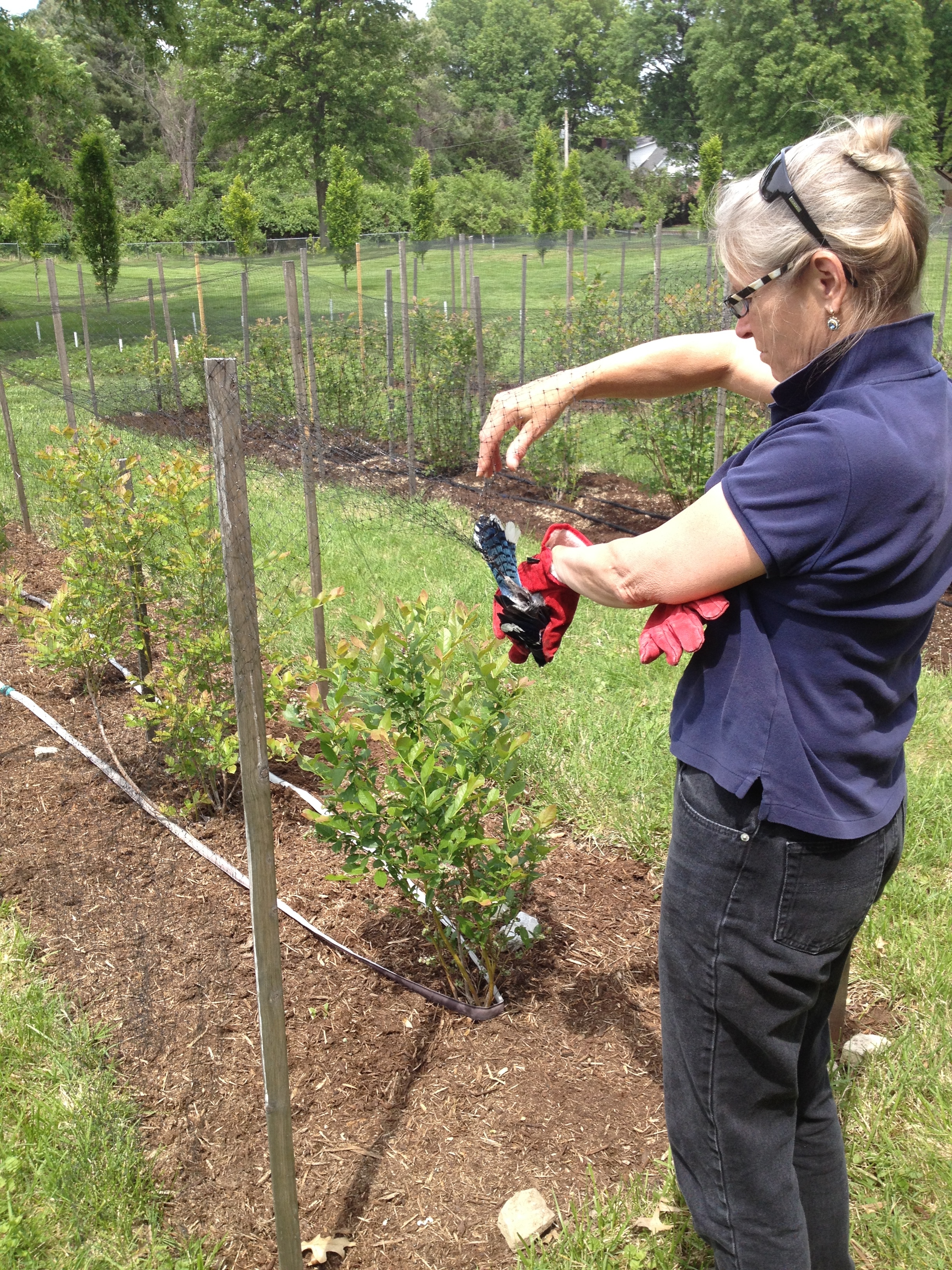
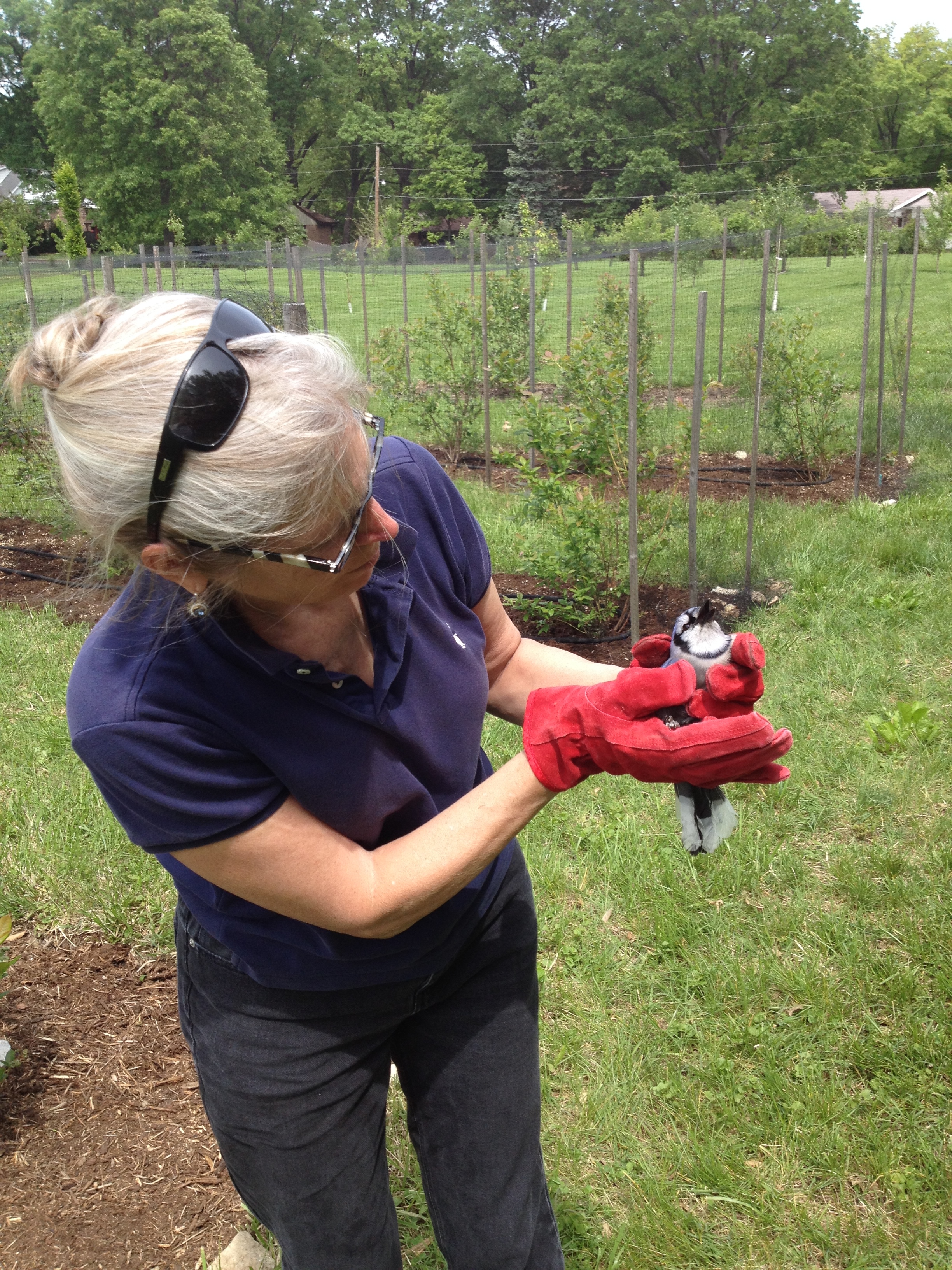
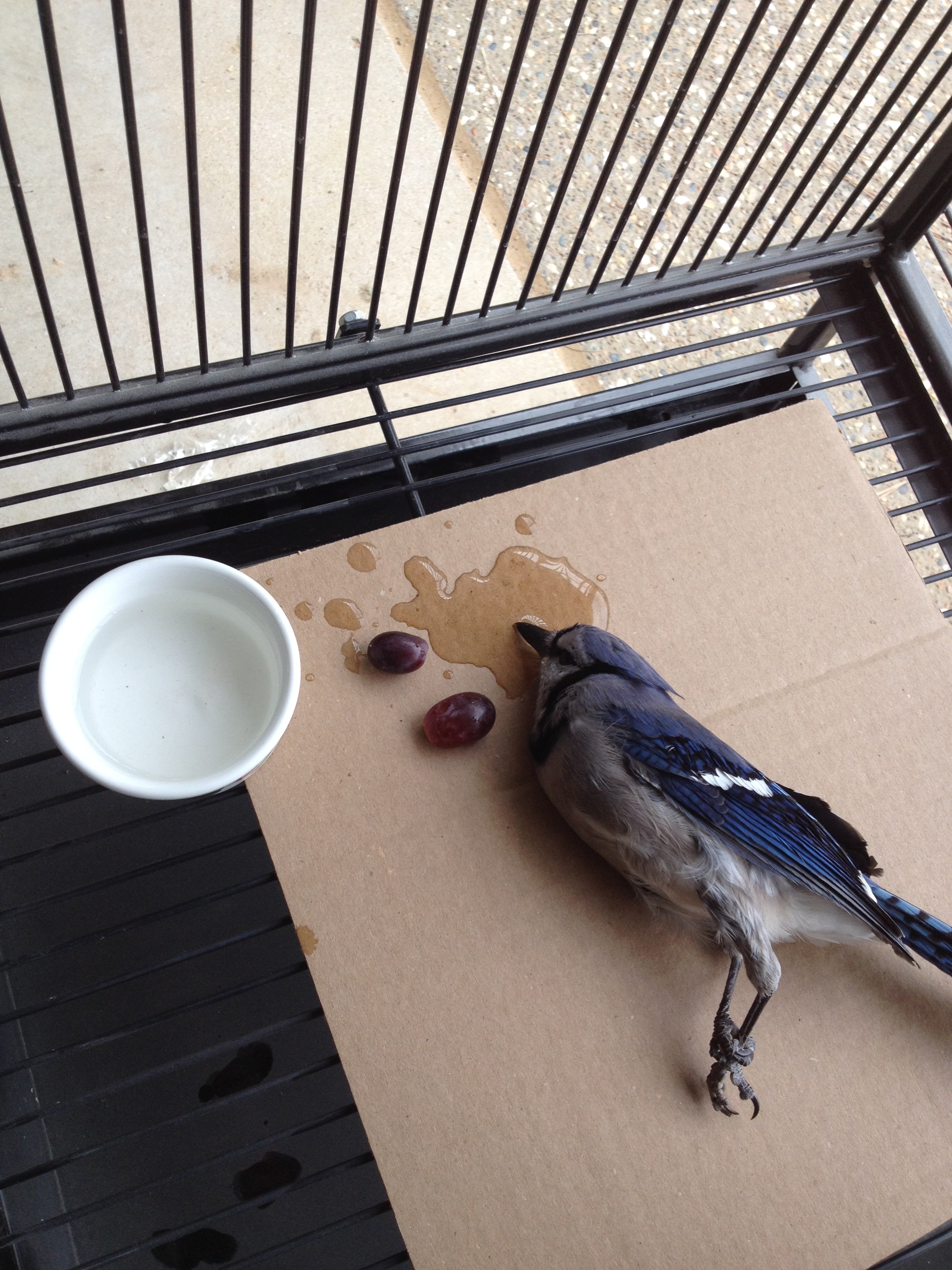
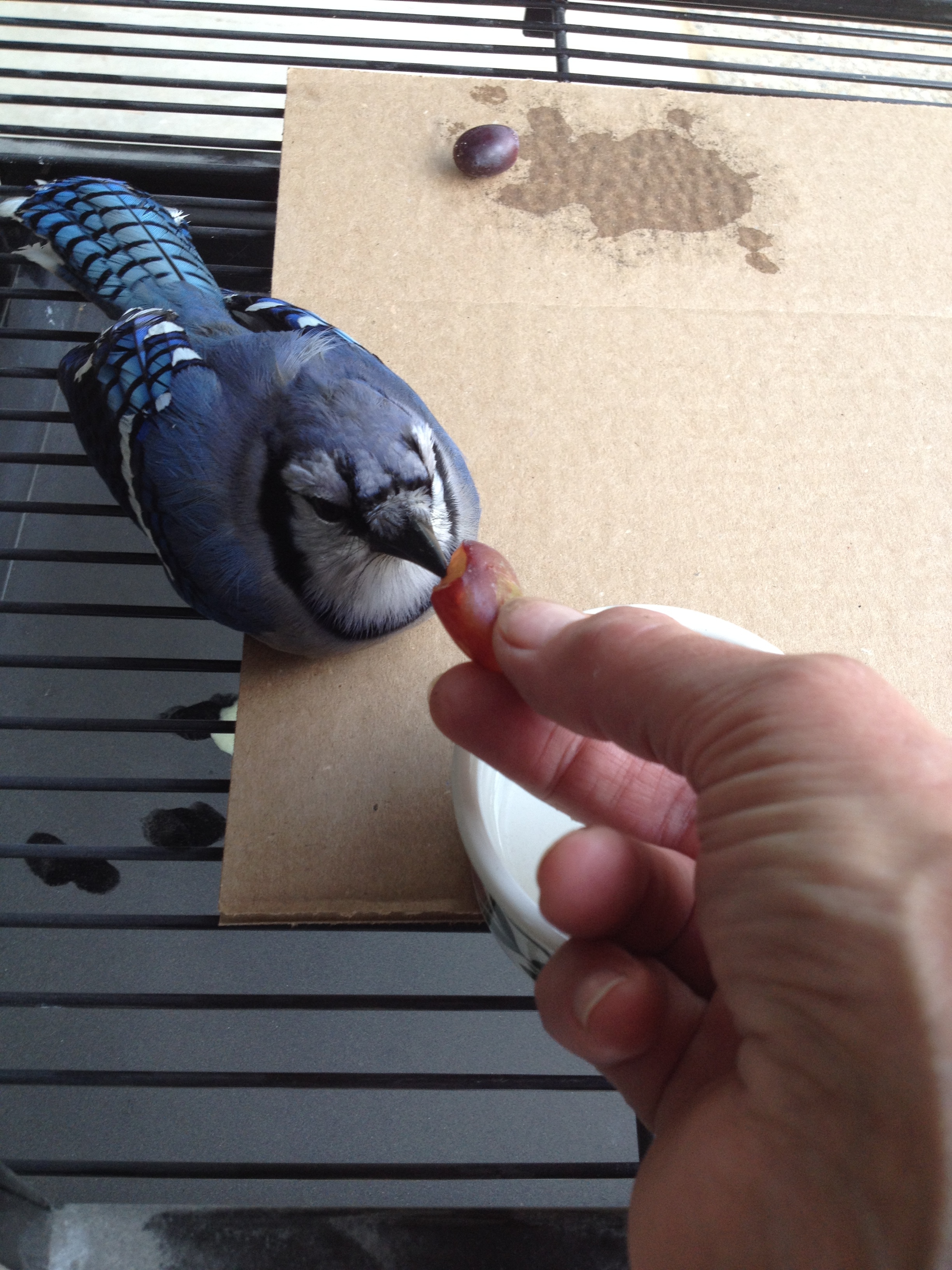
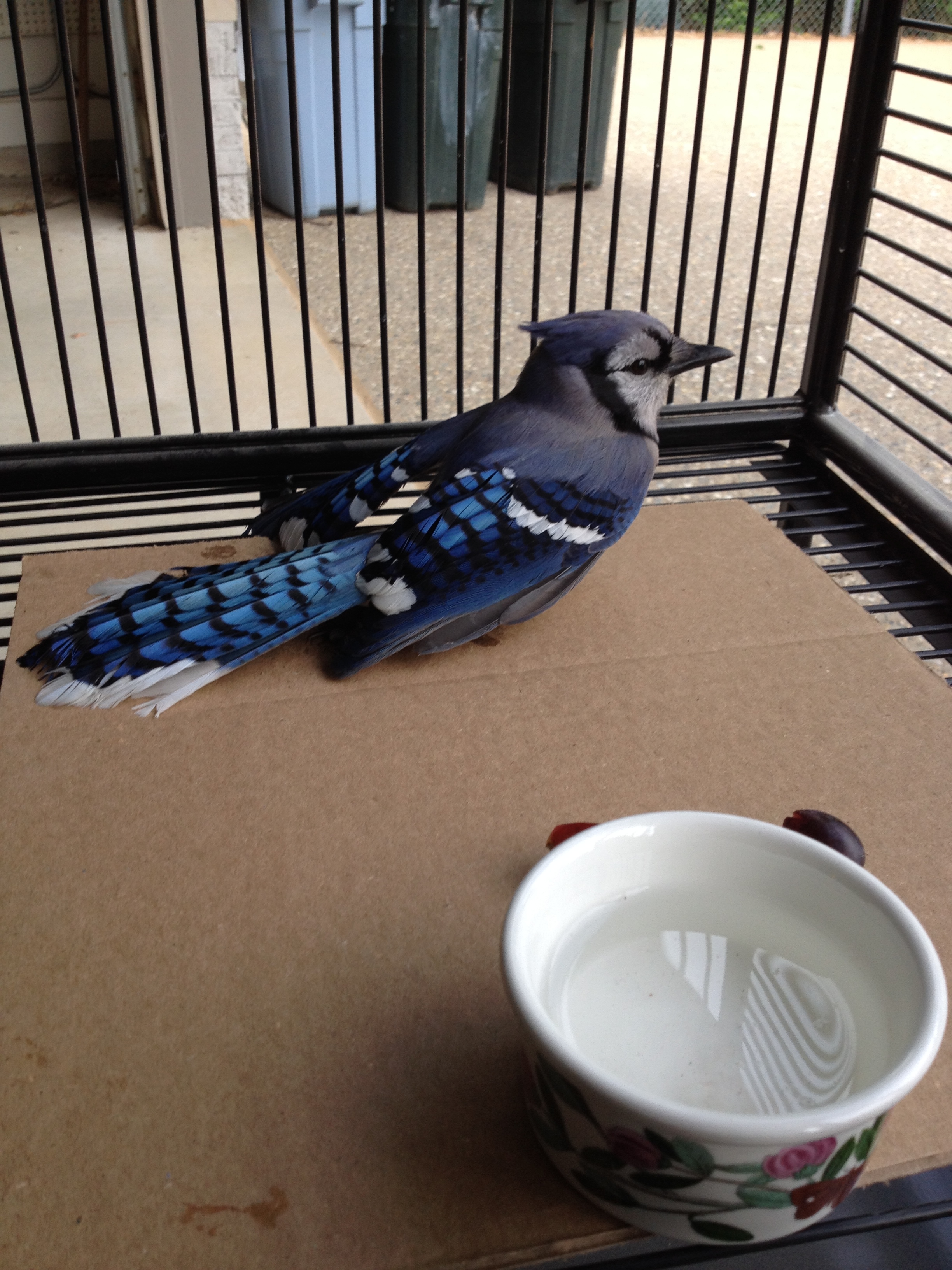
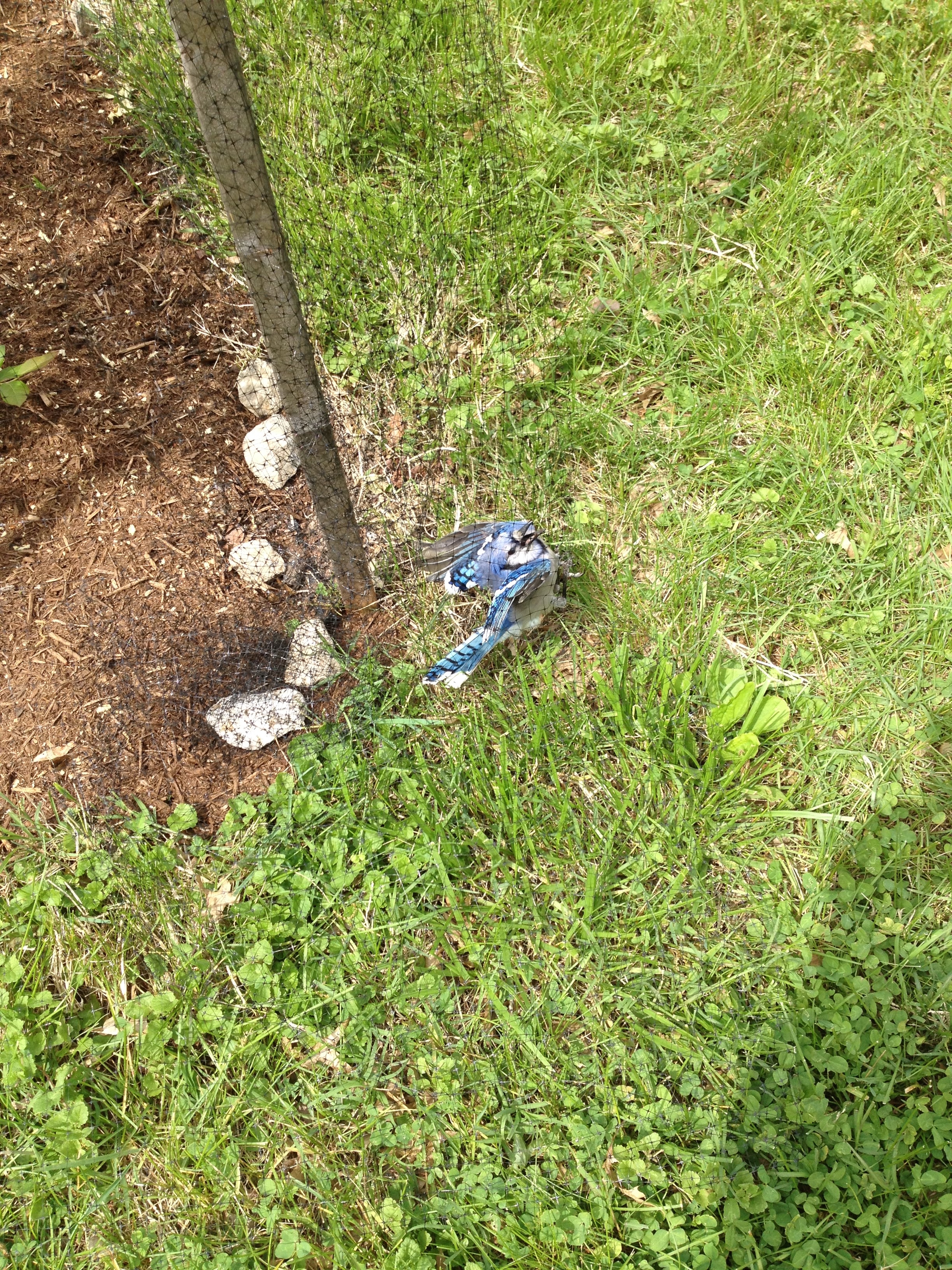
Dave and I divided our attention today and he worked in back on the last blueberry row while I attacked the ivy in the front. Around 1pm Dave came to me with the news that it looked like a blue jay had gotten seriously caught up on the inside of one of our netted enclosures. He was so tangled that at first Dave was unsure if he was alive or dead. Dave texted me this photo. IMG_6094It turned out that in his struggle to get out of the netting, the jay had gotten one taloned leg entangled and the more he fought the net, the more entangled he became. Goodness knows how long he had been there! So, even tho I don’t like the jays eating my berries, I do love birds and had to try to set this one free, hopefully without cutting my precious netting. I donned my leather gloves and was flooded with the memories of our pet parrot, Merlin, as I attempted to set this guy free. IMG_6102 We worked on the situation for quite some time before it became obvious that we were going to have to either snip the net or the foot of the bird. Dave had my nice scissors at the ready so I gingerly cut the netting away to free him. IMG_6103Unfortunately, it seems that after hanging by the caught leg for such a long time, he must have dislocated it since it is limp and he is quite unable to fend for himself. What to do? If we let him go he would be killed immediately as nature does not provide much shelter for the injured or sick among us. Maybe this would be best? Or maybe I should just wring his neck and put him out of his misery. Do not fault me, but I couldn’t do either. I asked Dave to bring up one of our old bird cages from the basement and we put him inside. He looked pretty forlorn at first. I dribbled some water on his beak and he really liked that and responded. Don’t tell my mother, but yes, that is one of my Port Merion dishes in his cage serving as his water bowl!IMG_6106I thought this was probably pretty silly, and that he would not be with us very long. I was hoping to get him to eat something, so I put the grapes nearby, but then decided to open on up and serve him some dinner and he perked up and ate it from my hand! IMG_6112Needless to say, I’m sure his one leg’s injury will be the end of him but for now, he is fairly happy to have another day to see the light of day. He is now hopping around on his one good leg in his new digs. If this were an injured bald eagle, the wild life bird sanctuary would gladly take him in. Since he is a feisty blue jay, I’m not sure they would care to rehabilitate him, but I plan to call them in the morning if he is still hanging in there. From the looks of him, he just might be. IMG_6113Wouldn’t you know, I went back out with Dave to repair the compromised netting and found another jay inside trying to get out! This one managed to escape without serious injury! I wonder if it is Mrs. Blue Ray, looking in all the obvious places for her errant husband! Look for updates here on the continuing story of Blue Ray the Blue Jay! IMG_6107

Unknown's avatar

Harvest 2014 Begins!

Someone must have been listening to my rant about rain in the last posting since soon after that we had the perfect amounts of ‘farmer’ rain. One night last week we had a prolonged, gentle rain that measured  0.50 inches which continued later that day for another 0.12 inches. During the next day or two we got another 0.50 inches that really gave everything out in the fields a nice drink. For once, we were quite happy despite the cold weather that came with it. Brrr, May isn’t usually this cold…it was 39 degrees one morning! As usual, somethings (peas, radishes, spinach, lettuces, etc.) enjoyed the cool weather and other things (tomatoes, beans, peppers, eggplant) were just marching in place, waiting for some sun and a little more heat.

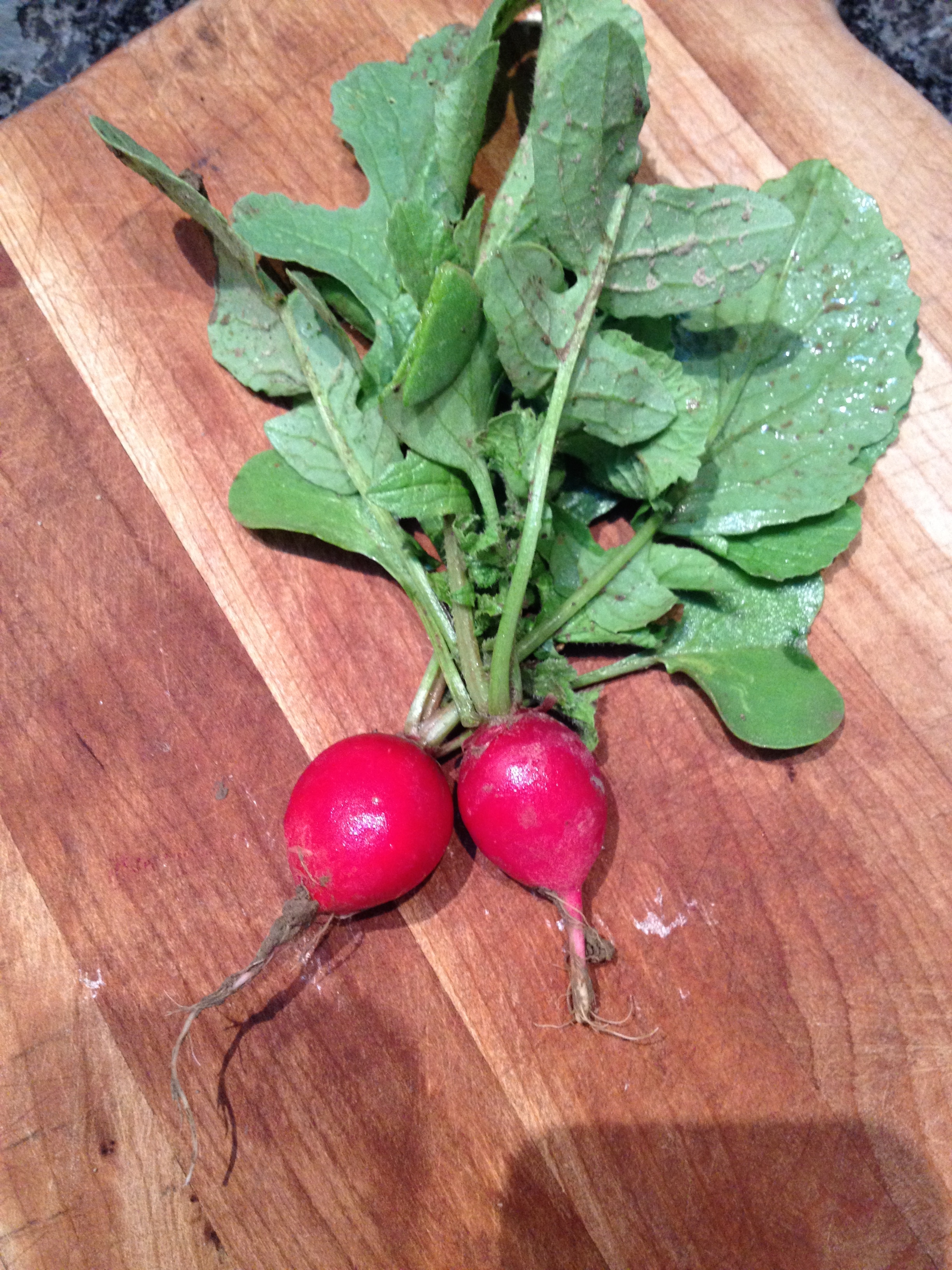
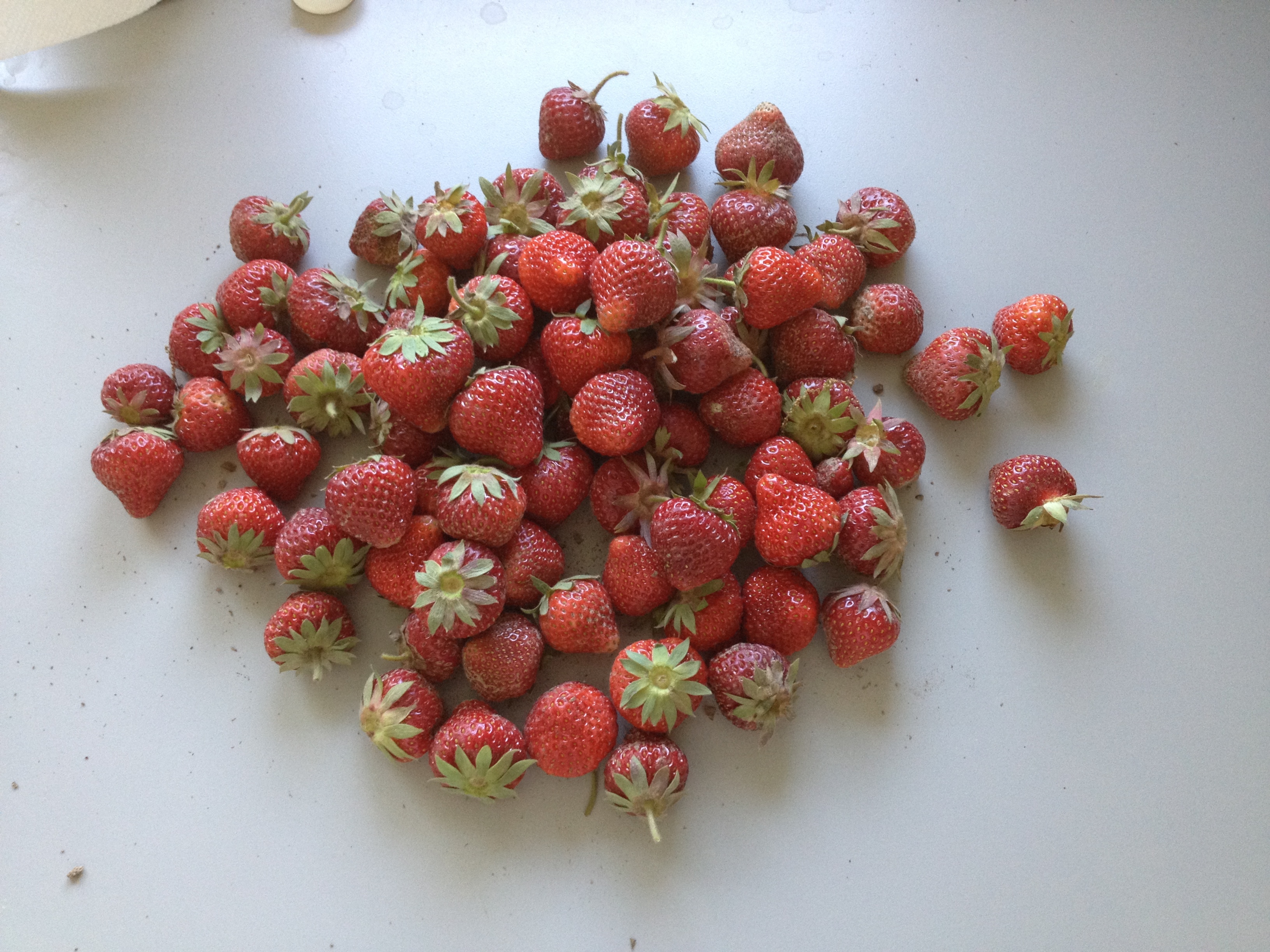
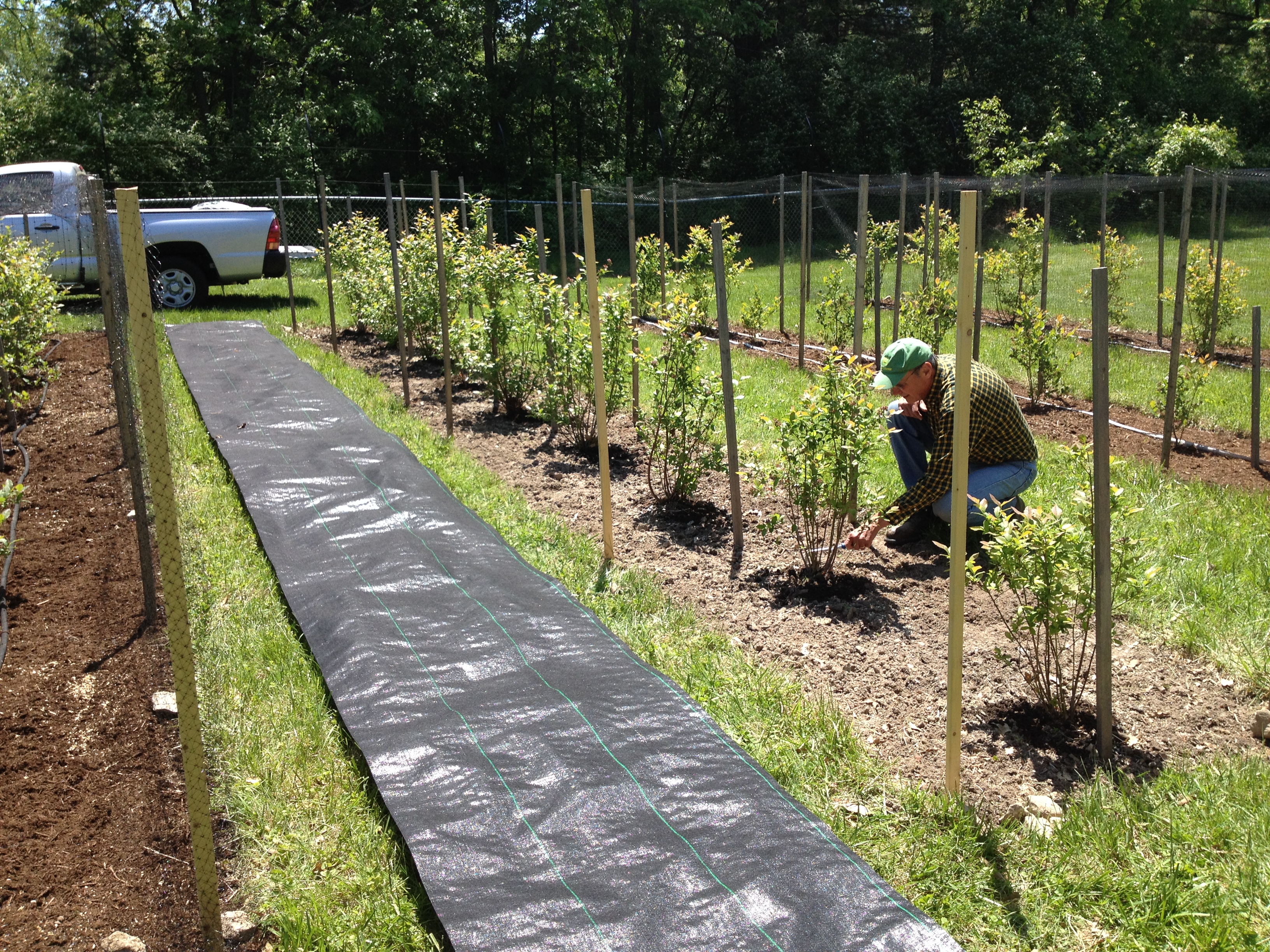
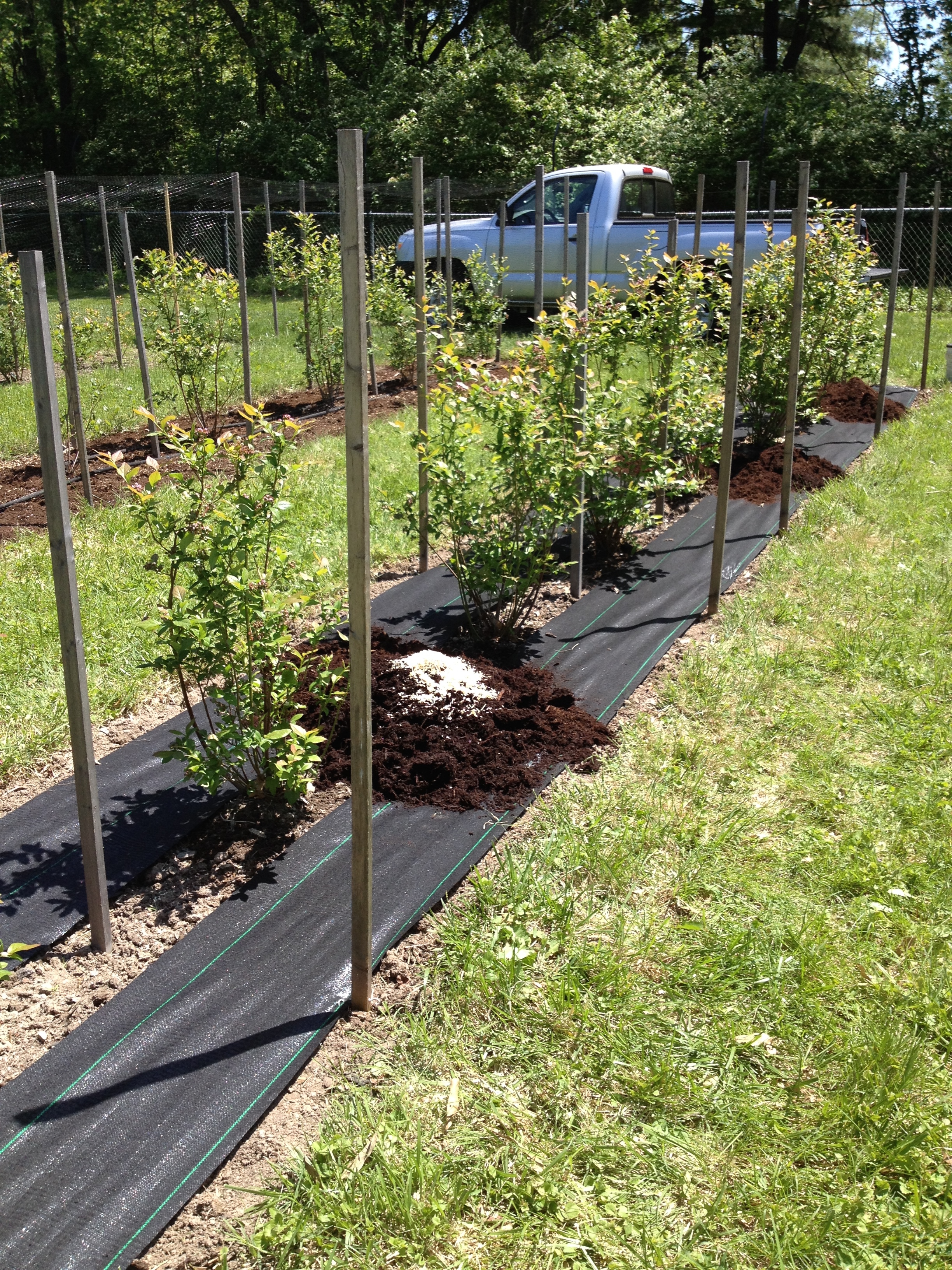
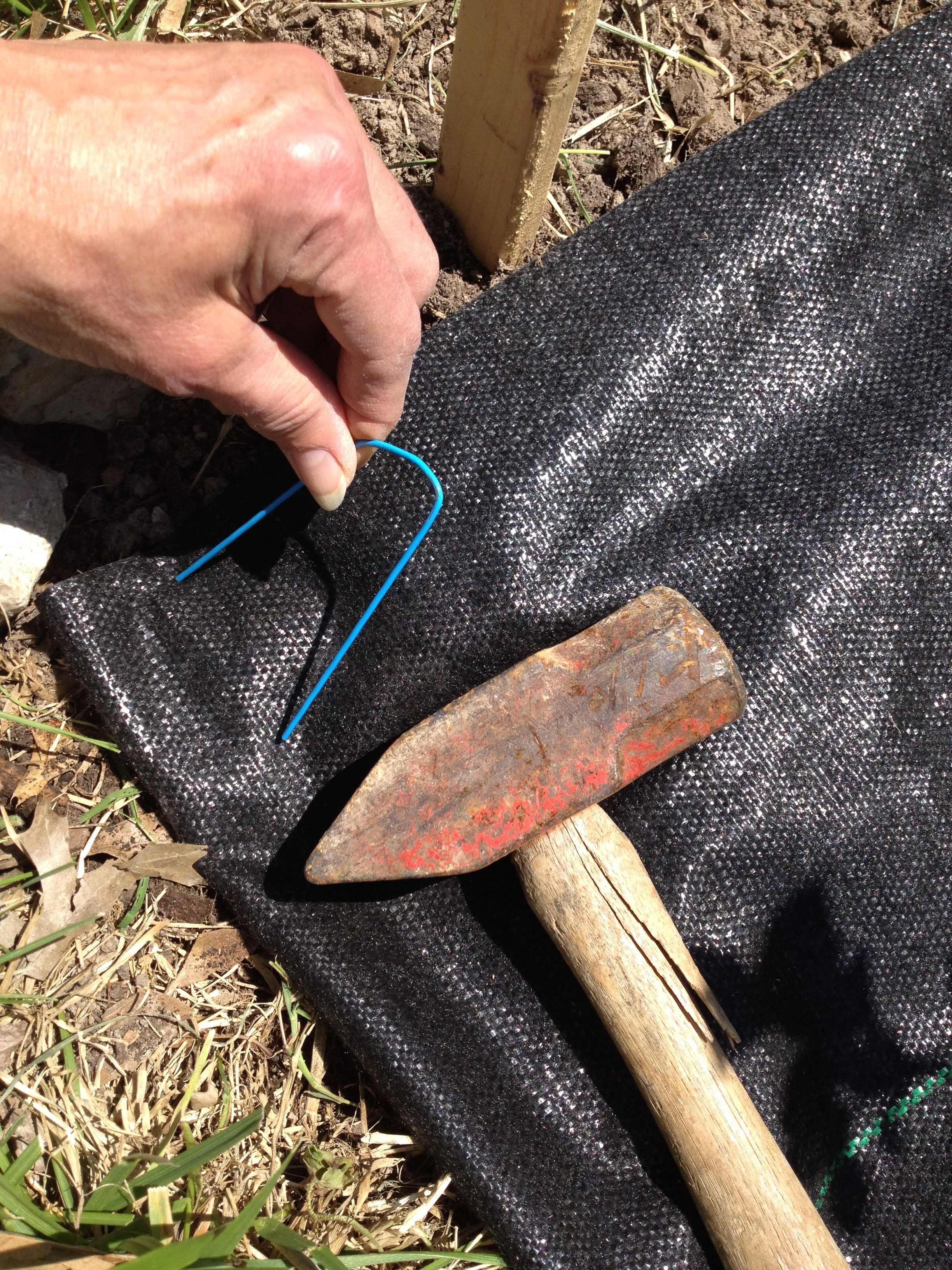
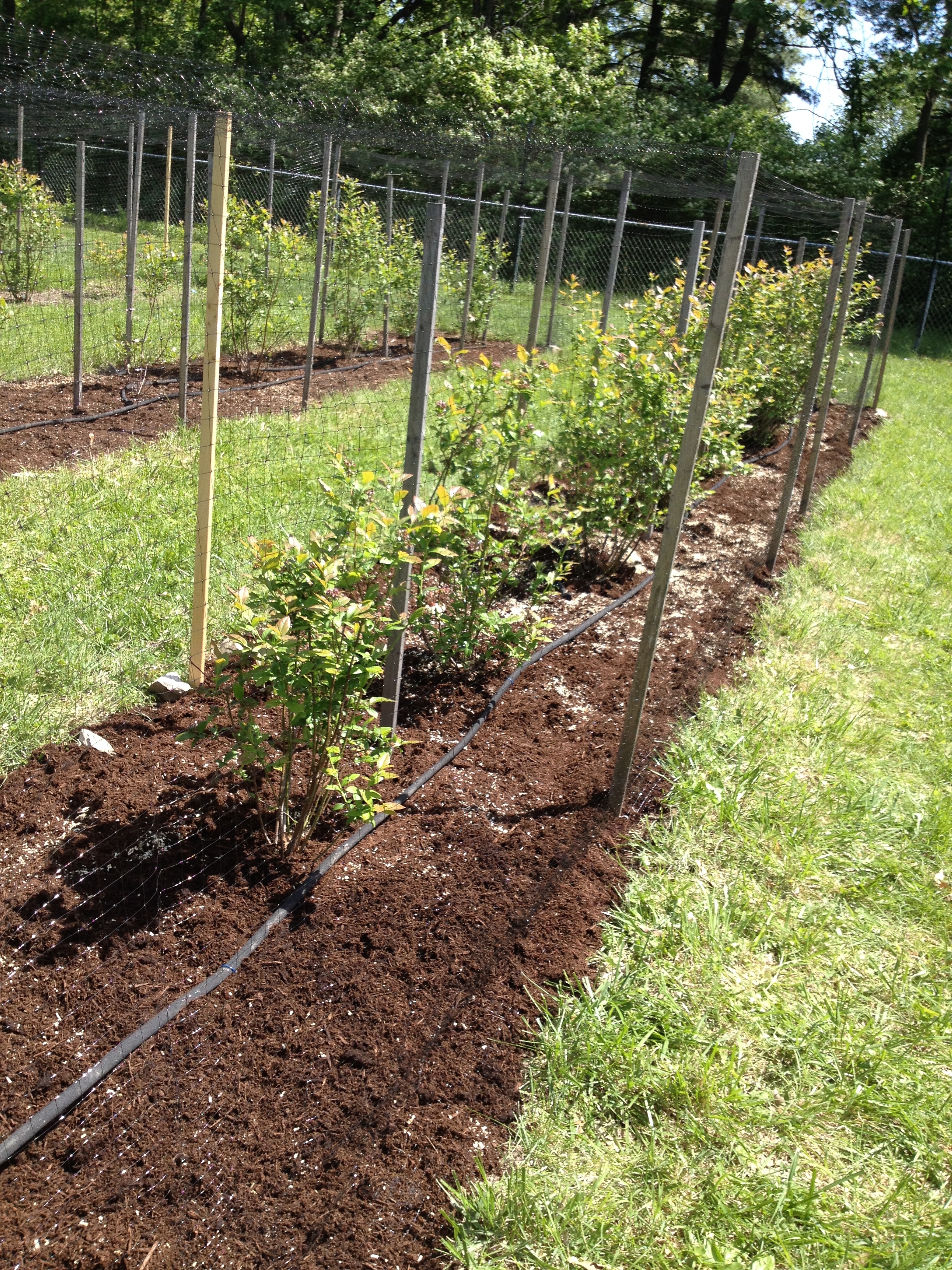
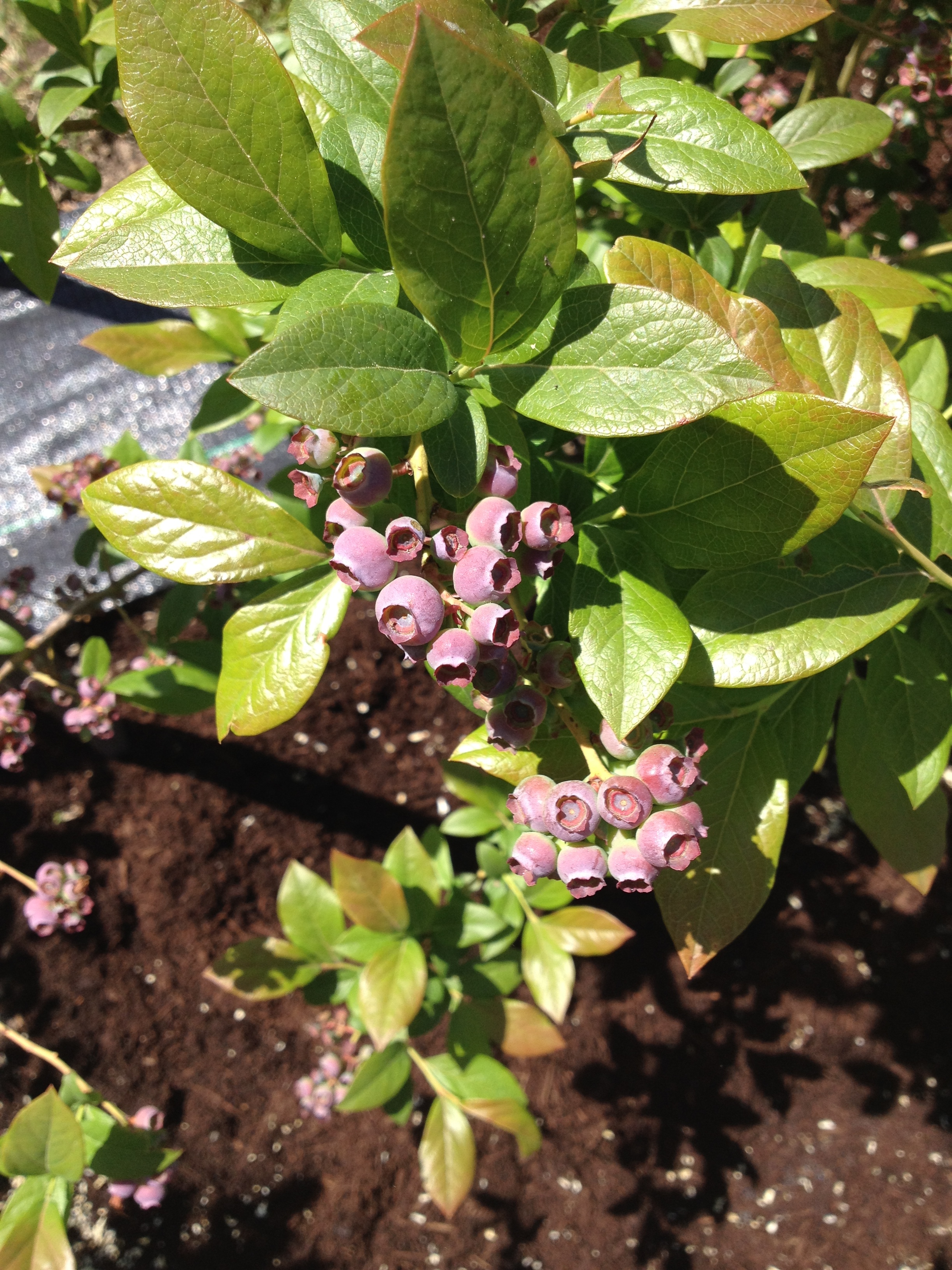
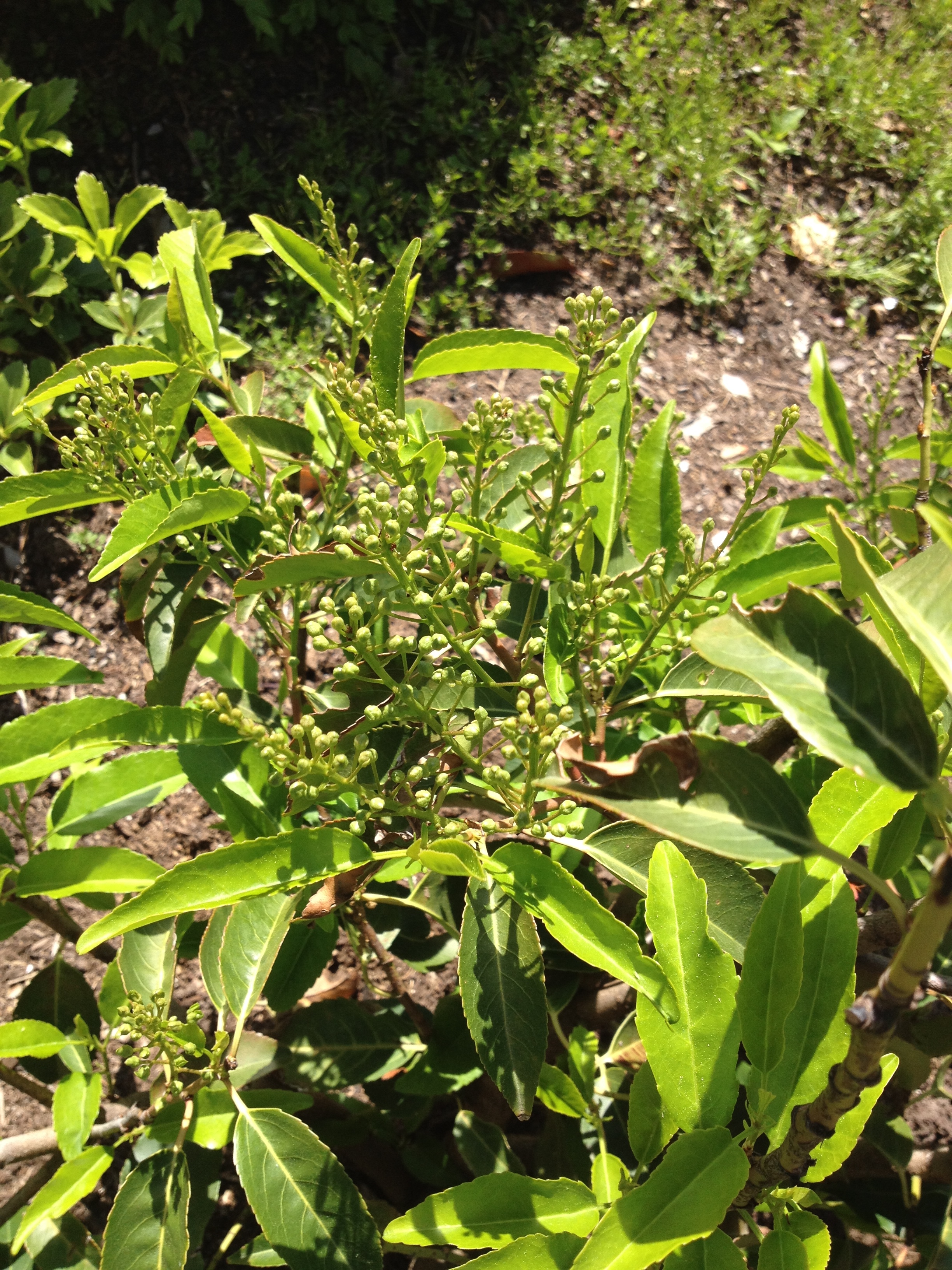
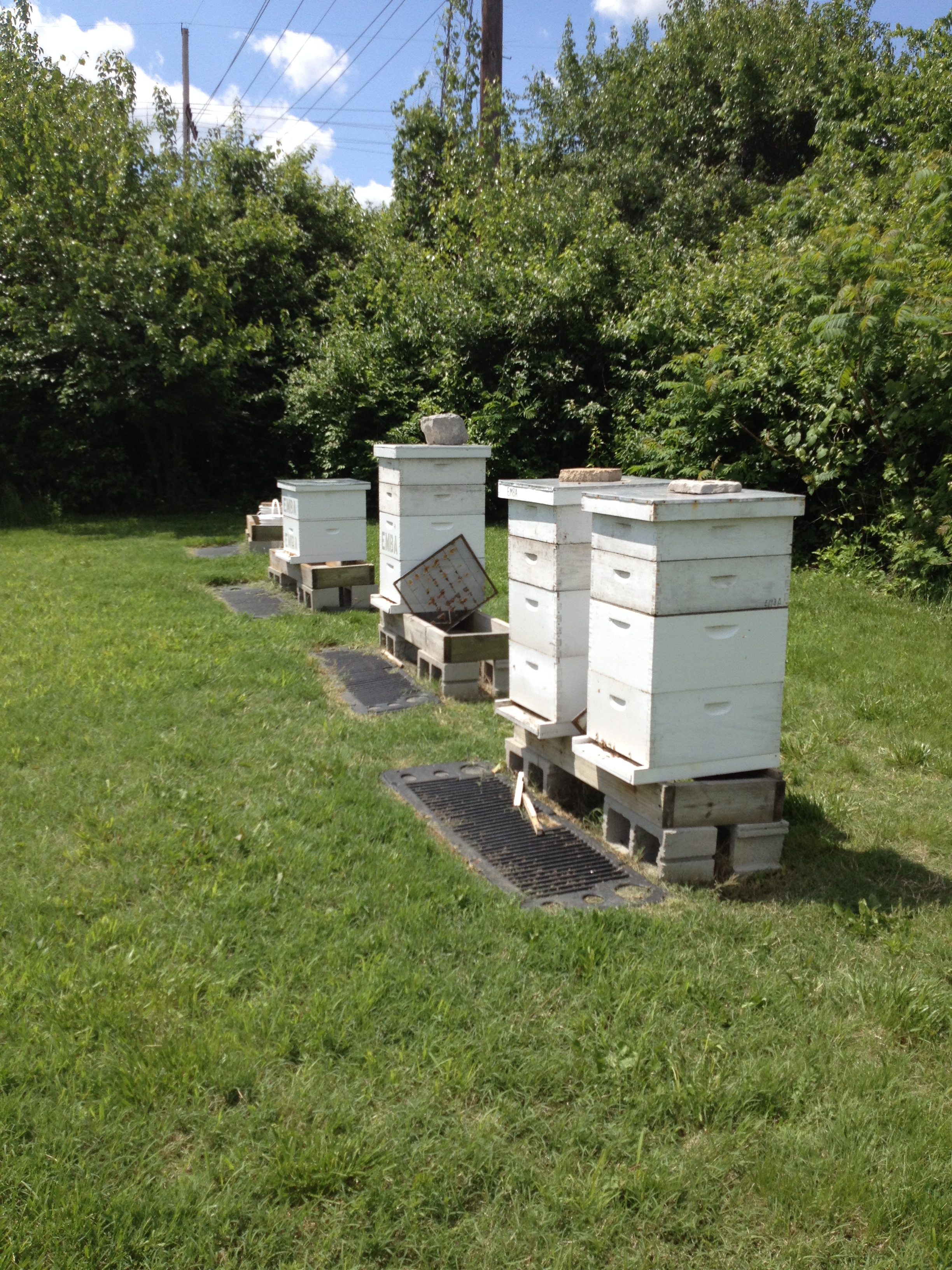
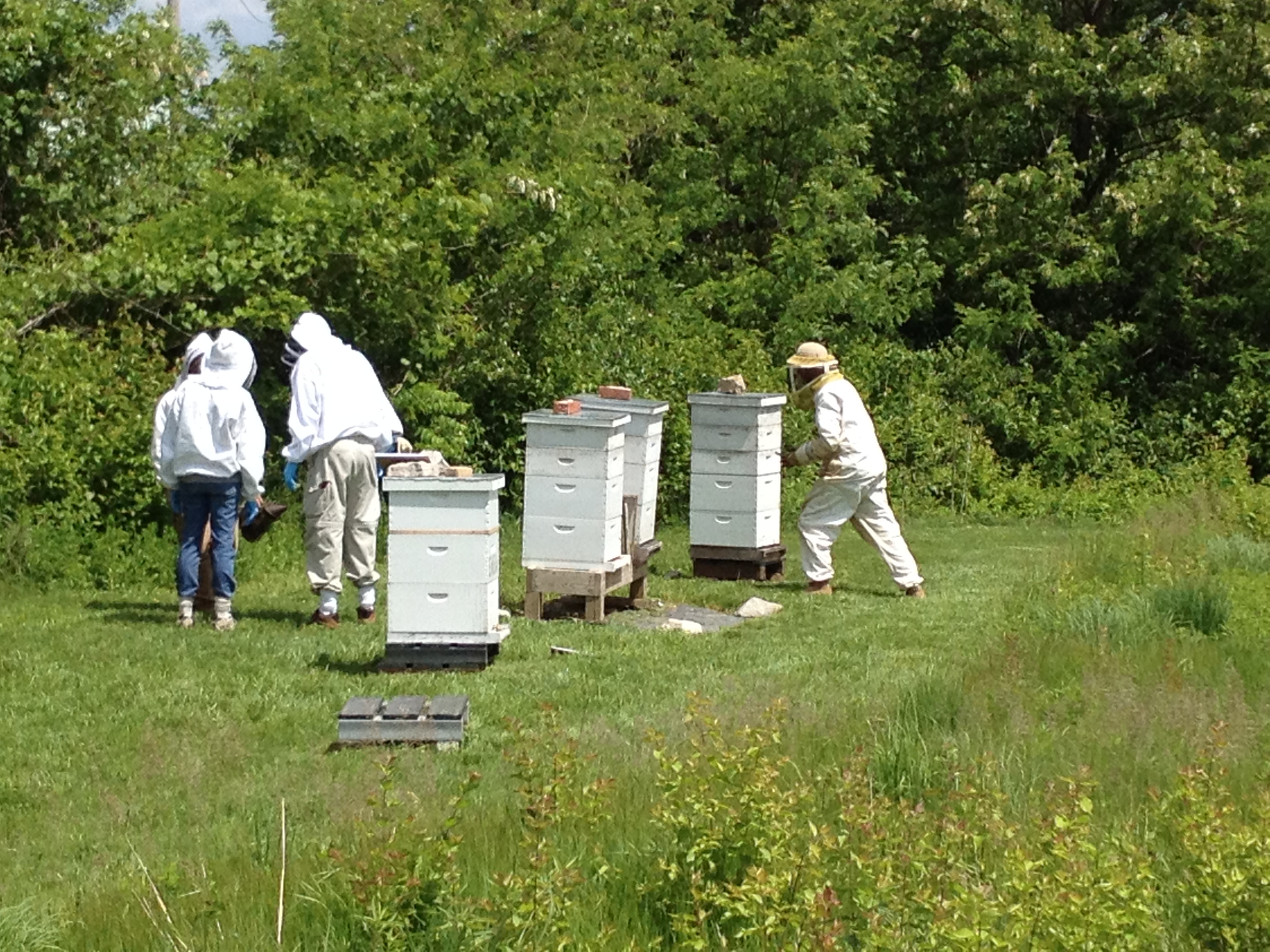
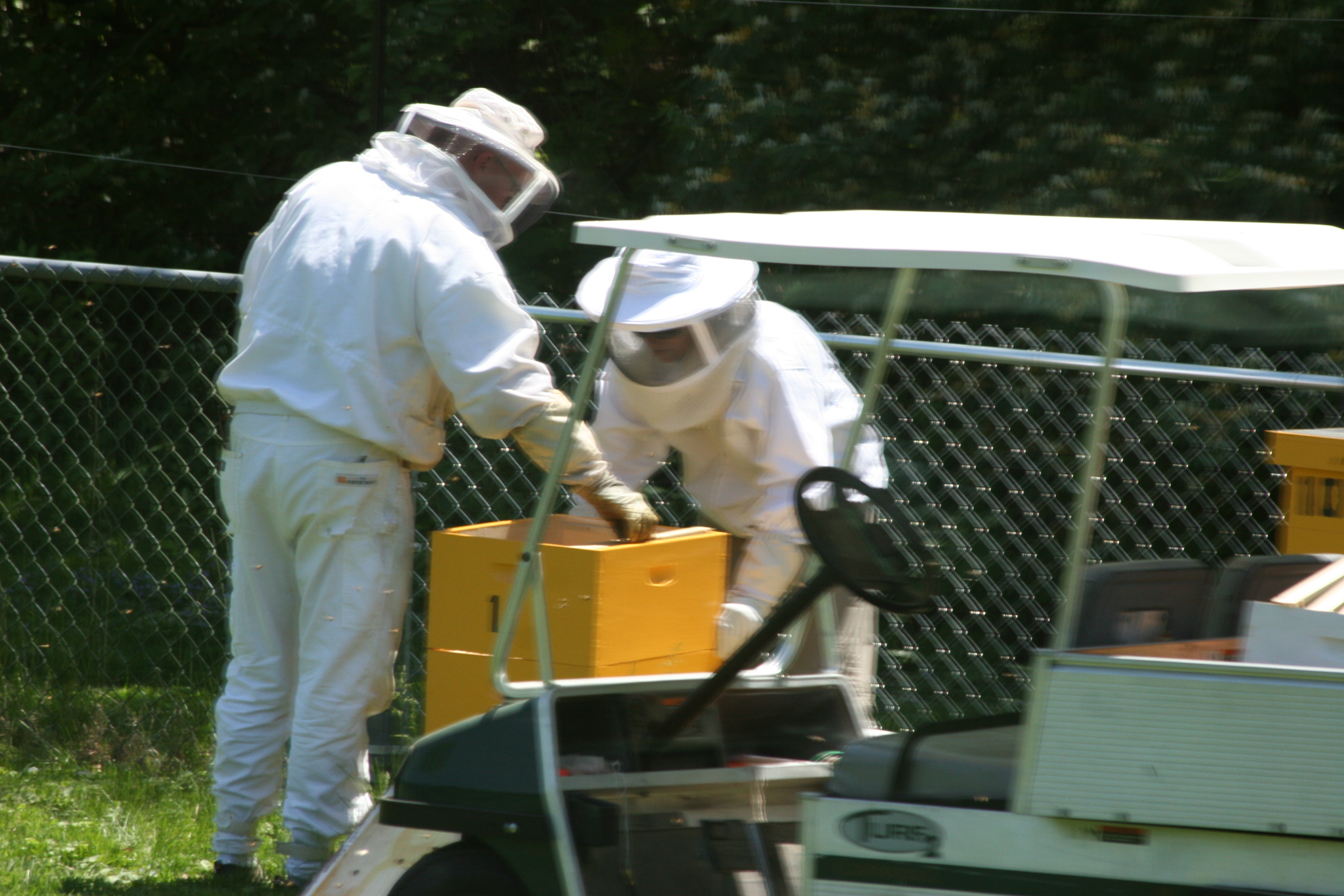
But I have GREAT NEWS! Seven Oaks Harvest 2014 has begun! It is modest by any measure but so far this week we have been enjoying the radishes – Burpee “Cherry Belle” – which are very sweet and round with a gentle flavor. We have been putting them into our salads but these are so nice we just slice them and eat them next to our sandwiches at lunch. We even put them into the fry pan for dinners…see bottom of blog! IMG_6014We also picked the first of the strawberries in the last two days and have just over two pounds to show for it but there are many, many more in the patch waiting to ripen. We will easily eat this quantity of fresh berries as they come in but I do have memories of last year with as many as 8-10 pounds a day (for 4-6 weeks) when I was challenged to just make jam, jam, jam (90 pints last year) or freeze gallon after gallon bags of whole berries which we enjoyed all the year since. Welcome, fresh strawberries!! IMG_6082The blueberries are not far behind! We have been working to renovate the five rows our 5 varieties: Blue Crop, Blue Ray, Jersey, Patriot and Elliott. Each year we do a thorough weeding and mulching and add agricultural sulpher since the berries like acidic soil. This year, our best producer, Blue Ray, needed a super, duper jump start. The reason for this is a bit embarrassing, but I’ll share the details if it will help anyone else in the same situation. When we first planted our blueberries, we followed all the berry books as well as the advice of Sean, from Stark Brothers, on what to do. We made our rows the width and length he suggested and spaced our plants accordingly. We were advised to put down landscape cloth on either side of the plants in 4 foot wide beds and then add 4″ of mulch on top, adding decomposing saw dust to the mix.  We started this treatment with our very best, strongest looking row, the Blue Rays, but we made our biggest mistake with that most precious row. We bought inferior landscape cloth! We didn’t know the difference, but we do now!!! The cloth we used for this first bed was so flimsy that it started to disintegrate immediately…in fact, it happened so fast that we didn’t buy it for the other rows. This year, we decided to replace the old cloth and re-do this row. So, we weeded extensively since the landscape cloth wasn’t helping much. Then we unfurled the replacement landscape cloth (the type we used in the other beds) and got it ready to cut in half to put on either side of the plants. This cloth says it is warrantied for 20 years of “normal use”. Well, I doubt that, but I’m keeping the paper work just in case!IMG_6051Here it is after we cut it an laid it on either side and started to add the mulch. The white “snow” on top of the mulch is some of the saw dust that we mixed into the mulch as advised. IMG_6059 It is important to note that we pin the landscape cloth into place. You can buy metal pins to secure it, but we have learned to make our own. We take a hanger and a metal cutter and snip the ends and the middle and make 3 pins per hanger. Here is how we make them. IMG_6058Here is how we install them with the help of the “Persuader” that nudges them in through the thick cloth and into the soft ground. IMG_6054After all the cloth is secured with pins and the width of the bed is mulched, we install our soaker hoses for the season which are also secured with hanger pins to keep them in place. At the end of the day, we put on a package of new bird netting and our best row of berries is fully renovated and popping with berries. IMG_6071There is a blue jay watching as work the berry patch. He seems to have a great interest in the blueberries and we joke that he is well matched to the food he most likes to eat? We hope that although we have peaked his interest in the ripening berries, we are also circumventing his access to the crop as we have – in the last week – now weeded, mulched and netted all rows save the one which is the last variety to ripen.  We can’t wait for our best crop yet! The pale purple color is only an indication of the deep blue that is yet to come!IMG_6064In other news about the farm, I’ve been continuing to carefully prune away the evidence from the damage of last year’s harsh winter. As you may recall, we installed a burlap wind break on the front landscaping, in an effort to protect the Portuguese Laurels. It is difficult to tell whether the burlap helped or not, but these laurels look a lot better than others we have seen around town this spring. The good news is that all of the plants survived, are putting out new growth and most even have evidence of buds for future blooms! IMG_6078Time for my favorite topic, the bee report. In am learning that May is a particularly busy time for beekeepers. I attended the local club’s monthly meeting last Wednesday evening and listened to a very interesting program about Nectar management, swarming and finally, the main speaker, Corey Stevens, who spoke on “Raising Queens for Backyard Beekeepers”. It was all very interesting, and I wrote notes in my bee book for two hours straight,  but I’m still a bit over stimulated with massive amounts of information that is all new to me. I gladly attended a workshop at the Monsanto bee yard on Saturday morning for beginning bee keepers. We had two good presenter/demonstrators who made it clear that there are no absolutes to beekeeping since everyone’s methods are unique. So it is good to get information from a variety of beekeepers. Here are the club’s 8 hives which are in the bee yard at the Danforth Center across from the main Monsanto campus. IMG_6032
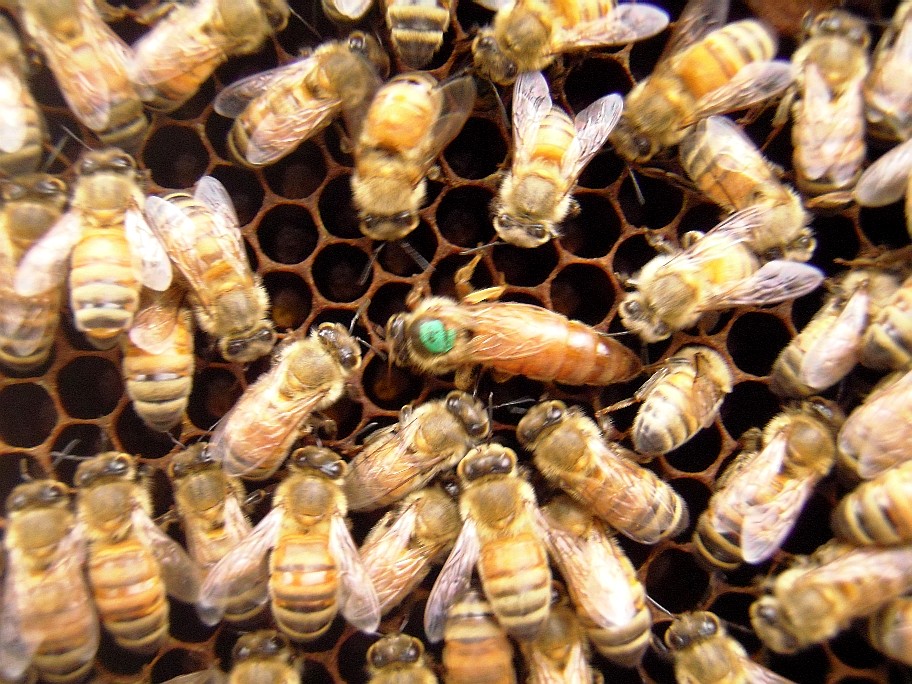
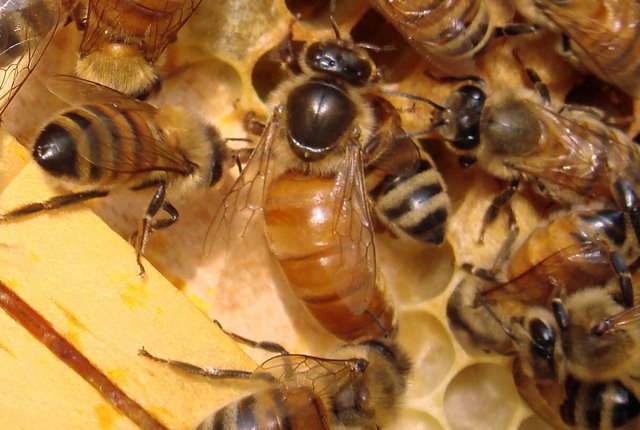
IMG_6033It was a chilly morning to open the hives but I learned a lot since part of the demonstration was to ‘marking’ the queen. You actually isolate the queen of each hive and put an ink mark on her back to make her more readily identifiable. There are 5 different colors used with this function in mind, with one color assigned to each calendar year in an effort to keep track of the age of your queen. This year is green, so we put a green spot on her back and then put her back into the hive. Now she will be a lot easier to identify since one of the tasks of a beekeeper is to check on the status of the queen in each hive. When you can identify that there are newly laid eggs and/or see the queen herself, you call that hive “Queen Right”. See how easy it is to spot her now?queen-rearing-006

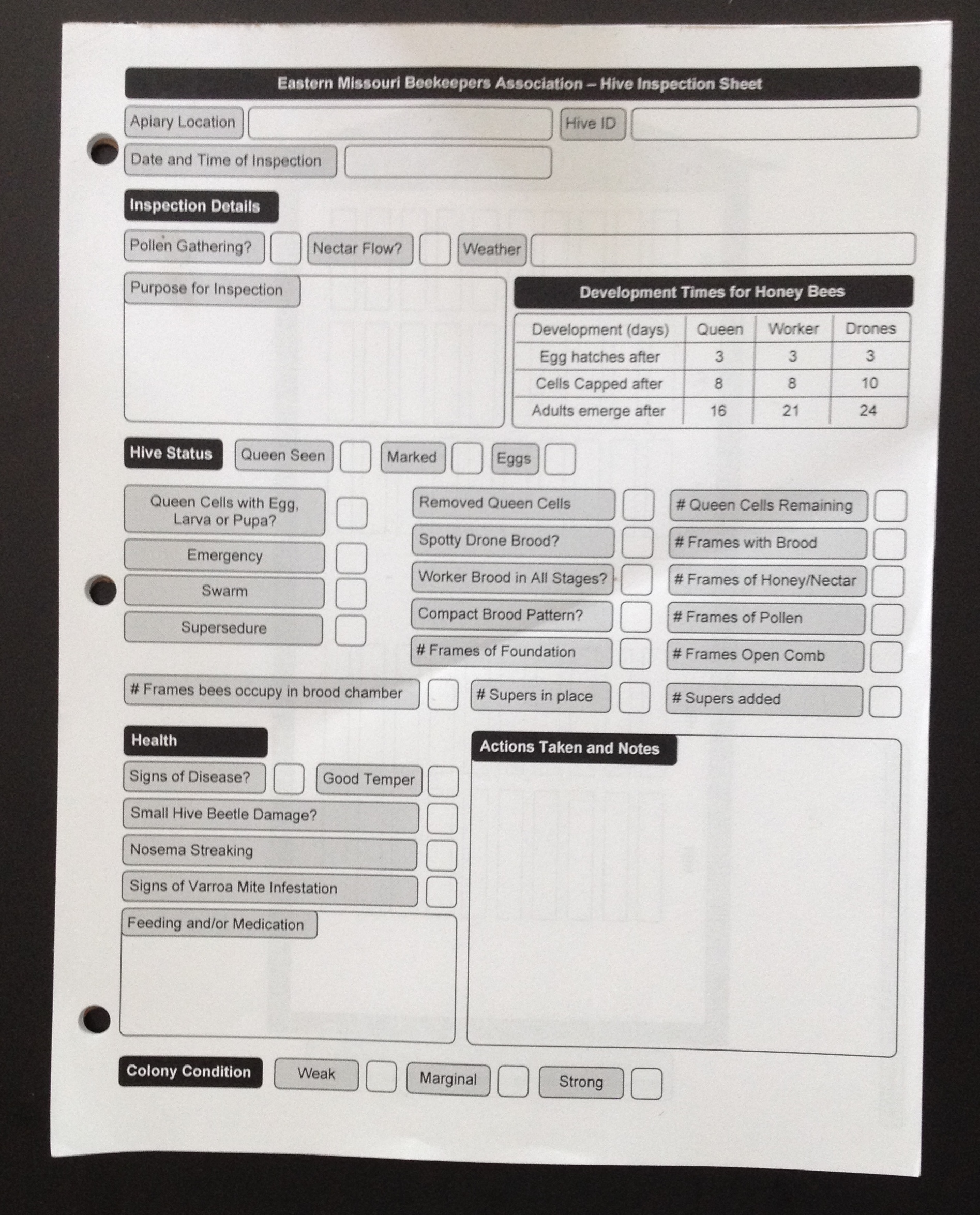
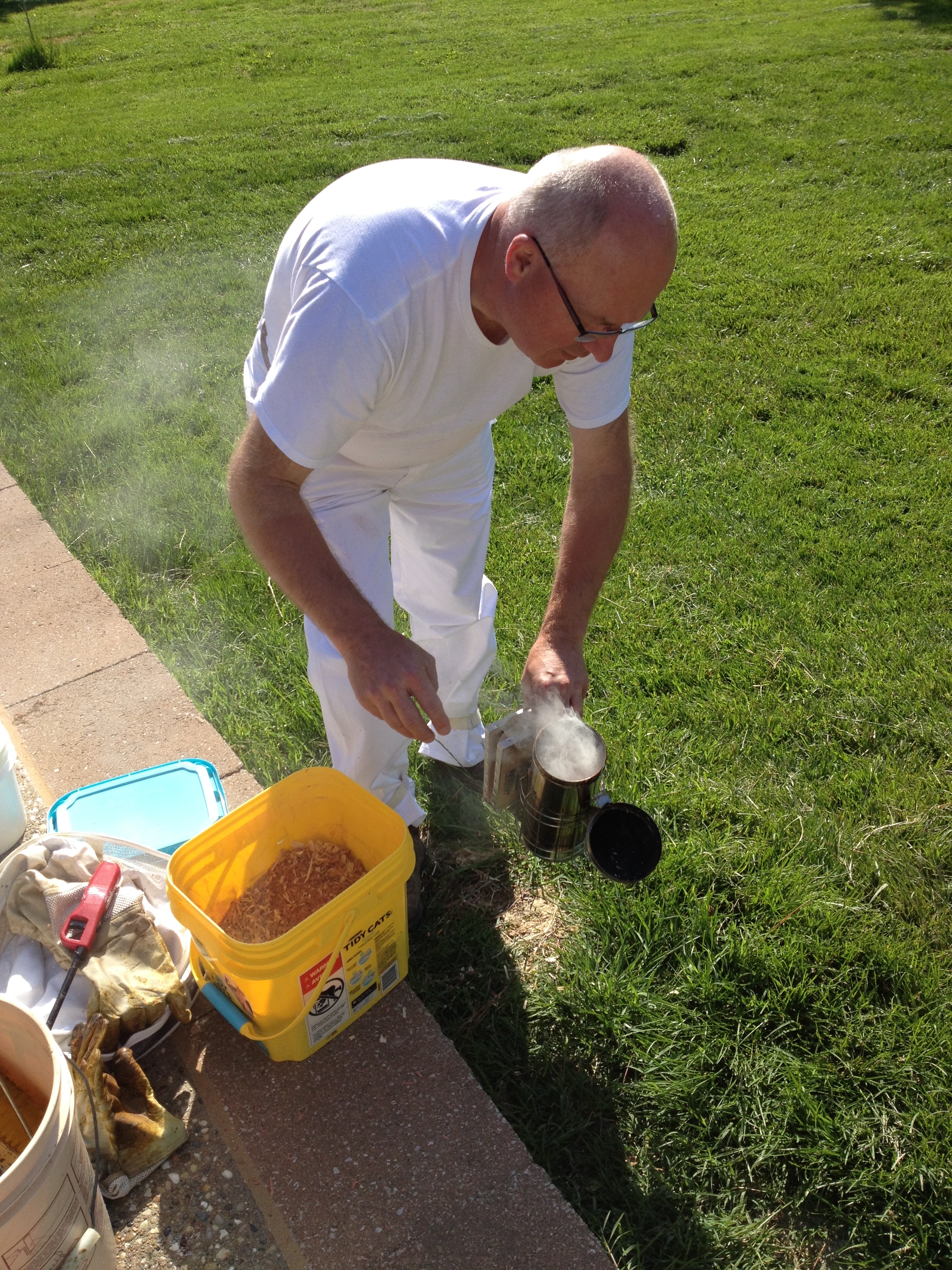
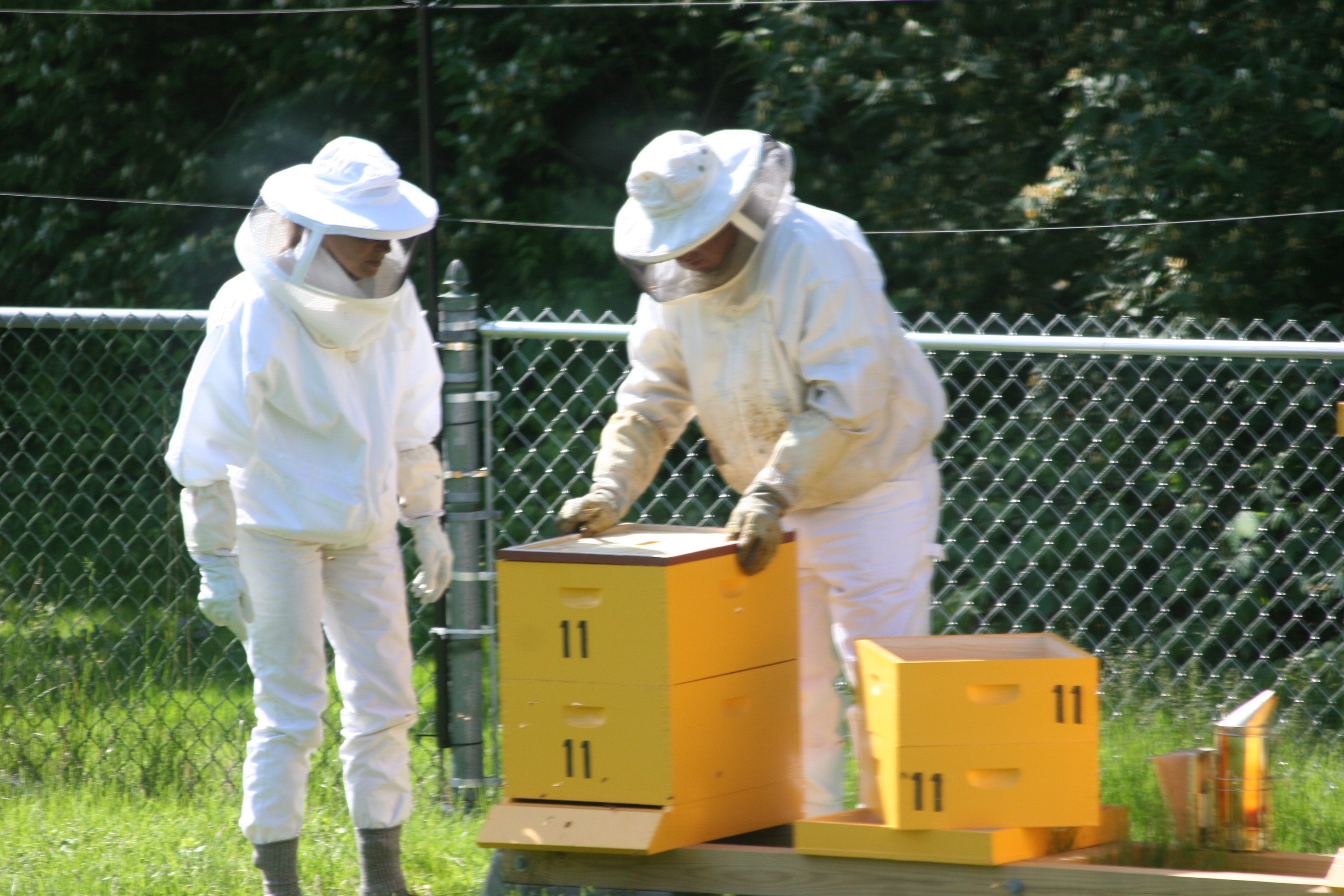
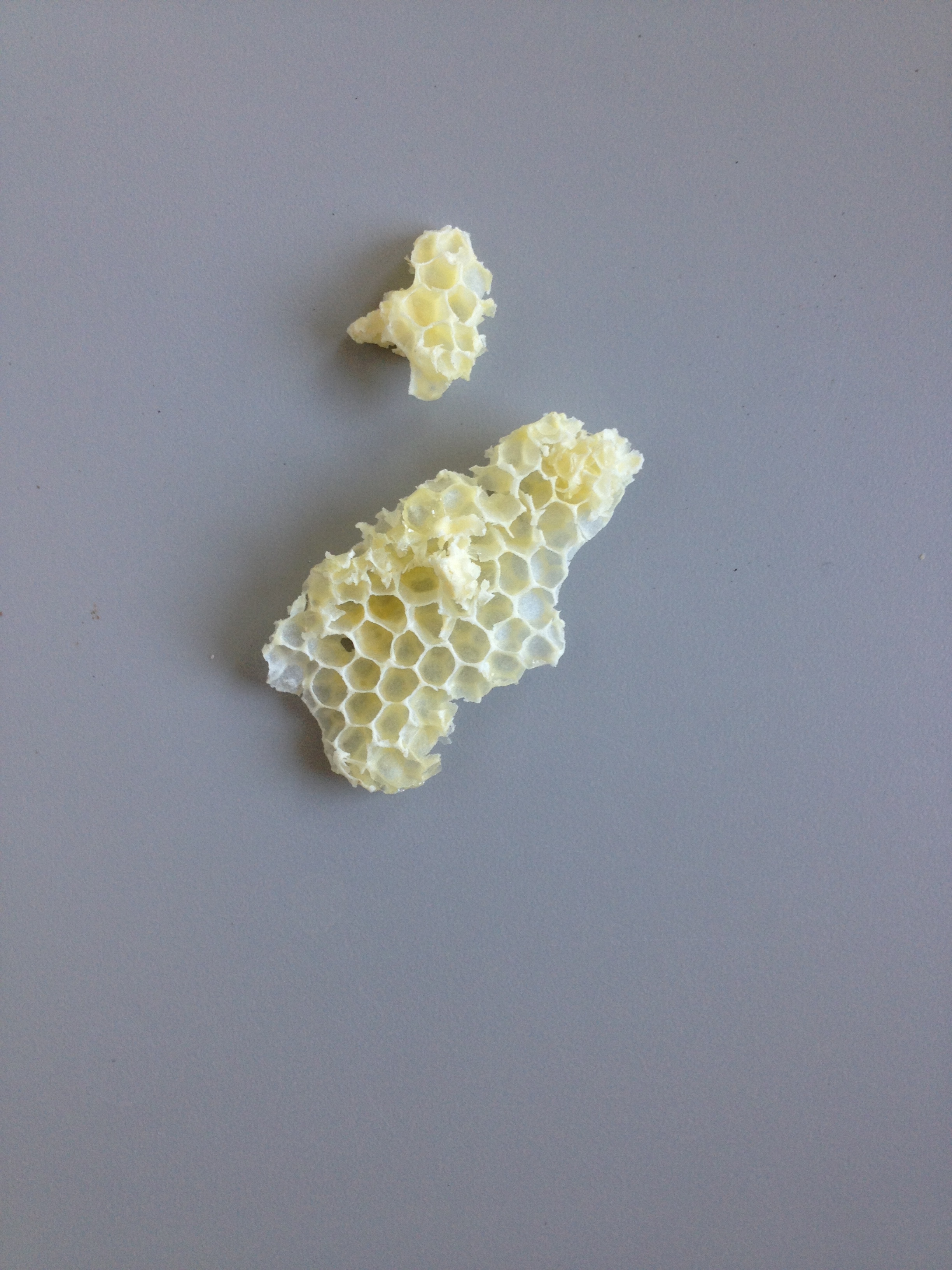
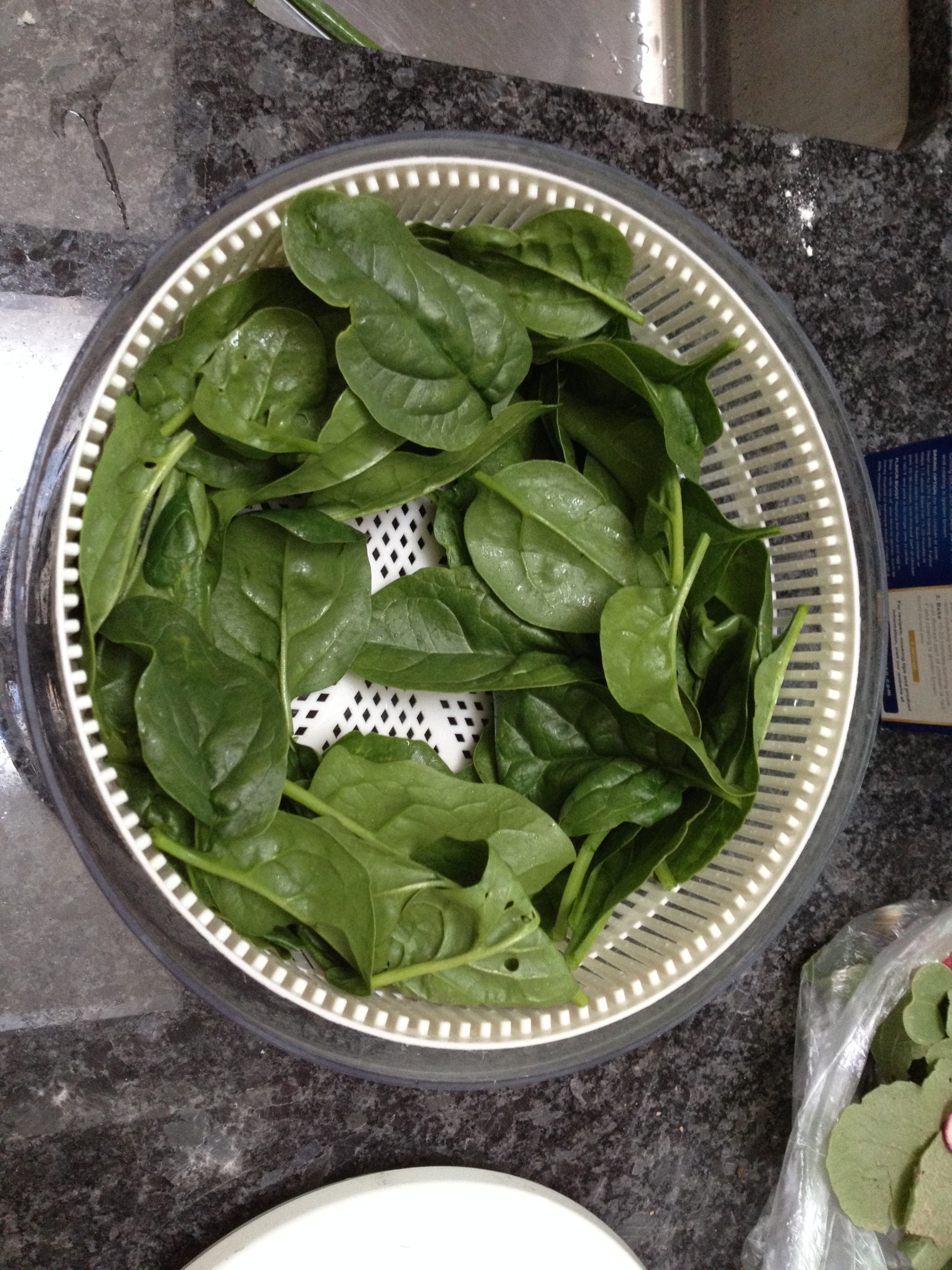
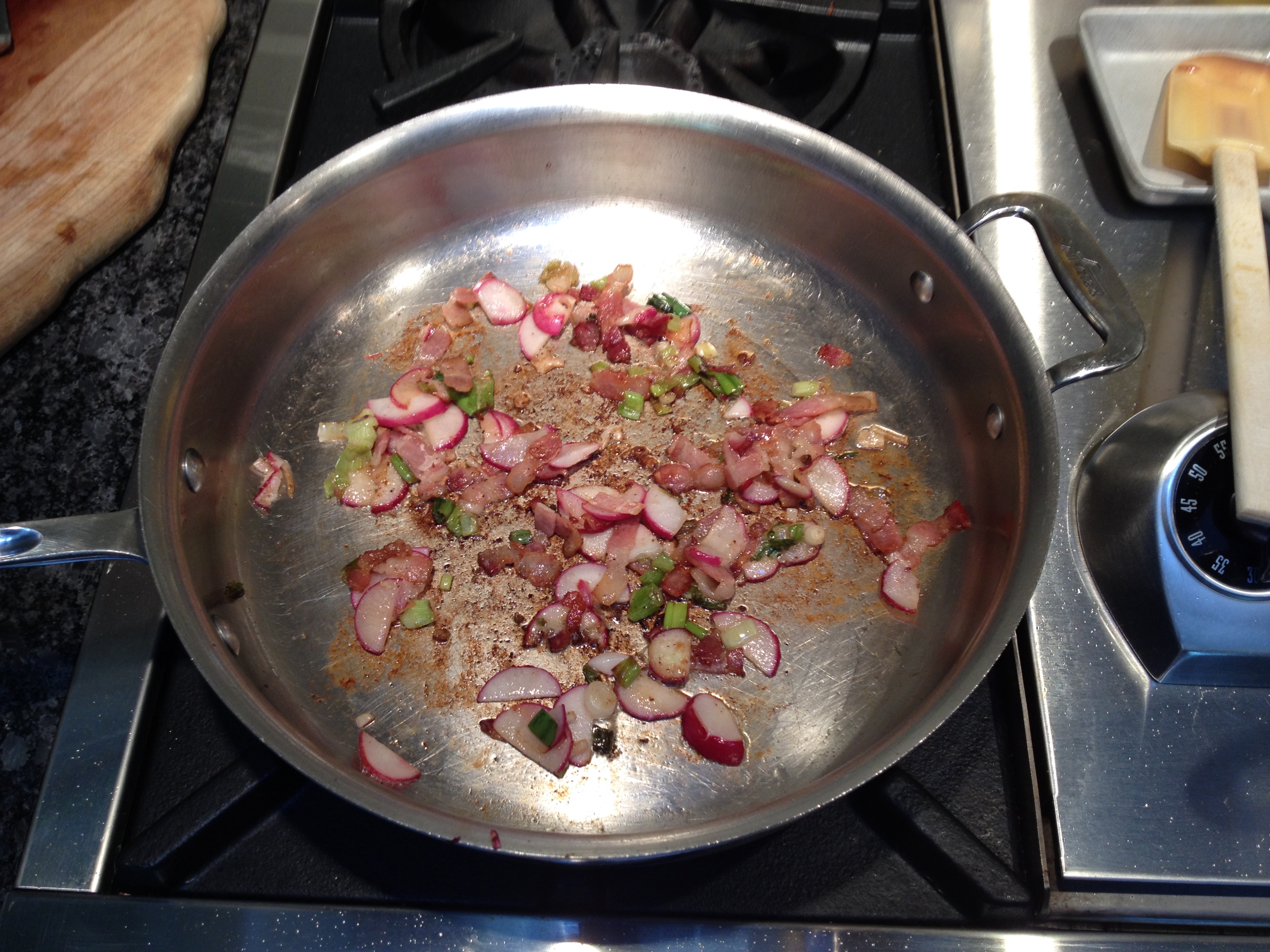
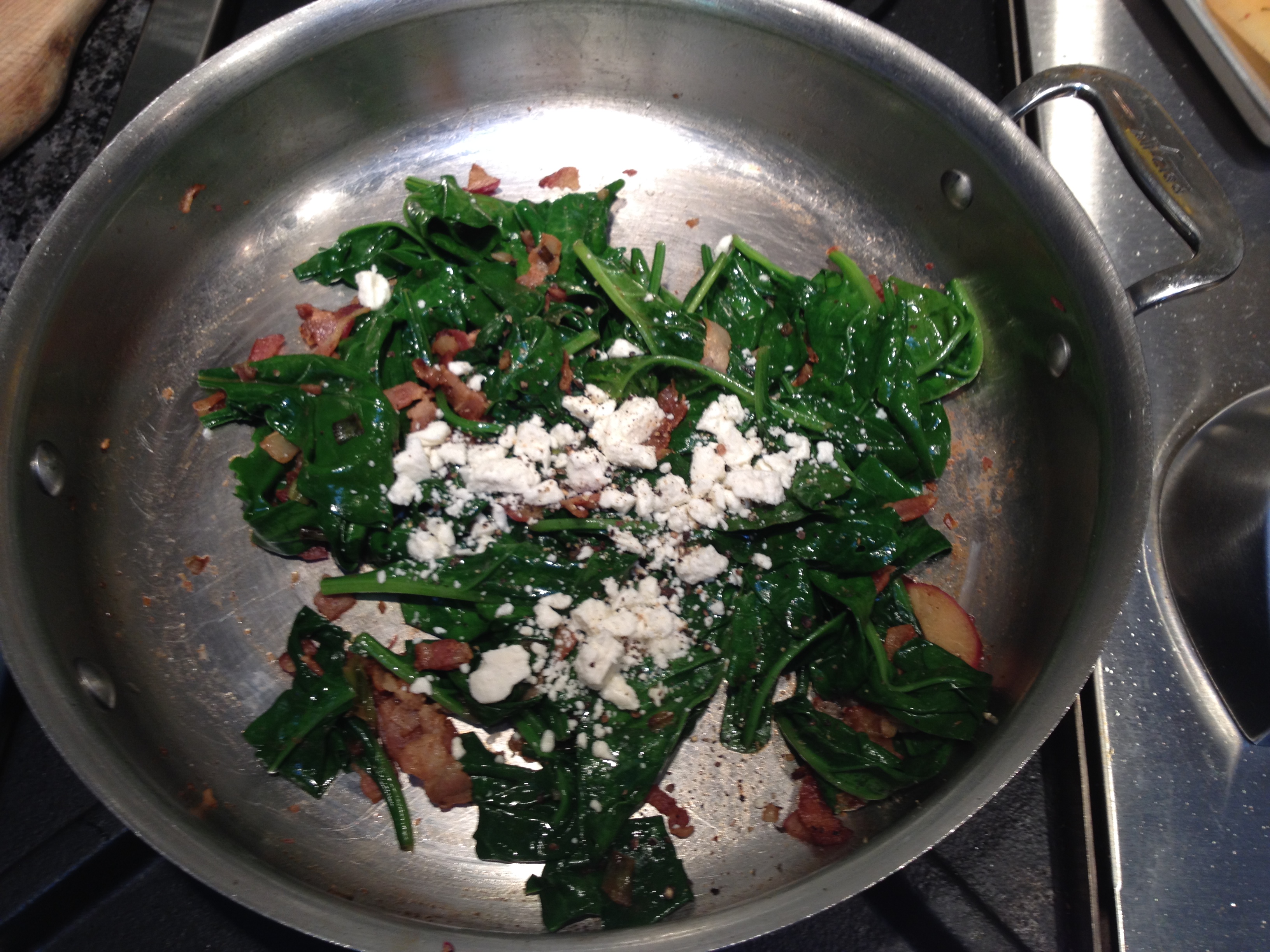
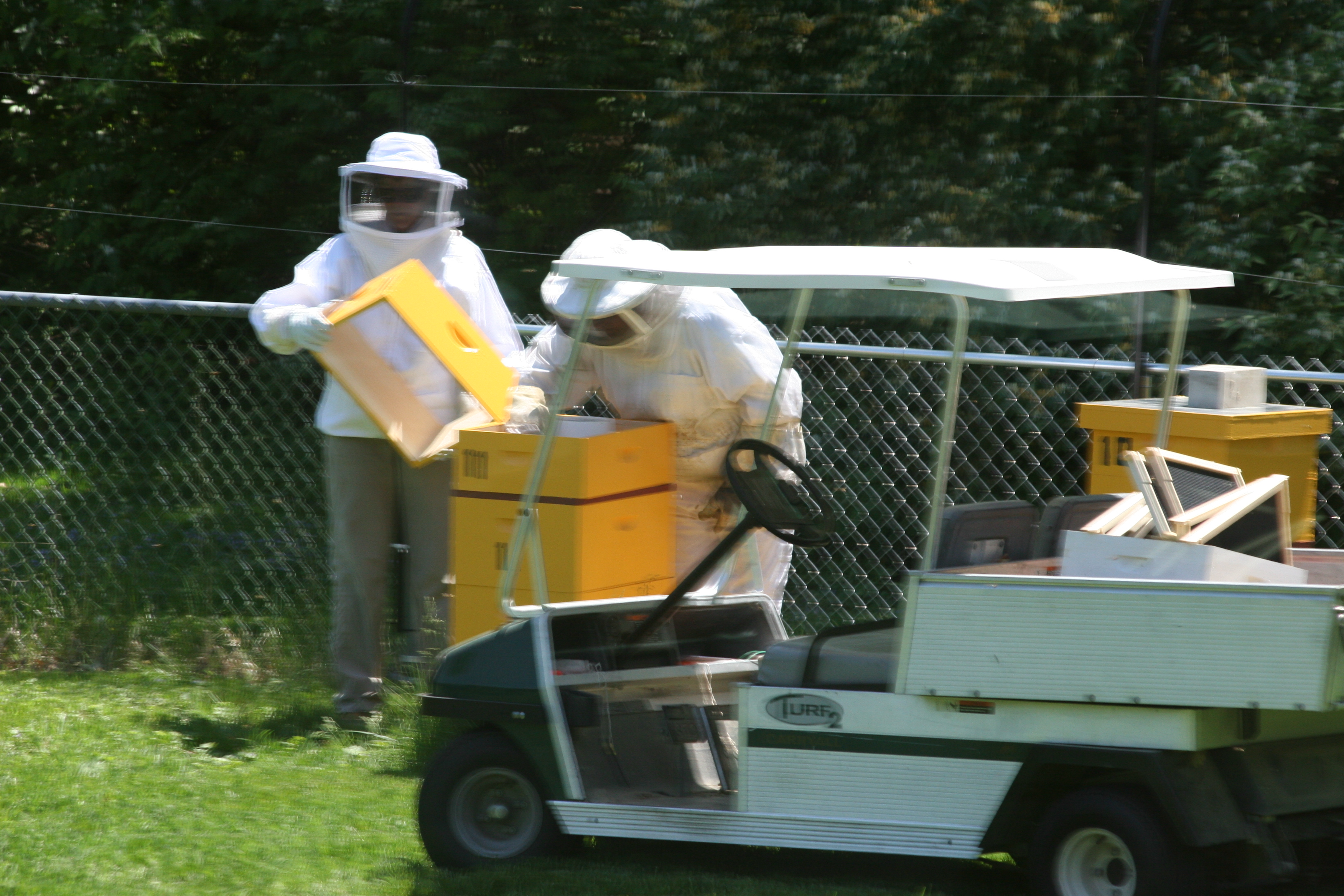
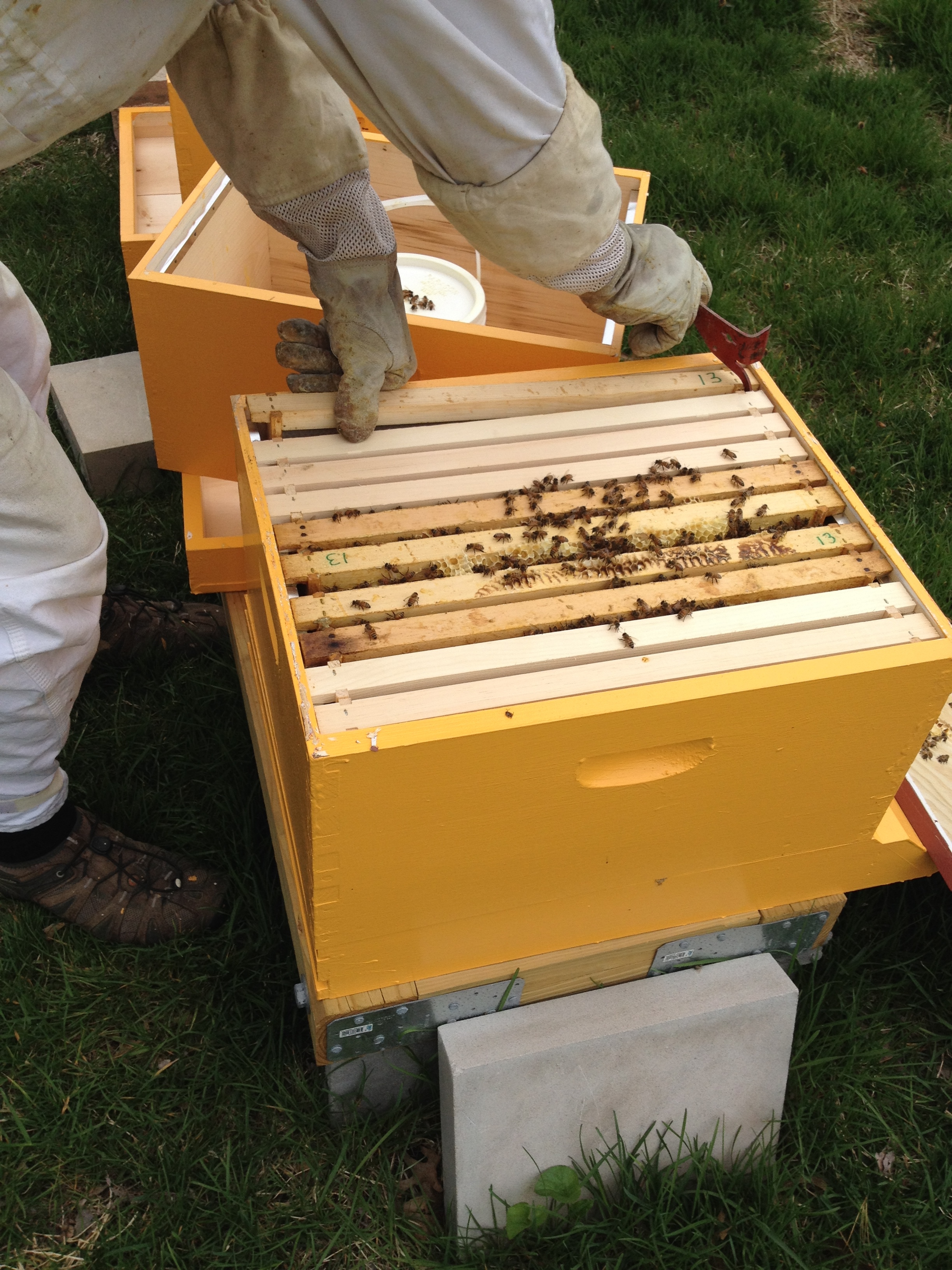
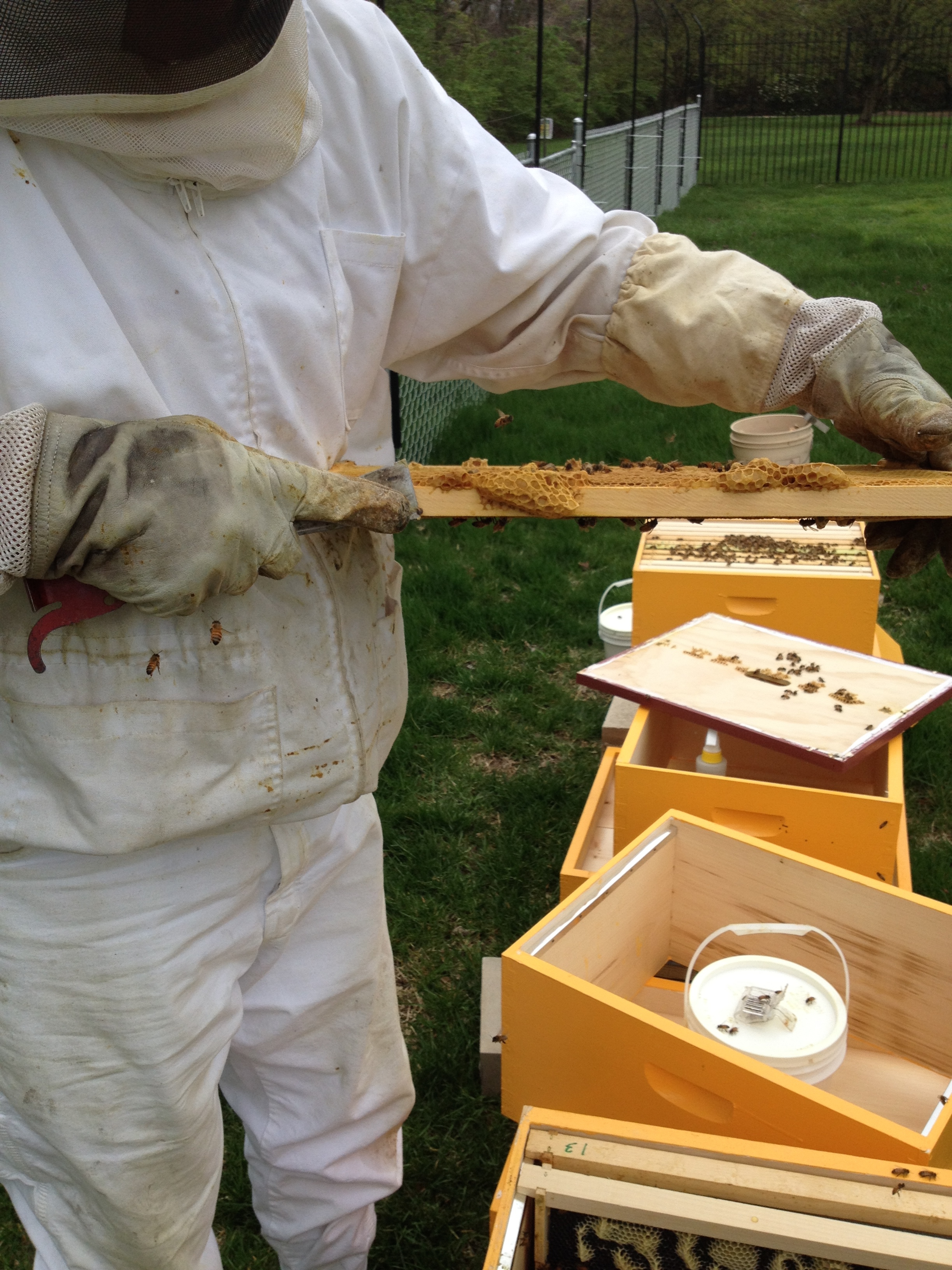
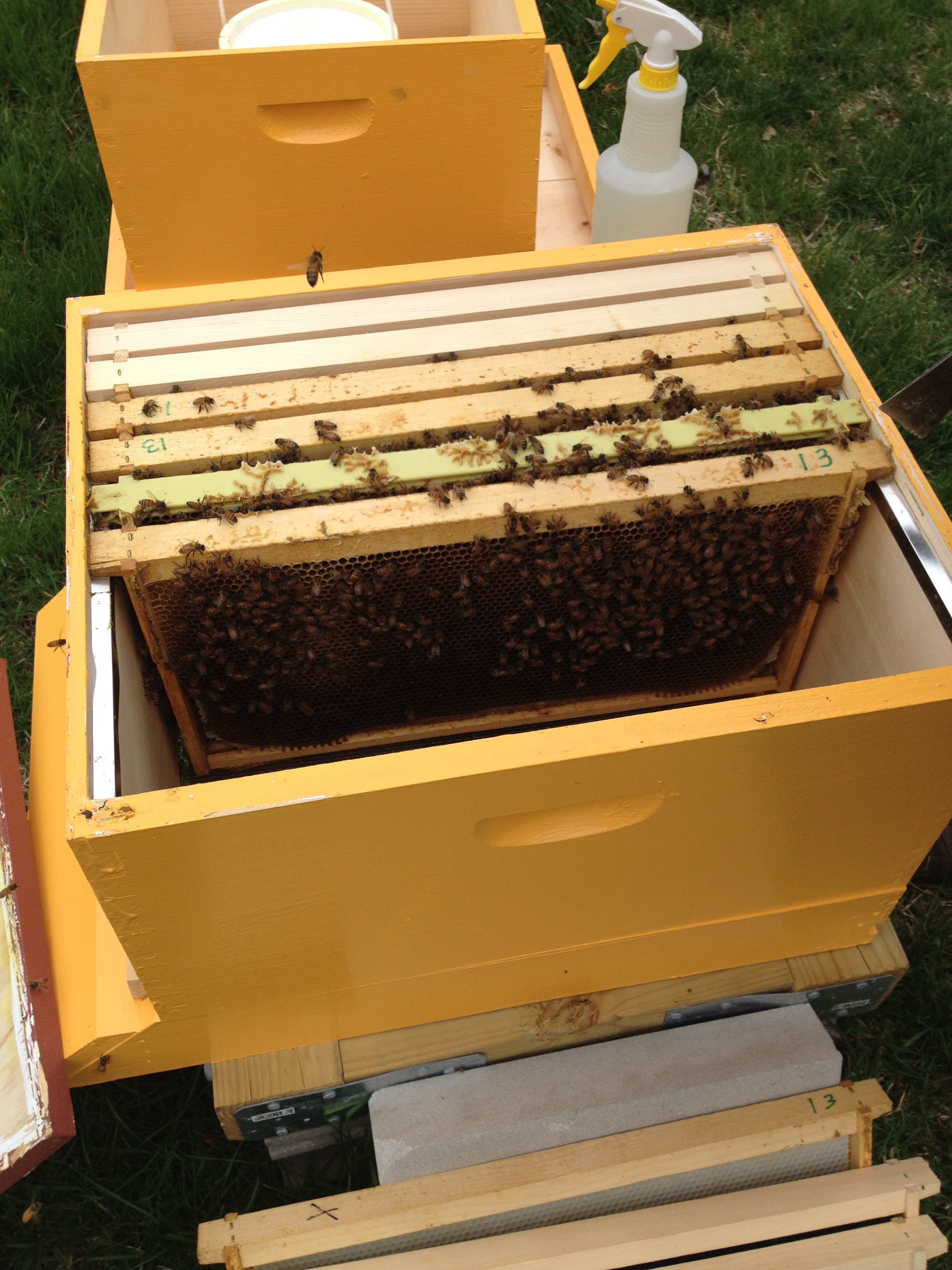
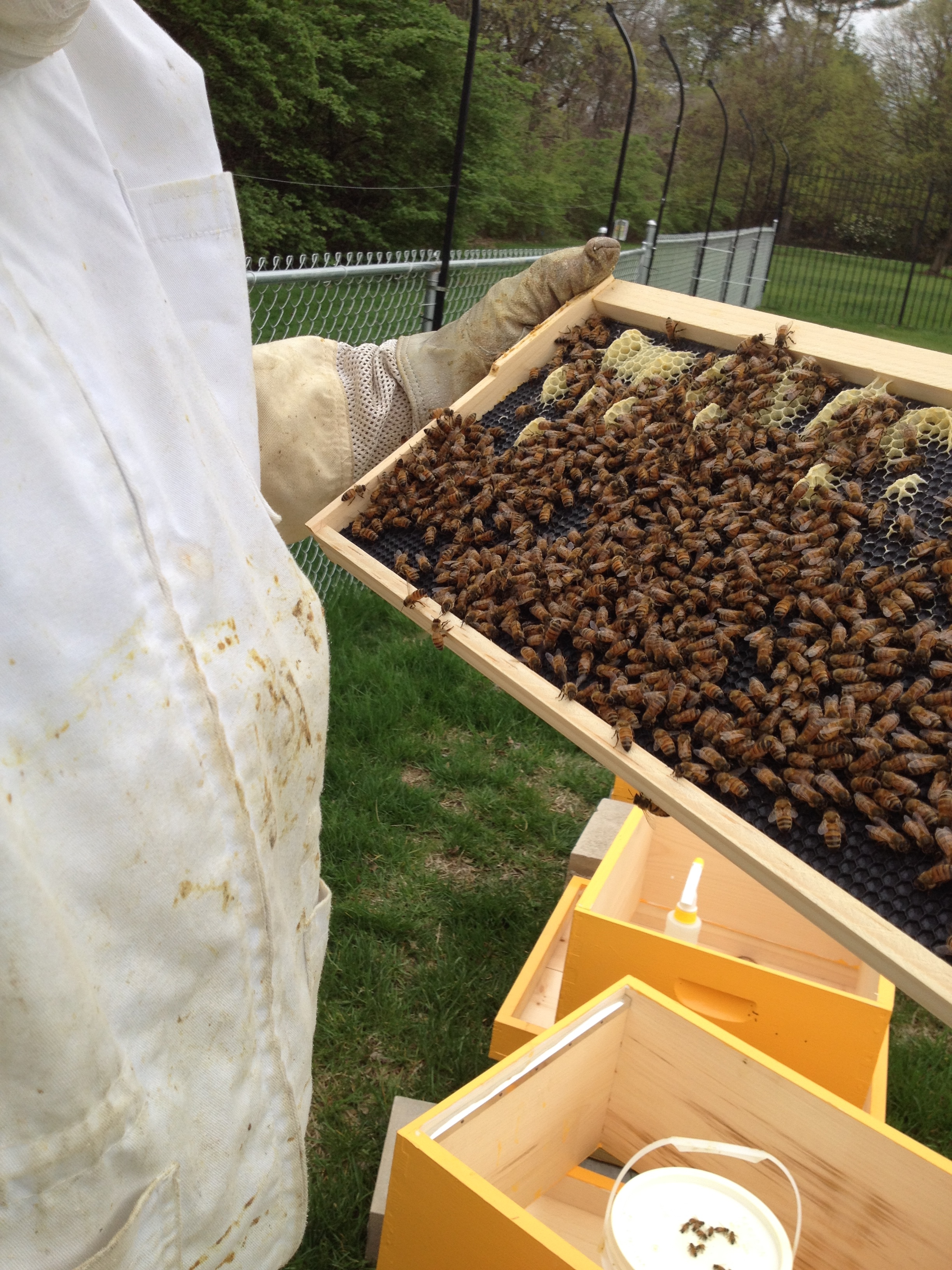
We were also given a tablet of Hive Inspection Sheets that the club produced to encourage good book keeping methods. I keep a composition book where I take notes on all the workshops and meetings I attend as well as the hive visits here, but this form does promote good record keeping so I will include it in my files as well. IMG_6092Jurgen also paid us a visit on Sunday morning for a hive inspection at the farm. He now tends 19 hives and plans to get some more soon so there is a possibility that we might add some more too which is exciting. He decided to use his smoker this time around so he demonstrated his lighting technique. He uses a combination of cedar and wood chips and has an extra large smoker so that he can light it once for a day of hive visits. IMG_6046He was pleased that the bees had started to work on the second deep box that was added last week on hive #10. He put one frame of brood in the upper chamber last week to encourage this activity and we saw evidence that they are drawing out the combs, making honey and also new eggs were present. So although we didn’t see the queen, this hive was ‘Queen Right’ due to the larvae present. When we inspected hive #11, the bees had not really started to work on the upper box of frames so we needed to check down in the first deep box to confirm that the queen was present. Jurgen found the queen right away and isolated her so that he could do some re-organization without the fear of damaging her. Every time you open a hive, there is some degree of bee fatality so you want to work very slowly and gently to insure that above all else, you do not damage your queen. So this time, he played a bit of musical chairs with the frames and made sure that one of the upper frames had brood in it. This will encourage the bees to ‘move to the second floor’ to work on filling out those frames. IMG_1060 2He also did some maintenance and removed wax comb from the edges of the frames so I got a nice little souvenir of the day…fresh beeswax! IMG_6073At the end of the day we rewarded ourselves with a dinner that included 3 types of freshly picked spinach that was sauteed with fresh radishes from the garden. Spinach…IMG_6086Added to the sauteed radish, scallion and bacon bits… IMG_6088Equals yummy with a bit of feta on top!!! This serving of iron will help us have the energy for another day’s work! IMG_6090

Unknown's avatar

The Birds and the Bees…How Appropriate for Mother’s Day!

We spent the last week furiously working in the yard and fields getting ready for what has been a false hope of some rain. I’m starting to think there should be at least two kinds of rain…one for picnickers and another one for farmers. The picnickers will report that it ‘rained’ if they experience a light drizzle under cloudy skies that may have put some dampness on their blanket. That is not rain! We experienced that last week when everyone was complaining about the rain but our rain gauge measured .26 inches after a day of precipitation. Then we were supposed to have a storm on Thursday but got nary a drop. Last night and today we were suppose to have rain but so far, we have had .02 inches and the skies are clearing, much to the delight of the picnickers.  The farmers need an inch a week, preferably not in a 15 minute span of time which also happened not too long ago. Wouldn’t it be lovely to get 1/2 an inch twice a week?

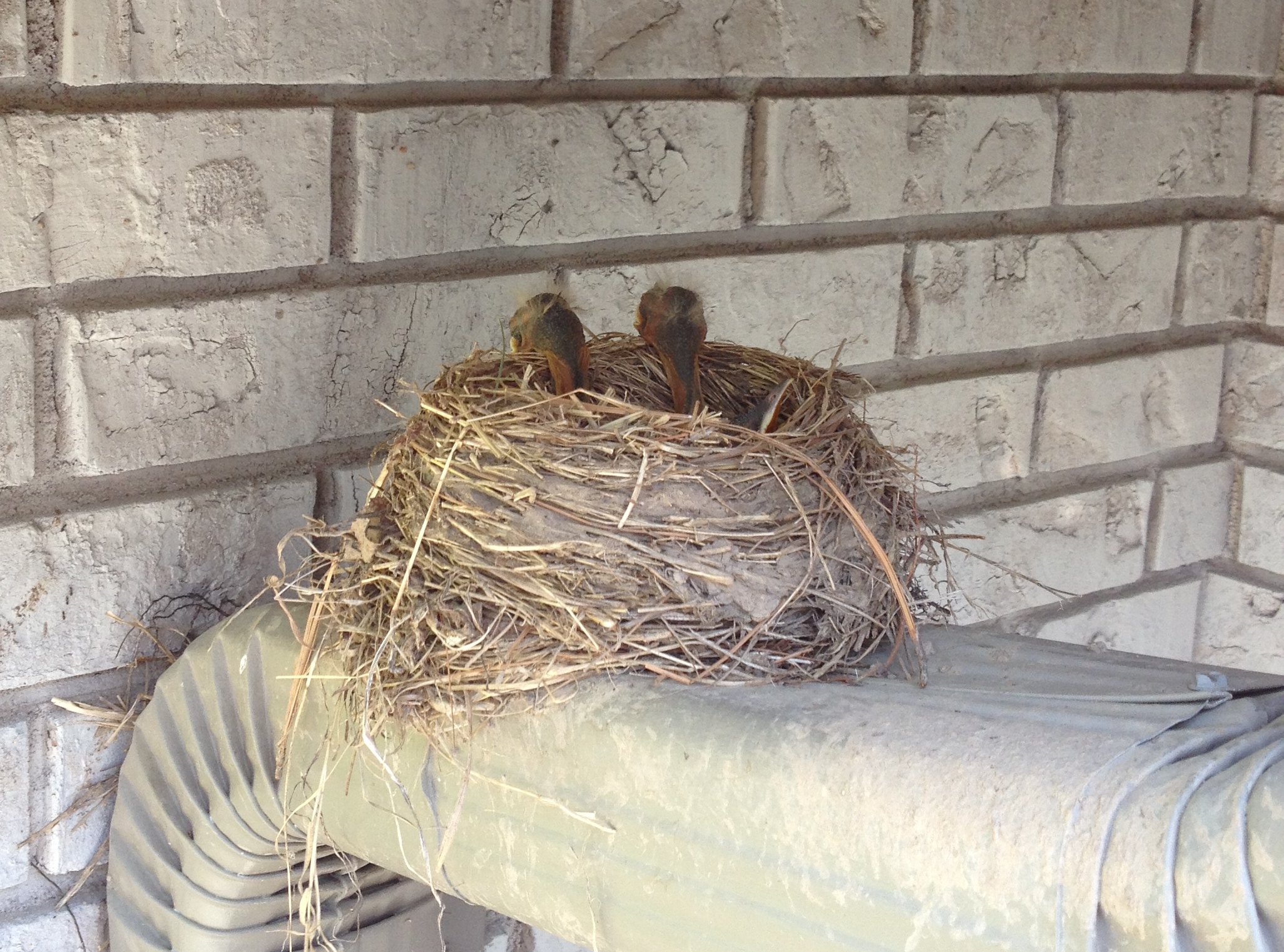
A good rain this time of year would certainly help the allergy sufferers who react to the spring pollens. Luckily, Dave and I are not particularly bothered by the pollens which is a good thing since Seven Oaks has its share of it! When the oak pollen drops there is so much of it that a gentle breeze will gather it in remarkable piles at the driveway’s edges. IMG_5923 The birds are appreciative of a gentle rain as well since it will bring the worms up to the surface and they can quickly bring home a fast food meal to their chicks. We are particularly enamored with the robin babies that hatched about a week ago at the front side entrance. There are three little babies who clamor for food when their parents return from foraging. They are not fully feathered yet and try to behave and hide when their mother is away so it is difficult to get a photo. Here are two of them showing me the backs of their necks with feathers so light on their heads that they look like fur. IMG_5945 The barn swallows at the front door are active too, having built their nest for the second year in a row in the same spot. I have not seen any babies yet but hope there is some activity in that direction soon so that the babies will be old enough to fly away by the time of the wedding which is now only six weeks away!

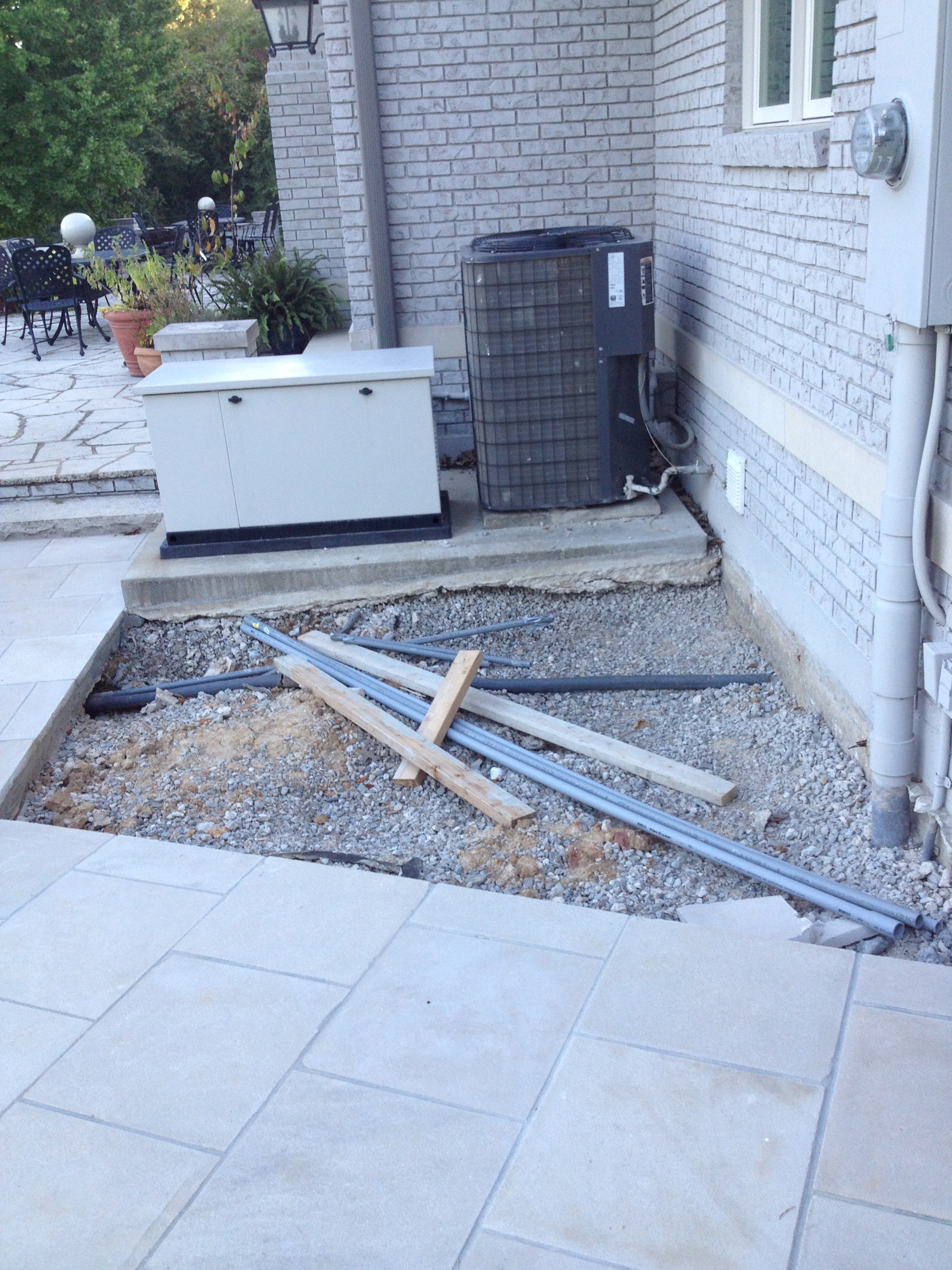
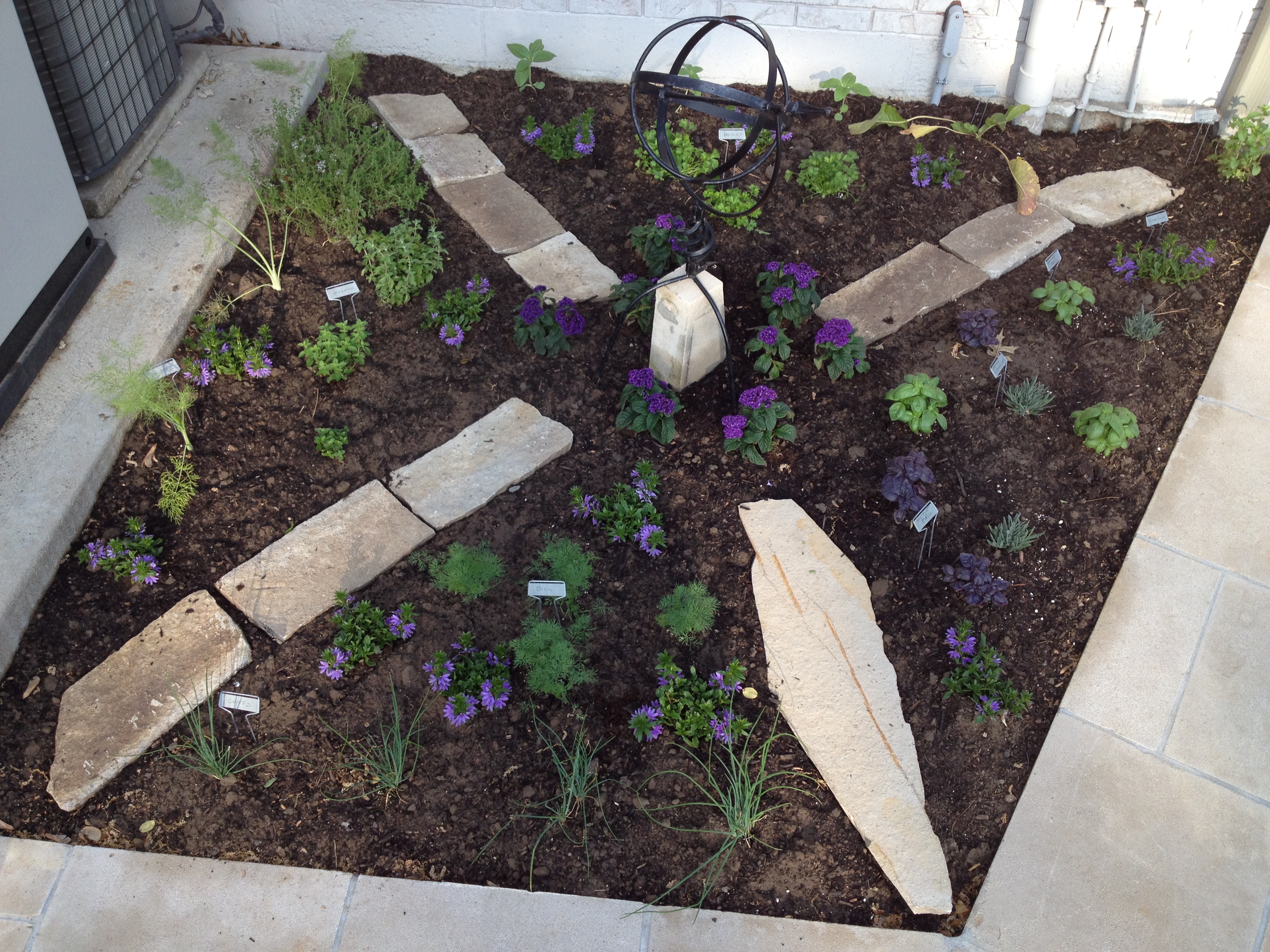
In preparation for the big day, we have finally gotten some new planting beds in order. Last fall when we were working on the new driveway we had the rear sidewalk reconfigured and it was then that I finally got rid of an expanse of hard-scape that always bugged me. It was no easy task to remove the stones that were laid on a concrete foundation, but at least the heavy machinery did all that work. This ‘opening’ allowed for the plumber and electrician to put in the gas piping and wiring for the outdoor grill area – how convenient! But it left me with all the rock and clay to deal with afterwards. IMG_4681  The setting isn’t that fabulous since the generator, one of the air-conditioners and the electrical meter are all located in the vicinity and require air circulation as well as room for maintenance but I figured I could greatly improve on the look and make a useful little herb garden out of the space. First, my friend Lucy came over and sat in the “hole” with me and we dug out countless buckets of rock and clay while we jabbered away on two recent afternoons. I then filled the space with 50% top soil and 50% compost and made sure it was mounded above grade so that it could settle some. I watered it for a couple of days to encourage the settling since I was eager to plant my herbs. I selected some flat stones from the rock pile (yes, we still have quite a collection of rock on pallets in back of the driveway) to form the design of my Parterre, which is the French word for “a level garden that is planted in sections or patterned compartments”.

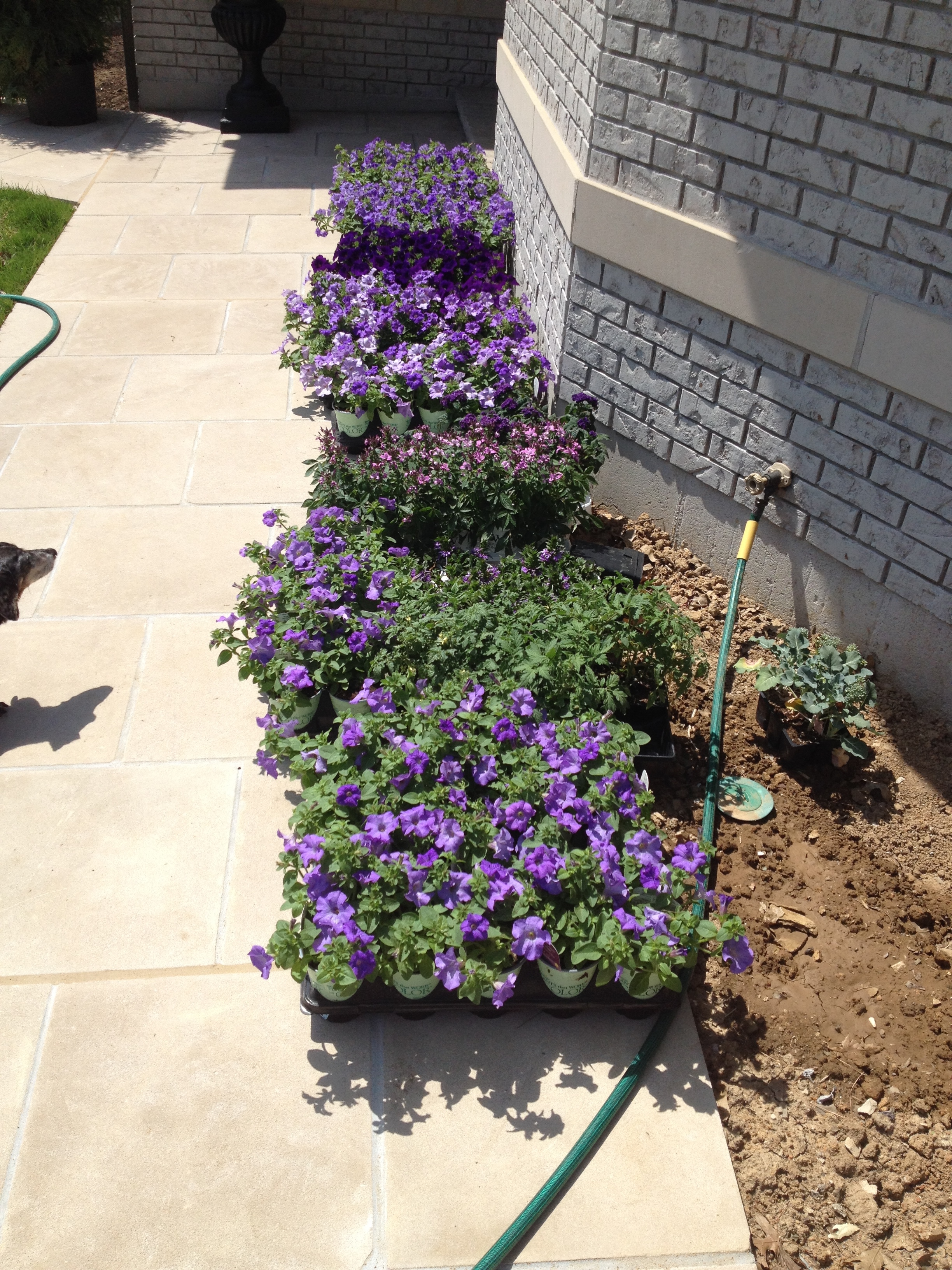
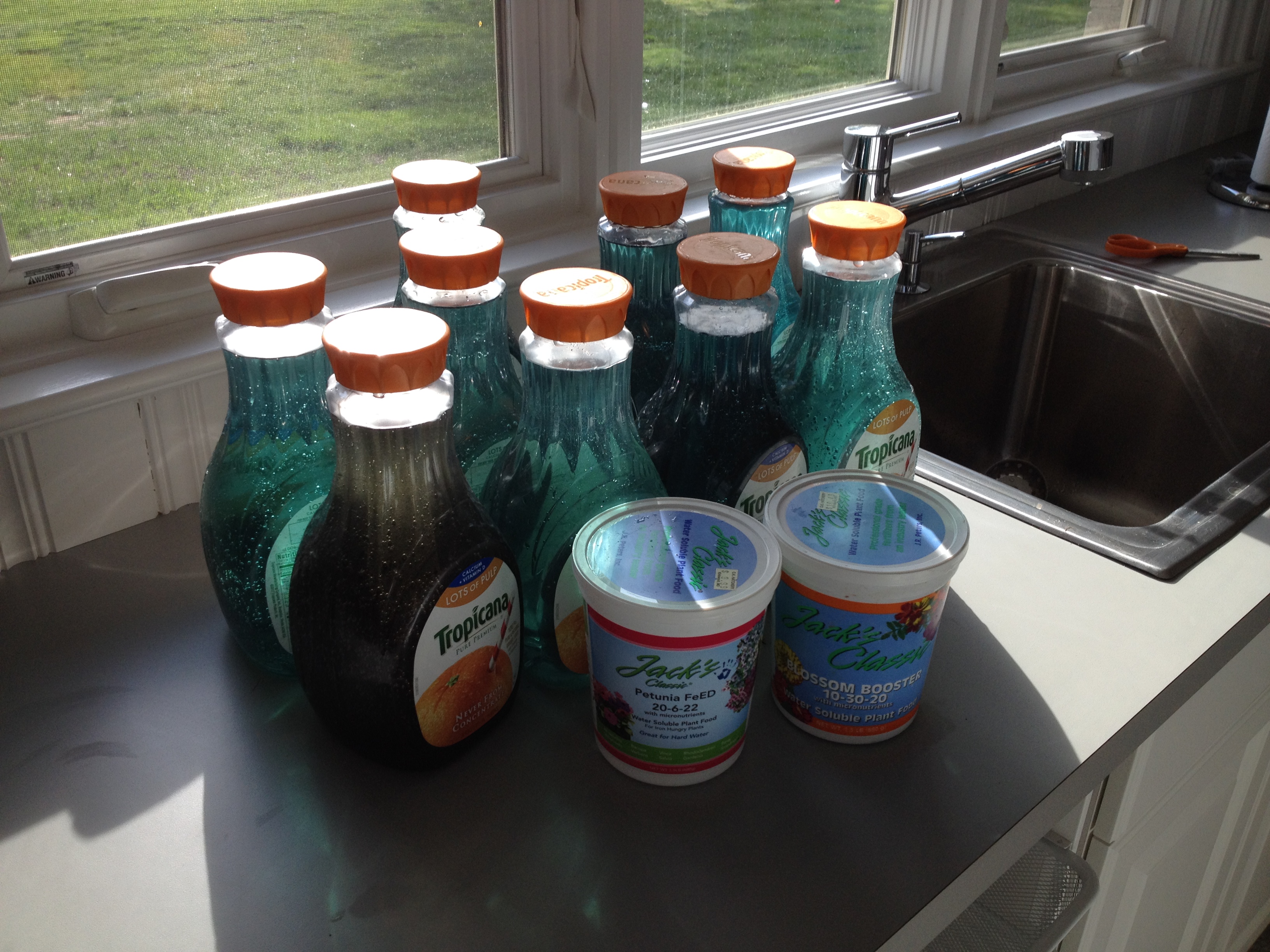
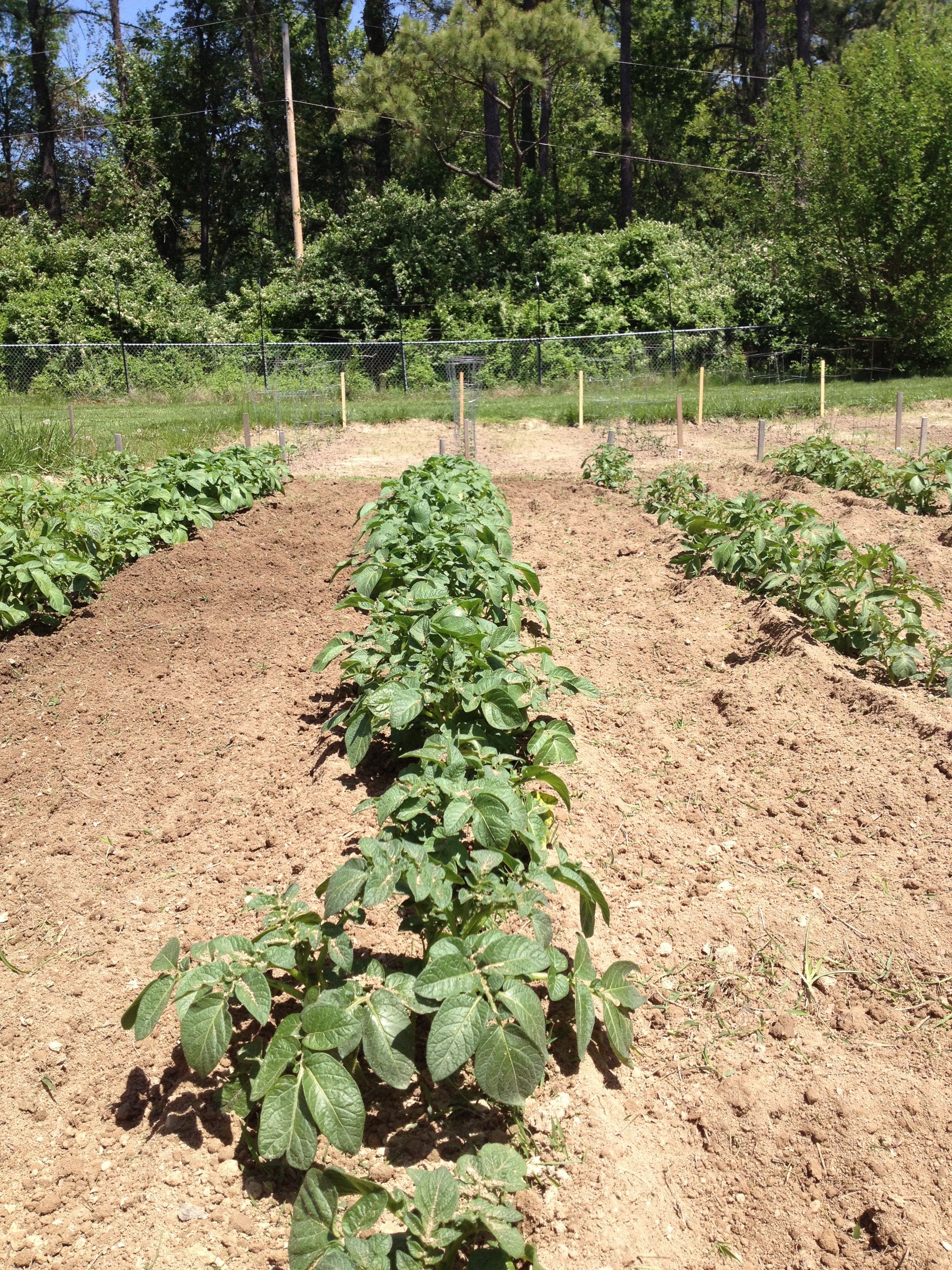
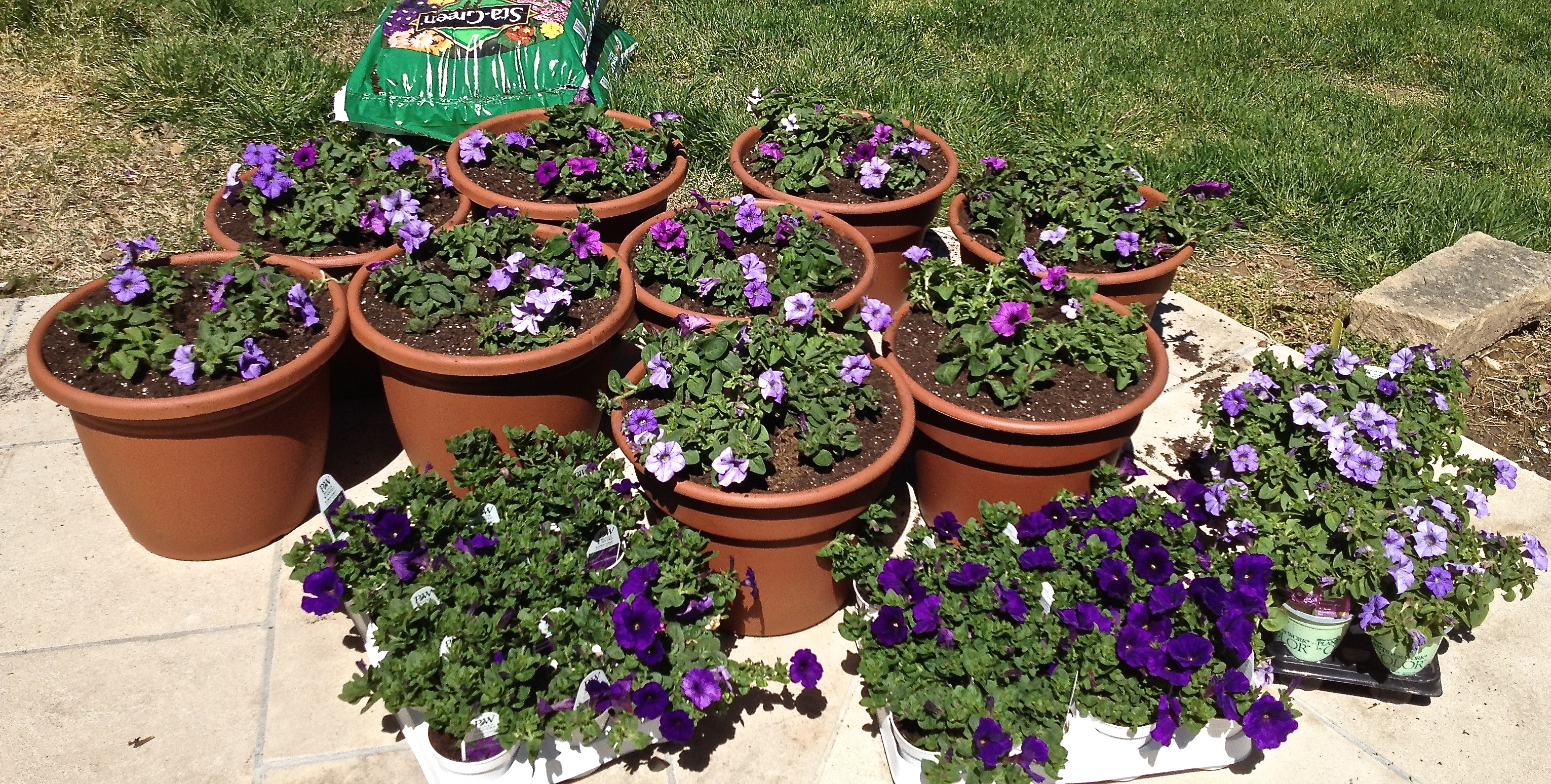
I used the stones as a design element as well as a way to step in this carefully prepared soil. I then placed a wrought iron feature in the middle and planted and assortment of herbs and some small, distracting flowers. I’m told the bees will be very attracted to the herbs but I must say I am too! I planted some of the usual suspects: a variety of basil, oregano, parsley, dill, chives, thyme, lavender, but also some plants that are new to me this year such as fennel, horseradish and spearmint. I’m on the look out for garlic which I would like to add and rosemary which the nursery was sold out of at the time I went shopping. IMG_5980     I also managed to plant all the awaiting petunias this week…106 in one day plus many others!  IMG_5921I feed my petunias like crazy so that they bloom their heads off all summer and mound over the pots to the point that you can’t see the pots anymore. This routine is daily and looks like this. I give the petunias two types of specialized food on alternating days. Here are my bottles of food ready to go. IMG_5918I worked on weeding and hilling the potatoes yesterday and they look incredibly healthy! IMG_5960

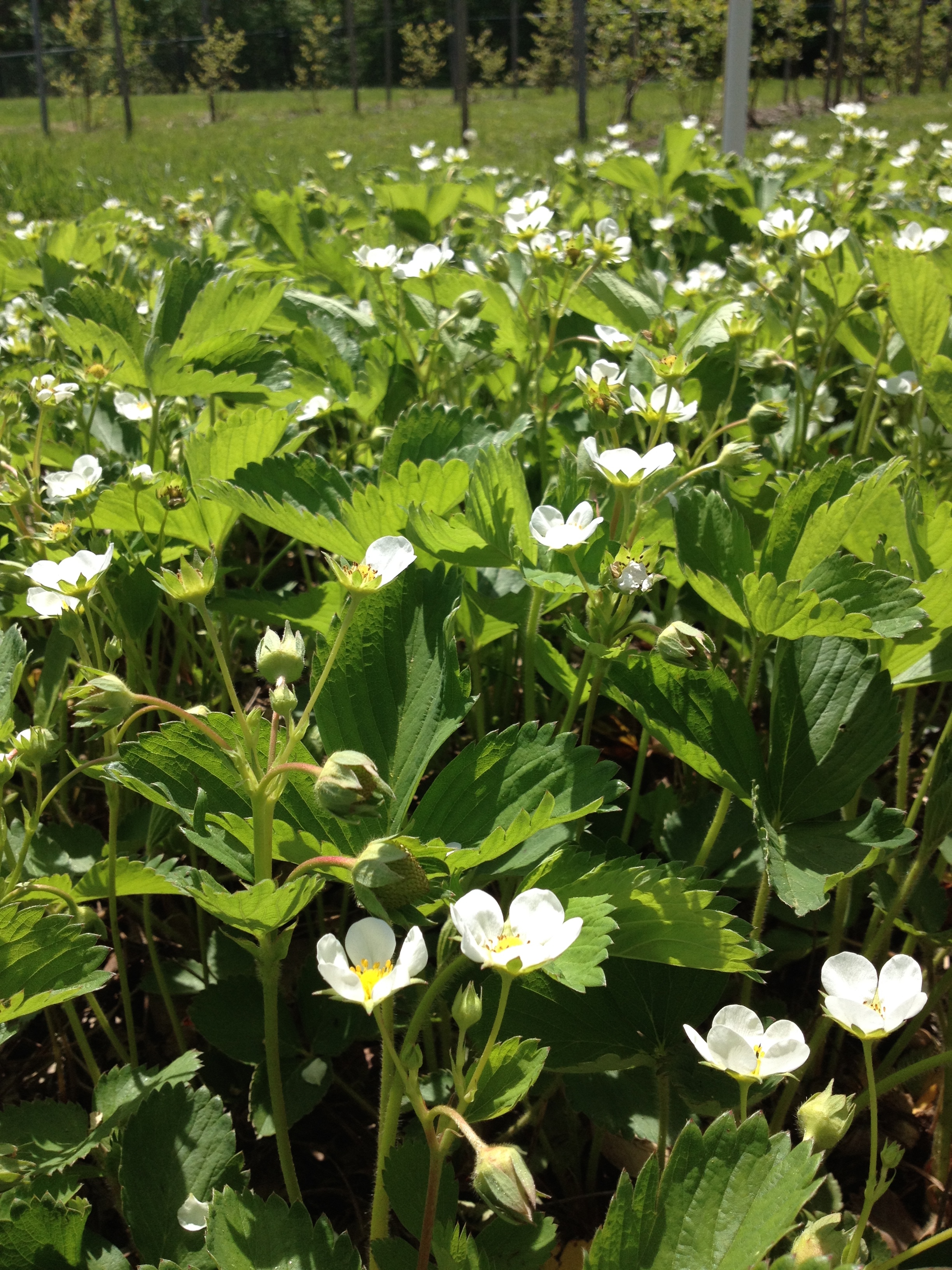
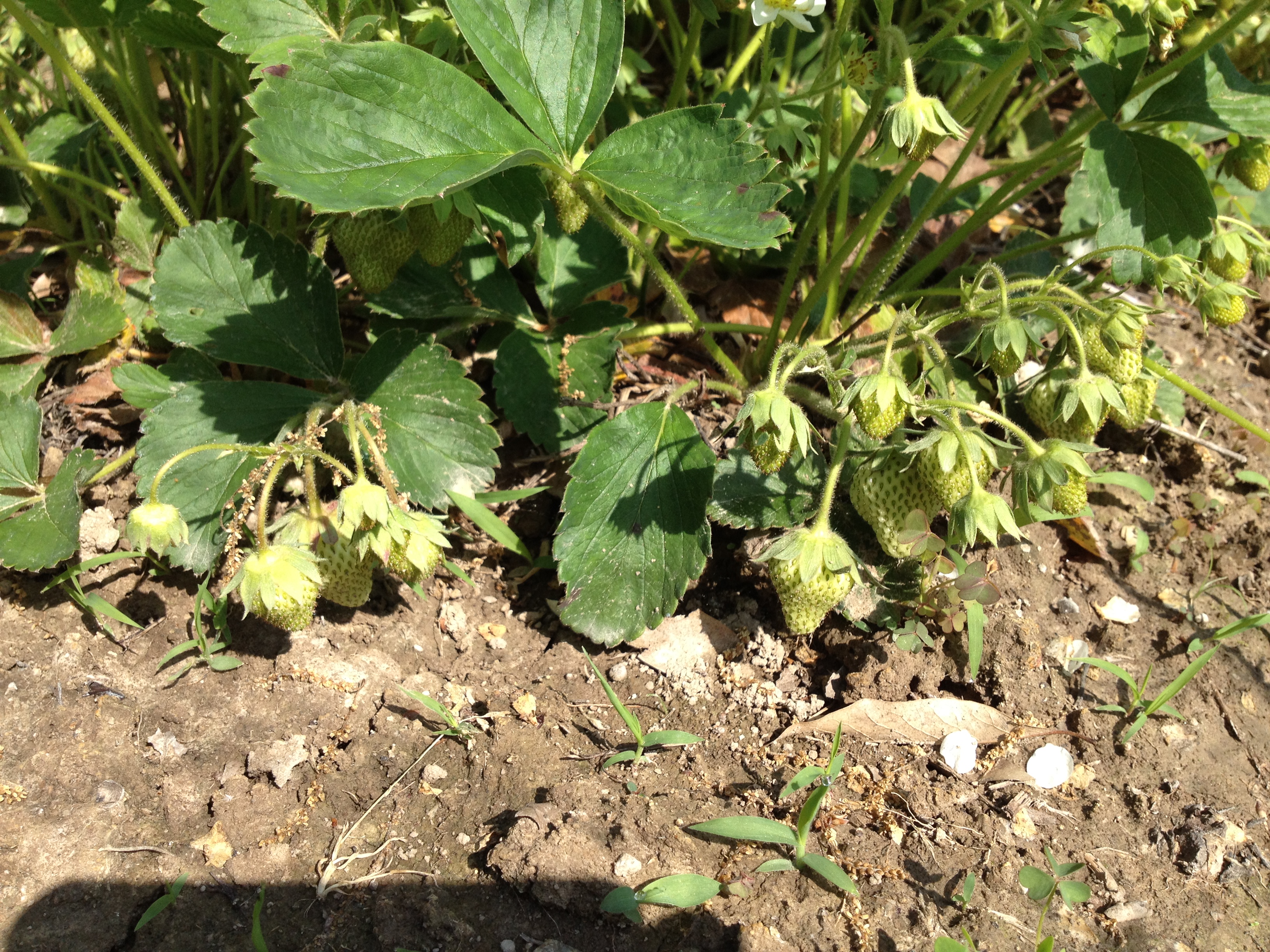
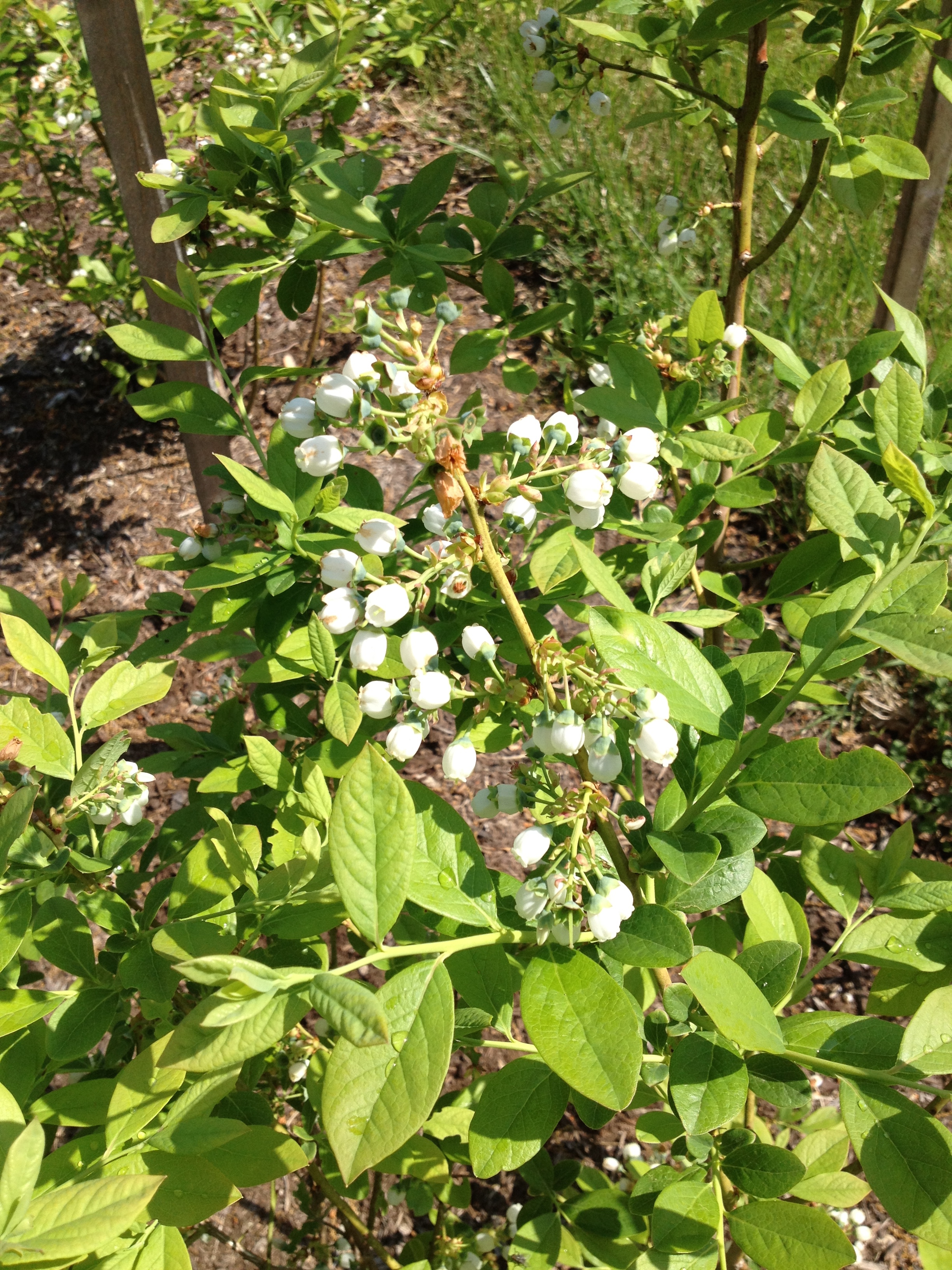
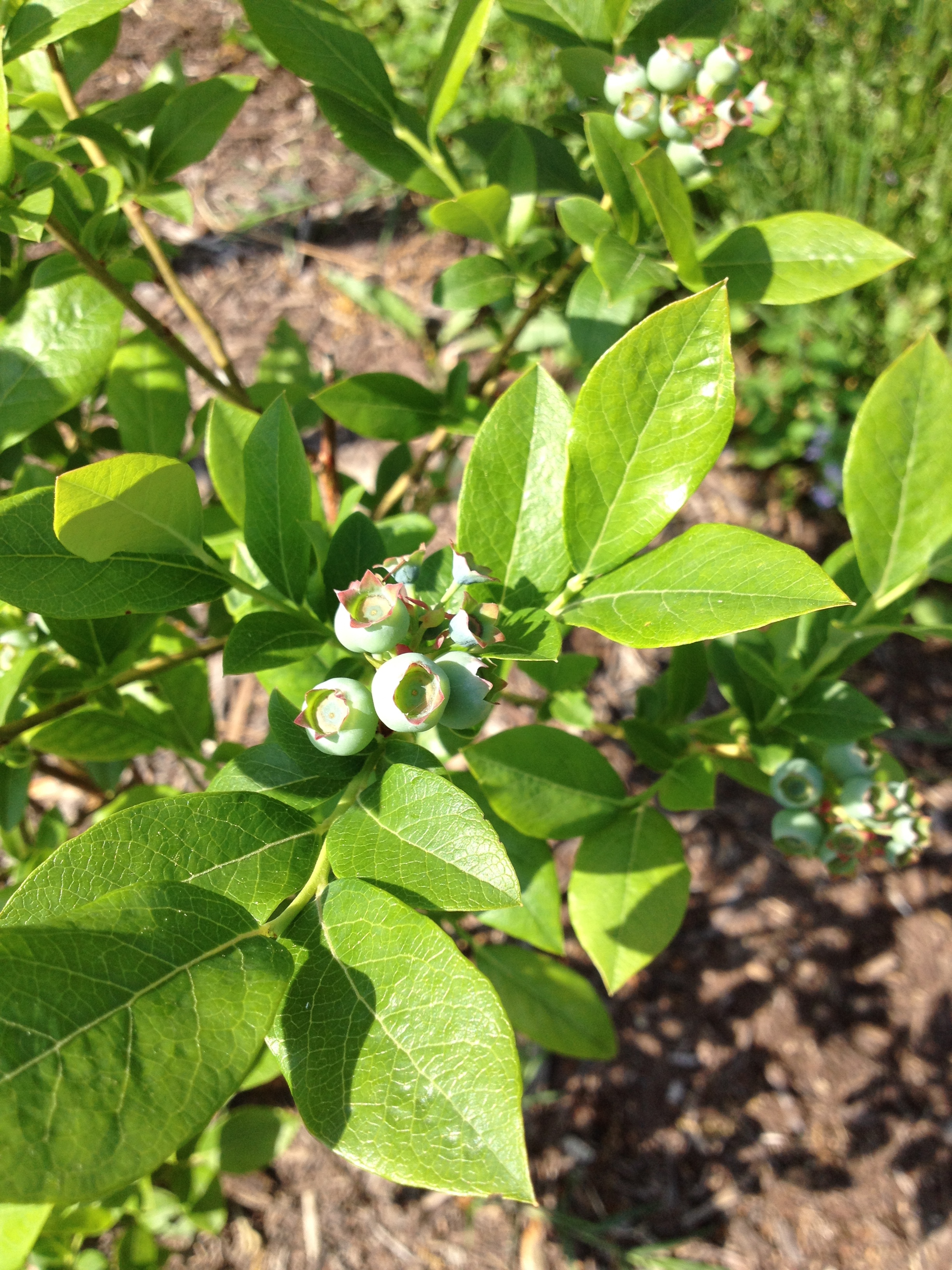
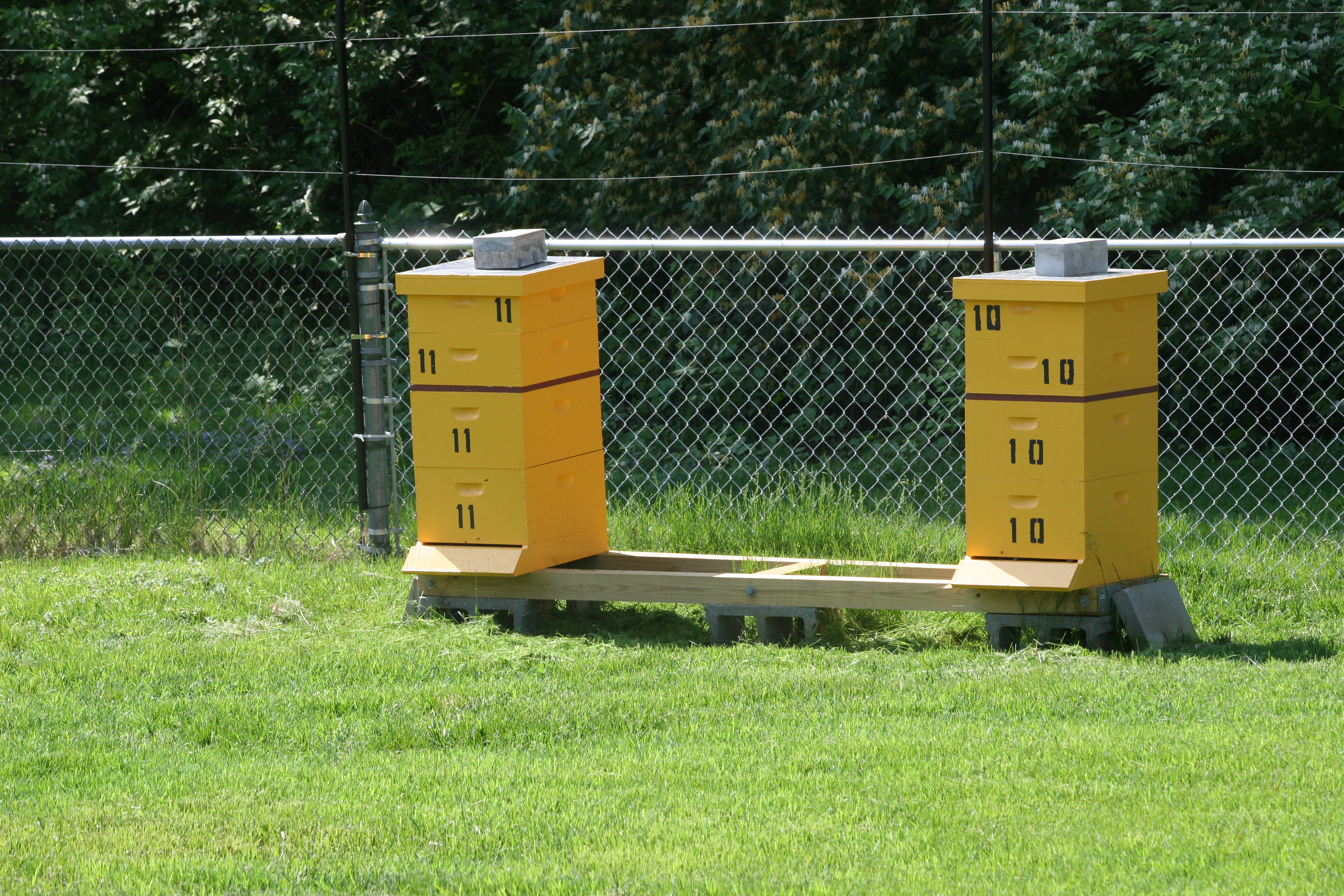
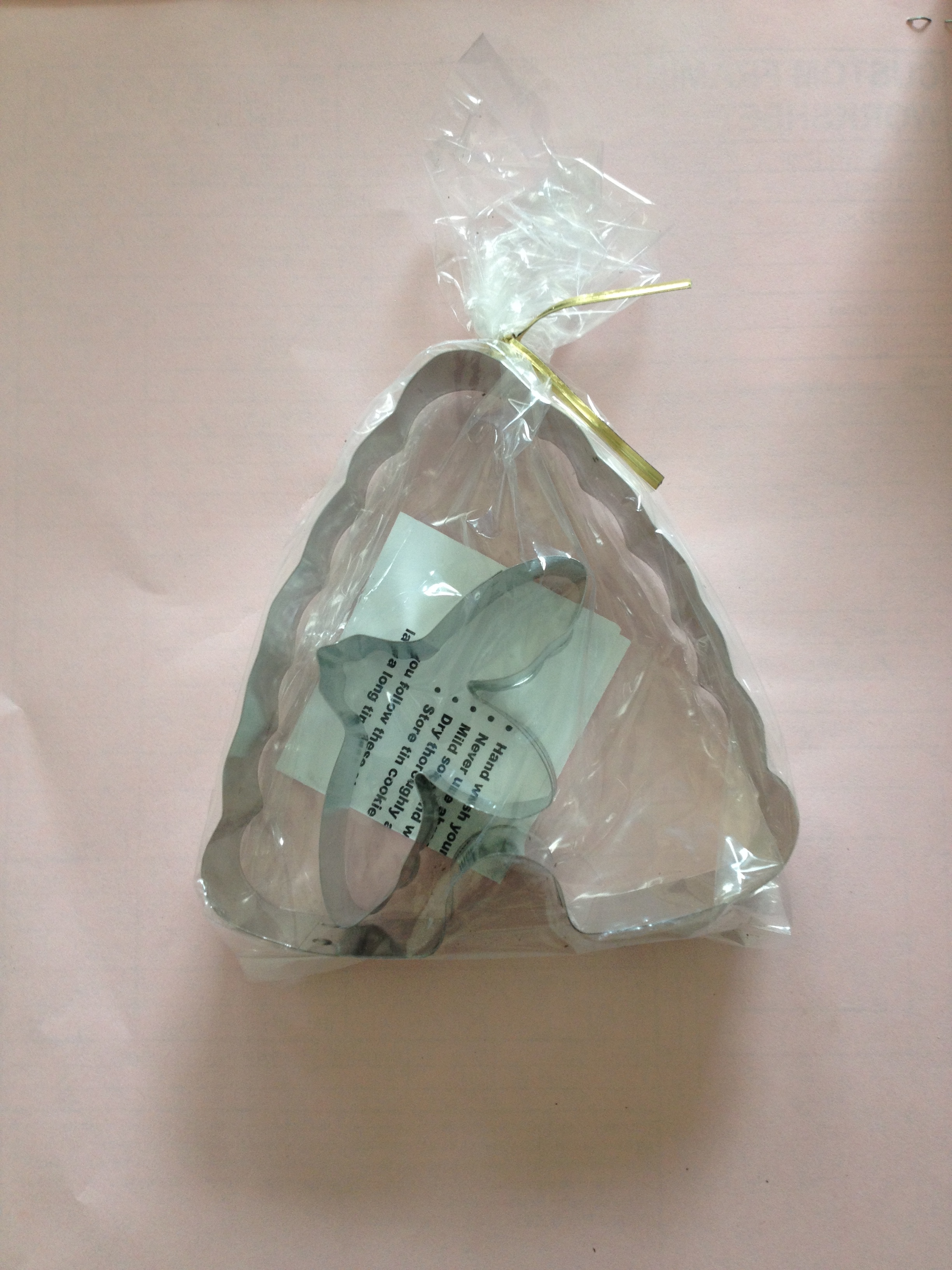
We also worked on the strawberries which have set on like mad and are waiting for some sun and heat to ripen. I spent one morning weeding out all the wild strawberries. Wild strawberries are not as cute as people think and can just take over like a weed once they get a foot hold. They are a real detriment to the patch and so I was glad to have a chance to pull them along with some other weeds. It looks like it will be a good season for strawberries! Last year we began picking on May 19th and it looks like we might have that same timing this year. I will be interested to see if we get as many fruits this year. It will be hard to top the nearly 160 pounds from last year’s harvest! IMG_5916Here are the berries that are setting on like crazy! IMG_5990I think the bees took their job quite seriously both in the strawberries and the blueberries! I have never seen so many blueberries in this patch, which could be due to the bees as well as the maturity of the plants. If you recall, we have 5 rows with a different variety in each row that ripen progressively so that we are not inundated with blueberries (is there such a concept?) which is why some rows are still flowering…  IMG_5994 While others are already developing nice clusters of fruits! IMG_5991Time for the bee update! It is always a highlight of our day when Jurgen comes to inspect the hives. If you recall, we were waiting to see if the re-queening that took place two weeks ago in hive #10 had worked or not. Jurgen did not want to disturb that hive last week so he was very pleased yesterday to find eggs being laid, meaning there is an active queen working the hive! Yeah! He showed me that the bees are filling out the existing frames quite nicely and had me feel the weight of one of them so that I can imagine how very heavy a box of frames full of honey will be in the fall. IMG_1017With good news about the queen and the nectar ‘running’ (meaning available for foraging), Jurgen came prepared to add more frames to the hives. When he did this, he sprayed the new frames with sugar water to attract the bees into the upper box. He wants them to start to work on developing these frames (making new combs) with the hopes of getting more honey in the fall. The other thing that he did was to take the restriction away from the entrance of the hive. Before this, the opening was just a couple of inches wide and now it is the entire width of the front of the hive. IMG_1022I took advantage of nice weather that morning to mow the area around the hive and Dave used the weed whacker today to further clean up the edges . photo 1Here are the cleaned up hives with the added boxes. IMG_1053Of course any honey that is harvested from these hives will belong to my bee mentors but just in case any comes our way, I am experimenting with some honey recipes.  Today I am making Rolled Honey Spice Cookies using my new cookie cutter which was a Mother’s Day gift from Kate. Can you guess what it is?  IMG_5937


Unknown's avatar

Bee One, Help One

Yesterday I had another interesting adventure in beekeeping. The Eastern Missouri Beekeepers Association, EMBA, was having their annual Nuc (nuclear bee family) distribution day. The association trucks in honey bees (this year from Louisiana – the state, not the Missouri town where Stark Brothers Nursery is located!)  so that local beekeepers can replace or add bees to their hives in the spring. I was told by others that this was an extraordinary experience, so when the call for volunteers went out, I signed up to help. We had to be on site at 5:00am in order to work most efficiently in the dark before the bees were overly alert and feisty, so this is when my alarm went off…just after 4am.photo 8

That is not horribly early for us since we are often awakened by the birds chirping and Farley stirring between five and five thirty in the morning but the anticipation of an unknown and possibly challenging task caused me to be sleepless and ready to get moving and so I popped out of bed promptly at four. Farley thought it was wonderful to be up early since it meant he got fed! Dave was sweet to get up and make some coffee so that I was fortified with Java. Off I went to a new experience.

Of course I wore my bee jacket and veil and arrived to find a bunch of other ‘alien equipped’ beekeepers ready for action. I was feeling a bit nervous so I was glad that one of the organizers asked if anyone was new to the experience and my hand shot up quickly. I was in good company since several others had not done this before but the difference in comfort level was obvious to note. We newbies were in our gloves, veils and basically suited for this from head to toe while the old hands could hardly bother to suit up and were handing the HUNDREDS OF THOUSANDS OF BEES with great calm and nonchalance without even covering their faces until the light of day. As soon as the sun was up, the bees were a bit more awake and active.

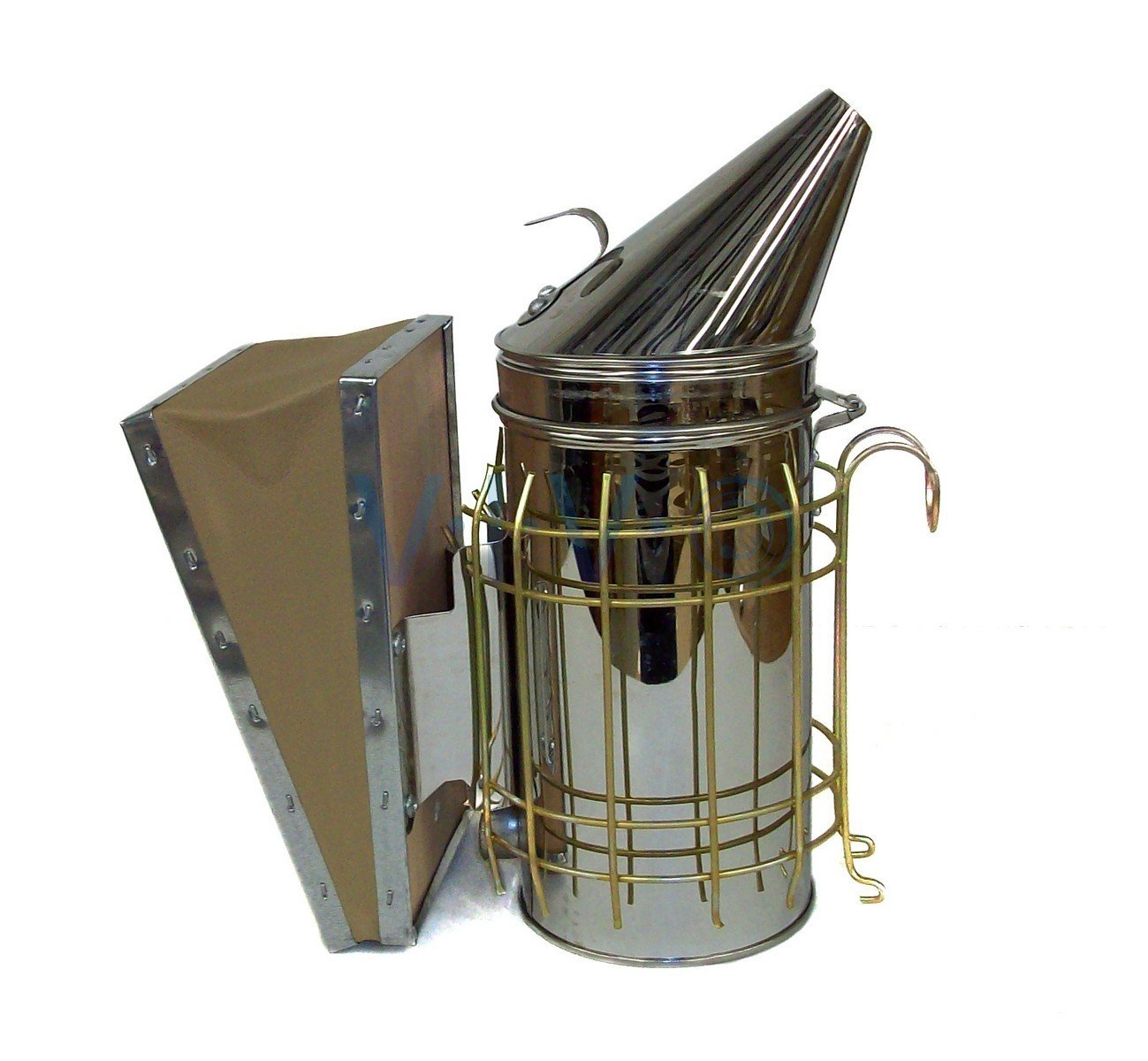
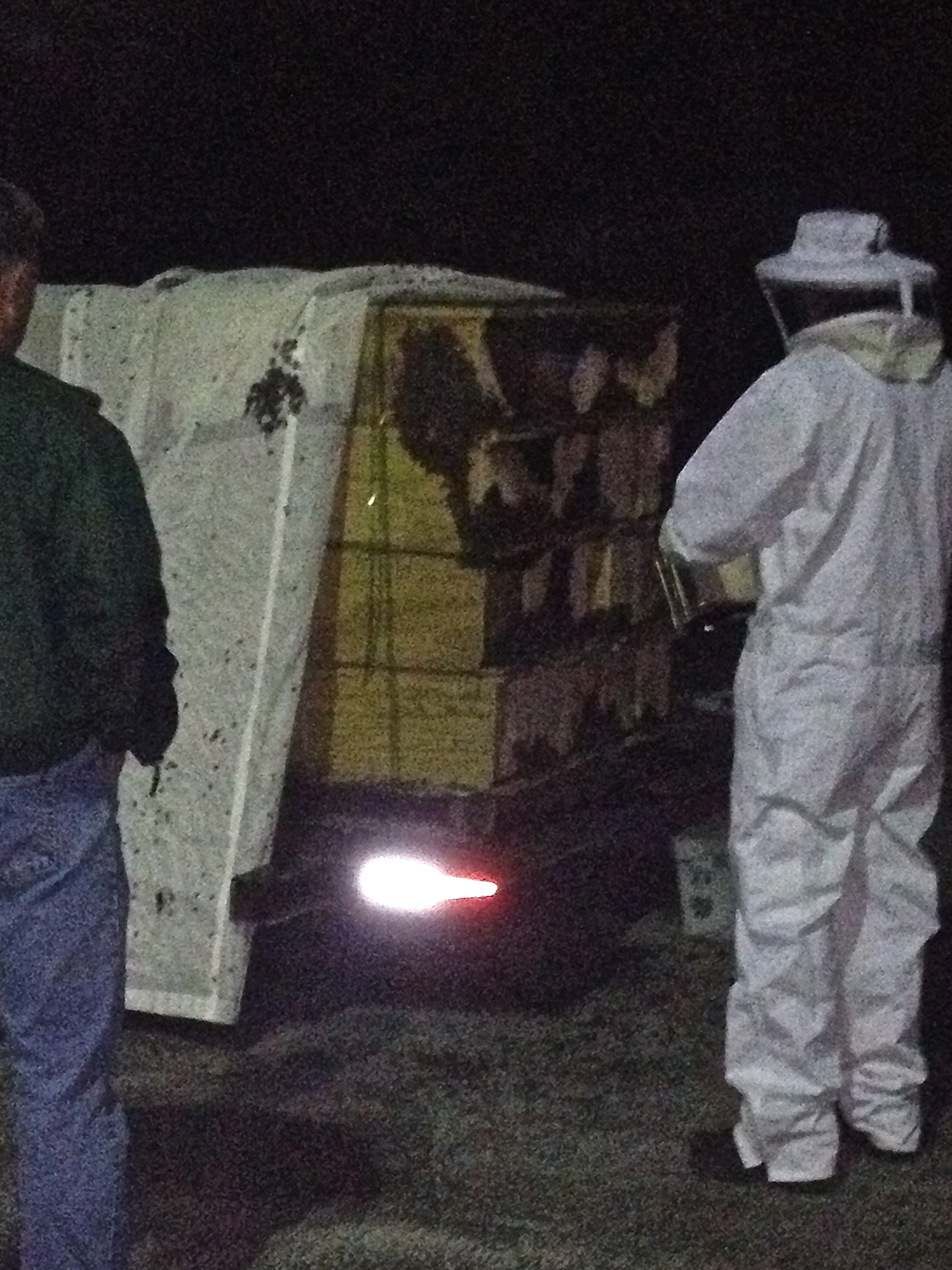
Most of the regulars brought their bee smoker and these were puffing away to calm the bees as well. Each beekeeper seems to have a particular fuel and method for starting their smoker so it was interesting to observe. I plan to practice lighting my smoker today and will use the pine needles from our many pine trees as my fuel. Here is what a typical smoker looks like. The can is filled with the ‘fuel’ of choice and the bellows gives the container air, so that when you work the bellows, it puffs out smoke. I am told that a perfectly fueled can will last all day without refilling, but I’m not sure about that yet. 71P9FLm46zL._SL1500_So, the truck loaded with crates of bees pulled into the parking lot and it had a large, net-like tarp covering box after box of bees that had been transported on the highway all the previous day. The bees were not contained other than the ‘tarp’ and so once the tarp was pulled back, one could see thousands and thousands of bees on the exterior of the boxes trying to hang on.  IMG_5873This is when those in charge started to bark the orders so that we could work quickly and efficiently to unload the bees and get ready for the distribution. I swallowed hard and made the decision that I could do this but as soon as the tarp came off, the bees were as thick around us as rain and I can say it was much different than my previous experience with the hives at the farm! As I told someone later, I was calm on the outside but rather stressed out on the inside. Luckily, the darkness and the crazy outfit I was wearing helped to not betray any of my anxiety during the moment.

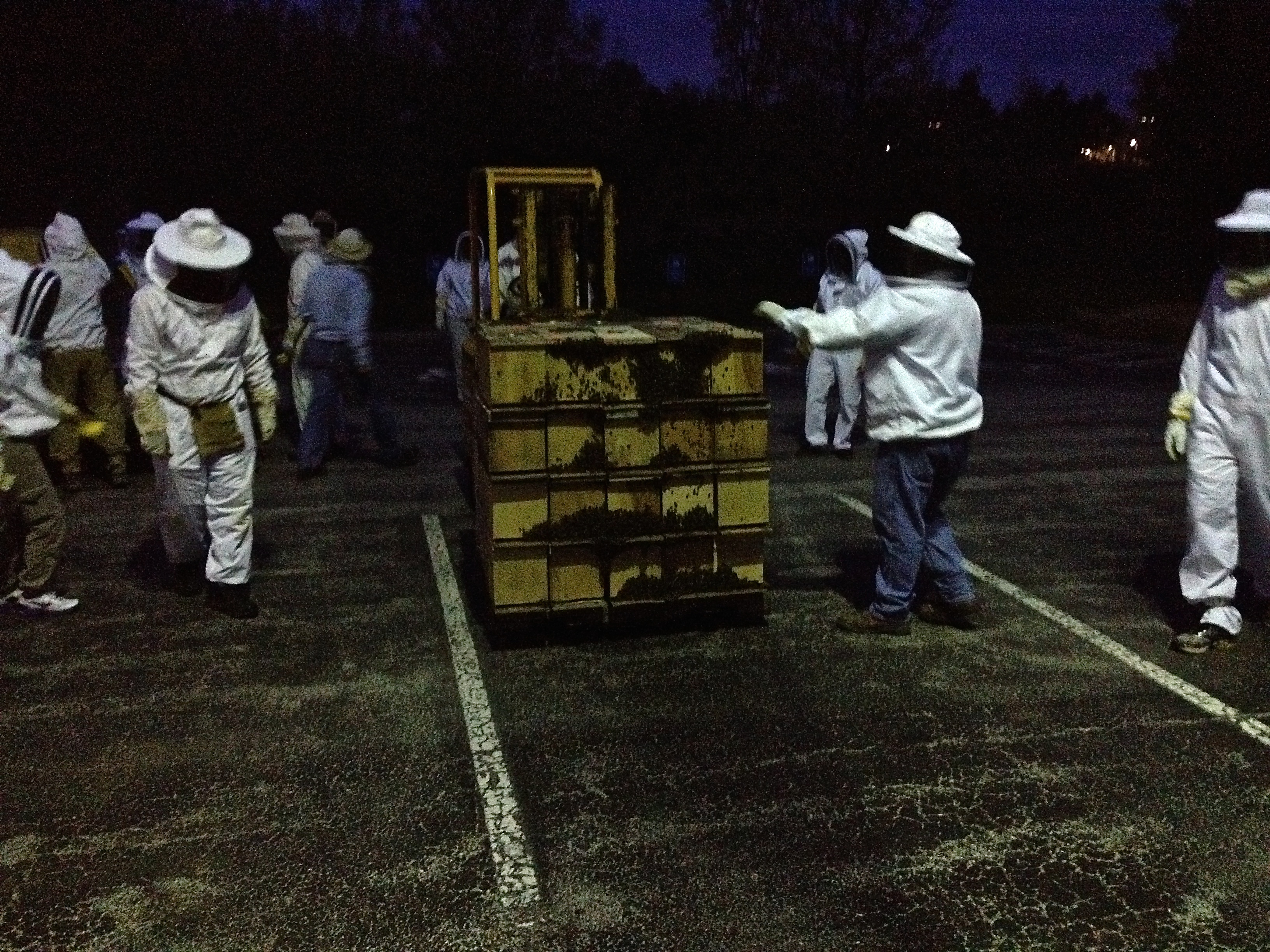
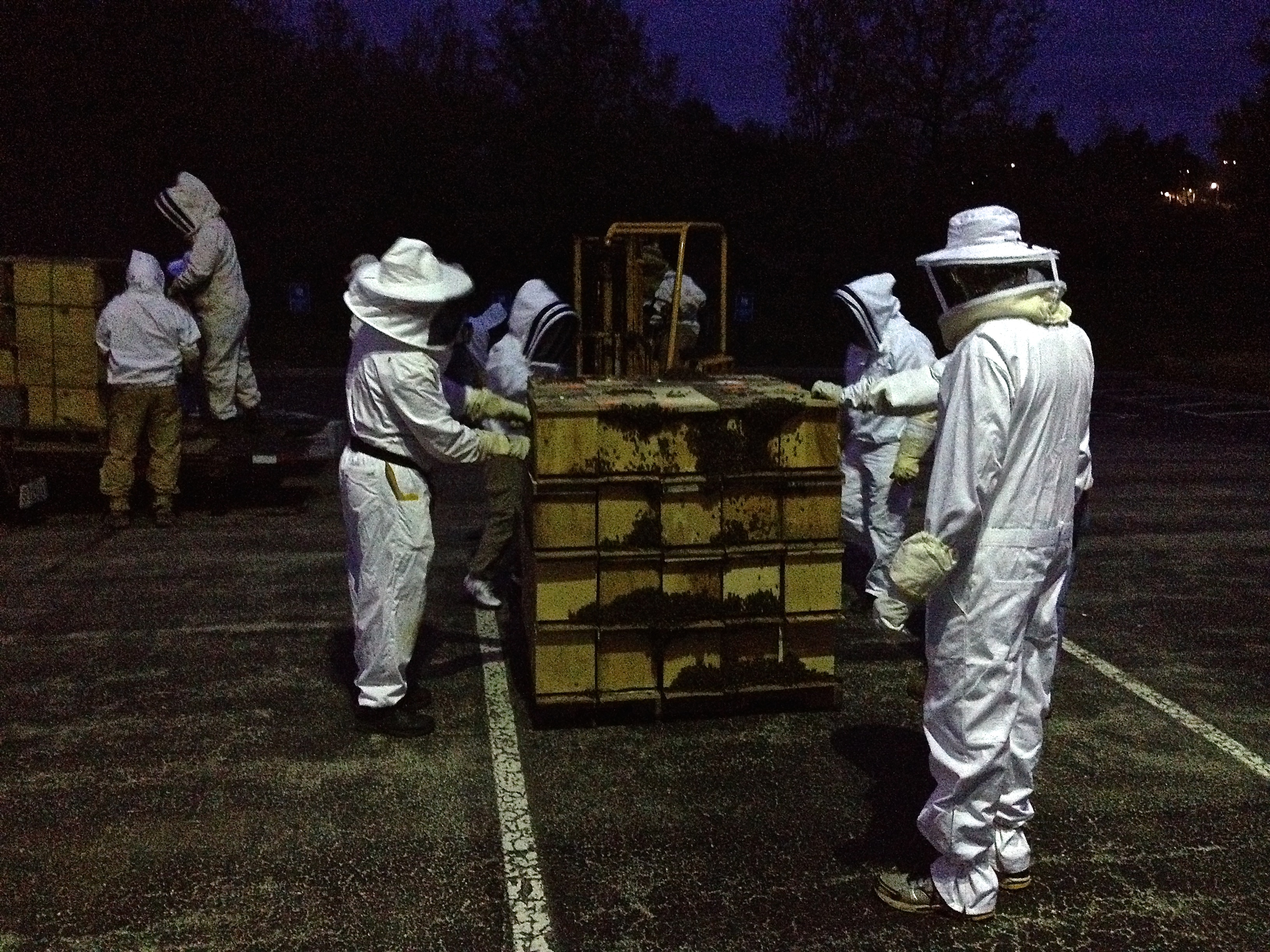
As the tarp was slowly pulled back to reveal the crates of bees, my co-workers all came forward with their smokers to calm the bees and try to encourage them to get back into their crates. IMG_5883They unloaded pallet after pallet of bees with a skid loader and after each box was relatively free of clinging bees, we used a hive tool to insert a piece of metal screening into the opening in order to keep the bees inside which was helpful as we unloaded the boxes from the pallets to the pavement. This, however, only meant that there were slightly fewer bees looking for a place to settle.  IMG_5886I was a bit hesitant to jump into the melee of all of this but I witnessed the calm of all the others who were covered with bees and figured I could do this too. The key is not to panic and to move in slow motion and never, never, never swat. It is kind of like snorkeling…easy breaths are best but a panicked gulp just ruins the wonder of the moment! I was very proud that my only real moment of panic occurred when I was carrying one of the boxes of bees and felt a sting on the palm of my hand. I guess I had picked up a box and a bee got between me and the bottom and it was unpleasant for both of us! I did ask a neighboring volunteer if he could take the box from my hand for a moment so I could get the stinger out of my leather glove! He obliged and I took the box back and continued working as it was expected. The glove did a good job of keeping the sting to a minimum and this was my only sting of the day.

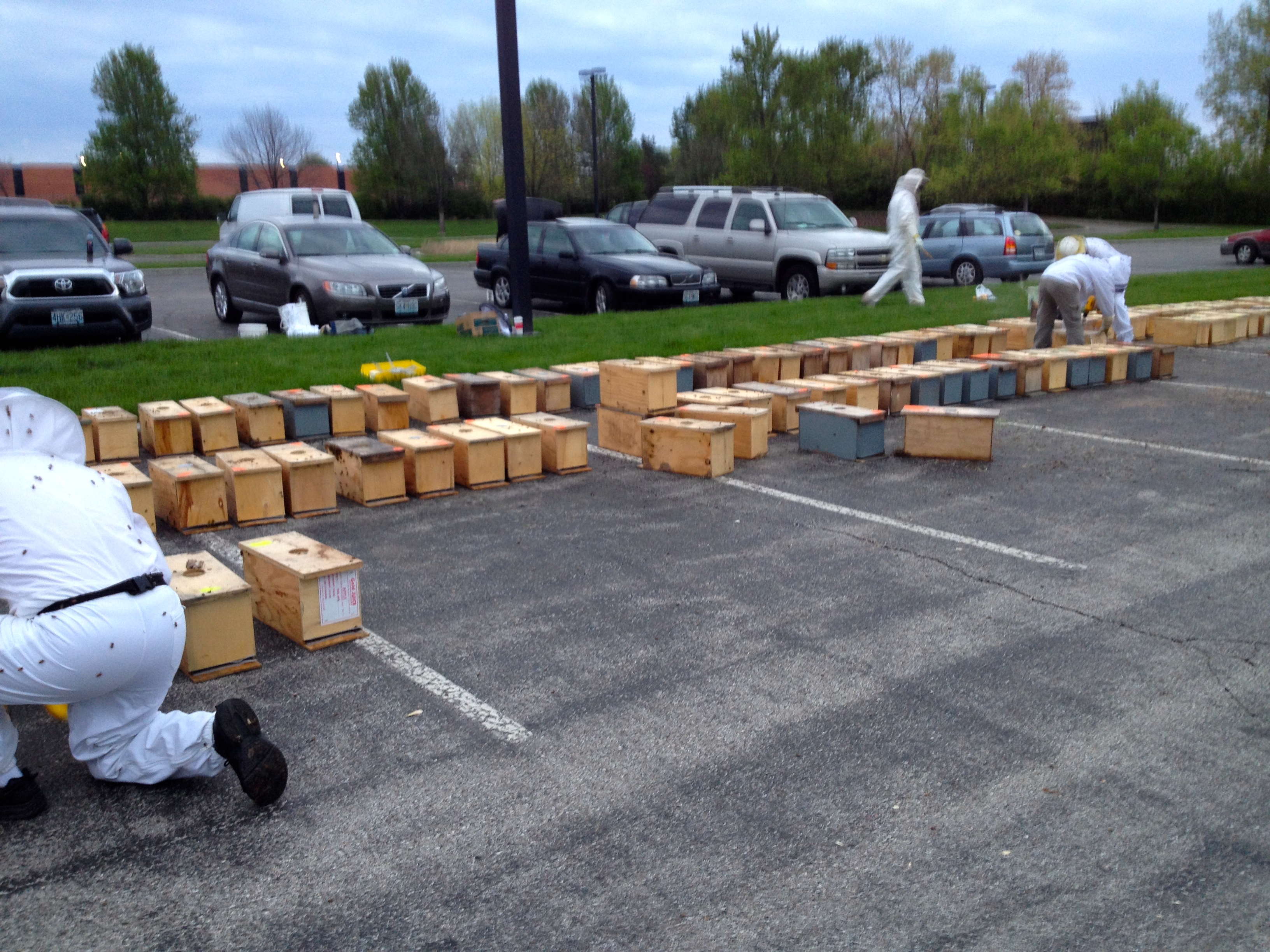
It was beautiful as the dawn arrived and we had the tractor trailer entirely unloaded and started to distribute the bee boxes to those who had purchased them and had started to arrive for their pick up. IMG_5889I had transformed quickly from a novice to an “old pro” as I started helping to carry the nucs to the waiting customers’ cars. I had one hilarious experience with another novice who was at least 5 times more nervous than I but who needed help to his car with his newly purchased bees. His brand new bee suit was too big and the veil dropped down over his eyes as we carried his boxes to his waiting mini-van. Here he was, blindly walking towards his car with about 4,000 bees in his shaking hands as he looked to me to tell him how to proceed! Of course, after only two hours of bee-ing entirely covered with bees (they were cold and our bodies were emitting warmth, therefore we were attracting them) it was easy to help guide this fellow on his way. Of course, I can only imagine how his drive home went with a van full of bees!

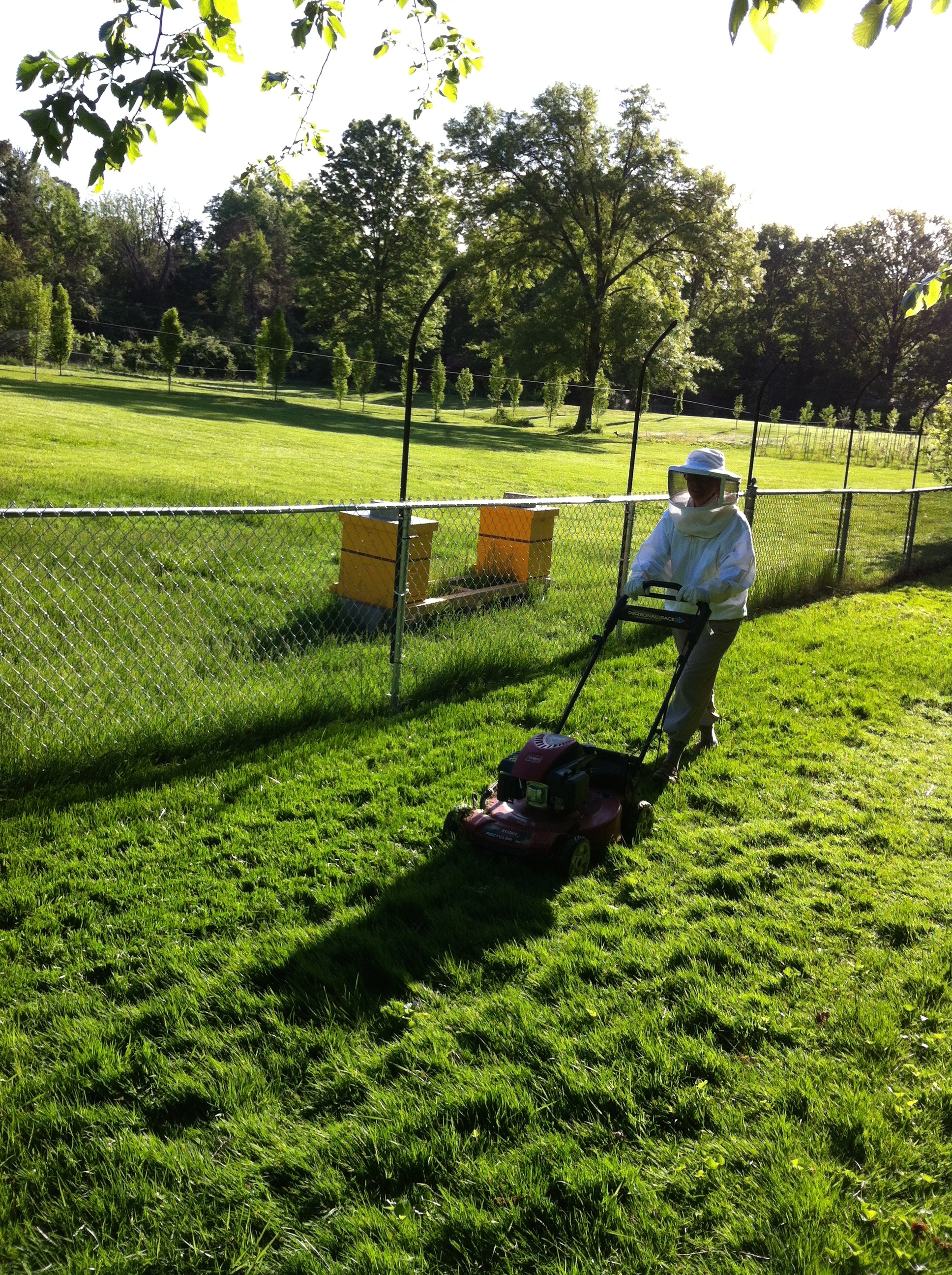
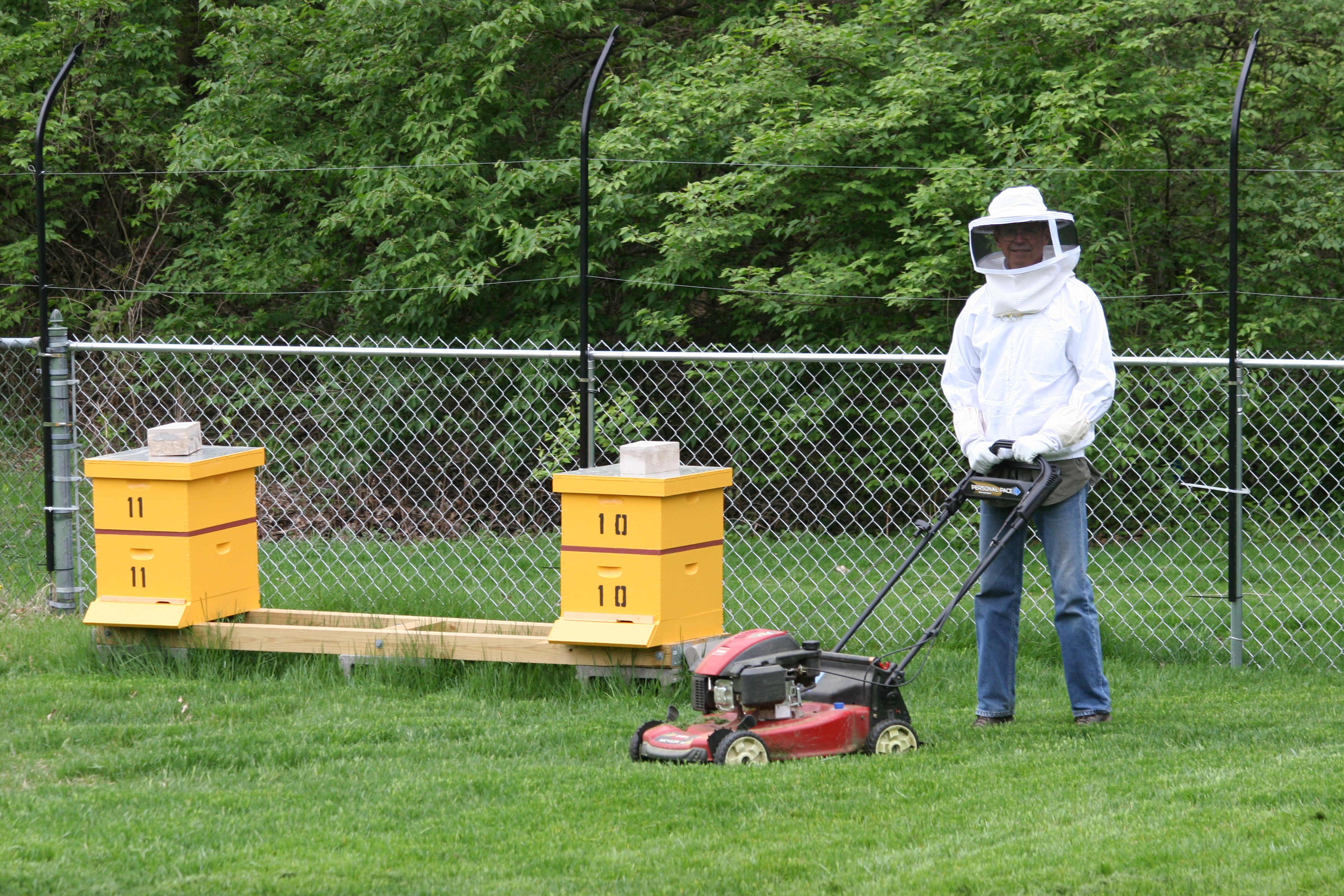
So this was my morning experience with the bees. The hardest part was figuring out how to get into my car to go home since I was covered with hugging bees but didn’t want to ride home with them. I asked another bee volunteer to brush me off (which is all it takes to get a bee to un-glue from your clothes) and I got into my car feeling relatively accomplished until the car warmed up and I found that there were indeed spare bees with me flying around. Thankfully, I used my new experience to be calm and the bees flew off out an opened window. After arriving home, I realized that the adrenaline from the morning’s experience had taken its toll and even tho I had not overly exerted myself, I was dramatically tired by it all. It was a nice tired tho and I hope to put the entire experience to good use in the future. By the way, the sting on the palm of my hand is insignificant, but we take precautions when mowing the grass right next to the bees. Here is Dave suited up while mowing recently. So far, so good. IMG_1010

Unknown's avatar

Tools of the Trade and an Attempt to Re-Queen a Hive

Farley has been usurped, and I’m back at the keyboard for a bit since the rain has forced us indoors but not before lots and lots of work was accomplished this weekend. Yesterday was an extremely interesting day for me as an apprentice beekeeper but first I have some other details to share on efforts we made around the farm using some of our favorite tools, some of which we have named.

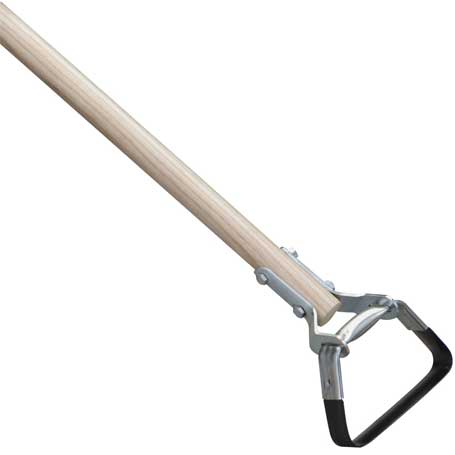
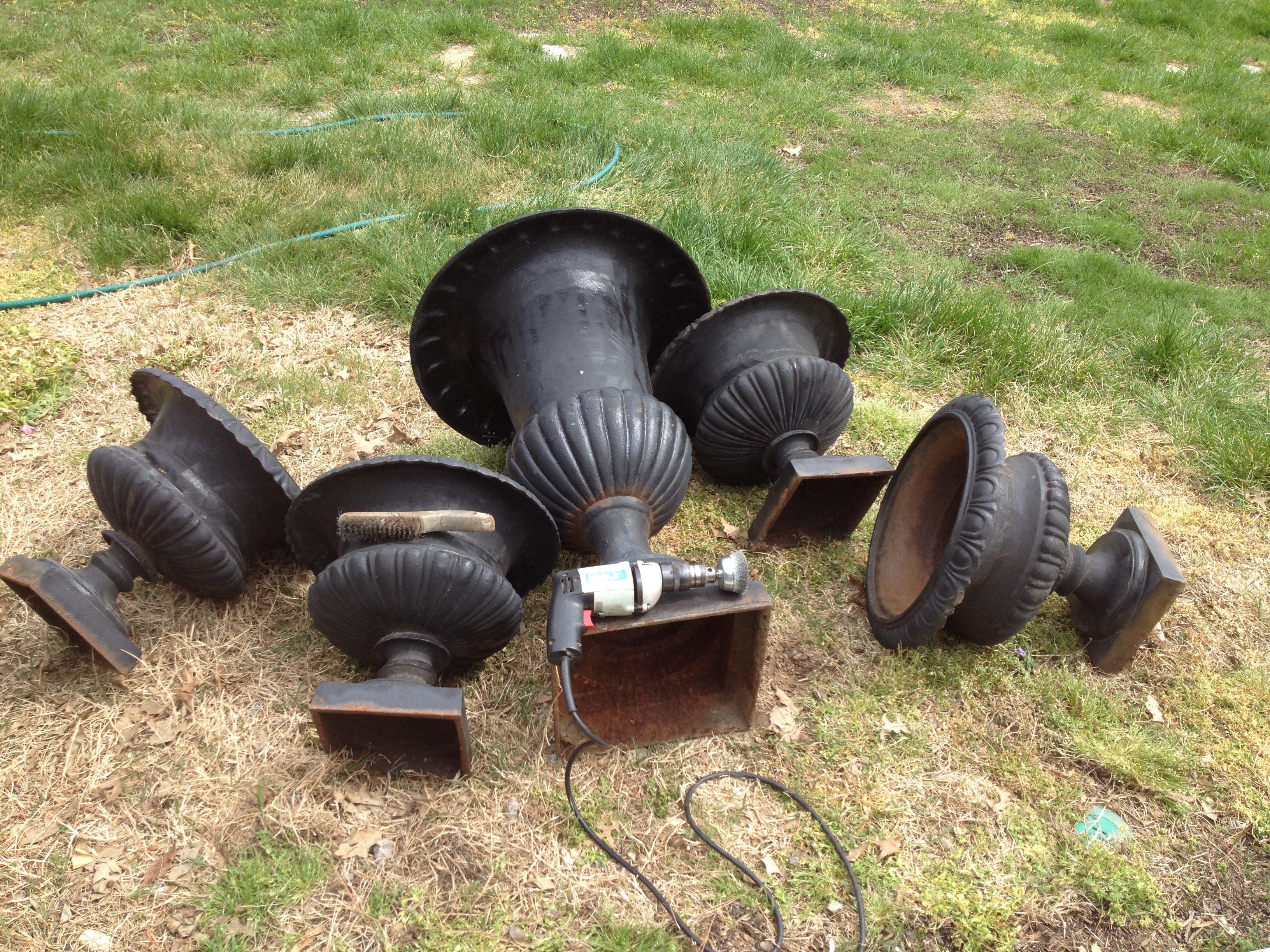
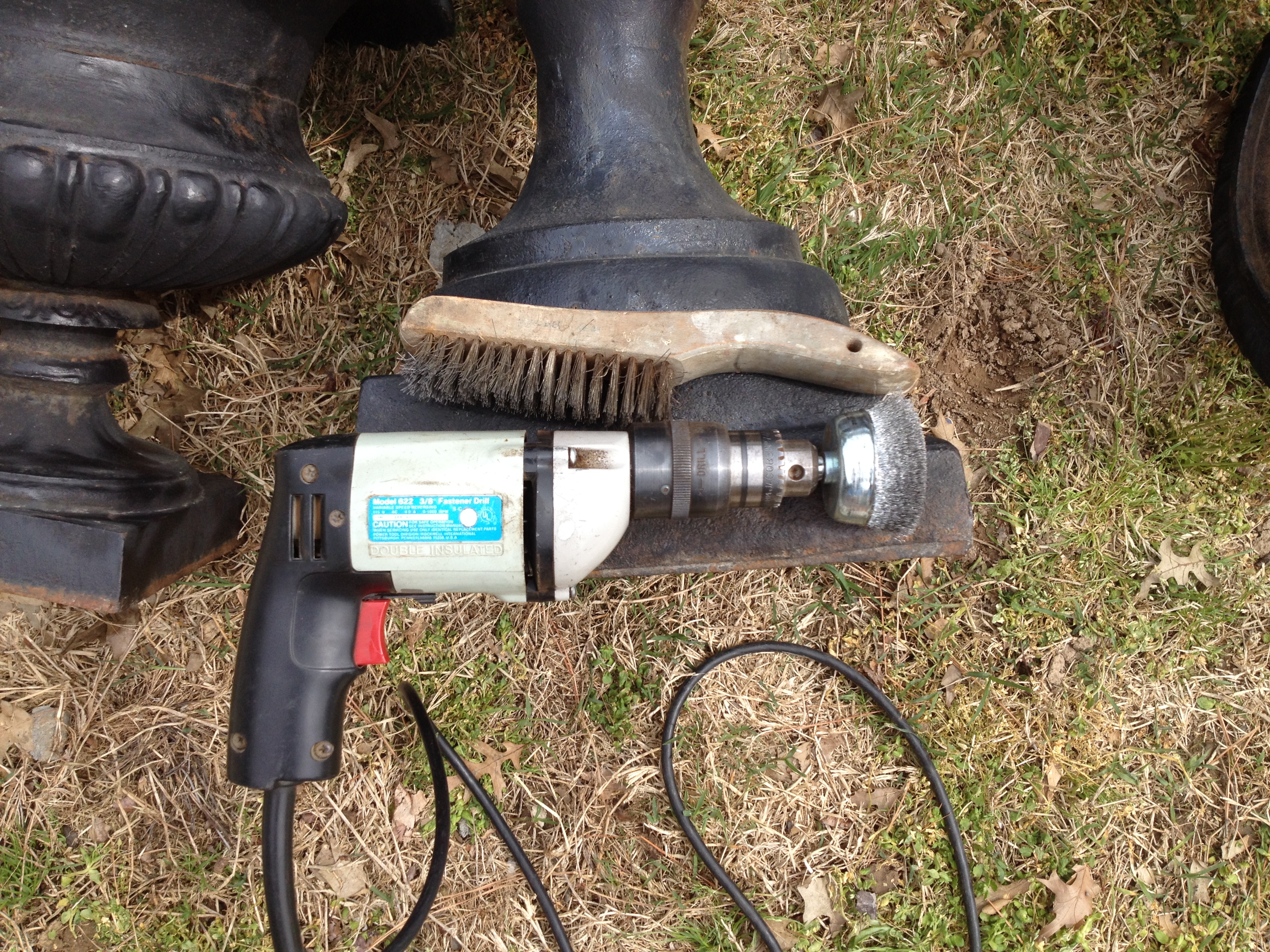
The Hori-hori knife is about as useful as any hand tool we have used for weeding. The point is sharper than most trowels and the serrated edge is extremely helpful. I think that it is more efficient to use for weeding because it is not as wide as a trowel and also not scoop shaped so it lets you get ‘down to business’ faster and easier.  Ours looks like this but many versions are available in gardening stores and catalogs now. We call it the Hari-kari, which is both the misspelling and wrong pronunciation for Hara-Kiri, the ritual Japanese form of suicide. Just try using this tool without thinking of that!  photo 7One of our next favorite tools is new to us but we are already in love with it and wish we had purchased one years ago. It is called an Action Hoe which you quickly find on line by that name but it is based on the old fashioned Dutch hoe mechanism. This makes hoeing very efficient and twice as ergonomic as a regular hoe since both sides of the blade are sharp and mounted so it swivels on both the pull and push action of your stroke which is very effective. We have not sharpened ours yet but if keeping this sharp is the only difficulty, it will still be well worth owning and using this tool. So far, we have not called it anything funny, just the action hoe. We like using it so much, we may have to get another one so that we don’t get into fights over who gets to hoe with it! If that isn’t a recommendation, I don’t know what is! It looks  like this. vegetable-garden-2010-action-hoeWe have lots of other effective tools, but this weekend in particular I was focused on grinding away at our wrought iron flower pots and re-painting them so they would look sharp for the wedding. Here are a mere half of the urns I was looking to work on.IMG_5828 What a daunting task! I had an old metal brush with a wooden handle that was probably my dad’s but I nearly fainted at the thought of how long it would take to clean the rust from the urns using it alone. My arms would have been rubber by the end if Dave had not suggested that I try to use his power drill with a special wire brush attached. Here is what I used instead. Brush vs. Power tool – no contest!IMG_5829This made easier work of the task of getting these ready for fresh paint but it was still a chore since the power tool needed to be grabbed by both hands to control it and keep it on the metal surface and not my skin! Despite the fact that this has little to do with the farm or our plants, it brought to mind a concept that I was first introduced to after college when I was working as a paralegal in New York City. This was not a super challenging job but most of the law firms hired new graduates from prestigious colleges to do whatever menial tasks the lawyers didn’t want to do. Of course there was a pecking order of sorts amongst the paralegals and as the new person on the job, I started out being assigned some of the most basic and boring assignments. I endeavored to complete all the tasks that came my way with swift and thorough precision so it didn’t take long for my boss, Bernadette, (a brassy New Yorker and the head paralegal) to take me aside and explain the error of my ways. She basically told me that the wise way to approach menial tasks was to do them poorly. In other words, if I didn’t want to be assigned to that task again, I shouldn’t excel at doing it. Hmmm. This was the first time I had been introduced to this concept. I don’t think I ever quite subscribed to it, but must admit it was hilarious to hear my co-workers from Harvard, Yale and Princeton saying things like “no, I can’t file those ’cause I can’t alphabetize” or spell or type or whatever it was that they just didn’t want to do. Anyway, I was reminded of that concept yesterday when I was cleaning the rusty urns and realized I still don’t like the theory. I get a good amount a satisfaction from getting things done under my own steam. After a morning of wire whisking with the drill, I spent an afternoon painting and all the urns are now beautifully ready for their new plants. Pics to come.

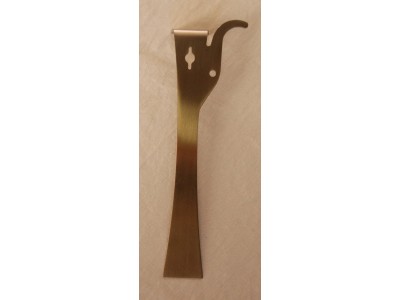
Okay, ready for the bee keeping update? Jurgen came by yesterday to check on the queens that we had liberated about 10 days before so I jumped up from my paint brush and donned my bee veil and joined the examination. We were looking to find either the queen herself or evidence of her presence (egg laying) in both hives. (Only one queen per hive.) We opened hive #10 first and Jurgen used what must be one of his favorite tools called a hive tool. It looks like this and has functions on both ends plus more. Kent-Williams-Hive-ToolIt is handy because bees ‘make’ – they actually collect resins and saps and add another ingredient from their bodies – a substance called propolis which is a sticky, gum-like material that bees use to seal cracks in the hive and even to help “winterize” the hive. Beekeepers have to pry the hive boxes open at times and then frames apart from each other since the bees are using this material in lots of places in the hive. Here is Jurgen using his hive tool to separate the frames.IMG_5852And also to clean some of the unneeded comb structure from the bottom/sides of the frames.IMG_5862

Here are the the frames that Jurgen pulled from the hive to examine. IMG_5844

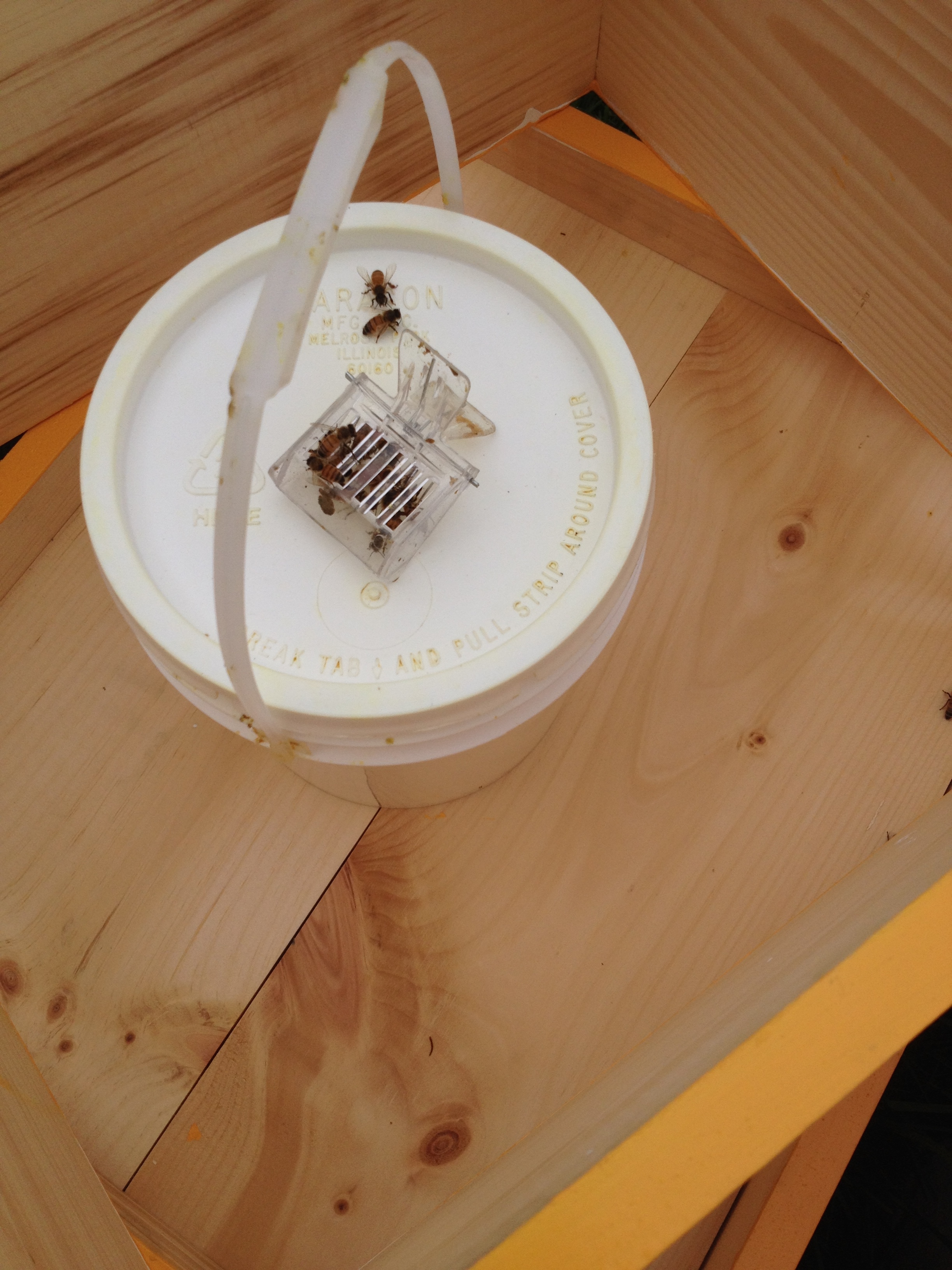
Yeah, lots of active bees, but he was really disappointed that he did not find evidence of newly laid eggs in the first hive he opened. We examined each active frame carefully, looking for the queen. She is quite distinctive from the other bees since her abdomen is longer and not hairy nor striped like the other bees. Here is what we were looking for. See her in the middle?queen-beeSo, it seemed the queen we had introduced into the first hive was no longer there. Bummer. After thoroughly searching but not finding her, Jurgen temporarily closed the that hive and opened hive #11 and found good news. There were newly laid eggs present which meant that the queen had been hard at work, serving her roll in the hive and the chief egg layer. Can you see the bright yellow pollen still on the legs of one of the bees? He has just arrived from collecting and hasn’t ‘delivered’ it yet. IMG_5849A visual search for her also was positive which was really good news since our queens are un-marked and the only way to spot her is with keen eyes. I think Jurgen would agree that this time, I actually spotted her first which was a very proud moment.  So Jurgen pulled out a queen isolating or secluding mechanism from his jacket and promptly scooped her inside this small cage like structure with a couple of other bees as well so as to keep her captive for the next step.  Here is what that looked like. IMG_5859It was then that Jurgen explained his plan to me. With the queen temporarily excluded from the second hive, he was able to lift out some of the frames from the queen-less (and therefore egg-less) first hive and replace them with frames from the second hive that had eggs already present. We just swapped some frames and gave the first hive a fighting chance at having their own new queen.IMG_5836Apparently, if a hive is queenless but has eggs between 1-3 days old available to them, they will adopt the eggs and make their own queen from one of them. If the queen starts to get too old to be an effective egg layer, the hive will also decide to get a new queen this way. I had to go to my text book and read all about this but apparently the bees start to treat one of the eggs with special care (only if it is between 1-3 days old, not more) and create a queen cup or specialized cell for housing the growing queen and eventually feed the larvae in this cell the royal jelly which is the special queen food. All of this is very complicated, but in the end, after 16 days, we may have a new queen which is how long it takes for a new queen to emerge. We will check next week for the presence of the queen cup and I will up date the progress. This was a very exciting episode of bee keeping due to the need to re-queen one of our hives (it is also one of the reasons it is good to have two hives) which was made all the better since Kate taught me how to take pictures with my iPhone while wearing gloves. In camera mode, you can use the volume control on the side as the picture taking button. Go out and learn something everyday!  IMG_5853


Unknown's avatar

Farley as Substitute Blog Writer

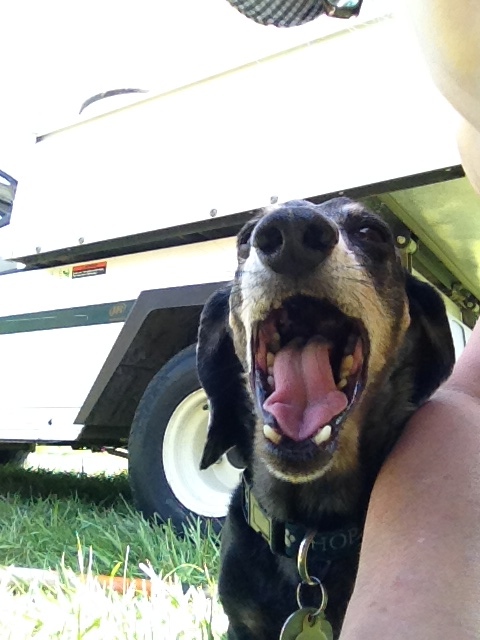
Greetings and a big woof, woof, and arf, arf to you readers of the Seven Oaks Farm blog! My humans, Nancy and Dave, are so busy these days that they don’t have much time to write so I thought I’d give it a whirl. I’m their precious dachshund, Farley, whom most of you already know as the ‘Twelve Pounds of Terror’ who rules the roost at Seven Oaks Farm. I’ve been a part of every, single stage of the work that has happened here at the farm for the last three and one half years, so it is about time that you get a taste of things from my perspective.

Plain and simple, they say I’m a dog with nine lives…or maybe more since lately I’ve had my share of old age problems. Sure my back hurts, my teeth are broken (indeed, some have most recently been extracted) and I’m as grey as Richard Gere, but I’m still the enforcer here! I defend this place like it is the Taj Mahal and my people really appreciate it when I make it clear to any stranger who comes to the door that I mean Business with a capital ‘B’ or even a ‘G’ for Grrrr!

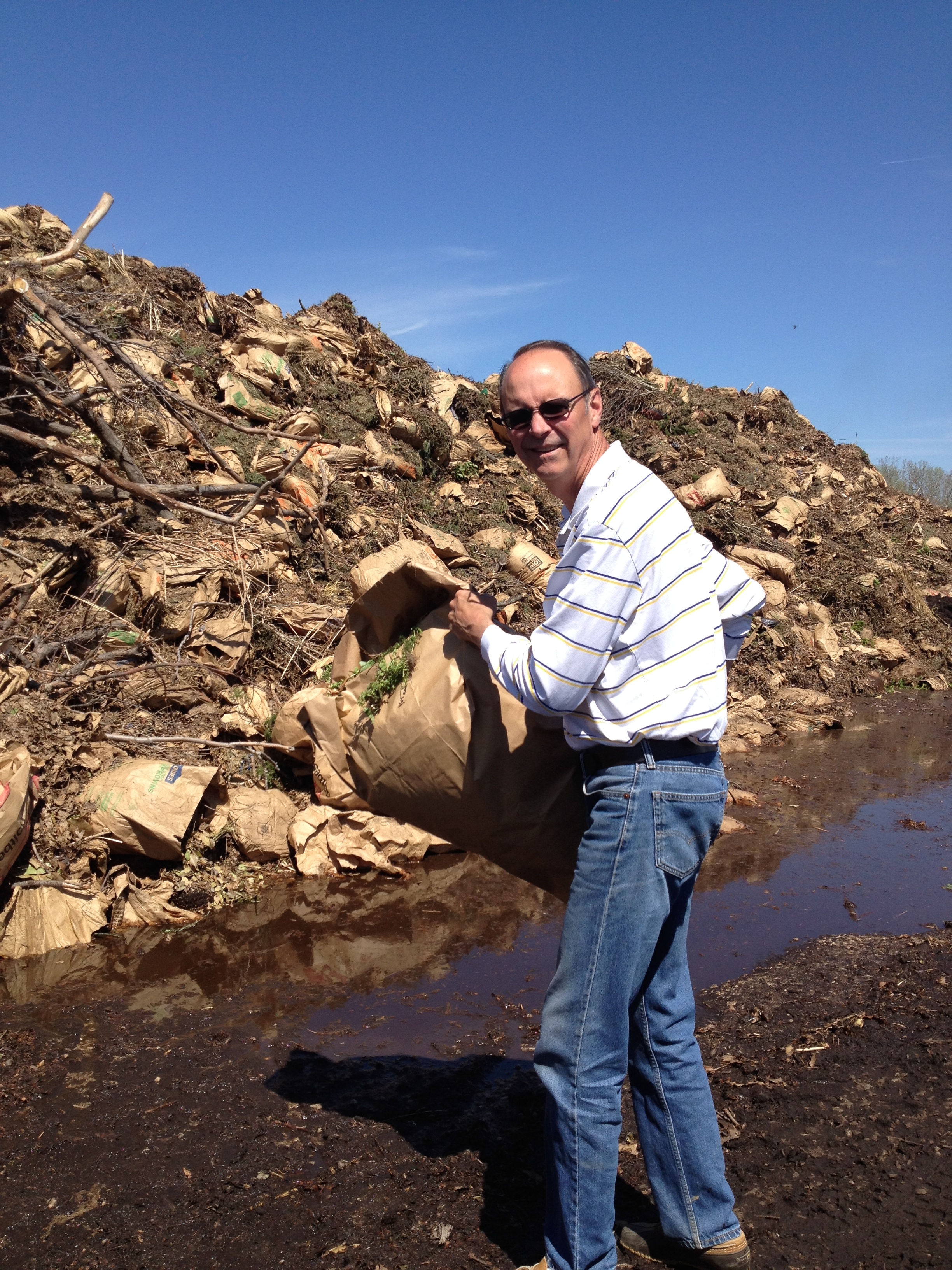
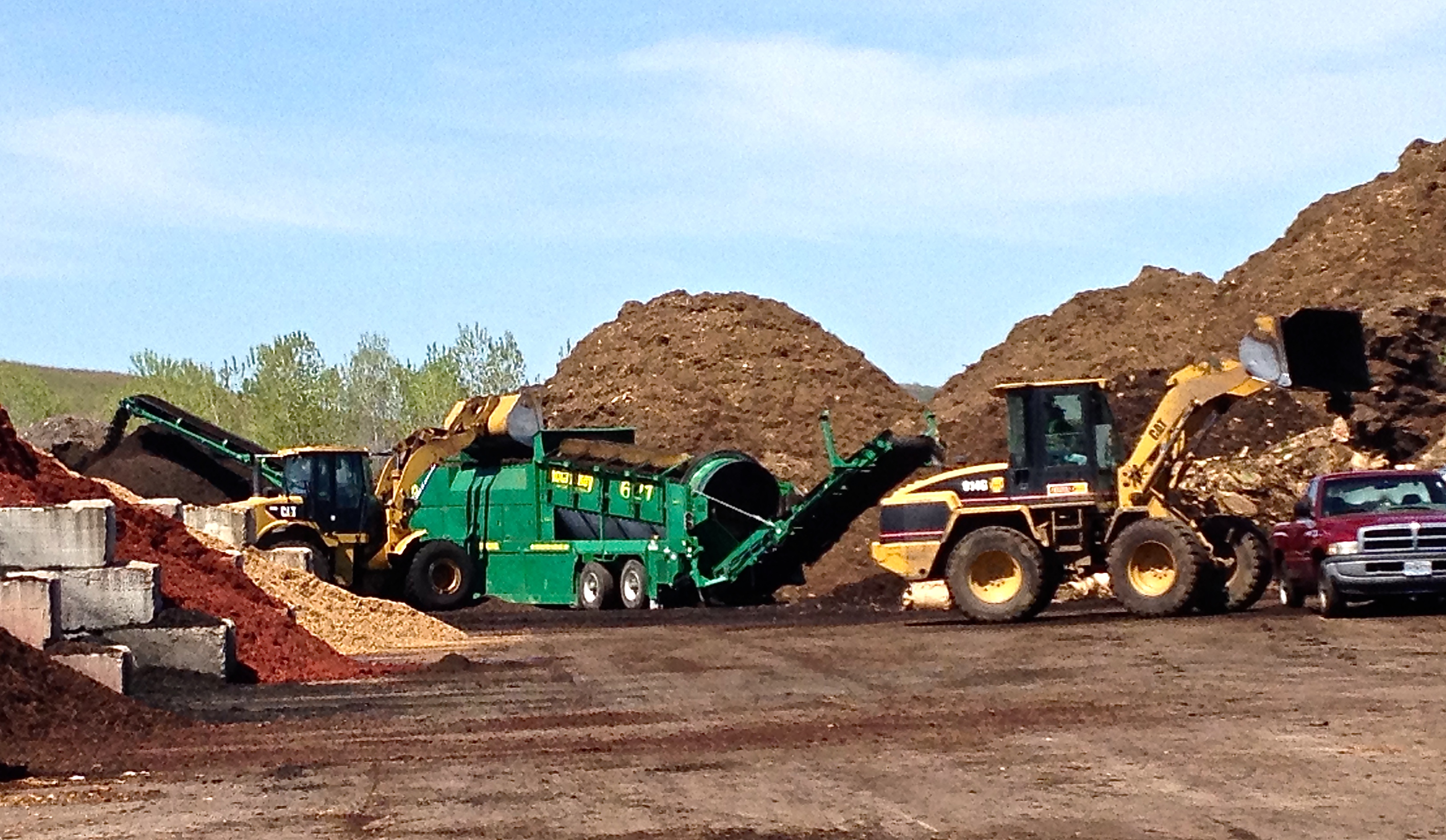
Nancy and Dave left me to guard things today while they went to their favorite composting site. Sure, they have a new and fancy twin composting unit behind the driveway, but when they want to recycle the big stuff, or the nastier stuff, like poison ivy, they haul it away in Dave’s pick up truck. Today they went to St. Louis Composting for a large drop off. They think it is a very fun field trip every now and then. Dave likes to show Nancy how strong he is when he hoists the bags into the mountainous pile of debris. Nancy says he has a cute butt…but is it cuter that mine????IMG_5781 The operation at the site they visit is wonderfully active with trucks dropping off waste material that can be composted into the most fabulous of recycled material. The operation is fabulous to observe as loaders and backhoes work and grind their way through all the dropped off deposits until they are ready to be picked up and hauled away as renewed material. IMG_5785 Wouldn’t you know, International Compost Awareness Week is May 5-11 and they are all about that. Details can be found at stlcompost.com and a ‘Lunch and Learn’ is offered at the 3 facilities that St. Louis Composting runs at Valley Park, Belleville and Fort Bellefontaine. Woohoo…Nancy and Dave are such nerds! They love this sh_t!

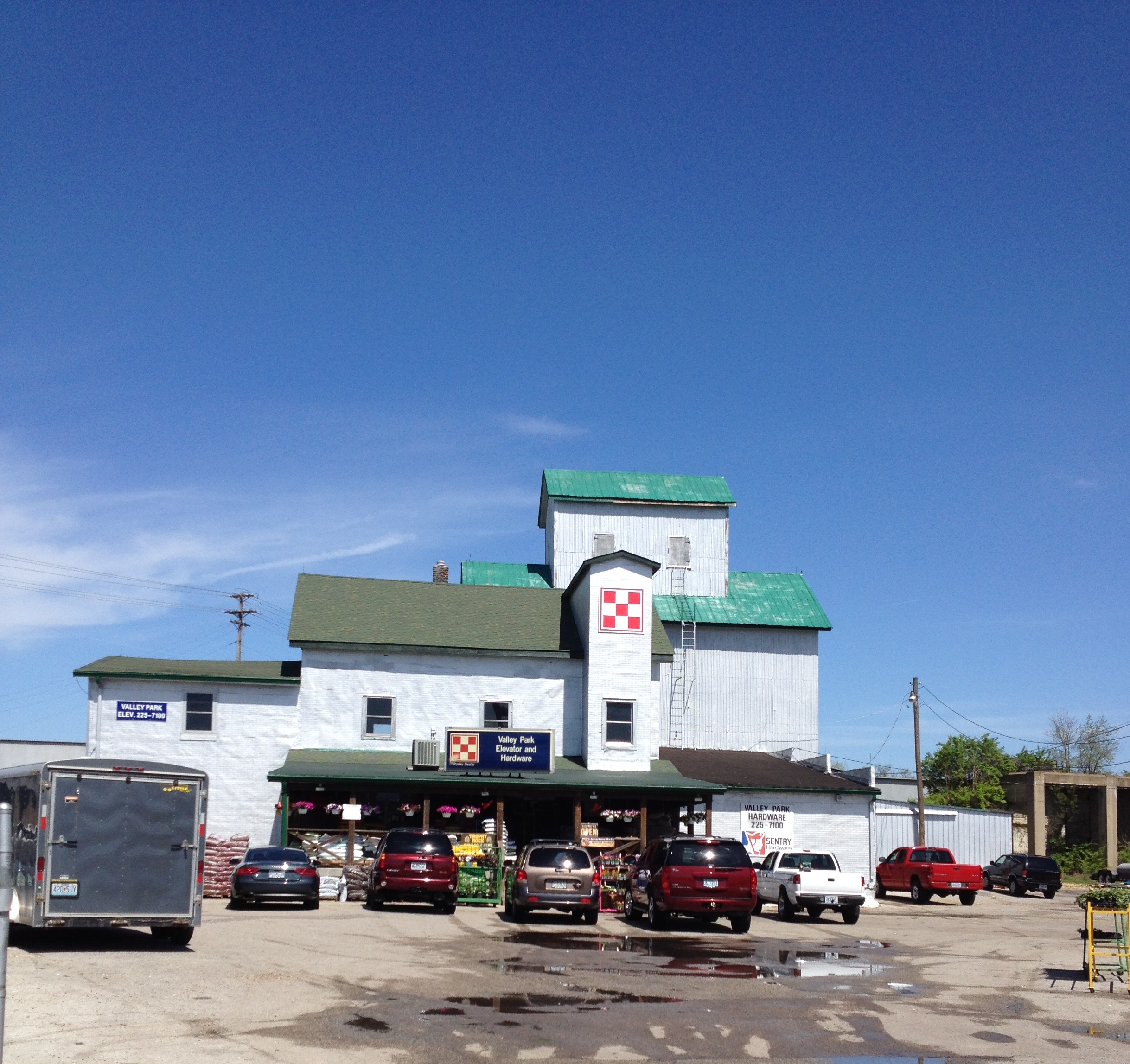
While they were out, they passed by the Valley Park Elevator facility which is where the potato starts came from. It is a quaint old building with lots of history.  IMG_5789

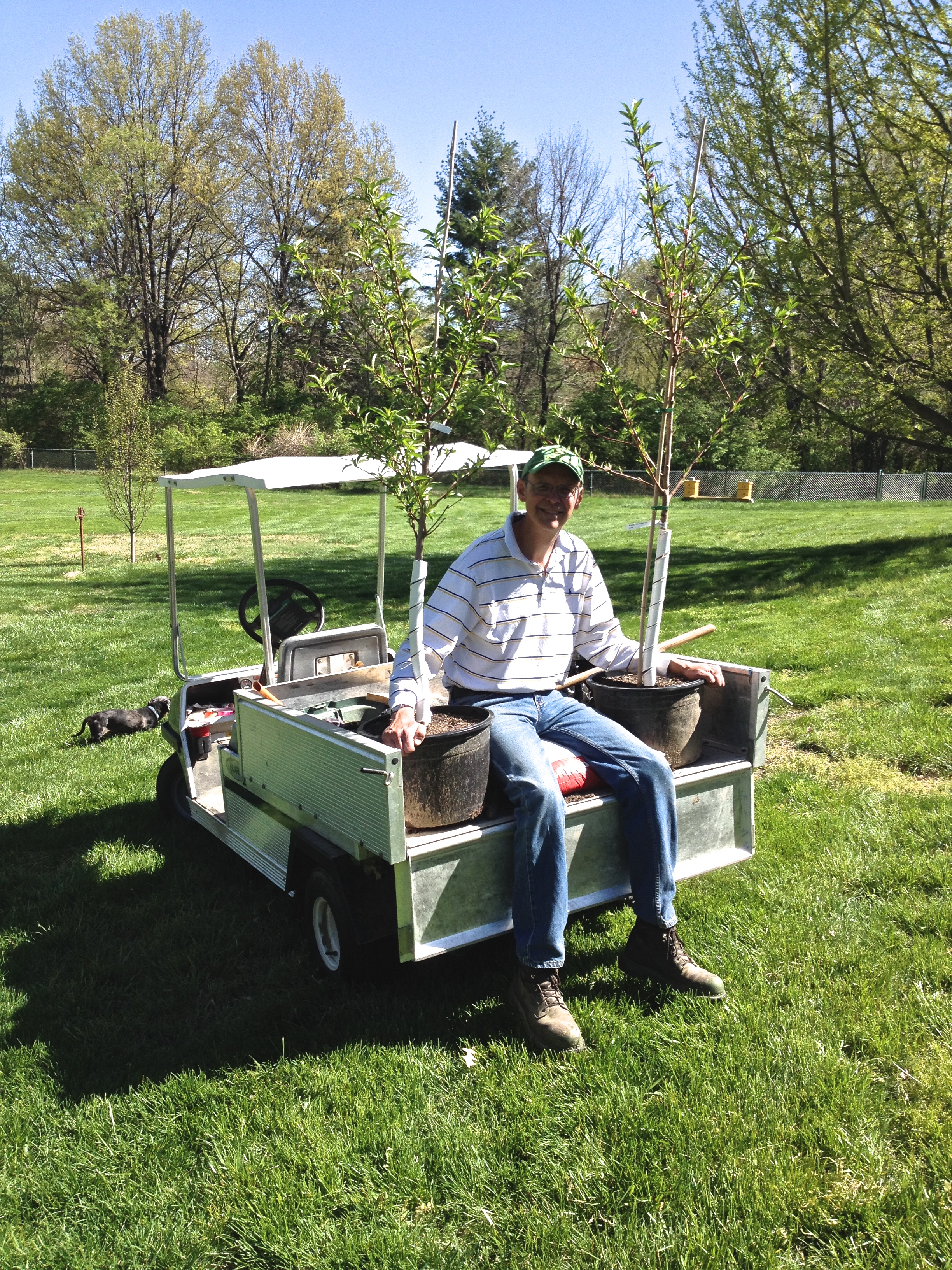
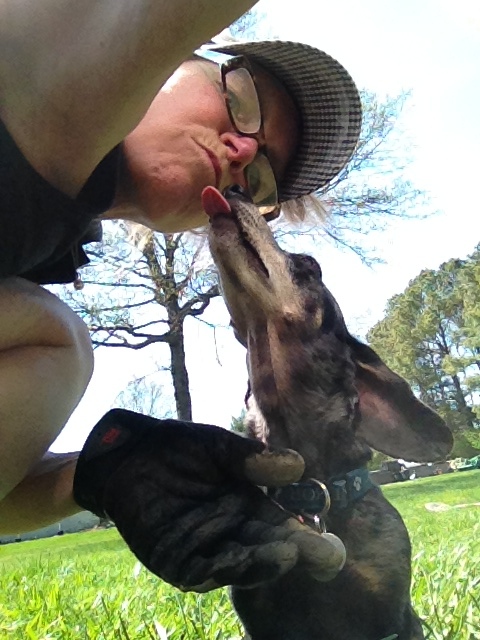
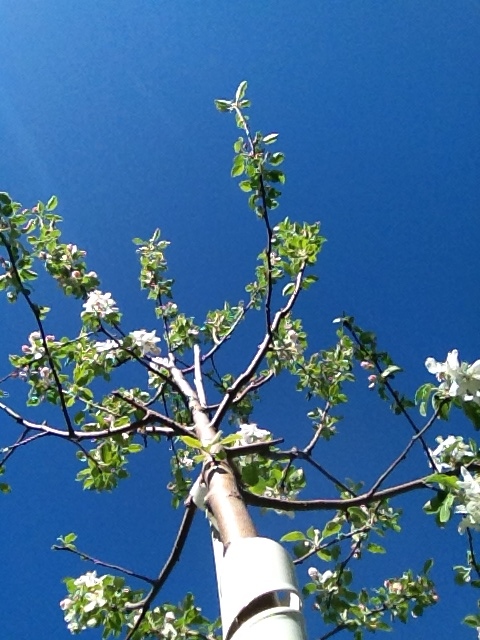
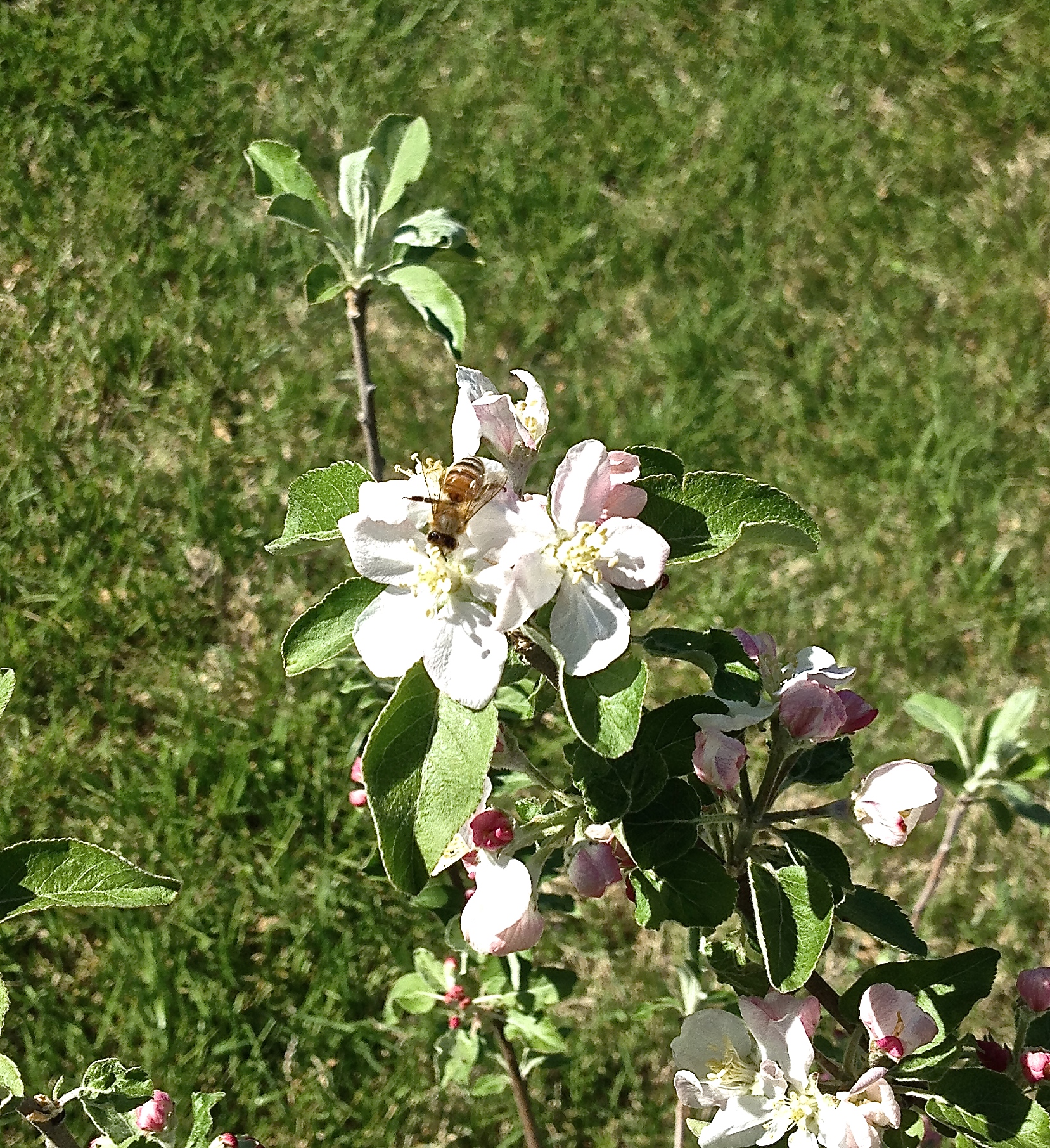
But back to me! I do have a gentile side to me which is evident when I photo bomb most of their photo shots. Here is a recent example…Nancy and Dave were planting more peach and nectarine trees in the orchard today and they were transporting them in the utility cart. I try to show them the way…do I have to do everything???IMG_5792I’m like their scout, showing them the right path to take. When I’m not photo bombing, I’m doing selfies with Nancy. IMG_5750Gosh it was gorgeous out today! Wherever I looked, I was surrounded with visions of everything greening up and blooming against a blue sky. Advice to humans, remember to stop, smell the air and look up! Here is one of the blooming apple trees from my view. IMG_5806I like to avoid the bees that are buzzing all around the blooms these days but Nancy is always snapping pics of the bees…as if they are her current favorite subject! Here is one of the avid pollinators working its way through the orchard. They say that the presence of bees contribute to the pollination of fruit trees by 90%! Imagine that! Youza, Arf, arf!IMG_5803

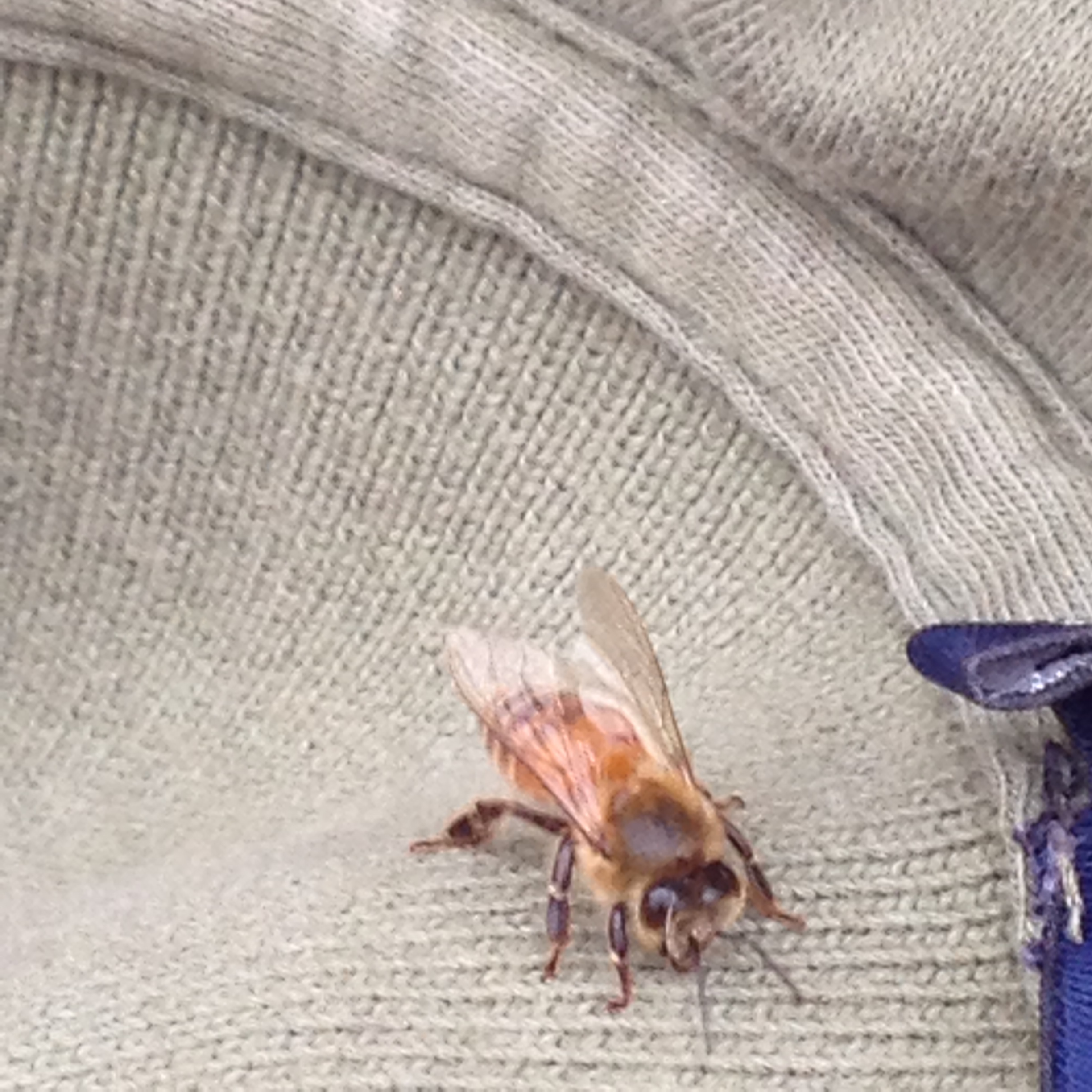
It doesn’t seem to faze Nancy that she recently did a bee visit to the new hives and found that the funny feeling inside her shirt was that of a bee meandering about. She doffed her shirt (Oh My!) and found this lovely specimen lingering around at the collar but this gentle bee did not sting her. Reminder to all, honey bees are harmless and do not want to sting you, so do not react in their presence if you can help it! IMG_5696

Thank goodness Nancy and Dave have gotten many of their vegetable seeds planted already. The weather cooperated last weekend while Kate was in town and they were able to plant seeds for Swiss Chard, Turnips, Cabbages, Pak Choi (aka Bak Choi), Radishes, Kale, Cauliflower, Brussel Sprouts, 2 types of Carrots, 3 types of Lettuce and 3 types of Spinach. Yahoo, the potatoes and peas have sprouted already! Can’t you see I’m so excited? Yawn! IMG_5757But the day never ends with these guys…they just keep working and working. Like today, late in the day, Nancy planted something like a million of her petunia plants. It seemed like a million to me anyway since it was hours and hours of work. Here is just a sampling.IMG_5791She thinks these will look great on the terrace for Kate and Jason’s wedding. Can you say SNOOZE? I plan to sneak away for that whole weekend and play with my Aunt Mary Ellen and Uncle Imre. They offered to entertain me for a couple of days while their sweet dog, Duncan, is away at doggie camp.  Wow, I’m so lucky! I will keep you all posted whenever Nancy and Dave let me post some more about the farm!

Unknown's avatar

A Hive of Activity Keeps Us Bizzy!

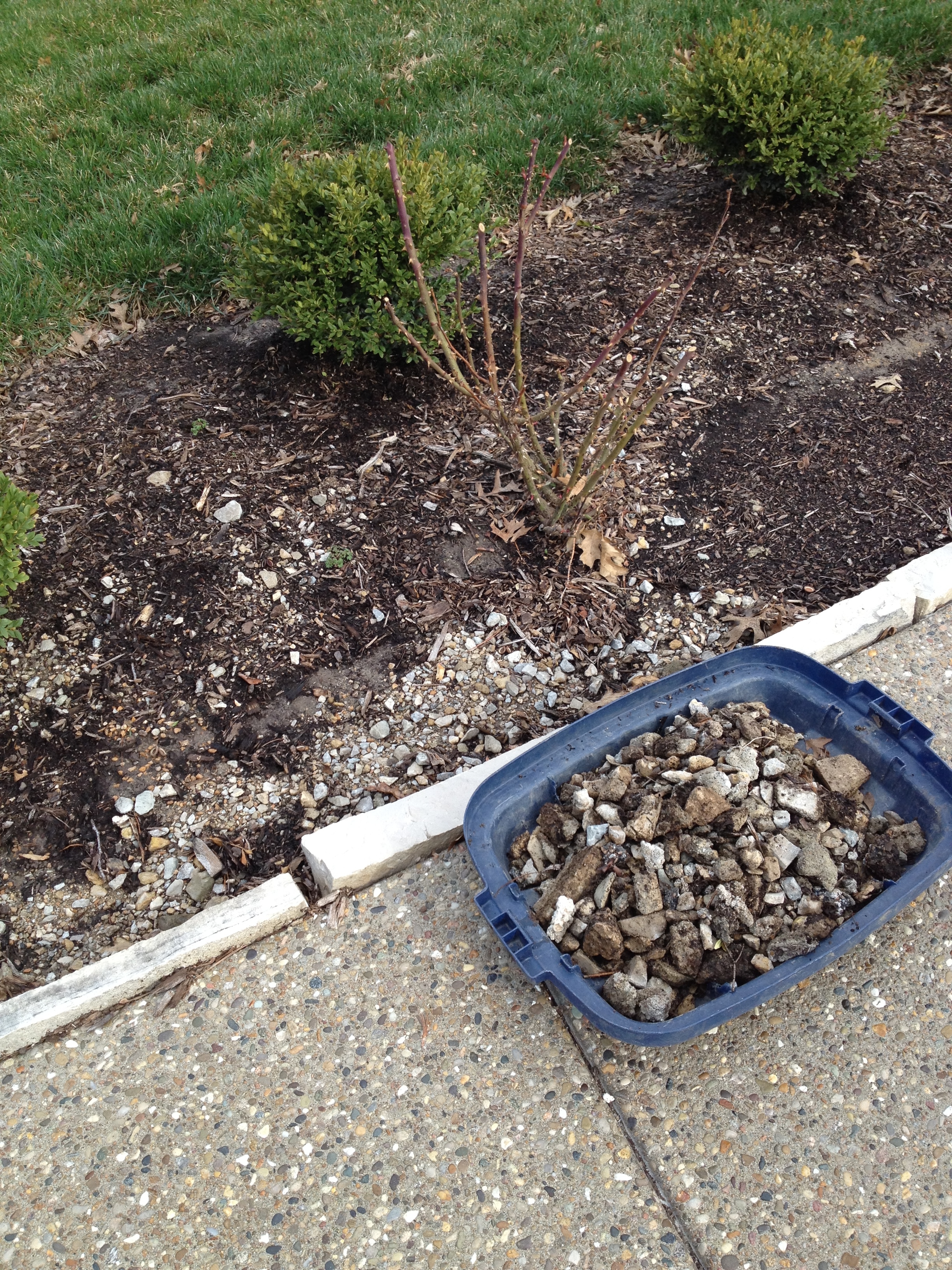
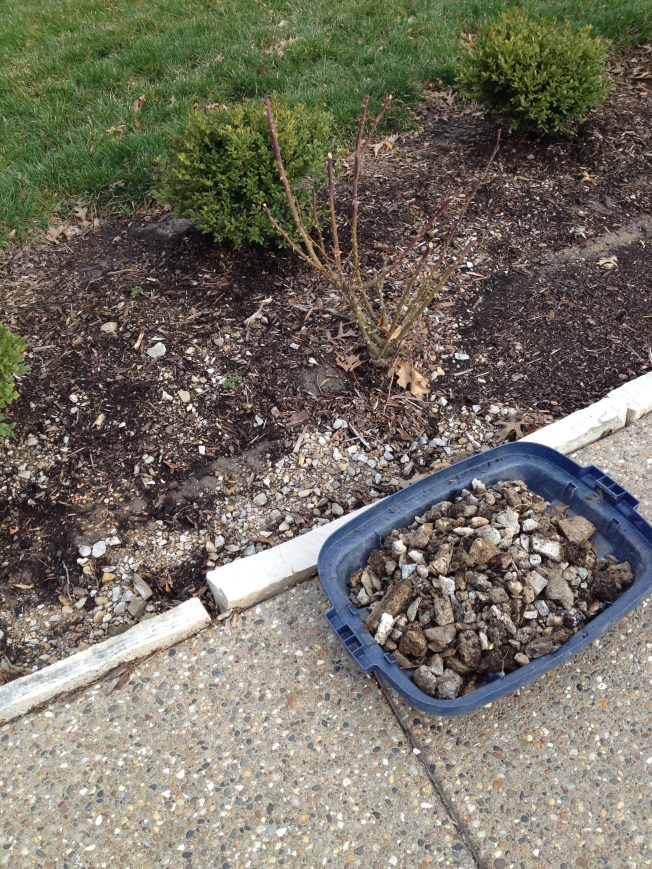
Our weather has finally turned spring-like but because the season was so delayed, we are feeling as if we are playing catch up before we even started the growing season.  The good news is that hardly any trees or plants jumped the gun and bloomed too early only to be caught with a frost. That happens often enough in our growing zone but so far, it looks like we may have seen our last frost. Since I last posted, we had torrential rain (along with nearby tornadoes) which brought more than 4 inches of precipitation (including marbles of hail) in a short span of time. We were glad our fields were plowed and tilled but the rain meant we had to wait to do any vegetable planting. So, we occupied ourselves with other chores and found plenty to do. We finished pruning all of the roses and hope a late spring will mean they will be blooming wildly for the June wedding! In addition to pruning and feeding the roses, I found time last week to pick the stones out of the beds which had been left behind by the driveway guys!IMG_5587
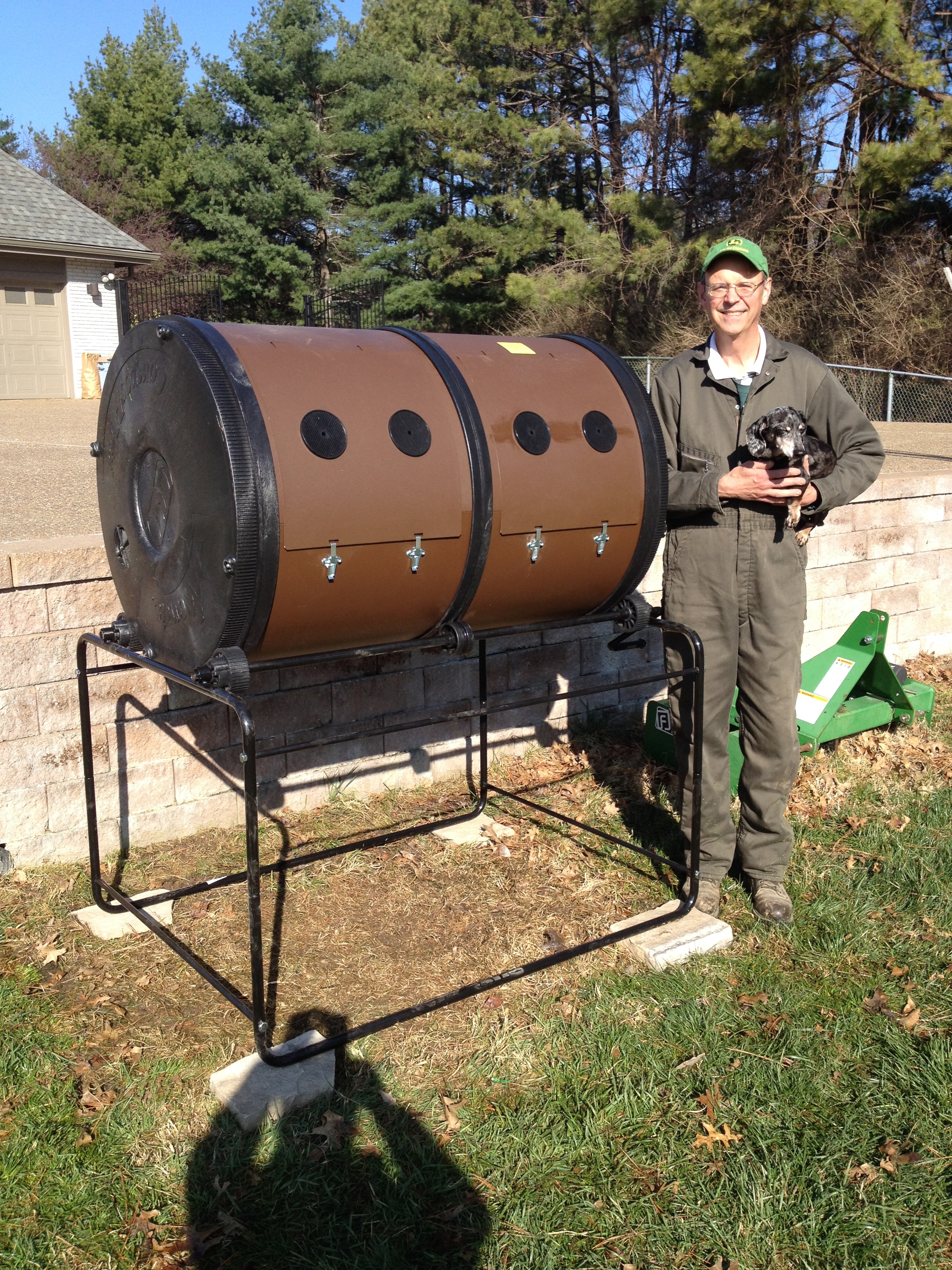
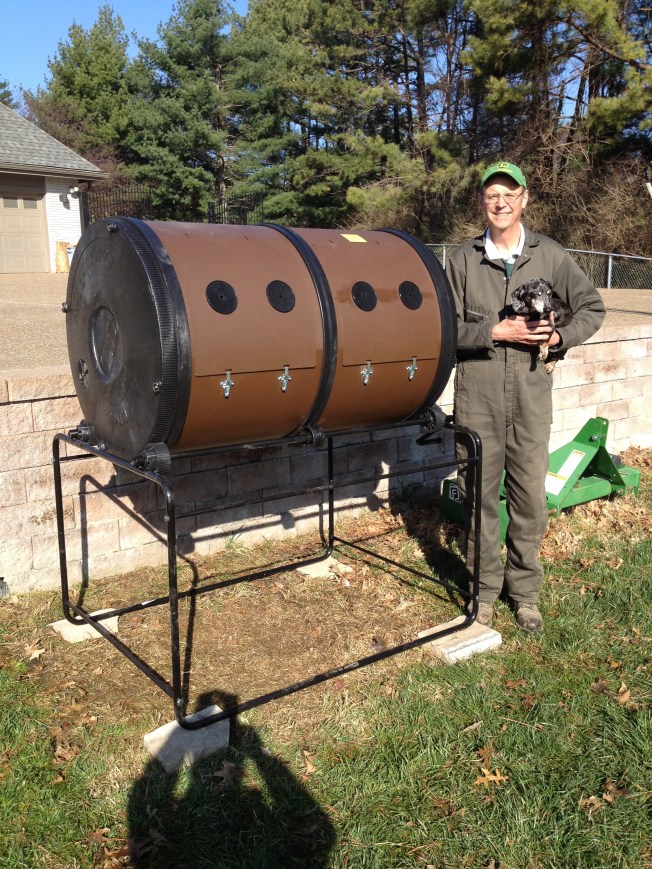
Dave built the twin compost set that we ordered last winter and we quickly set it in place at the end of the driveway. We see this as accommodating much of the “green” waste from picking and processing our fruits and veggies in the spring/summer and our “brown” waste in the summer/fall as the plants die back, dry up and get shredded before being added to the mix. Of course we will contribute our daily coffee grounds and a few other things not from our fields but we hope to produce a wonderful compost to use in the future.  IMG_5581
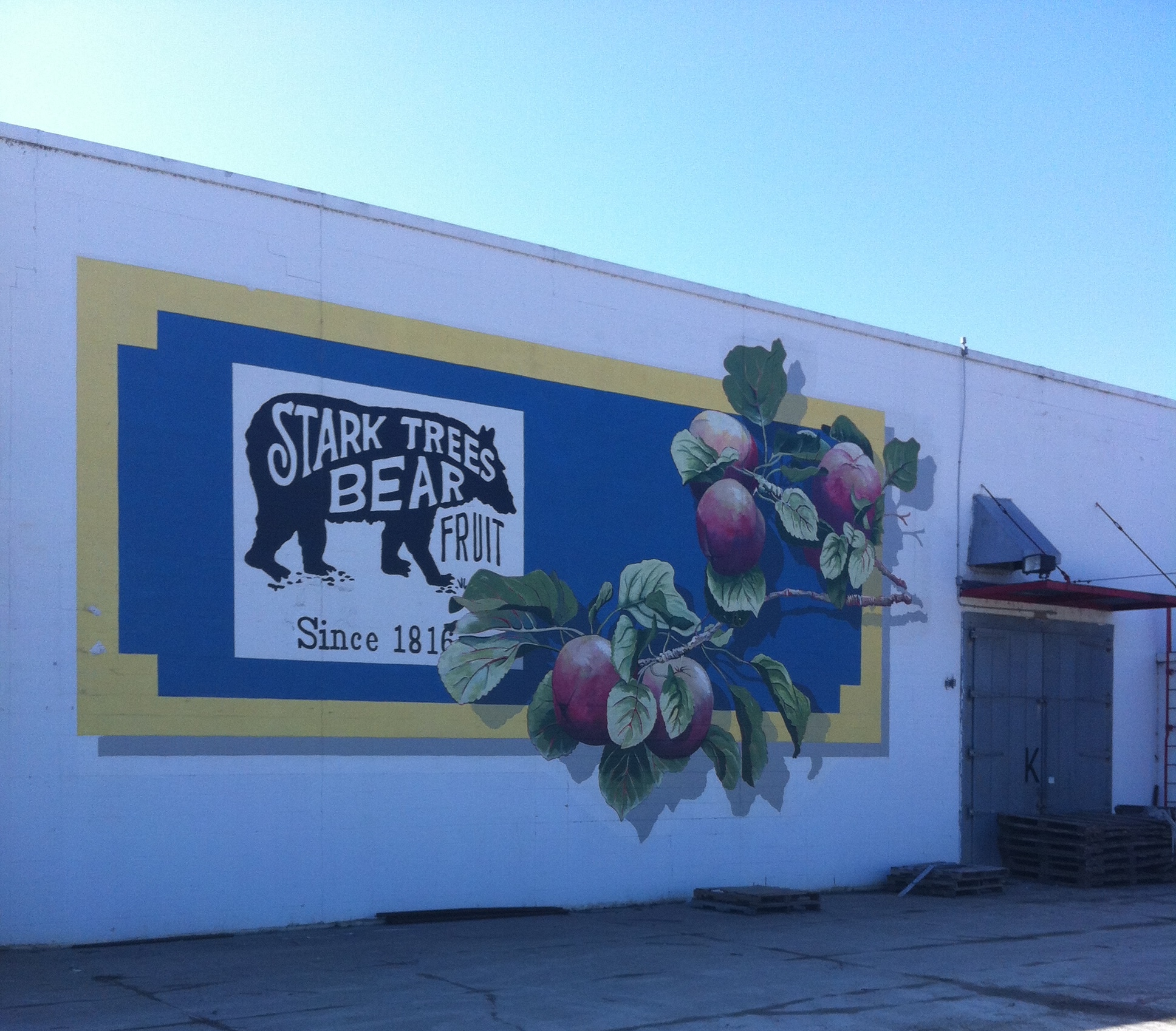
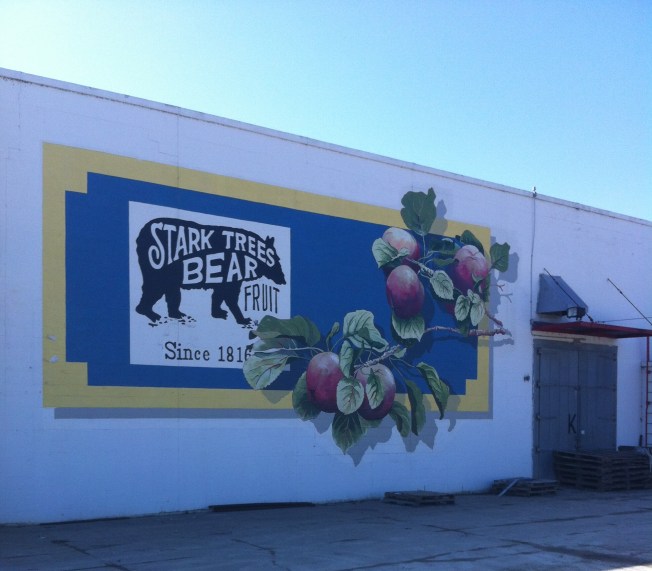
On April 1st, Dave also made the trip to Stark Brothers Nursery in Louisiana, Missouri, something that we have been doing every spring now for the last four years. You can find the retail catalog on line at starkbros.com  but the commercial listings we use for buying are fascinating since they include all of the root stock details as well as other information about each hybridized variety of plant or tree.photo 1
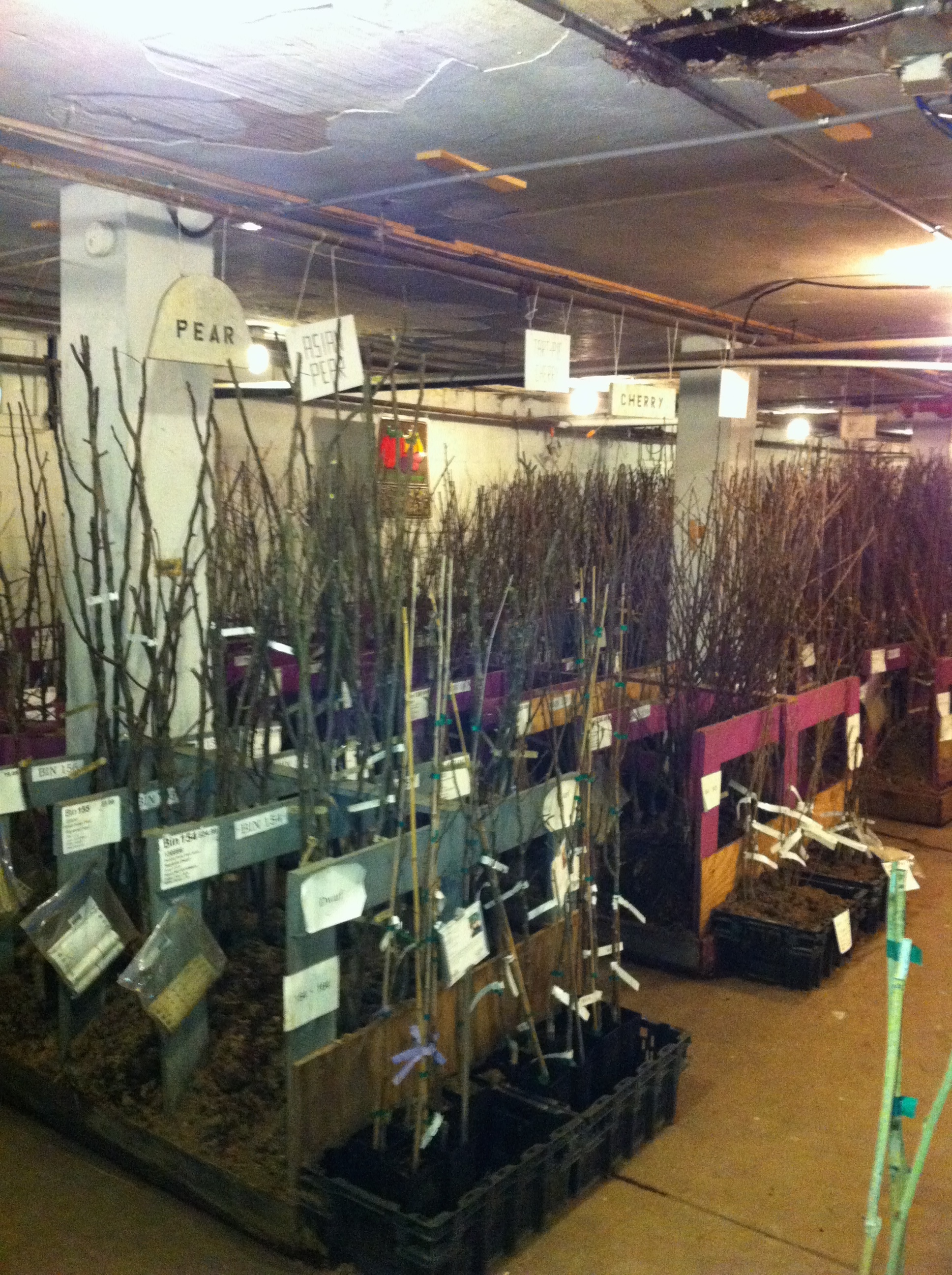
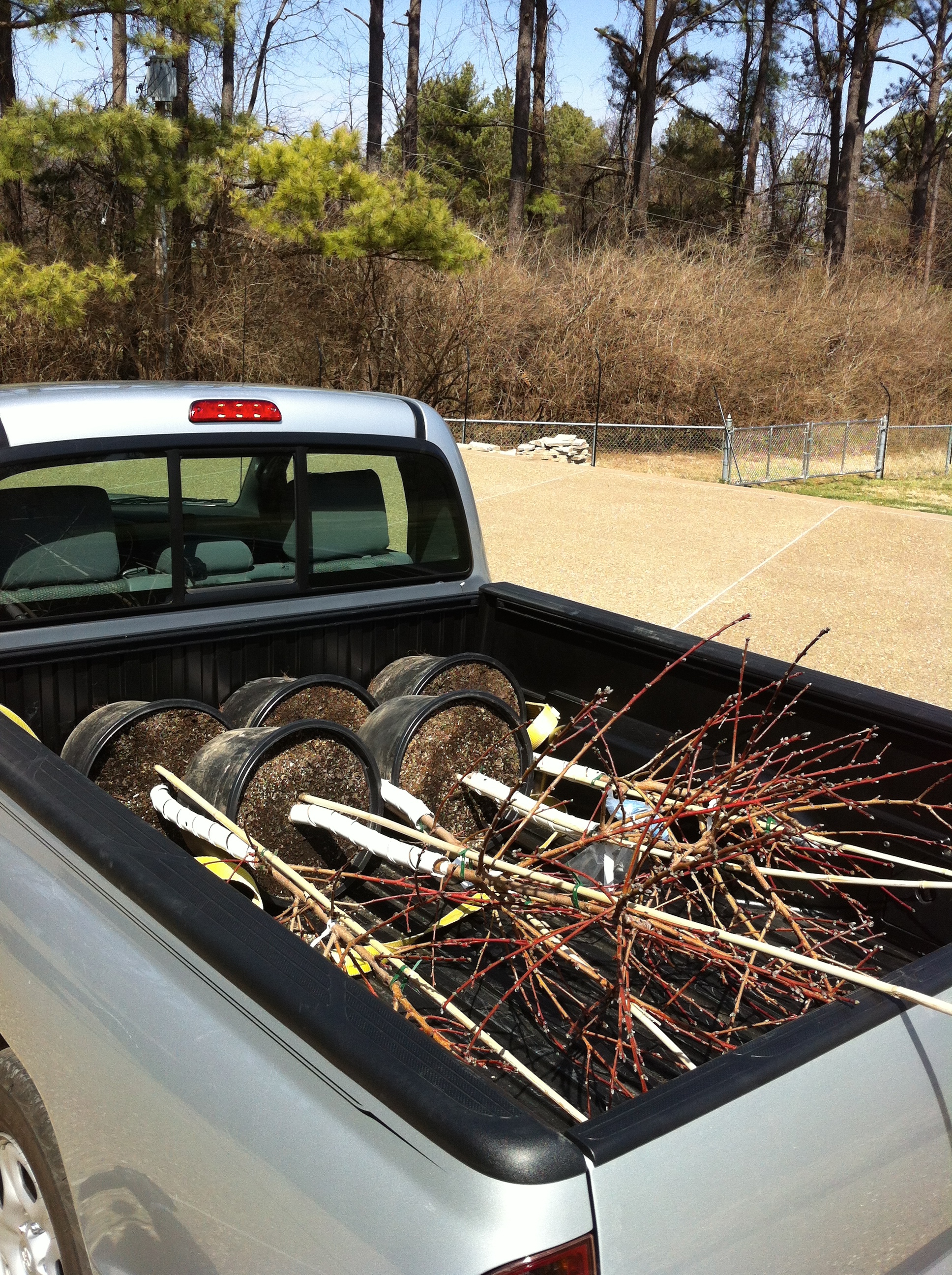
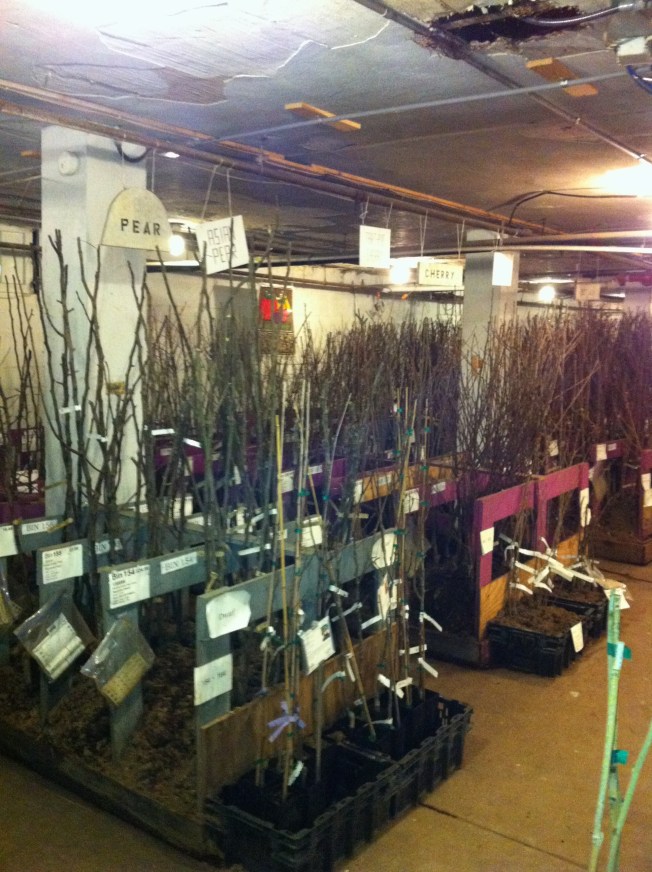
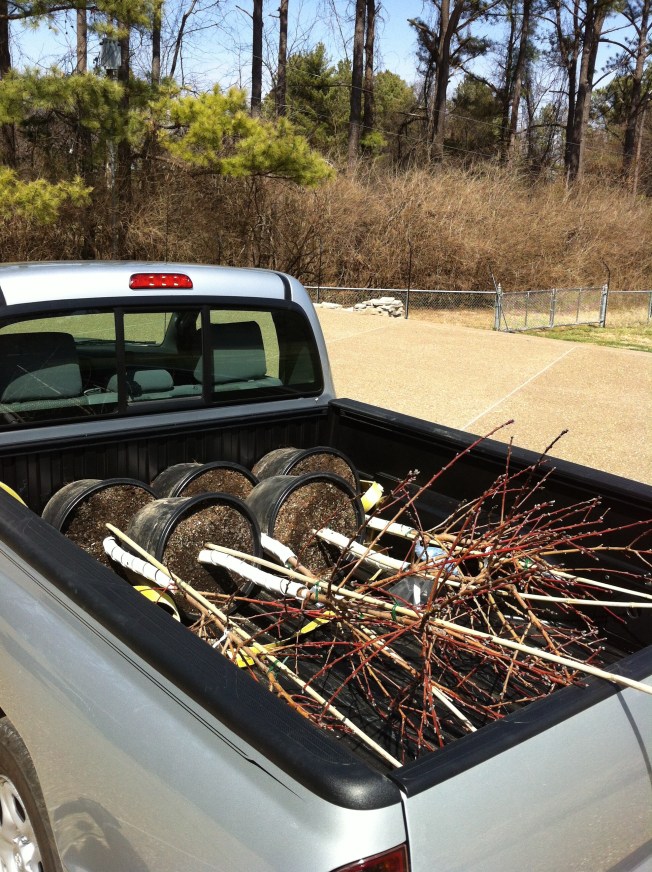
The purpose of the trip was to pick up some replacement and additional trees – peach and nectarine – for our orchard. We look forward to this hour plus drive through the Missouri countryside at which time we see the local farmers plowing their fields and getting ready to plant. This year, Dave had time to look around in the cave like facility where Stark stores many of the young plants. He also saw a truck being loaded with 1200 bare root apple trees that was headed to Washington State, at least two thousand miles away, where apples are king! It is fun to think that some orchard-ist in Washington has chosen the same place that we did to buy fruit trees!photo 3
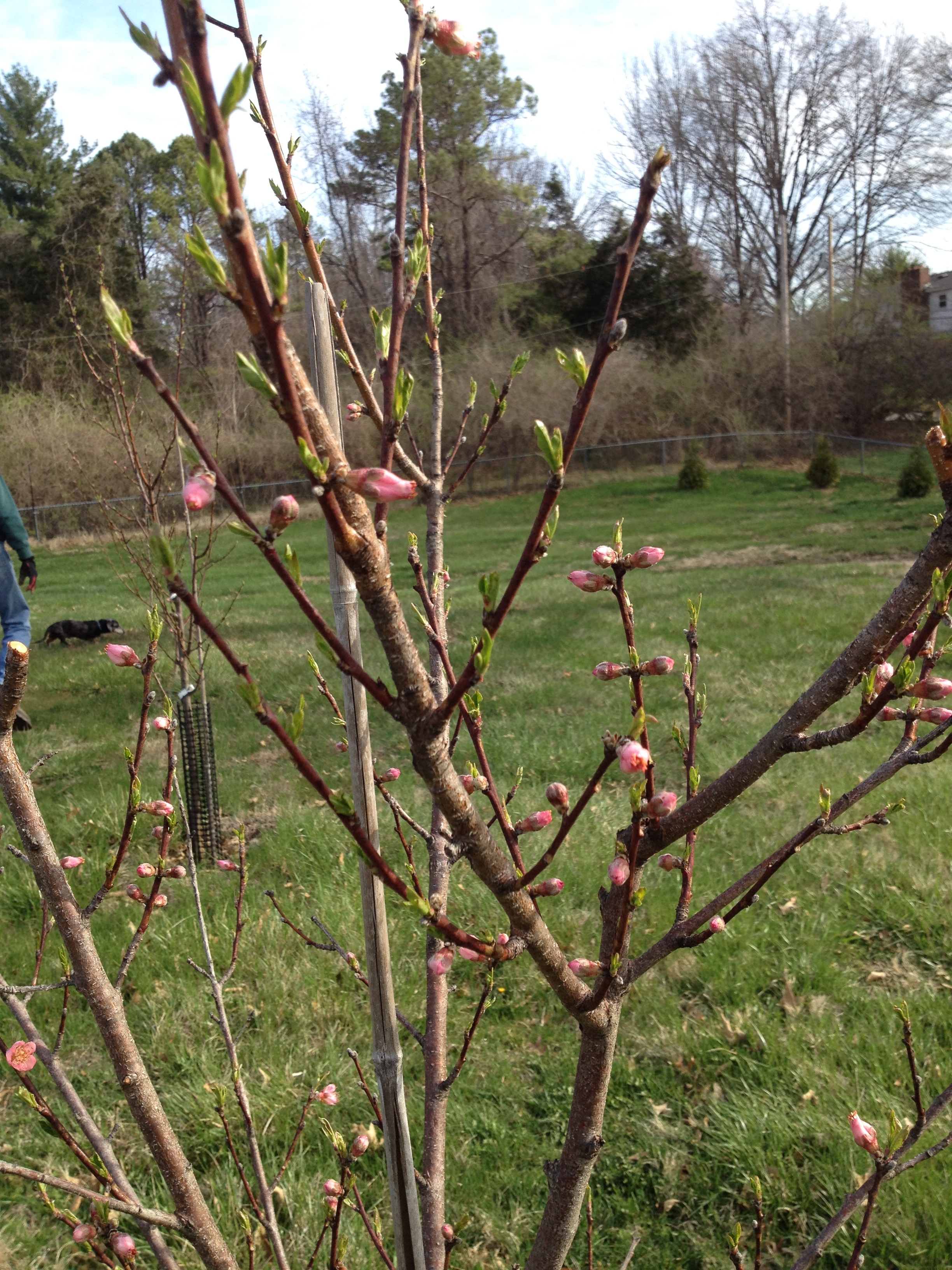
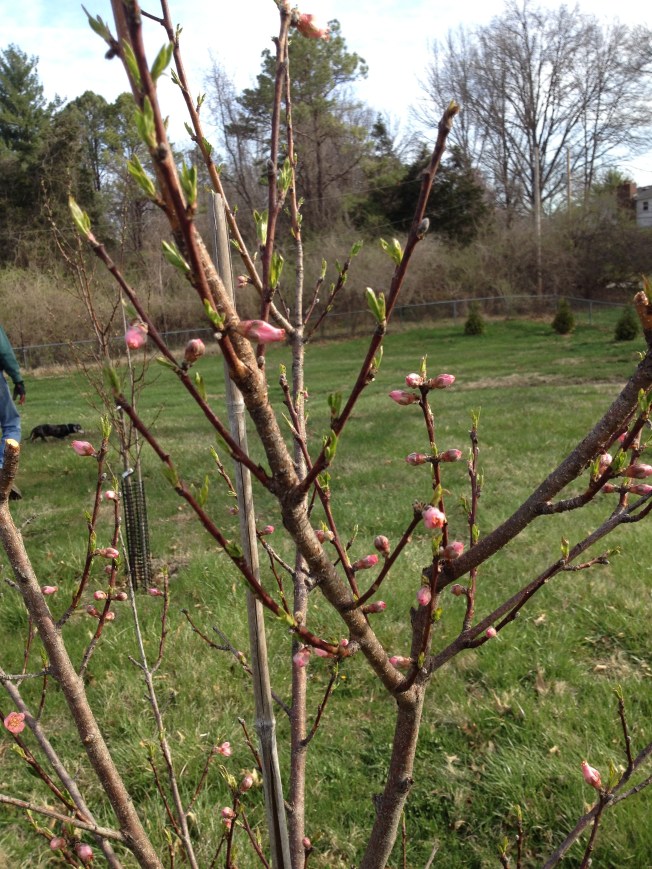
He loaded his pick up with young trees and covered them with a tarp for the ride home. photo 2As we add them to the rest of the orchard, we see evidence that all the trees are transitioning from budding to blooming but this varies significantly even among the same varieties. IMG_5639While it was still too wet to work in our fields, I kept busy getting the blueberries ready for their annual mulching and dosage of sulpher. They look wonderfully productive at this point. As soon as I get done cleaning them up and minimally pruning, we will once again apply the bird netting in case any deer find their tender buds too irresistible and attempt to munch on them.
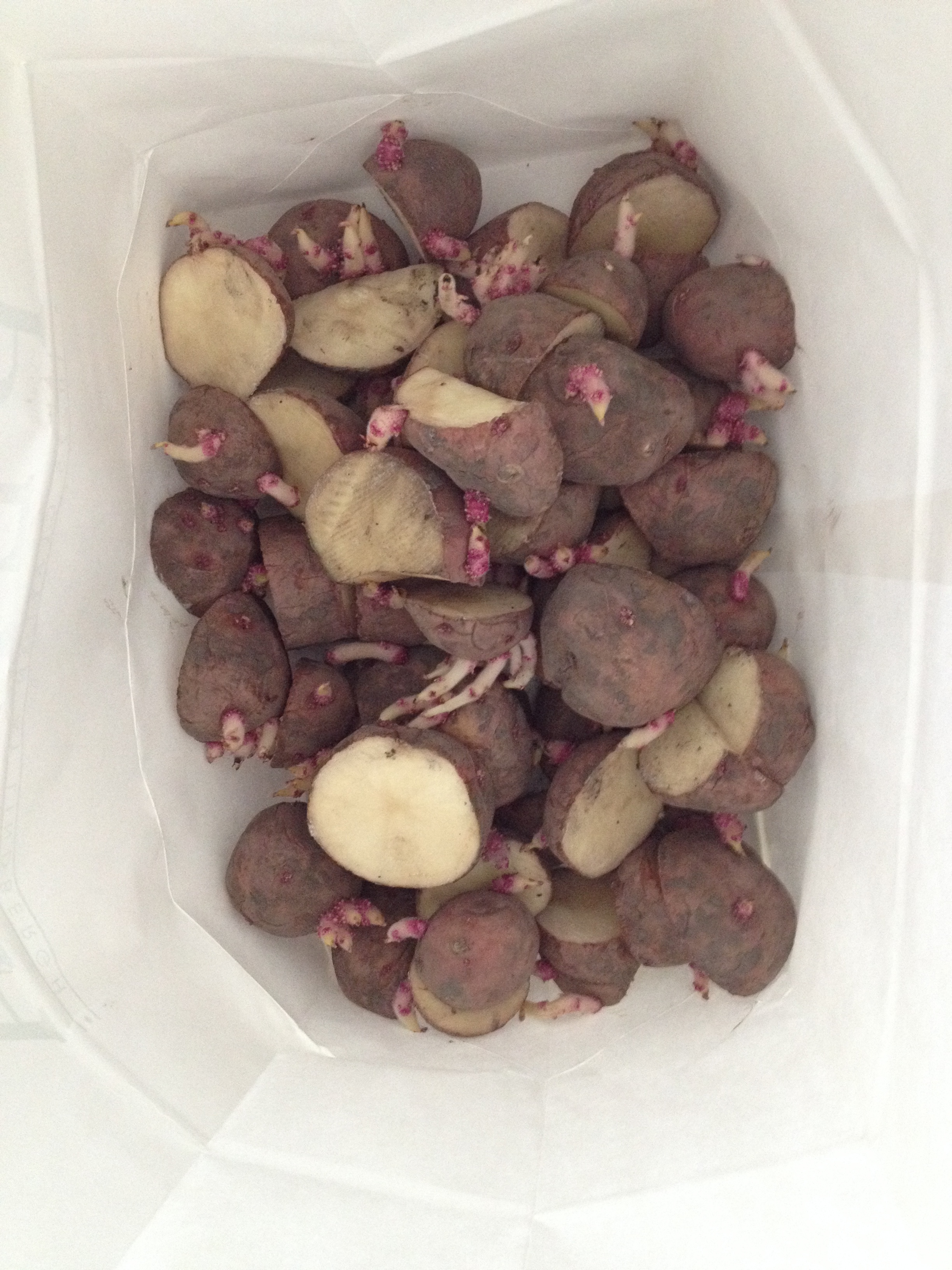
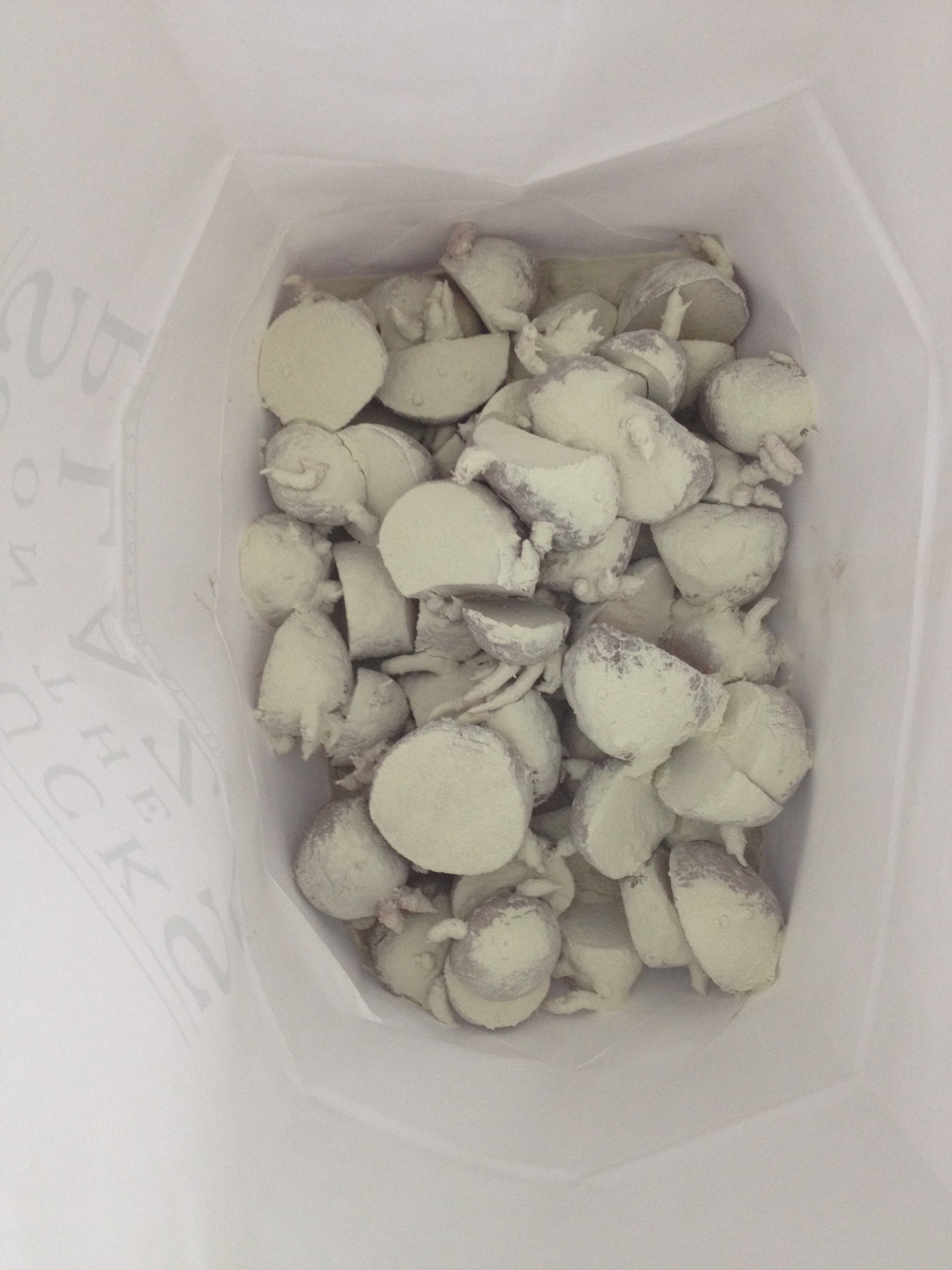
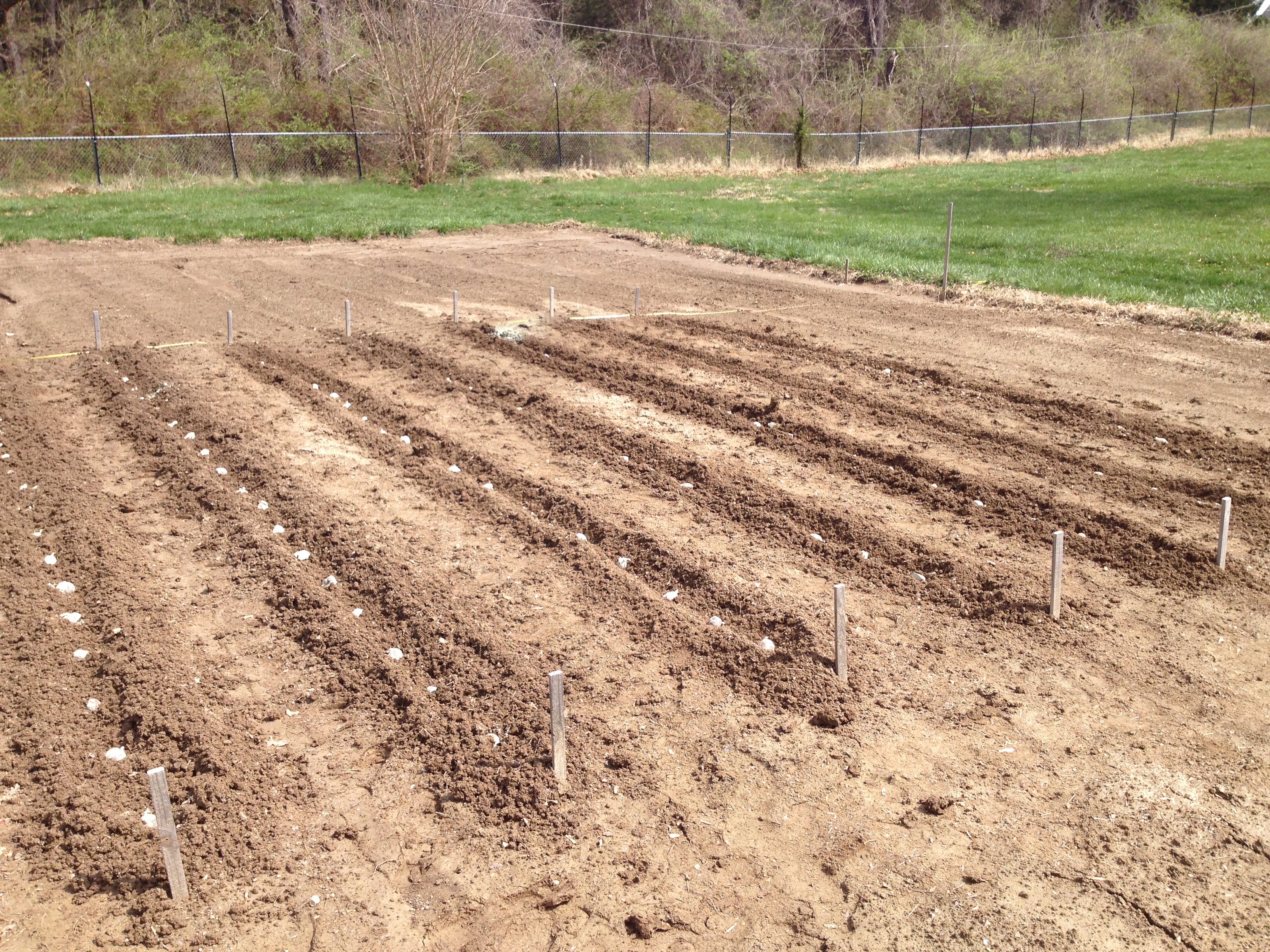
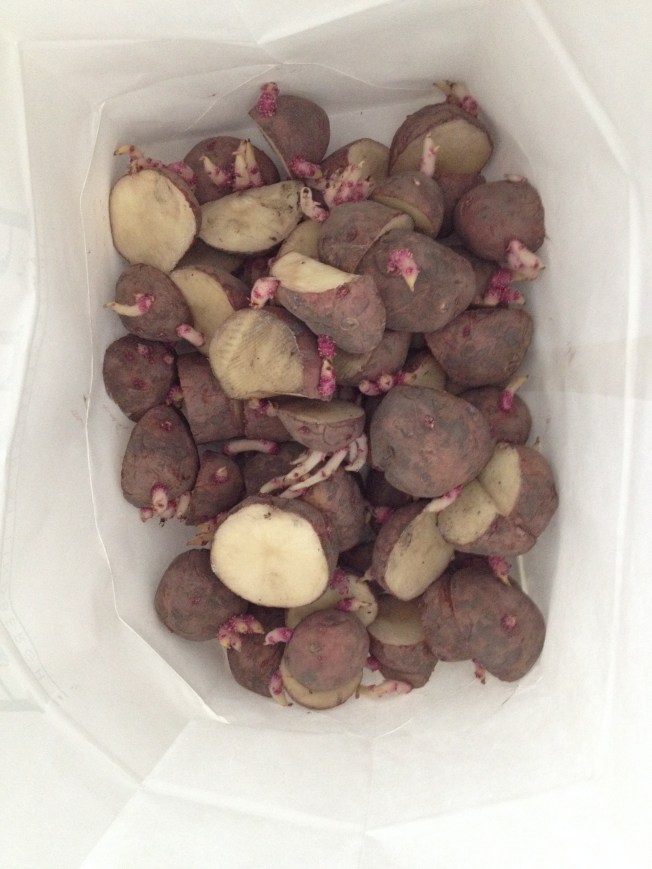
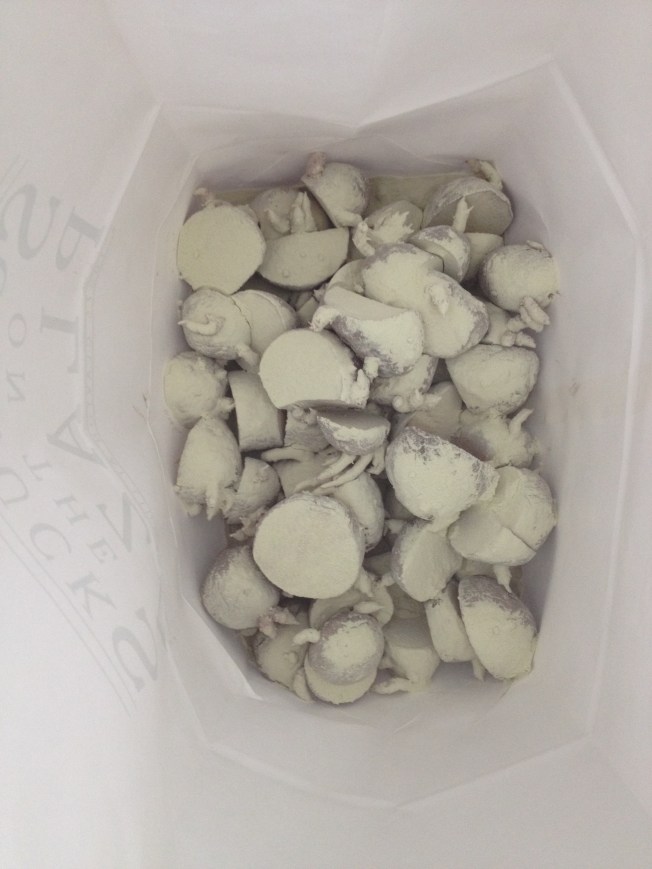
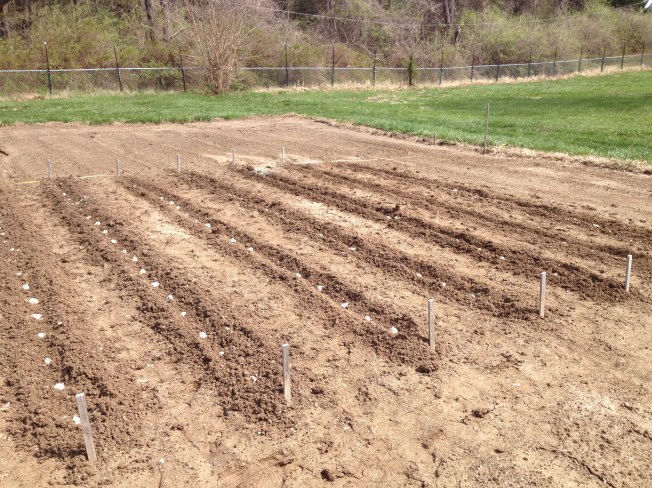
We have now had a couple of days of sunshine and the soil has both dried up a bit as well as warmed enough to do some planting. This was not a year to follow the traditions of planting potatoes on St. Patrick’s Day since I’m afraid the wet, cold soil would most likely have rotted the potato starts by now. Instead, we are (as we were last year) about 3 weeks behind but it was ideal today after having prepared the potatoes in advance. First, we bought the Yukon Gold and Pontiac Red tubers from Valley Park Grain Elevators, and cut them into pieces that included at least two ‘eyes’ and left them to dry or ‘heal’ for a day. IMG_5675Then, we sprinkled them with agricultural sulpher which will help protect them from fungal disease and hopefully ward off potato beetles while in the ground. IMG_5676We did a bit of last minute prep of the rows since the soil was finally workable again. IMG_5682This year we planted seven, 22 foot long, rows or approximately 145 potato starts. Some books say you can get as much as 10lbs of potatoes per plant, so I would say it is safe to expect we will harvest well over three hundred pounds from the crop this year. Here are the starts in place before we covered them up with soil.IMG_5684
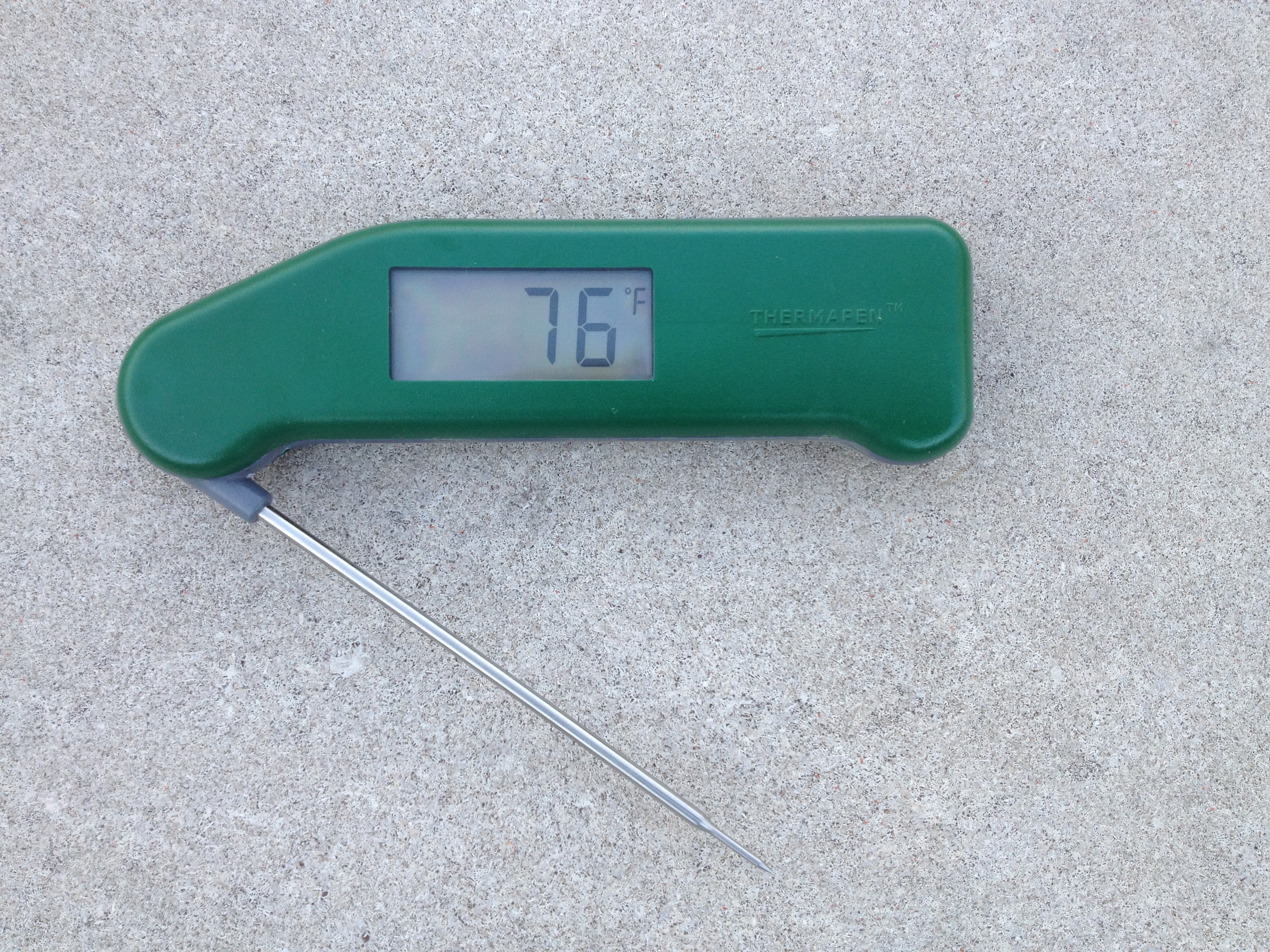
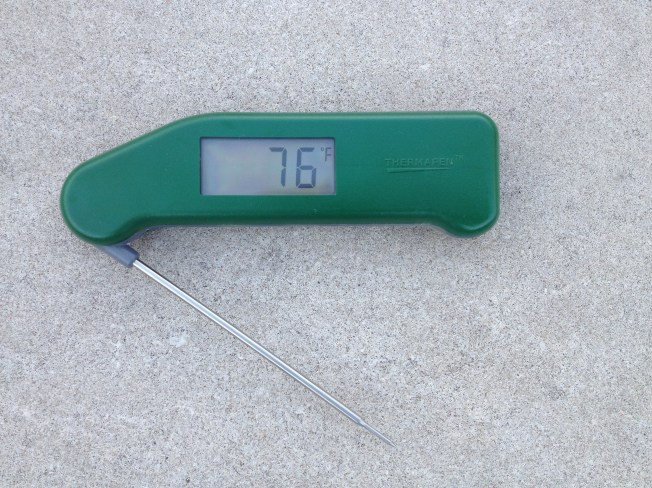
Today was also a good day to plant the peas which are really good ‘companions’ to the potatoes so they went into the next rows. For these, we actually took at temperature reading with our new instant read thermometer. I usually use this for cooking, but why not stick the probe into the soil to get a good temperature reading? Everyone says you can plant peas very early and that is true, but if you plant them in 40 degree soil they will take 30-40 days to germinate whereas if you plant them in 60 degree soil, they will germinate in about 10 days. So, my thermometer readings today ranged from 63-67 degrees at about 6 inches below the surface. Perfect for peas! We planted two double rows of Easy Peasy seeds which are a self supporting variety from Burbee. Here is my Thermapen with an indication of the ambient temperature this afternoon. photo 6We also planted two rows of one of our varieties of green beans today and will continue to plant these in spurts throughout the summer so as not to be overwhelmed with too many tasty green beans at once.
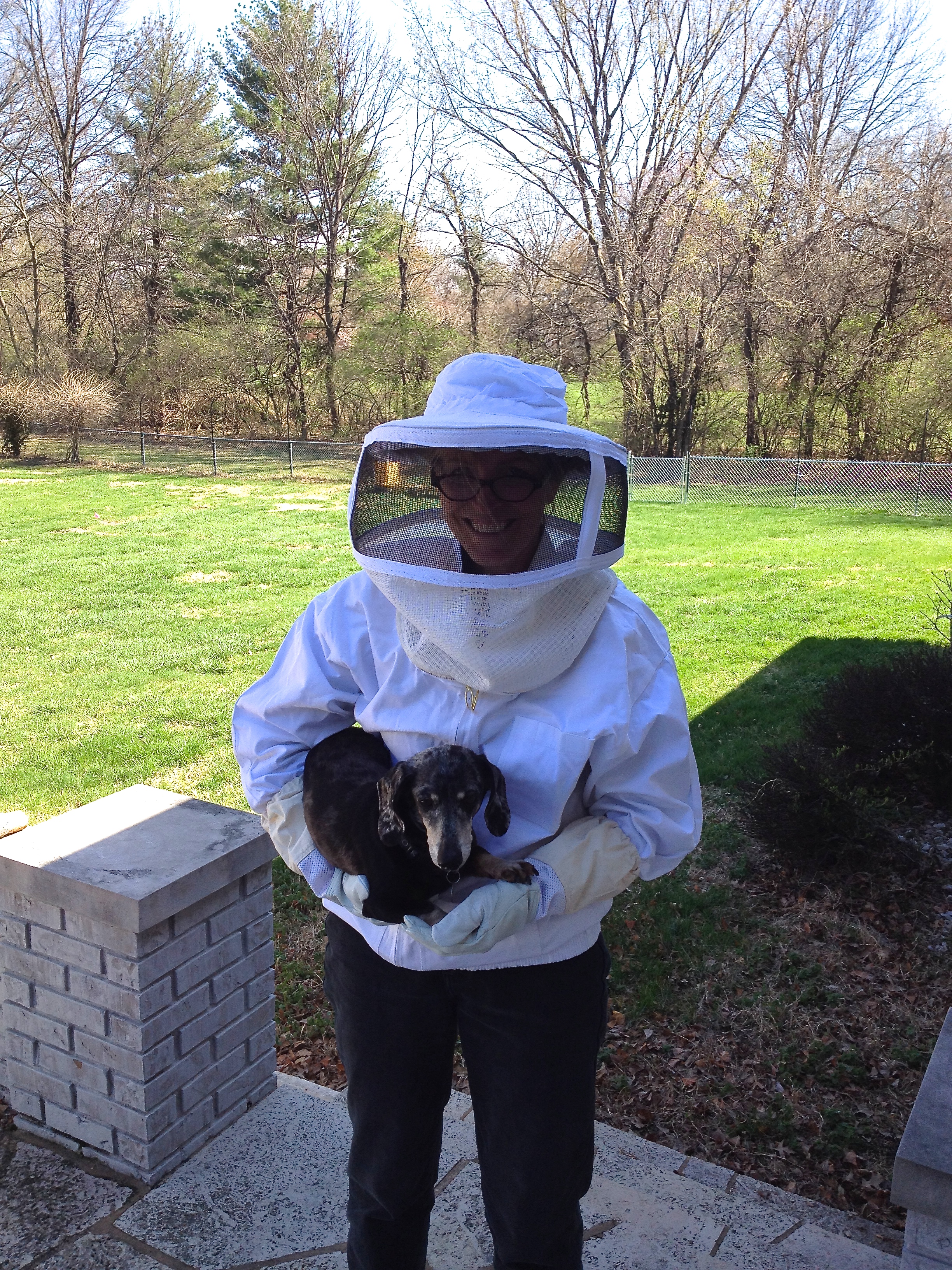
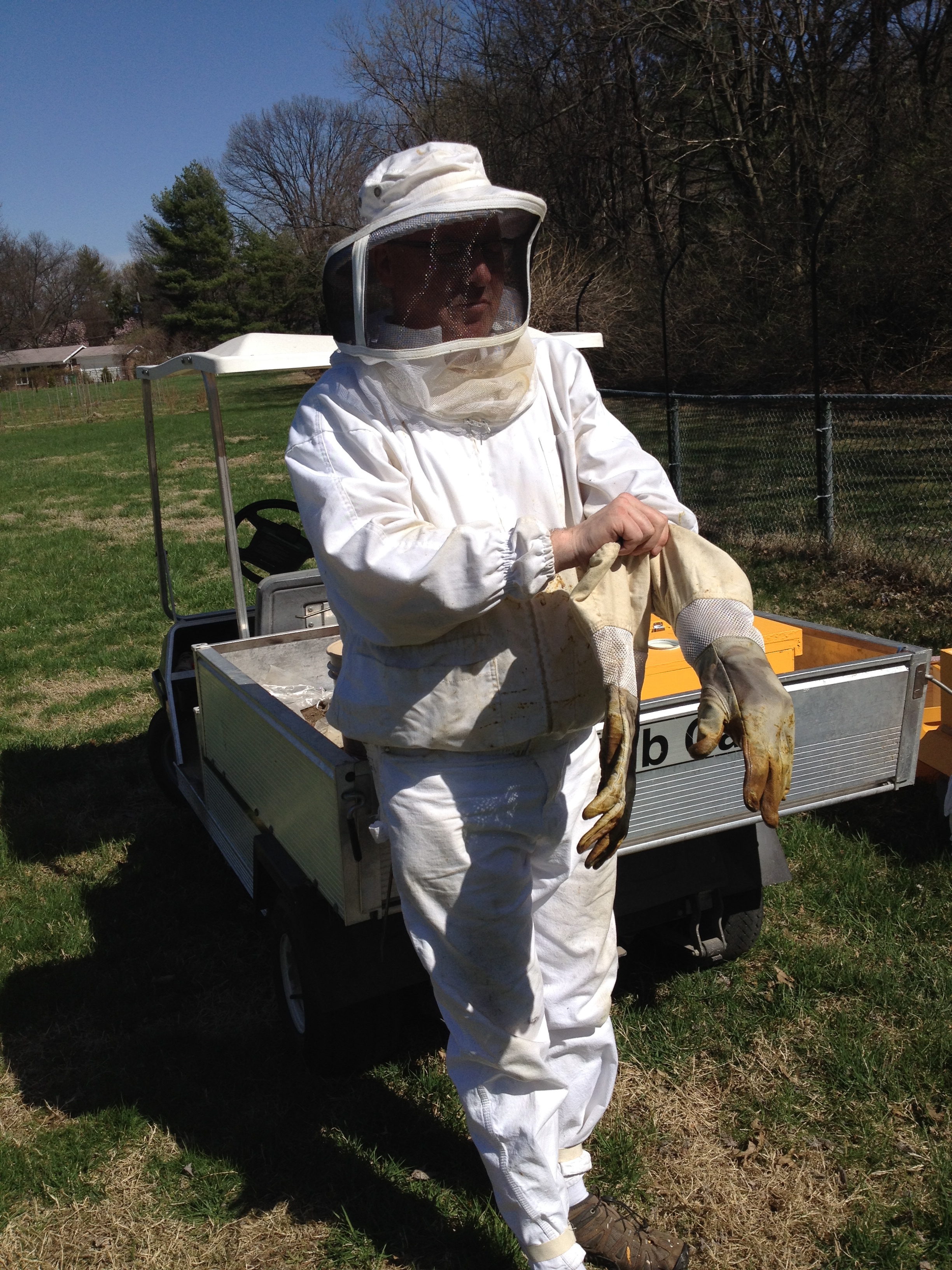
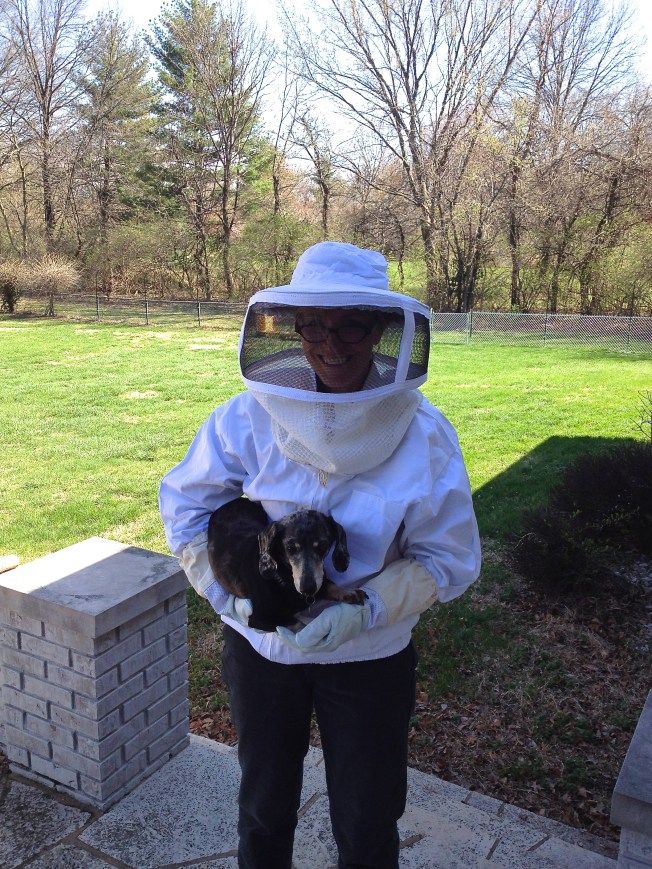
So now for the biggest and best news of all…the bees finally arrived yesterday! Last Sunday our bee mentor, Jurgen, arrived and put the empty hives in place. We knew he was going to ‘split’ his hives and buy additional queens for the new hives located here as soon as the weather and the bees were ready. I provisioned with gloves and a specialty veiled jacket as well as a couple of other handy items. If you look closely, you can see one of the hives thru my veil screening. Farley is not sure what is going on but is happy to pose for any camera.IMG_5650
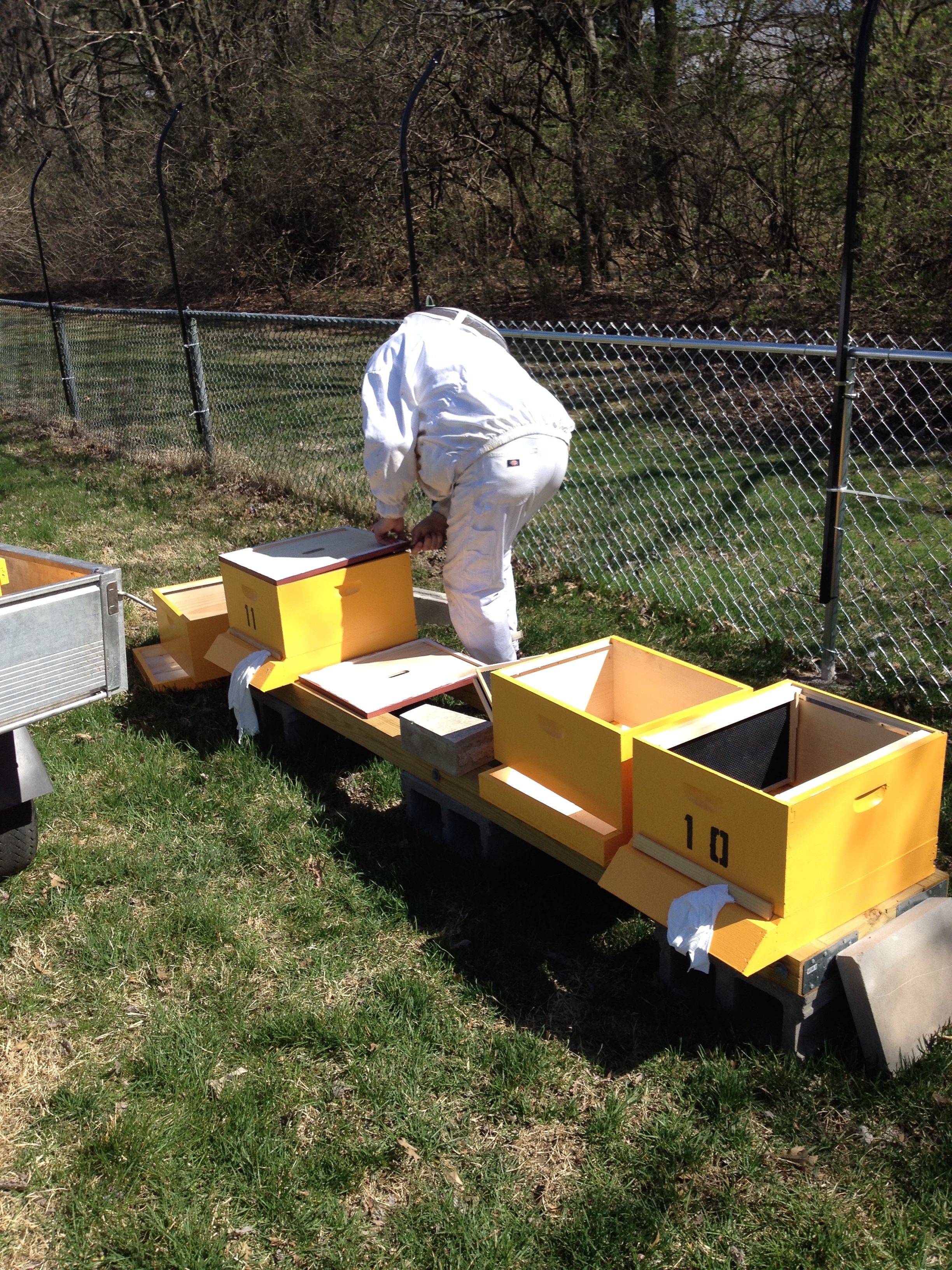
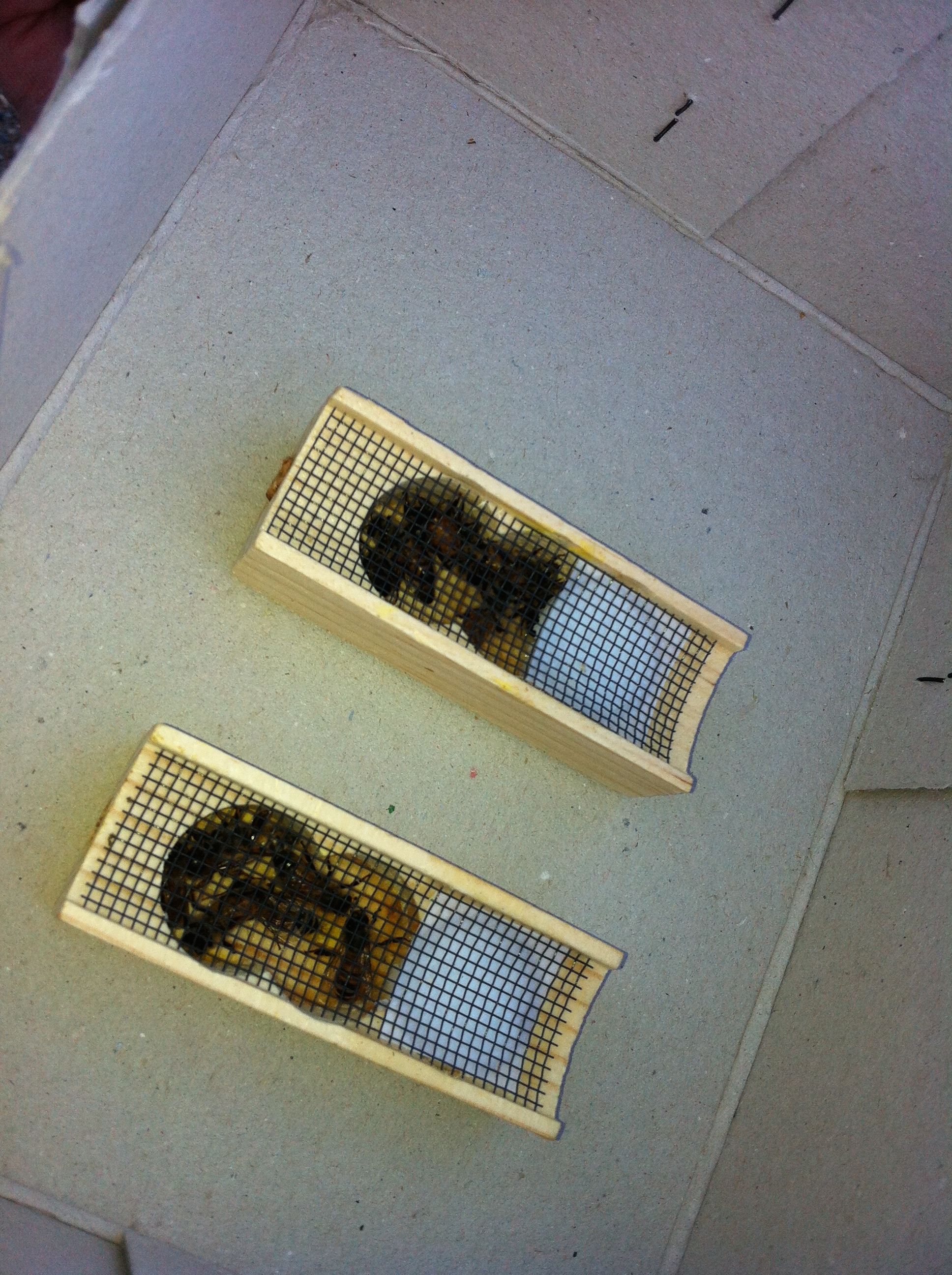
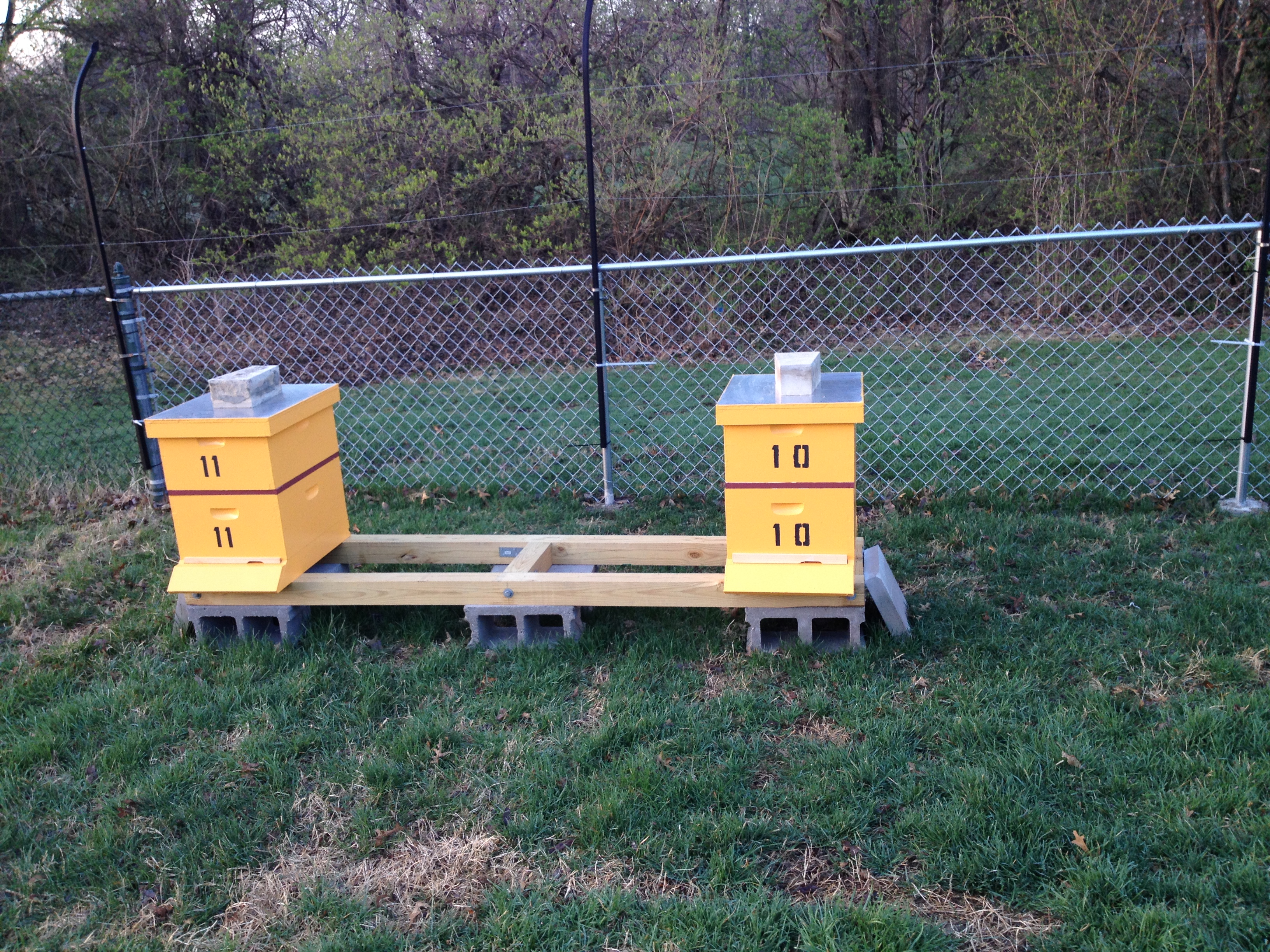
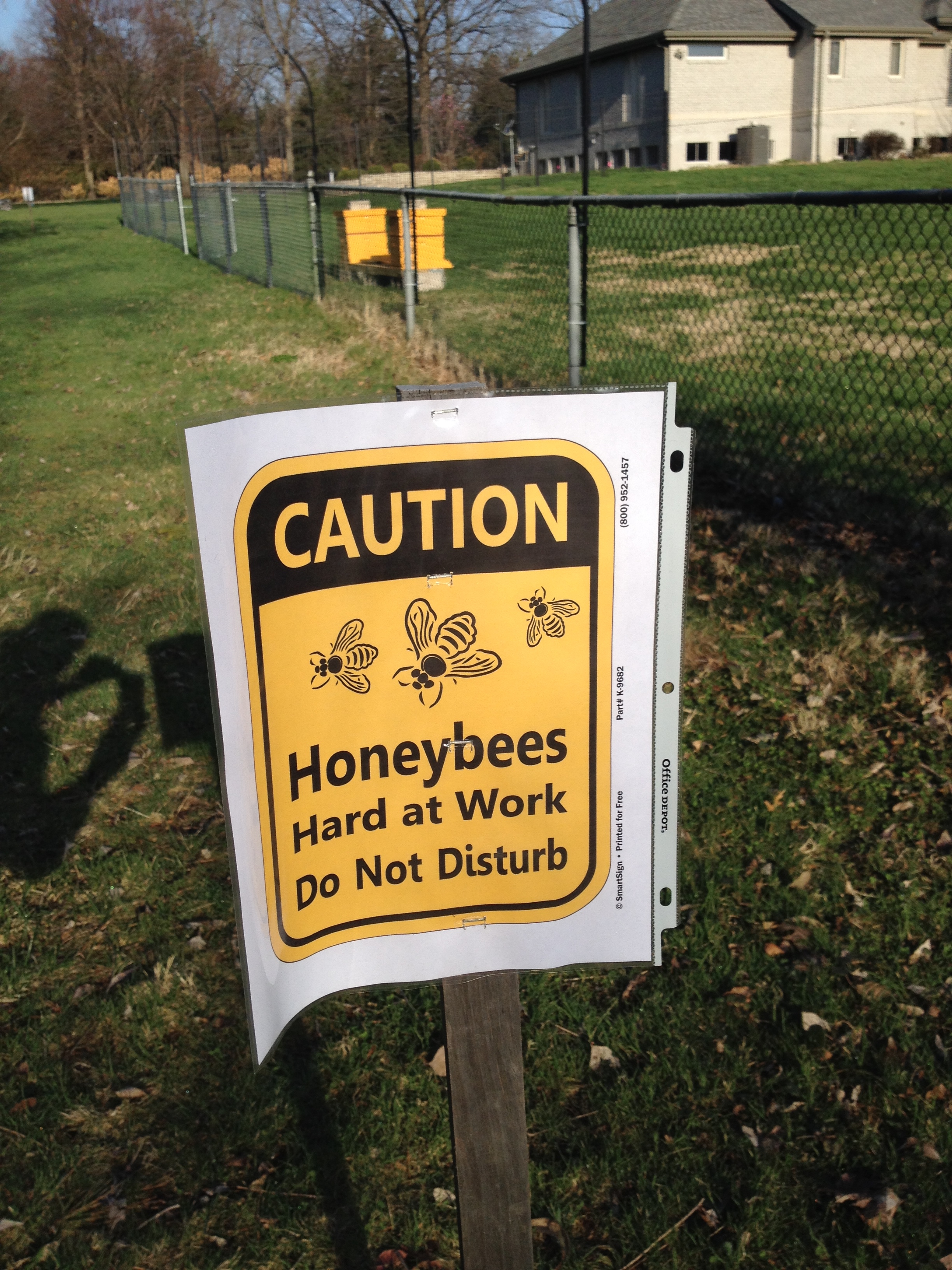
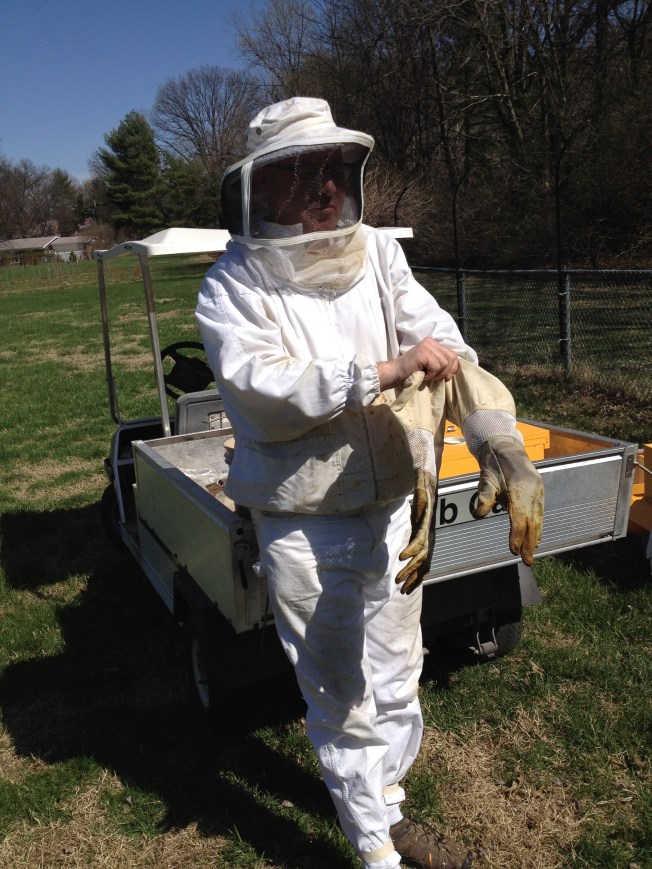
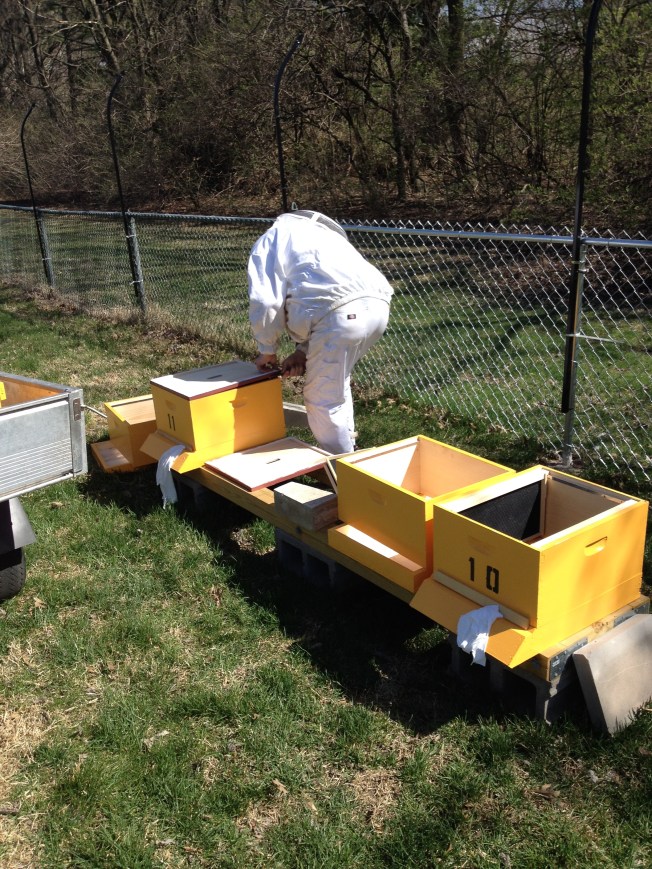
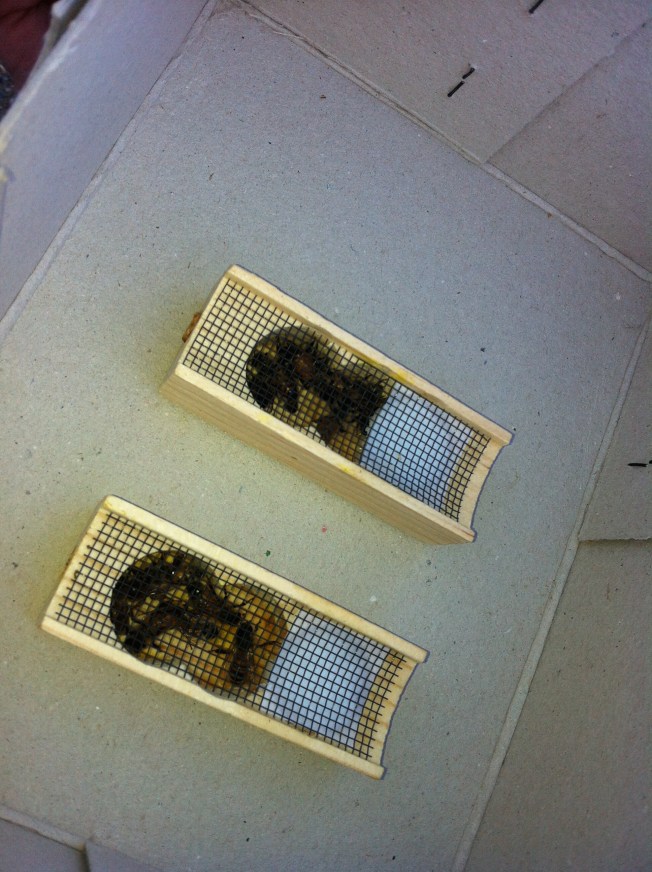
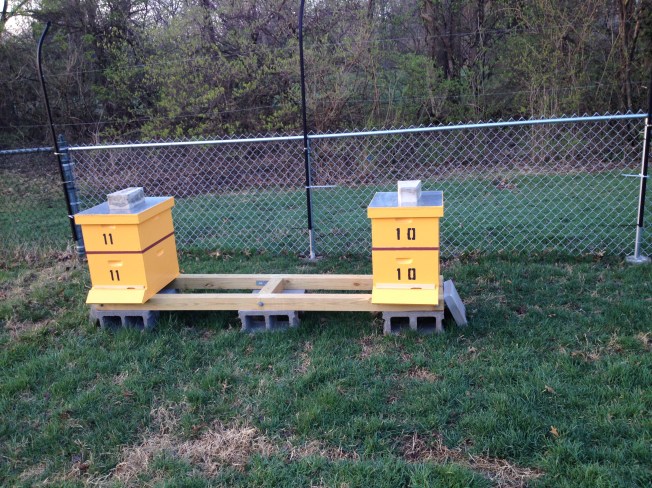
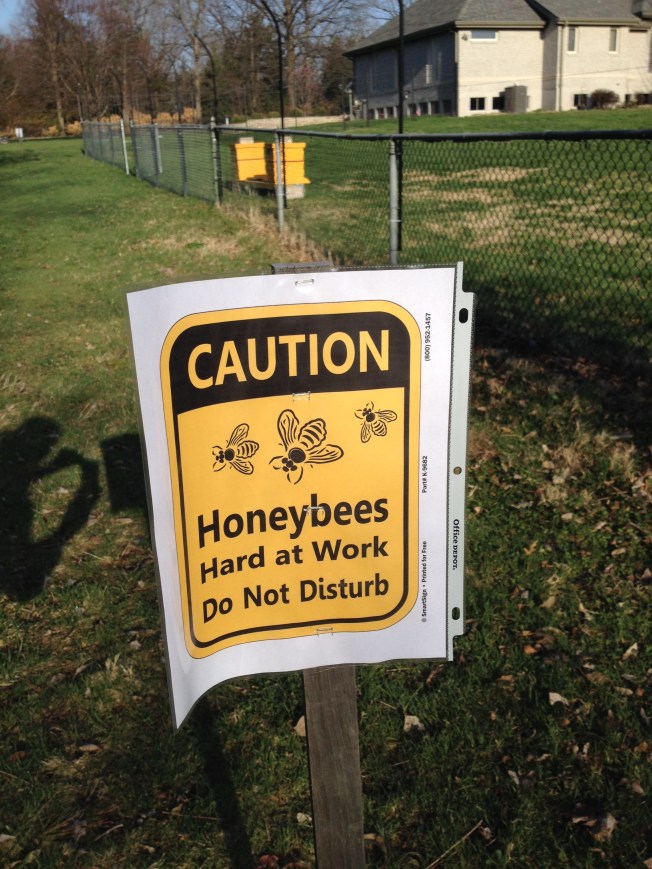
So Jurgen arrived yesterday with the bees in transport boxes in the trunk of his car along with a smoker to keep them calm. He quickly loaded them into our utility cart and off we went to introduce them to their new homes.  IMG_5646He opened up the new, awaiting brood chambers or deep supers, which had 4 or 5 new, empty frames inside. He brought with him about 4-5 additional frames with established bees from one of his other hives and popped these into the waiting boxes next to the empty frames. The bees will start to expand into these new frames as soon as they feel at home and when these are filled (10 frames per box) we will add another box on top to fill with more frames of bees. IMG_5645It was an amazing experience to have the bees flying about just outside of my protective gear. I think I passed the first test of being calm and not feeling any fear. The worst part of the experience is that my gloves prevent me from taking photos on my phone! After he got the bees all settled and the boxes re-assembled, Jurgen left but came back later that day with the queen, her attendants and some food for all. The queens are in little screened cages with just a couple of attendant bees who actually feed her! Isn’t that the life! Here is what they looked like. The white part is where the food is located. photo 4Then, Jurgen re-opened the hives and placed one queen container into each hive between two frames but didn’t let her loose since the bees need to become accustomed to her first. He will come back in a few days to evaluate if they have accepted her and I will give more details about that interesting aspect of bee watching then. In the meantime, he also fed the bees by putting some sugar solution (along with some more ingredients) into the upper super. Here is what the hives look like in place. We got up early this morning to investigate, but bees are late sleepers so they were not really out and about until around 7am. IMG_5659As we all get accustomed to the presence of the bees, I decided to warn the neighbors with some signage…like the bright yellow hive boxes aren’t telling enough????IMG_5671This is such an active time of year for us that we are exhausted before the sun goes down. I can think of at least a dozen other things that we have been working on lately but perhaps I’ll have time to write about them tomorrow…especially if it rains as predicted! Stay tuned!
Unknown's avatar

‘Persuaded’ to Plow

OMG, today was a perfect day for plowing the fields at Seven Oaks! We are usually complaining about the weather getting in our way for early spring tasks but we could not have been happier today with the conditions that allowed us to get into the fields with the tractor to get the plowing done. Of course we took plenty of photos of this, but before I show you the easy part of plowing, let me explain what takes place before the wonder blade hits the dirt.

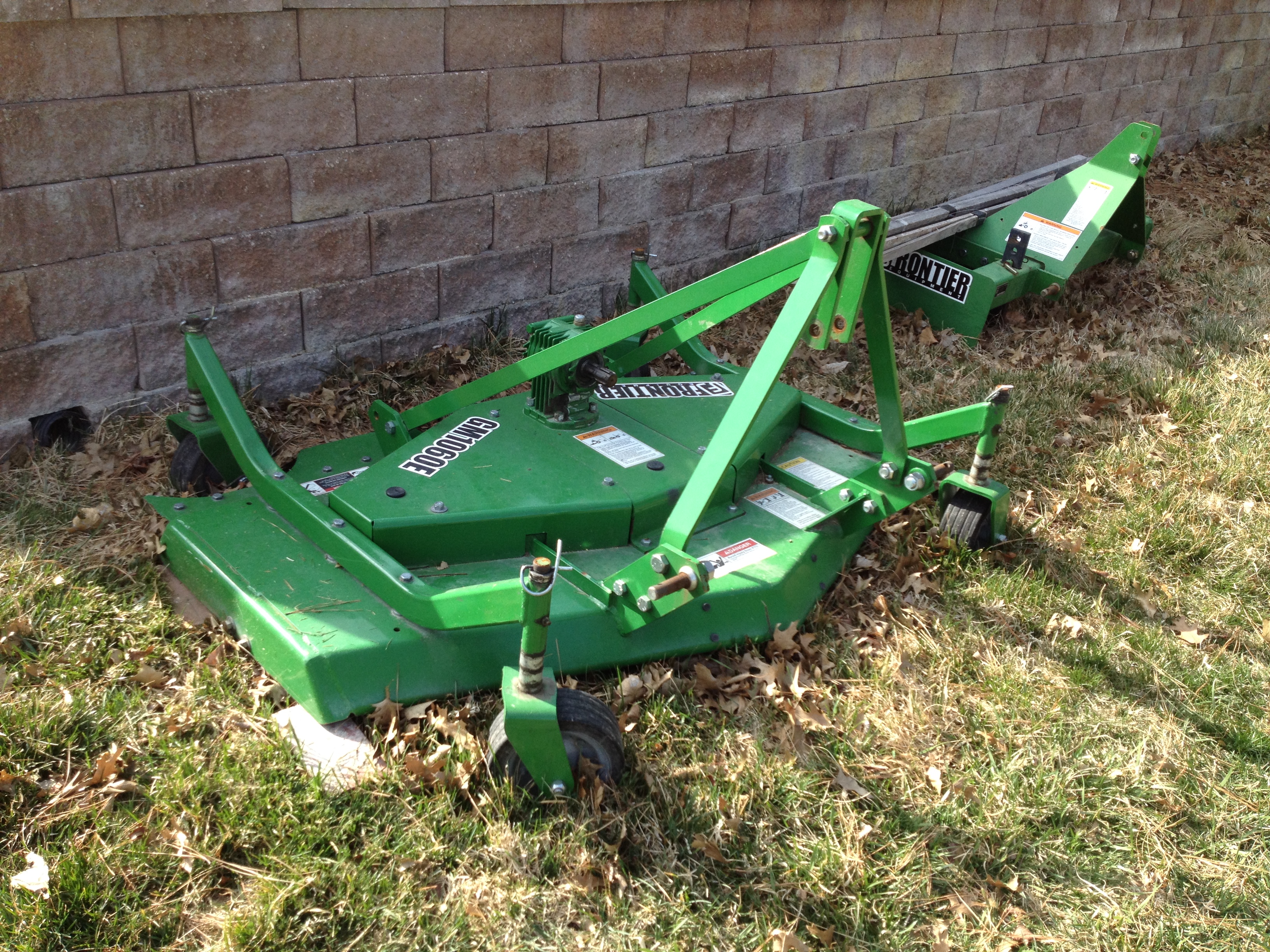
As everyone knows, we bought a John Deere tractor after we moved to the farm which is something that has made life easier in so many ways, but it also gives us a whole new challenge when it comes to switching around the implements we use with it. Our tractor is equipped with a PTO or Power Take Off which is a drive shaft that spans the distance between the tractor and the rear implement. I always thought PTO meant ‘power train operation’ since this is what comes to mind when I consider how this operates. Anyway, the PTO transmits power and torque from the tractor to the implement you are dragging behind when that piece of equipment needs to rotate. We have four rear attachments for our tractor: a mower, a tiller, a box blade, and a plow. (We also have a front loader which is used to move dirt or plow snow, but that is another story.) The mower and the tiller use a PTO since their blades require power to operate where as the box blade and plow are just dragged along behind and only raised and lowered to accommodate their use. Since we cut all of our own grass, the mower is used constantly all summer long and is helpful to us because of the width of the cutting swath and the fact that when it cuts it also mulches the grass. It looks like this.IMG_5513

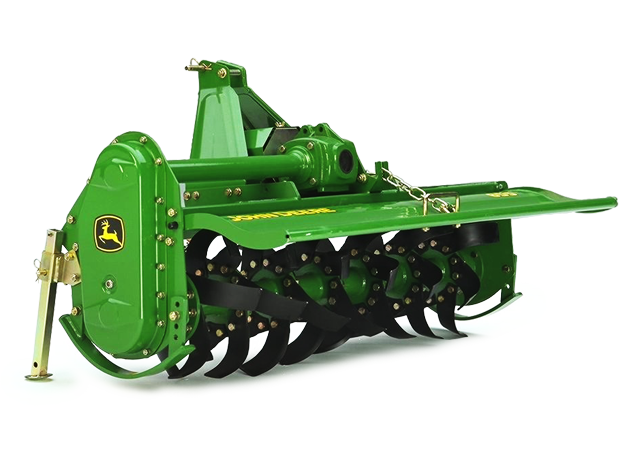
The tiller is also really wide so we use it in the fields where it is more appropriate than our smaller sized one. It looks like this.99579_655_tiller_642x462

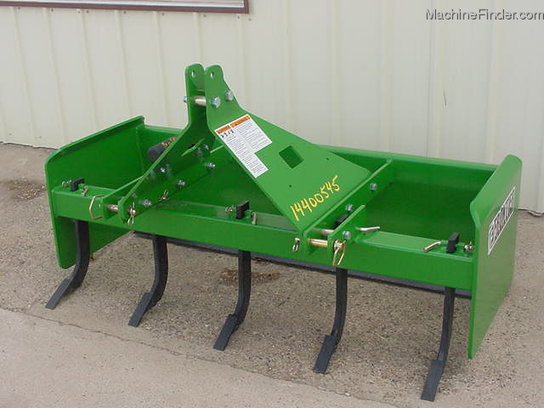
We used the box blade to pull out tree roots and other nasty overgrowth which was all around here when we first moved in. We called those areas “scabs” since they looked like eye sores in the landscape. Dave has nearly completed the removal of the last, nasty scab in back but it has been a challenge since it was full of poison ivy. You can also drag the box blade through a field to help pull out things that you don’t want to grind into the dirt. The box blade looks like this.BB2060

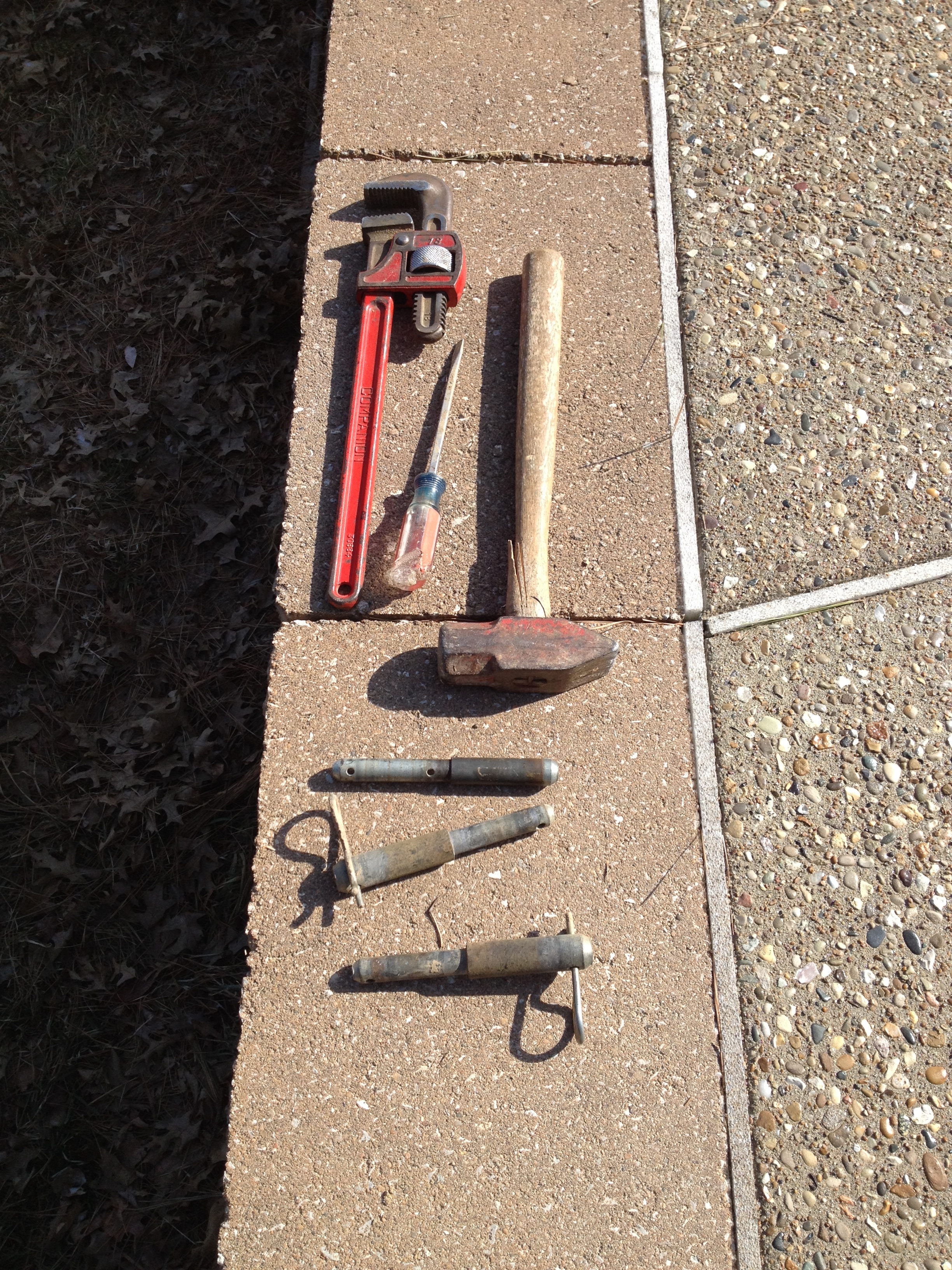
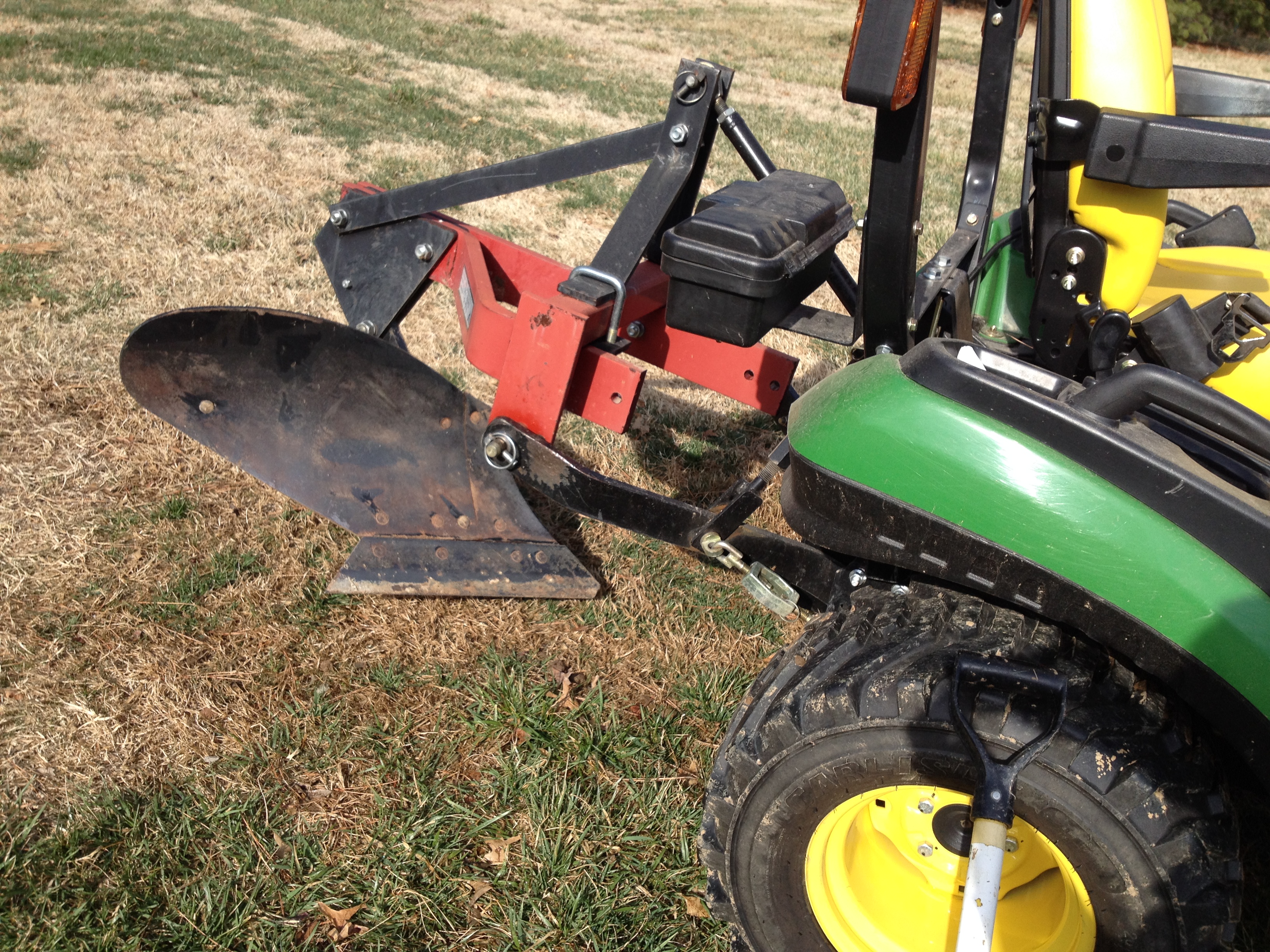
So the plow was the attachment of choice today but it meant changing out one of the other pieces of equipment which is not as easy as you would think. Dave has gotten much faster at this, but it always helps to have an additional pair of hands and some tools to accomplish this, especially for the first time in the new season when things have been sitting out in the elements. (The tractors has a parking spot in the garage but at this point the other features do not.) Here are the tools of importance when taking the connecting pins off and on between the hitch and the implements. Our favorite is the big, red, metal hammer which we call “The Persuader” since it is used to finagle the pins in and out of position. IMG_5508

We use a large tube of black grease as well to use as lubricant but some days it seems we get as much on us as on the machinery. Let me tell you, it is very difficult to get it out from under your fingernails! So after a quick change of implements this morning, the plow was in place and ready for action.IMG_5512

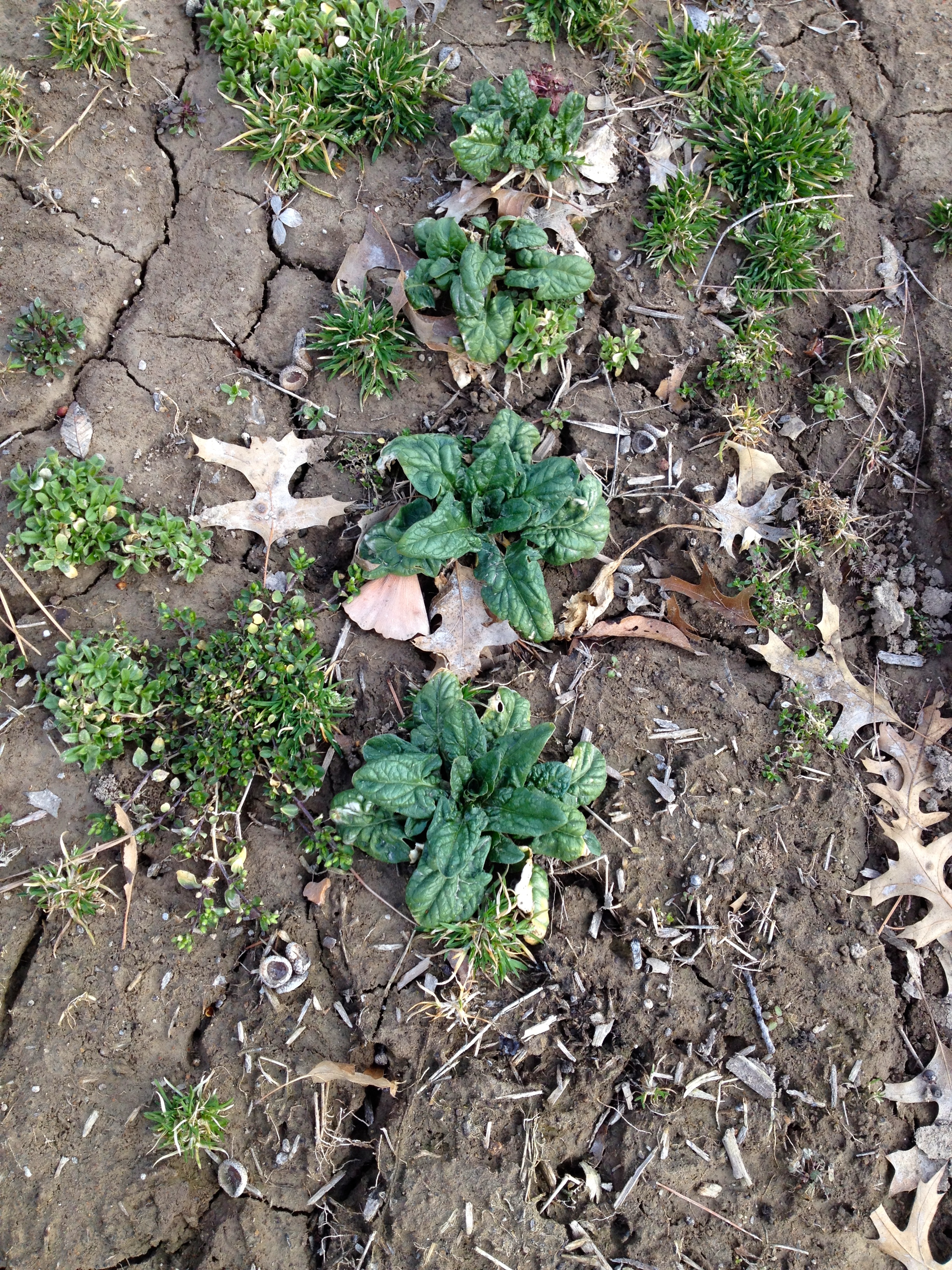
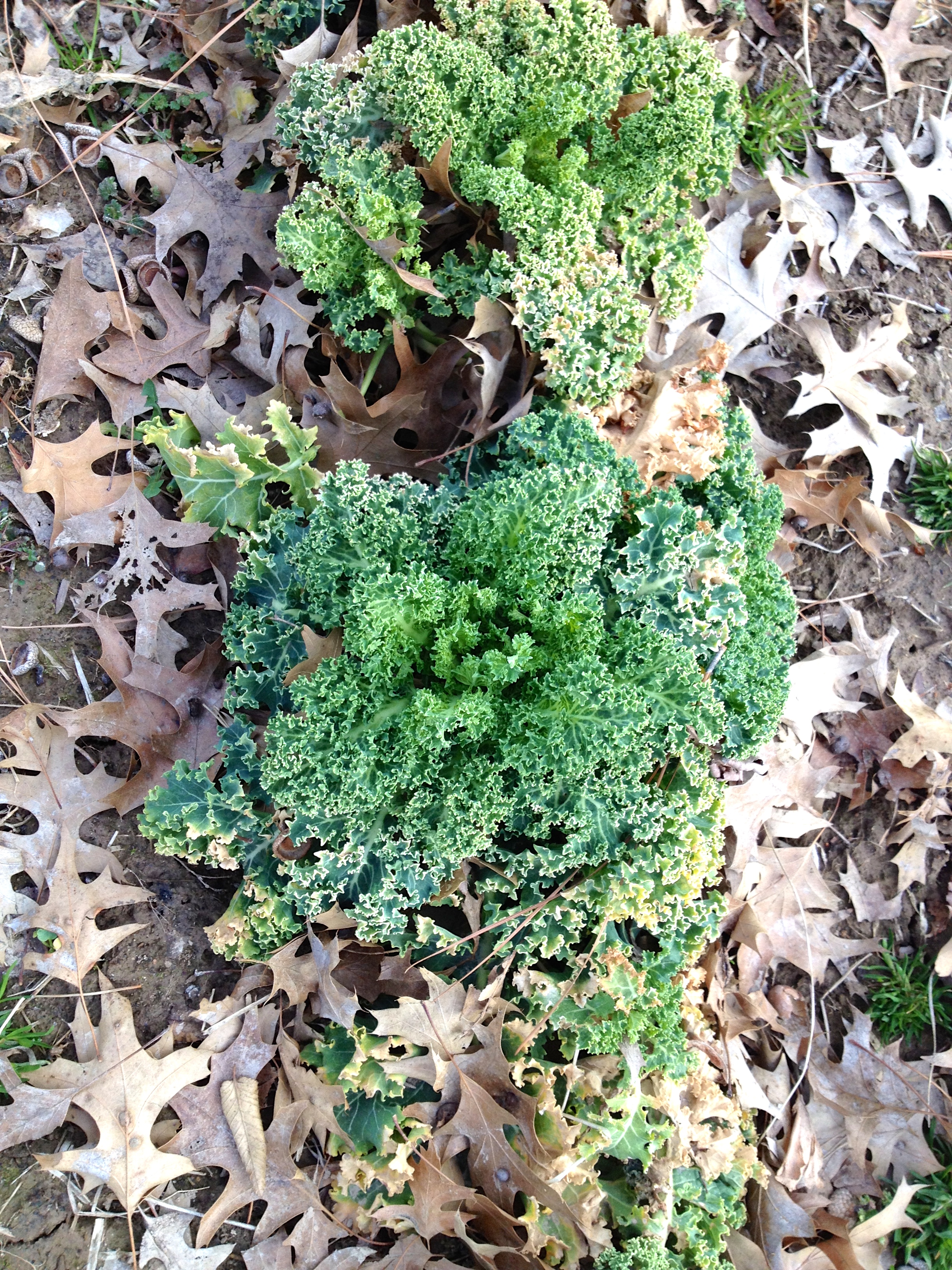
When we trotted out to the fields to get started, we marveled at the plants that were still thriving in the ground…both kale and spinach greeted us as well as some random cabbage and carrots! IMG_5474IMG_5475

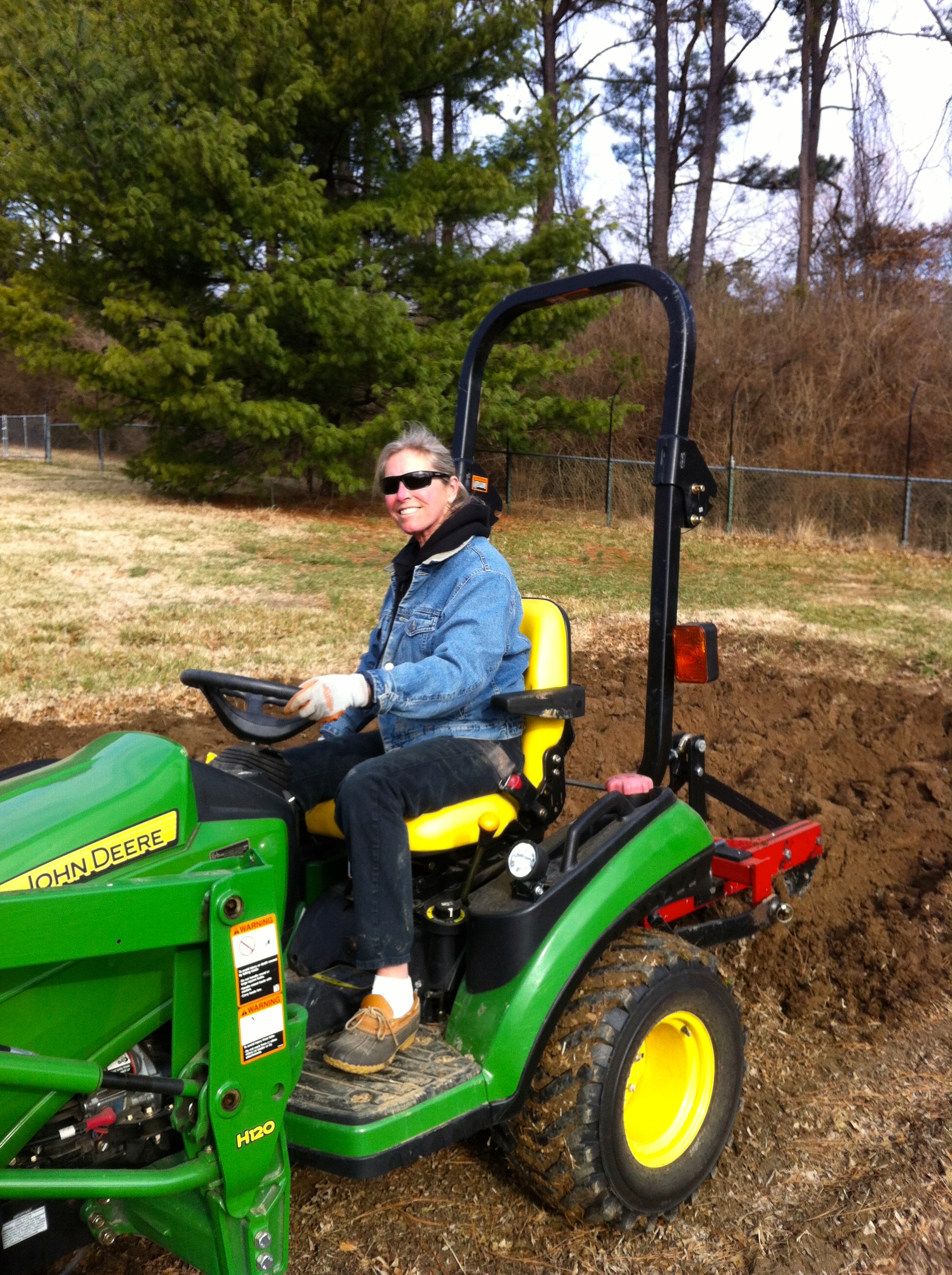
This is the third year we have had the plow to use and I think we finally did it justice with the perfect depth and direction of passes. Here is Dave getting us started.IMG_5500

Of course we took turns since plowing is a lot of fun, especially if you aren’t doing it all day long in the heat and you have a powerful machine to do all the work. I couldn’t help smiling as I thought of my dad and his youthful days of plowing by walking behind a mule or even a pair of mules.photo 1

Our two plow-able fields were finished in a matter of a couple of hours. The freshly turned soil will dry out over night and we will change out the plow for the tiller tomorrow and continue with our field preparation and start planting right away!
There were numerous other chores to attend to today in addition to the plowing. I took the blower over to the strawberry patch and got rid of the leaves and other debris that had blown in over the winter. Strawberry plants are capable of being cleaned out early whereas we are keeping other landscape plants snuggled in their ‘beds’ a little bit longer.

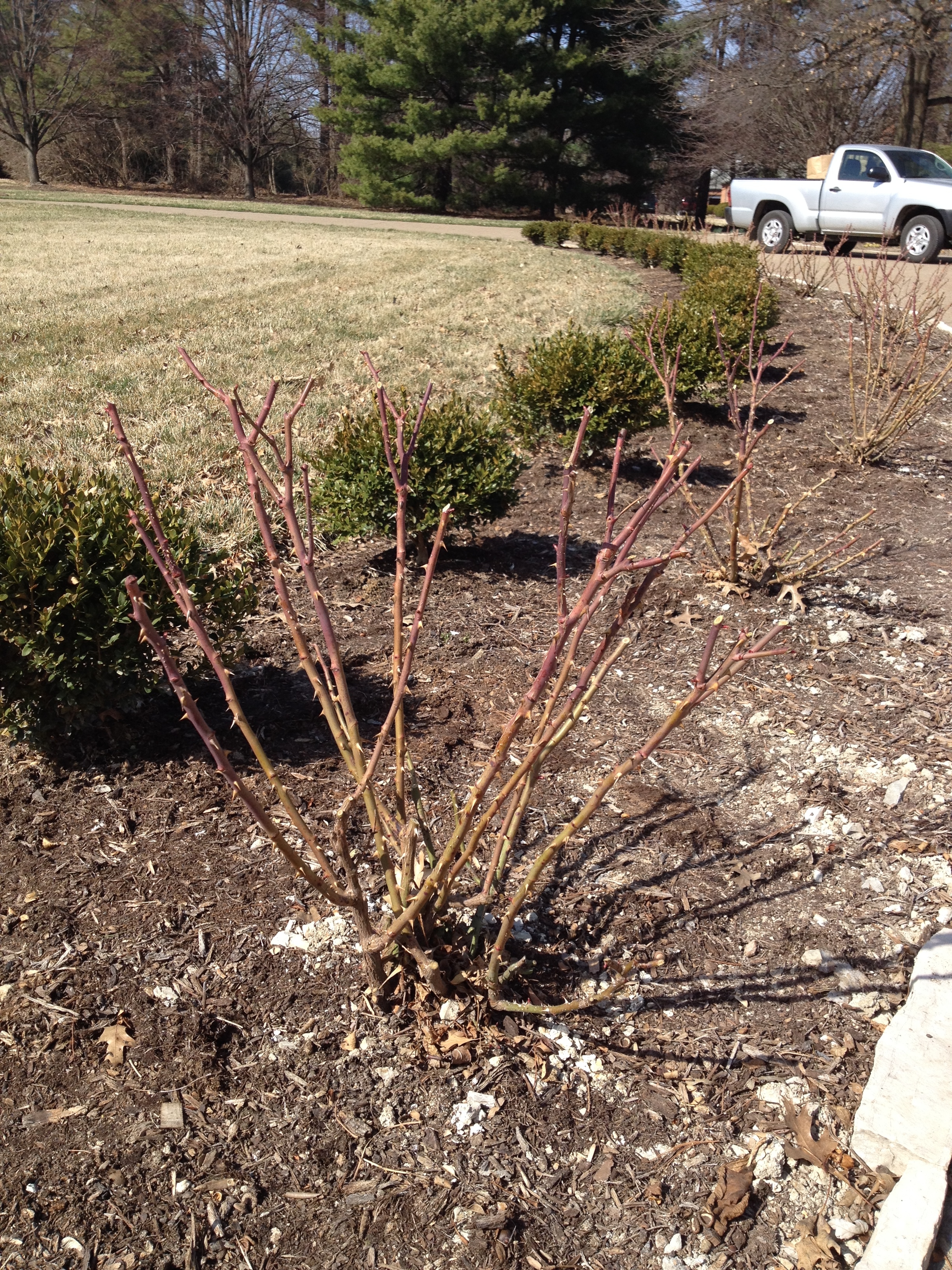
We also started the rose pruning today. We had been holding off on this prickly chore due to the long winter and late spring, but their leaf buds are sprouting and we have so many rose bushes to tend to that we started on the first 16 today and will tend to the remaining 29 another day. They looked naked after we were finished! Our roses are all the Double Knock Out variety which are very hardy and bloom all summer until frost so we typically give them a pretty aggressive pruning so that they don’t become too leggy by the end of the season and this year was no exception. IMG_5505

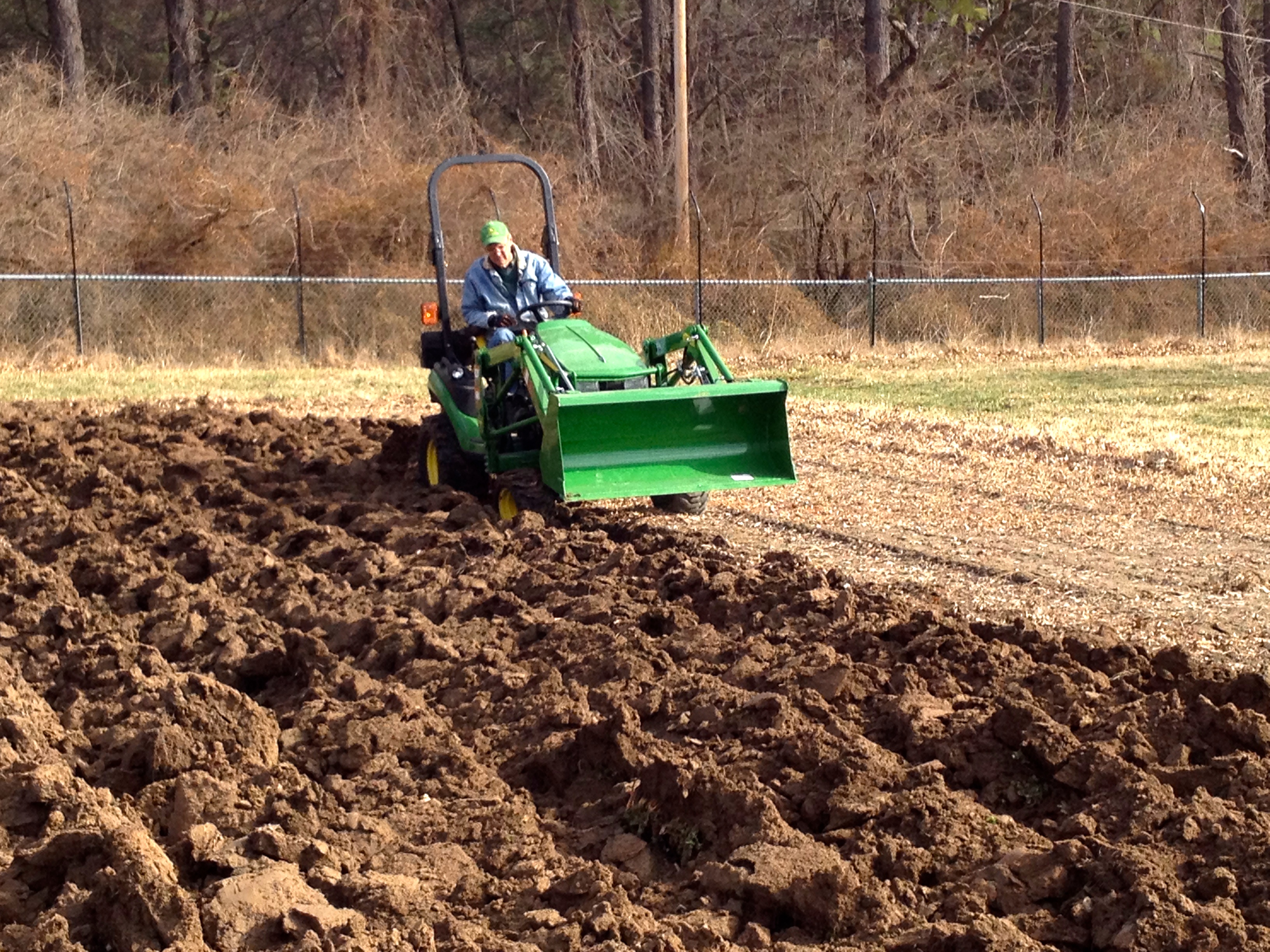
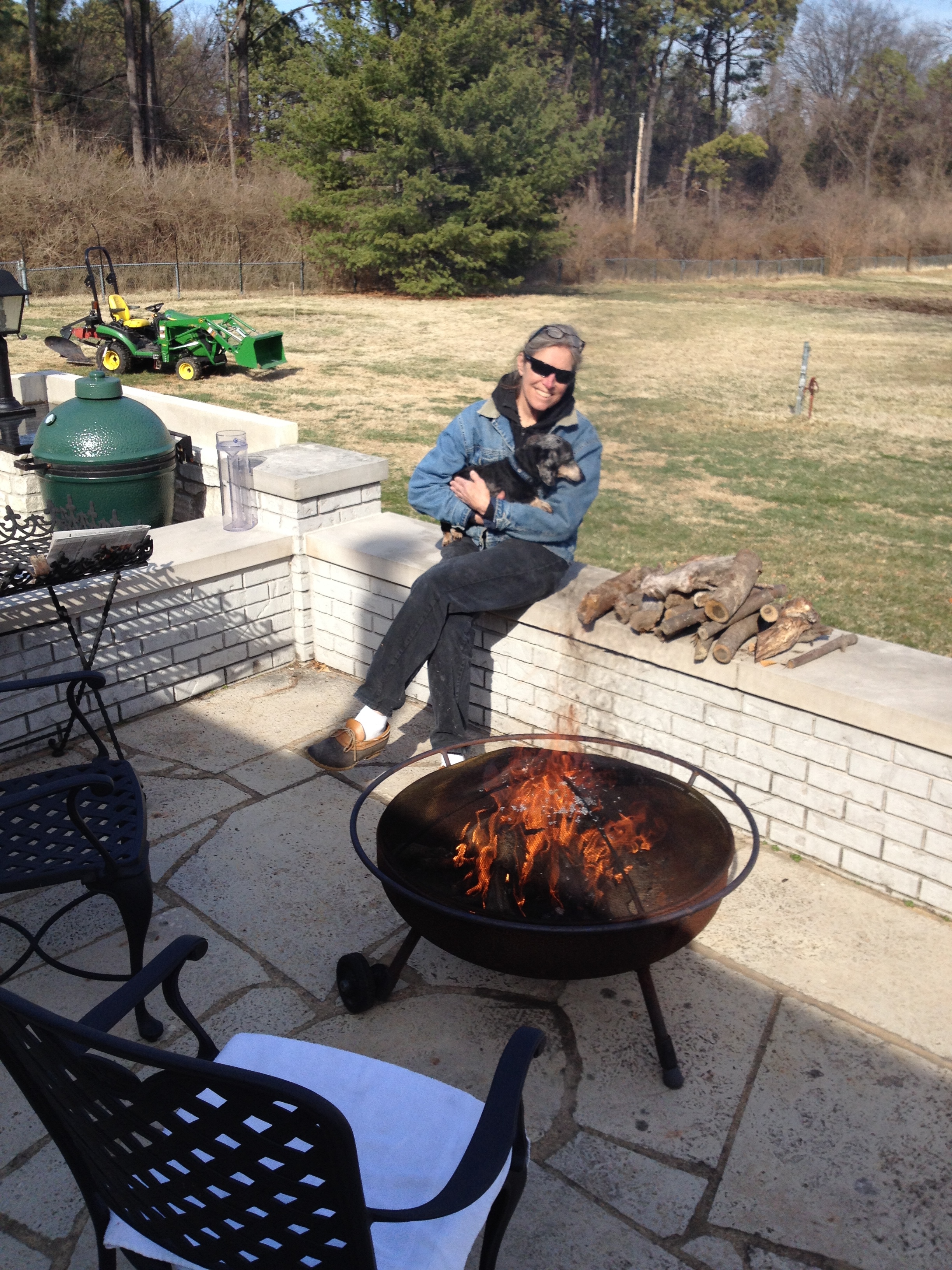
We did some additional clean up of winter leaves from the terrace and the pots and had Farley tagging along most of the day before building a fire in the outdoor pit. We are trying to use up some of the old woody trees we have chopped down over the years and it was nice to sit for a few minutes to reflect on the days accomplishments! Of course we also use the ashes from our wood fires to augment the plants in our landscape beds so it seemed like a win – win activity. IMG_5510It is on days like these when I am most glad that we put so many “meals” into the freezer last summer to eat during the winter. I think our quantities worked out pretty well since we have plowed through (haha) all of our prepared eggplant slices that were breaded and frozen. These we often ate on hamburger buns with our home-made mustard, pickles and ketchup…they made the best veggie burgers!  We are still working our way through the frozen green beans and peppers but the frozen carrots are long gone. We are down to nearly the last of the roasted vegetables which I froze to use with our rich tomato pasta sauce. We are still enjoying our fresh potatoes, as well as the frozen strawberries with our morning cereal and yogurt, but are saving the last bag of precious blueberries for next week when Kate and Peter will visit the farm.

Unknown's avatar

First Day of Spring

It is always confusing to say that March 20th is the first day of spring when March 21st gets a lot of press under that same title but of course the difference is that March 21st is the first FULL day of spring. We are so desperate for Spring to arrive around here that we welcomed today and the mild spring weather that went along with it.  Despite the light frost that covered the ground early this morning, we had a sunny, breezy, 70 degree day which was perfect for our outdoor activities. Our hawks have been watching all the activity as well. Here is a young one, getting the lay of the land. IMG_0974

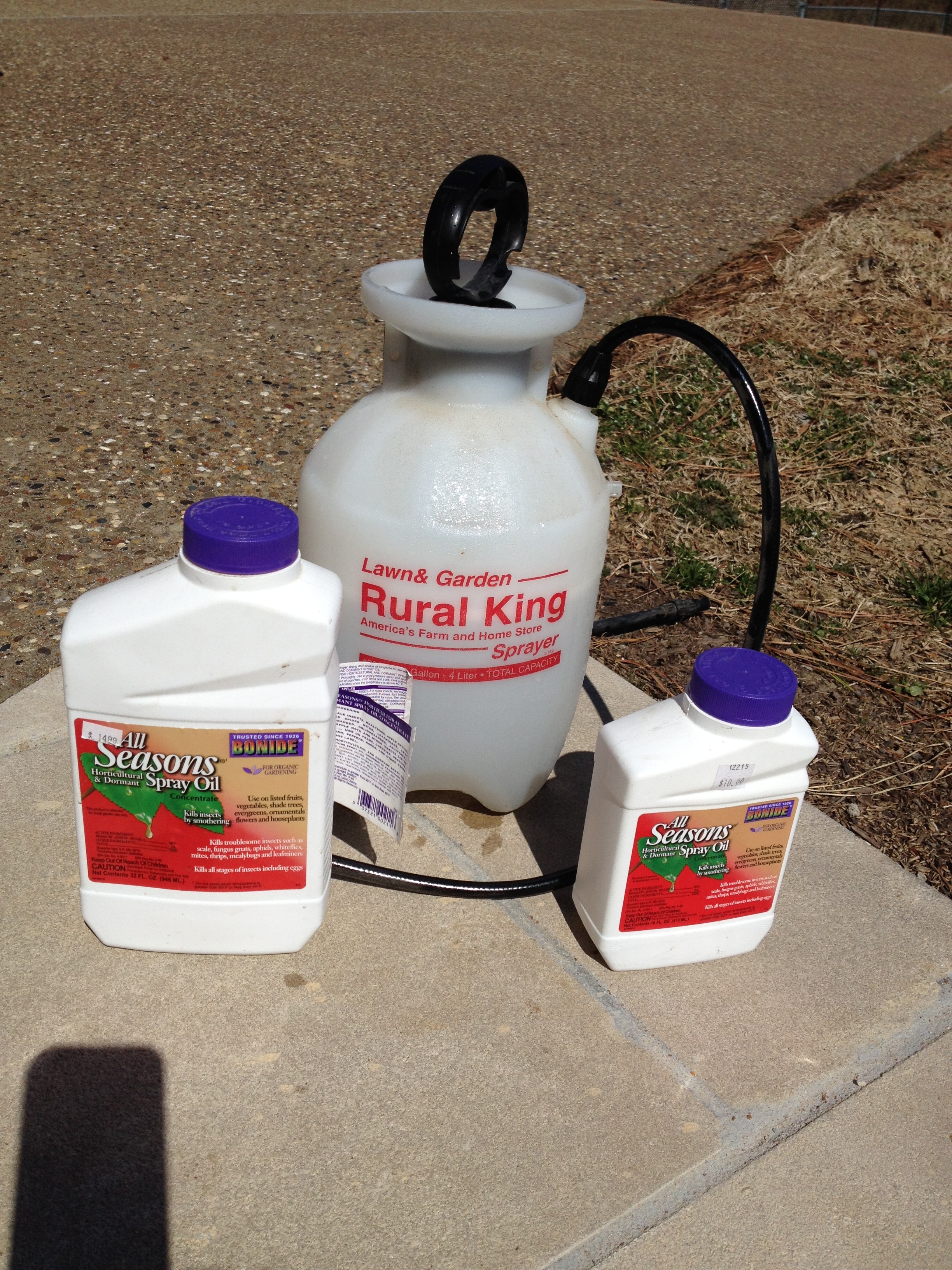
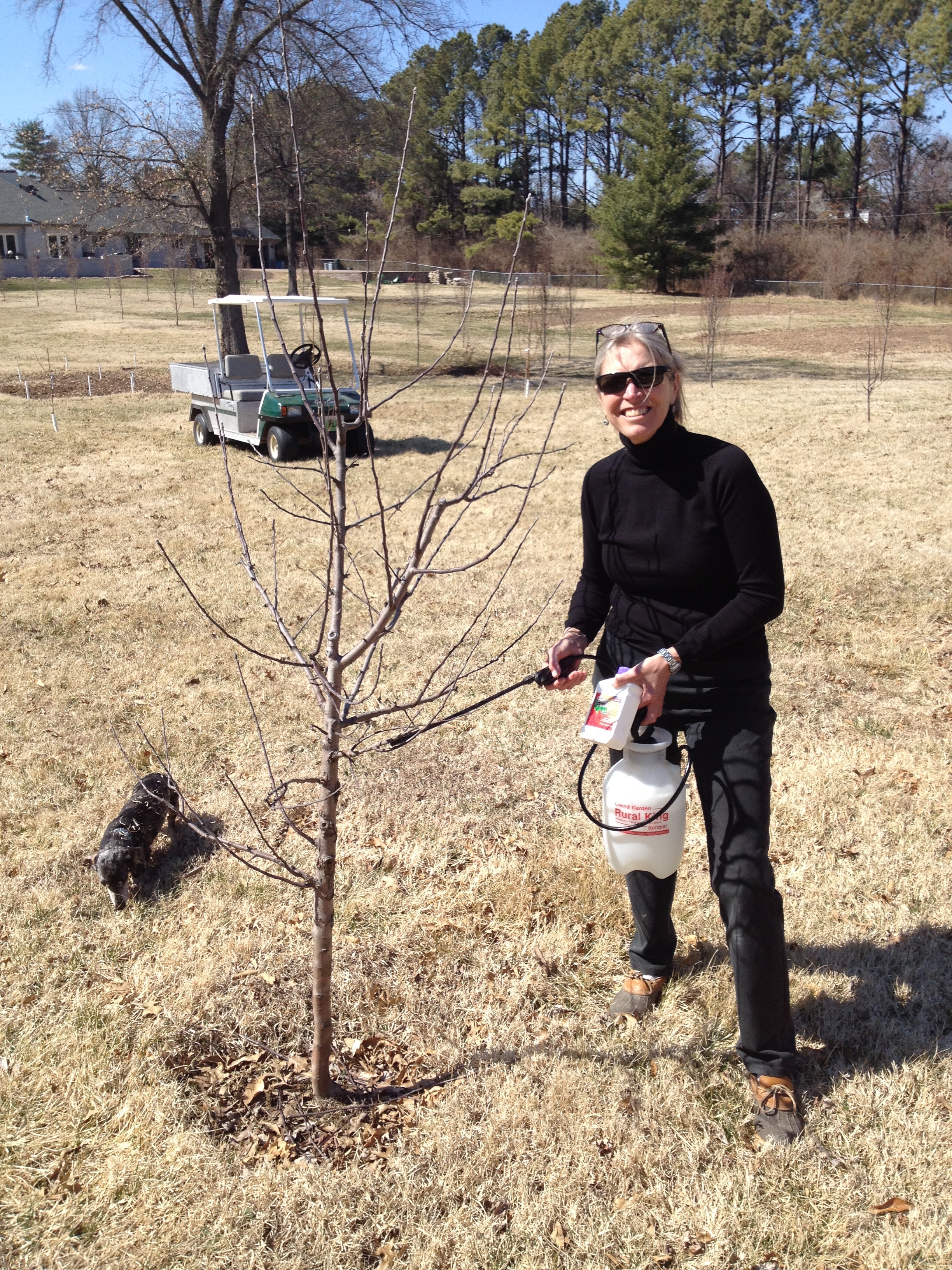
We’ve been watching carefully for a day just like this one to spray the orchard with a dormant oil mixture. They say if you are only going to spray your orchard with one item, this would be the most important one to apply since it suppresses insect infestation by smothering the overwintering adult insects and the eggs they’ve laid. It is considered a natural product which is why we use it and although applying it doesn’t insure we won’t have insects, we should be ahead of the game when it comes to controlling red mites and scale. The reason it is called dormant oil is because you spray it when the trees are still in a dormant stage, meaning the buds have not burst out with visible new growth. The timing is tricky because you also need to apply it when it won’t rain or freeze for 24 hours after spraying but if done too late, it will kill the new growth.  So despite the light breeze, today was the chosen day to spray. I had a bit of the oil leftover from last year’s spraying but needed more and had some difficulty finding it locally at first. IMG_5453

Its not hard to mix up a sprayer full and get started. The worst part about this today was the blow back in my face as I circled the tree with my spray canister. It didn’t take long to figure out that jabbering to Dave while on the east side of the tree was a mistake; a mouthful of the oily mess was a quick lesson but the need to spray on that side was still necessary so I managed to shield my face while still watching where the spray was going. Not unlike the day of pruning, this is a once a year chore that is fun because it is finished in short order but has  a big impact on the success of the orchard.IMG_5457

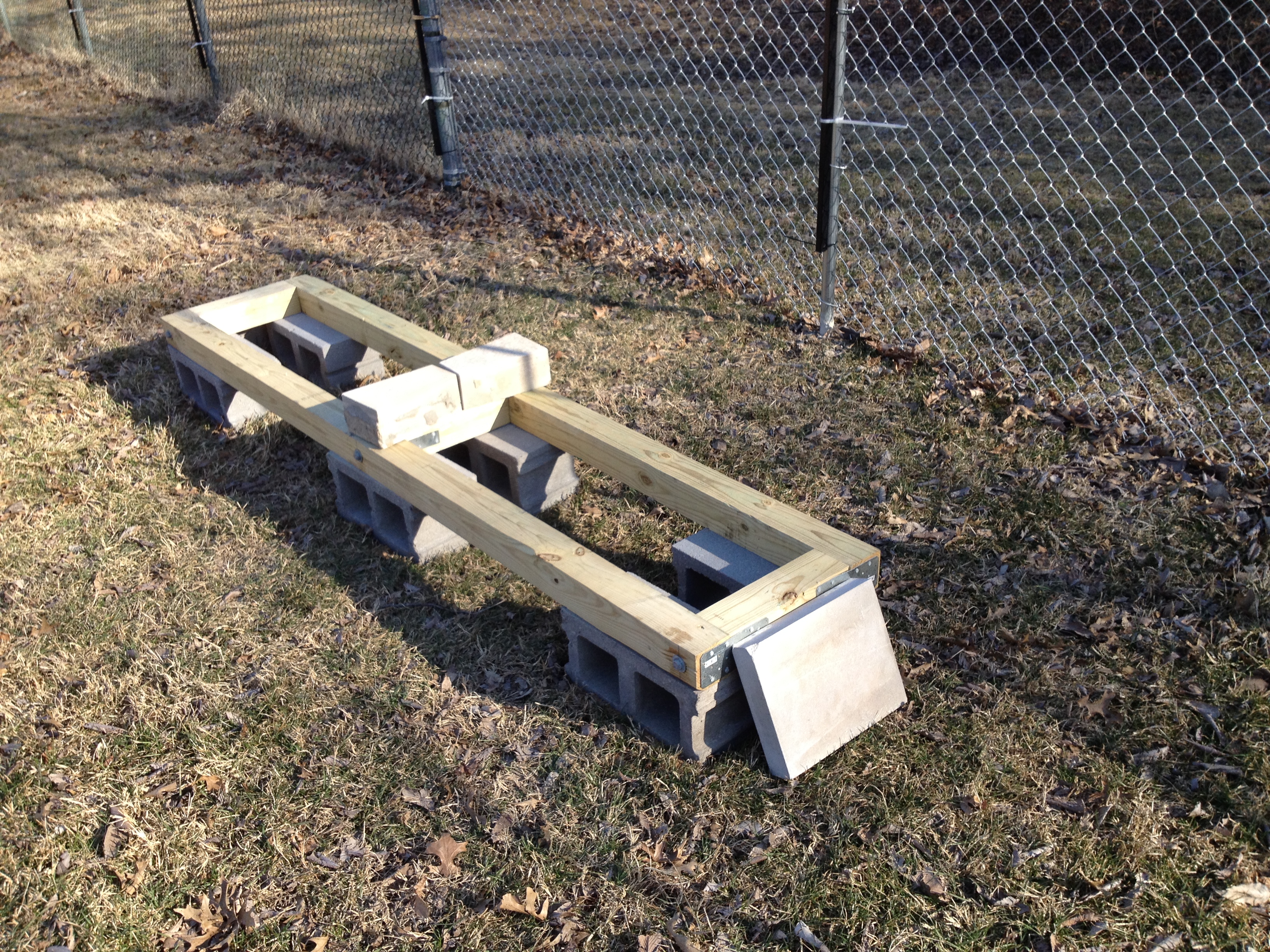
The other feature of the farm that will soon have great impact for the orchard is the coming of the bee hives. J&H, our bee mentors, dropped off materials to build a nice, large hive stand last week and they came over late Saturday afternoon to put it in place. It could hold 5 hives, but we will most likely be starting out with 3 this year. J is doing a split on some of his hives to accommodate these new ones so we will see how many are actually going to arrive after he does the split. Here is the stand, (installed on the south side – just inside the fence line), ready and waiting for the hives. More on the bees and hive placement details after they arrive!IMG_5467

Since the last post when the new fencing went up, we worked hard on getting the deer fencing in place and the wire installed. We broke this into several days worth of chores since the weather was chilly and the hands need to be bare to work with the wire. IMG_5376

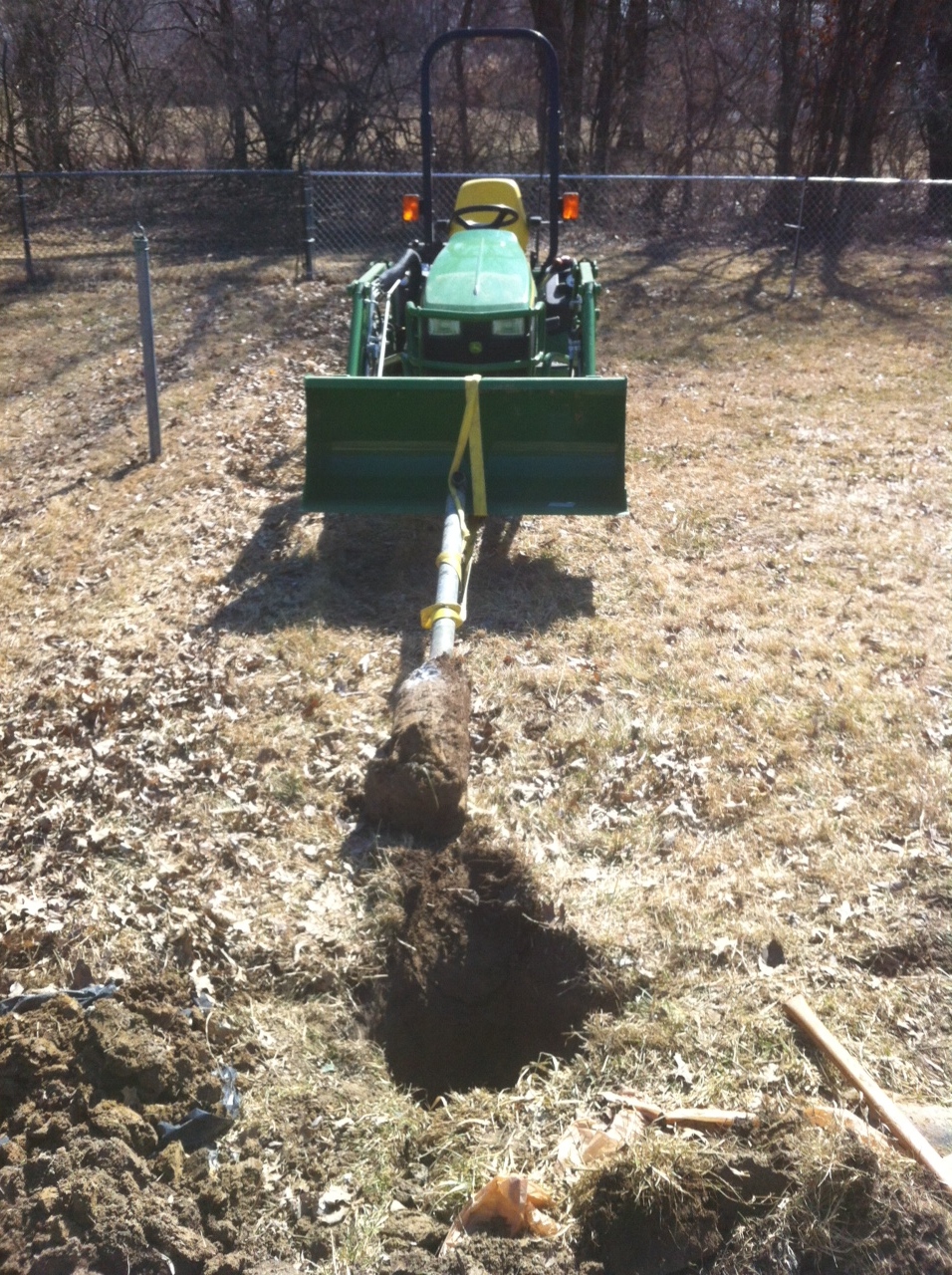
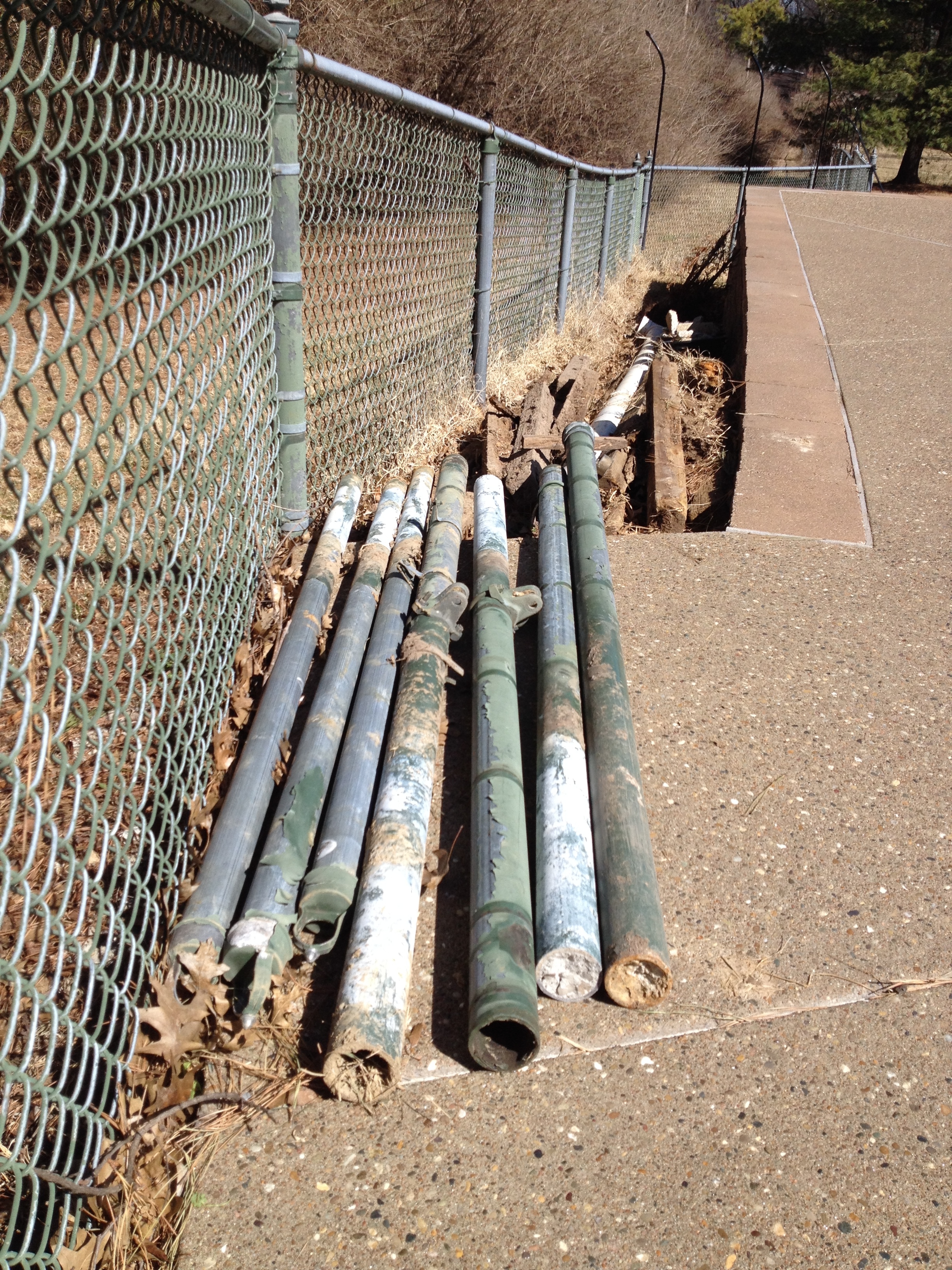
Dave was able to continue to remove the old steel fence posts. This time there were eleven posts to remove, some harder to get out than others so the tractor became an important aid in the process. We wanted to get this finished before the bees arrive since they probably wouldn’t take kindly to their new digs if we were making a commotion while they were trying to settle in. IMG_0715.JPG
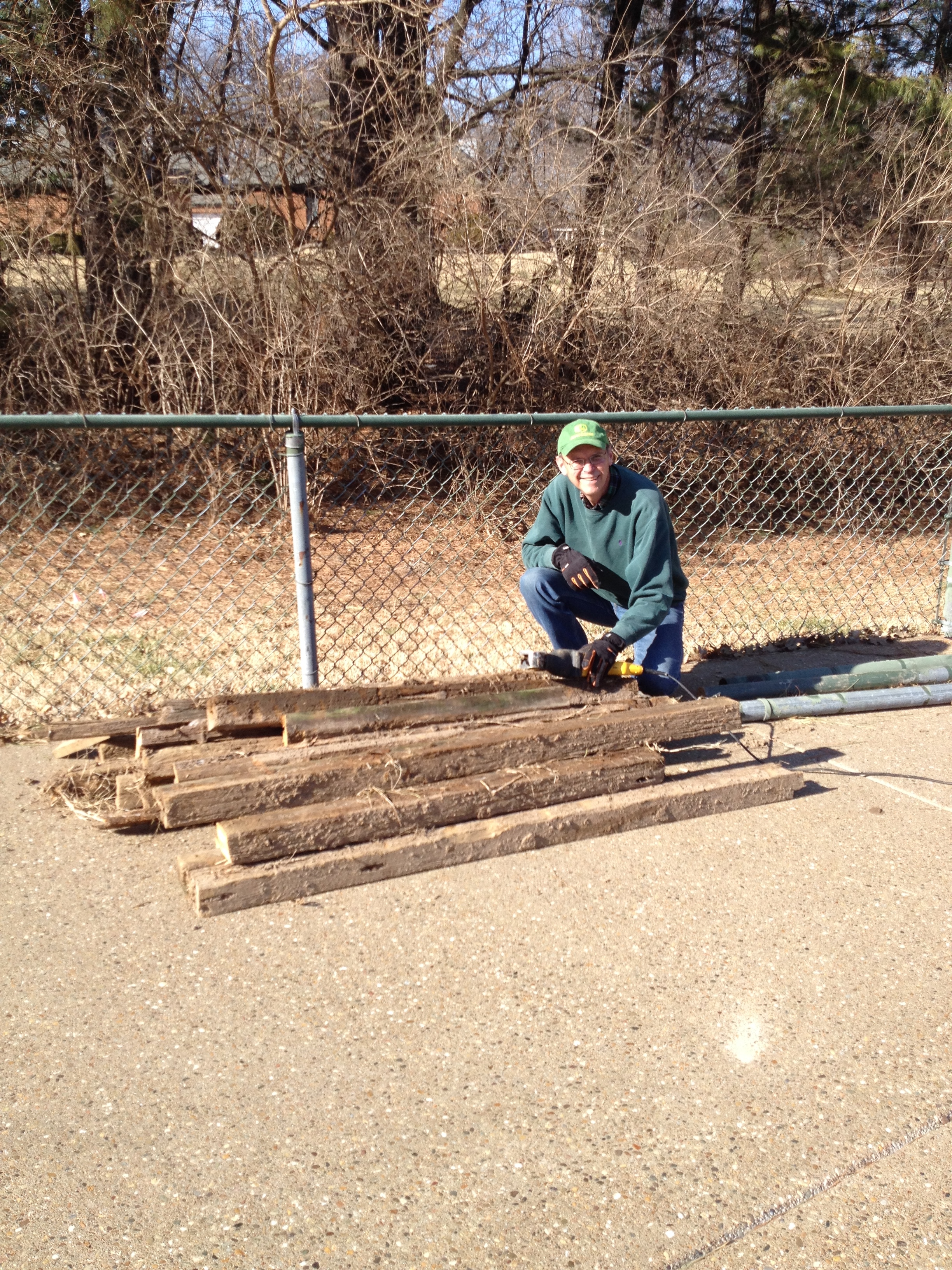
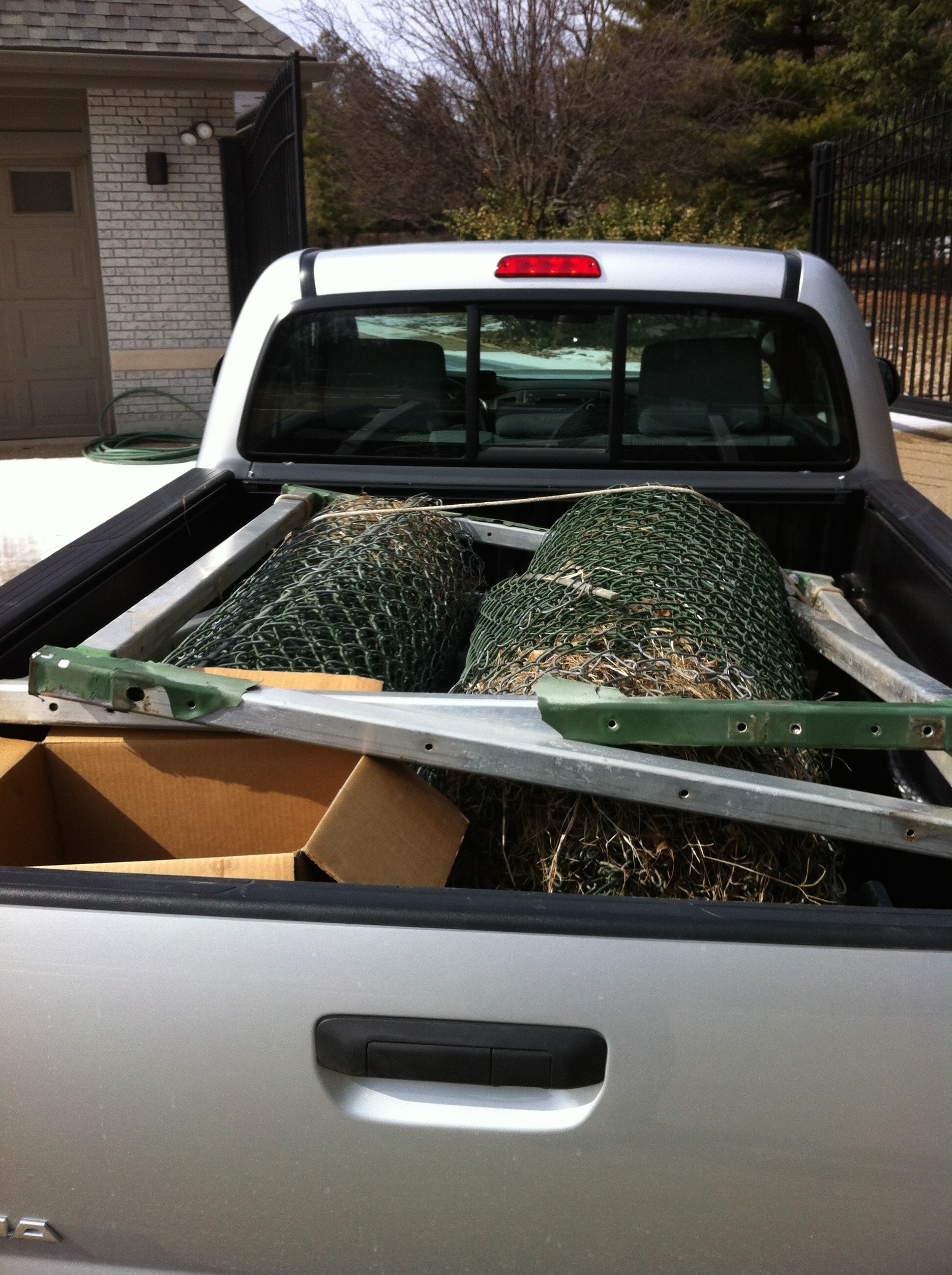
These efforts produced another pile of posts and old, rotting rail road ties.IMG_5425Which Dave has been cutting up into reasonable sizes…IMG_5464In order to haul them away in the truck to the recycling center. The last truck load was between 1,000 – 2,000 lbs of concrete which was pulled from the fence post holes and dropped at a construction dumping spot. These were good winter chores that make us feel as if we are making progress with the land. photo

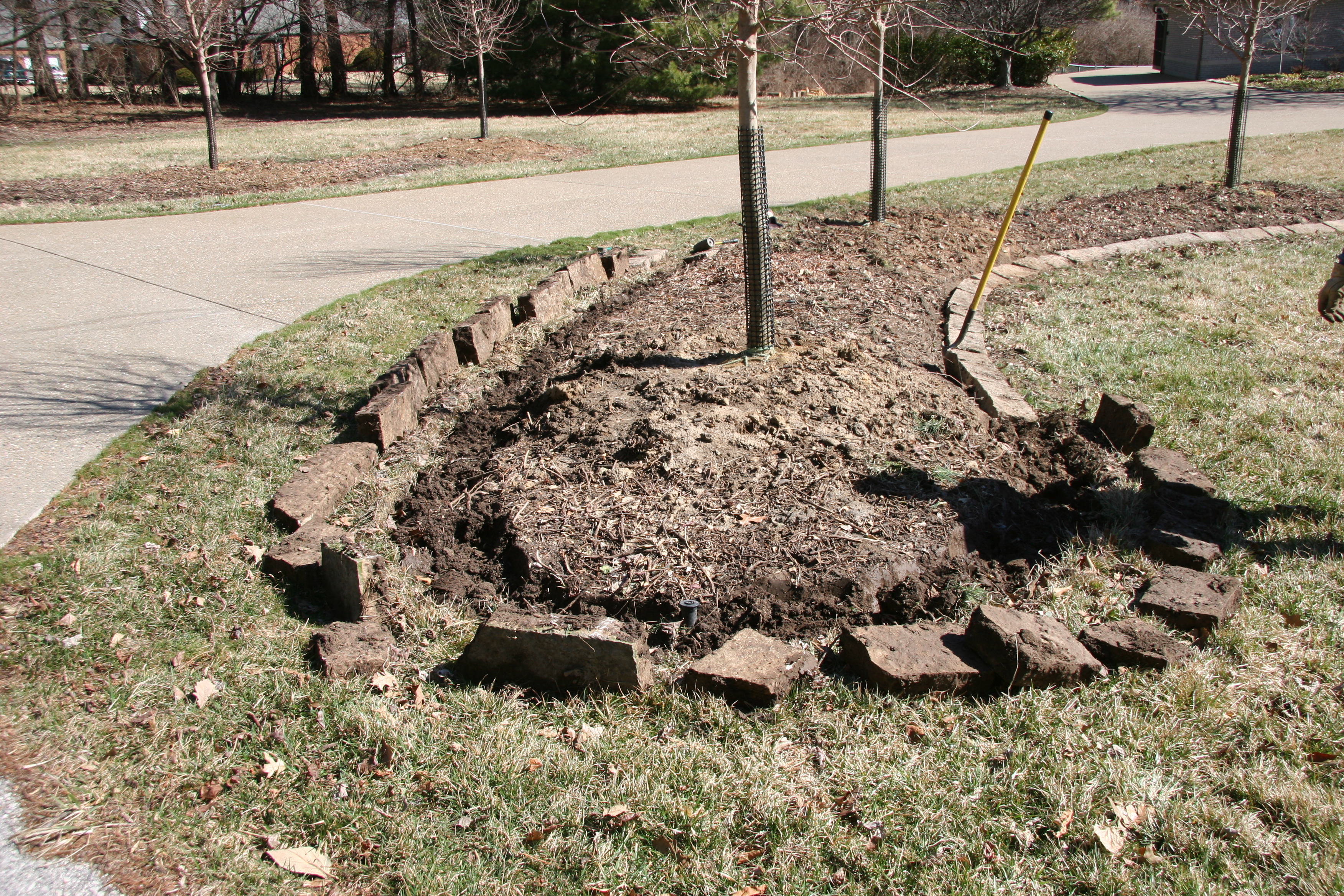
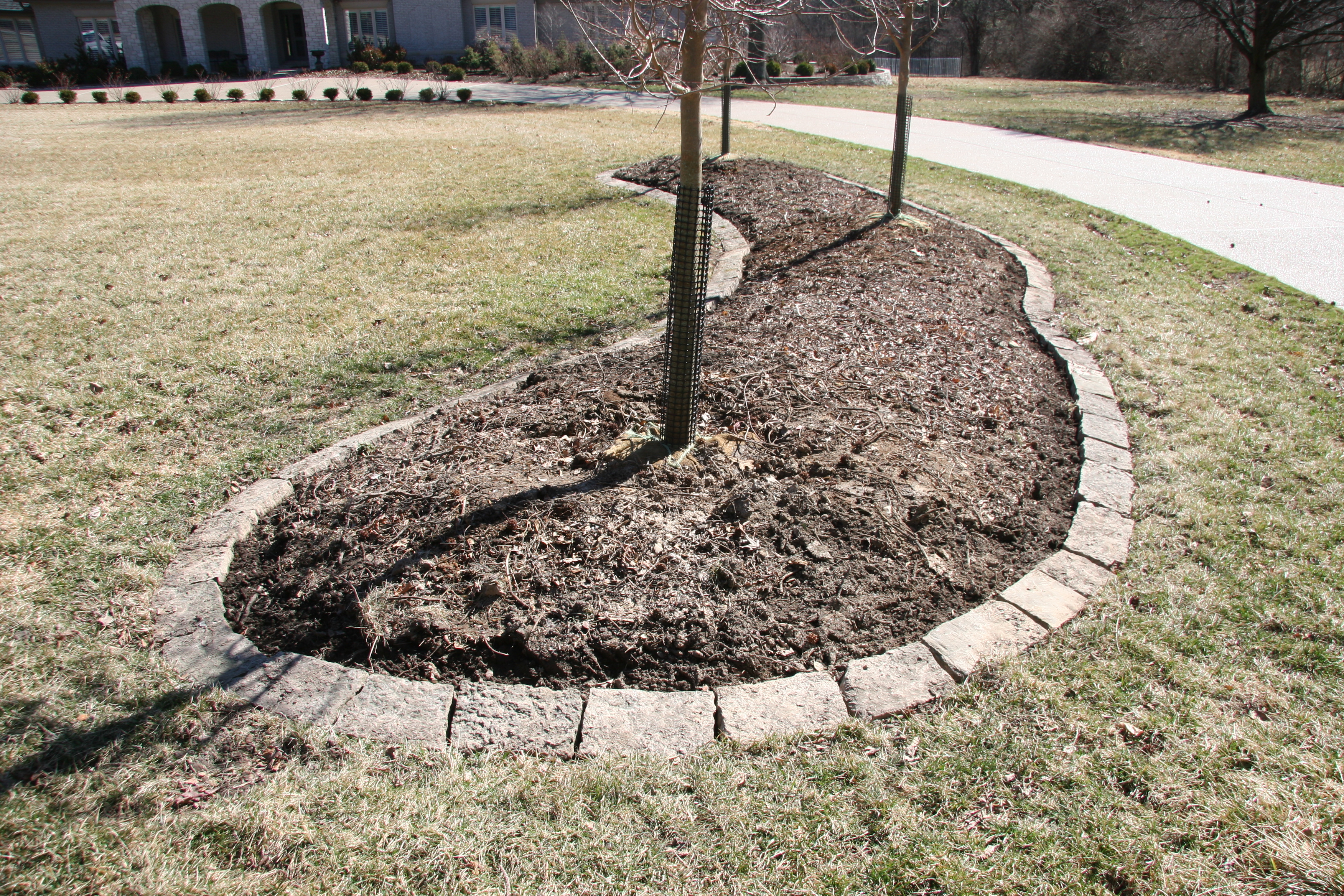
We have also been working in the front around the area of the new trident maples. Our arborist, Jon, is helping us to reset the mowing stones which were completely buried beneath the overgrowth of the old tree beds and are now nicely exposed and re-aligned. Boy, what an improvement! Can you spot the new tree guards? Lets hope they keep the deer from scratching away at the trunks!IMG_0988

IMG_0990

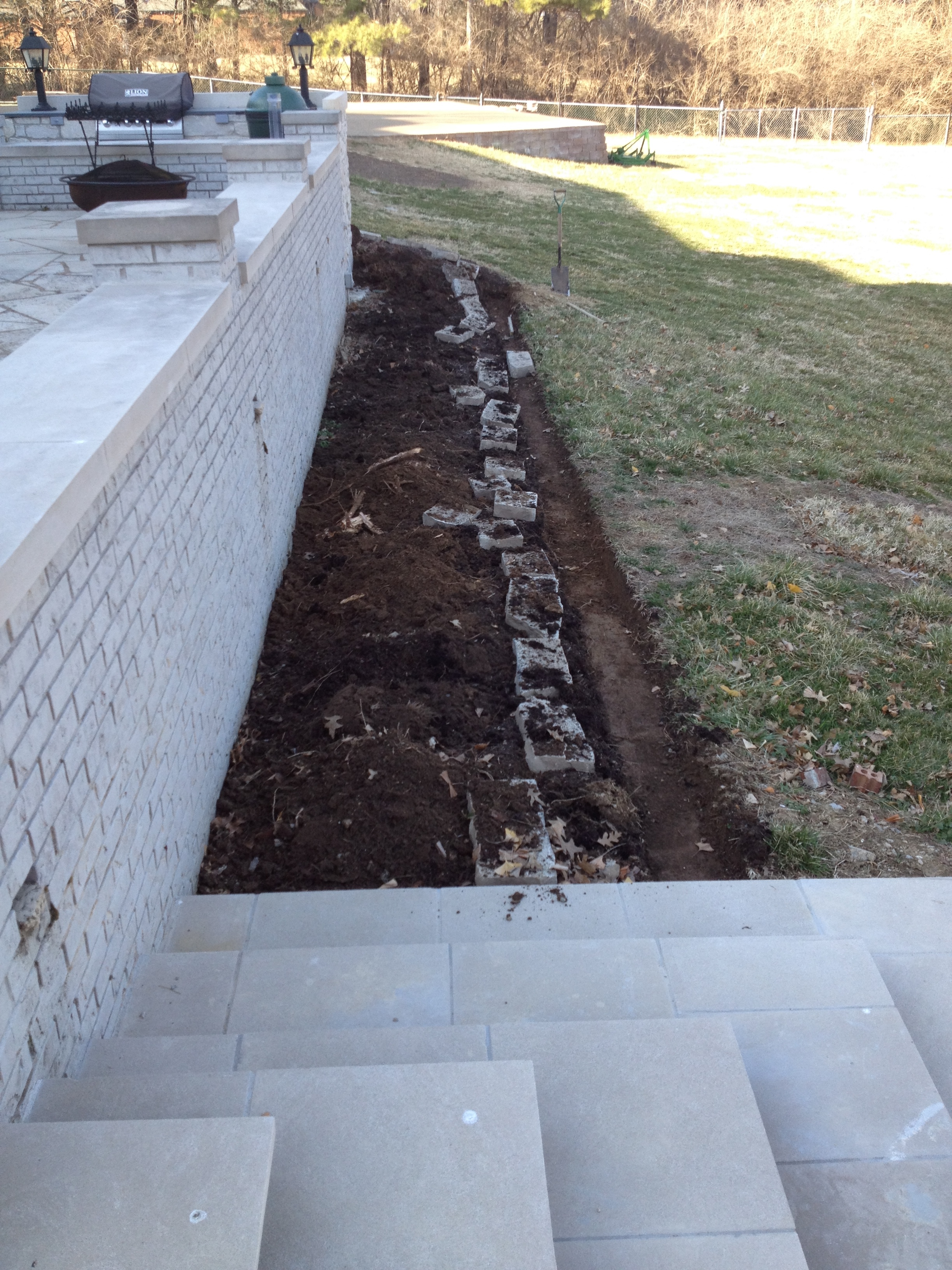
We are also getting his help with forming new beds with stone edging behind the terrace wall in back. As soon as the weather allows, these beds will be planted with a couple of layers of green matter with crepe myrtles being the main component. IMG_5469

Finally, a shout out to our daughter, Kate, who celebrated her 30th birthday yesterday! She and Jason celebrated with cousins Sarah and Henry over a cozy dinner that Kate cooked for all. Happy Birthday to the bride to be!
Unknown's avatar

Visitors and 2014 Orchard Pruning

What a wonderful week we had here at the farm! Kate and Jason came in from California to visit and we managed to keep quite busy with wedding planning activities. We all felt as if we got a lot accomplished and with plenty of laughs along the way. Besides bustling about with wedding planning, the farm had some other visitors as well.

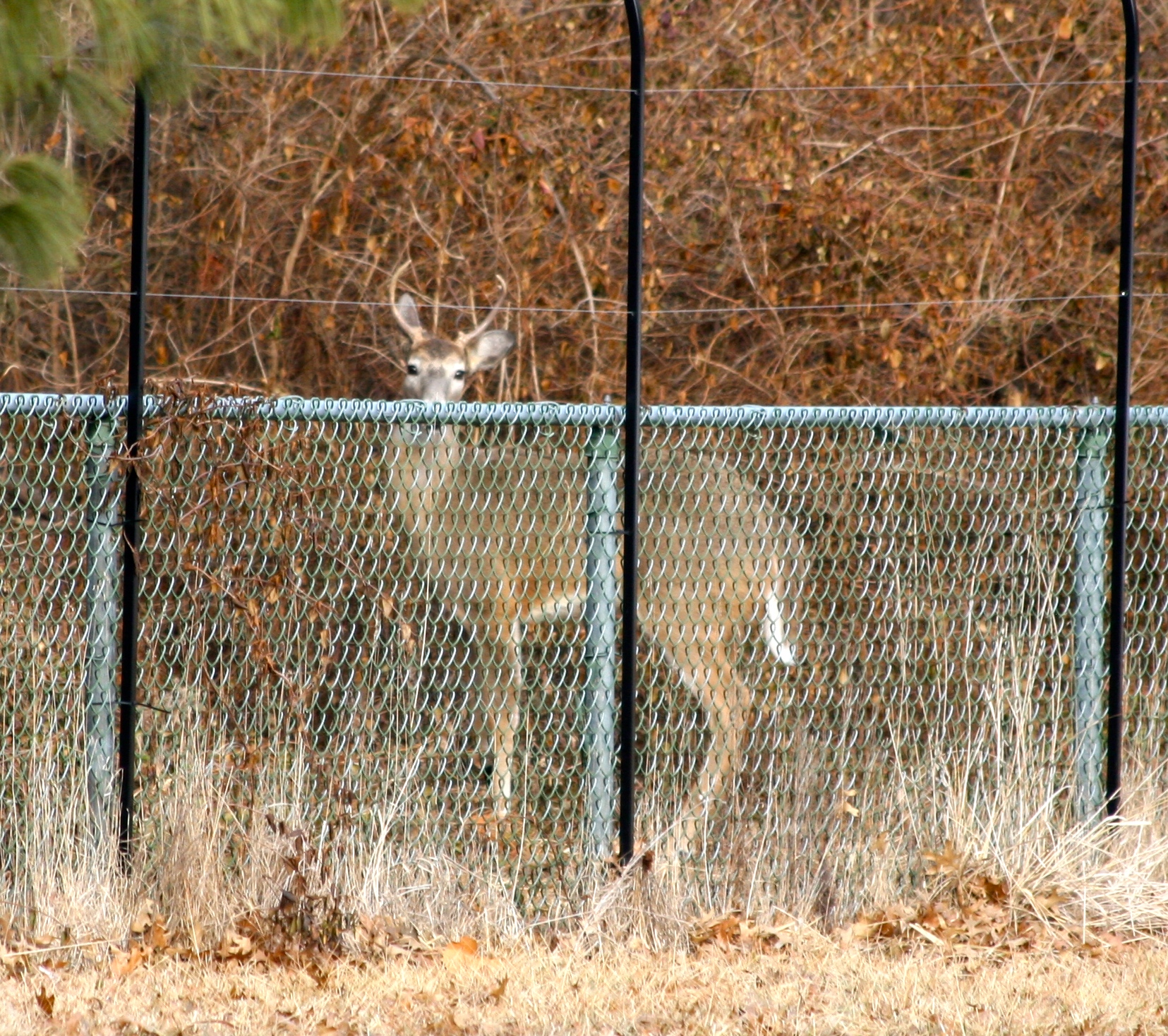
First, we had a sighting of the hobbled deer that I mentioned in the previous post. As you may have noticed by now, we are keen on watching for activity out the back glass and so it was that I spotted a young buck on the north fence alleyway last Monday. He was munching away at honeysuckle and I grabbed my camera and slipped out the back door to observe him, wanting to see if he would challenge the fence or not. He spotted me, stopped eating and looked around to figure out his options. I thought he would dash off along the fence but he hobbled into the woods instead. I managed to get a quick pic but I couldn’t discern any visible damage to his leg other than his odd gait. So here is my crippled deer. I guess I should call animal control? They might just think I’m interested in having one less deer. Well…..IMG_0950

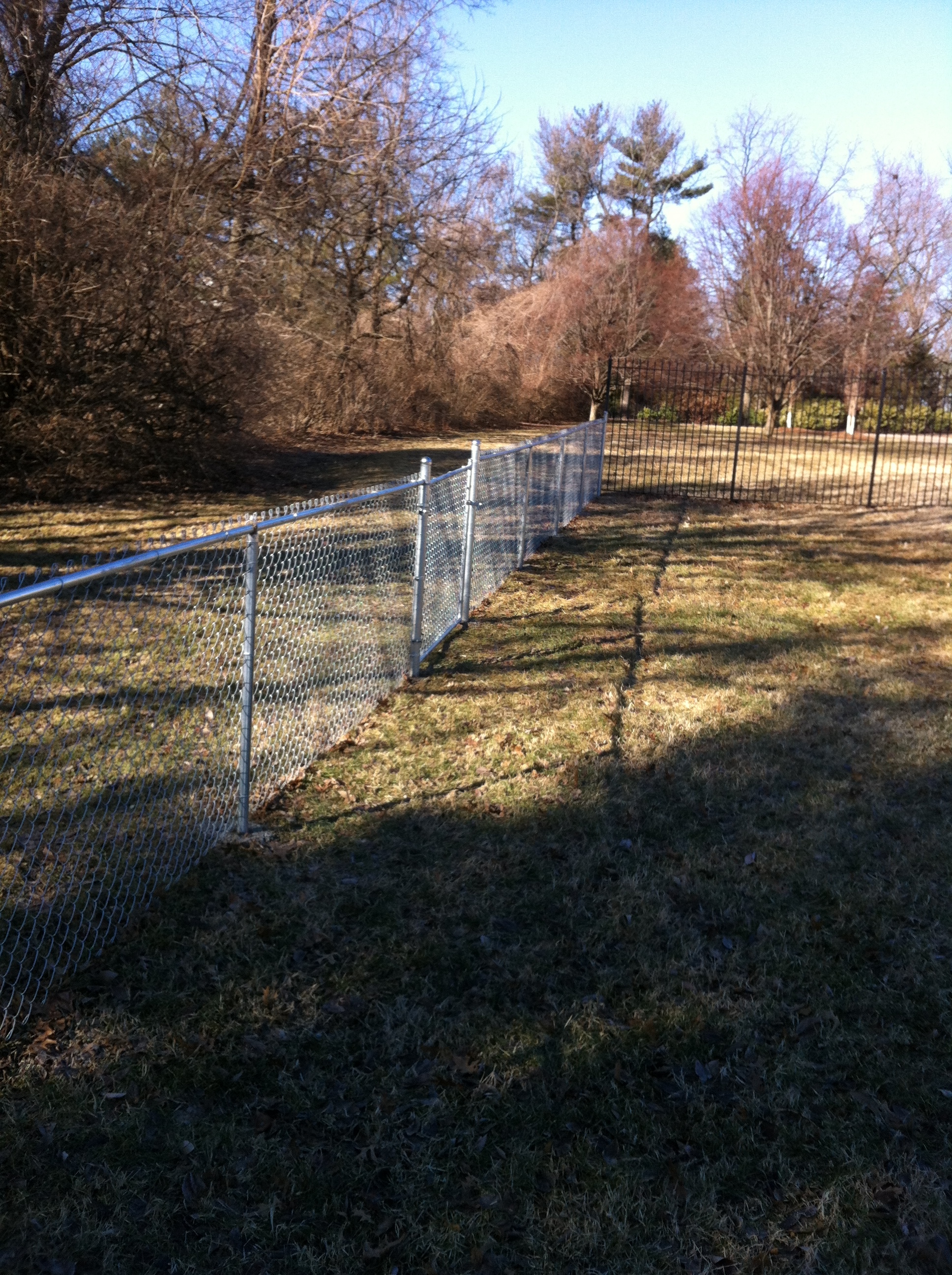
Our fence guys also arrived this week to install the new cyclone sections and gates. We were a bit surprised to see them since it was about the first day the temps had been above freezing and we were not sure how difficult it would be to dig the new posts since we had heard that the permafrost was solid for 12-14 inches below the surface – the most it has been for many years. They managed okay since they had an auger and the posts went in quickly. They returned the next day to pull the fencing and add the gates. Next up: adding deer fence pickets and wire to the new fencing. photo 10

photo 7

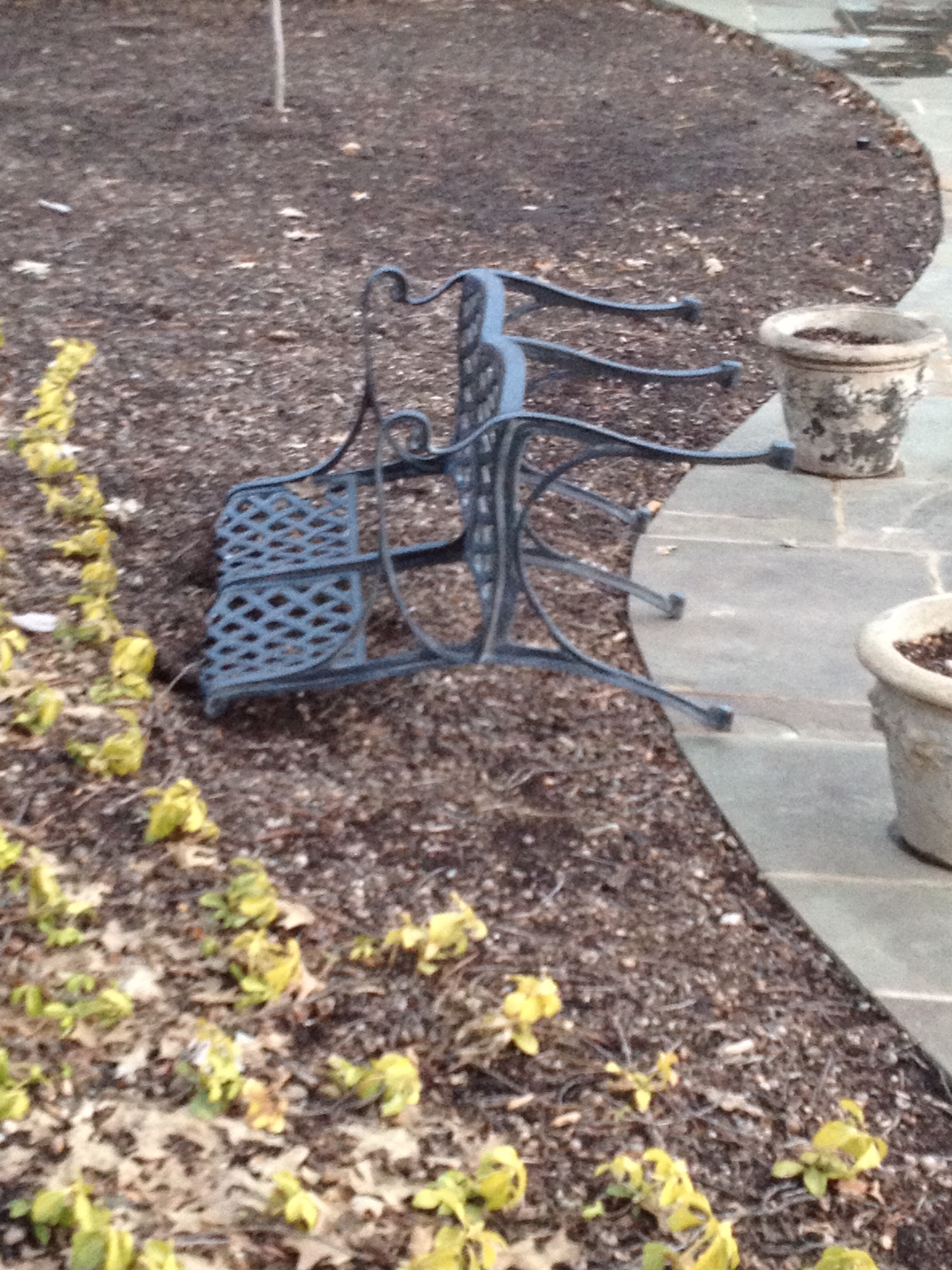
We had decent weather until Thursday afternoon when a terrific storm kicked in with high winds and brief, but torrential rain. The wind was blowing at more than 50 miles per hour and got so bad that at one point we looked out the window and saw one of our wrought iron benches had BLOWN right over!photo 11

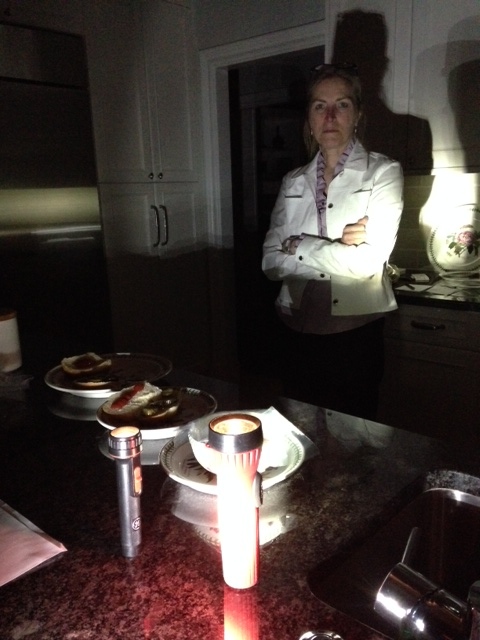
We lost power for about 5 hours that afternoon which would not have been so bad except that I had planned to have the family all over for dinner that night. It was fortunate that just about everything I had planned for dinner could be put off for another night. Our natural gas generator kicked in immediately so we did not suffer much except that the kitchen lights were somehow taken off of the generator panel at some point along the way so while we were watching TV in one room, we were using flashlights to cook by in the kitchen. As you can see, I was a bit perplexed by this as I prepared a little picnic dinner that night. image 7

Power was restored to the farm around 8pm but we heard the next day that the rest of our neighbors did not get power back until the following morning. The electricians are now scheduled to come next week to re-align the circuits that are fed by the generator! By Friday things were back to normal and we had everyone over for a lovely dinner here.

Saturday was so full of delights that it seemed like Christmas morning! The sun was shining clearly and the air temperature responded appropriately and so by early afternoon it was 62 degrees! Despite having to part with Kate and Jason who were flying back to California, we had another very welcome visitor to the farm. Our aborist, Jon, called early in the morning to see if he should drive in from Illinois for the annual orchard pruning day. What fabulous news! Yes, yes, we shouted, we would make a day of it! Although we planted the orchard four years ago, this was only our second year to thoroughly pruning all of the trees.

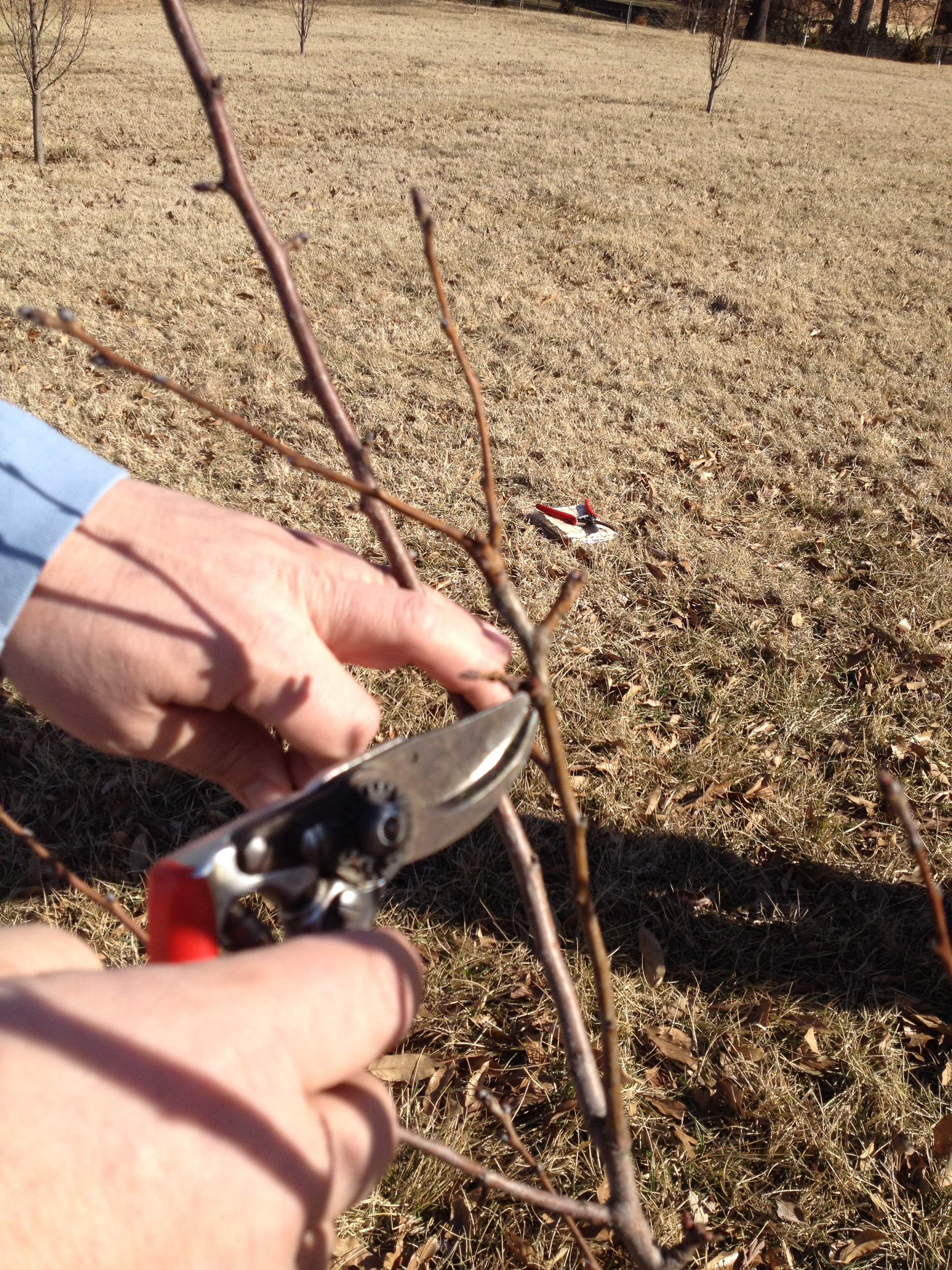
So we spent the morning and early afternoon and with Jon’s help, we evaluated each tree and pruned it appropriately. (Dave keeps a detailed spread sheet which shows each tree position, its name, root stock, bloom time and measurements – both height and caliper as well as how we have rated them over time.) There is so much to learn on this subject since each type of our trees (apple, peach, nectarine, pear, cherry) calls for a different pruning technique. Last year we went through this educational exercise with Jon but each year also calls for a different type of pruning as well so we had different considerations this year from last. It was fabulous to review each tree with him since we could easily identify the cuts we made last year and see the response in terms of growth that happened since then. Although we see these trees all the time when we are out in the field, it is so interesting to look at them through Jon’s eyes and to better understand the full growth/maturity plan as we worked with him. Of course we had our alcohol cleansed clippers at the ready and will continue to keep them clean and sharp for any intermediate cuts that need to be made before next year. IMG_5355

So despite reading the pomology (study of fruit trees) text books on pruning techniques, I must say, there is nothing like being in the field with someone who knows what they are doing and is willing to demonstrate how it is done but most importantly, be able to answer all of our questions. Jon is a great instructor and we are pleased to have his input. The other reason I feel like our pruning day was like Christmas, is because most of what we do here demands our near constant or continual efforts and much of it can be really hard work. This type of pruning happens once a year and is done in less than a day without without us expending too much effort but we see the payback from it all year long!

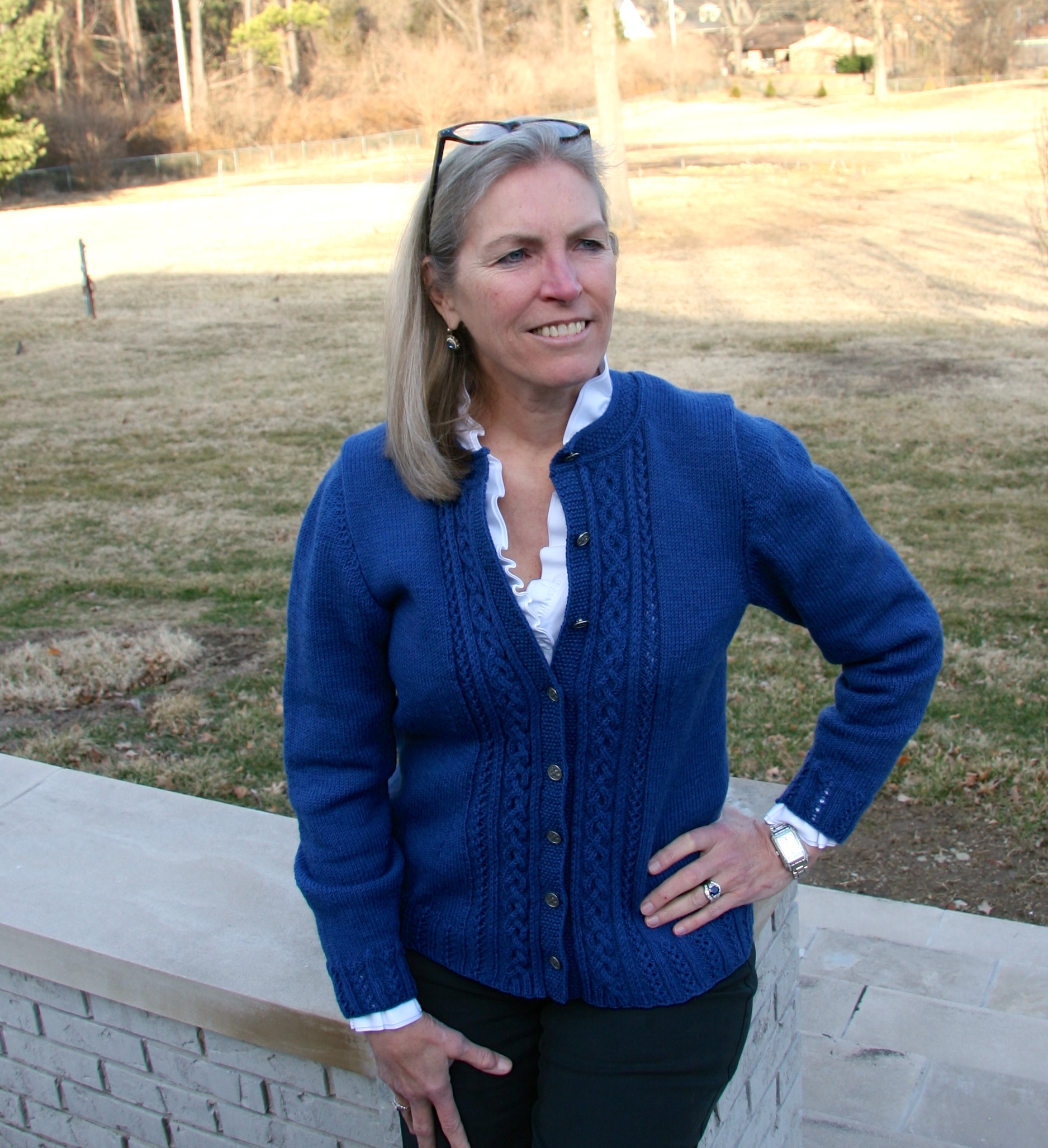
Winter evenings are also perfect for knitting. I started this sweater in early January and after completing it last night, I promptly put it on to wear today. As soon as the weather changes there will be little time to knit but that is the beauty of having more than one season, right!?!?IMG_0964