

The ‘Weather’ with a capital “W” has been absolutely atrocious – again or still, you pick the descriptive word – this spring. I suppose the most positive thing I can say is that at least the near record rainfall has not been combined with record heat as temps have been on the mild side for St. Louis but this means the wet fields are also not drying out fast enough.
As we transitioned from spring to summer during last Friday’s solstice (happy 5th wedding anniversary to the Kate and Jason!), we welcomed the beginning of the summer season with…you guessed it, nearly 4 inches of rain in the past 48 hours. And rain is just about the only reason I have time to work on this blog, as it has been raining off and on all day.
We also had poor timing last month while trying to replace the gutters on our house and do exterior repairs along with repainting during that time. We managed to wiggle our way through the weather challenges with a good outcome and just one or two minor glitches along the way. One small problem had to do with re-locating a bird’s nest that had been used almost constantly since March by a variety of parenting birds as if it were some sort of a hostel for an ornithological traveling members group.
At the time, a mother mourning dove had been occupying the nest on one of the downspouts by our side door when the crew came to replace that piece of downspout. (BTW, I always thought they were called “morning” doves, but when I was doing a little research about this species, I found that the ‘Zenaida macroura‘ are actually called Mourning Doves due to the forlorn sound of their coo or bird call. More can be found at this site. https://www.allaboutbirds.org/guide/Mourning_Dove/overview ).
So, the construction crew kindly asked how I wanted to handle the nest since there were two small doves in it that were not quite ready to launch as fledglings.
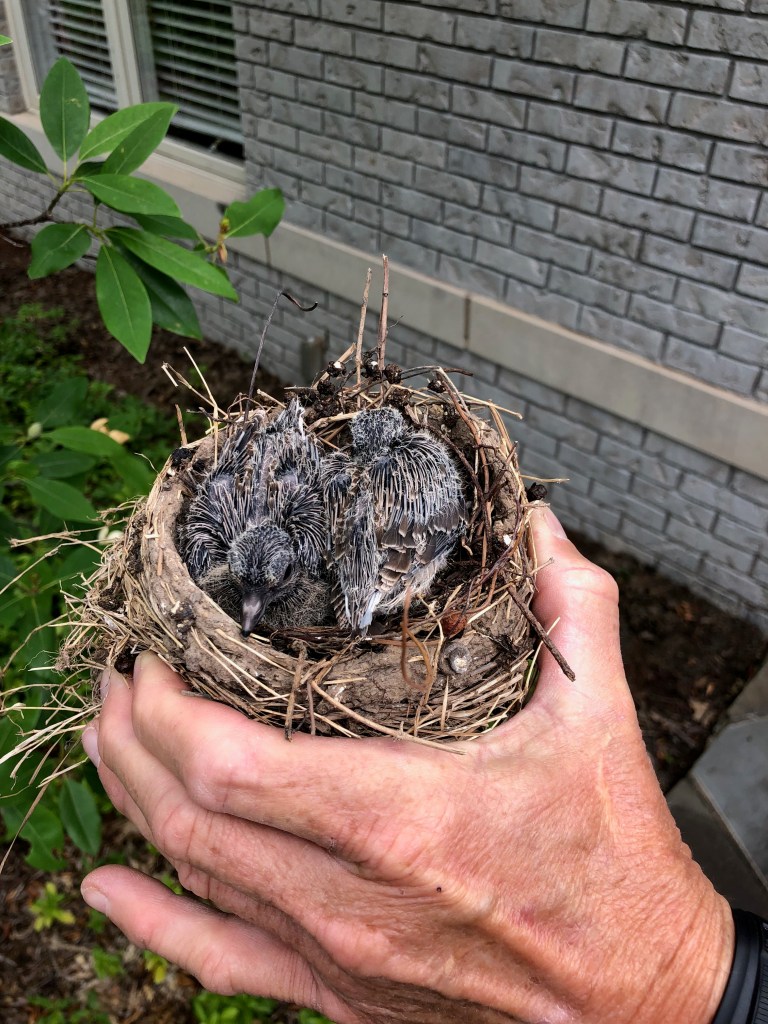
Of course, moving an active bird’s nest is not the easiest thing to do with success but we gave it a try and I popped the nest into the crotch of a nearby dogwood tree that had a protective upper canopy.
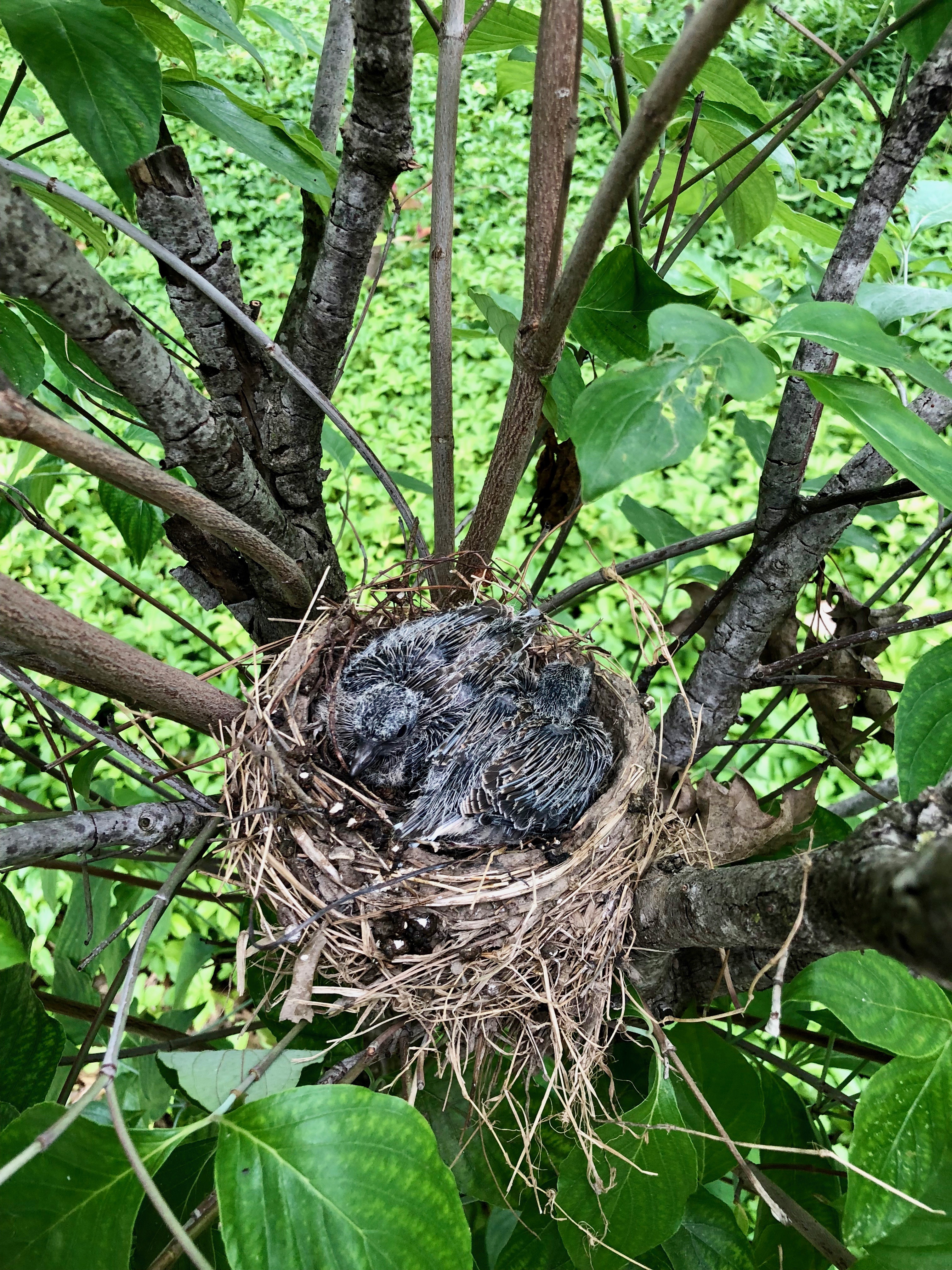
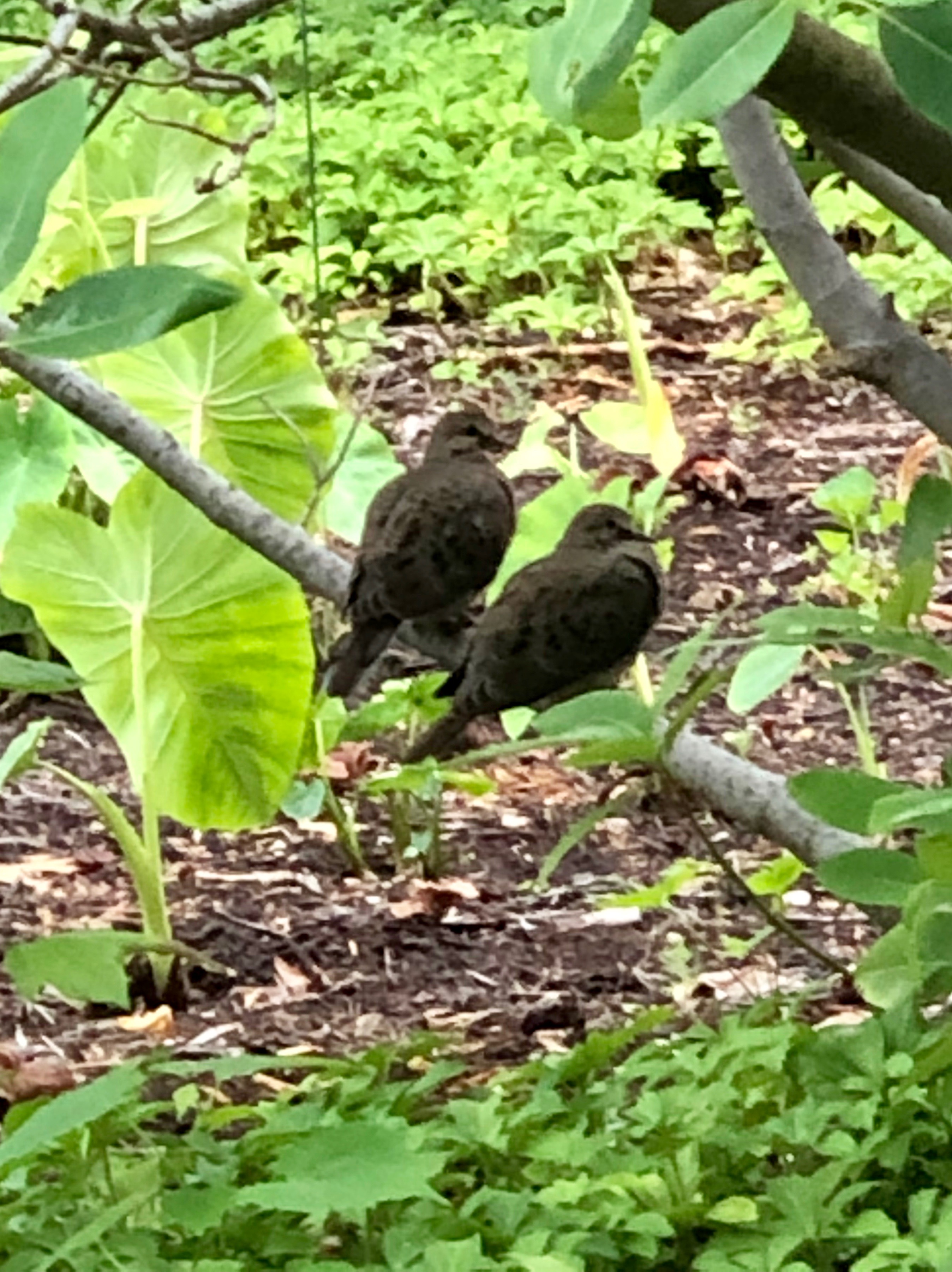
Much to my surprise, the mama bird returned to further shelter and feed her babies and after a week or so, we can now spot the two youngsters hopping along in the surrounding area, successfully finding food and maturing quickly. They have tolerated our traipsing in and out of that entrance to the house and and even allow the paparazzi to snap away!
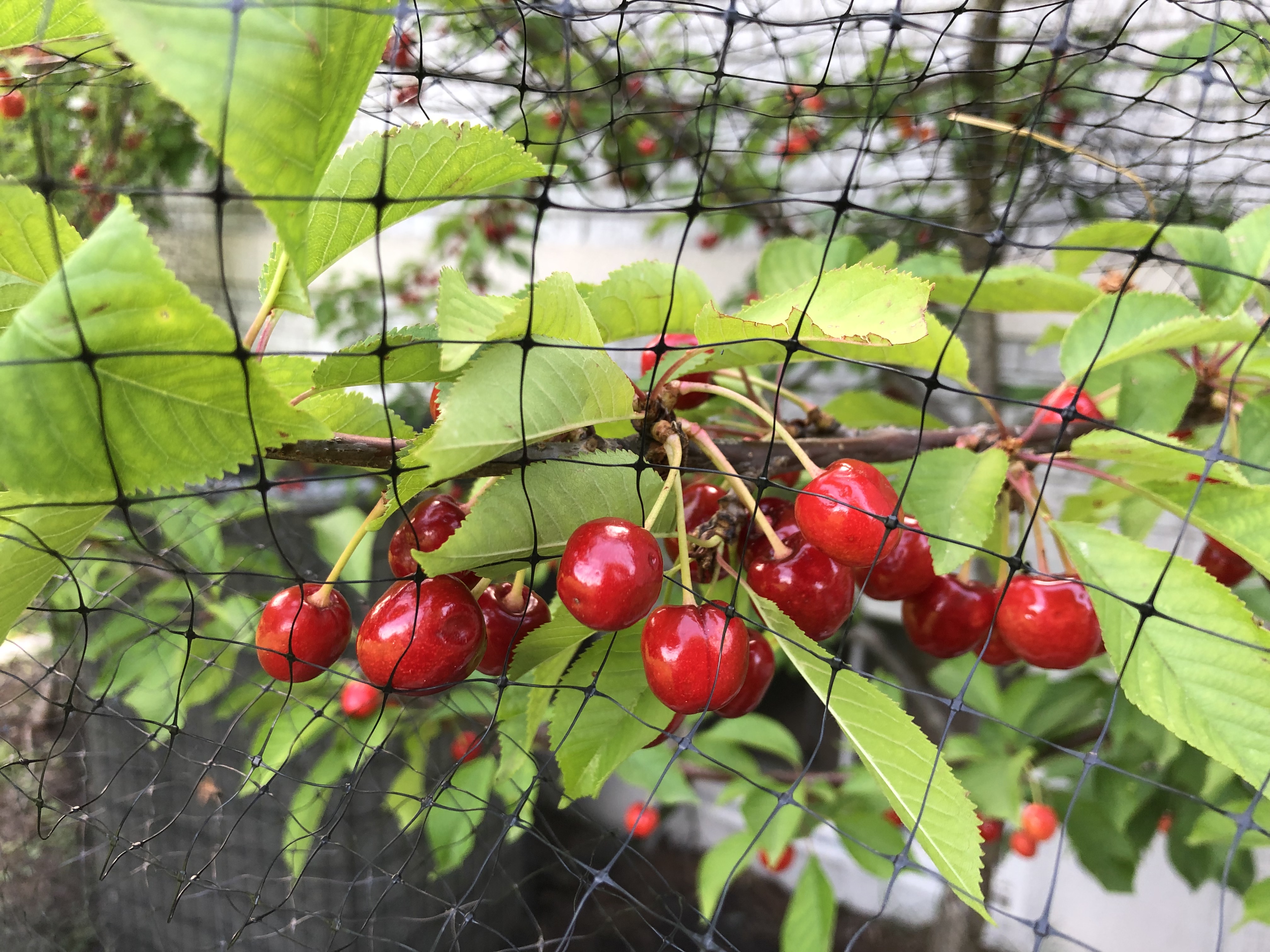
Remember the cherry tree fruits that we pictured in the last post? Those cute green fruits evolved into the real thing and for the second year in a row, we hoped for a successful sweet cherry harvest. First, we decided to take advantage of the workmen and their tall ladders and put a very large bird netting on the tree to protect the ripening fruits from the active bird population. We were rubbing our hands with glee at the thought of our nice cherry harvest…
…until one of our welcome black snakes got caught up in the net that was resting on the base of the tree. We love the work our black snakes do to keep the small rodent population down as they go after the voles and such that are nearly impossible to get rid of without an aggressive outdoor cat.
This snake was really caught up in the tangle of the net, so we sacrificed the net and tried to cut it loose except for the restraining/remaining bit that you might be able to see still around it’s upper body as indicated by the arrow and red box.
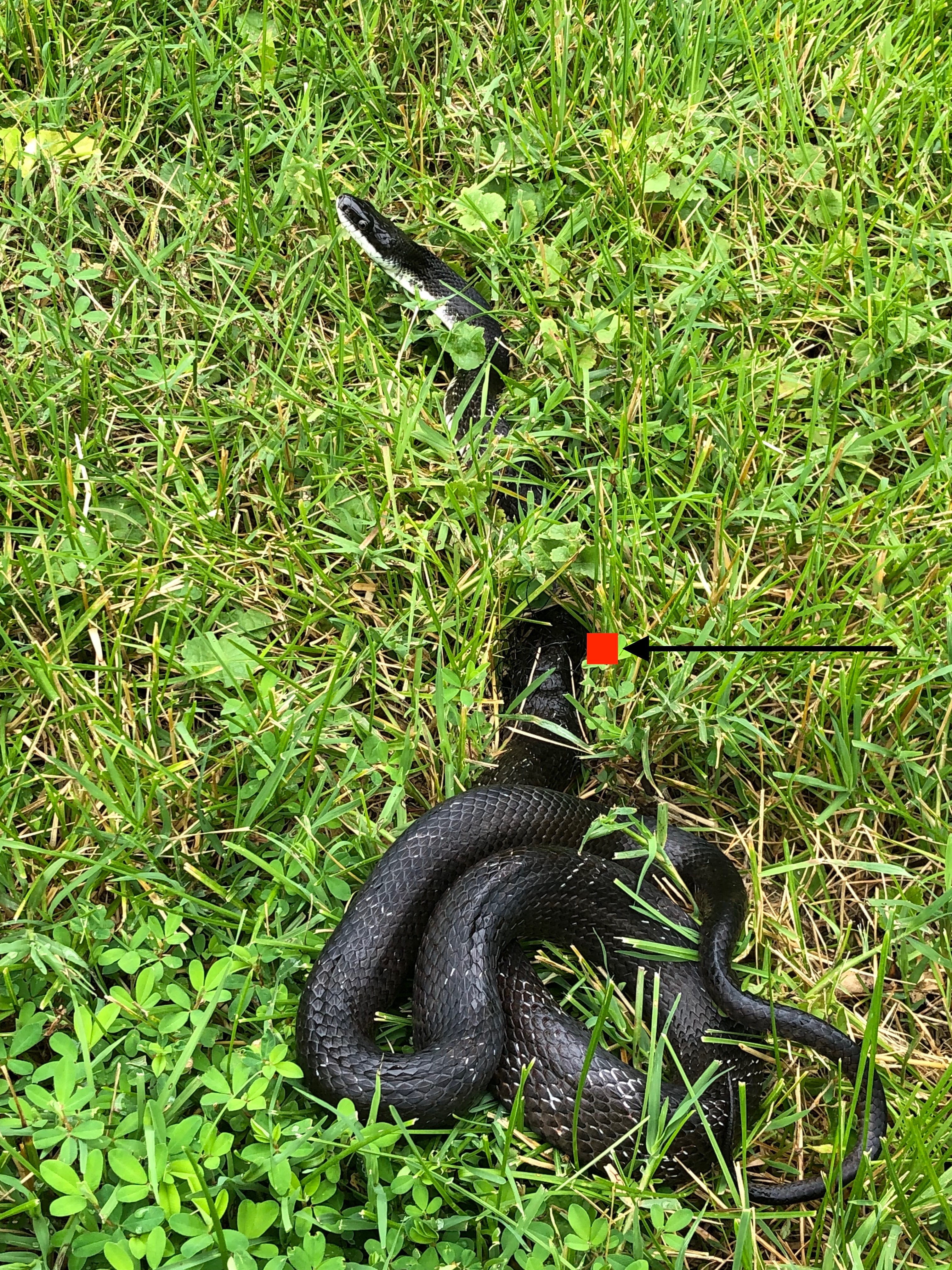
The remaining ‘waistband’ of netting constricted the snake’s ability to move forward as it was not able to expand and contract the muscles of its body to propel itself forward. (I’m sure you know, snakes cannot move backwards which is one of the reasons this guy got himself inextricably caught up in the first place!) So, we got a large cloth, gloves and a sharp scissors and tried once more to free this guy.
I put the gloves on, the cloth over it’s head and used the scissors to delicately snip off the rest of the netting that surrounded it’s belly and the moment of freedom was miraculous as off he slithered into the woods!
We then felt quite free to harvest more than 8 pounds of cherries from the tree!

This was the first year we had enough cherries to be creative…so one day I decided to make sweet cherry jam. What a long process this was as pitting 10 cups of cherries took some time even with my nice cherry pitting tool in hand!
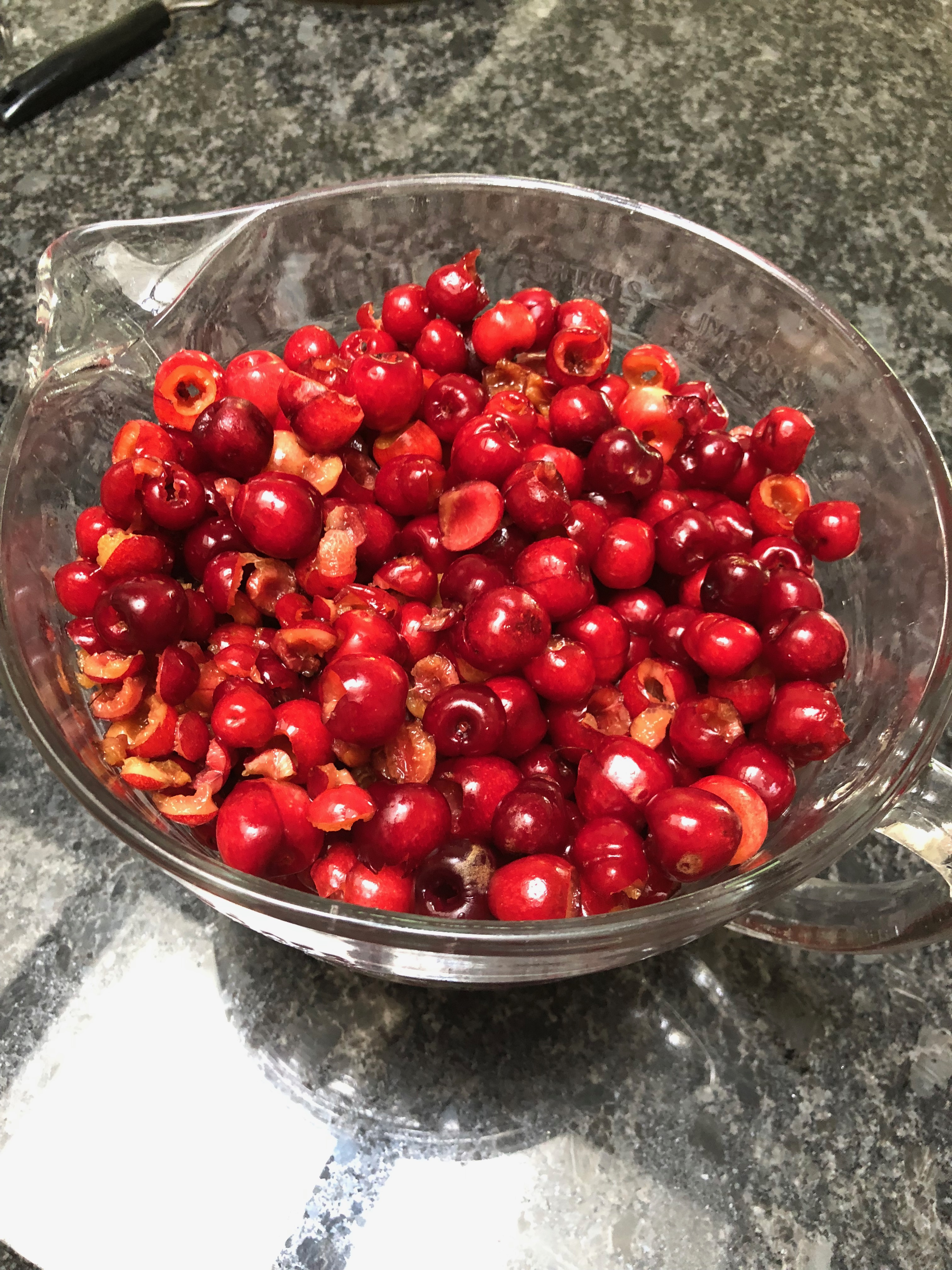
I then chopped and cooked them with pectin and sugar to make 12 half pints of sweet cherry jam!
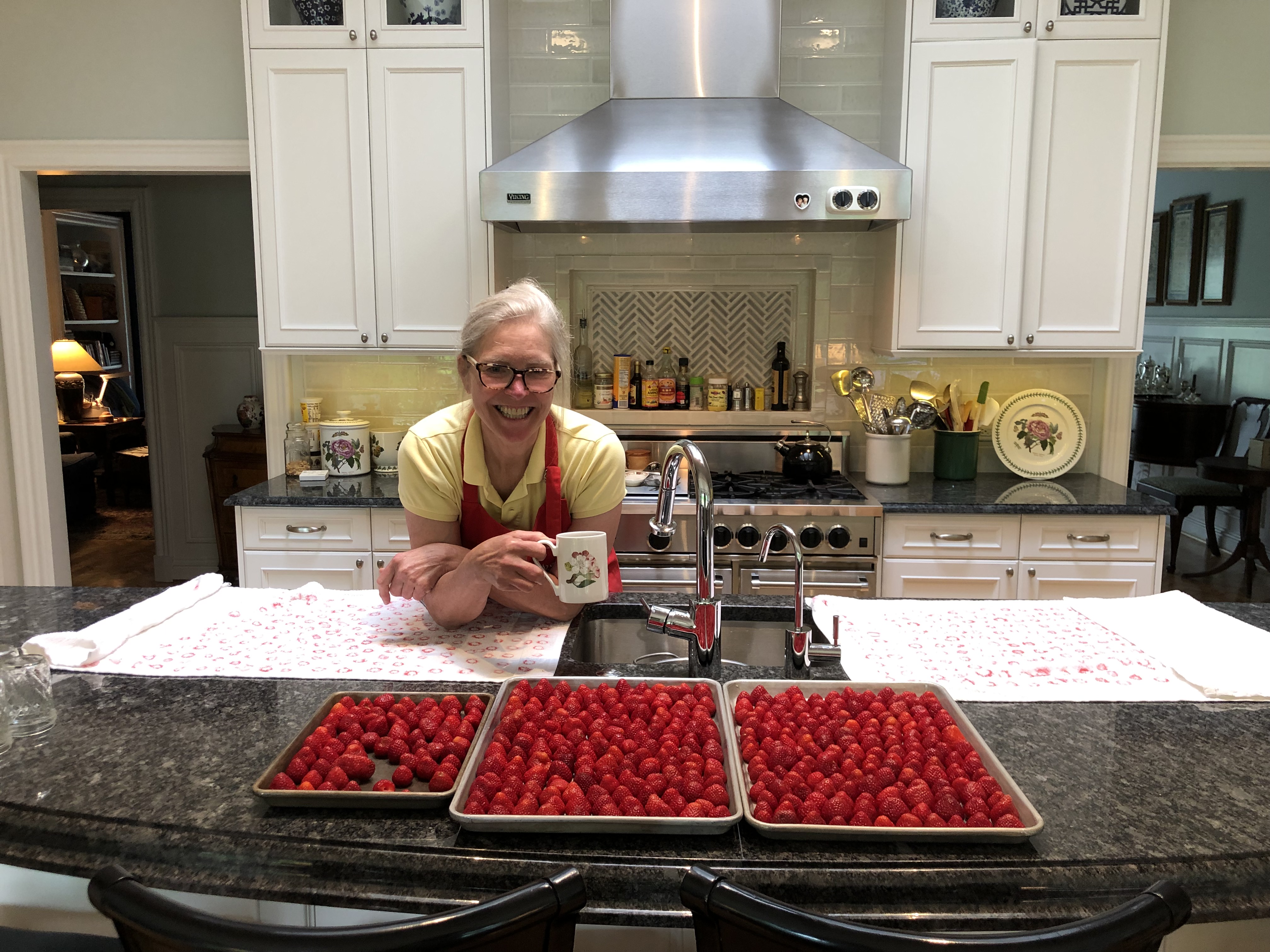
This of course was after processing pound after pound of our sweet strawberries…the ones we didn’t consume or sell fresh to our customers were made into 48 jars of jam or frozen. I hulled tray after tray of fresh berries and dried them on towels before placing them on trays for the freezer.
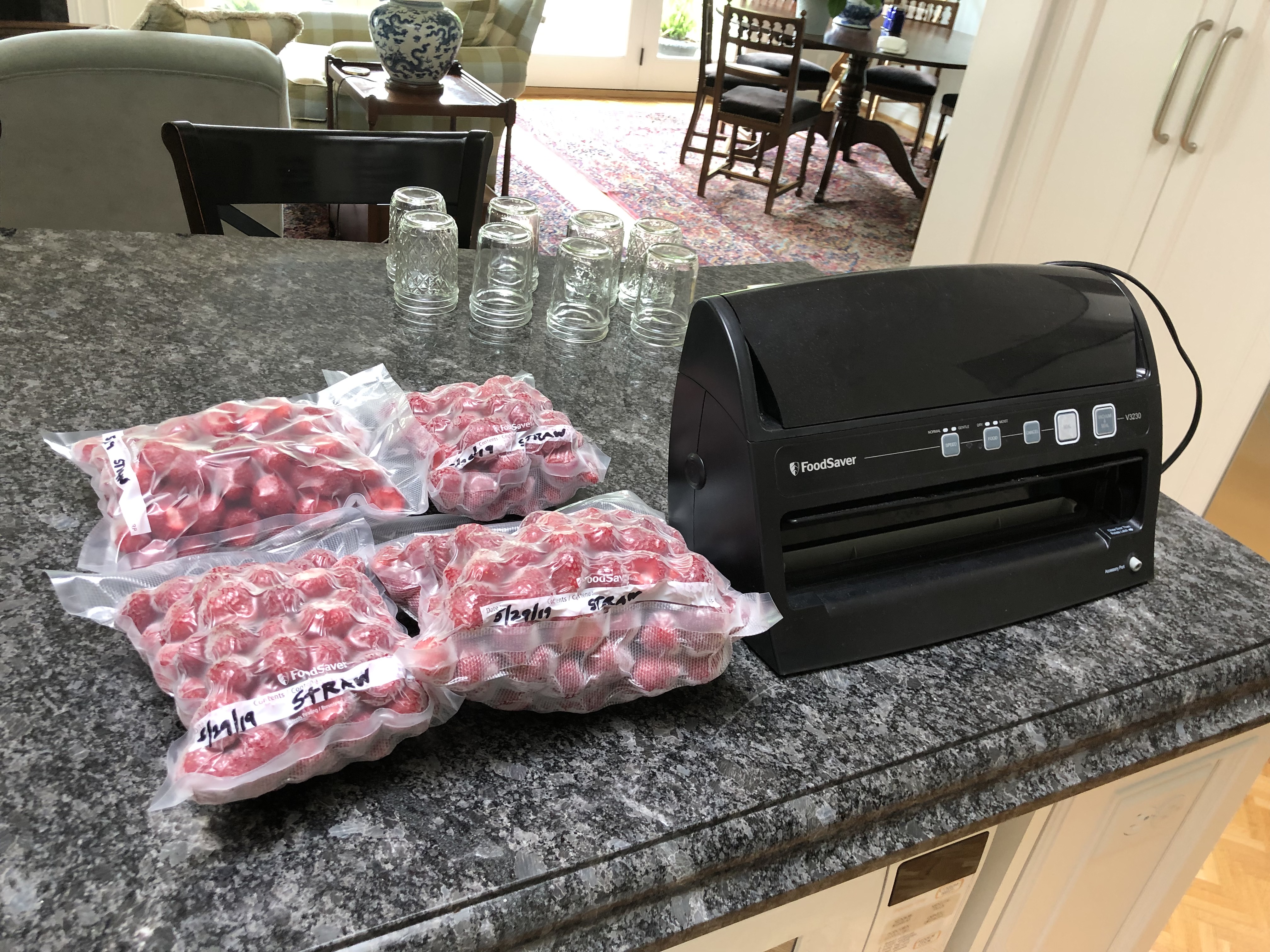
Once frozen, I put them into the vacuum sealer to safely keep for our winter consumption. Our freezers are groaning with many of these packages and are getting restocked for the winter!
So now the cherry and strawberry seasons are over, thank goodness but the blueberries have just begun to ripen with the Blue Ray variety first to hit the market as our CSA customers squealed with delight and we sold out of these sweet, plump wonders the first day. No worries for the next sales date as I picked again today before the rain started and we will have berries galore!

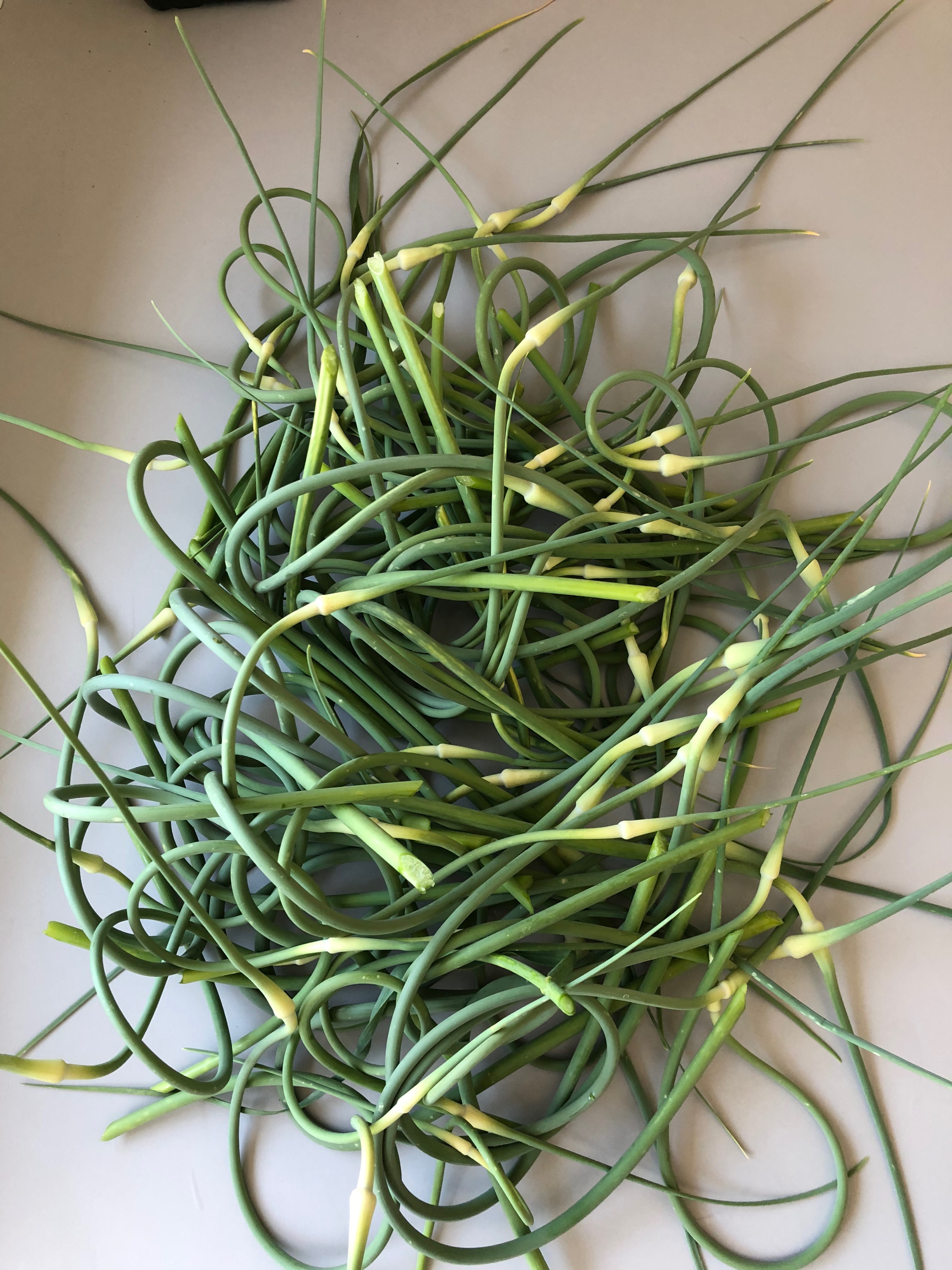
But berries were not the only star of the farm in recent weeks as we always enjoy the harvest of the garlic scapes…which are the flower stalk that a hard neck garlic plant produces. As our readers might remember, garlic scapes are a remarkably mild and delicious precursor to the garlic harvest and they are coveted as a special ingredient during their 2 or so weeks of stardom here in the plant world.
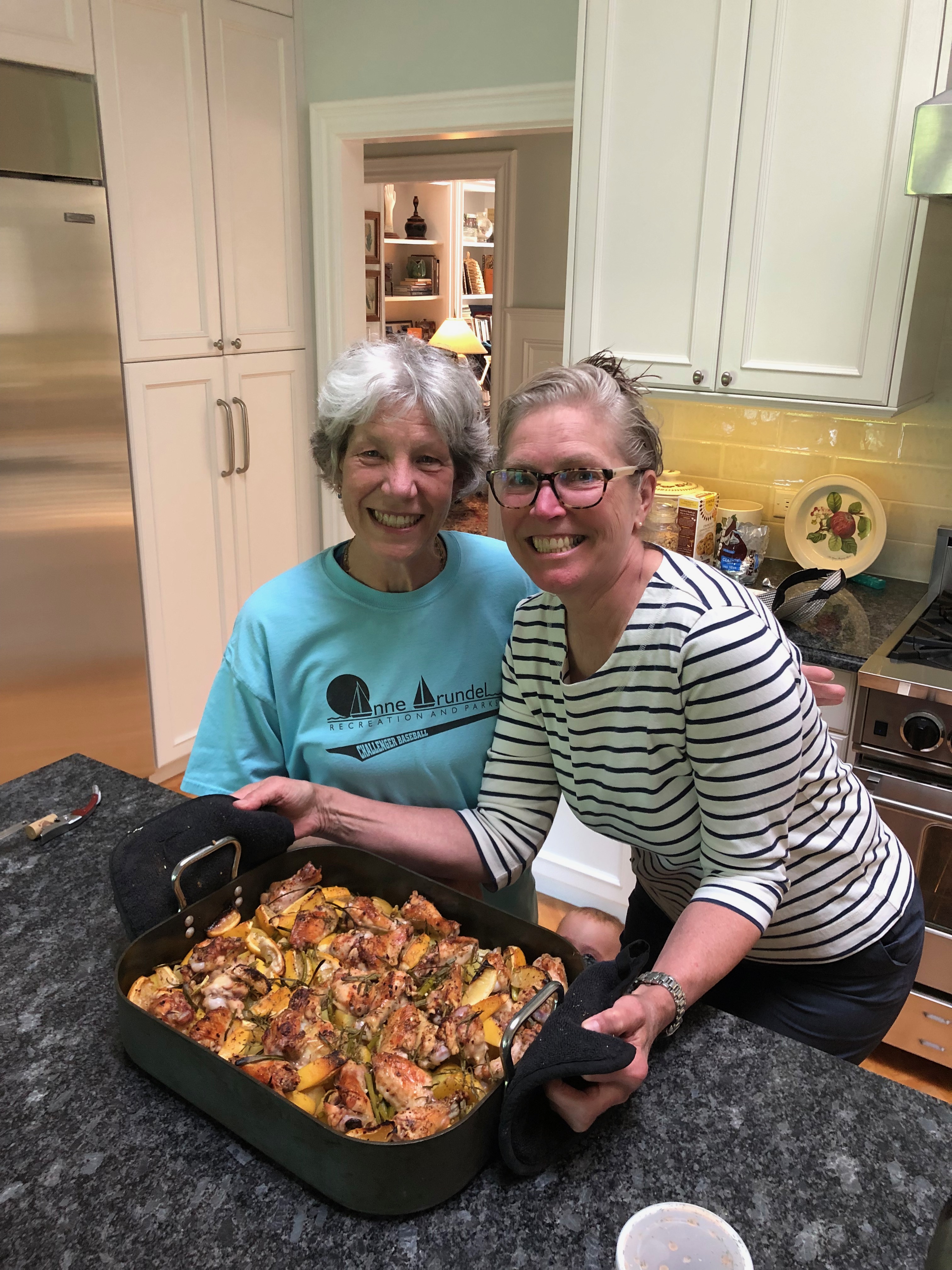
We were so lucky to have Cousin Peggy and her family visiting the farm on Garlic Scape Saturday this year. In addition to the fun of the CSA sales that day, we roasted a large pan of potato, chicken, lemon and garlic scapes that evening to share with our families. Yummmm!
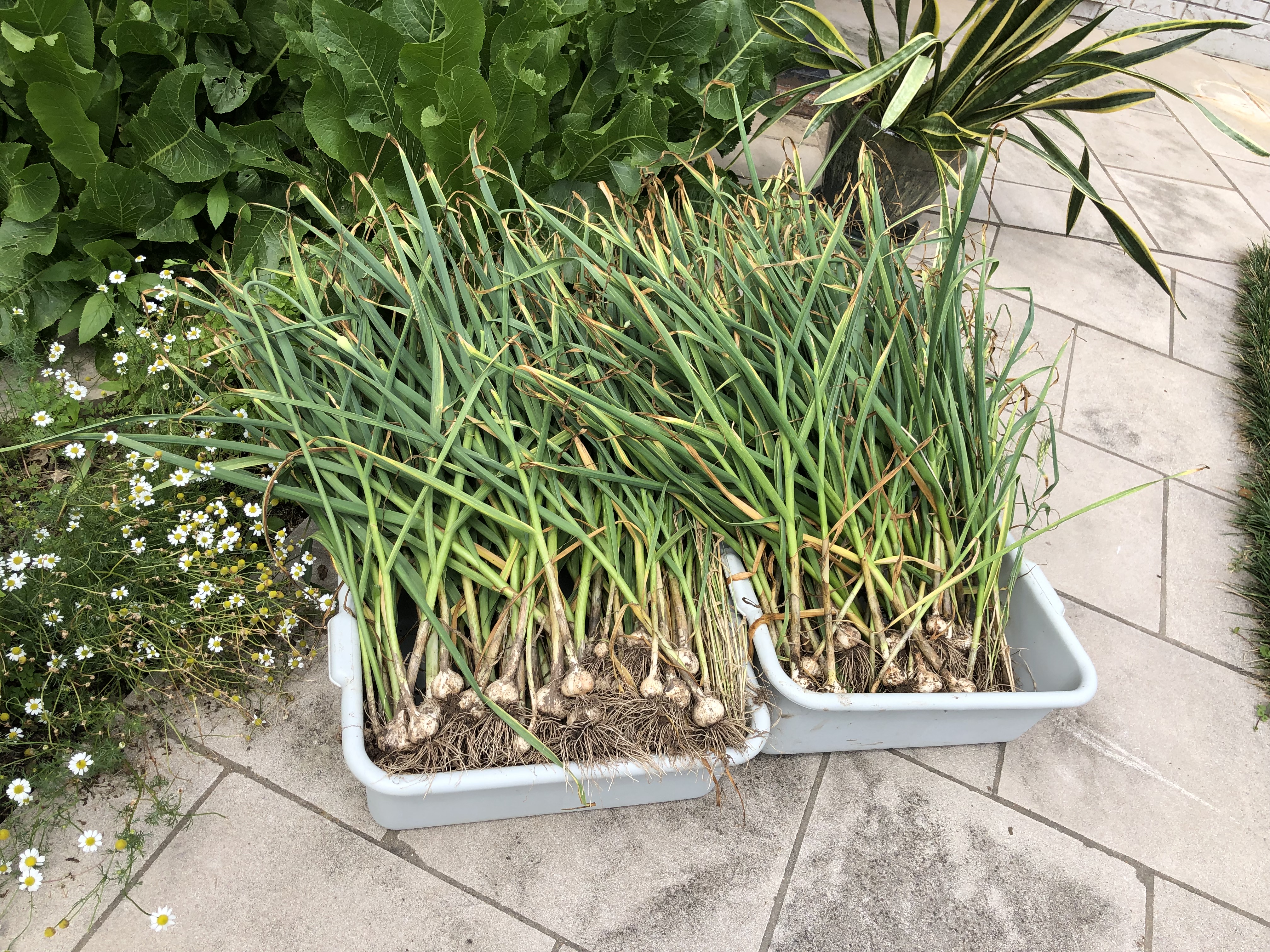
The scapes are just the introduction to the garlic story as the patch took center stage one day last week at harvest time and gave me fits as the bulbs were reluctant to give up their rooted bulb base from their raised beds. I nearly had to dig each one out individually rather than merely tug and pull them as I had successfully done in the past.
I attribute this reluctance to the wet soil conditions and the fact that if I tugged too hard to try to get them to release, the neck of the plant (where the stalk and the bulb meet) was too soggy to endure the tension and would break off, leaving the bulb in the ground and my hand full of the lonely, unusable stalk. So, hours later, the harvest was complete with approximately 25 pounds of hard neck garlics to share with our customers and keep for the winter.
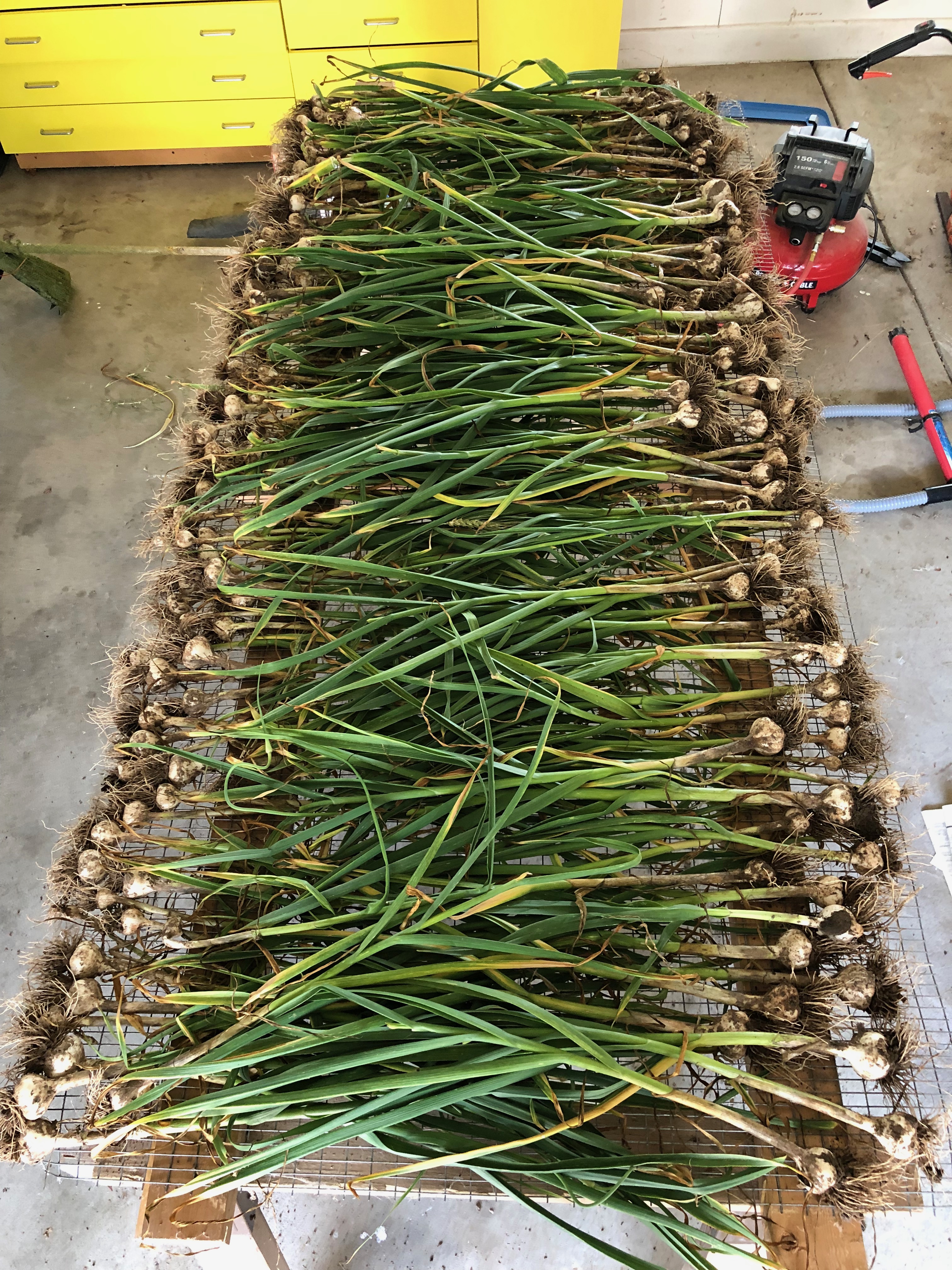
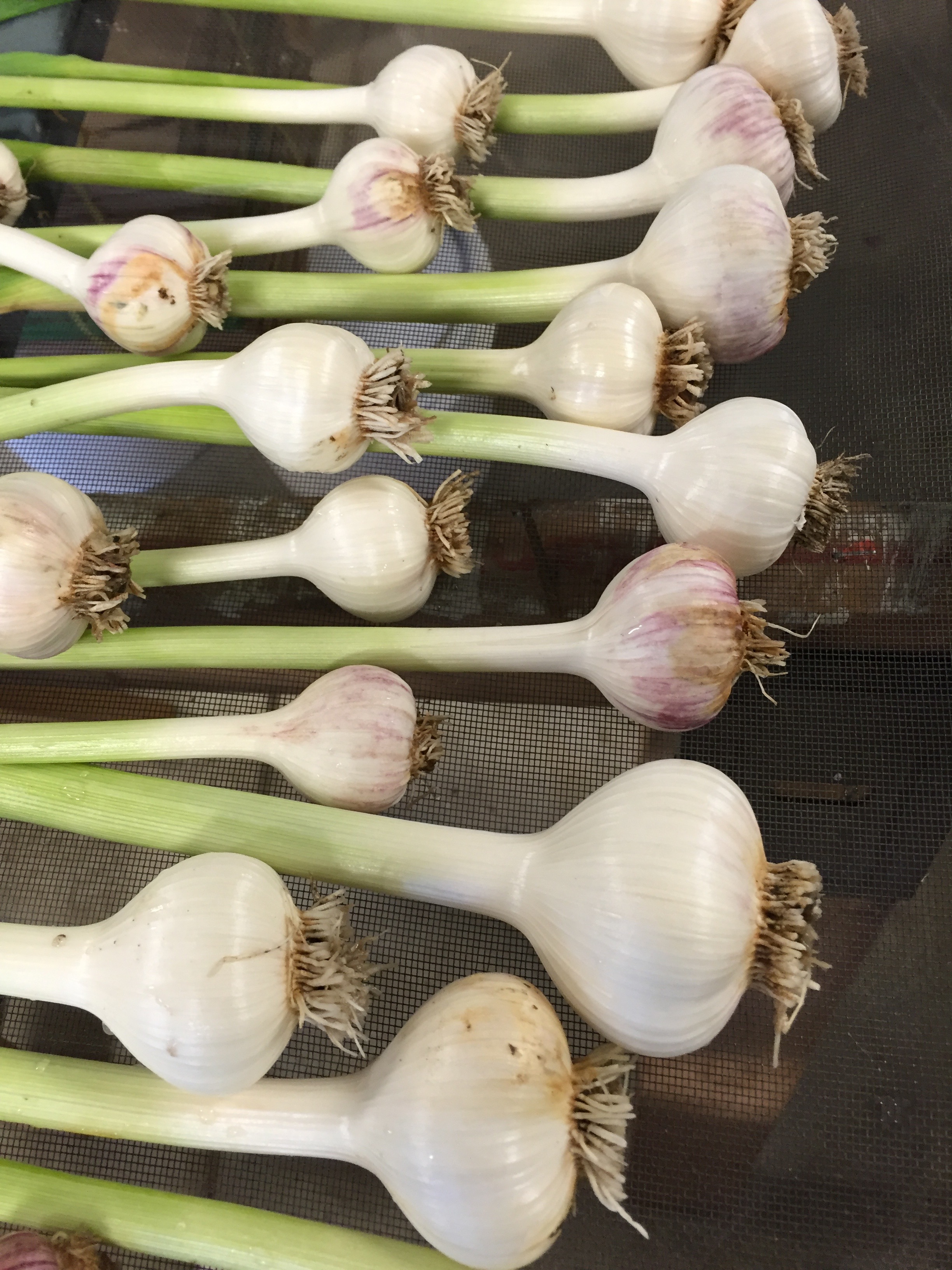
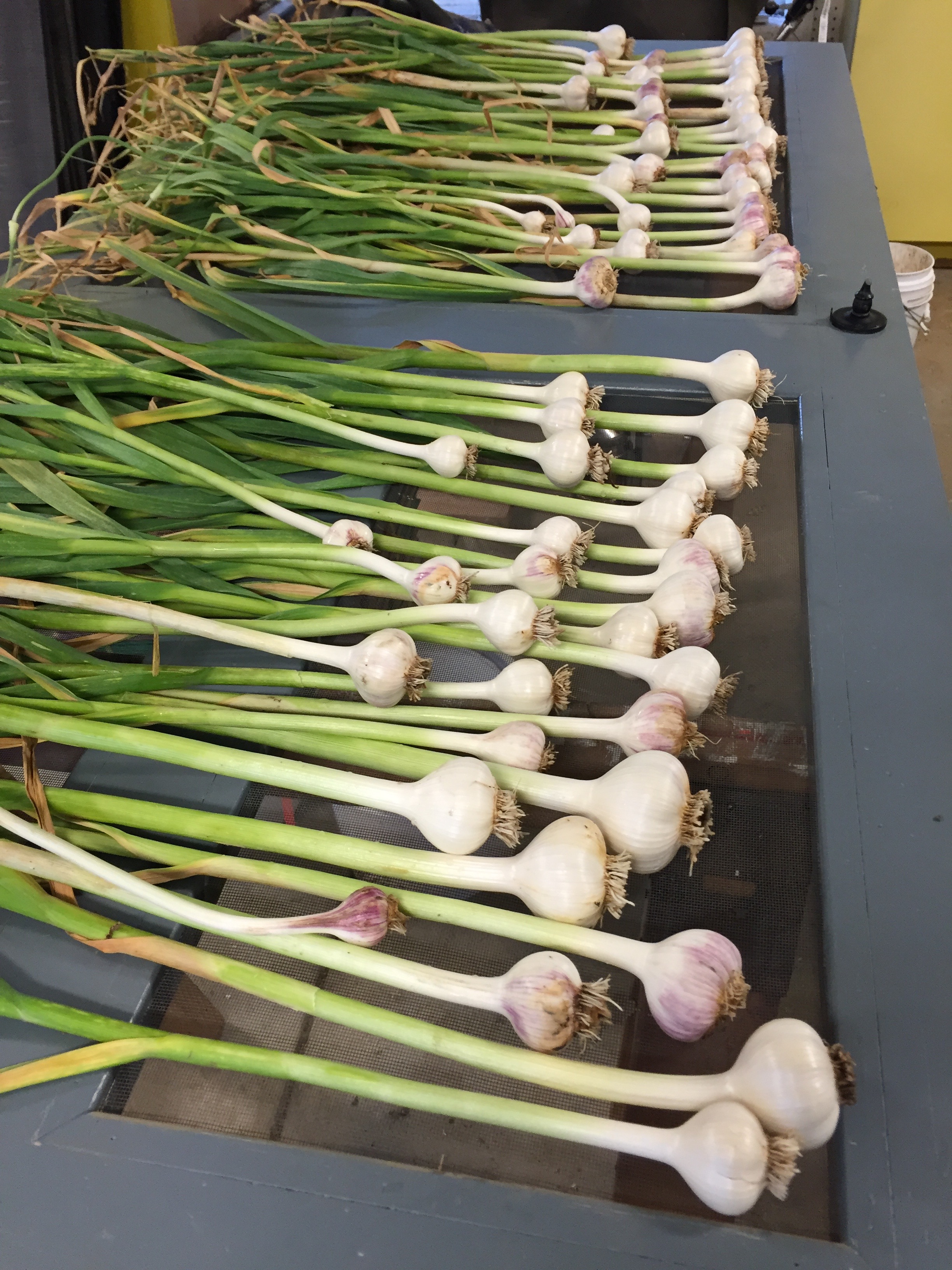
The large trays of bulbs were then set out on our screens to dry for a week or so before we clean them up and sell to our customers. We love the overwhelming smell of fresh garlic when entering this space these days!
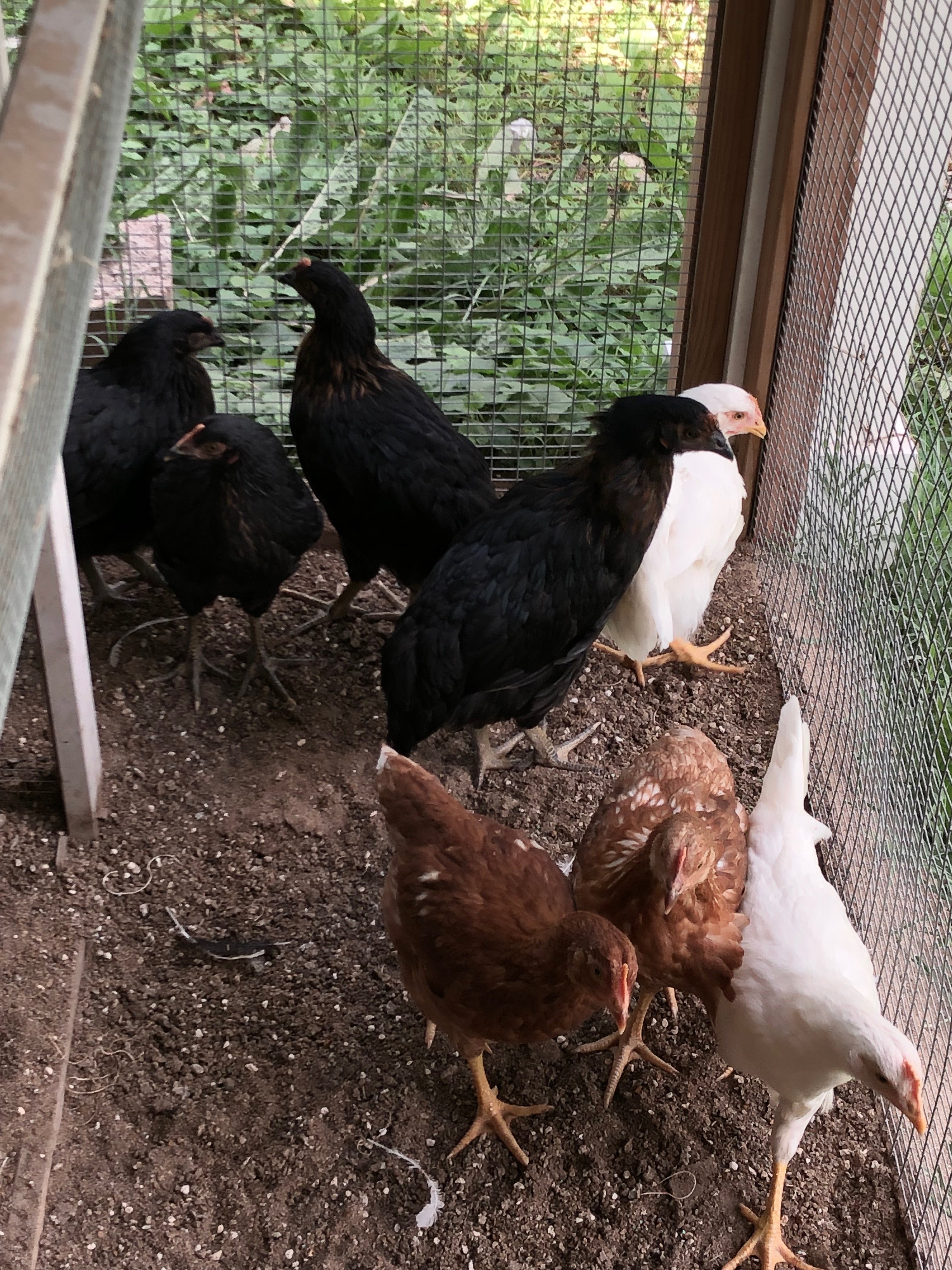
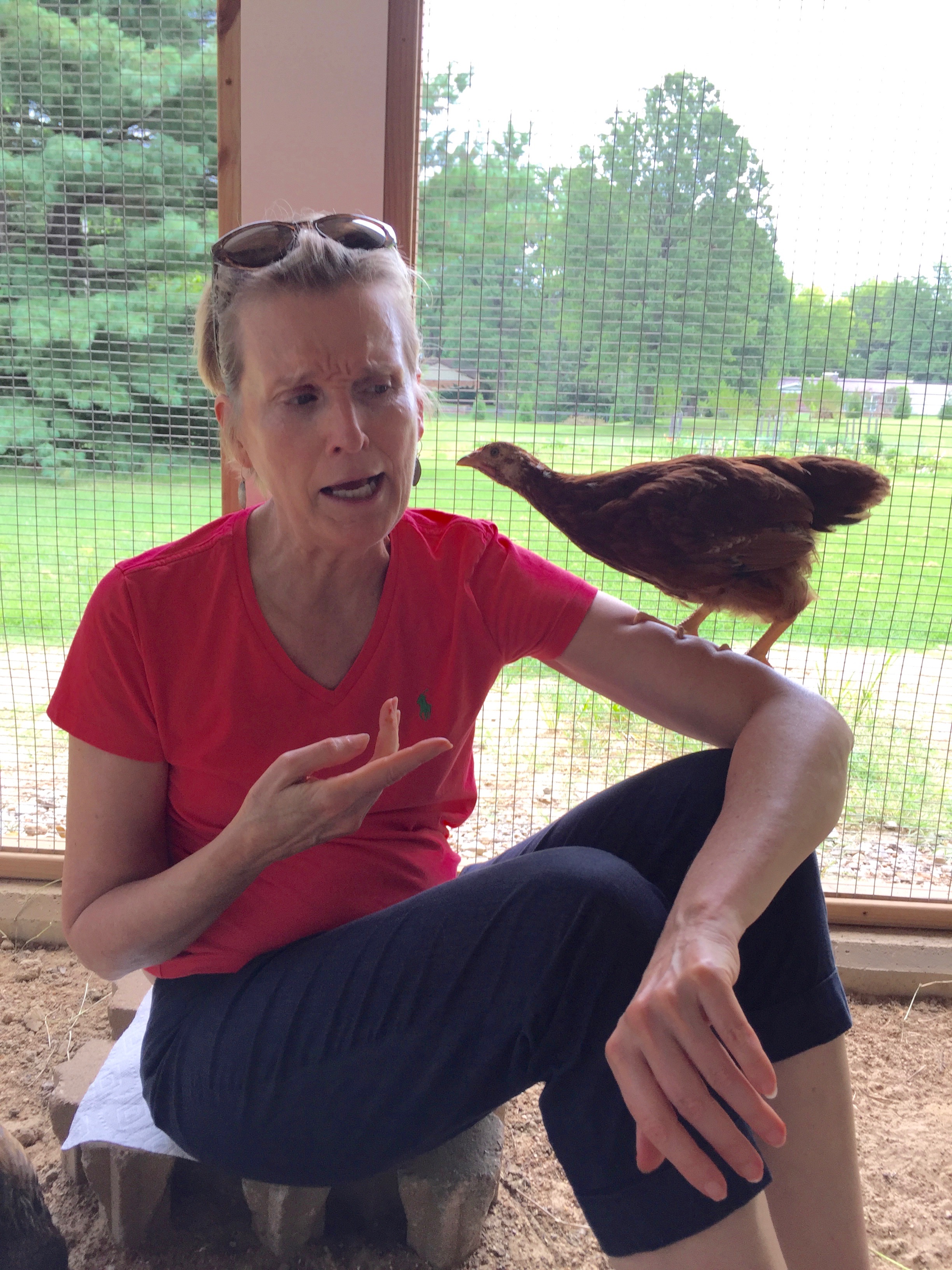
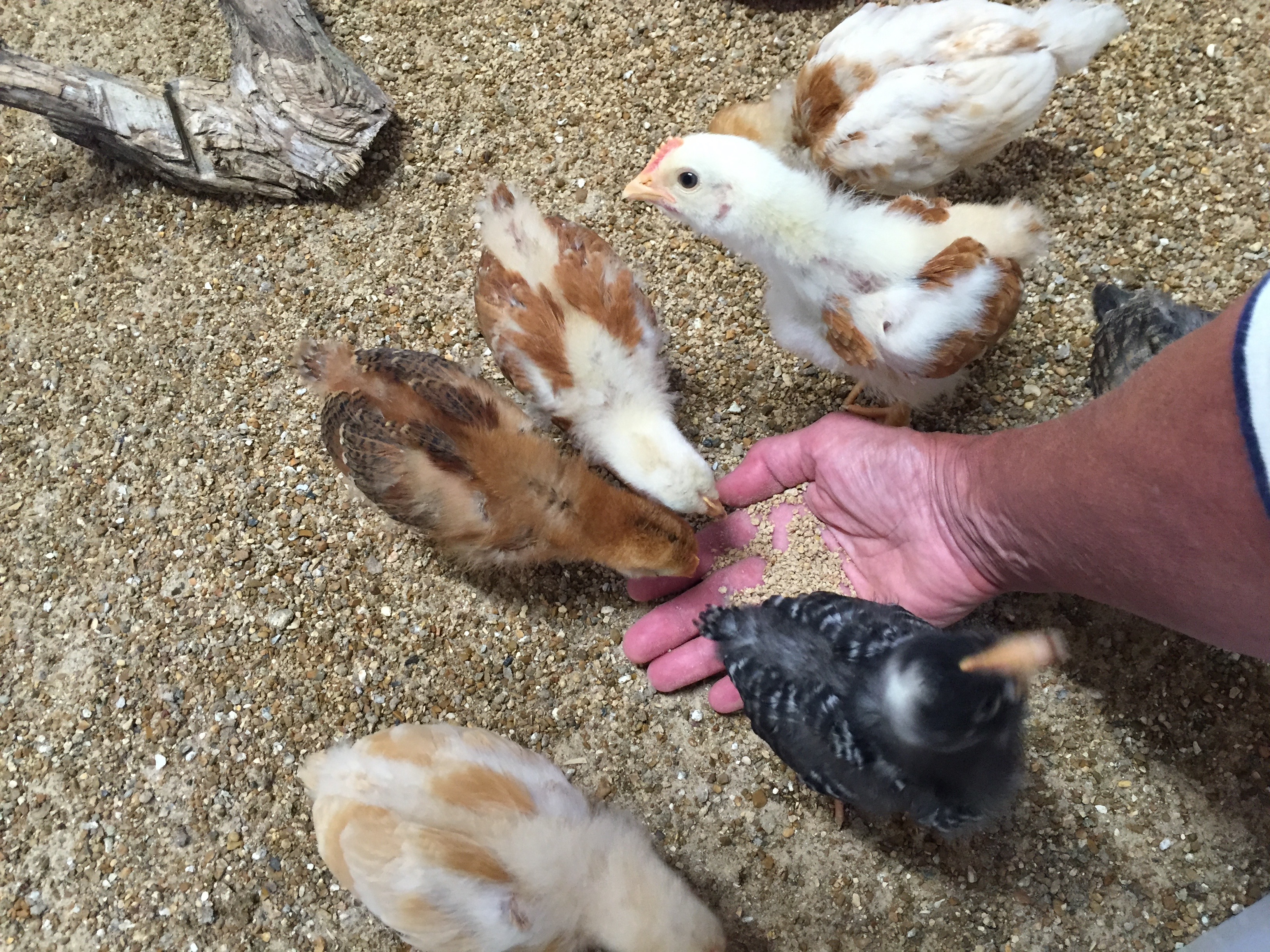
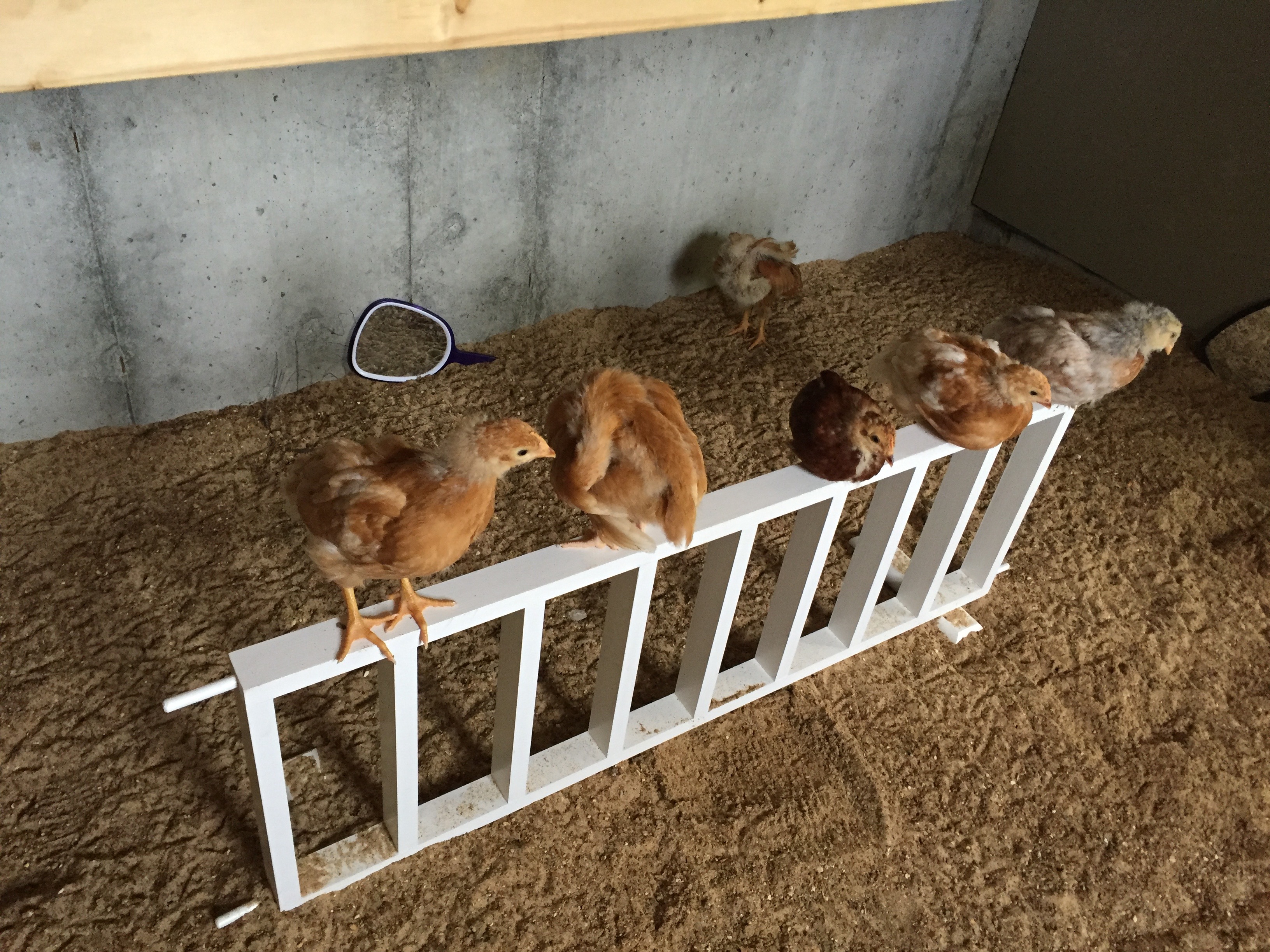
Have you been wondering about the baby chicks? They are now pretty much integrated into the preexisting flock of birds but have been shy to join the gang as a whole. They are nearing their 3 month old birthday which means that they are not far from laying their first eggs but they continue to be shy in the group as a whole. We watch them daily as they develop into part of the flock and find their antics to be another layer of the chicken life at the farm.
Is it finally time to tell everyone about my dear bees and the expansion of the apiary? You wouldn’t have time to read all my stories this year as it has been quite a complicated season so far.
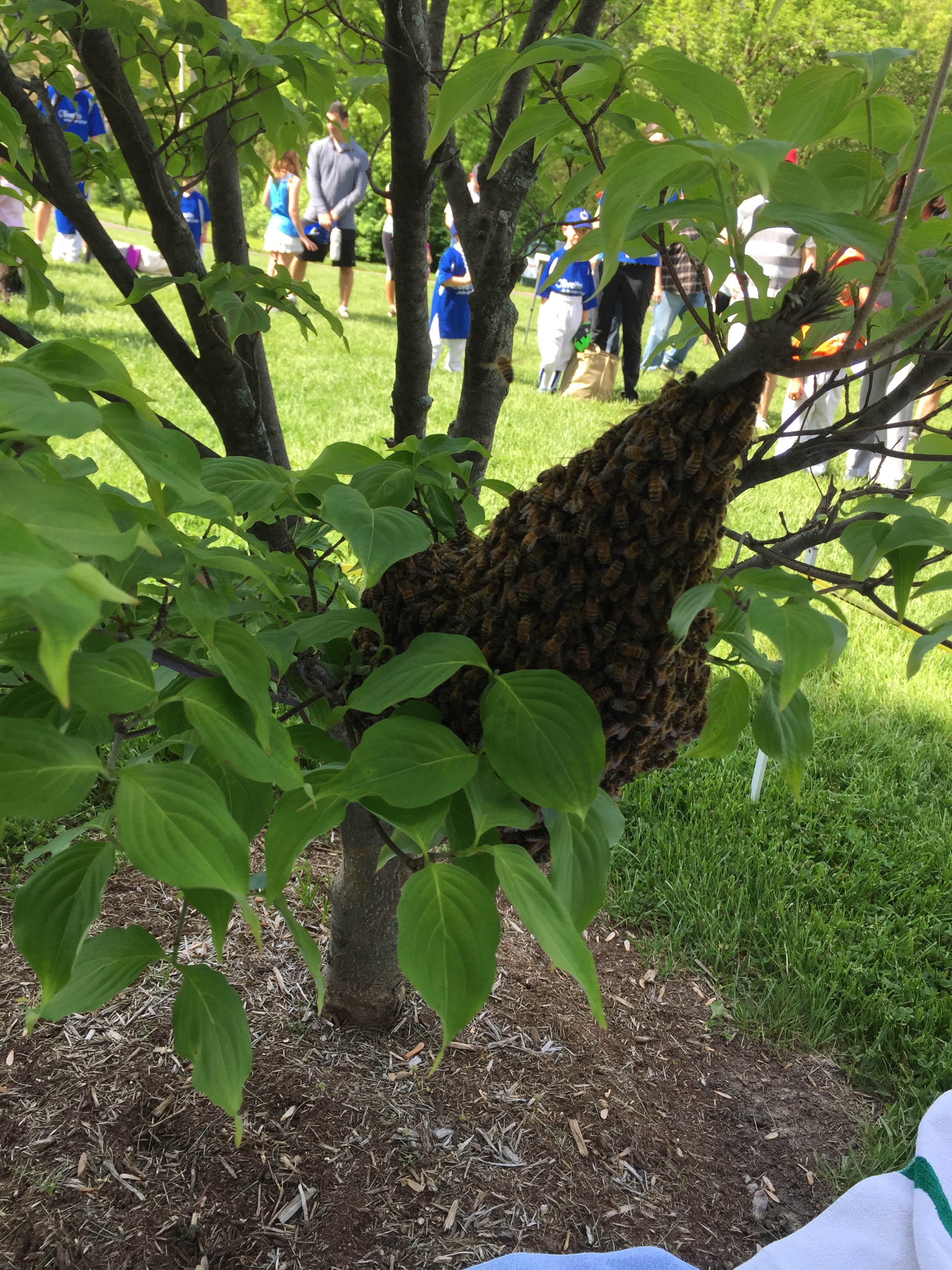
Our apiary has moaned and groaned its way through the wet, wet, wet spring where the bees were confined to their hives and chose to work on creating swarm cells, aka new and multiplier queen cells, whereby they wanted to elope and repopulate their colonies. I think I would have to write an entire post about the trials of this behavior and how it affected our apiary this year…and maybe I’ll find the time to do this but I will just give a few hints here of what has happened so far.
I had a surprisingly strong apiary after a long winter. The colony strength demanded to be divided which I did in spades, meaning I took 6 winter colonies and at one point made them into 10-12 depending on the day of the week.
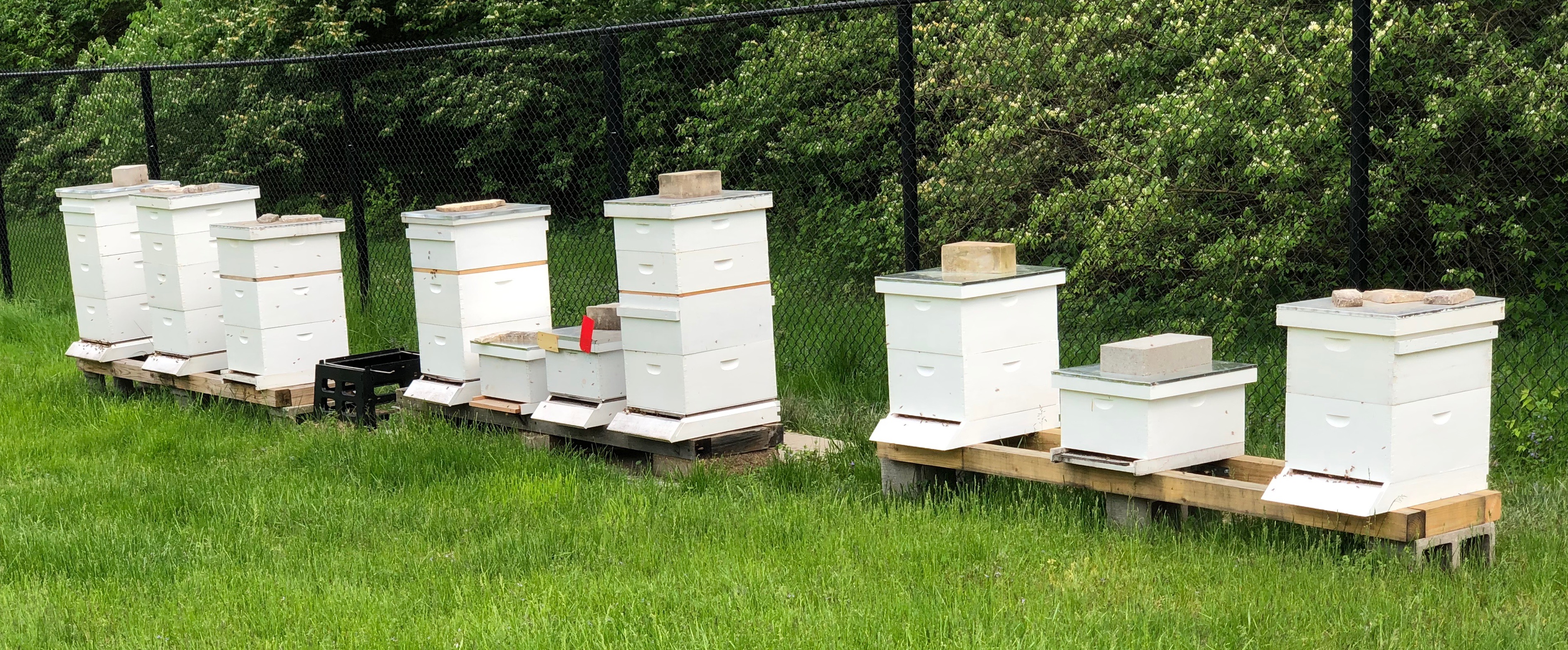
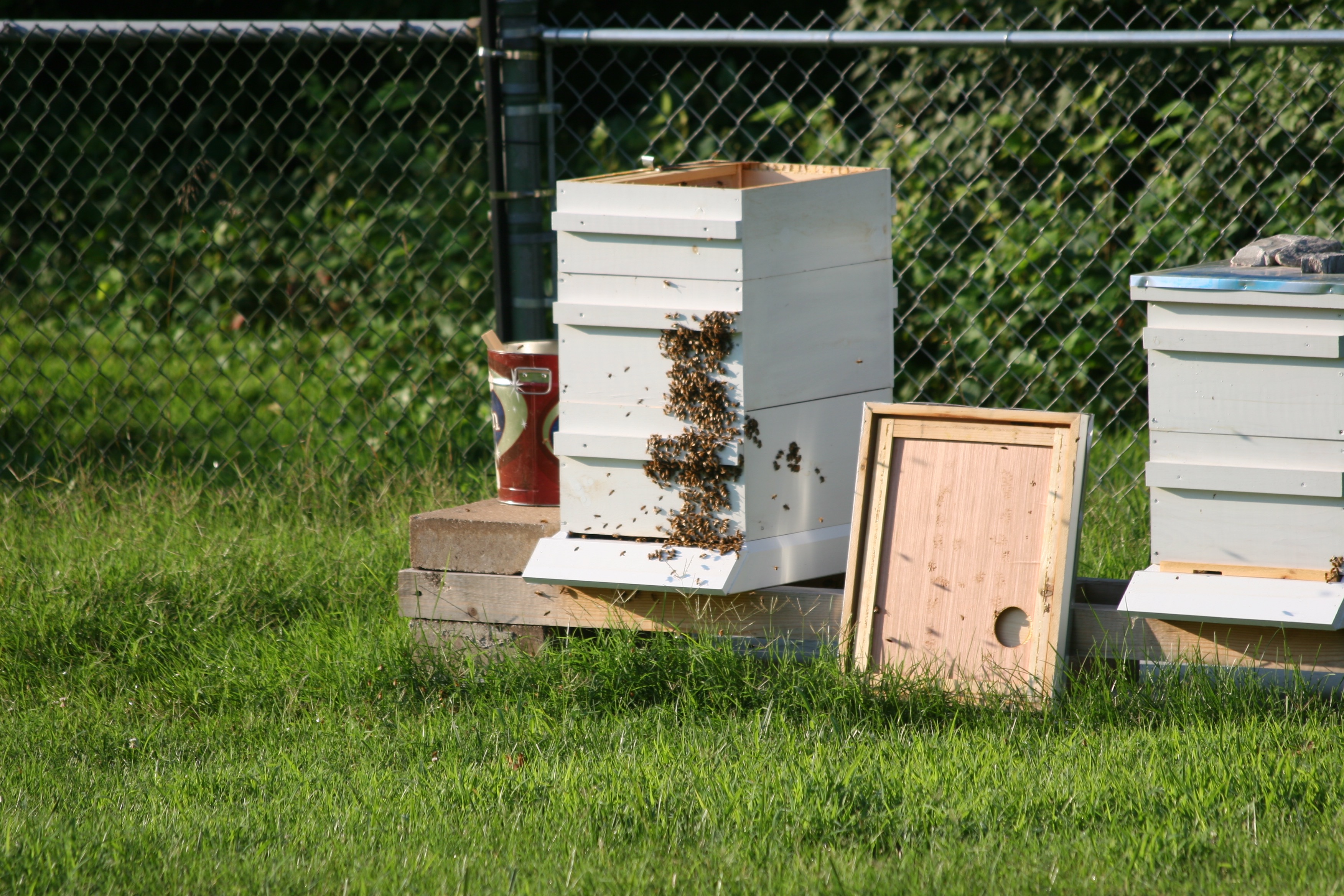
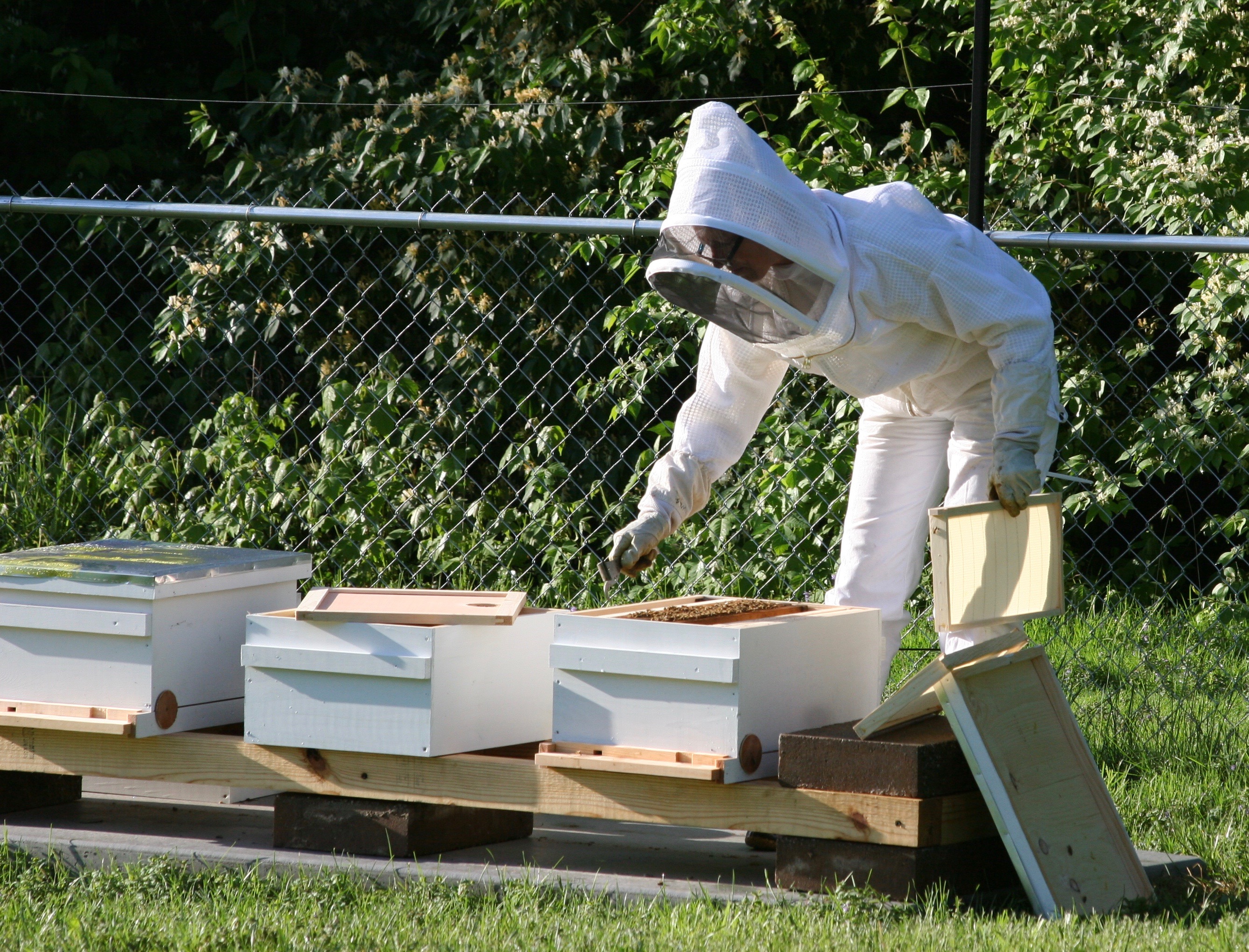
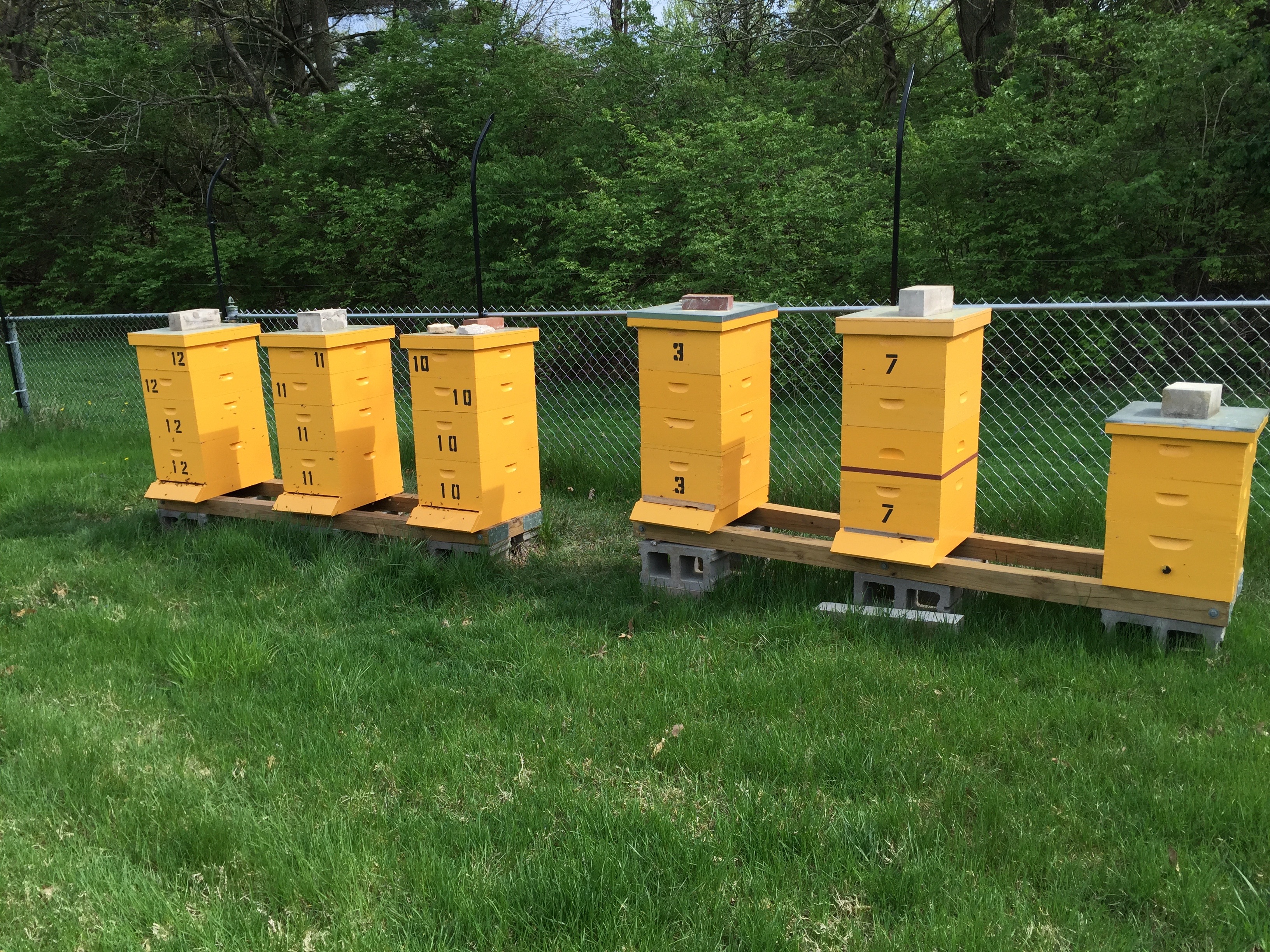
A keen eye will see that the mixture of stages of development in the hives show some that have been given honey supers while others are in their infancy which, IMO, is the most fun way to manage a successful apiary. I had great successes in creating new nucleus colonies this year as well as the surprise of using a new (to me at least) technique of providing an upper or second entrance to the hive for the bees who are foraging to enter just above the deep boxes and efficiently go directly into their honey supers to deposit the necessary goodies more directly.
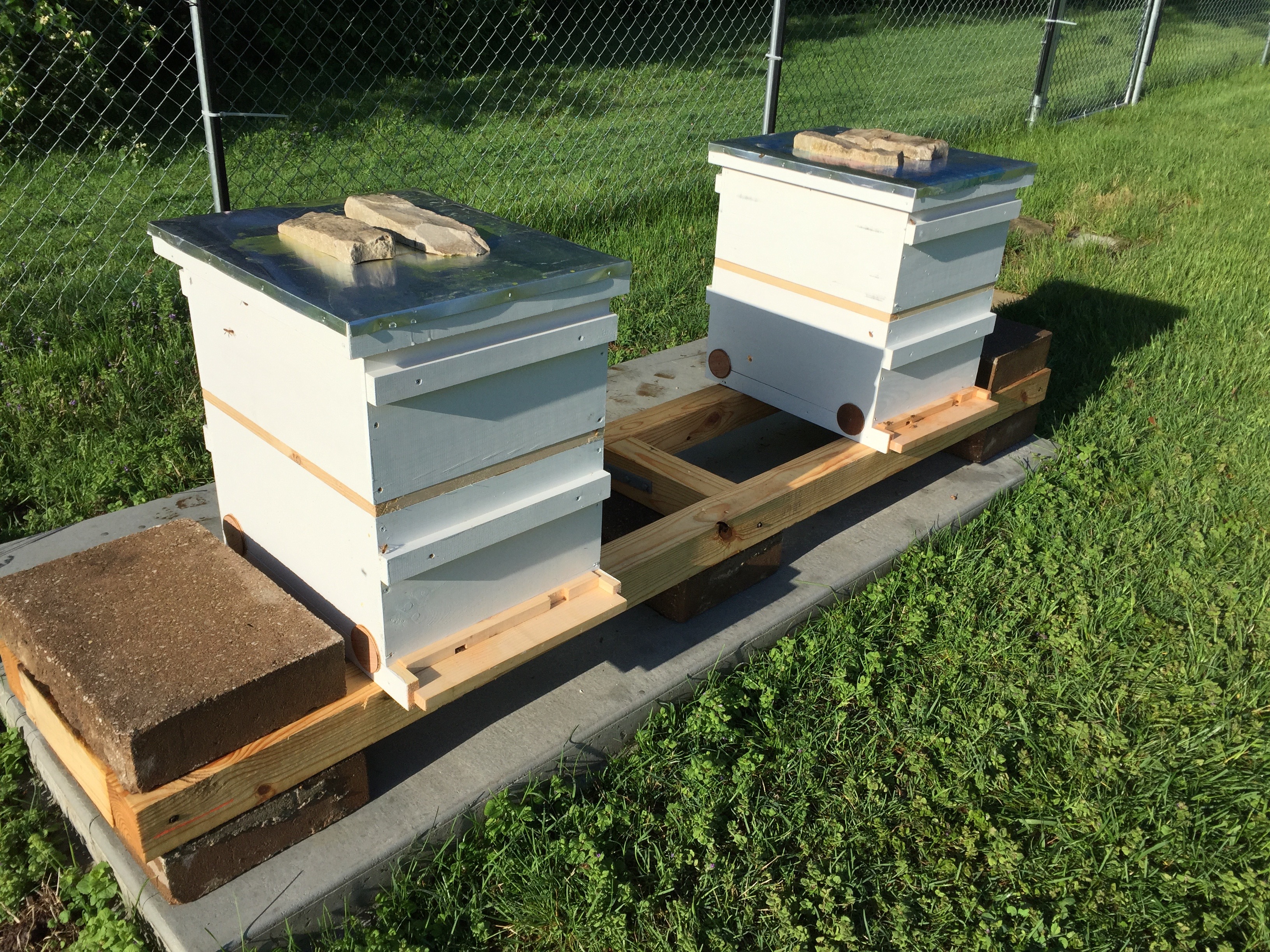
Here is a good example of the upper entrances that I installed on two of our hives. Note the wooden colored mid-hive protruding section on the left and right hives. The two lower deep boxes are where the queen has her nest and creates brood for the colony while the two or three upper honey supers are where the bees store their honey.
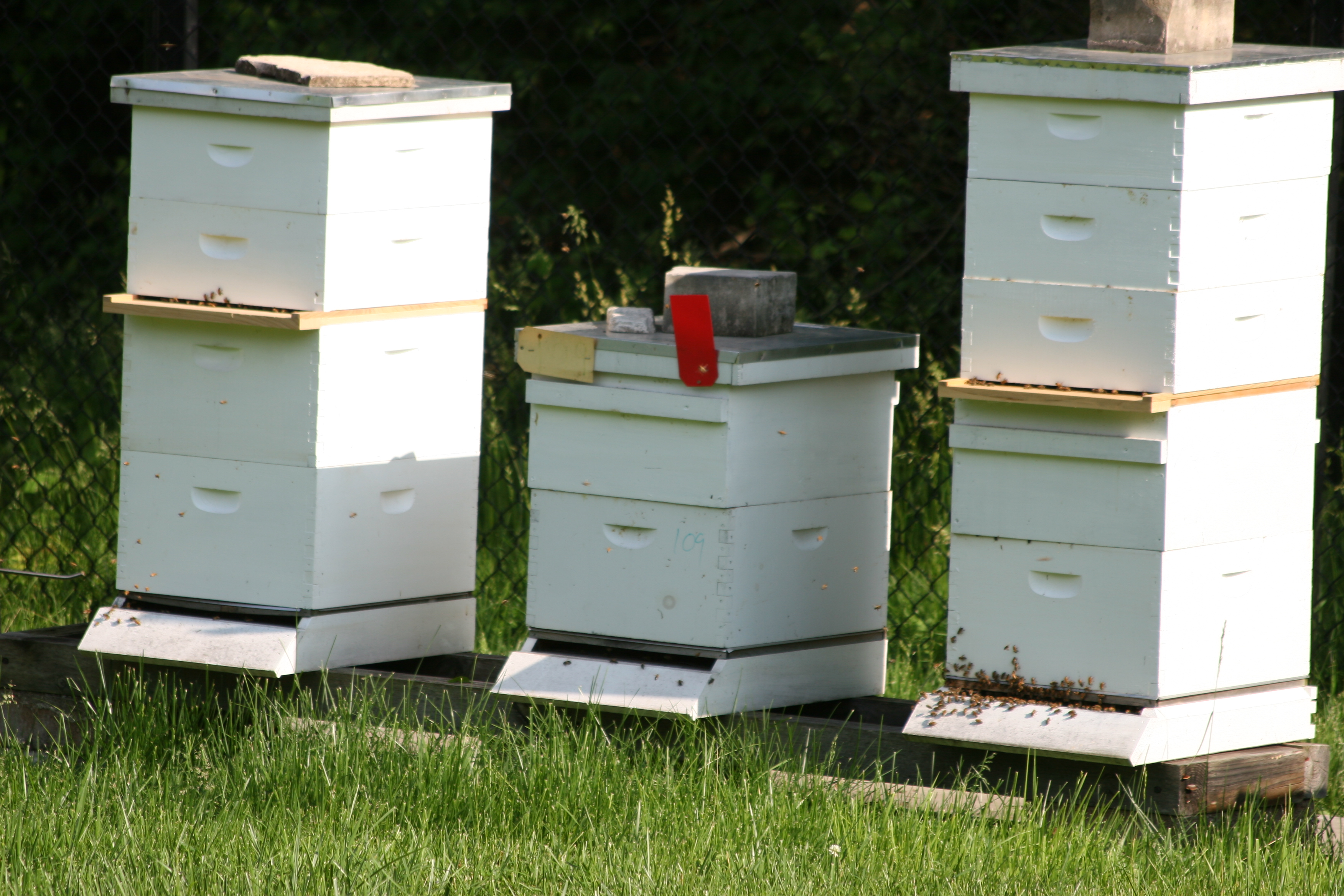
This added entrance was new to me this year and I thought it was pretty cool until the circumstances of this crazy, rainy, re-queening season became a reality for me. I had a fledgling, un-mated queen leave from the lower, deep nest boxes and do a mating flight. This is usually good. But, she landed in the upper entrance of her colony and proceeded to lay eggs in the honey supers of that colony. Arg! Such a mess as honey supers are only for honey storage and not for eggs or brood! This took much manipulation on my part to turn around the colony and set it straight.
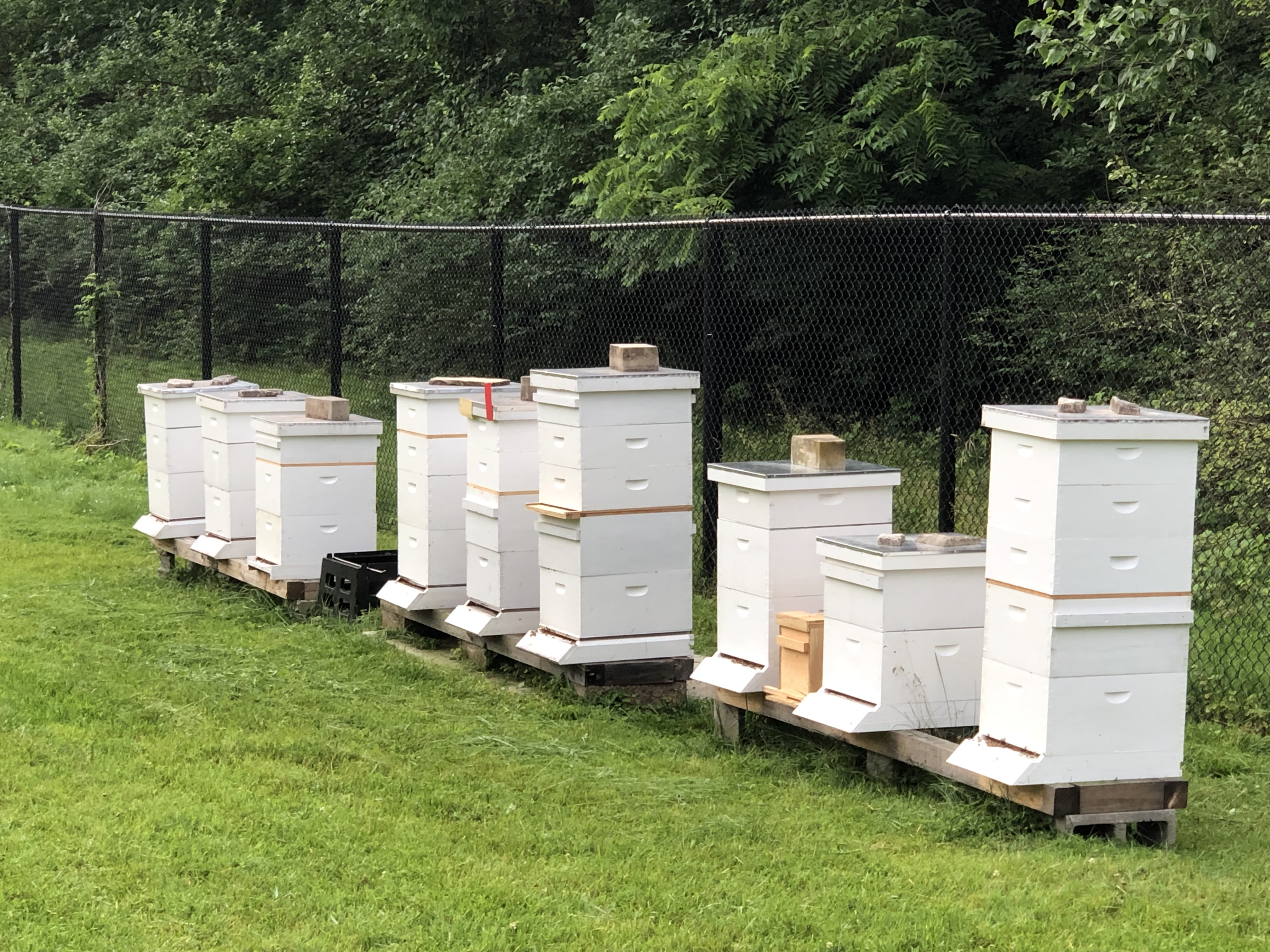
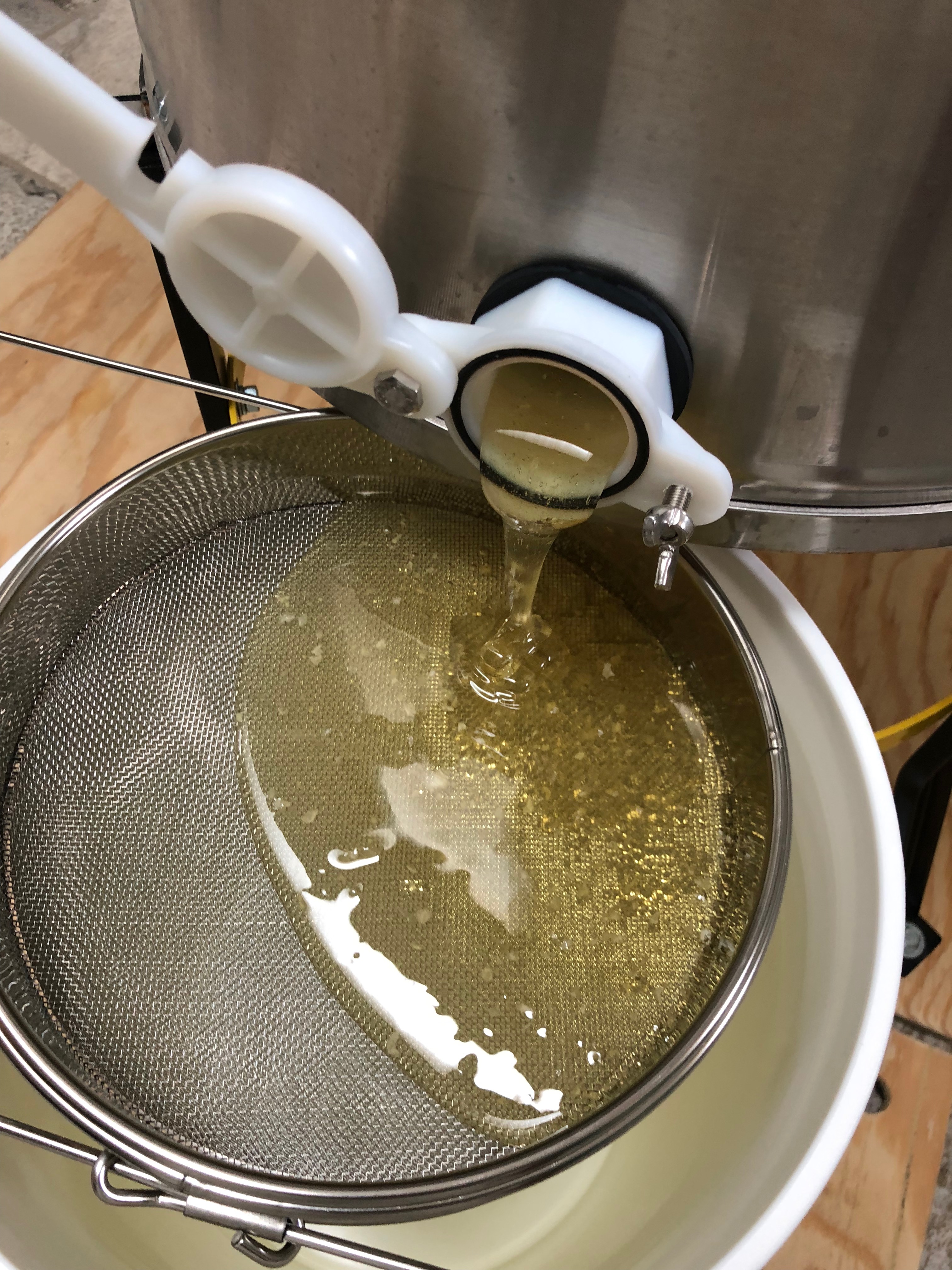
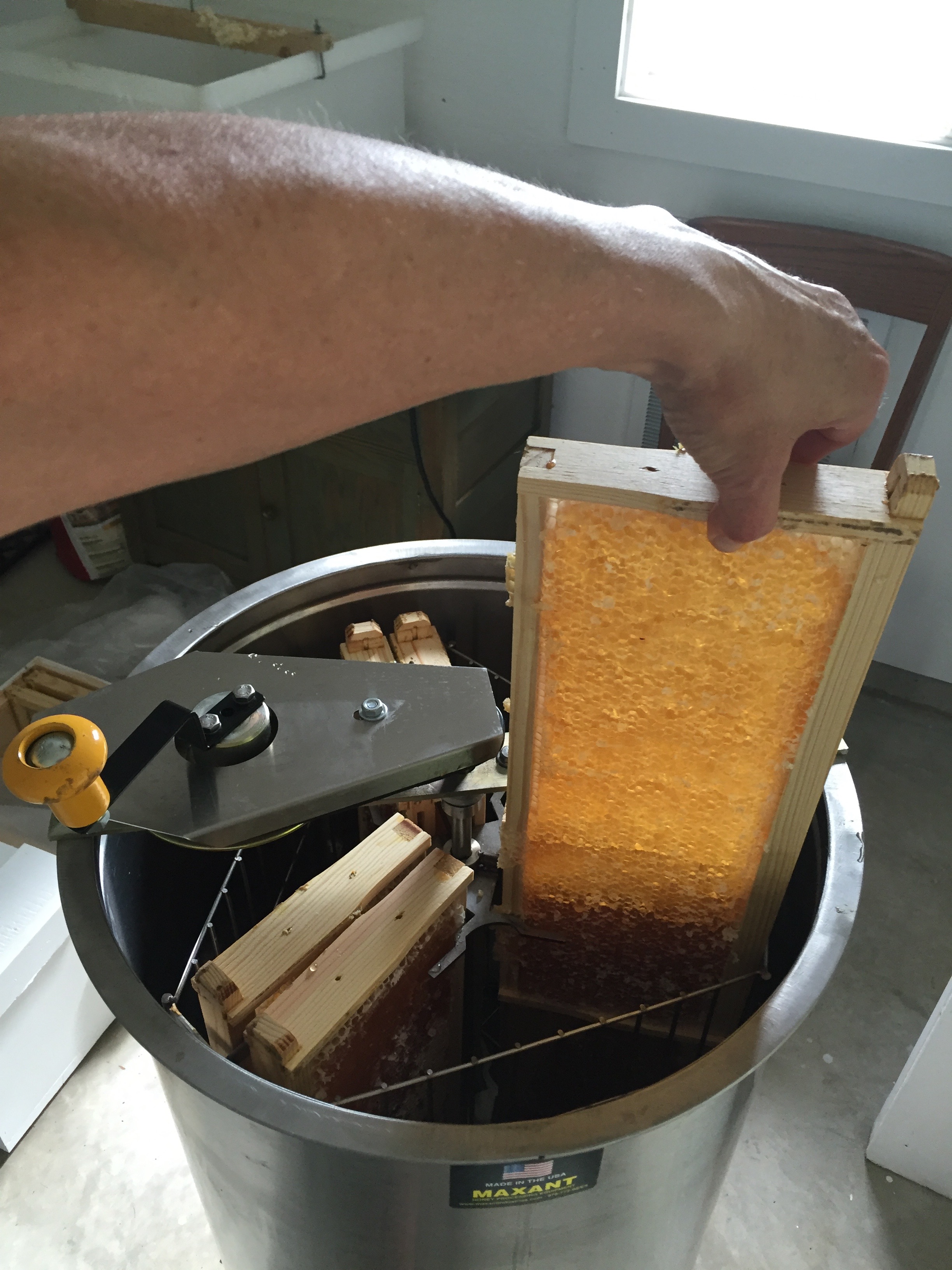
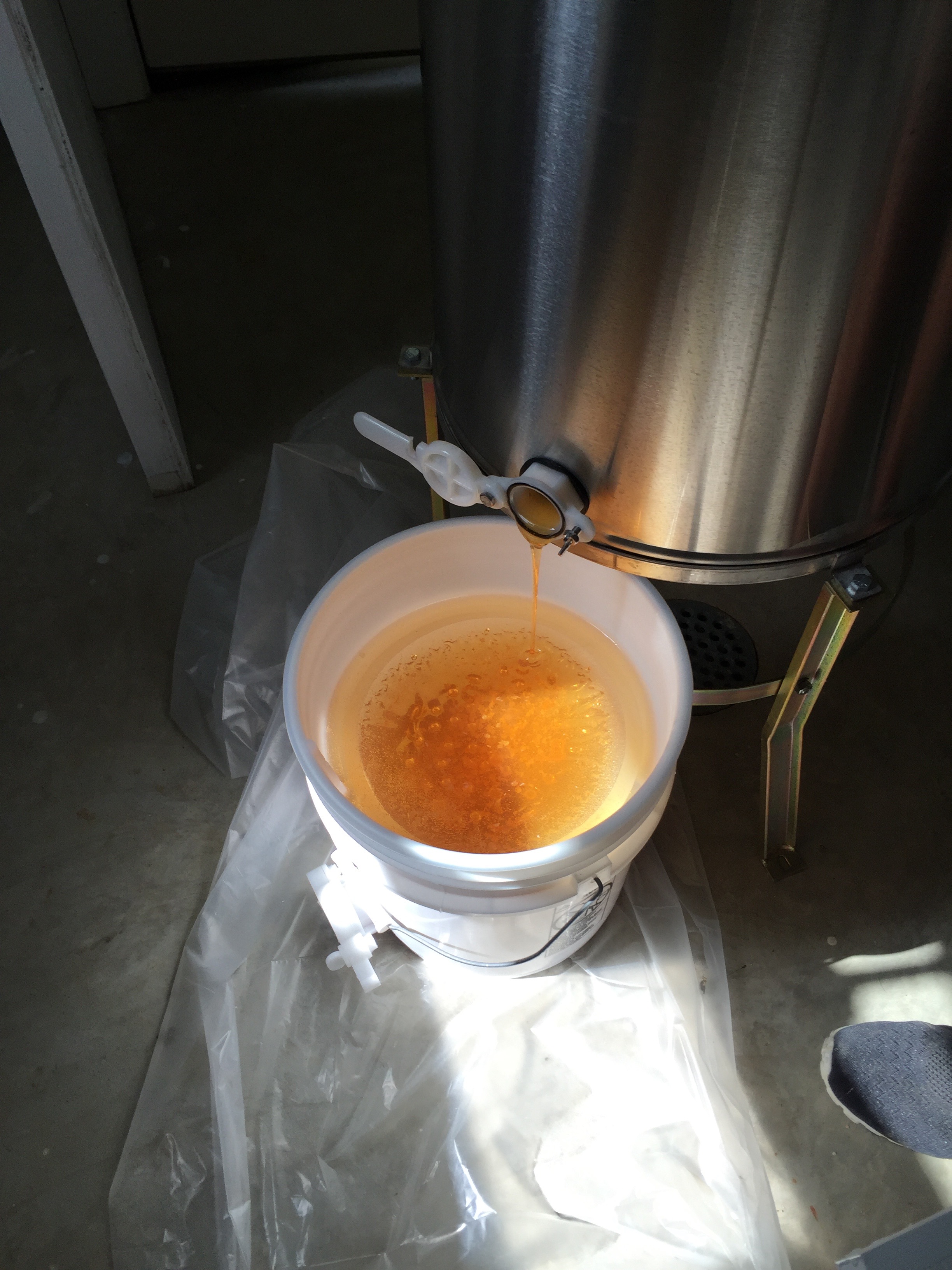
But…despite all the rain (when the bees cannot fly and forage) we managed to harvest more than 150 pounds of gorgeous spring honey this year and have three 10 gallon buckets to show for it while we currently now have 15 summer honey supers in place on the hives for more production to be harvested later this summer.
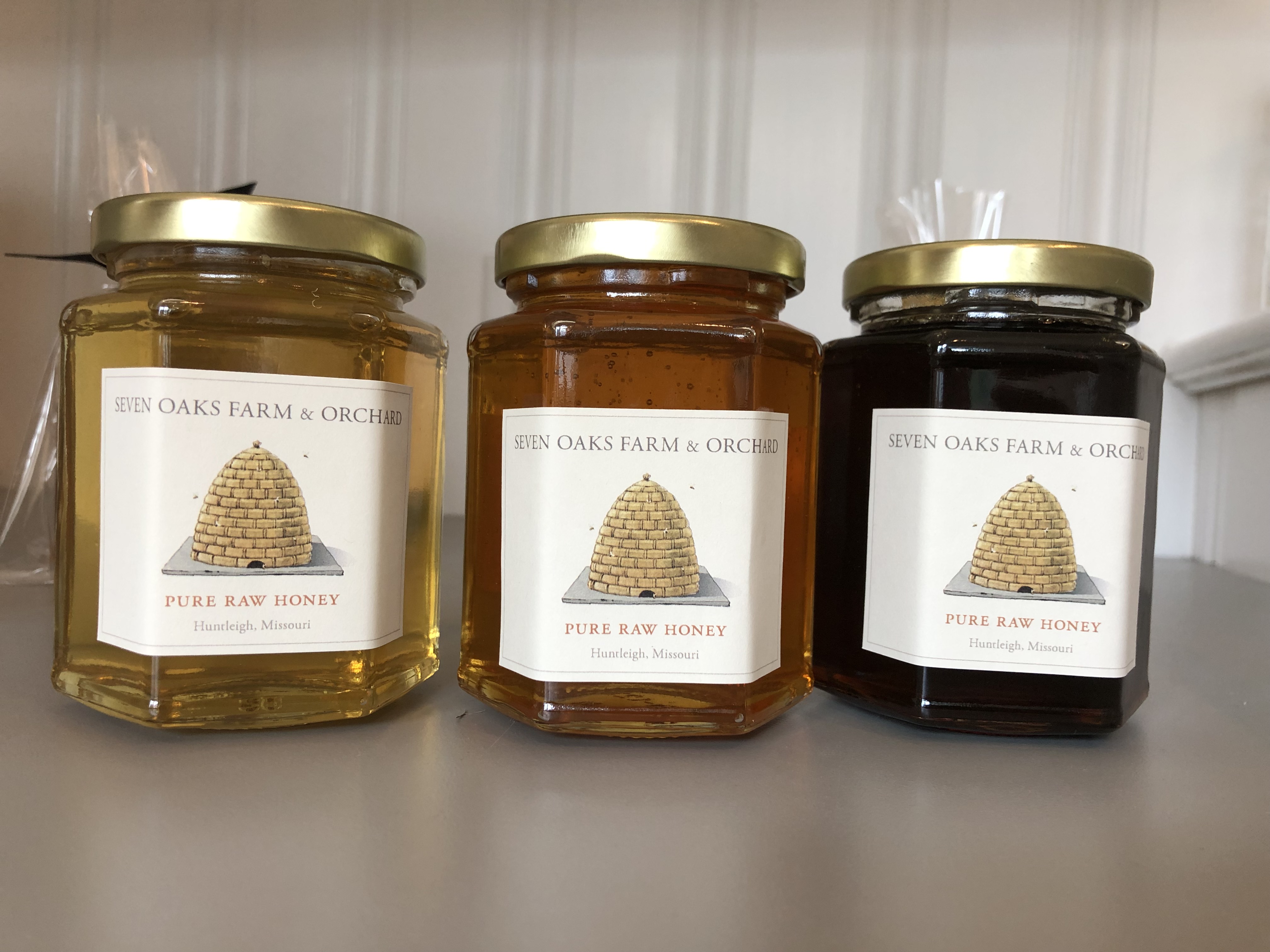
Left to right…Spring, summer and fall honey in jars for sale to our customers…if I ever figure out the WordPress interface, I might start selling these from the blog site! HELP!
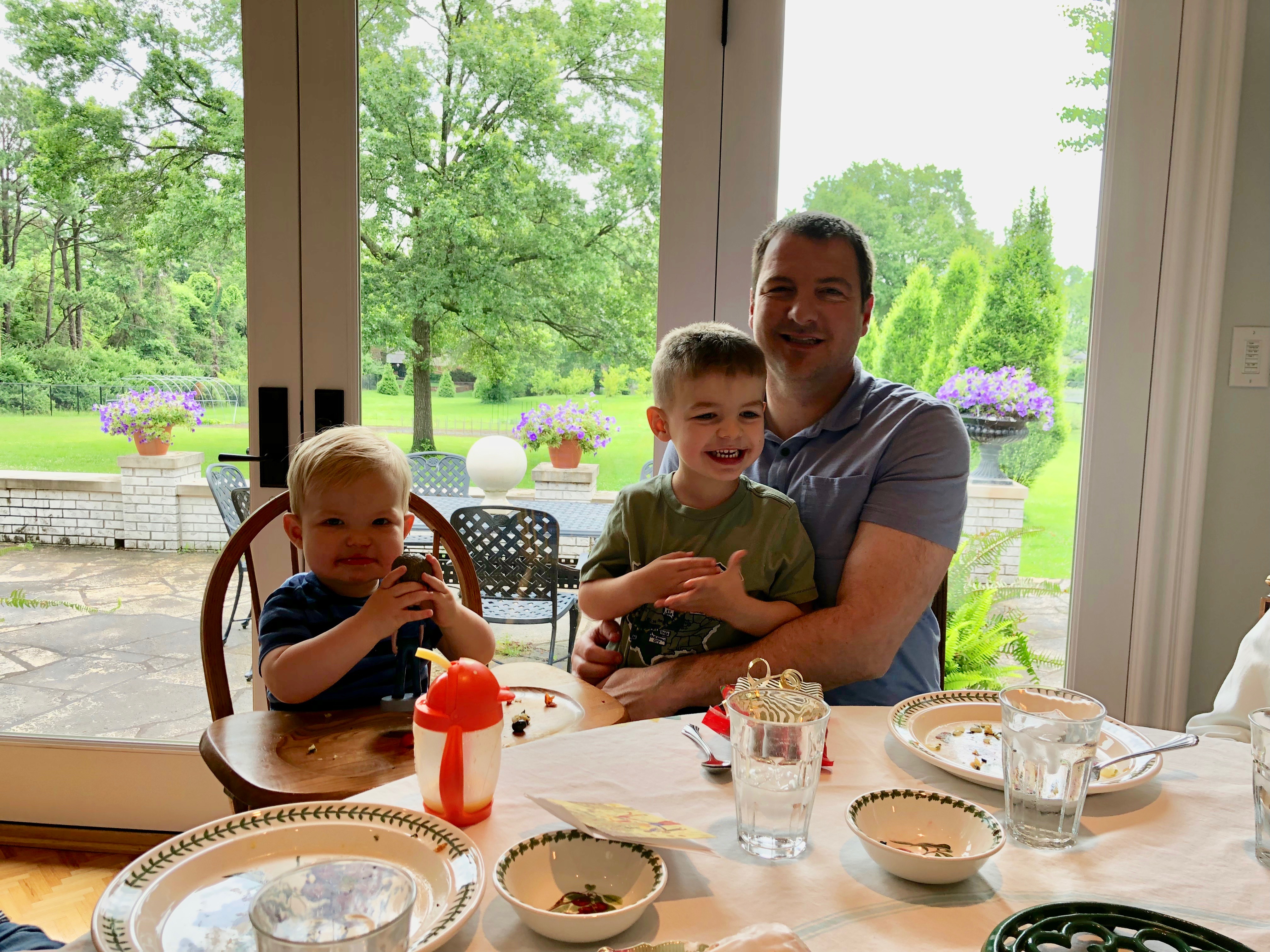
Representing the last of the “B’s”…the Ward Boys are always fun to have around…here they are enjoying our recent Father’s Day Brunch!
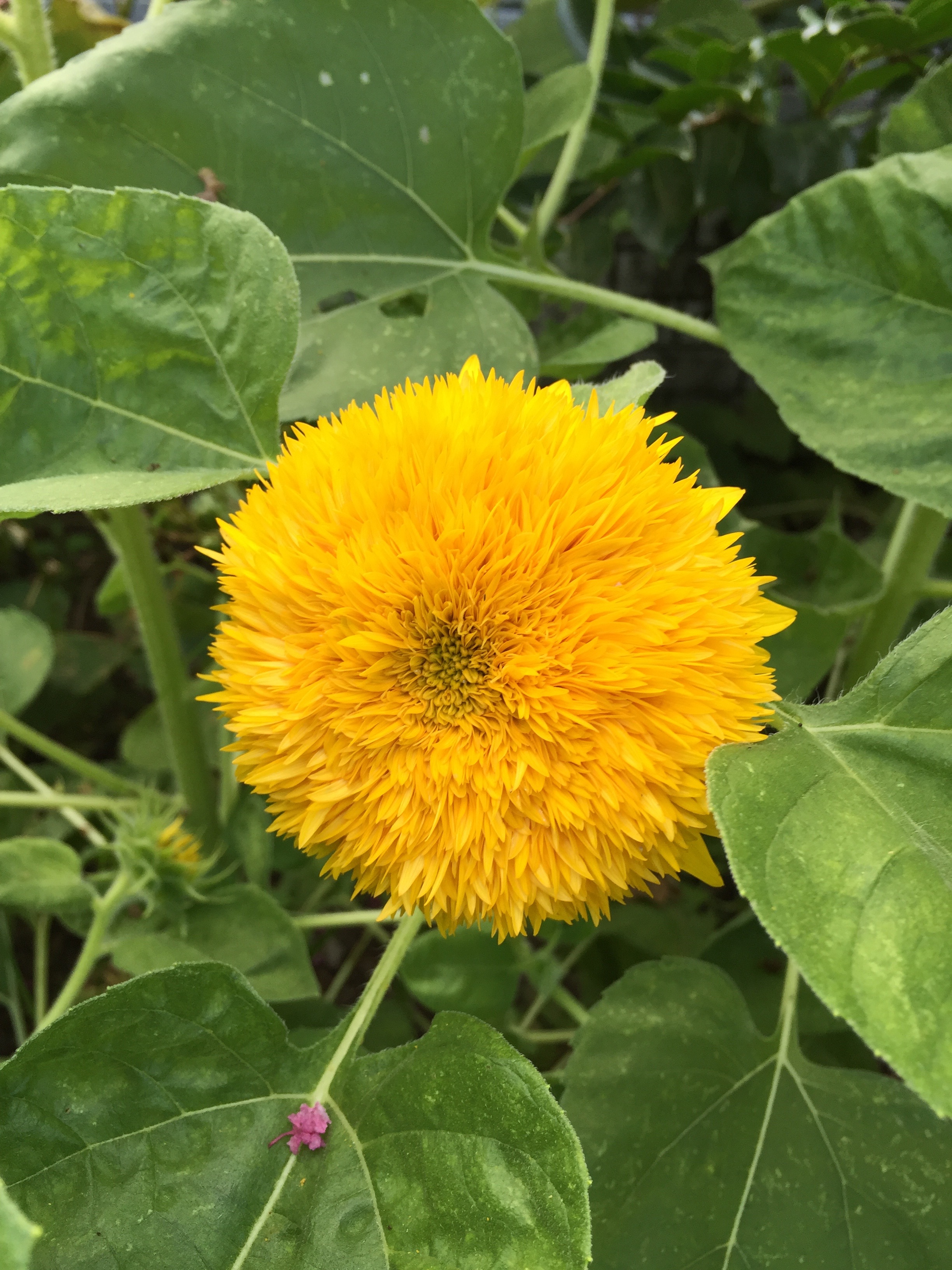
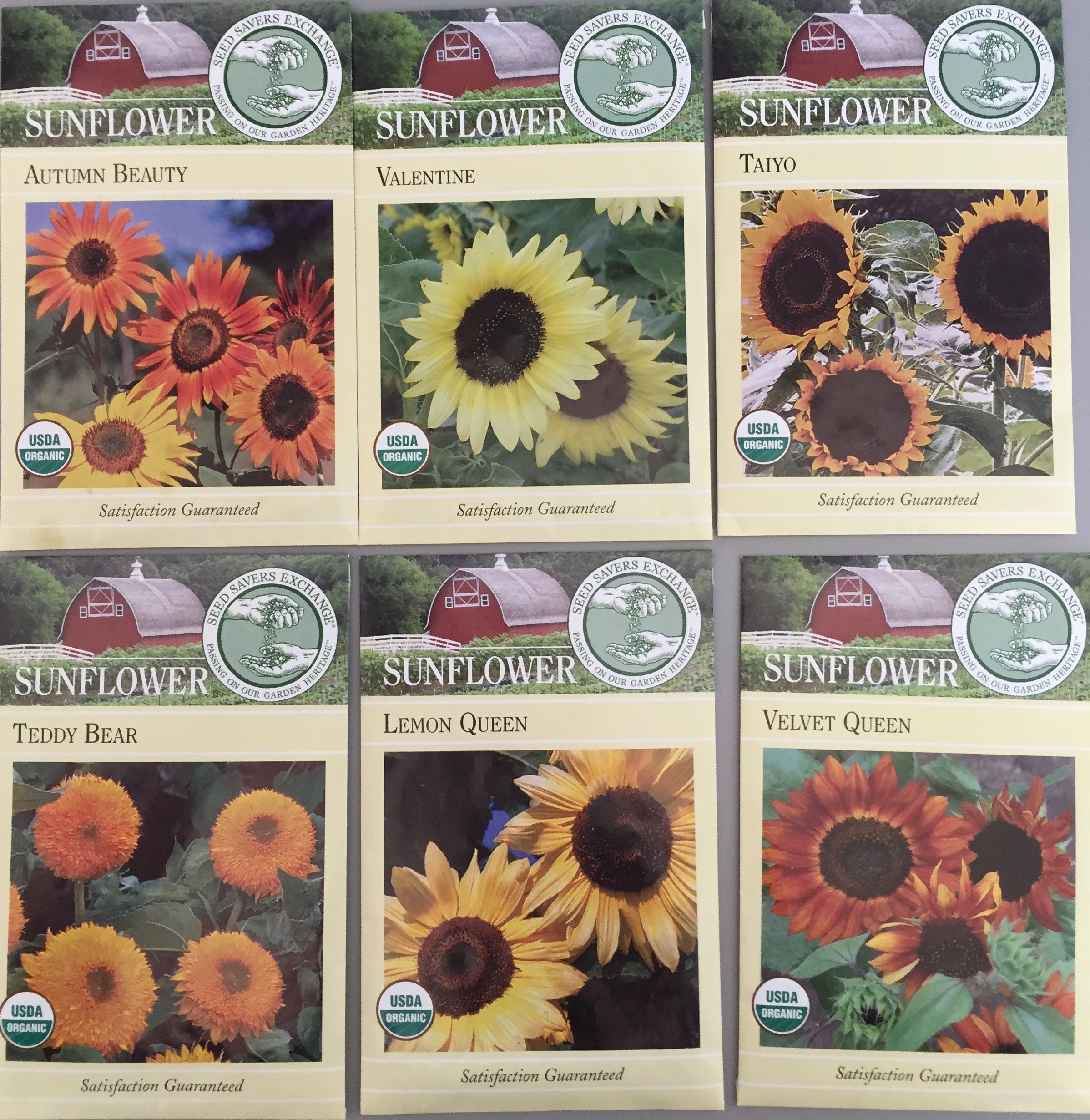 What a welcome site here in the middle of August. Here is the shortest of the group, approximately 12-24″ tall, named Teddy Bear.
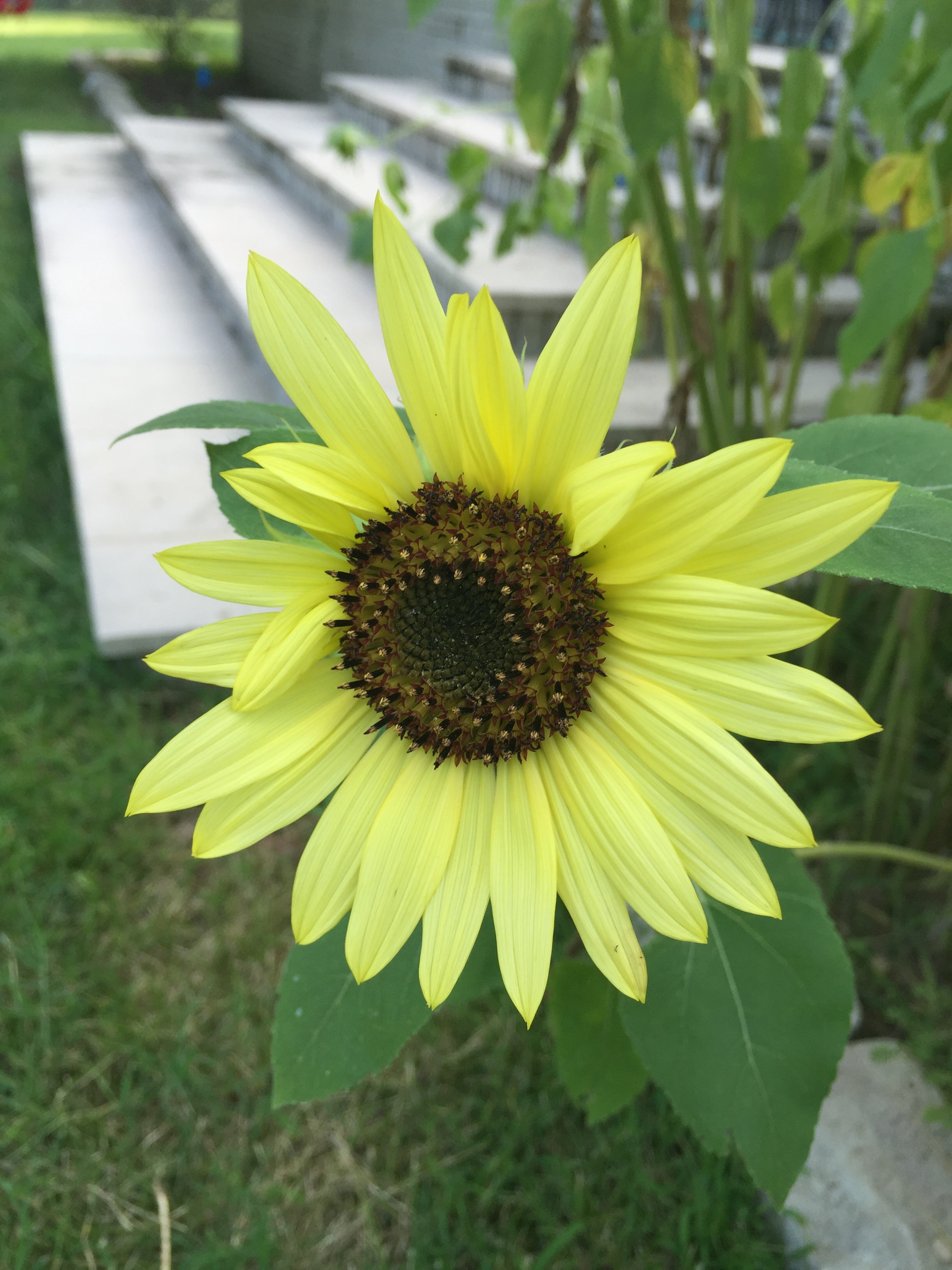
  Then comes Valentine at 5 feet tall.
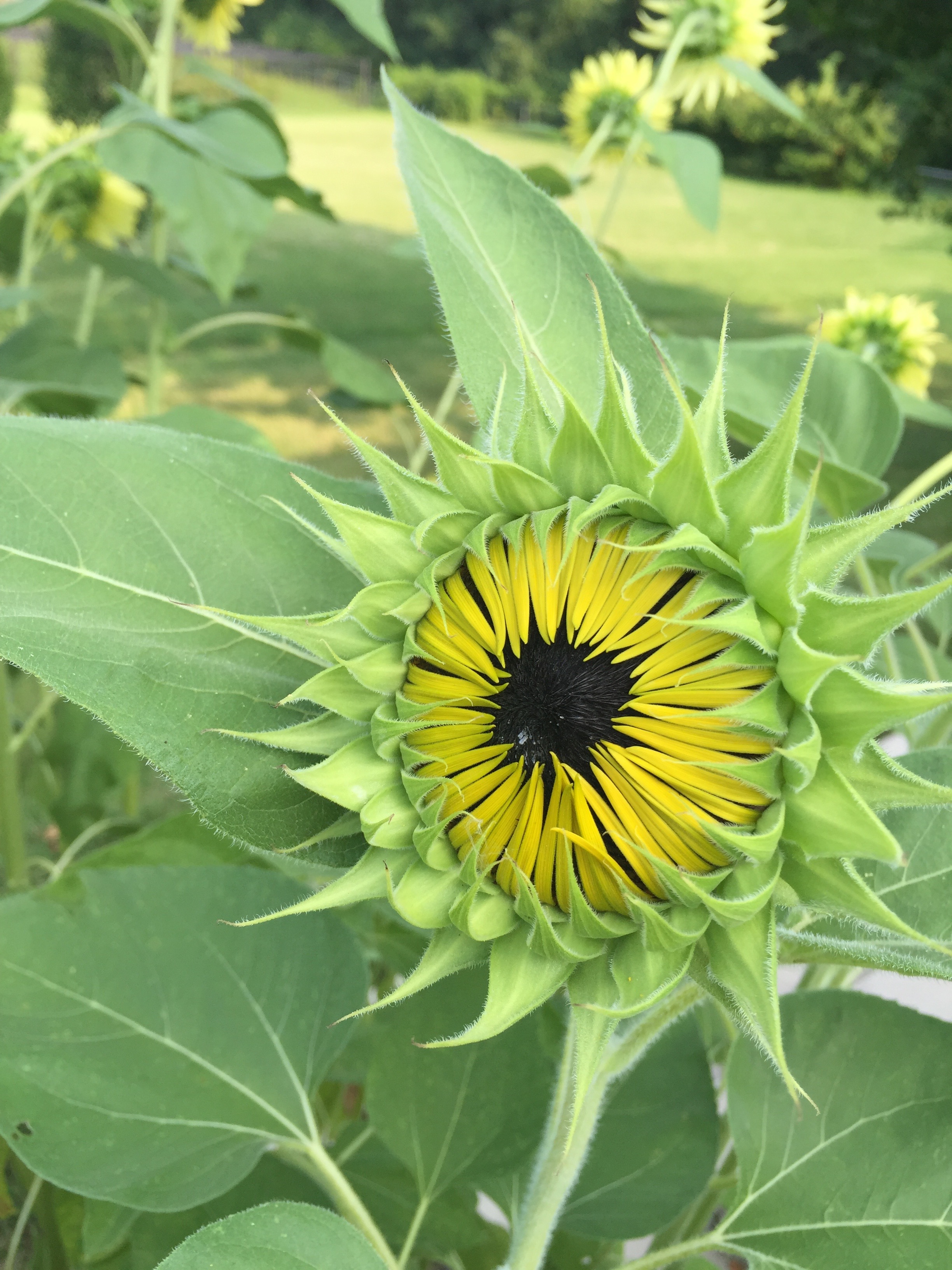
  Then Taiyo, about to open here at 5-6 feet tall.
  Then Velvet Queen at 5-7 feet tall with Mahogany petals and a nearly black center.
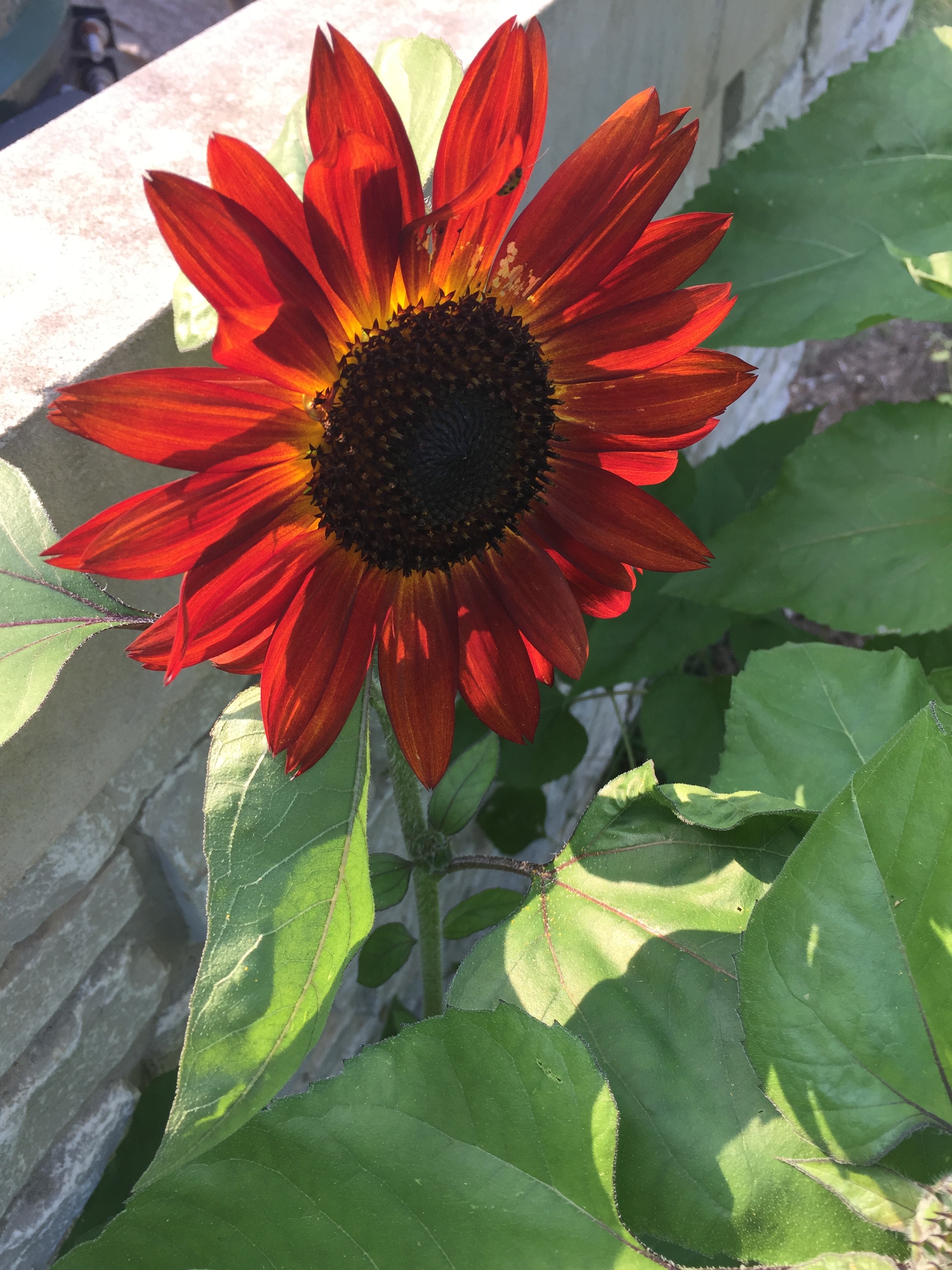 Autumn Beauty, ranging from 5-8 feet tall, has more than one shade, ranging from yellow to gold to dark burgundy.

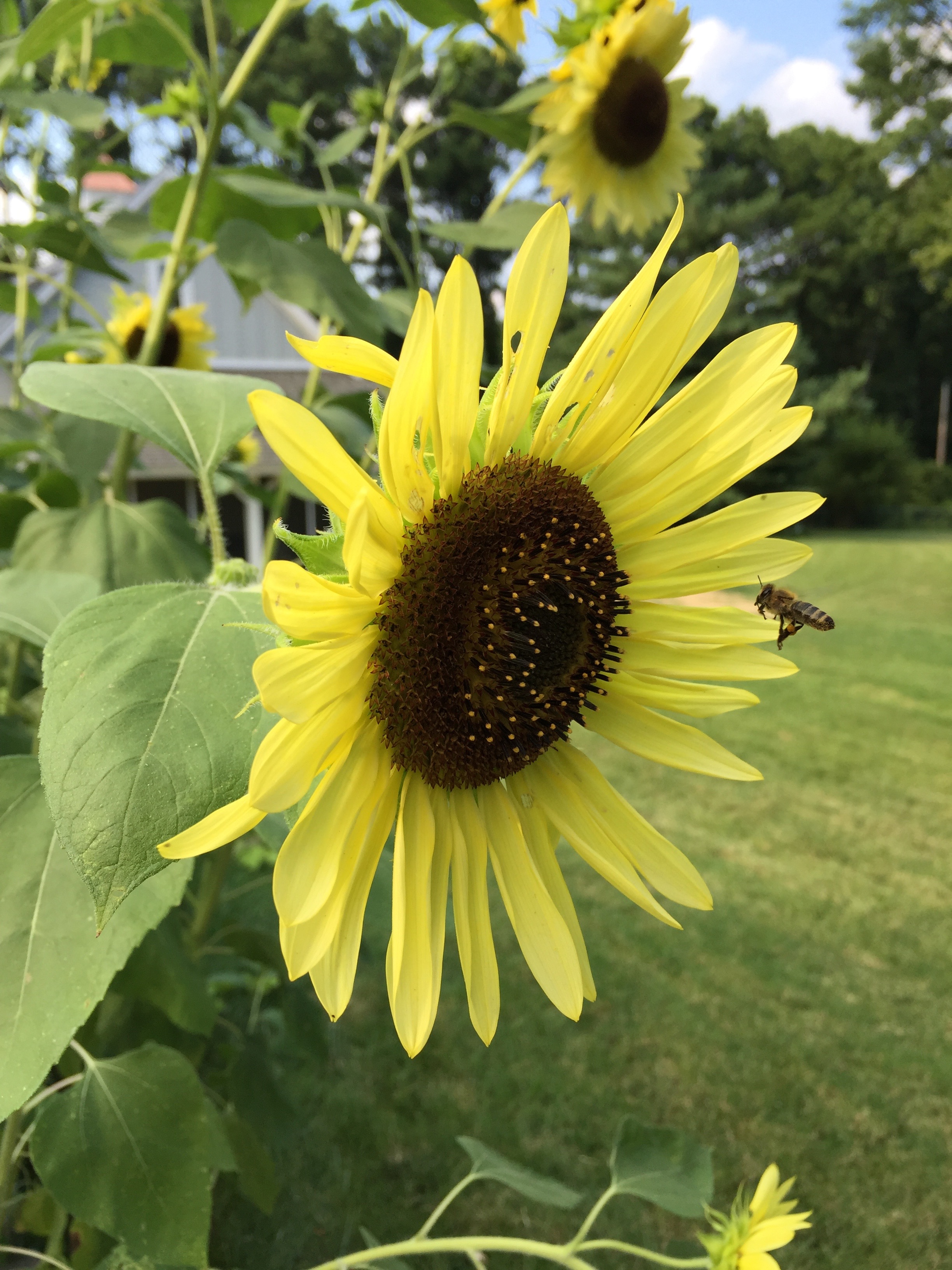
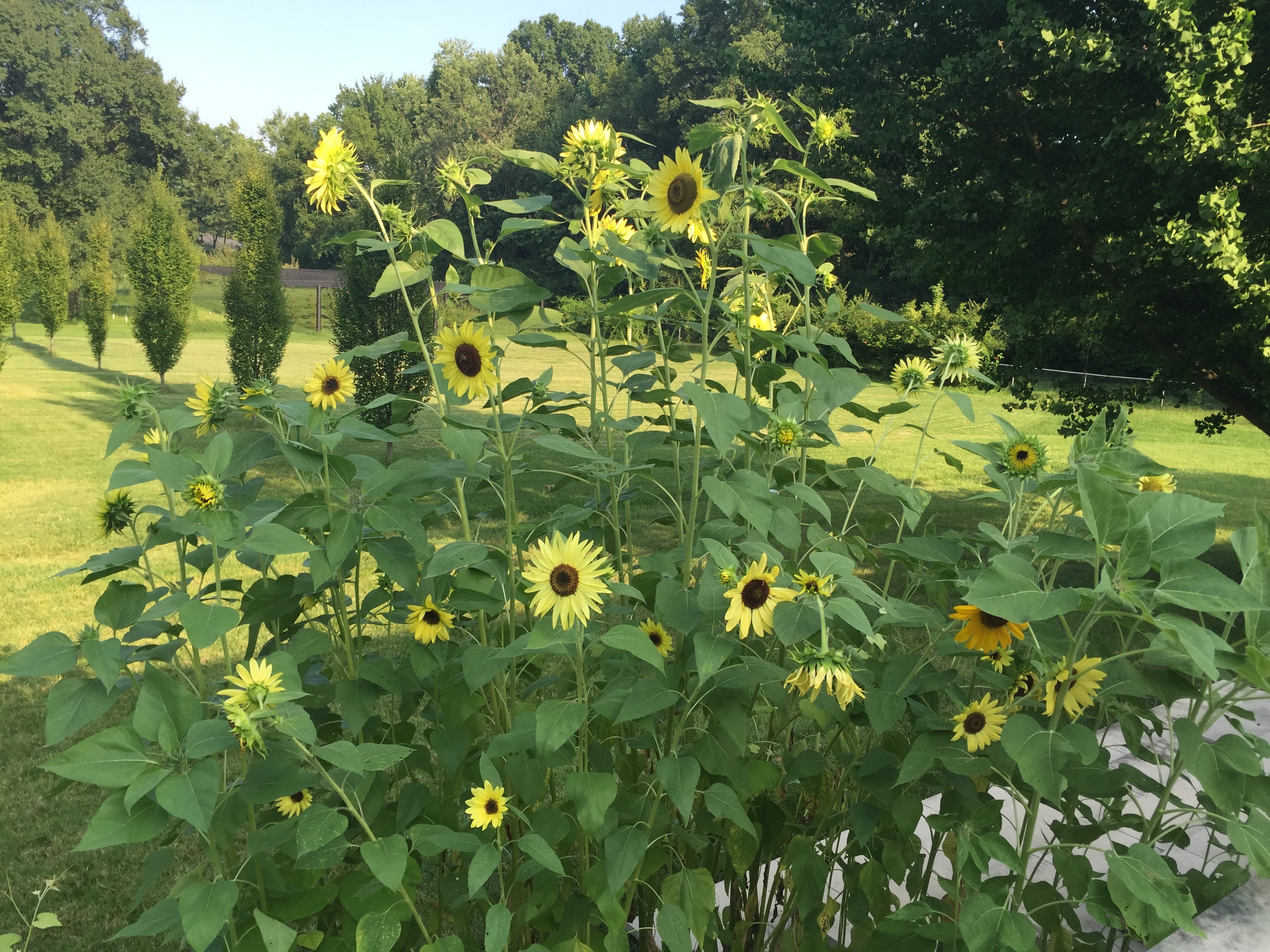 Do you see anything interesting about this photo? Dave noticed that the flower heads are facing west as the day wears on but they start out their day eastward facing. It turns out that they follow the sun with much drama and movement and
 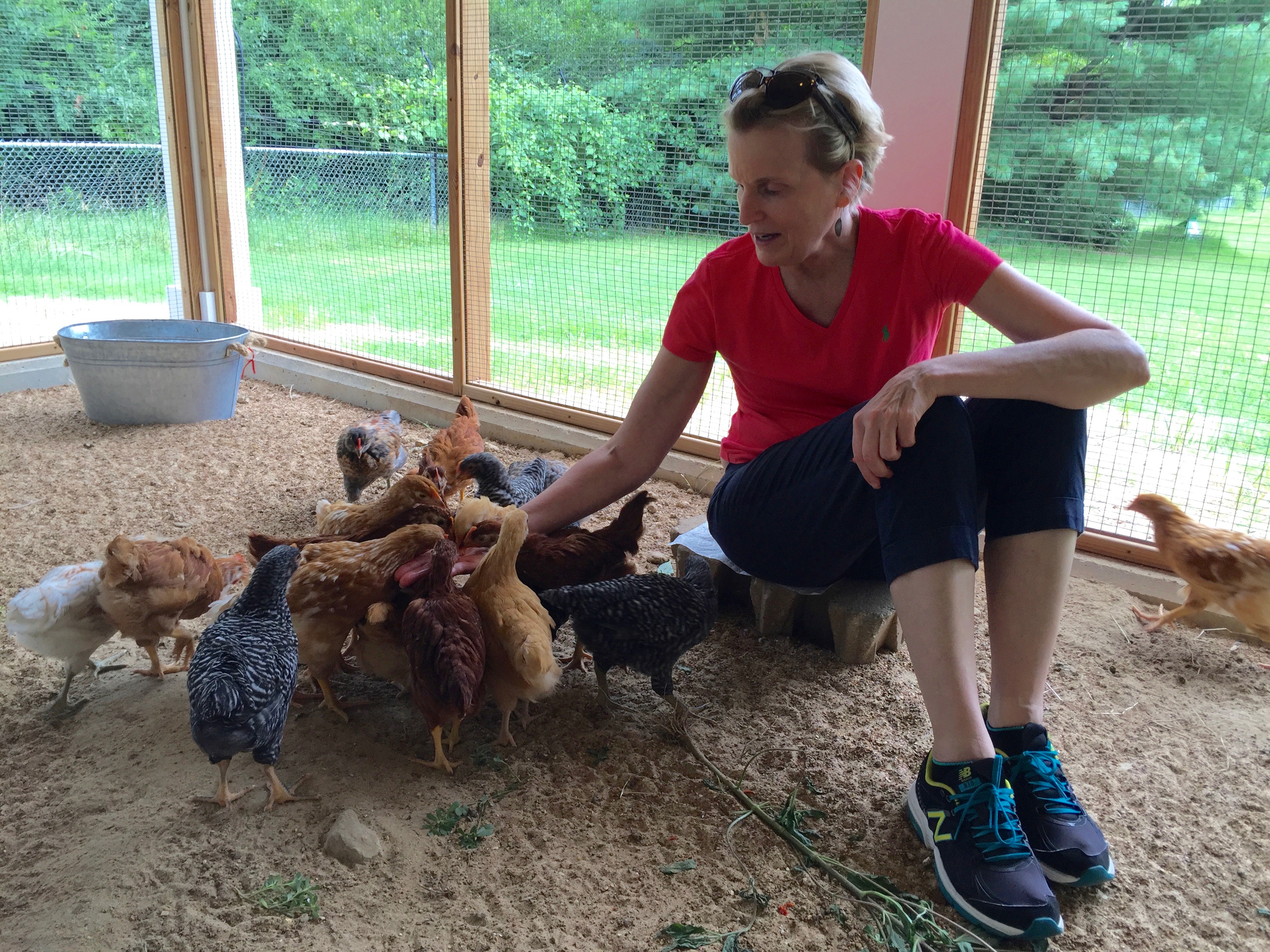 They don’t seem to care whose hand is feeding them when the goodies are leftover skins and seeds.
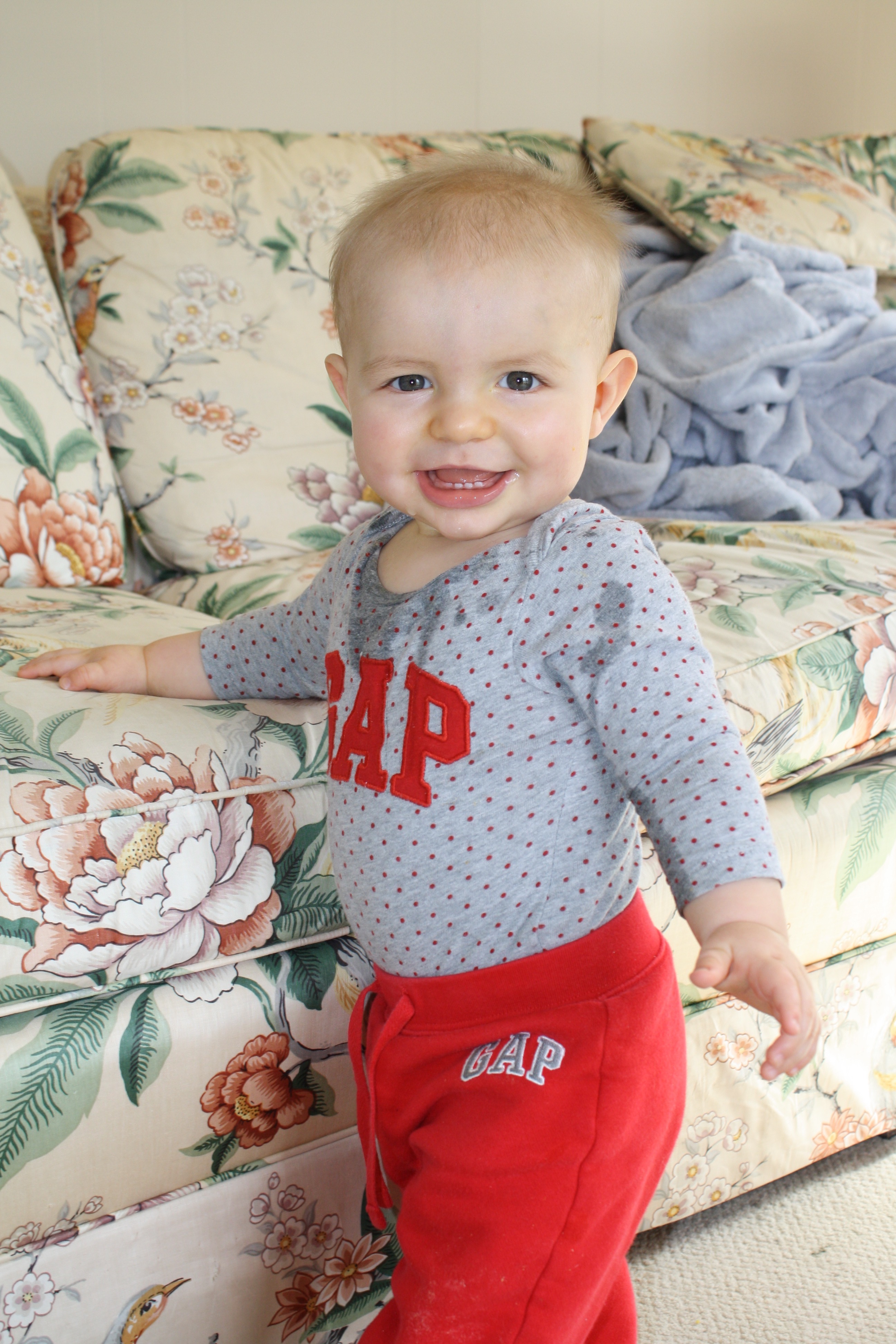
  But there was no attitude from little Coulter who had his first haircut this week. Kate managed a Rockwell-esque photo montage.

 Then the slide…
 And finally a cool off with a bit of breeze from the swing!!!
 What a difference a year makes when you are 15 months old!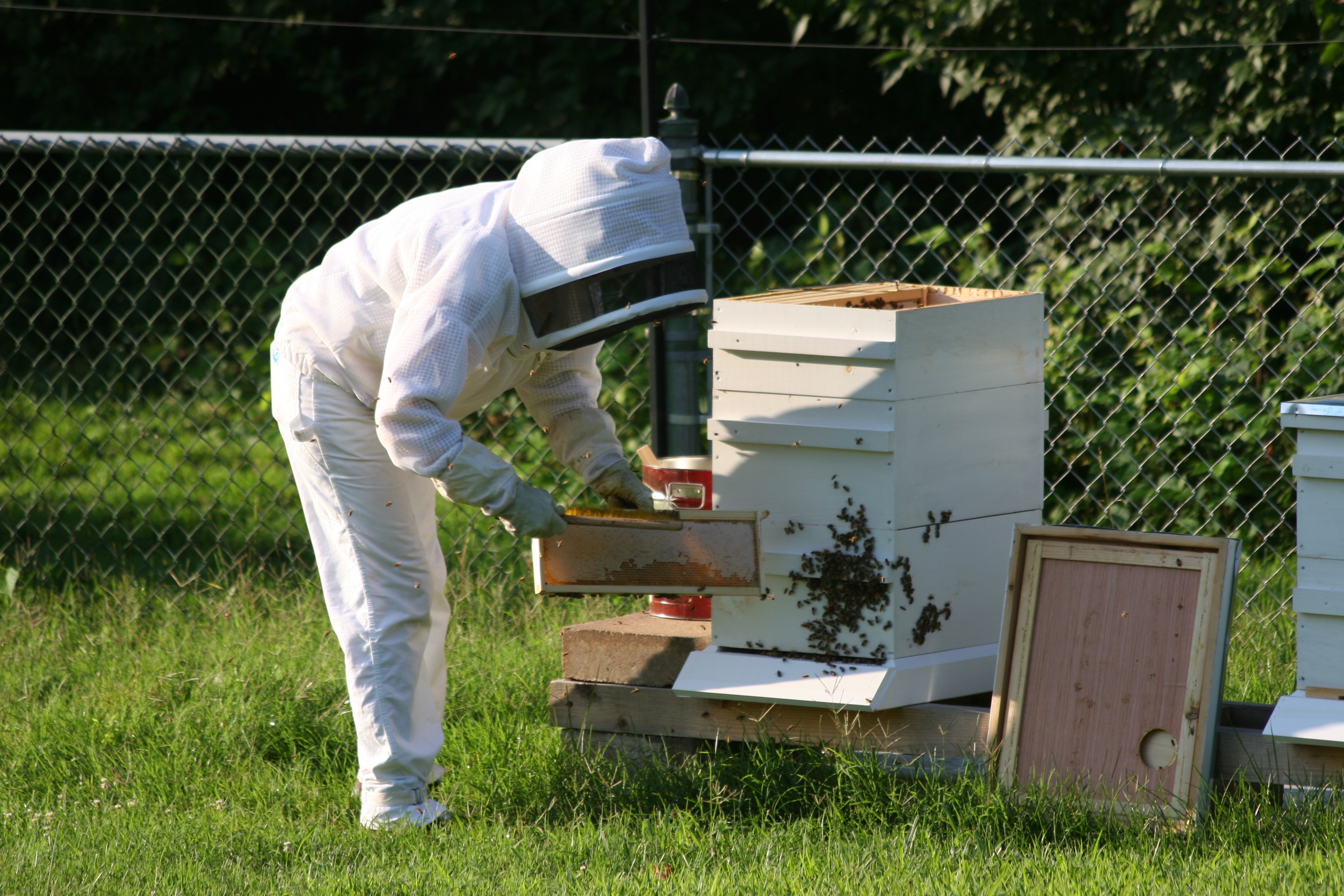
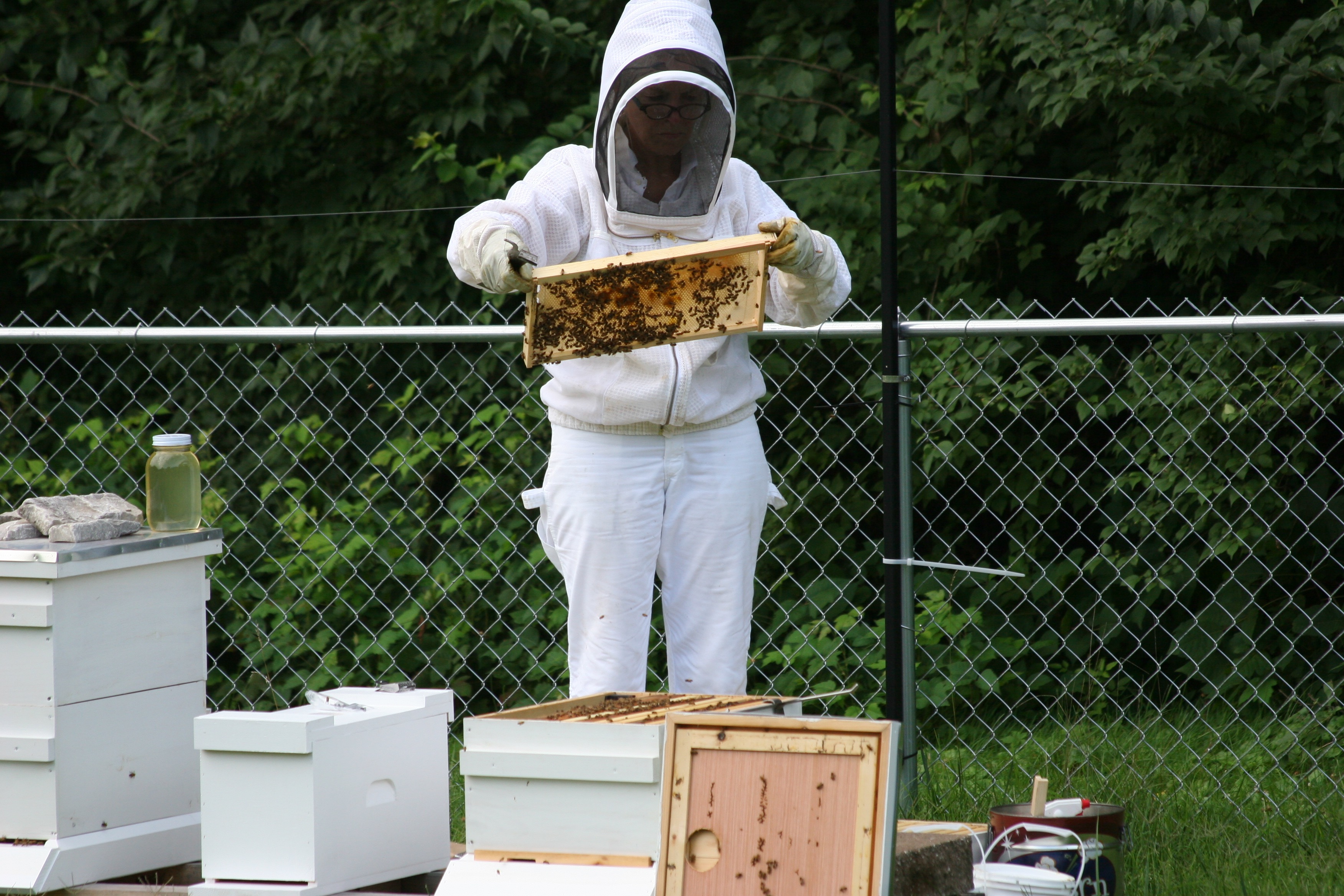



 The bees love to help out with pollination!
  So, much like other years, I have started with our favorite sweet pickle recipe and weighed up 9 pounds on each of the last couple of days to wash and slice up.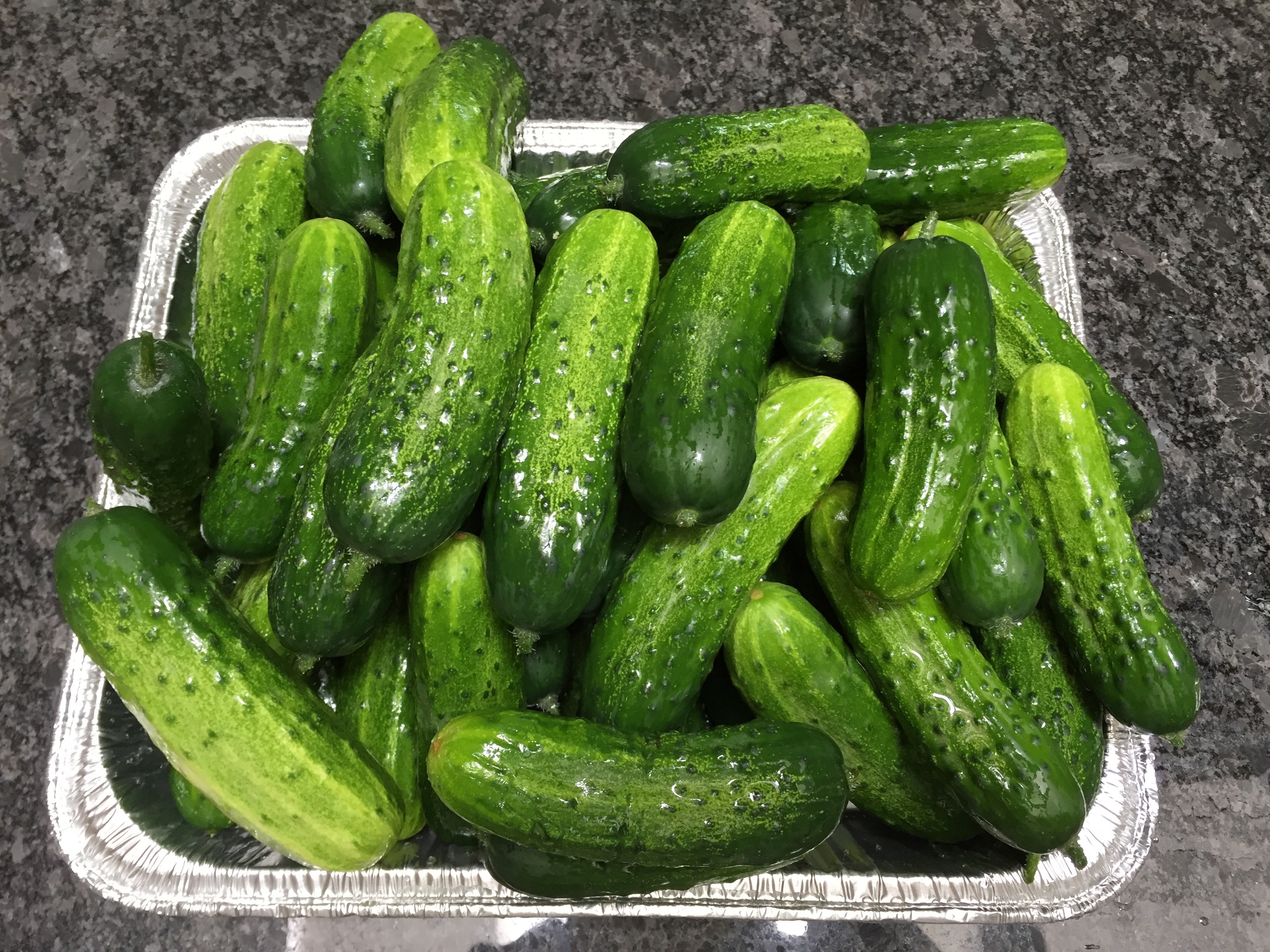
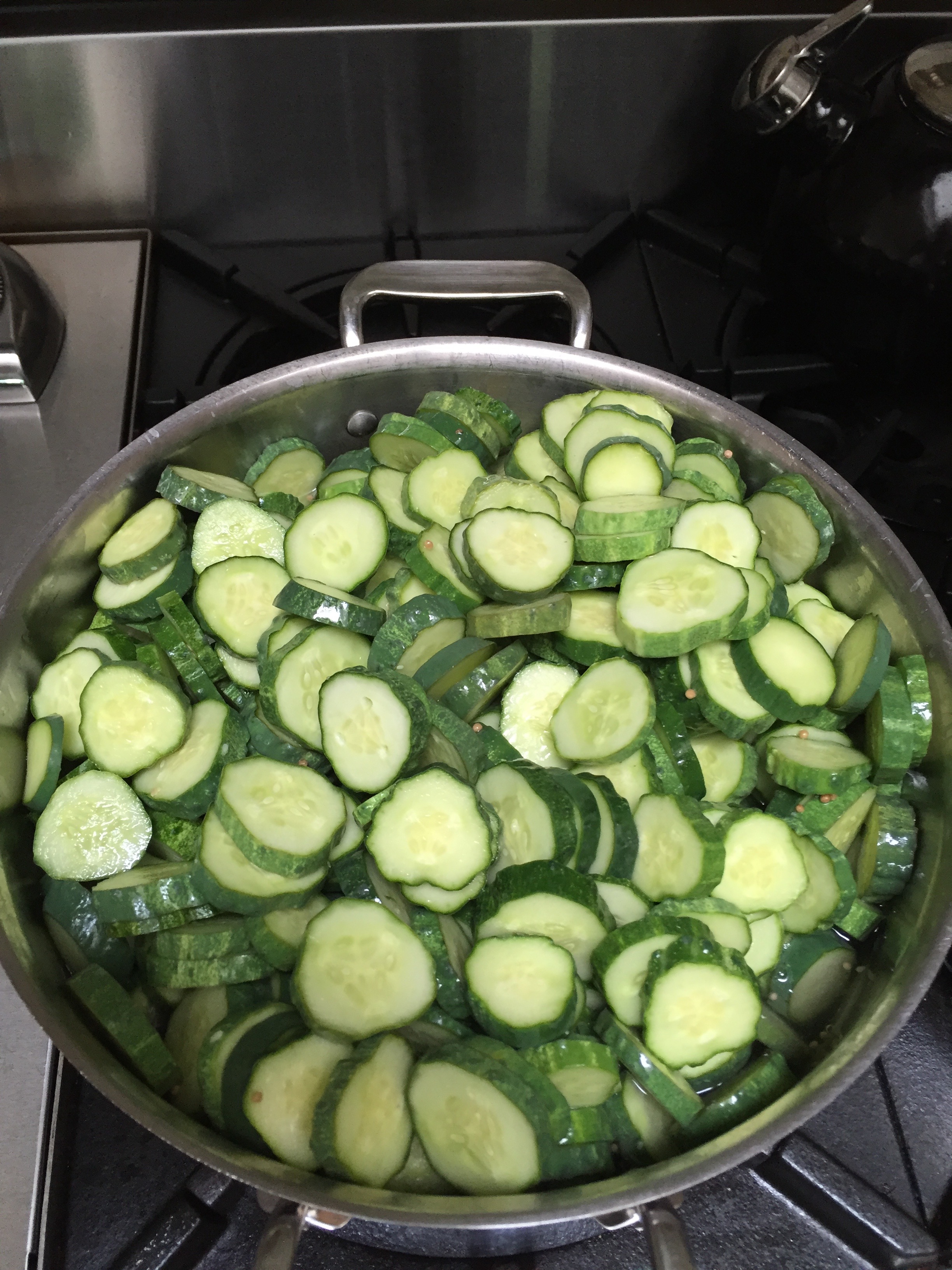
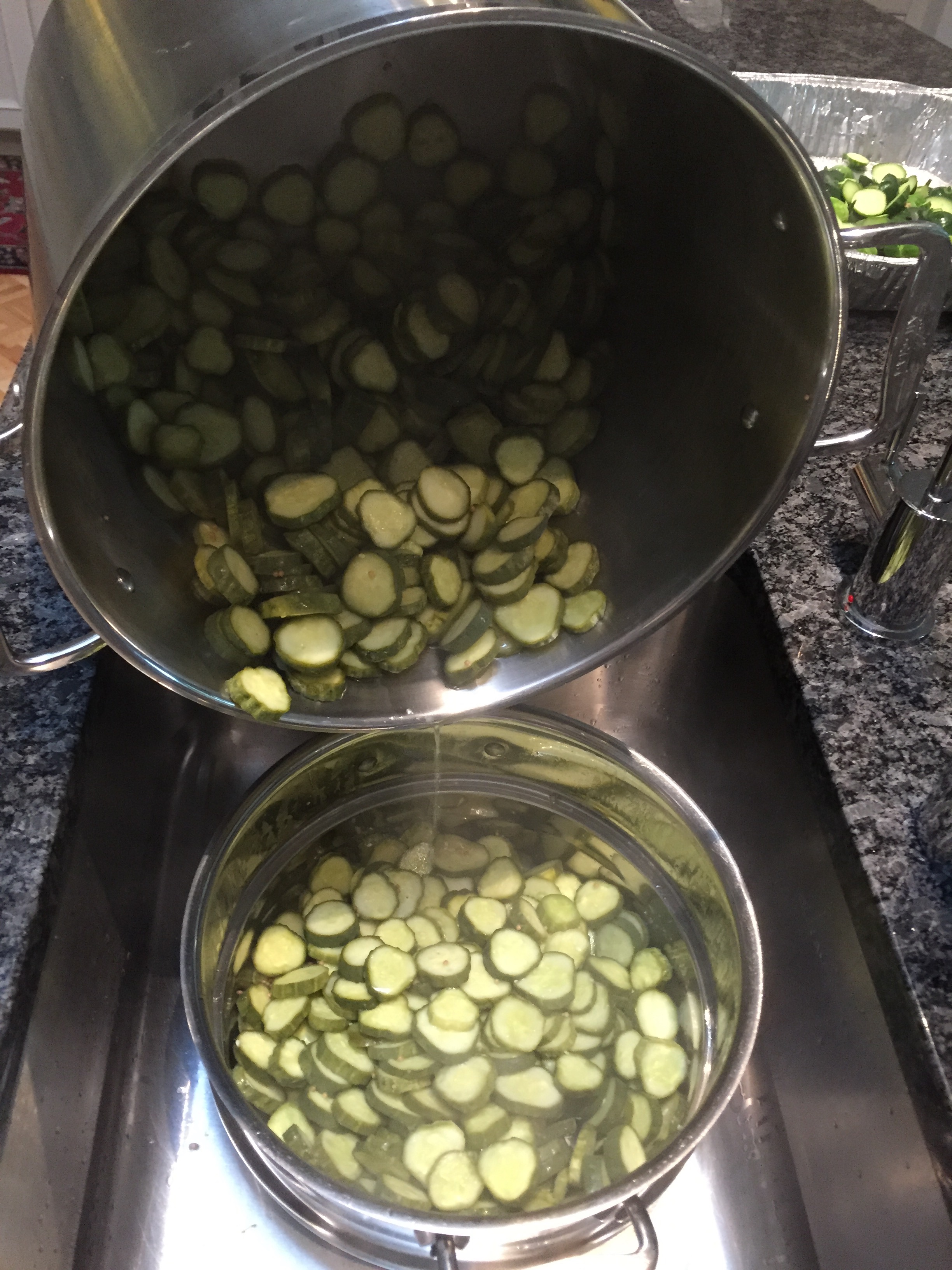 I then pack them tightly – steaming hot – into pint jars before adding a sweetly spiced, cooked syrup that has thickened on the stove top in the background. Ouch to fingers!
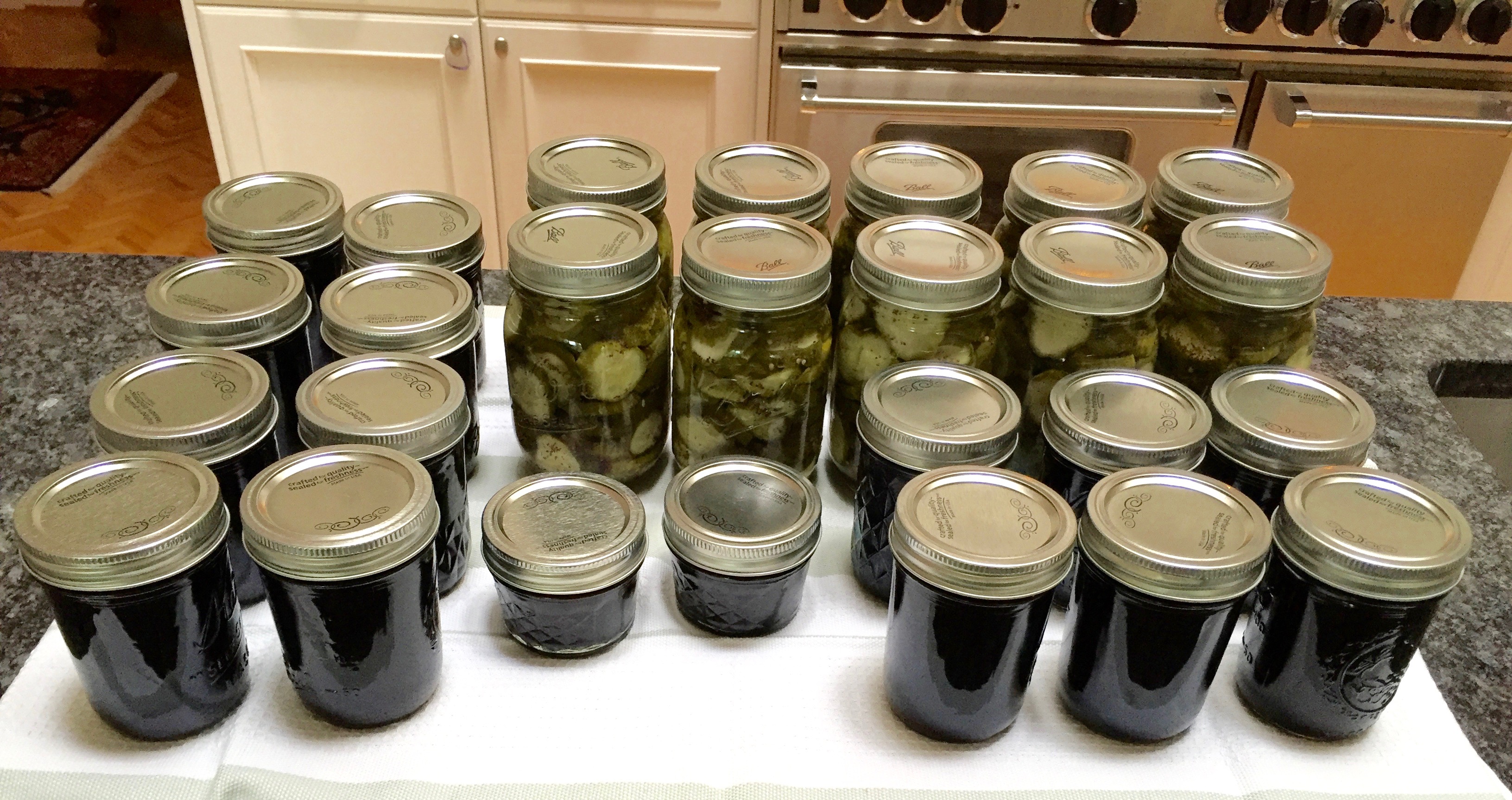
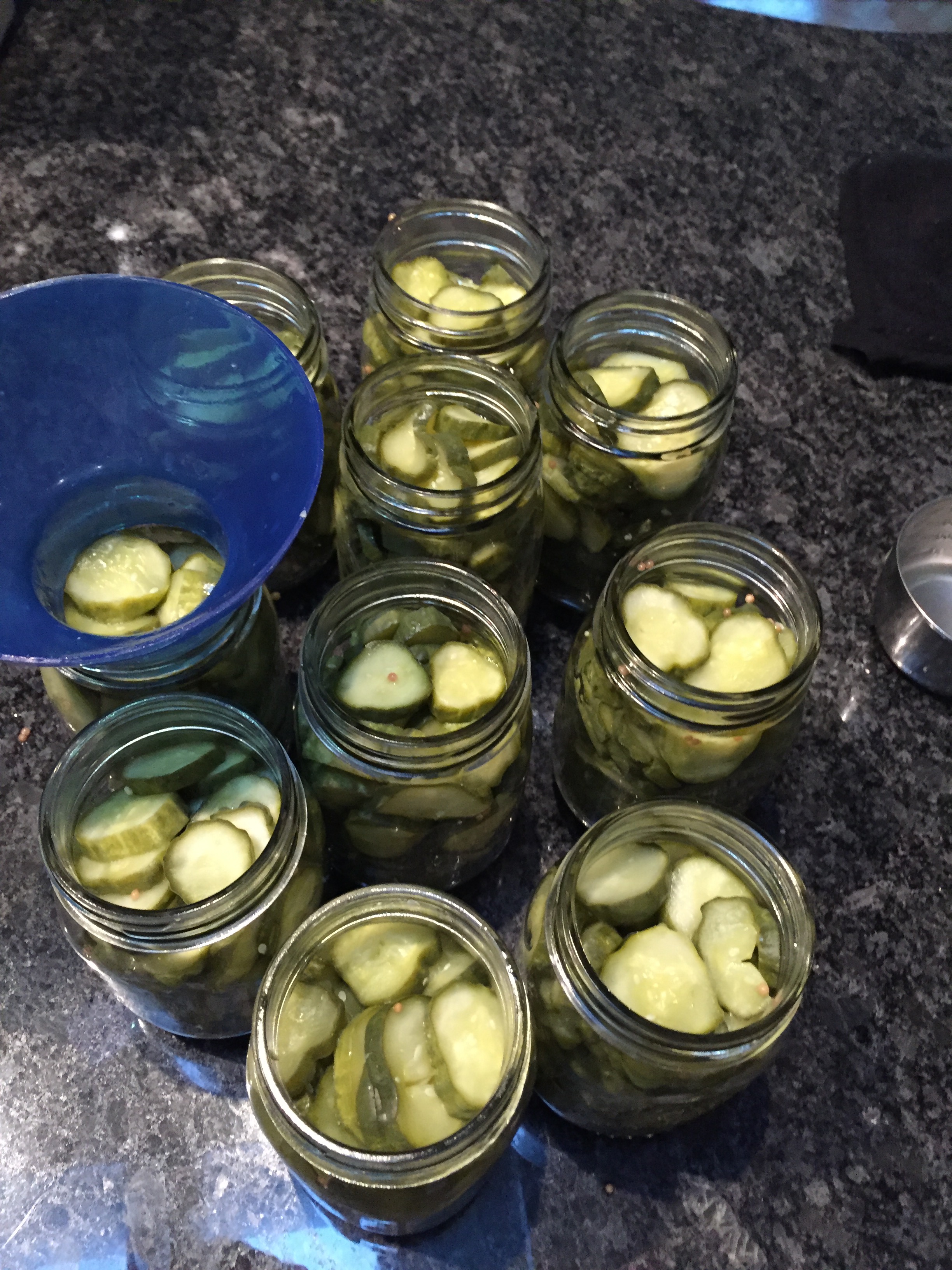 This reliable recipe makes 10 pints of crisp, sweet pickles which I’ve done twice already in the last two days. I’ve already made 31 half pints of blueberry jam in addition to freezing countless gallon bags of them. If it weren’t raining, I’d be picking berries now to add to the 90 plus pounds I have harvested this year to date. Here are some of the pickles and blueberry jam jars cooling while waiting for labels.
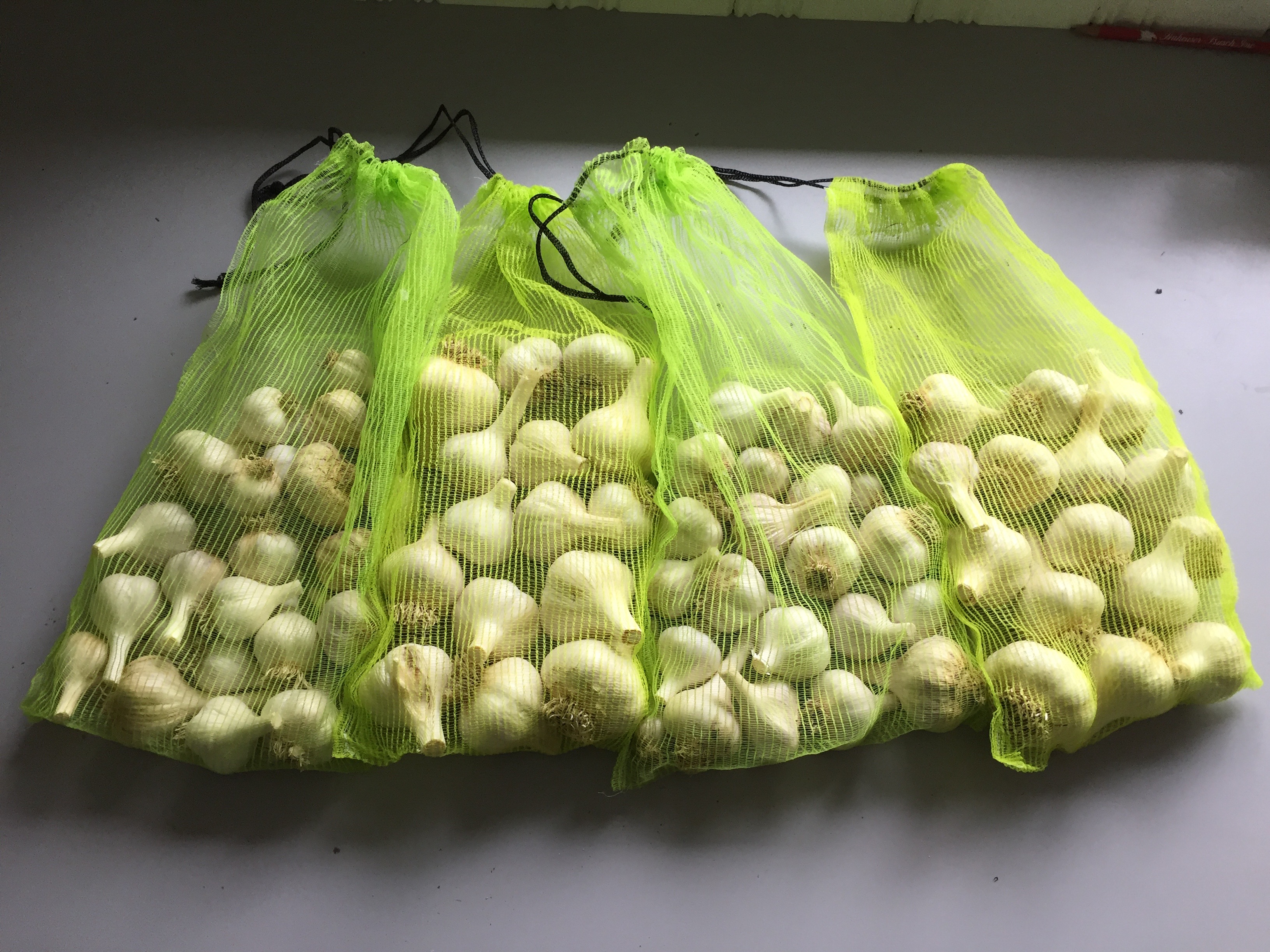
 The garlic bulbs have finished drying after two weeks on their screen bed and were ready today to trim and put in the “root cellar”, aka the basement. I cut their long necks and put them into the mesh bags I had purchased for this purpose and off they went to hang in a dark, cool corner of the basement where I will send my messenger, Dave, to grab a head every now and then for cooking during the coming year.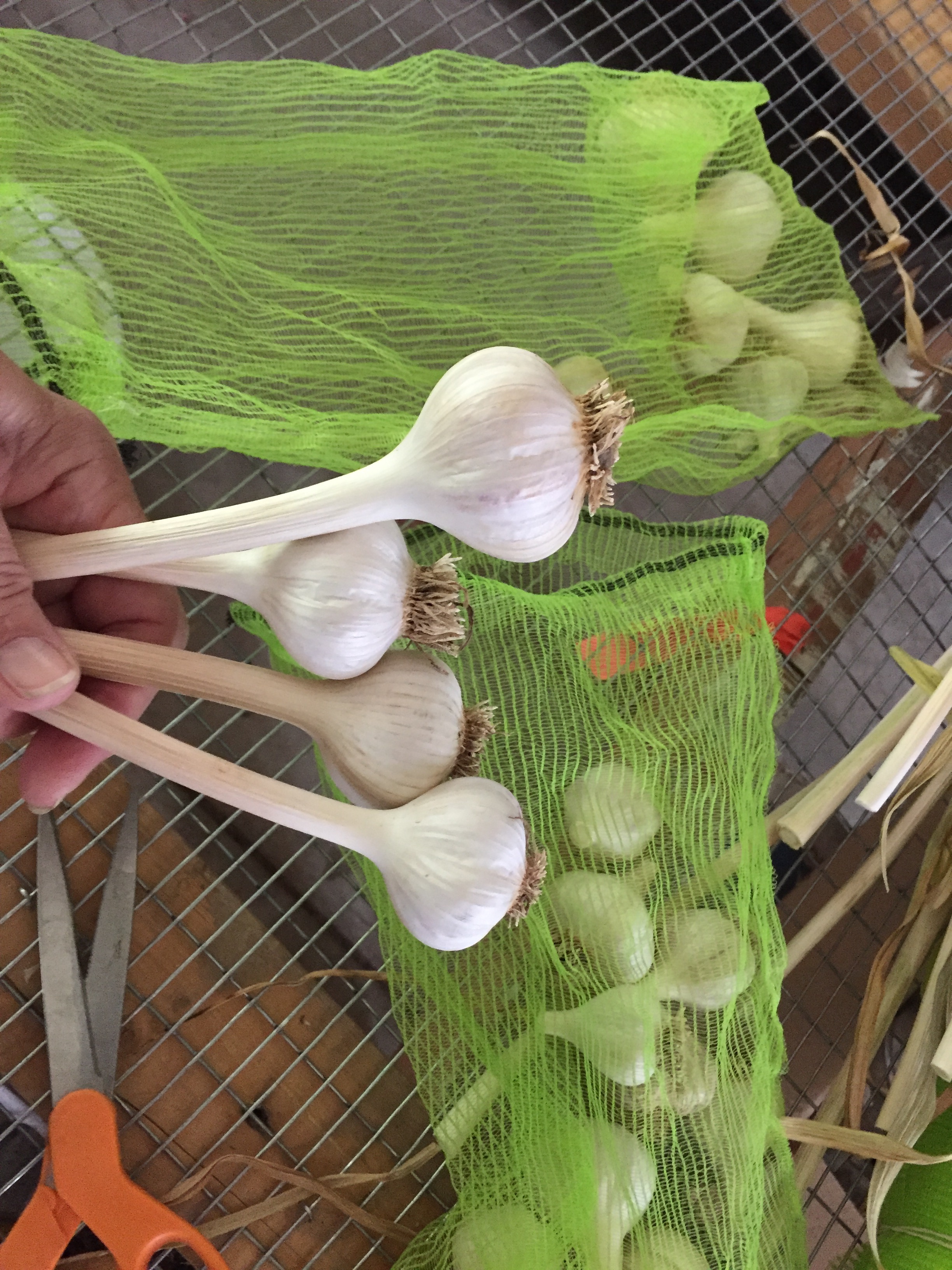
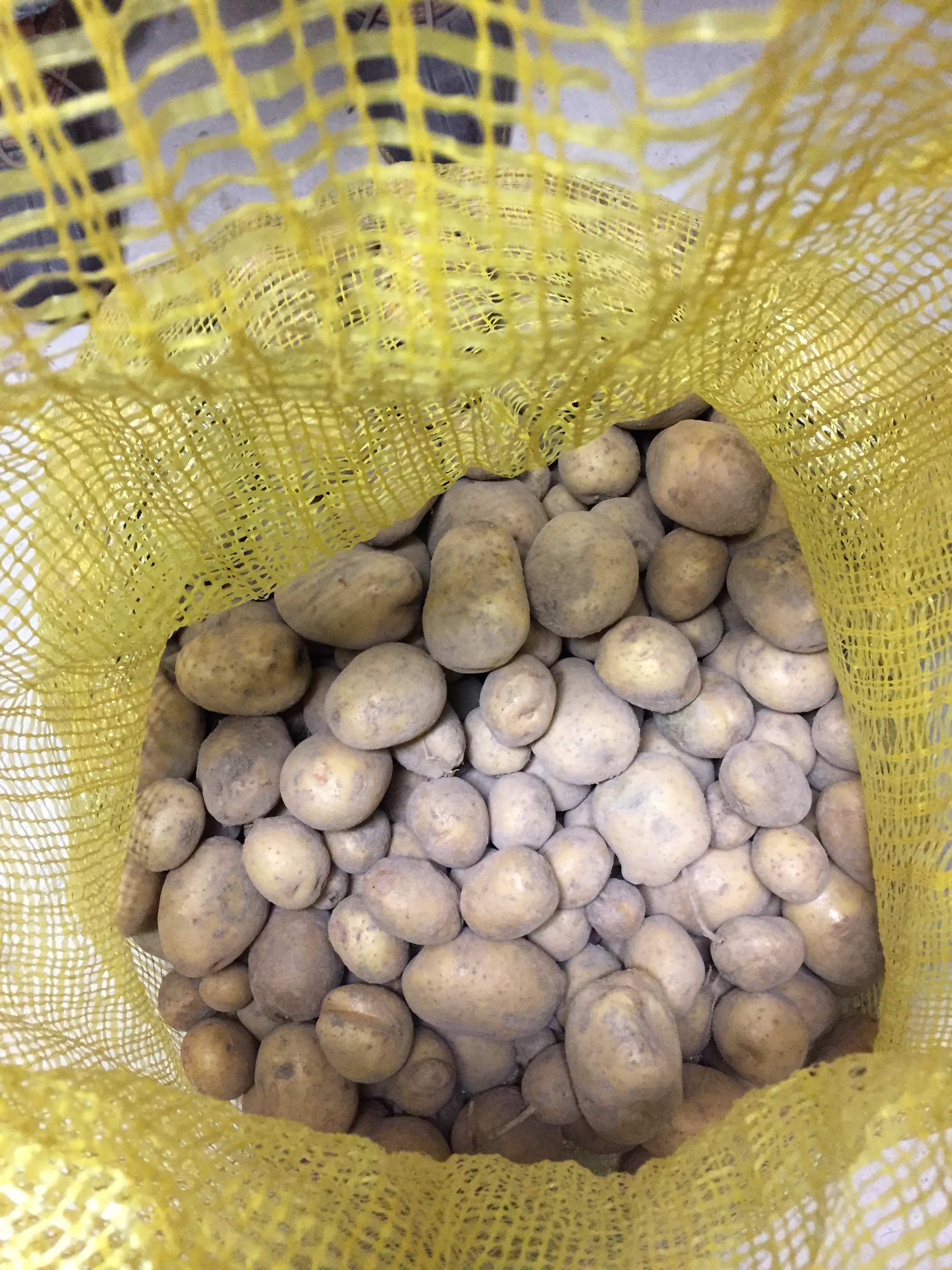
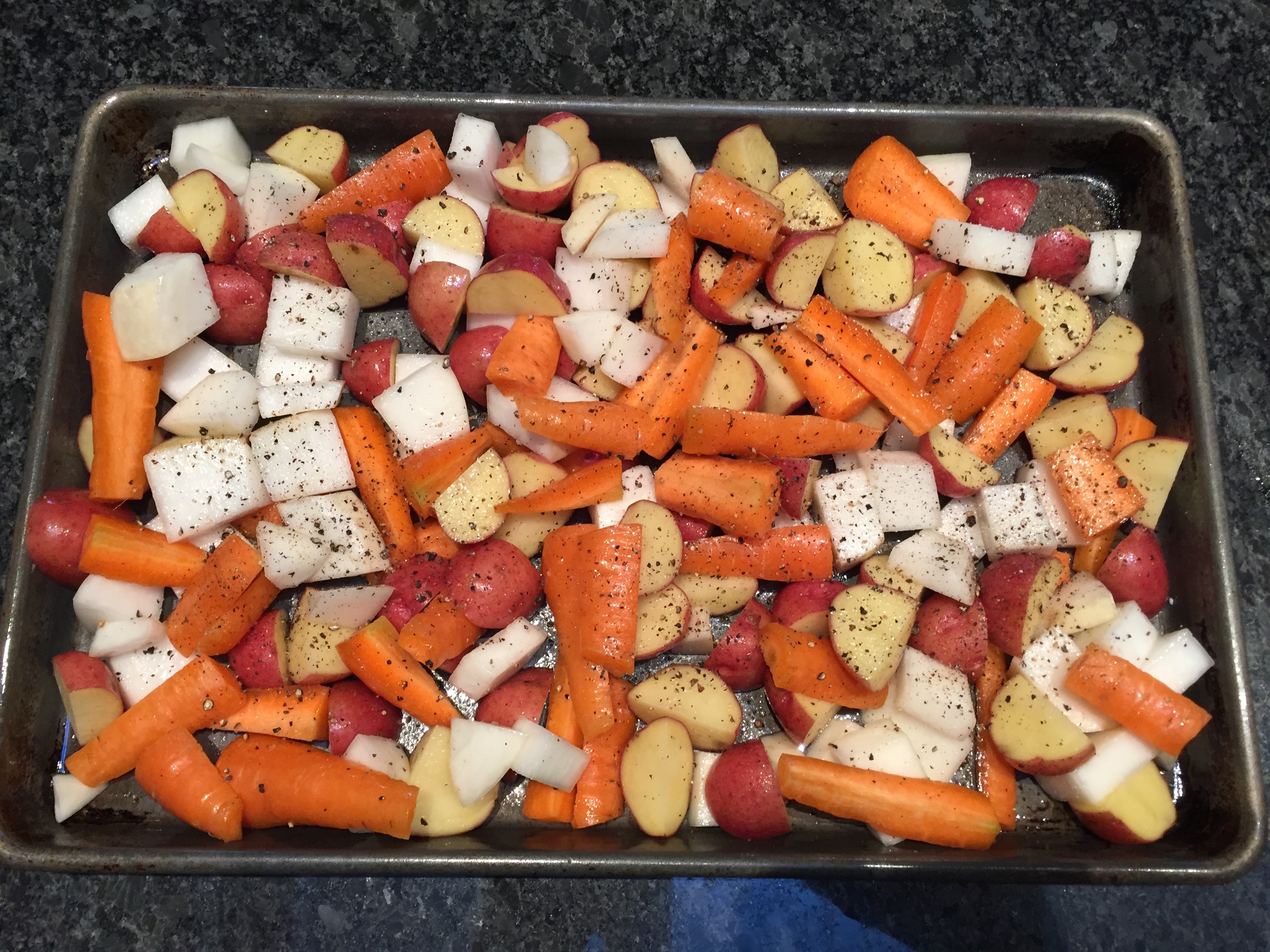
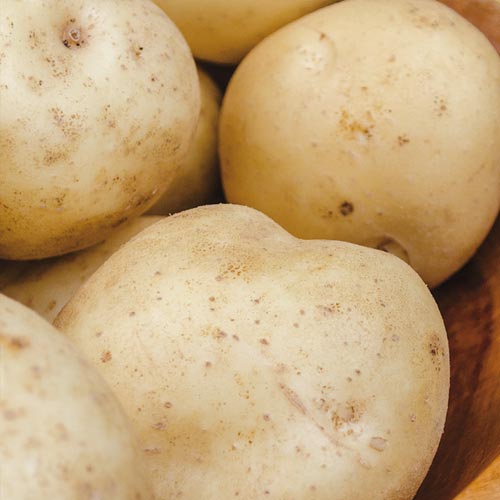
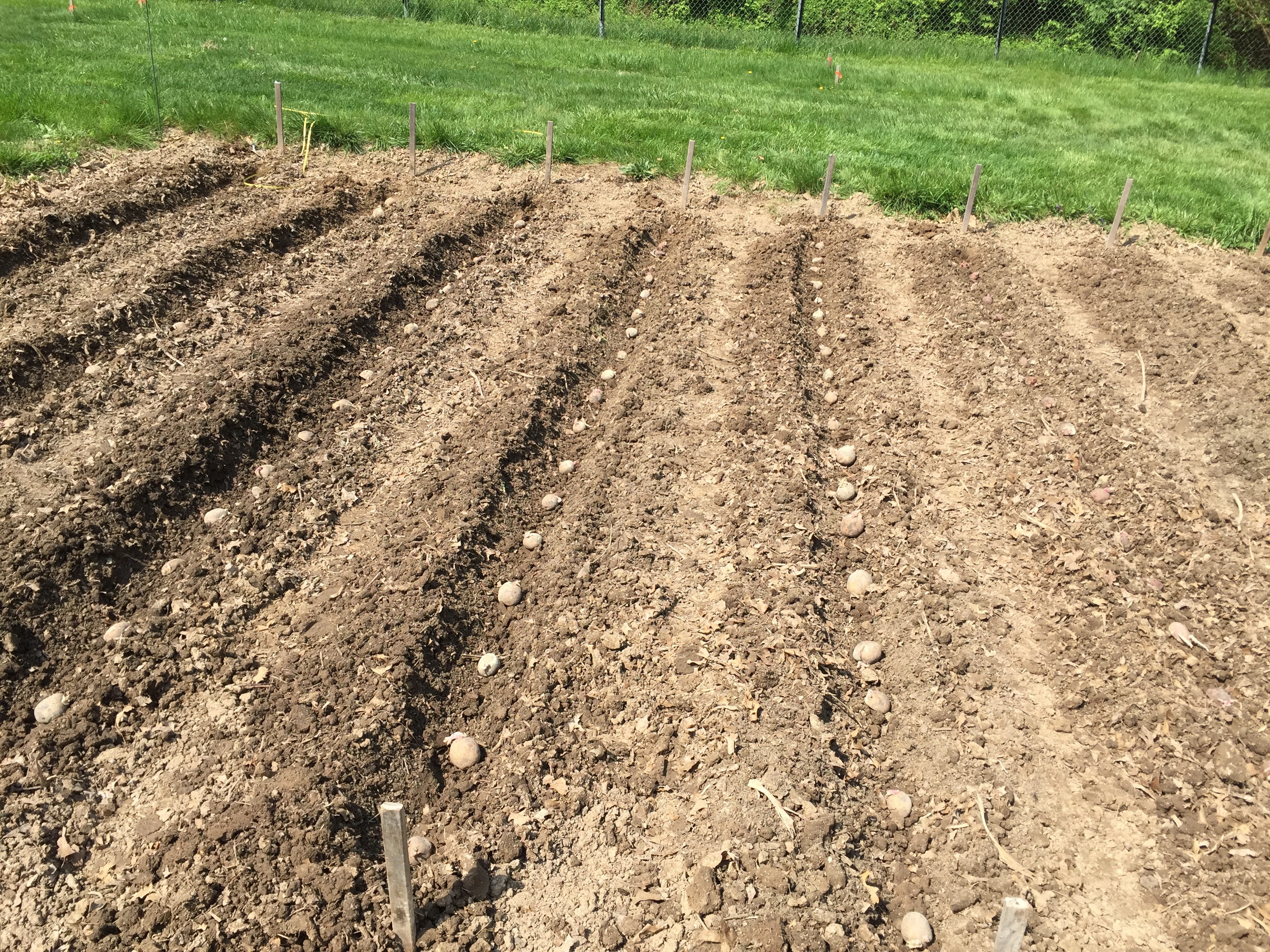
 Dave started digging the potatoes recently and got less than three of the ten rows dug so far – weighing in over 53 pounds – before the rain started in so they are also in the cool, dark basement as well! We expect quite a nice continued harvest of Pontiac Reds to compliment more of the Yukon Golds as seen below.
  With all the processing I’ve been doing these days, I decided to wise up and get some bulk items to help keep the cost down. For instance, I found a great pectin supplier in a small, family owned company in northern California called Pacific Pectin. So instead of opening an individual package of Sure-Gel every time I make a batch of jam, I’m measuring out the equivalent amount from a 10 pound box. What a savings for a jam maker like me!
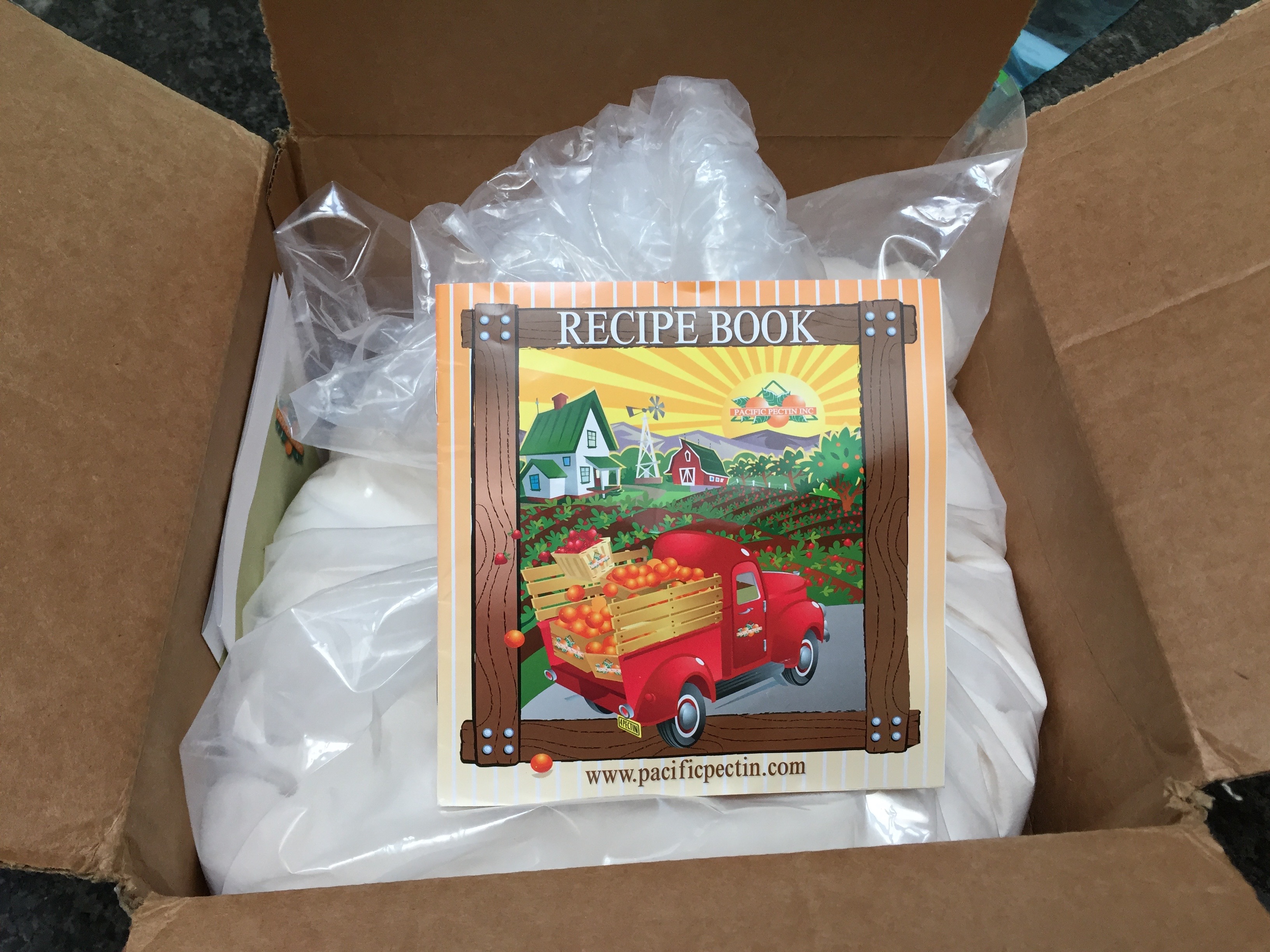 I’ve also taken to buying my sugar in 25lb bags.
  This requires some strong arms and pre-planning which I’ve been working on as well as the supplies for pickles shown here. Gallon containers of vinegar were on sale recently so I’m grabbing as many jugs and noting the amounts subtracted from each so as to keep my constant measuring sensible.
 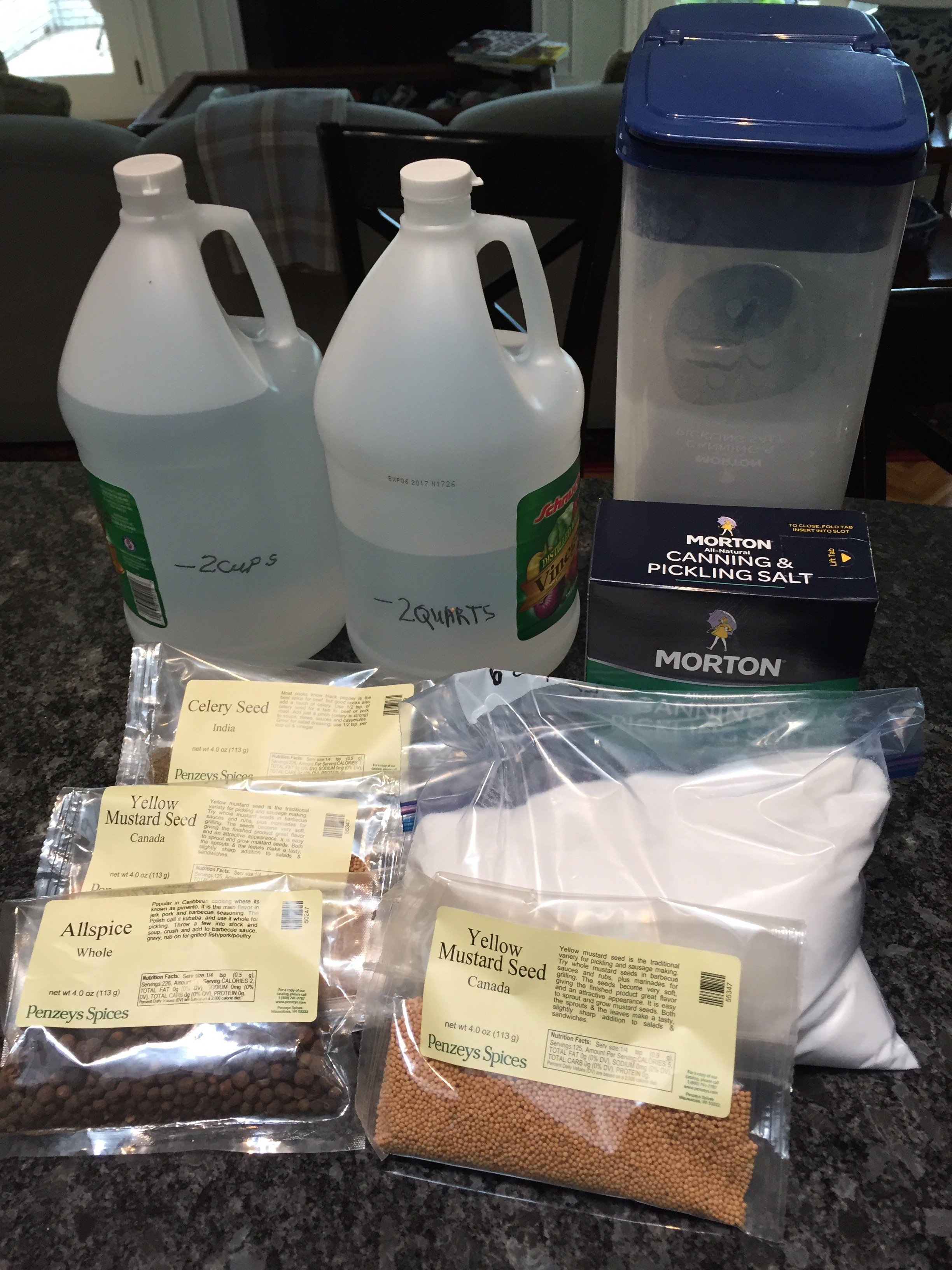 When I have time, I pre-measure bags of sugar for specific recipes so that I have a system called ‘mis en place’ – French for ‘things in place’ – so as to keep the stress of the fast paced, heated cooking the simplest. This helped out when making 85 jars of strawberry jam!
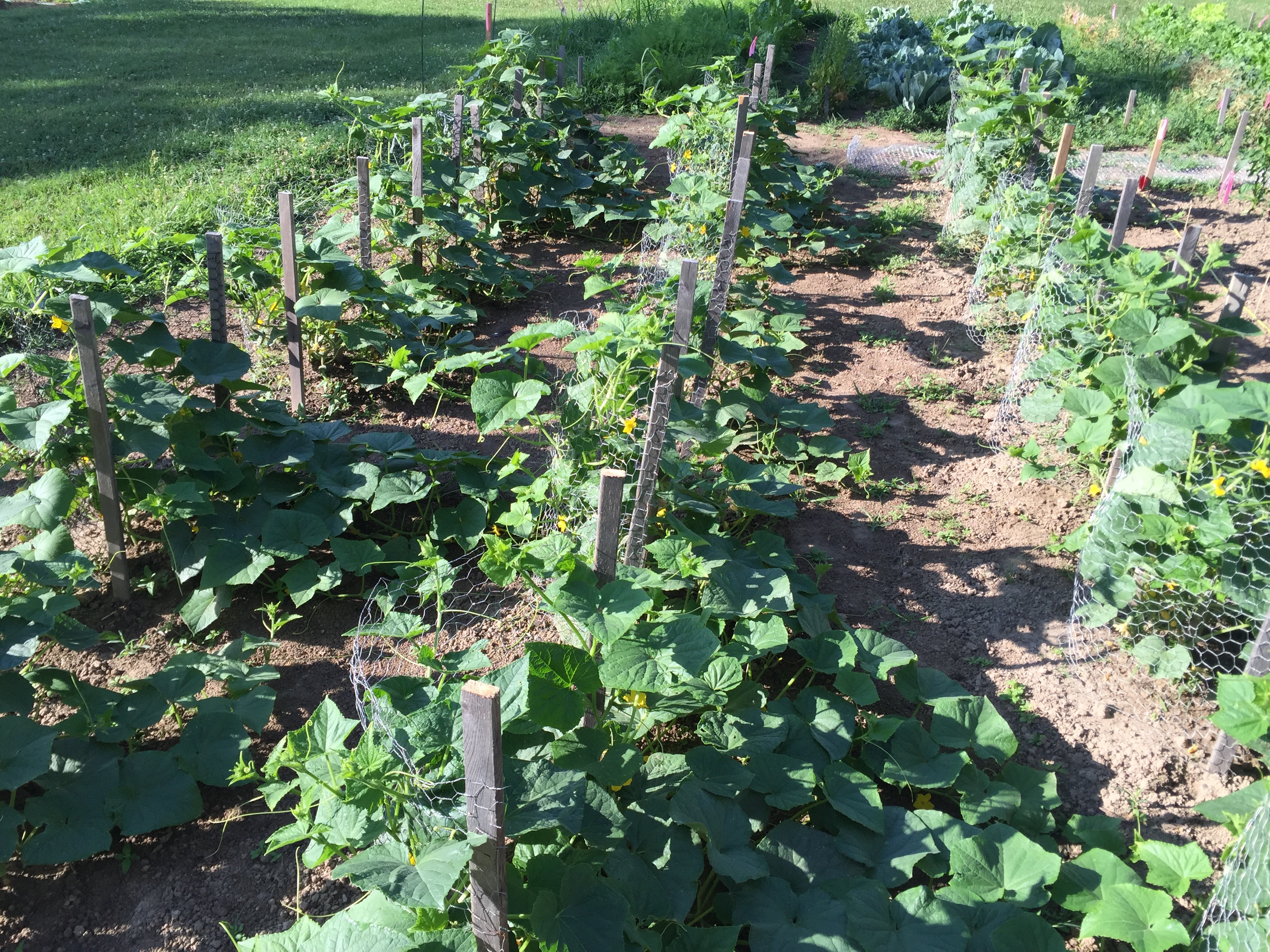
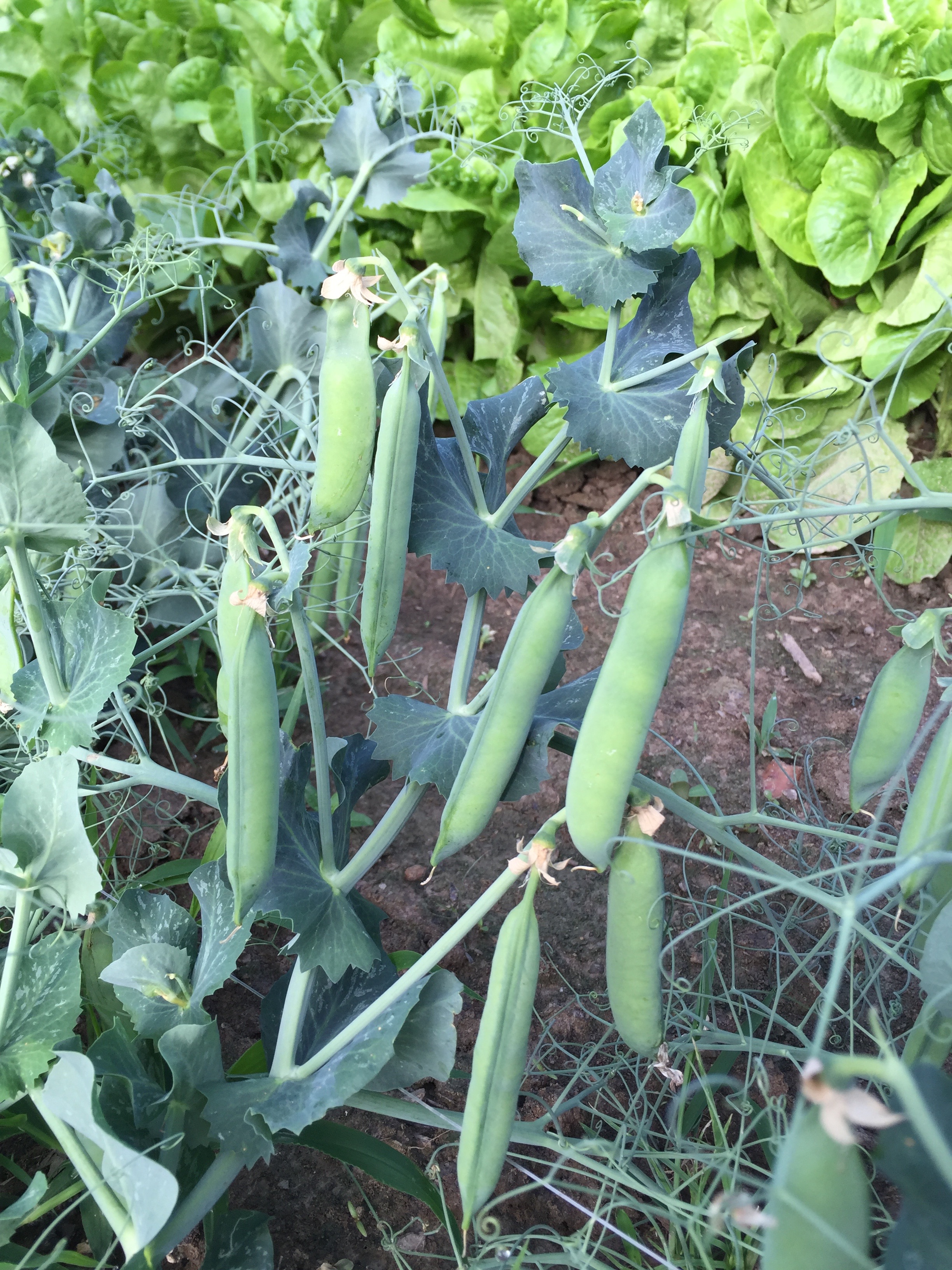
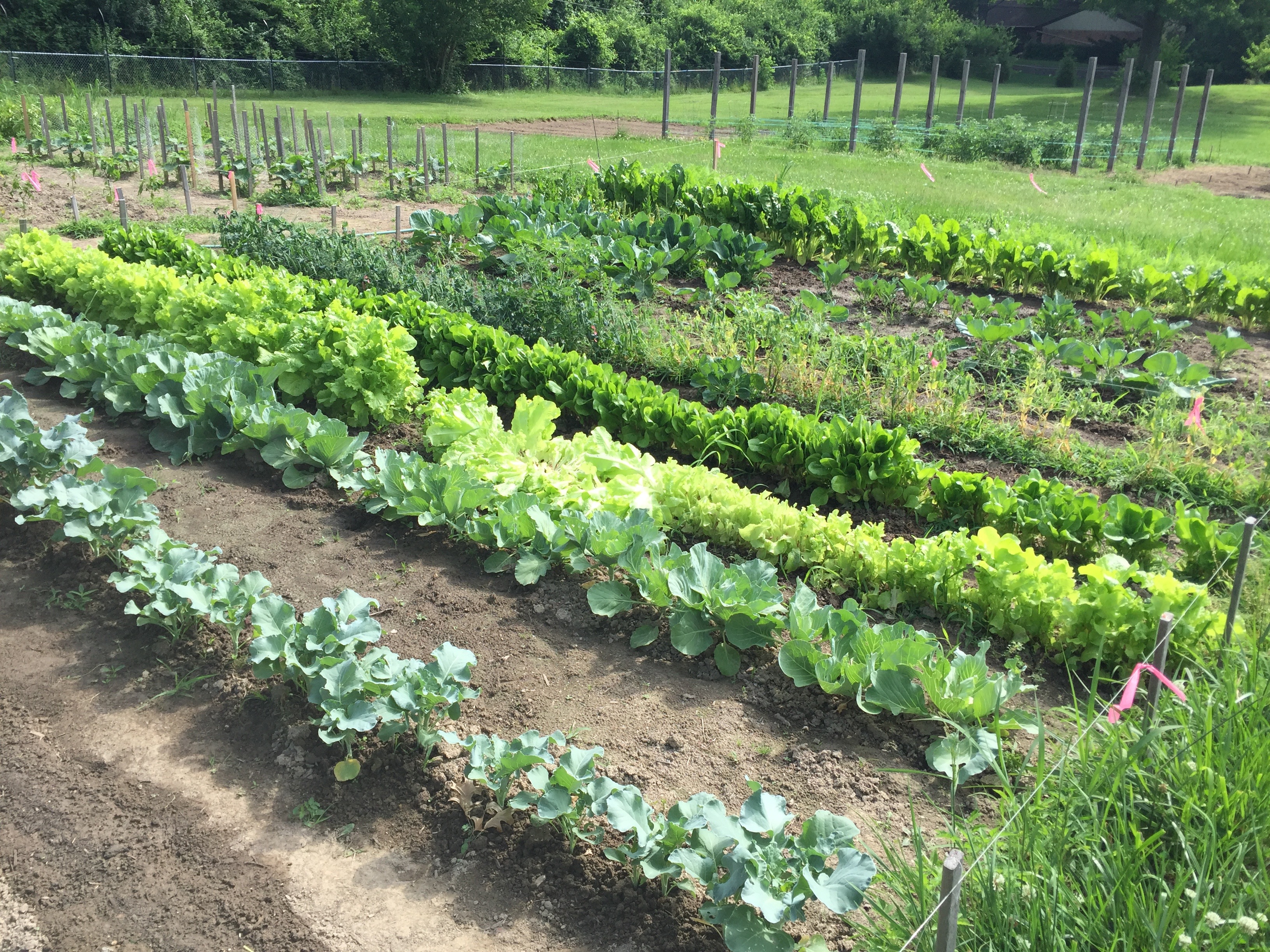
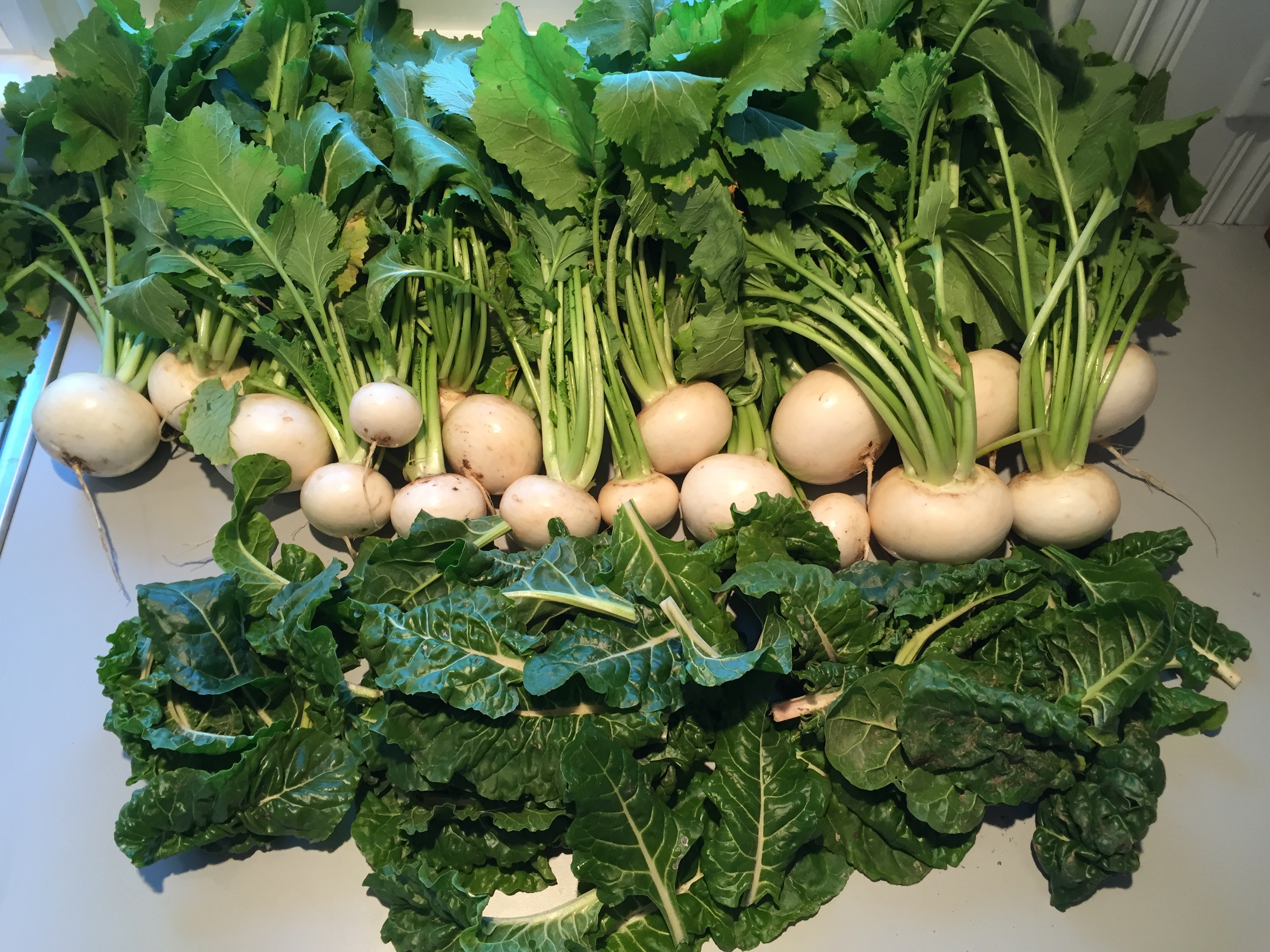
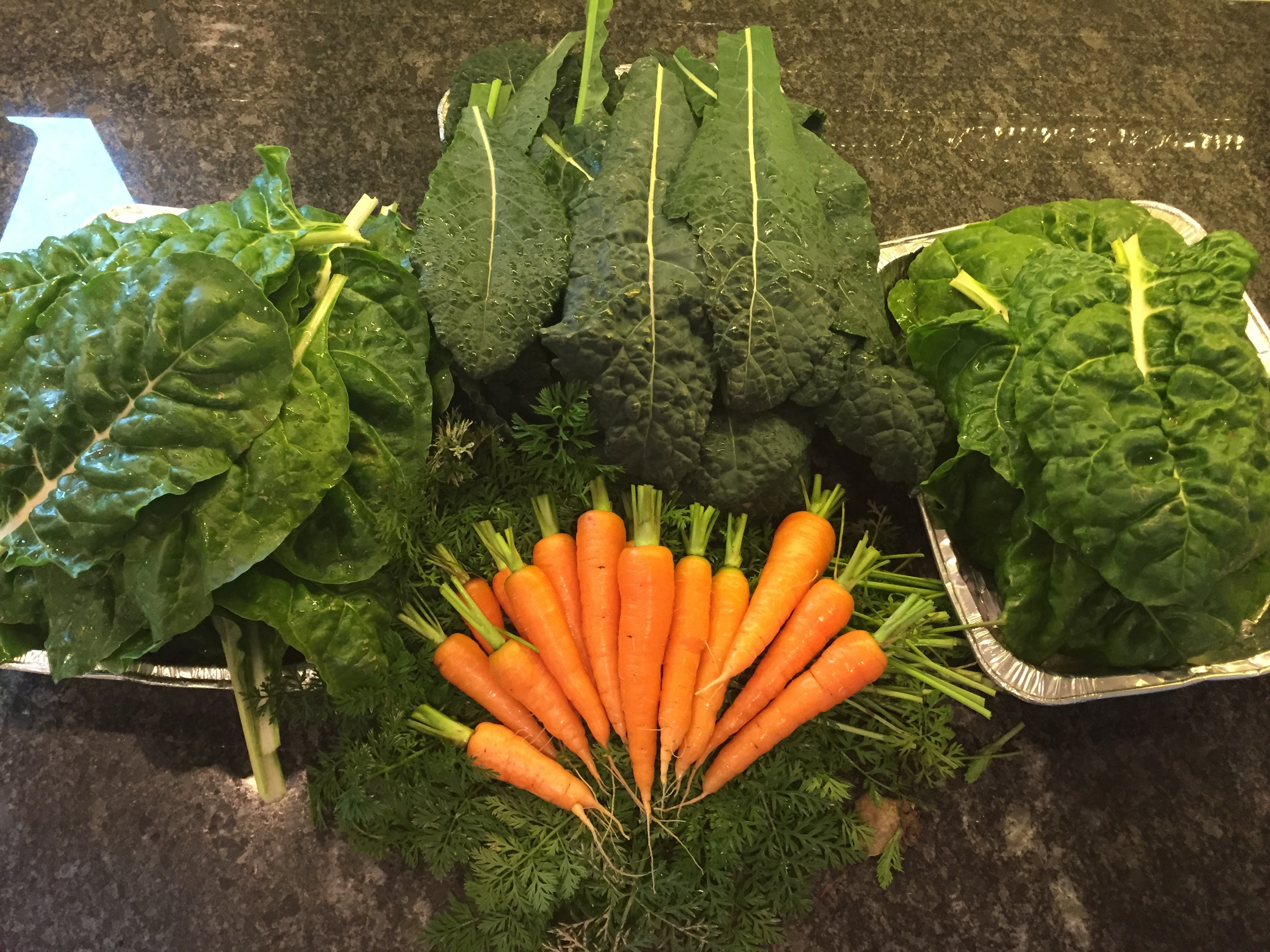
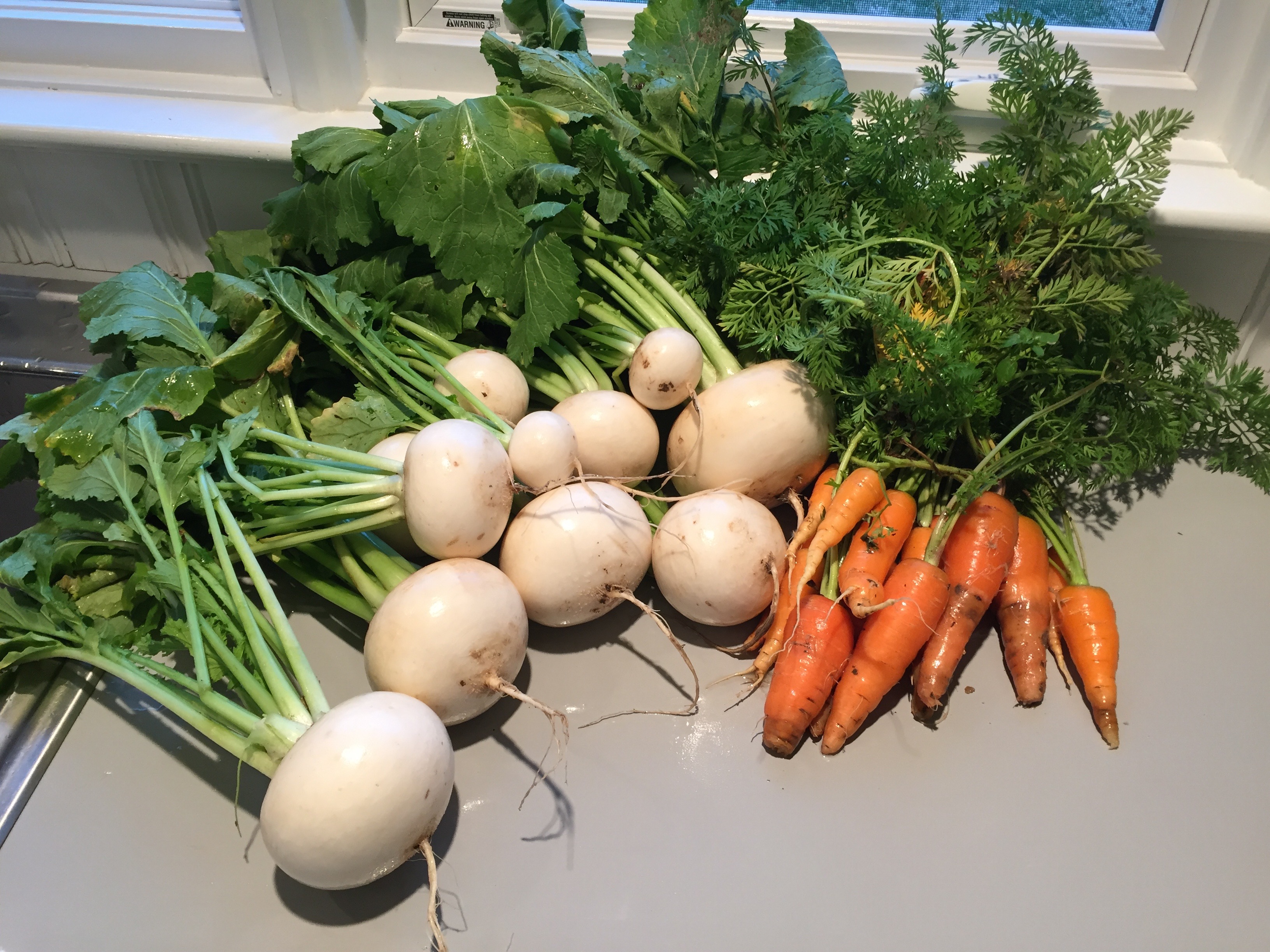
 Other crops are doing well and we are serving a large variety at mealtimes: turnips, broccoli, swiss chard, lettuces, scallions, peas and peppers and more. The tomatoes are just beginning to ripen and it looks as though we will have a good harvest. I’m investigating another method of preserving our harvest this year as I purchased a vacuum sealer recently. Everyone raves about these machines but I’ve been hesitant since I’ve been pretty successful so far with my other tools.
 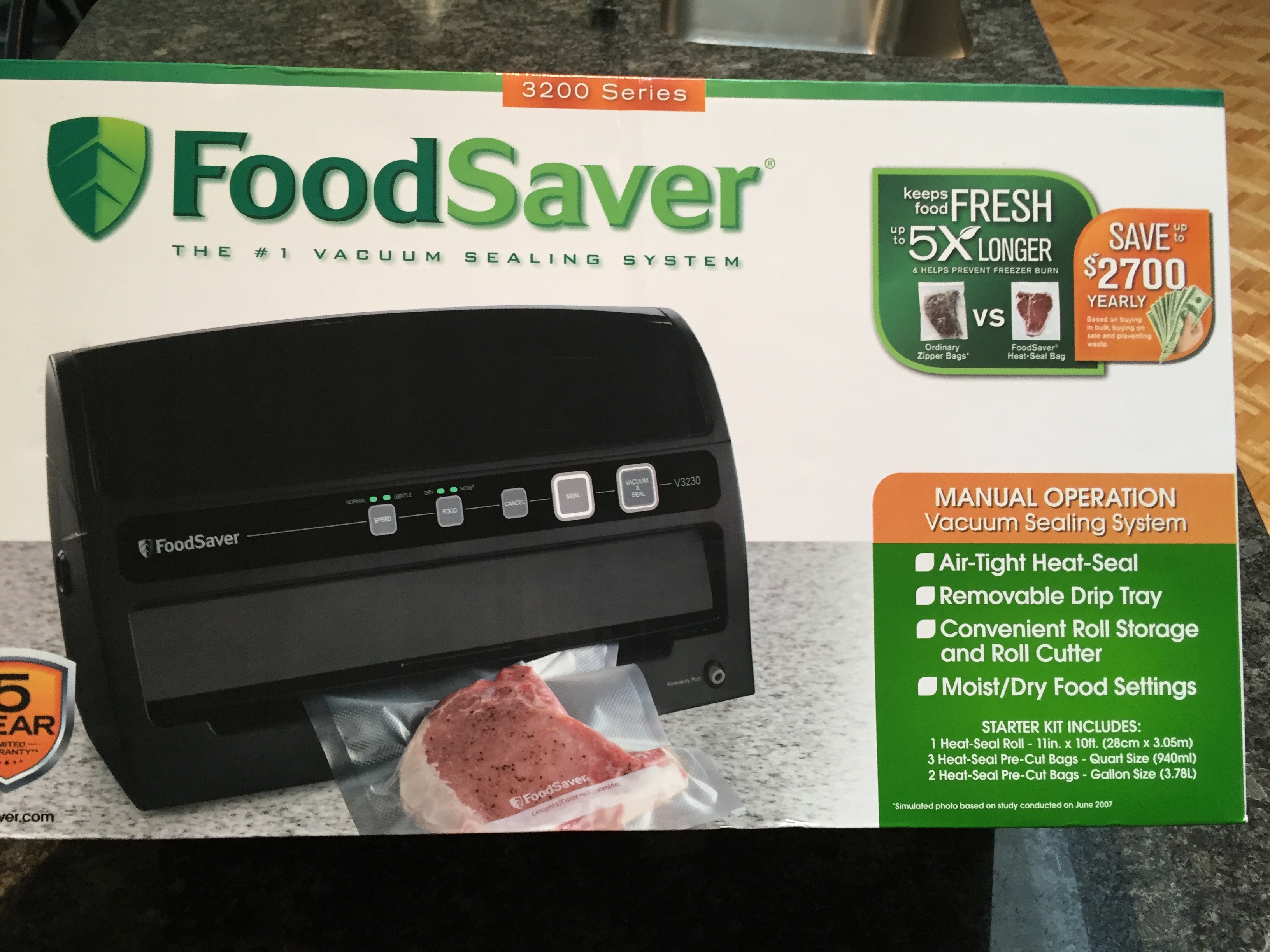 So far, so good. I worked up some Swiss chard today into nice bundles for the freezer. I consider this another tool in my war chest…I’ll keep you posted as to my opinion of usefulness.
  So, besides all I’m trying to accomplish on the farm lately, I’ve been asked to give a presentation at the
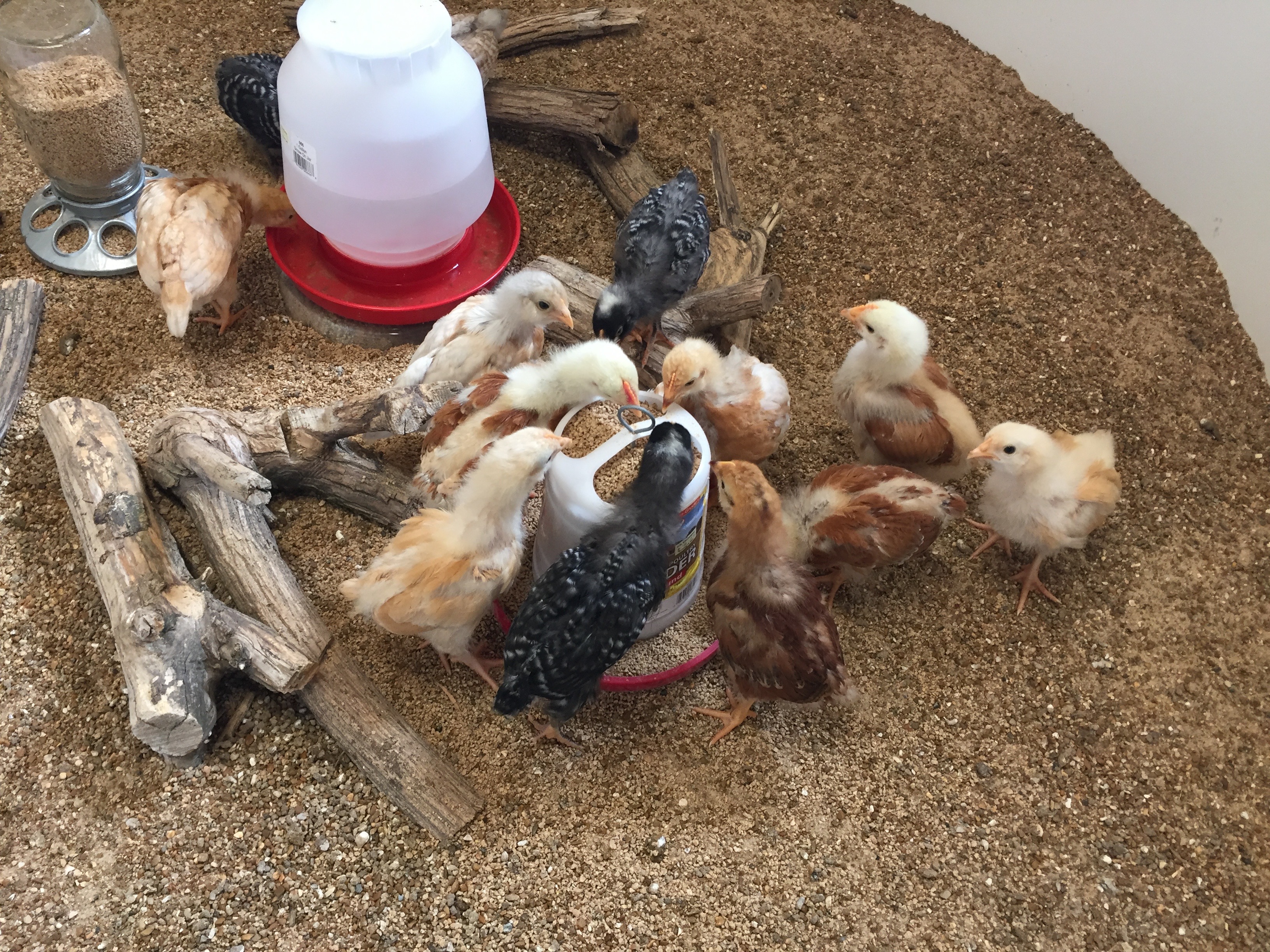
  The chicks provided some of the entertainment and at one week old, are doing quite well despite eating us out of house and home as they are consuming at least 3 quarts of feed each day! Tail feathers are now apparent on some of the varieties.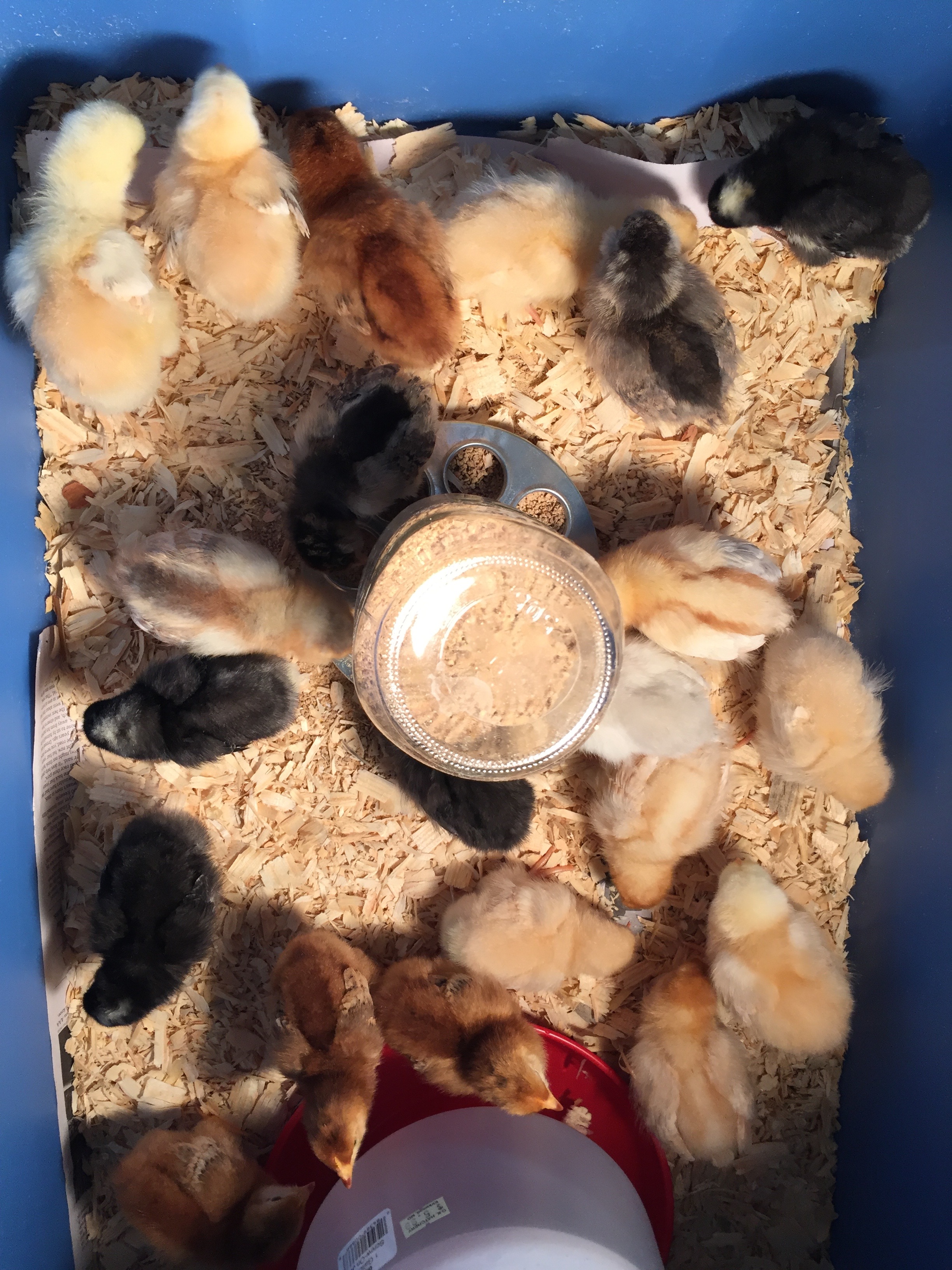
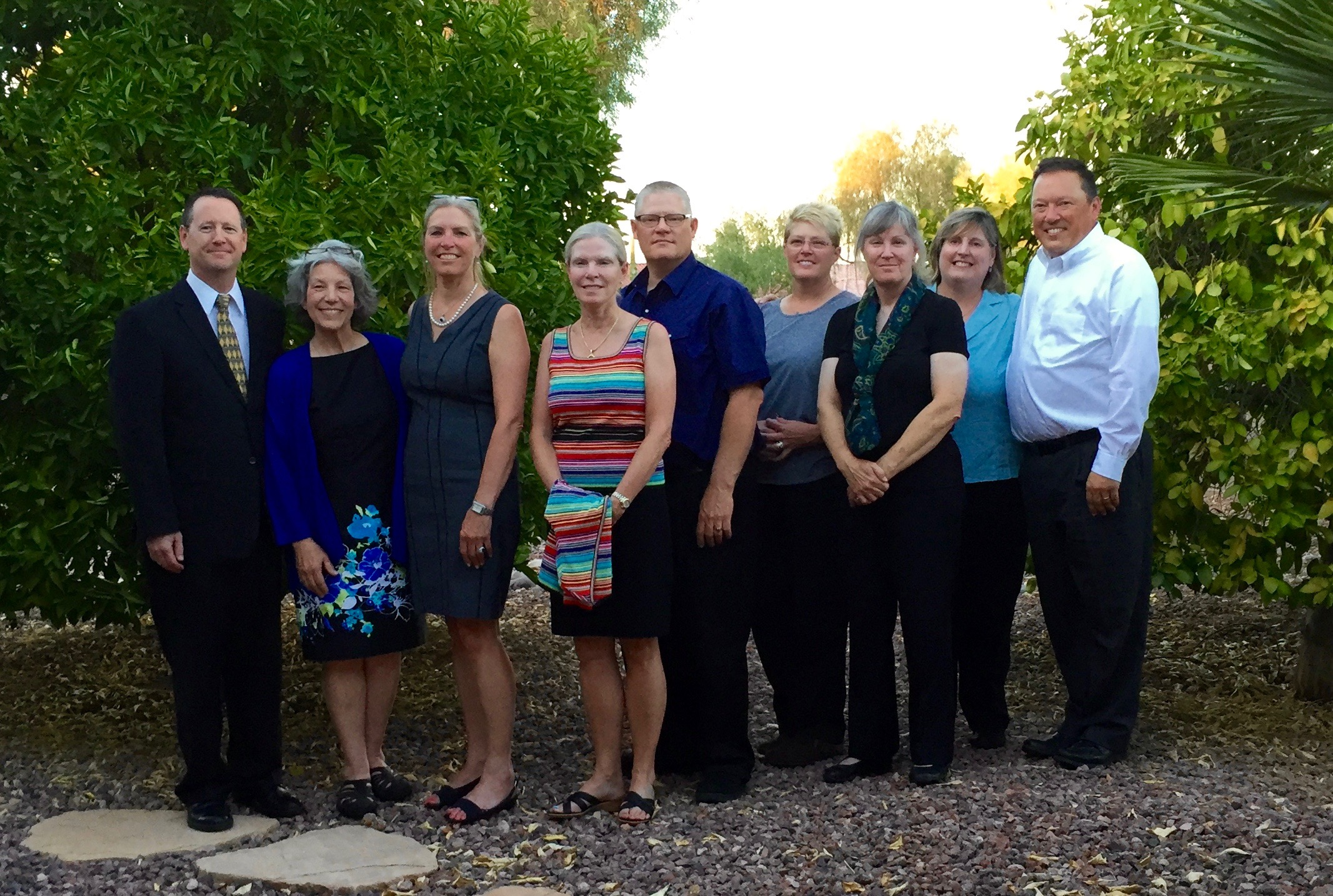
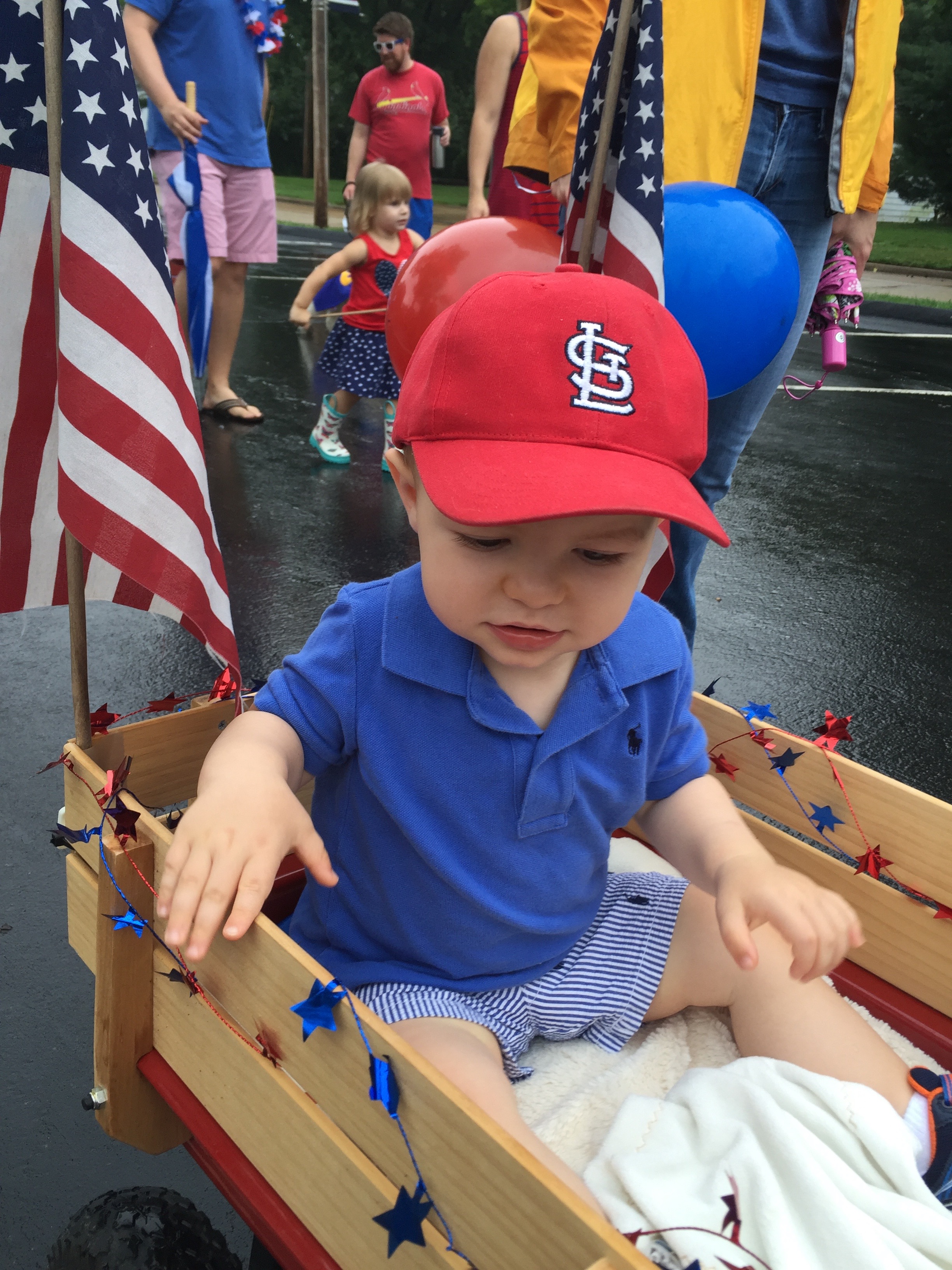 And we joined in for a group photo that included other JBS faculty members and their families! Happy Fourth of July!
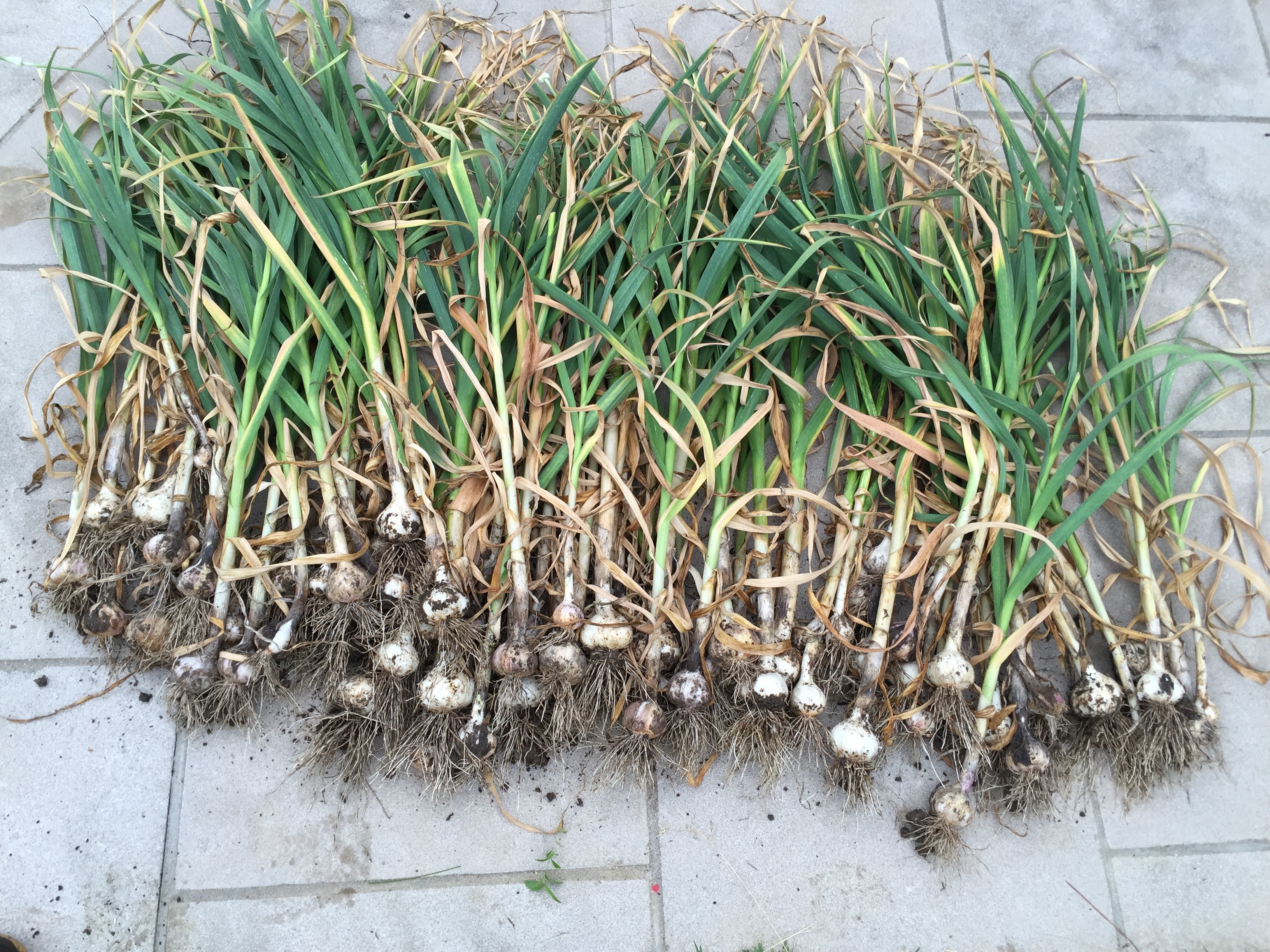
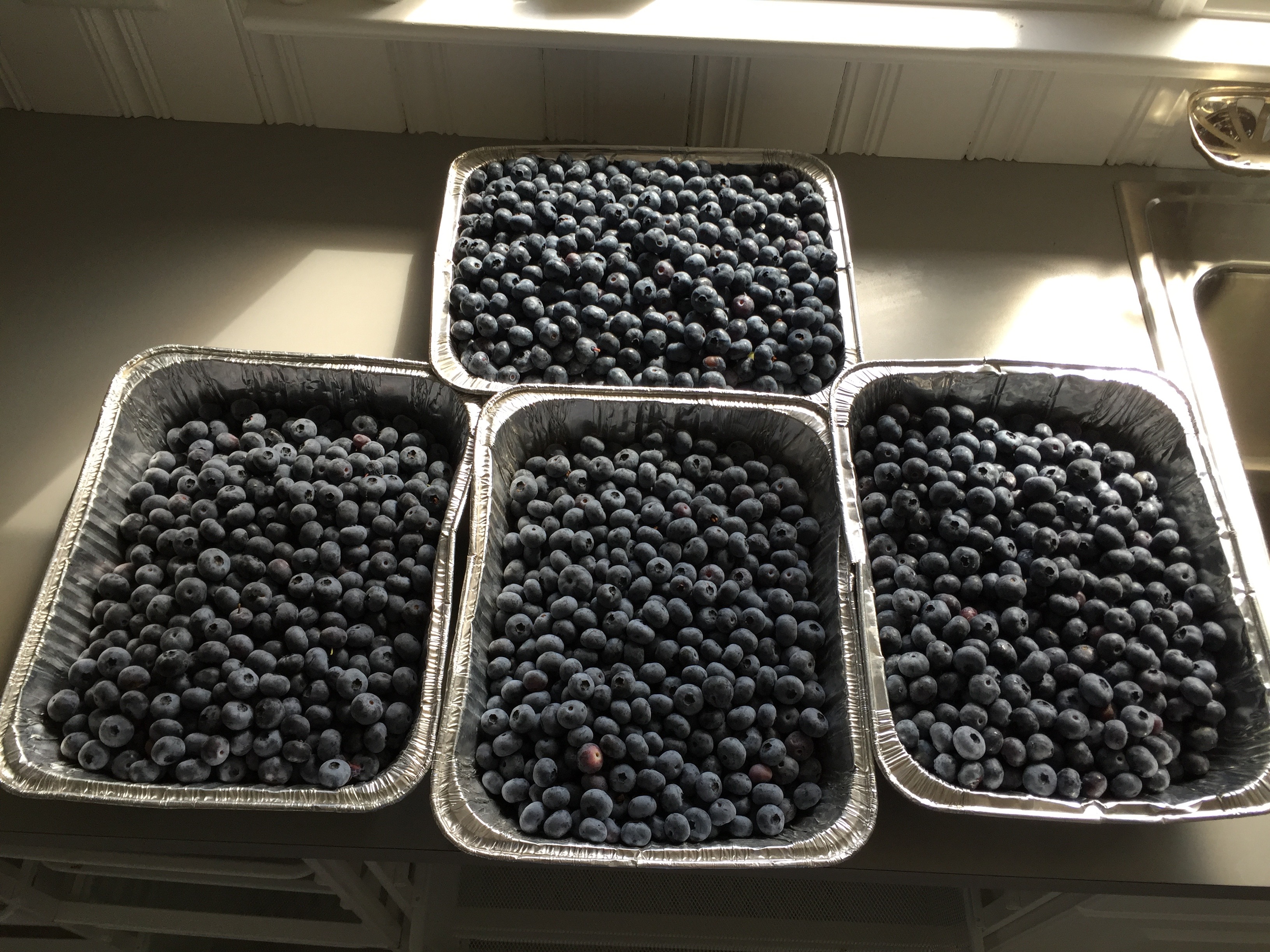 Although the blueberry harvest will continue for the next month or so, the garlic was entirely harvested in short order yesterday. How easy was that?!?! We brought in 18 pounds in about 30 minutes of digging! The signs of readiness were that the lower 3-4 leaves of the stalk appeared yellow or brown as you can see here.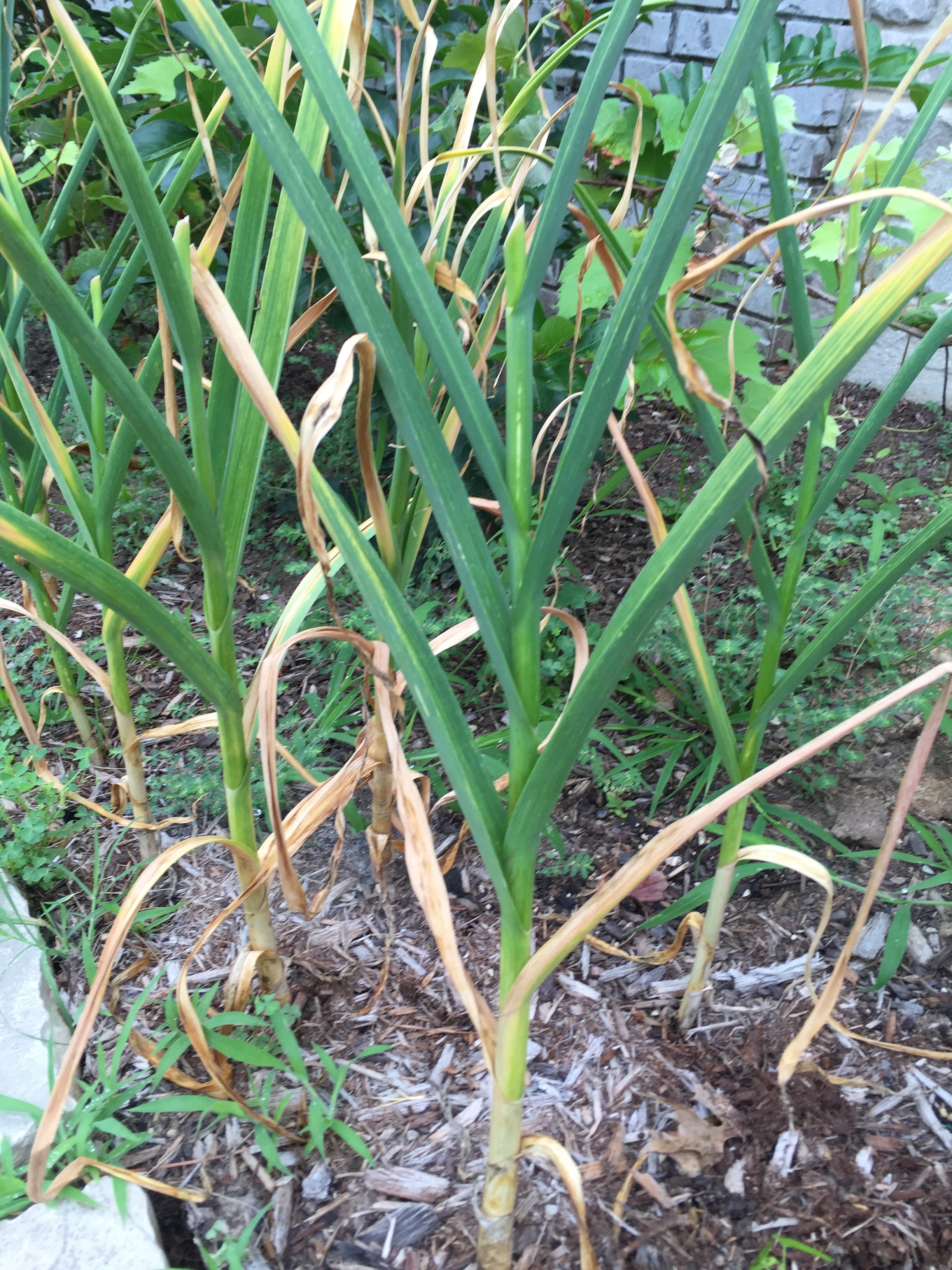
 To get an idea of scale, here is my hand…showing the German Extra Hardy which is slightly larger than the German Red.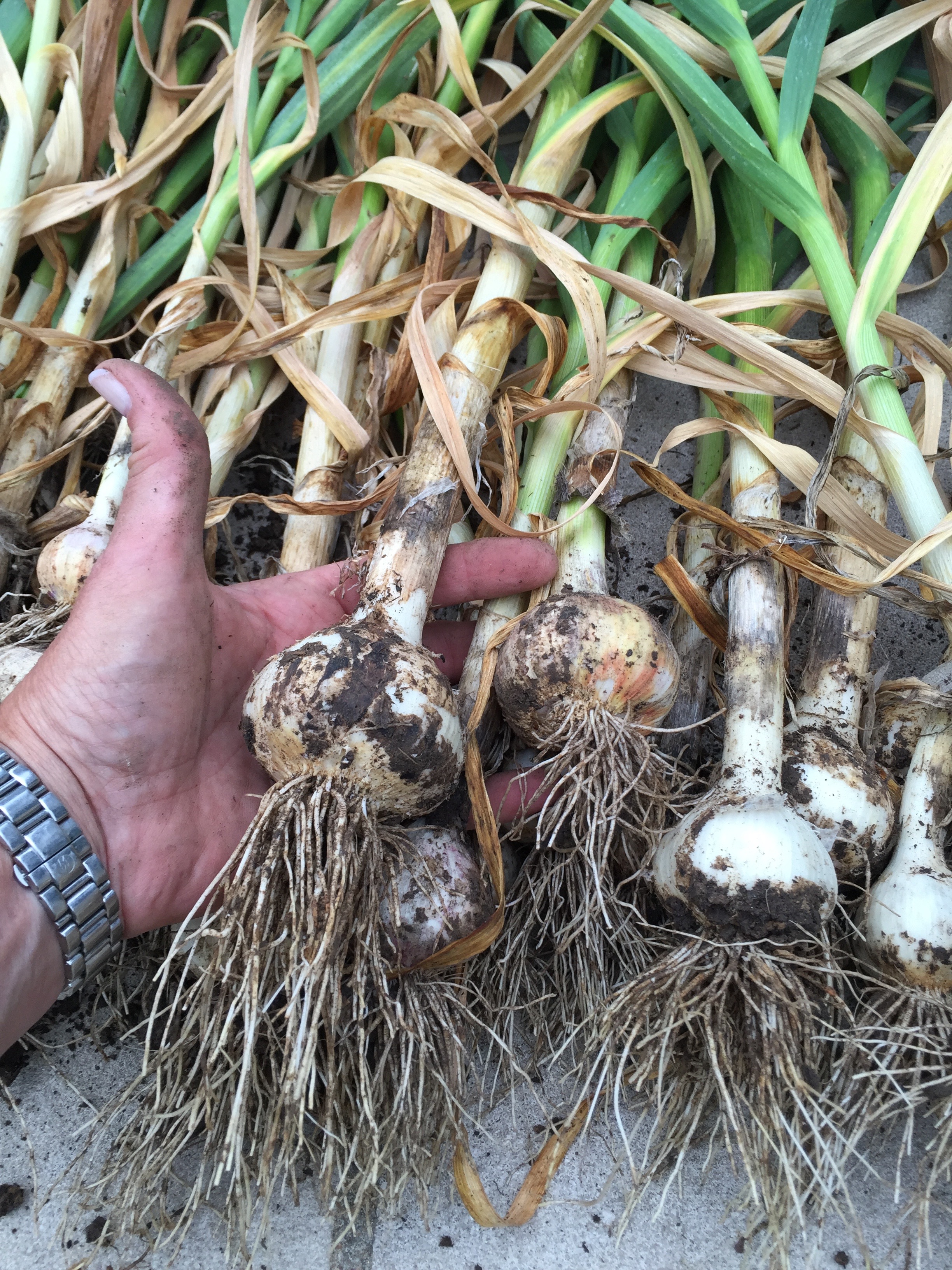
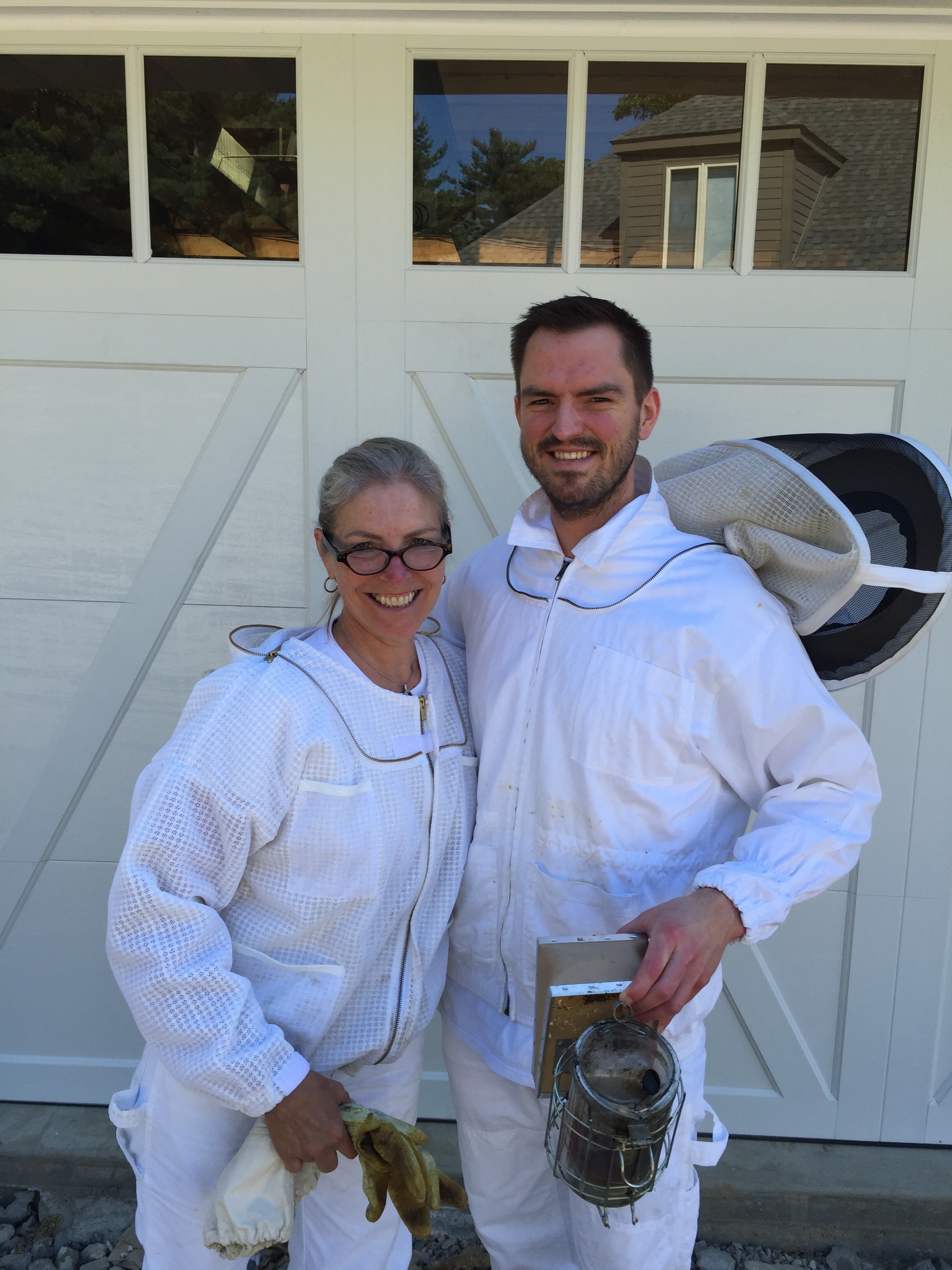
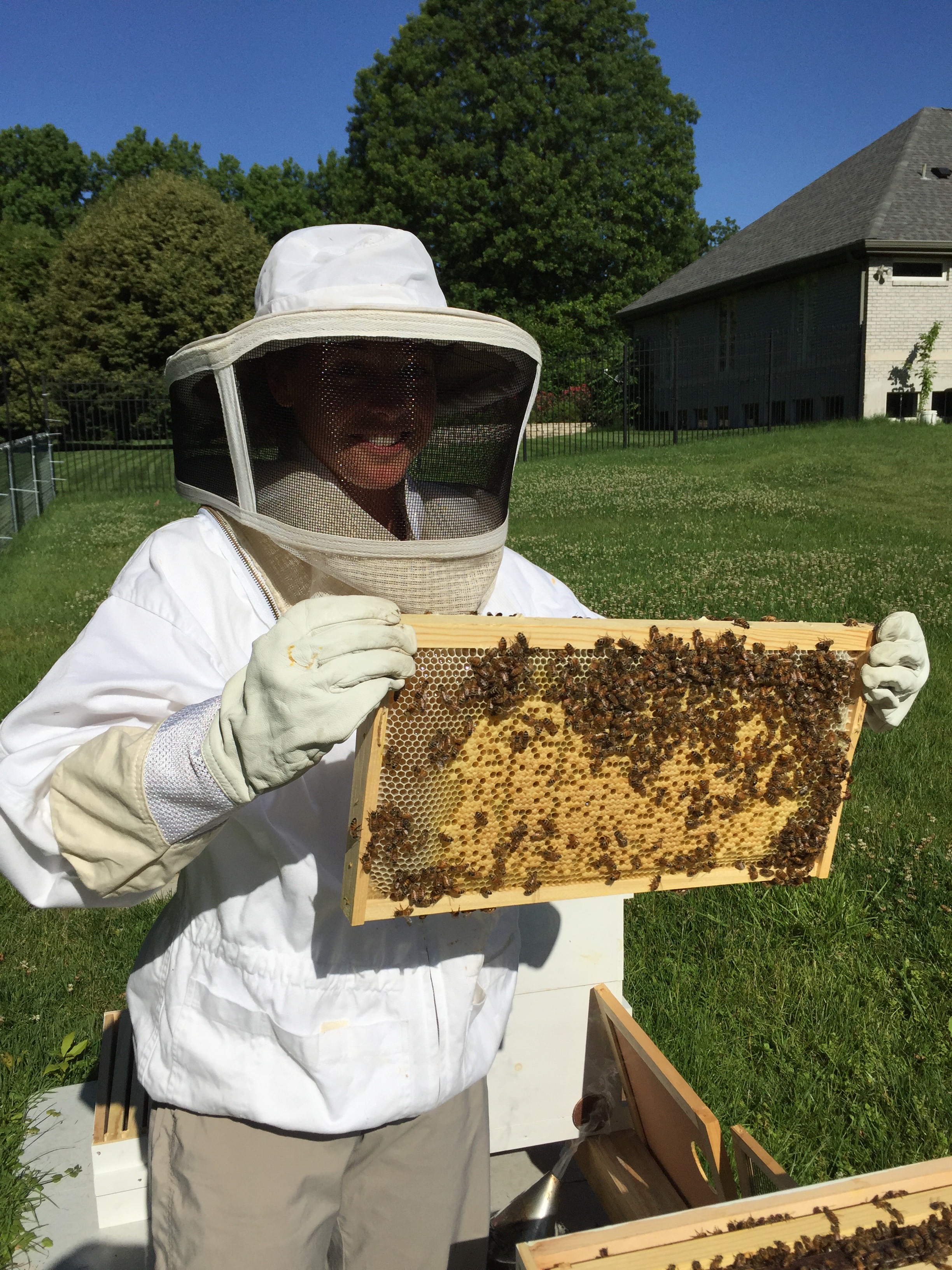 Next was son Peter who was in town for my mother’s memorial which was more like a family reunion at the farm to celebrate her life. Here we are preparing to look at the bee activity…he makes me look like a midget!
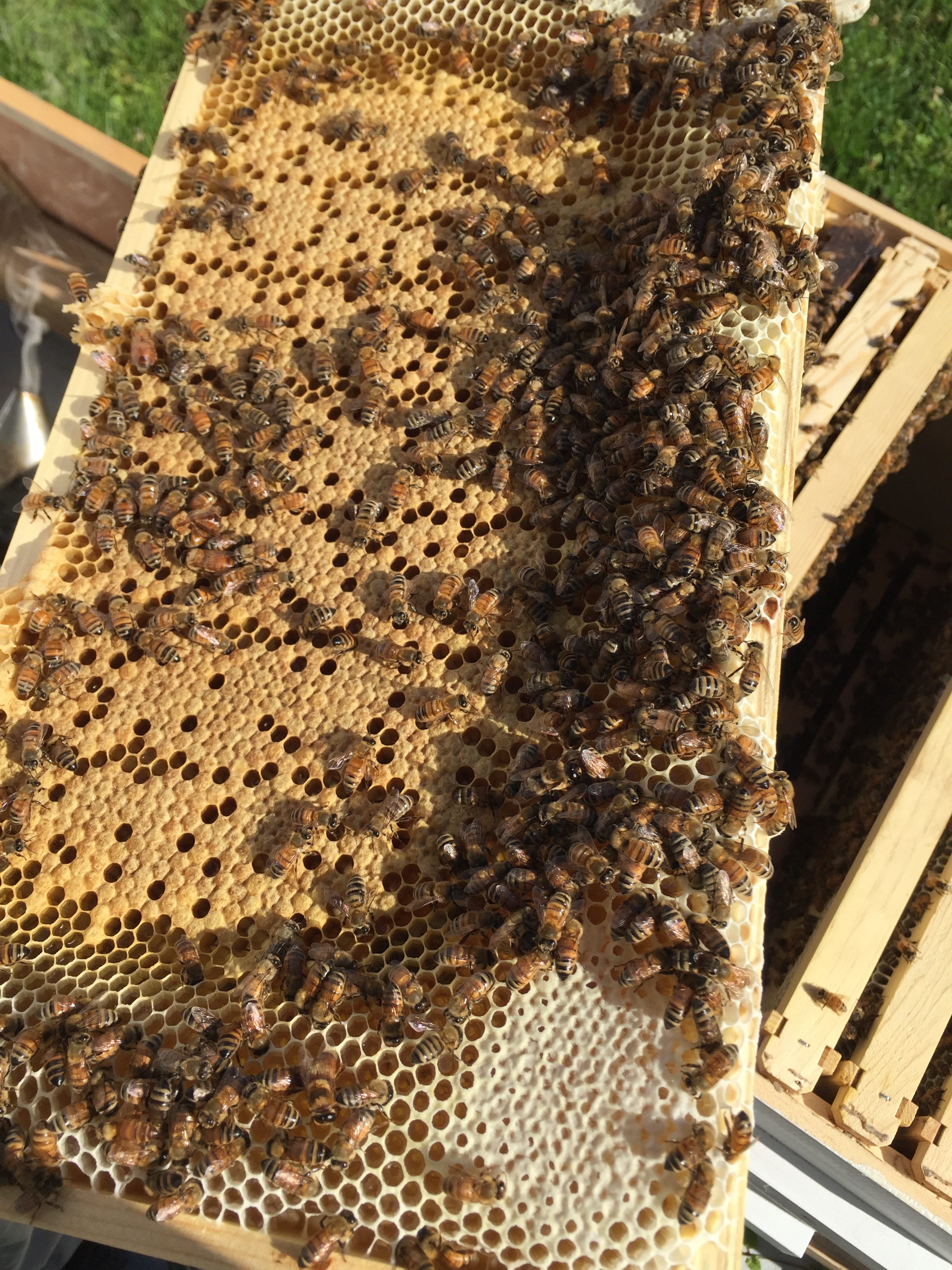
 And here he is finding the joy of new brood and lots of activity on one of the frames.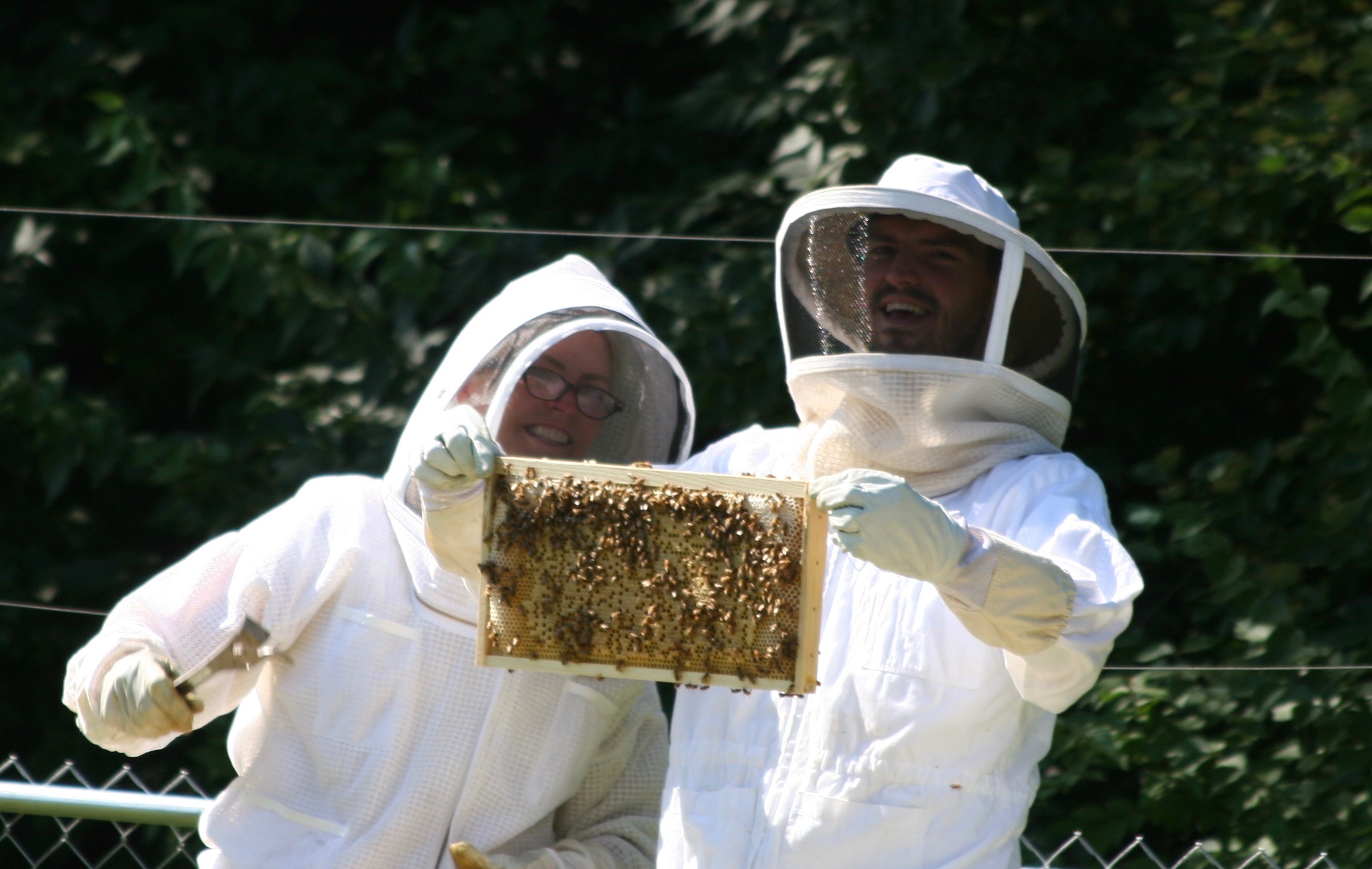

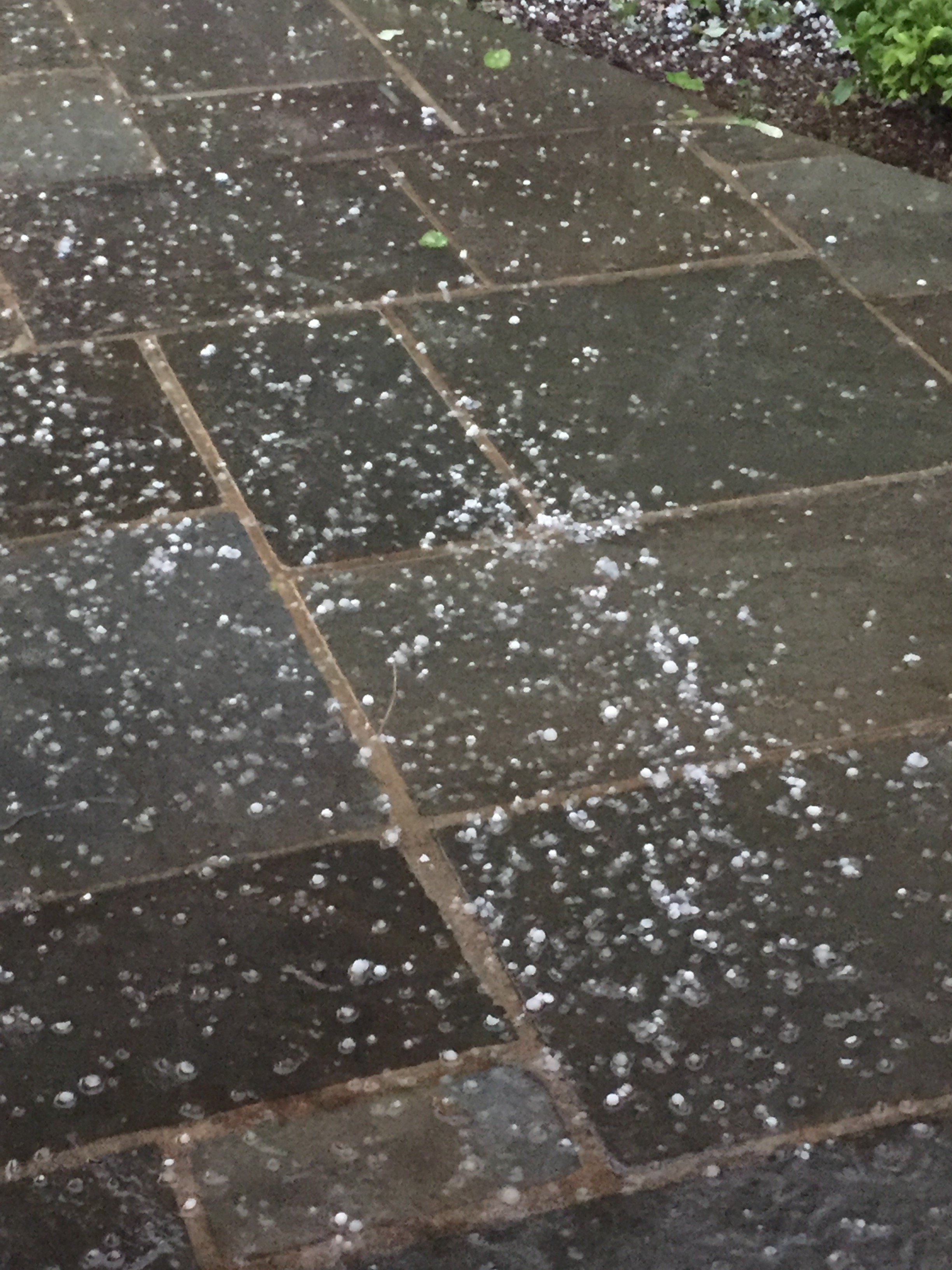 But patience won as we waited for the storm to pass and were rewarded by a rainbow in the lens of my camera.















 Seven Oaks Farm & Orchard