Unknown's avatar

Potatoes…Can You Dig Em???

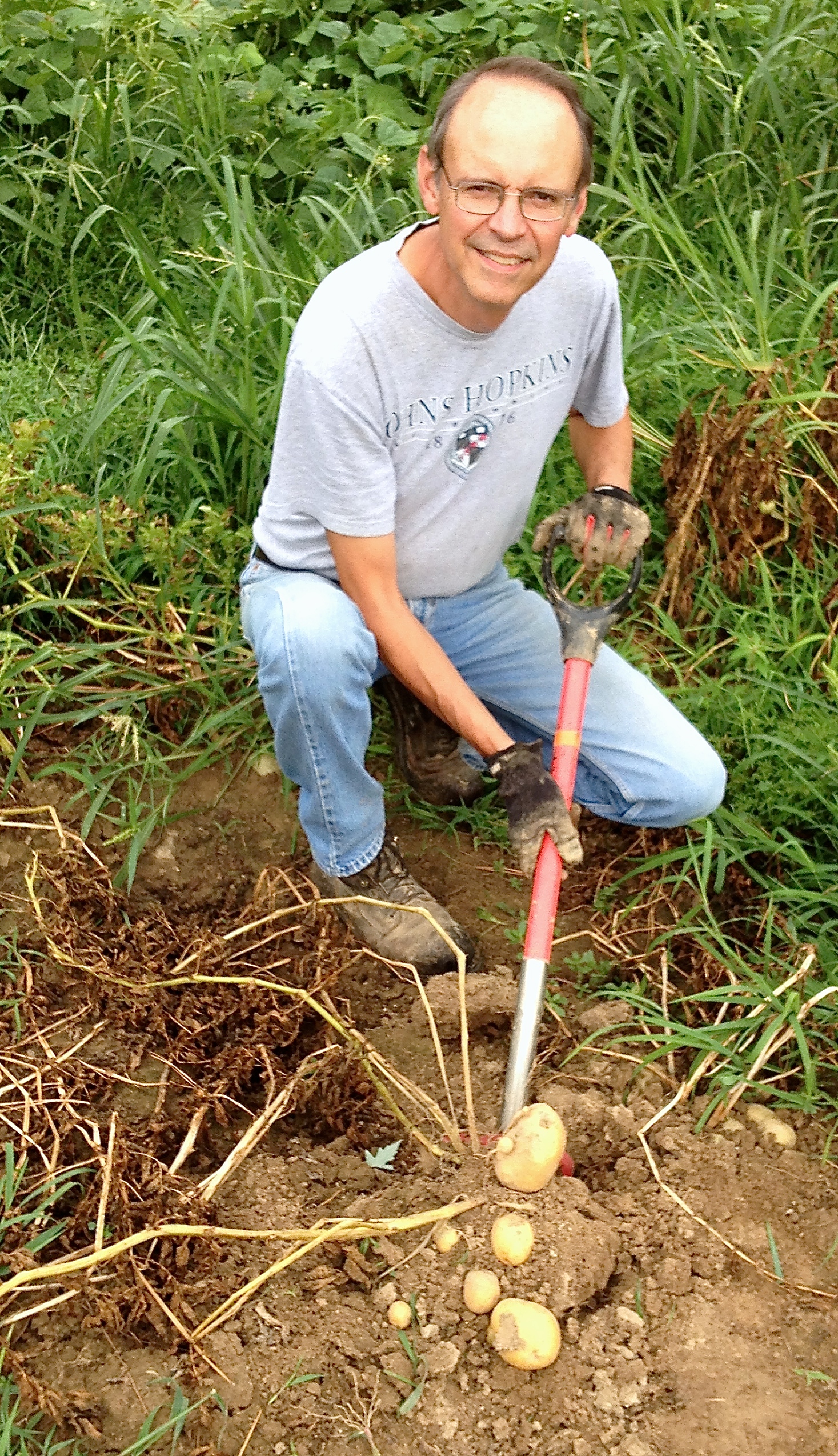
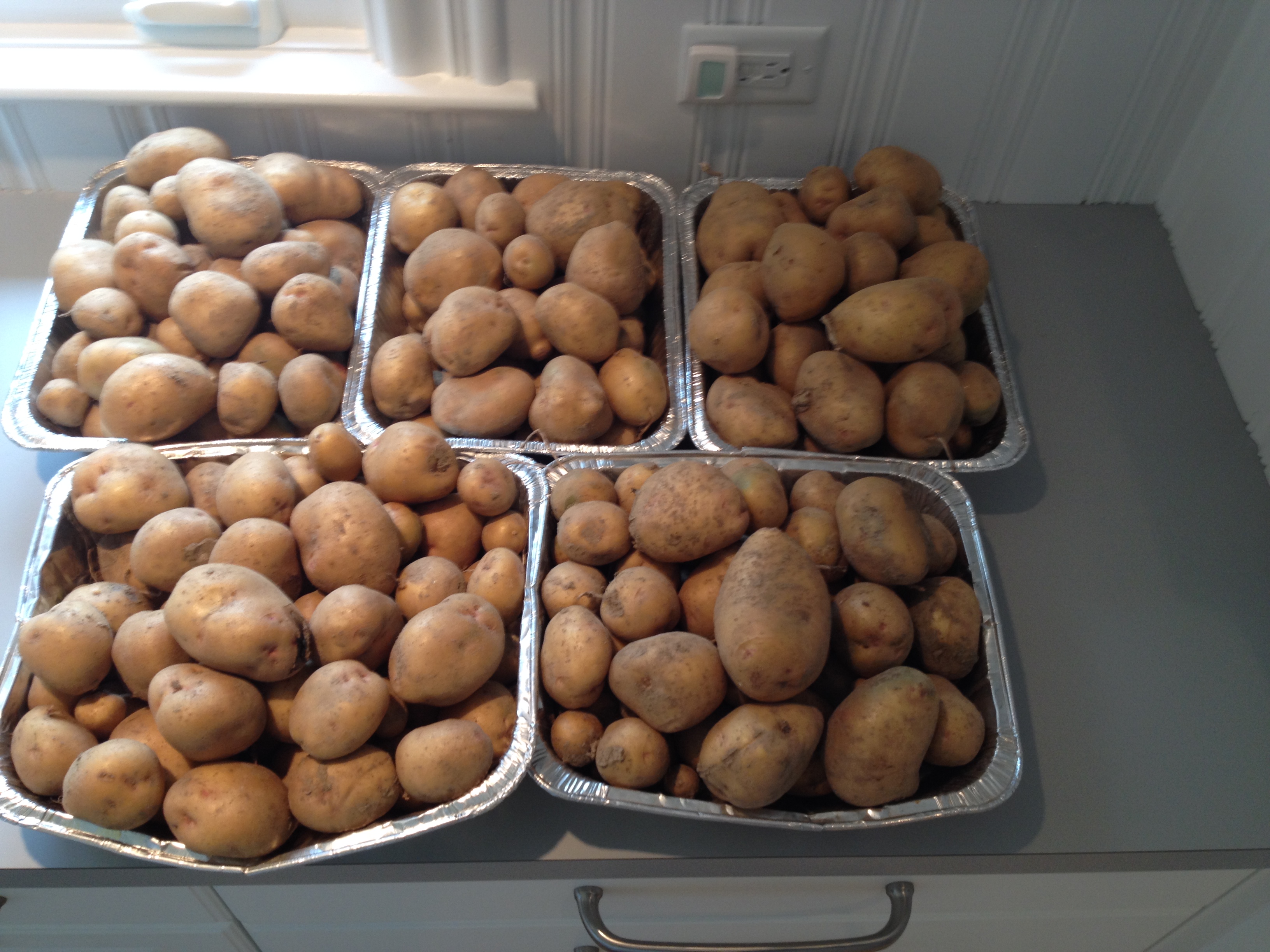
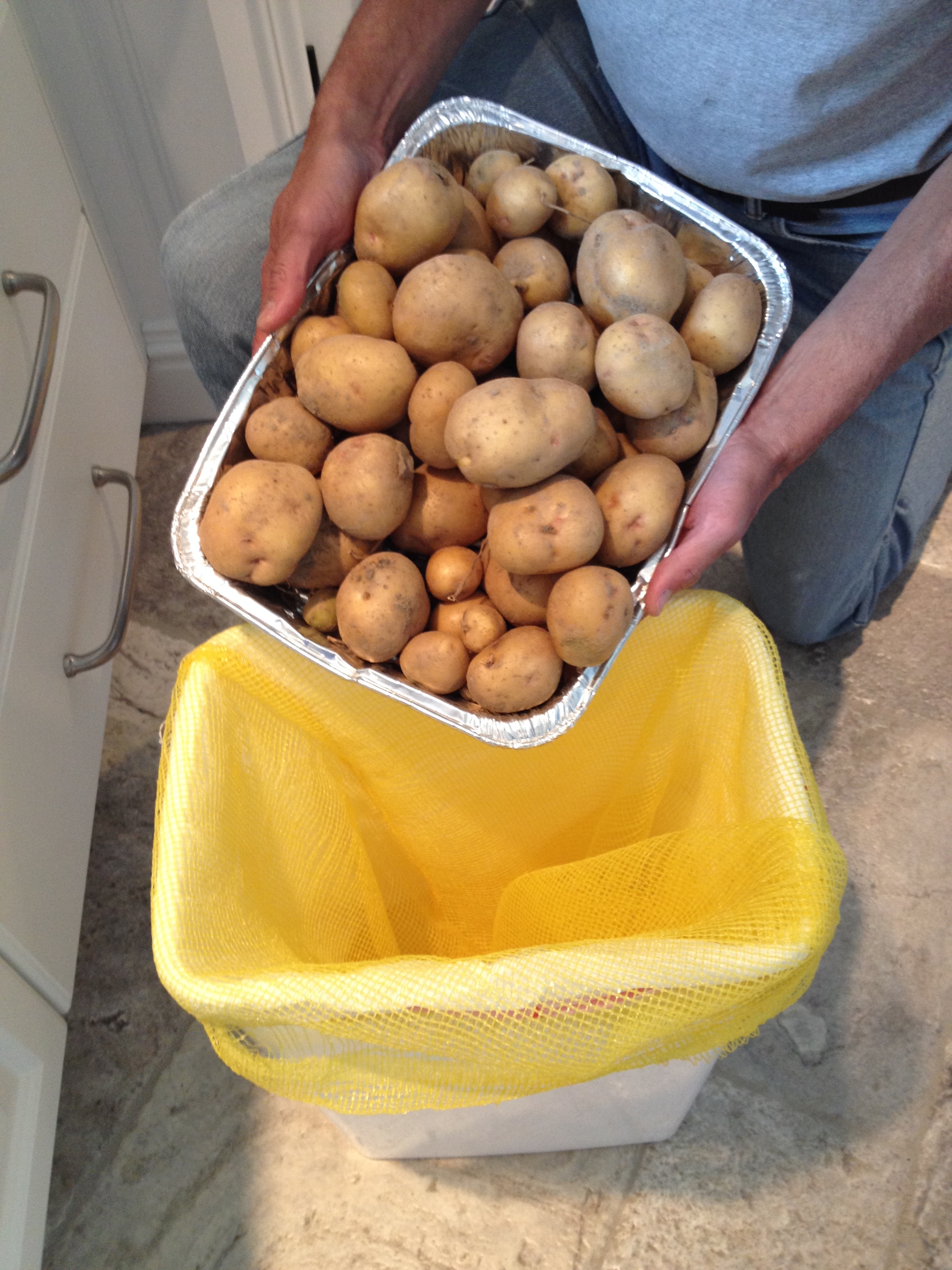
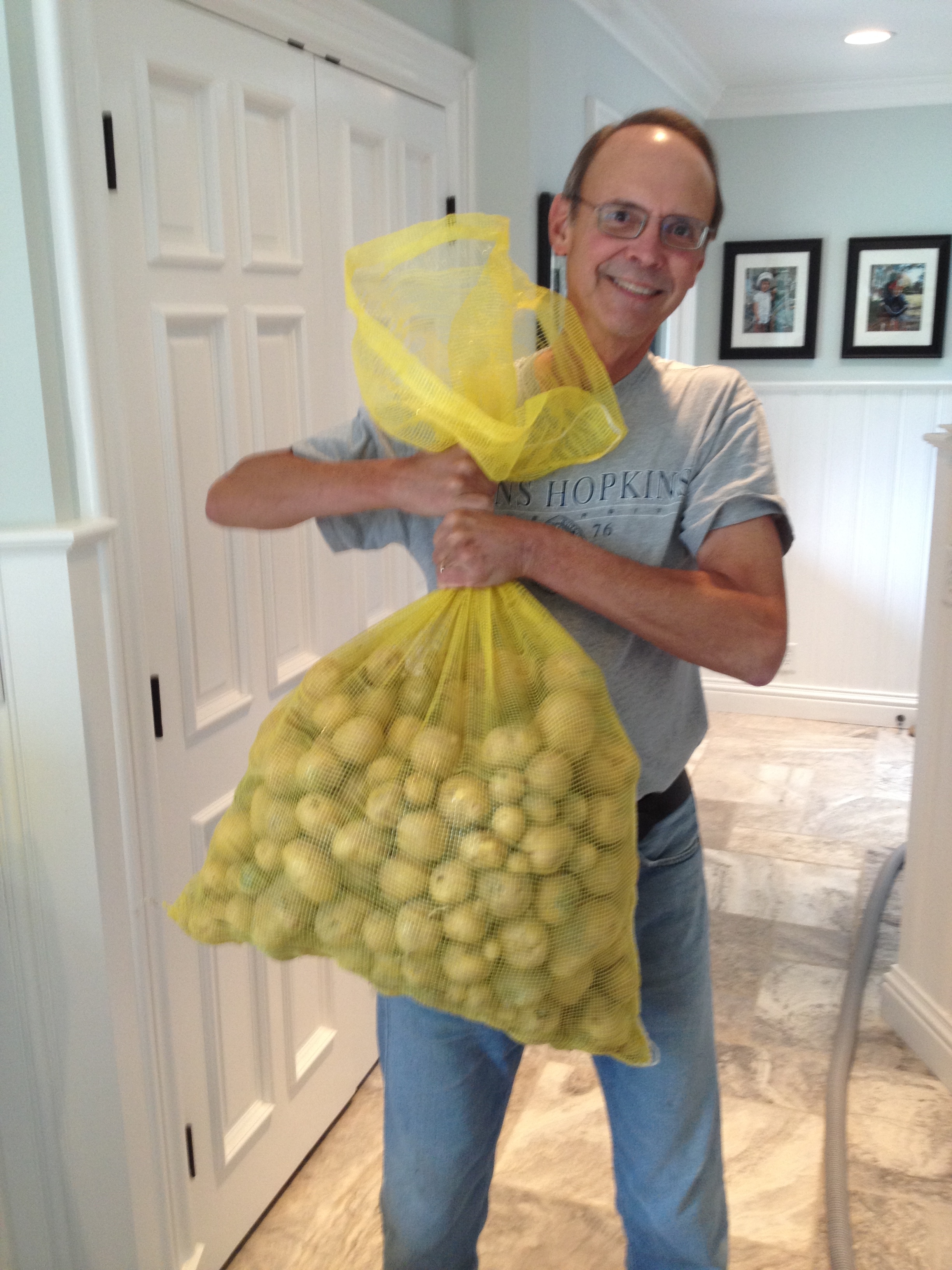
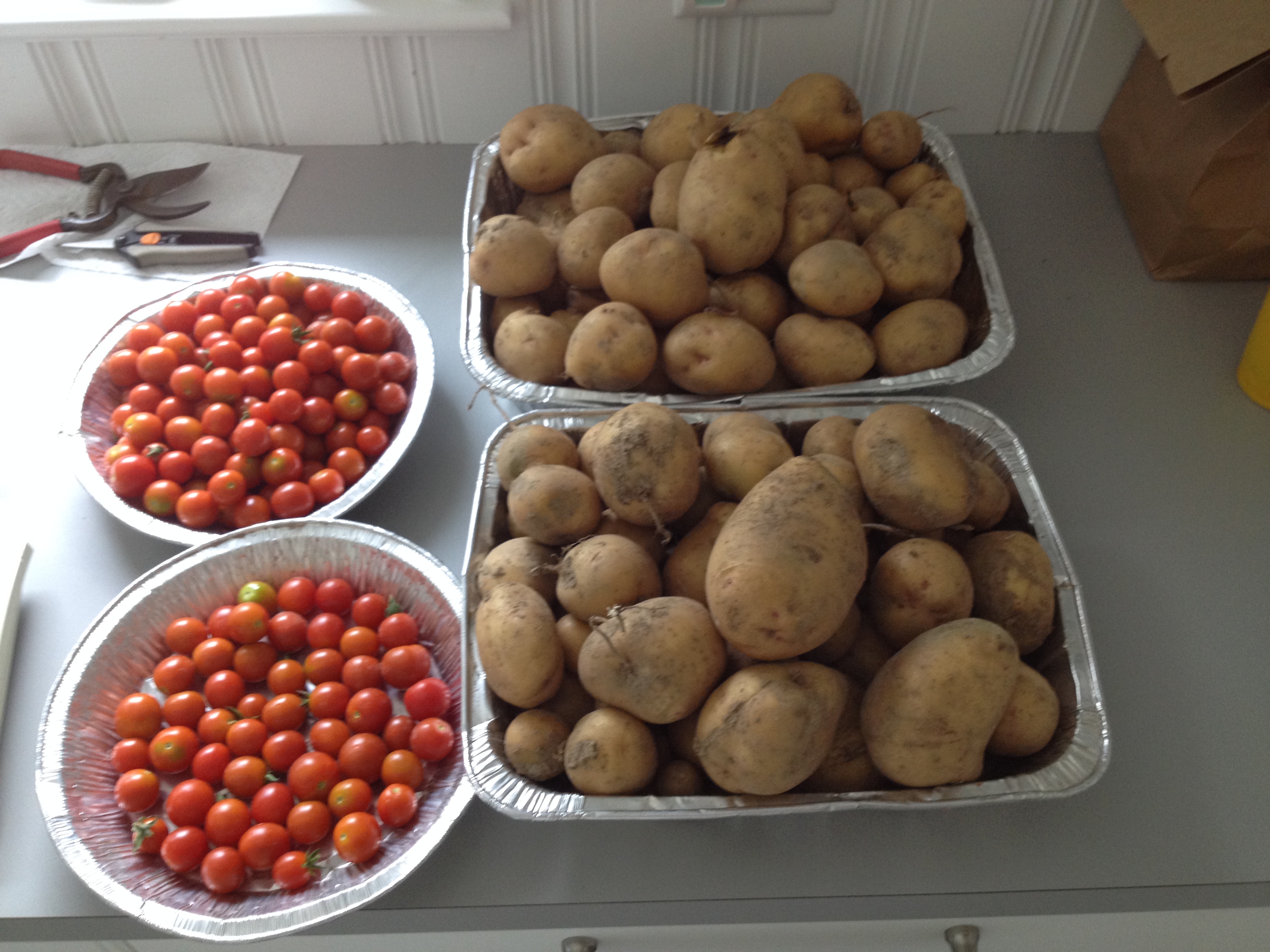
As reported earlier, Dave has been busy digging potatoes and a little early afternoon rain today has only helped with this effort. IMG_6543He started with the Yukon Golds and has done just a small portion so far but the volume was sufficient enough that we needed move forward quickly on storing them. IMG_6529With about 50 pounds at first glance, I decided to look for burlap bags. A visit to OK Hatchery in nearby Kirkwood was productive today. When I explained why I was looking for the burlap bags, they went looking for some but I guess burlap isn’t as efficient as other materials for storing and transporting goods today. Instead, I found these nice yellow mesh bags to be best for our purposes. These had whole peanuts in them originally which are sold in large bins in this supply store. (This is a great place to buy things like bird seed, chicken feed, and all sorts of gardening supplies.) They were happy to give me these bags and I’m sure I will go back for more of them soon!IMG_6531You don’t wash the potatoes before they go into the bag but we needed to contain the dirt a bit as we loaded the bags so we set up the mesh bags over a kitchen trash can in order to proceed. IMG_6533The first 50 lbs will go directly to the basement for storage. IMG_6541We aren’t nearly done with digging potatoes since we have not even begun to dig in the Pontiac Red rows but this is a good start. We look forward to tasty potatoes all year long now!

Here is a short bee report: The bees had a real treat this morning when I gave them the empty frames of honeycomb after yesterday’s extraction. The bees love to clean up the last bits of honey that remain in the honey supers after the honey has been extracted. After they do this work for us, the fully drawn frames will be clean and ready for next year’s season. I will leave these on the hives for one week and then I’ll take them off for the winter storage. This is what the hives at Seven Oaks looked like today with the extra honey supers on top for a great feasting opportunity!  I’m busy dreaming up the ways in which I’ll transform 36 pounds of honey into beautiful jars with Seven Oaks labels!IMG_6546

Unknown's avatar

A Crock of Pickles, Bees, Potatoes and More

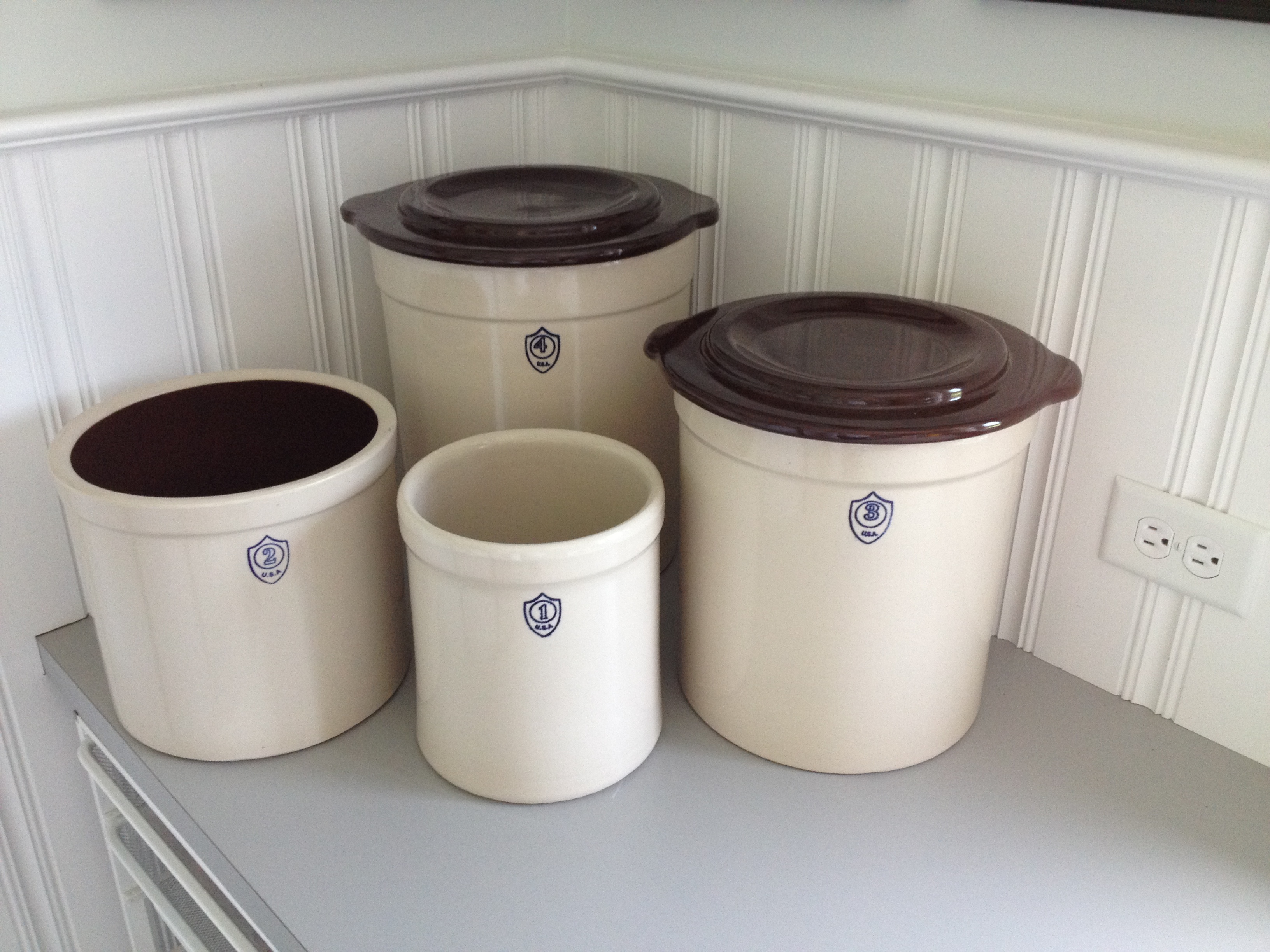
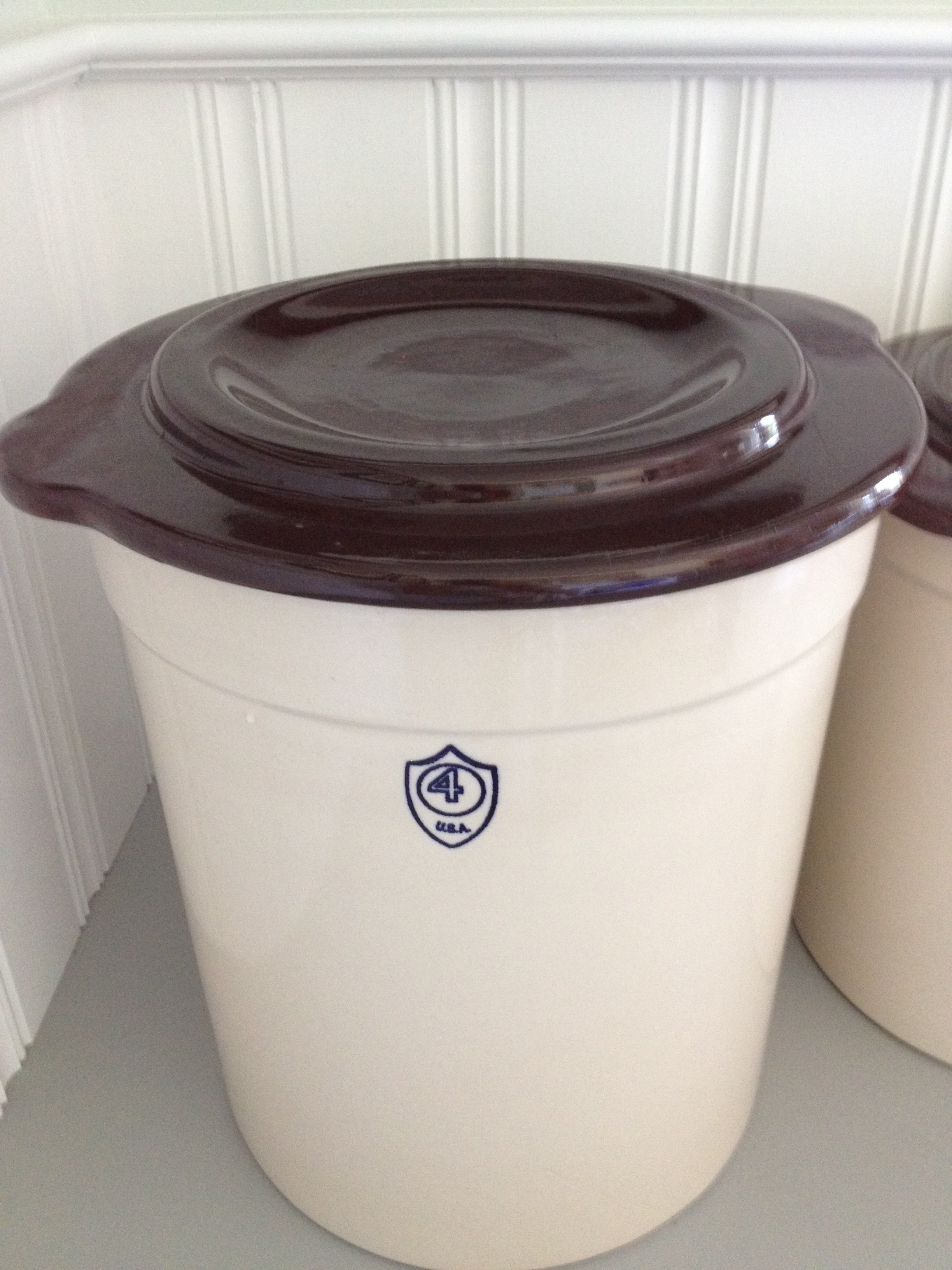
We are ever so busy here! I left town for a couple of days but not before ordering some fermenting crocks from the Ohio Stoneware Company in Zanesville, Ohio. I’ve been dreaming about making the old fashioned ‘sour pickles’ of my ancestry (as well as some sauerkraut with our cabbages but that will be another posting) but I felt I needed the appropriate containers for this new adventure. The crocks and their lids, which arrived Friday, were packaged with great care including a wooden crate type of base which we are going to keep for future use somewhere. We joyfully unwrapped them and set them out for display…1, 2, 3 and 4 gallon sizes. IMG_6486Today, after a morning of beekeeping (more about that later) I began the relatively labor-free method of fermenting cucumbers into sour pickles. Our ancestors were really smart…this method includes very few expensive ingredients but rather employs patience, which is something no one has today or else they wouldn’t be planting the seeds, weeding the fields, harvesting the fruits, washing and paring them and then combining them with ingredients to make what will be a marvelous batch of pickles after they sit and ferment for six weeks! I certainly can relate to the wine makers and cheese makers who have the patience to garner the products to make their craft so valued. Perhaps we need better marketing for pickles…

Anyway, the process was quite basic. After researching various methods, I found my favorite source was the University of Minnesota Extension which had careful and detailed instructions.

http://www.extension.umn.edu/food/food-safety/preserving/pickling/making-fermented-pickles-and-sauerkraut/

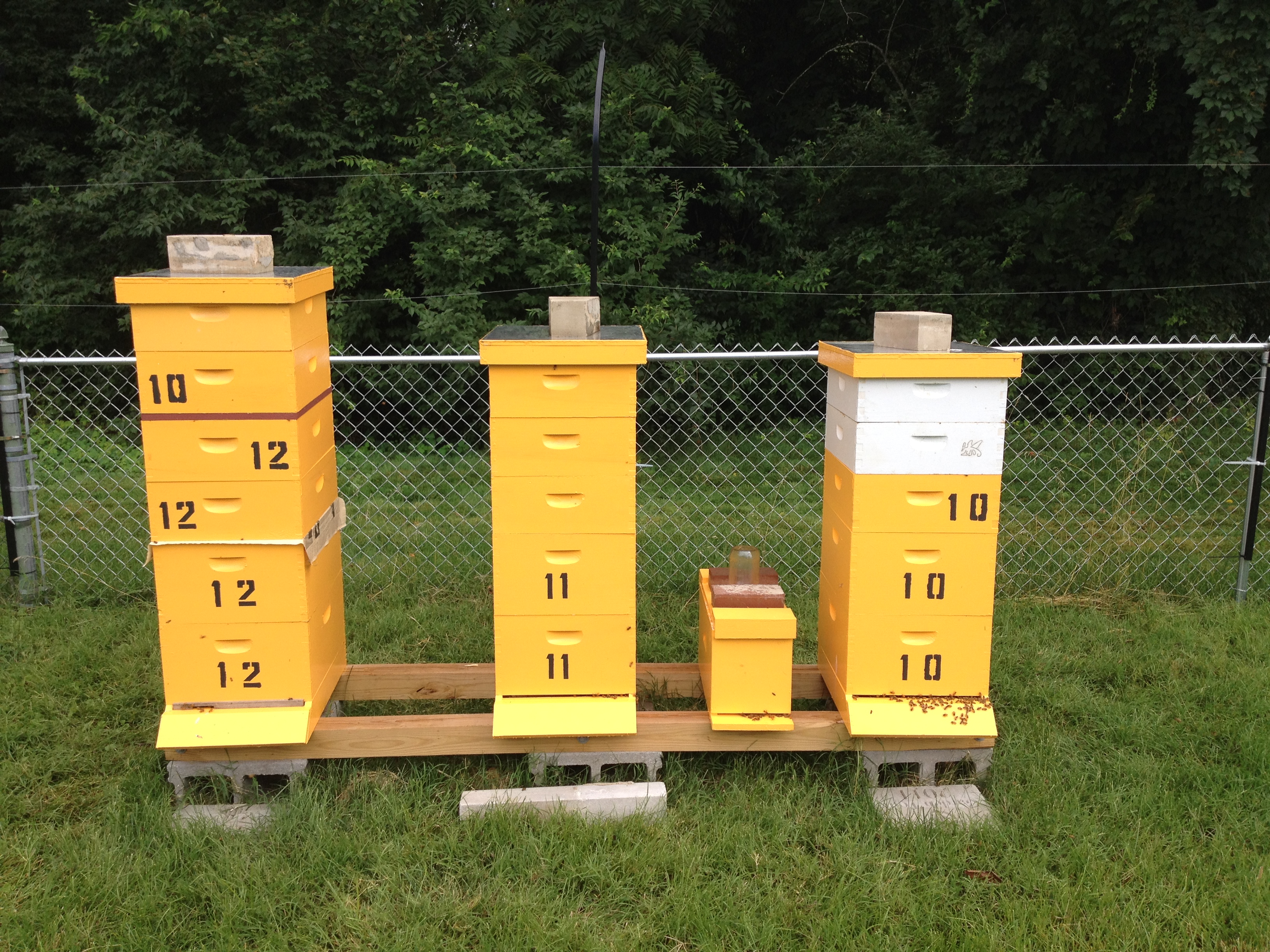
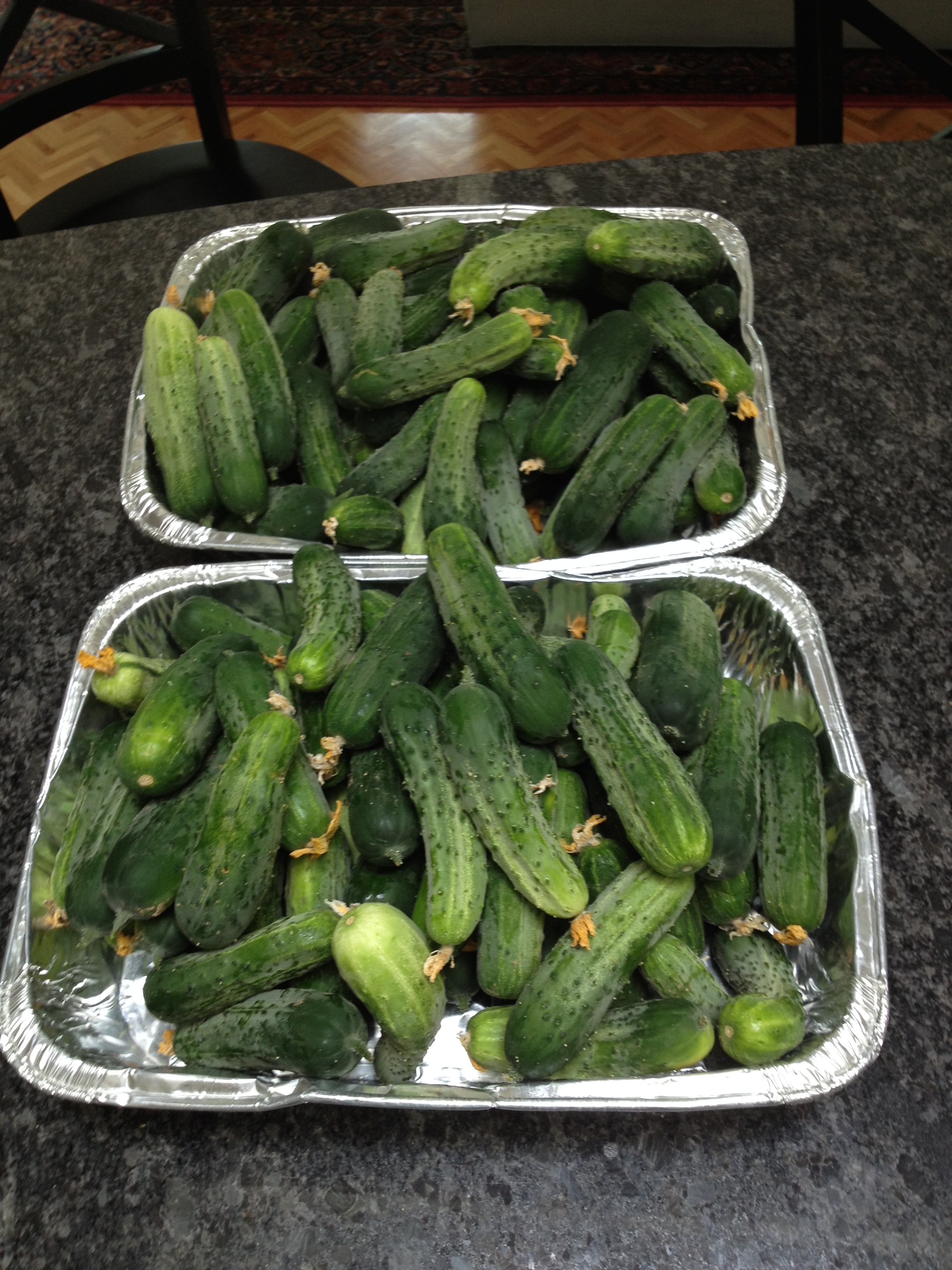
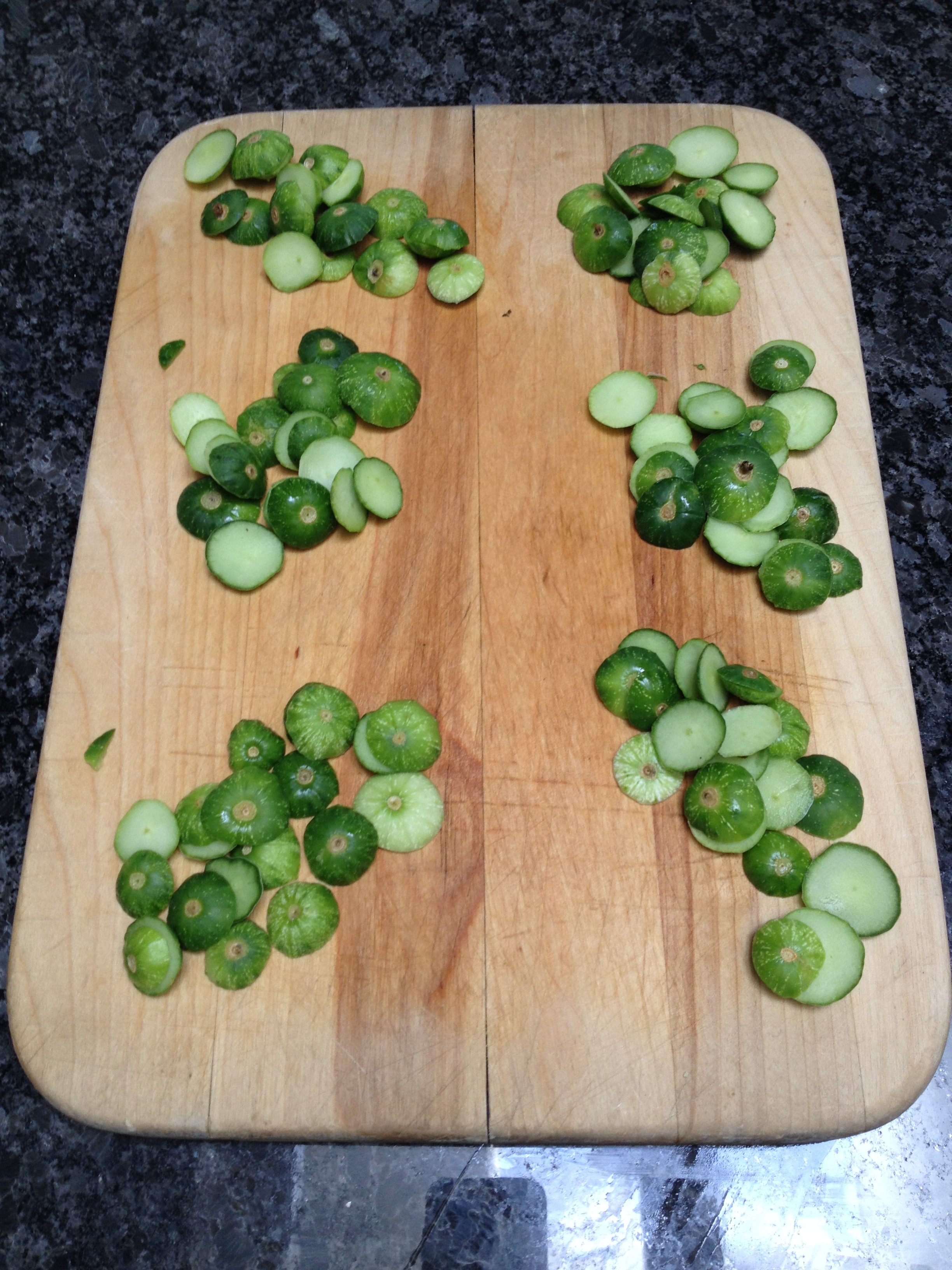
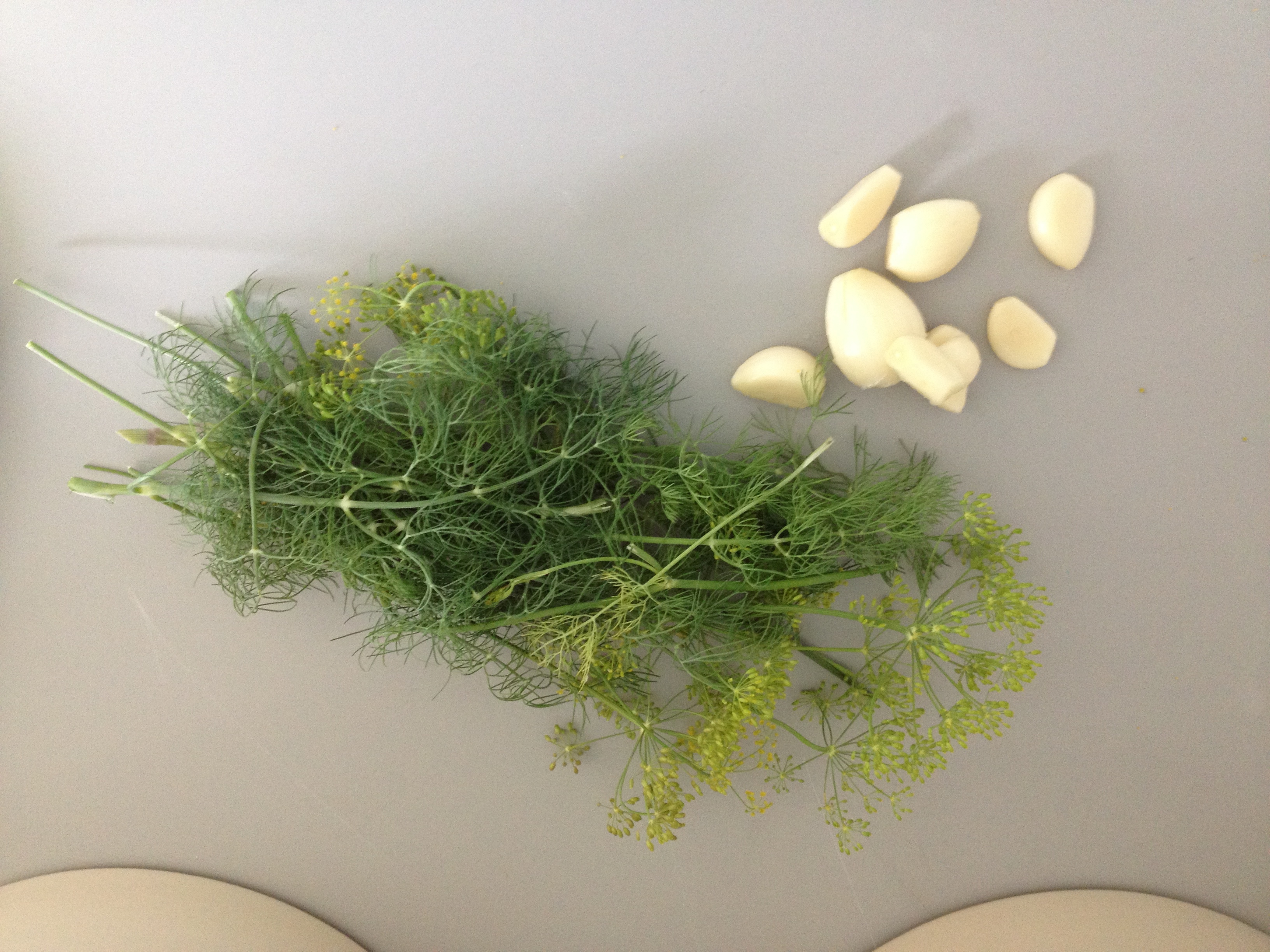
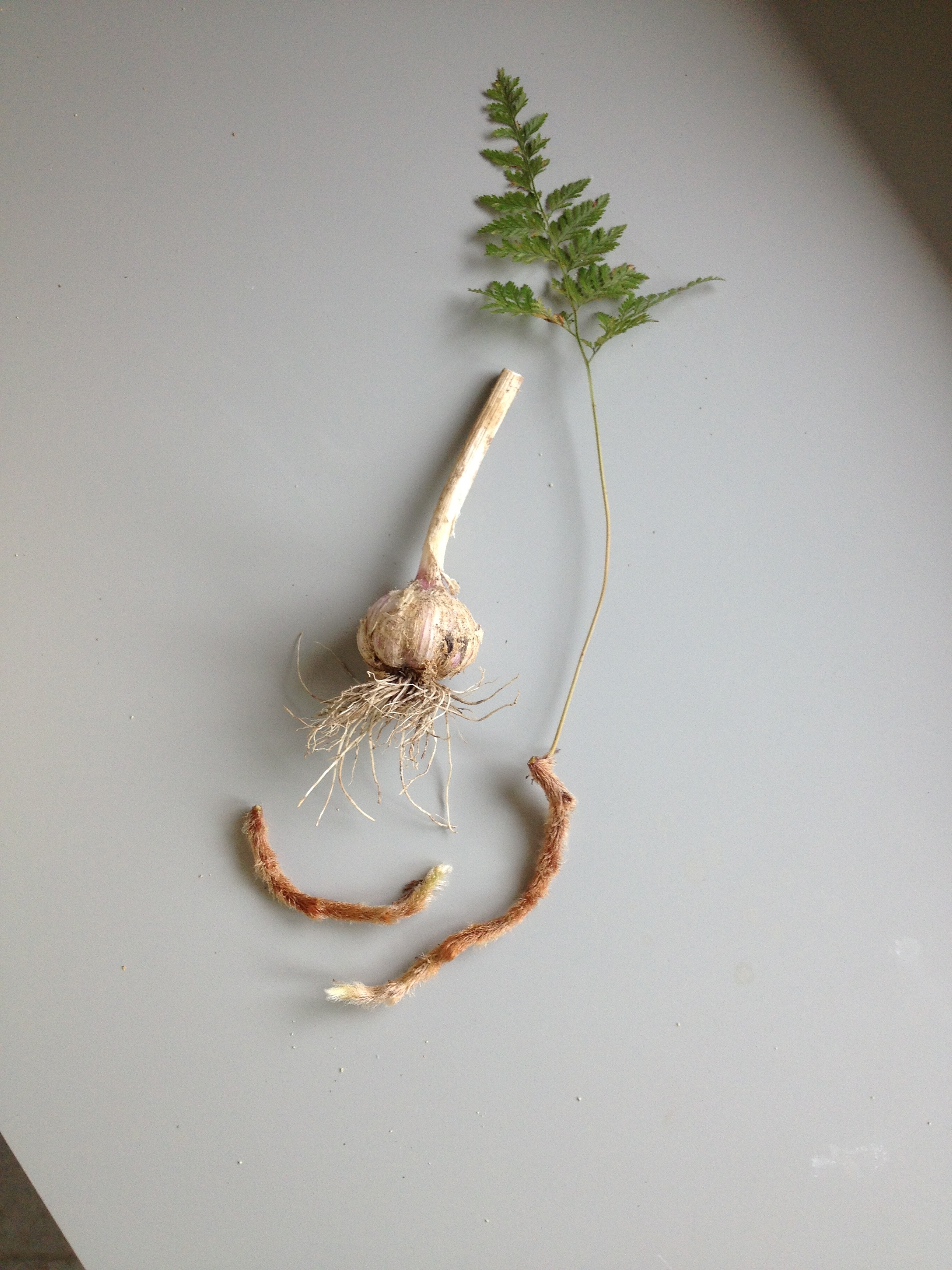
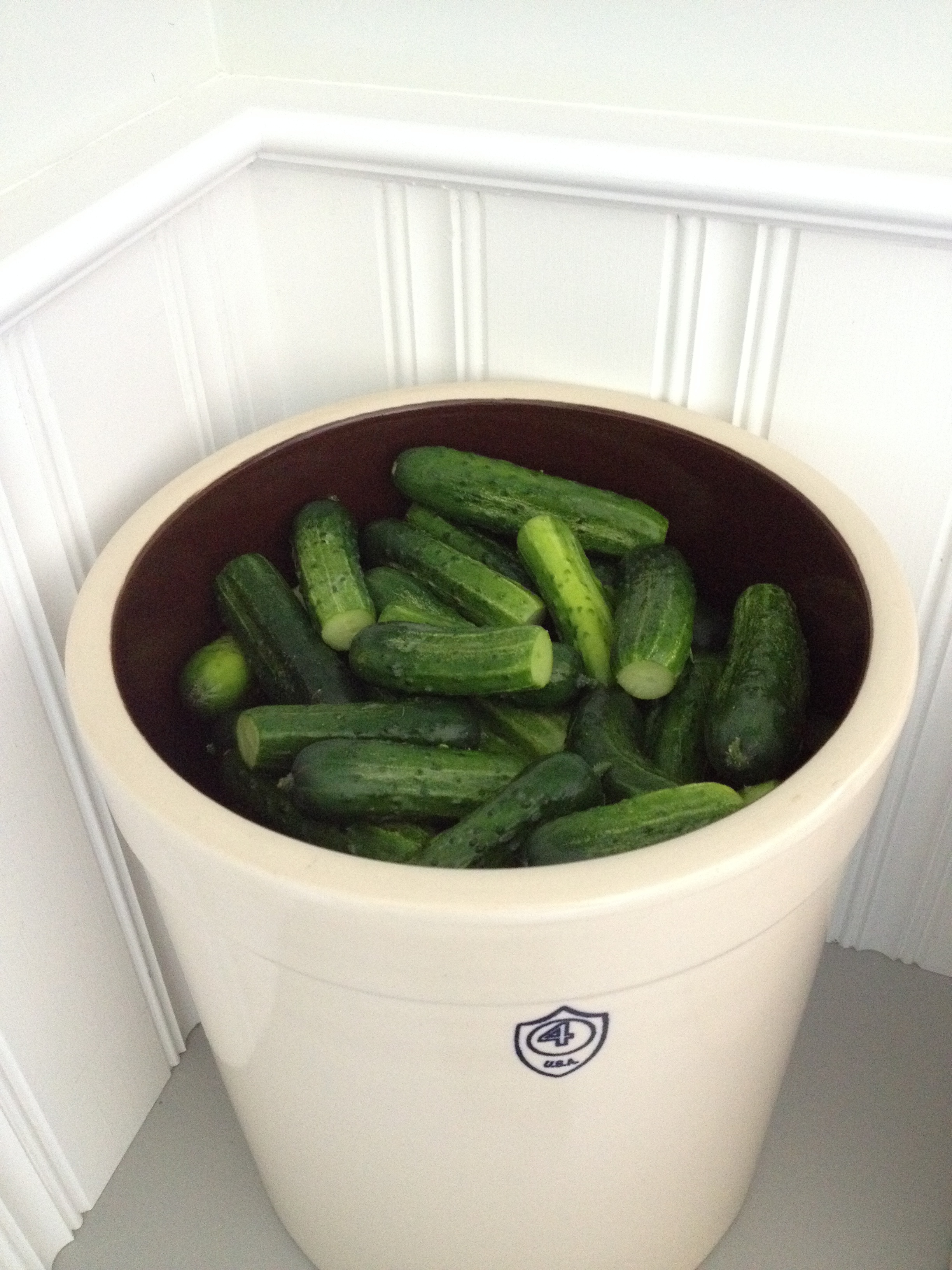
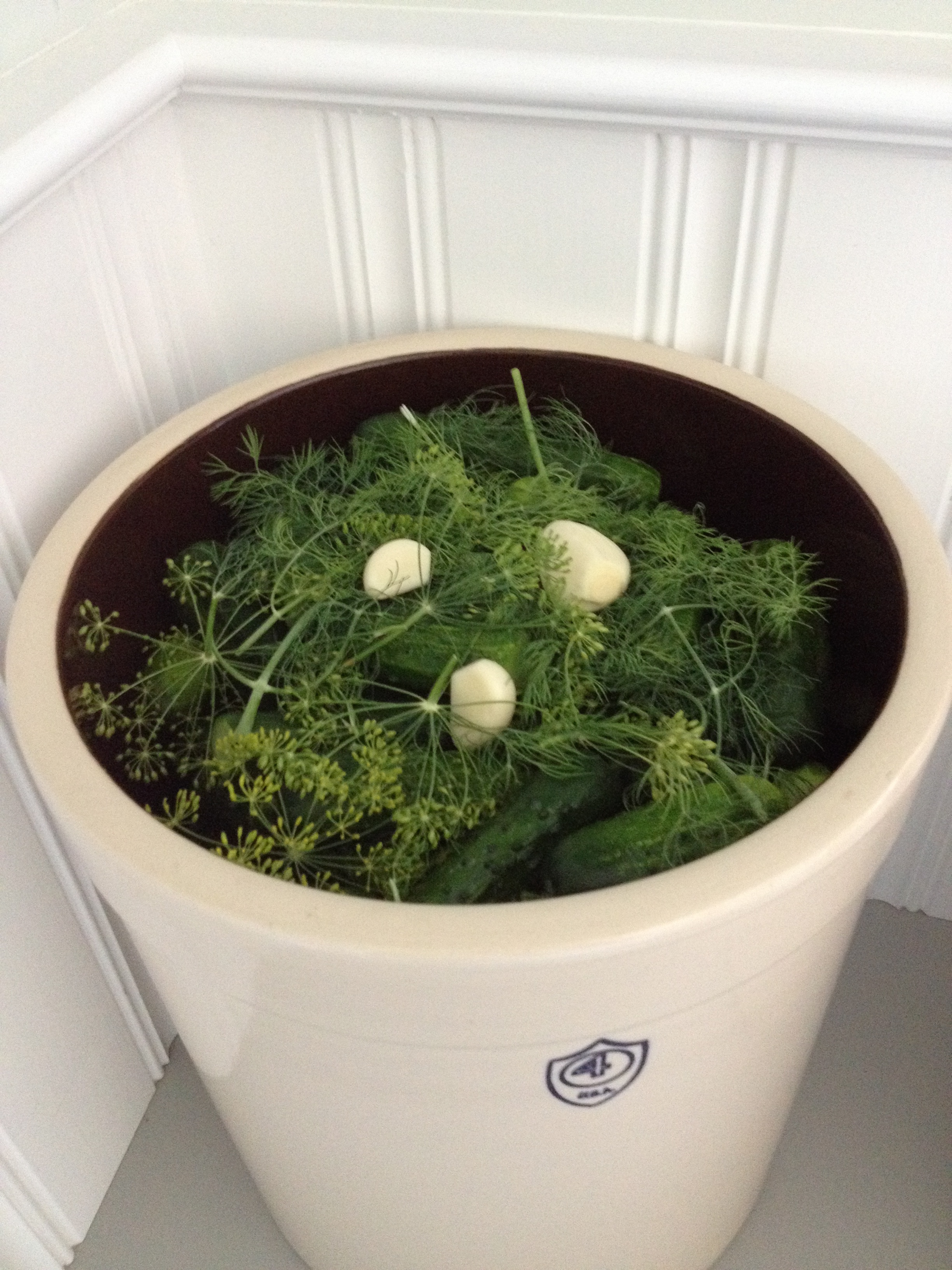
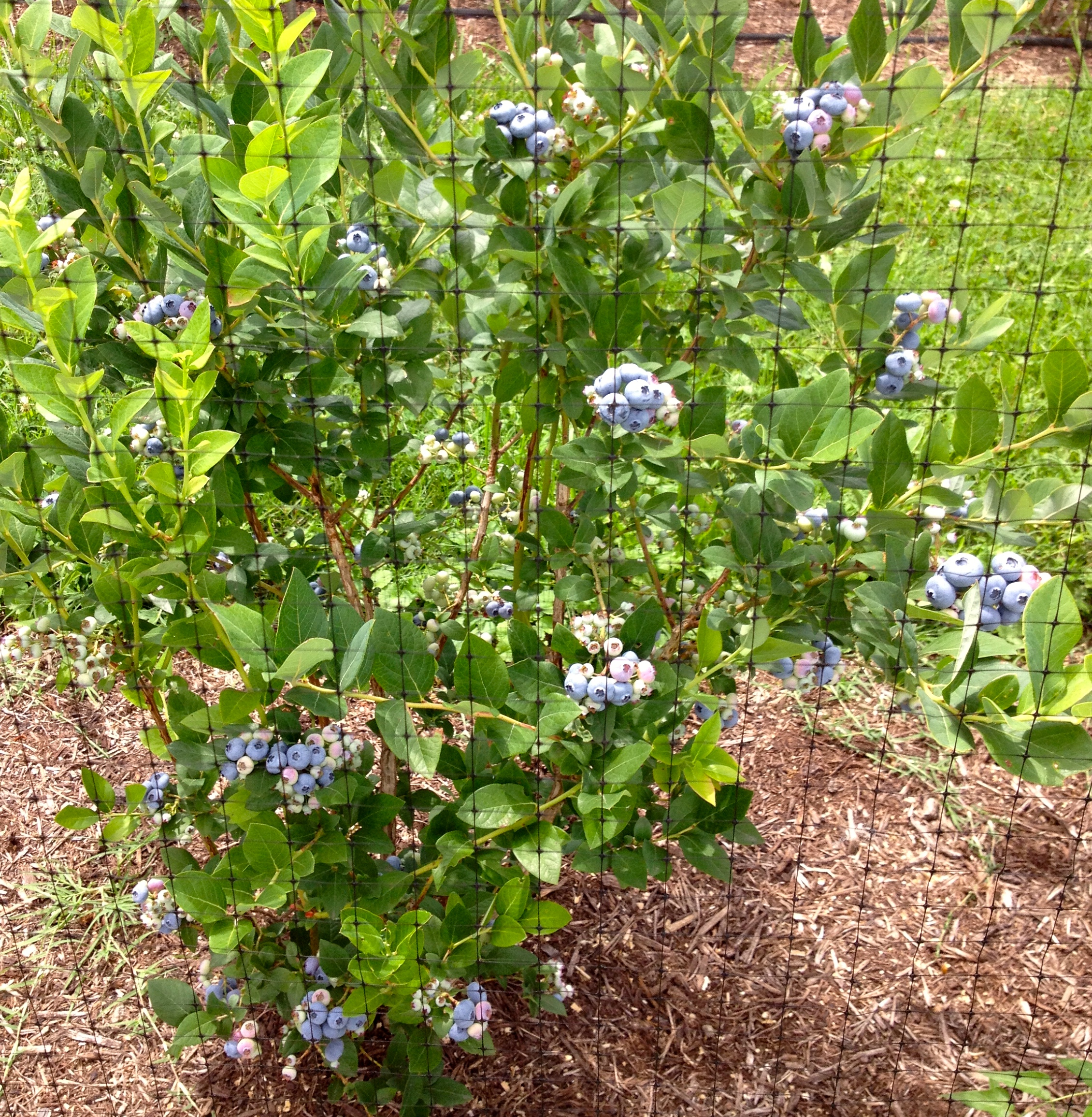
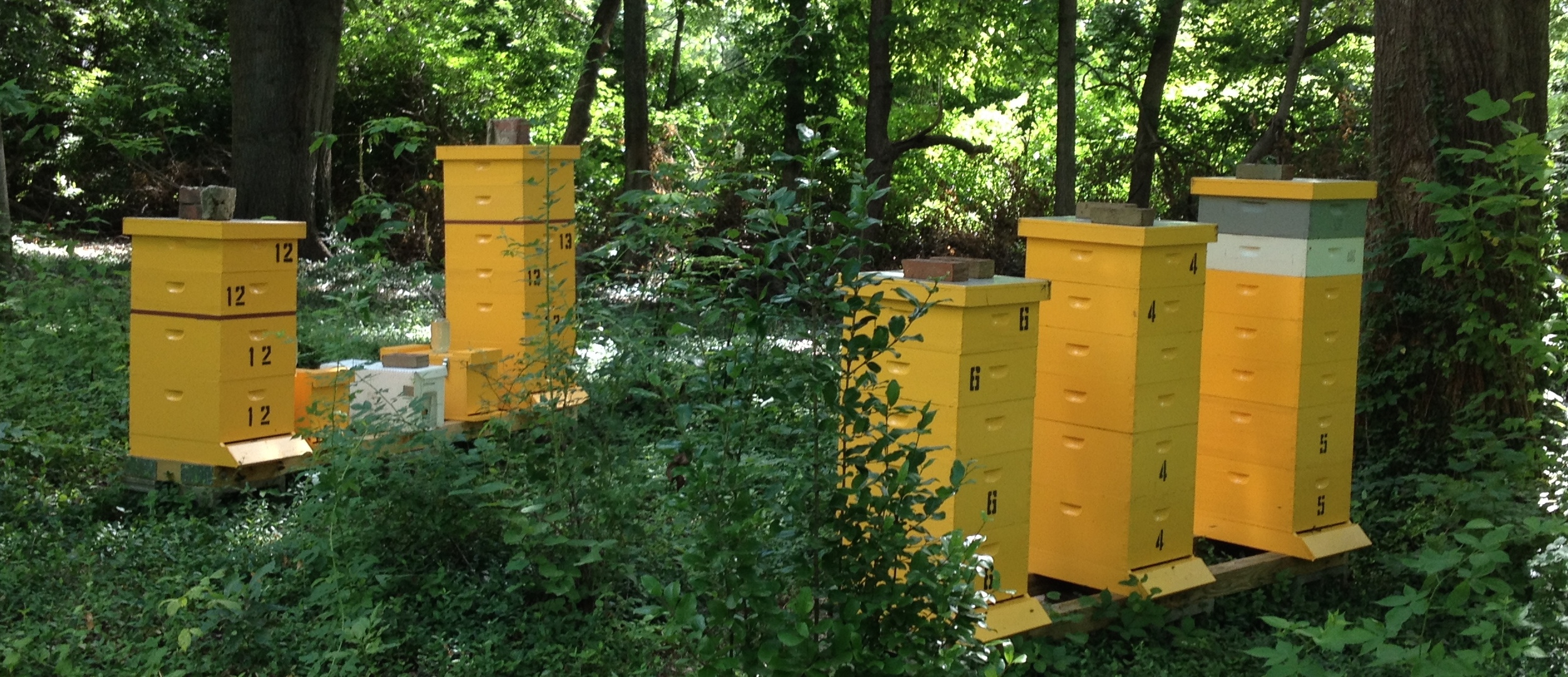
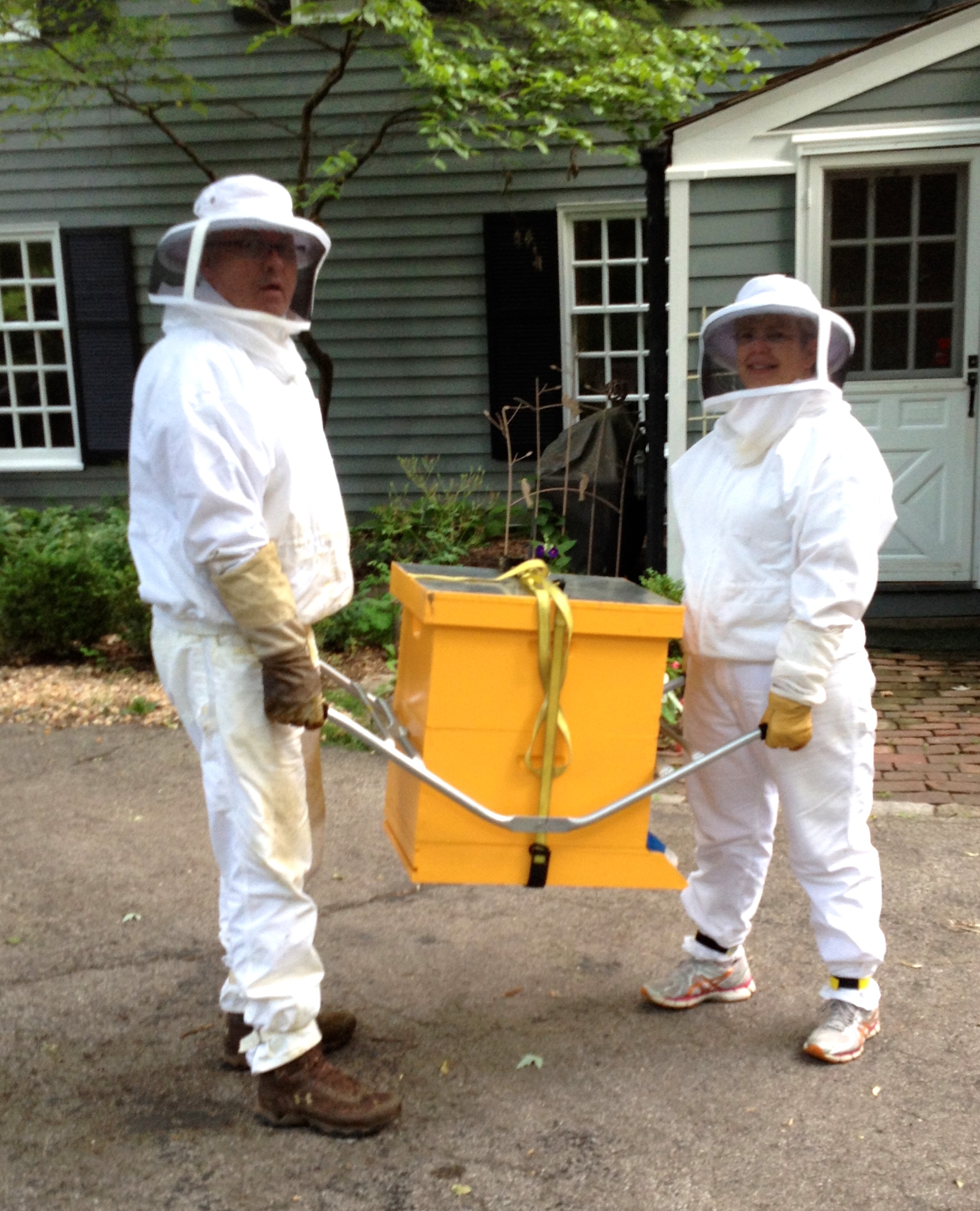
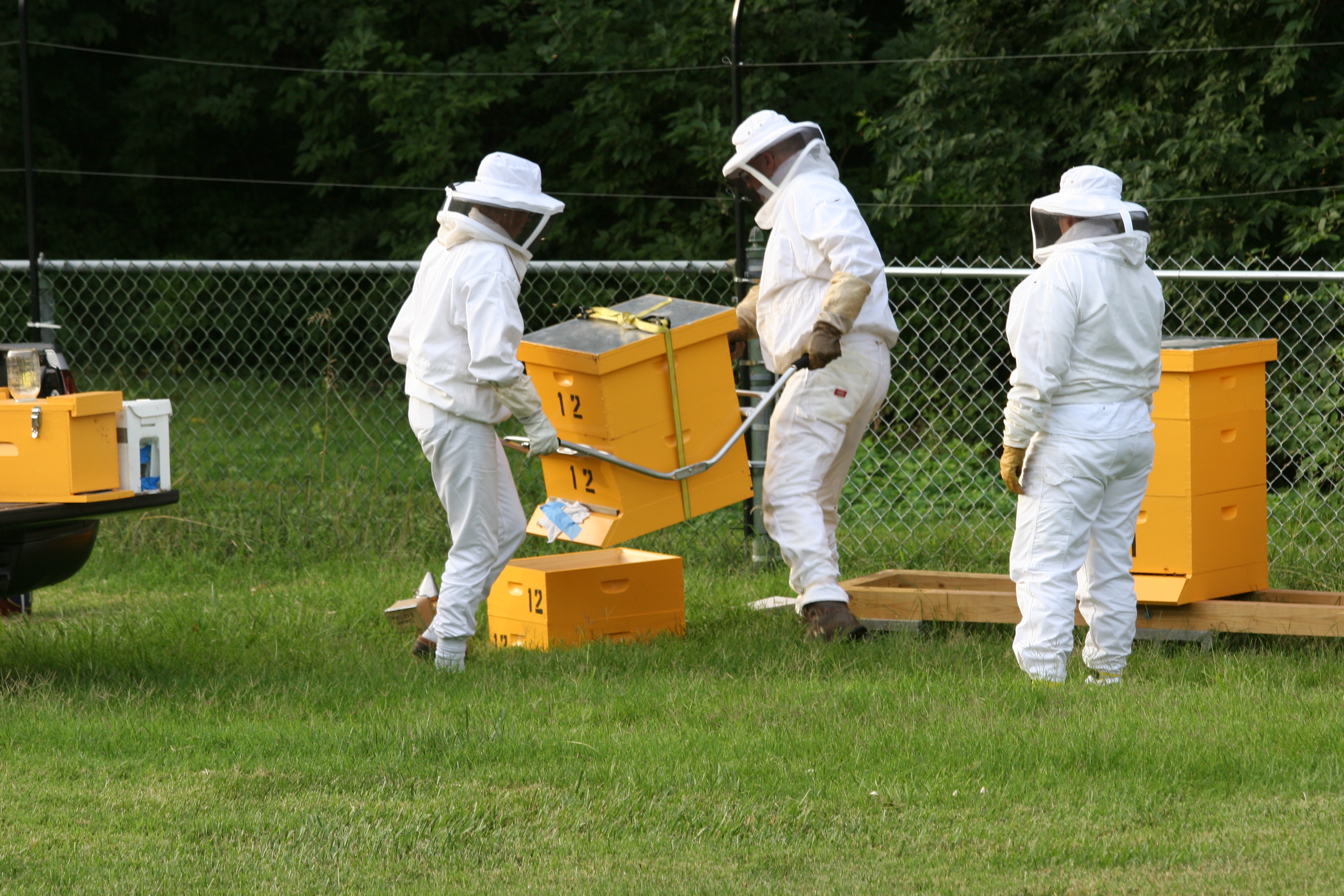
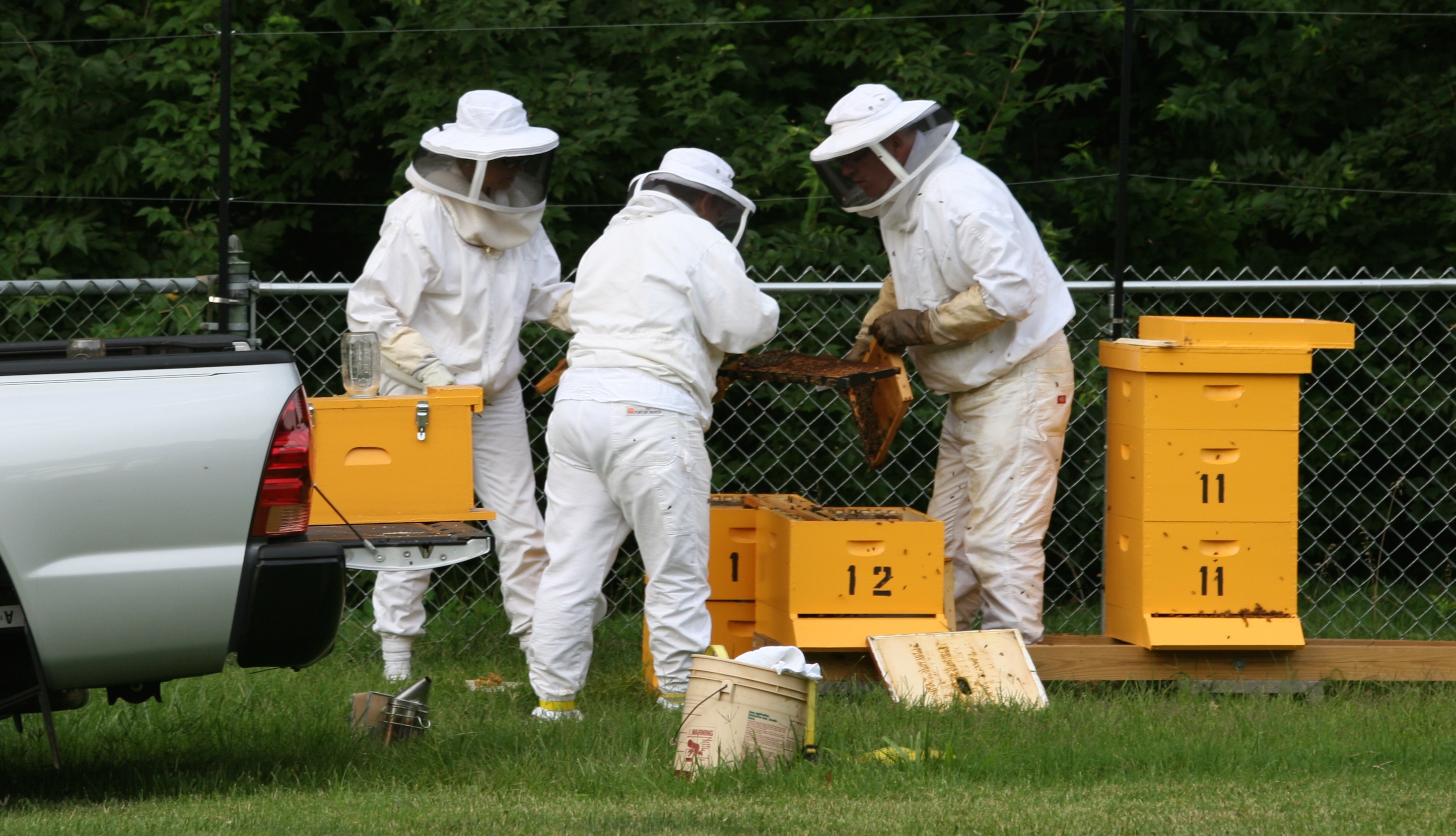
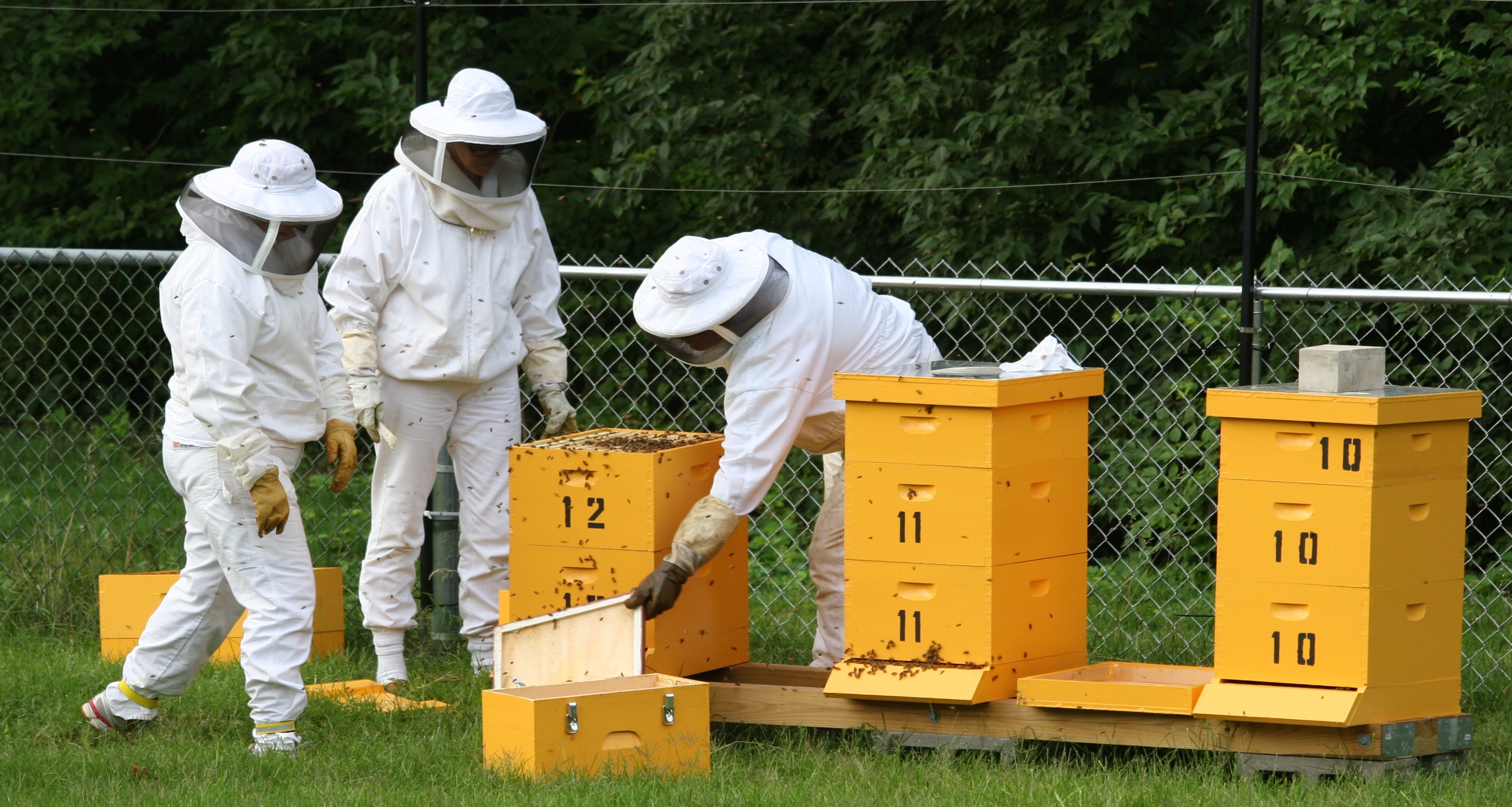
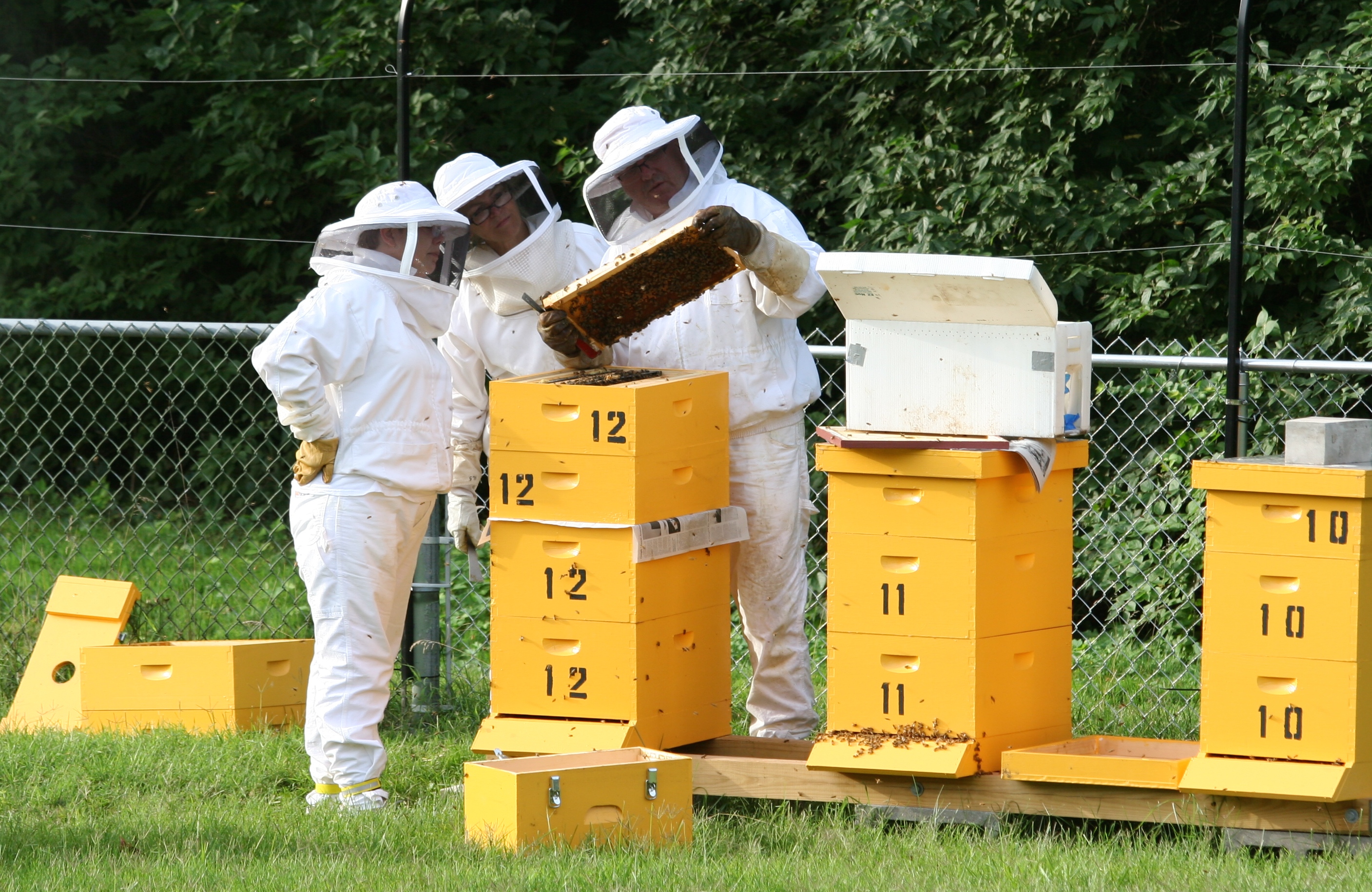
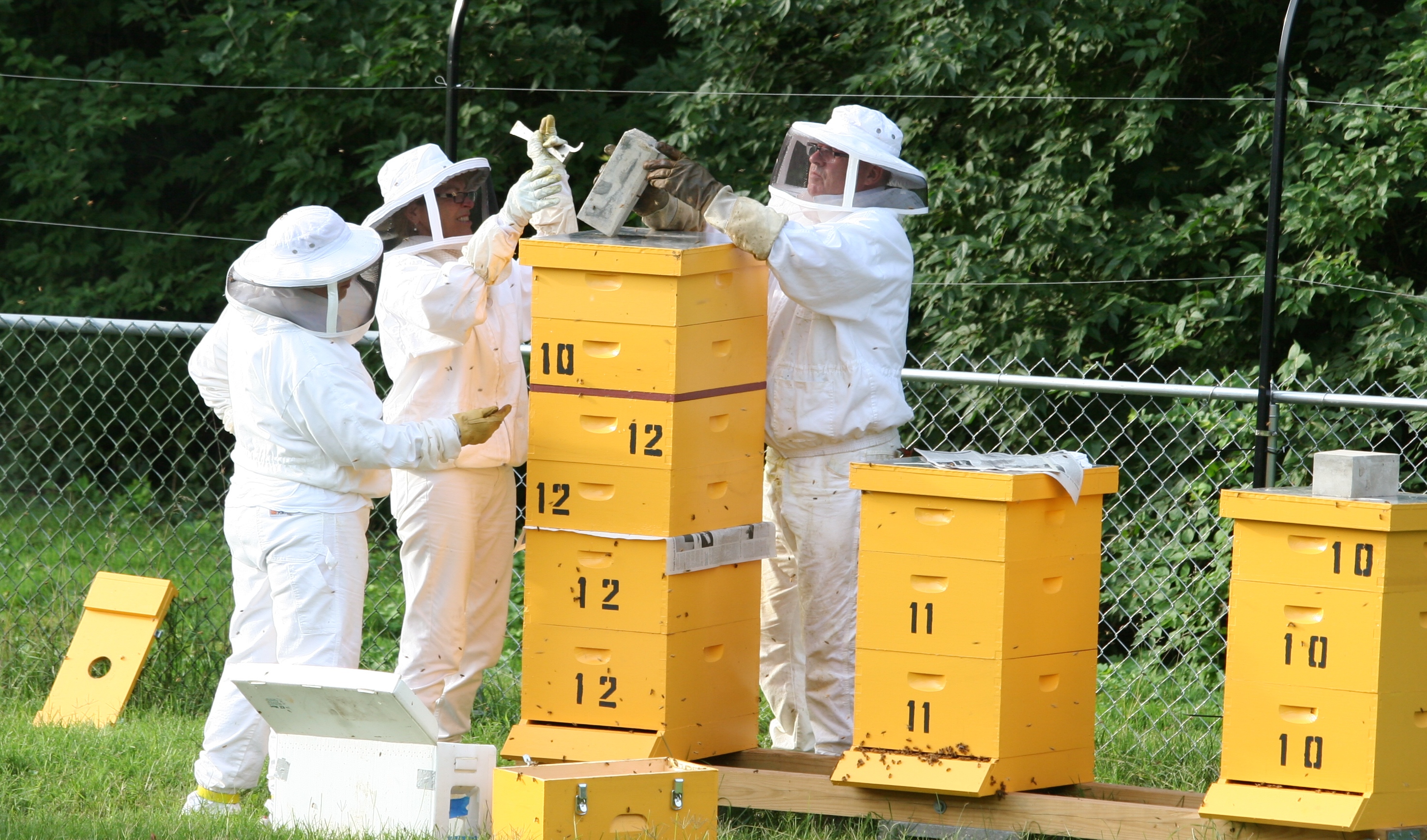
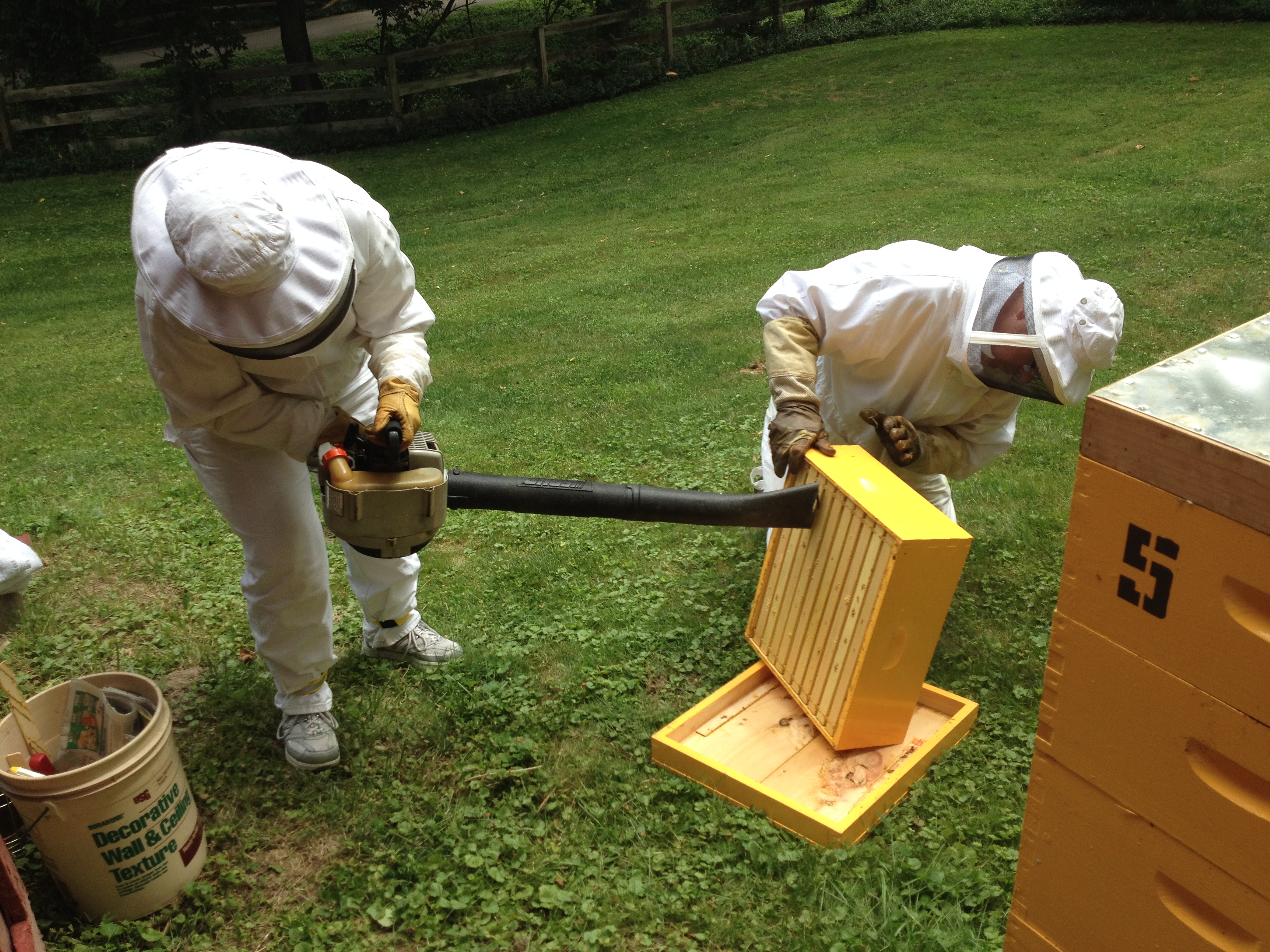
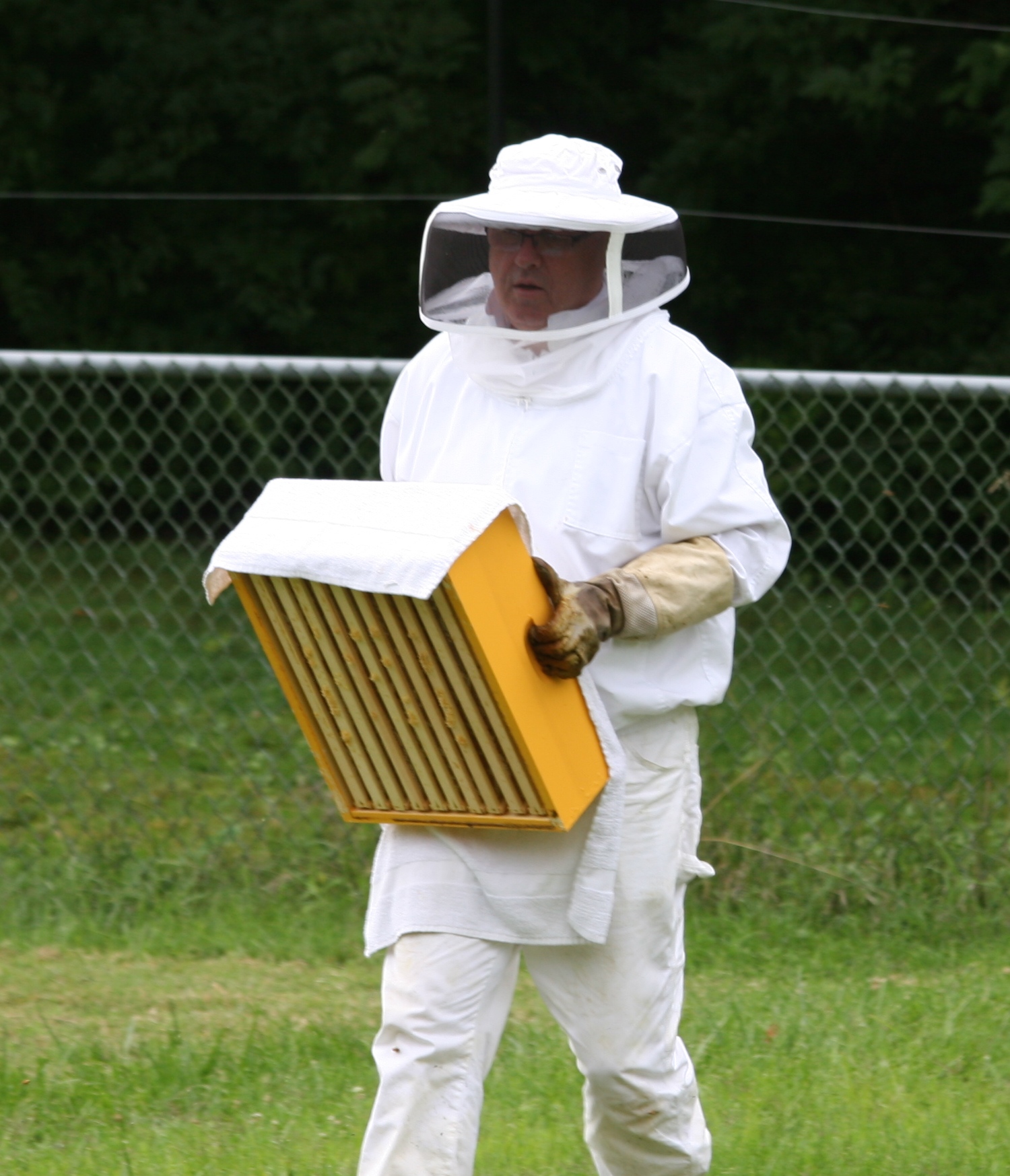
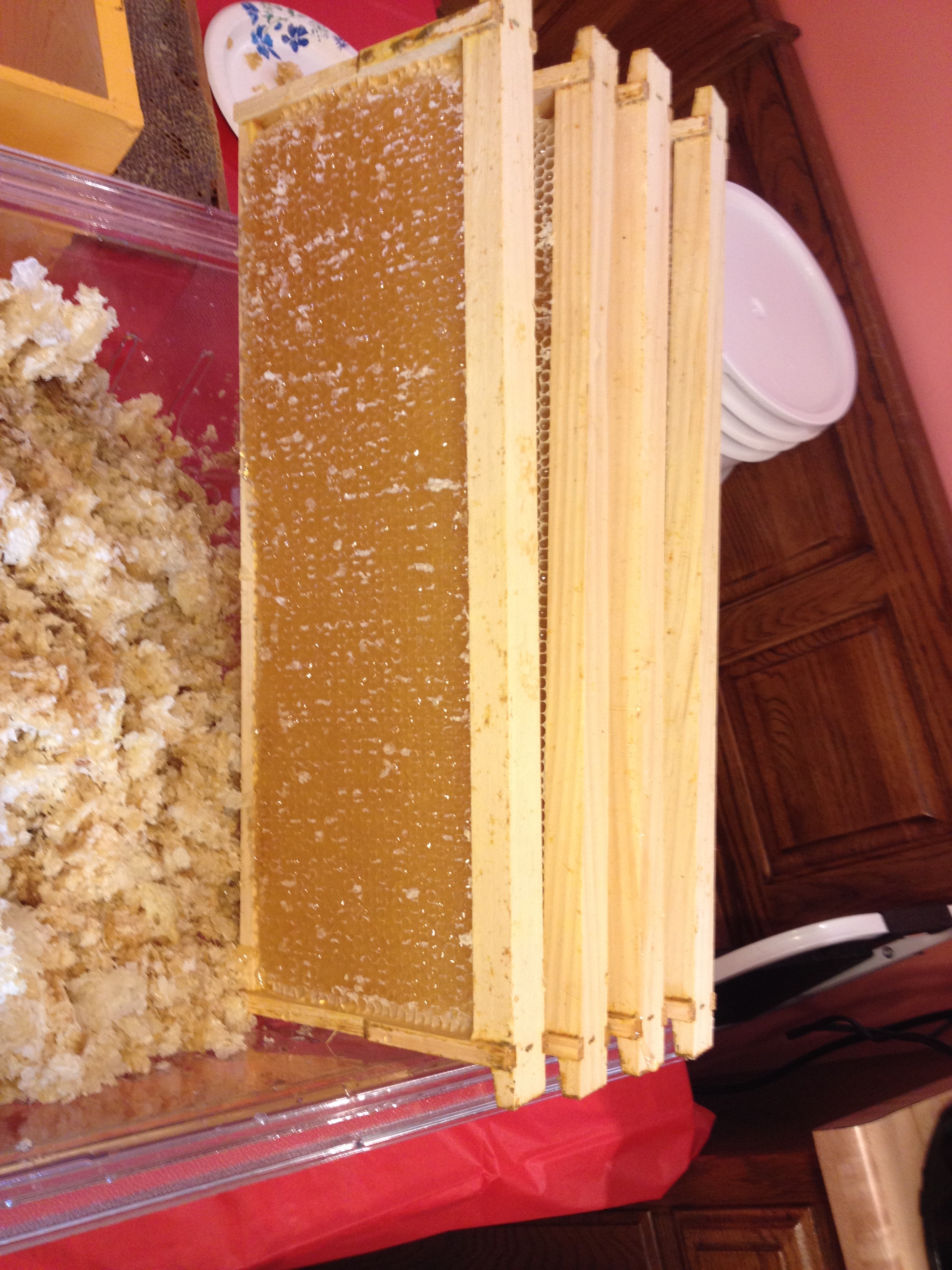
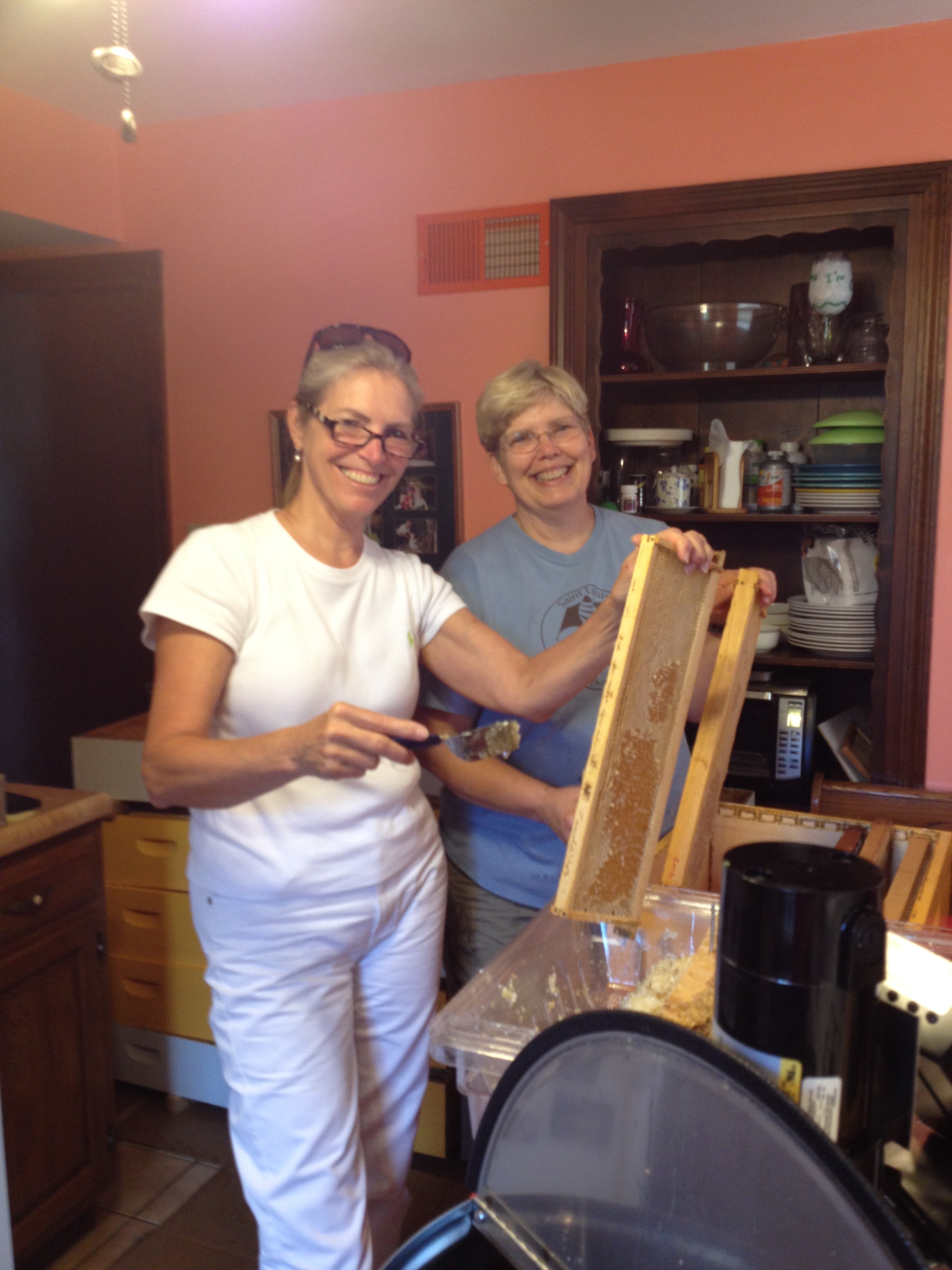
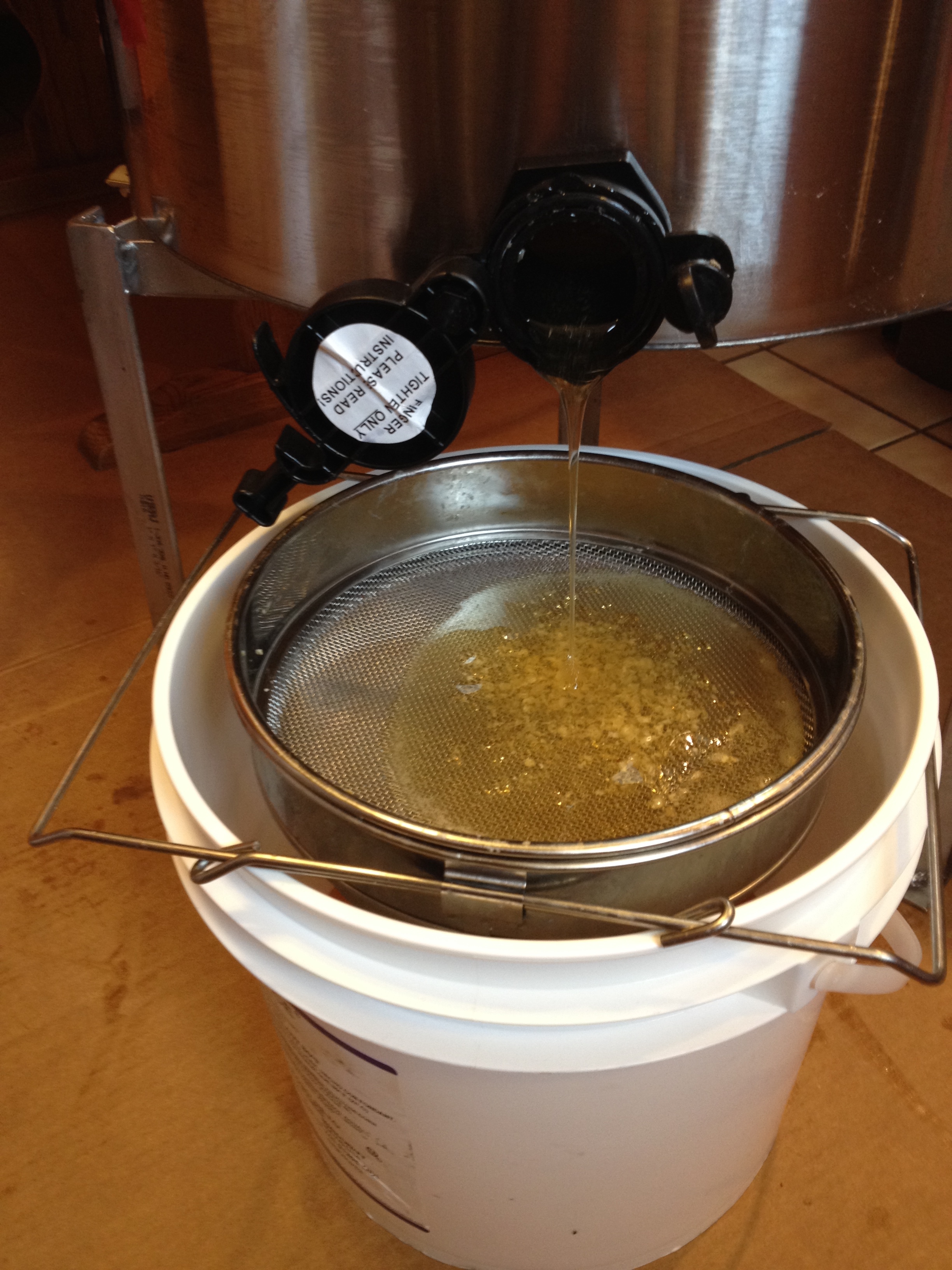
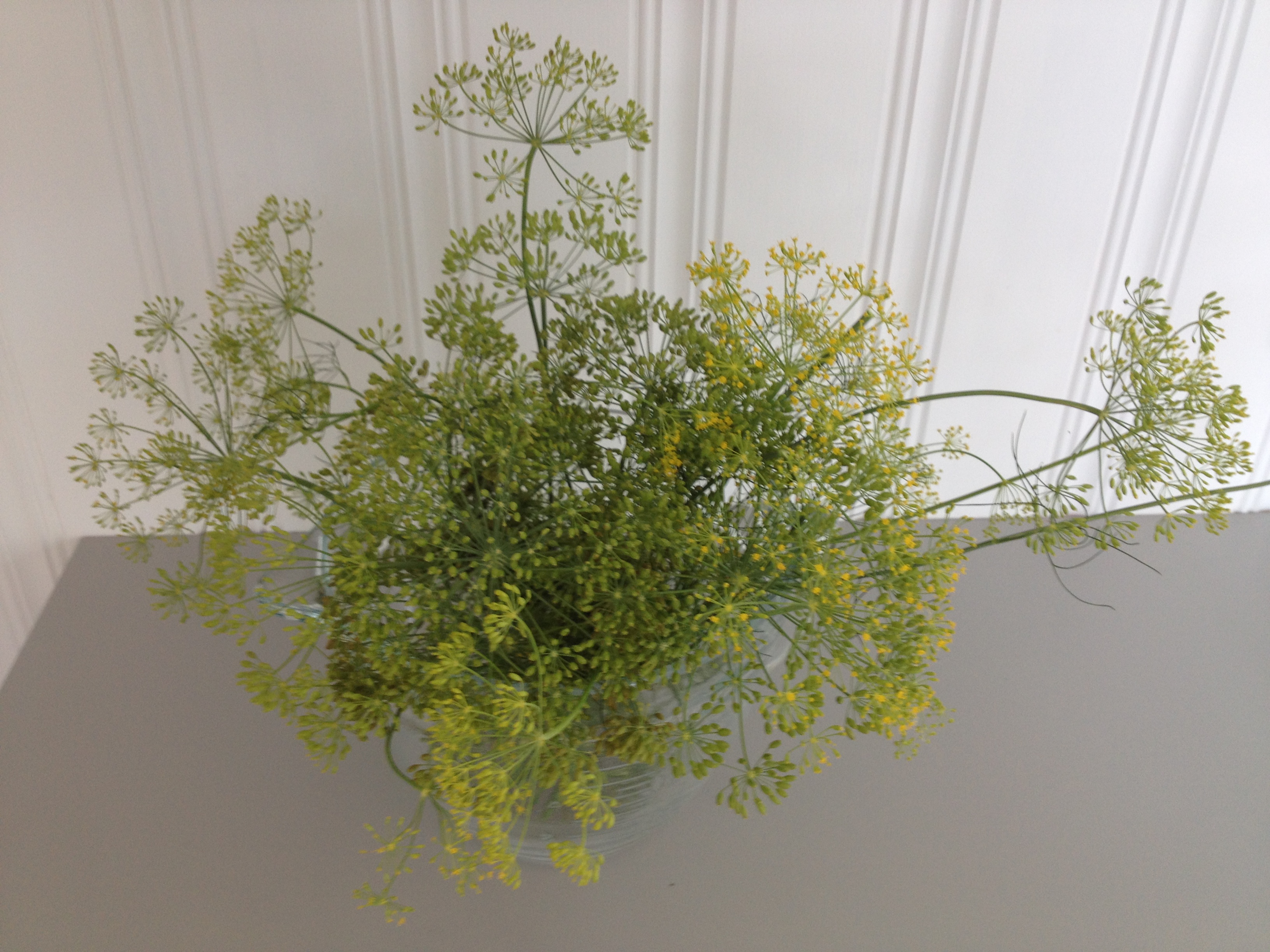
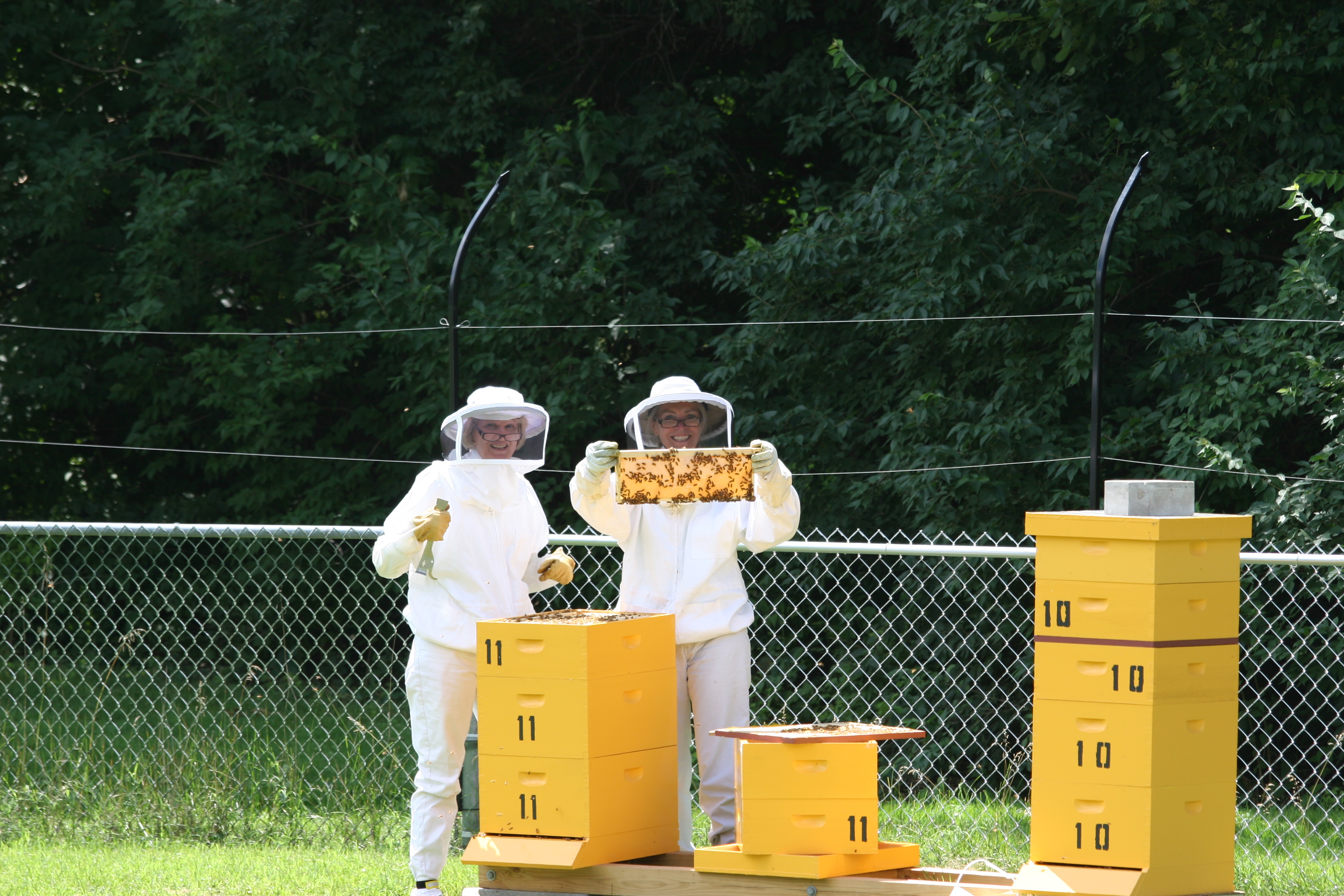
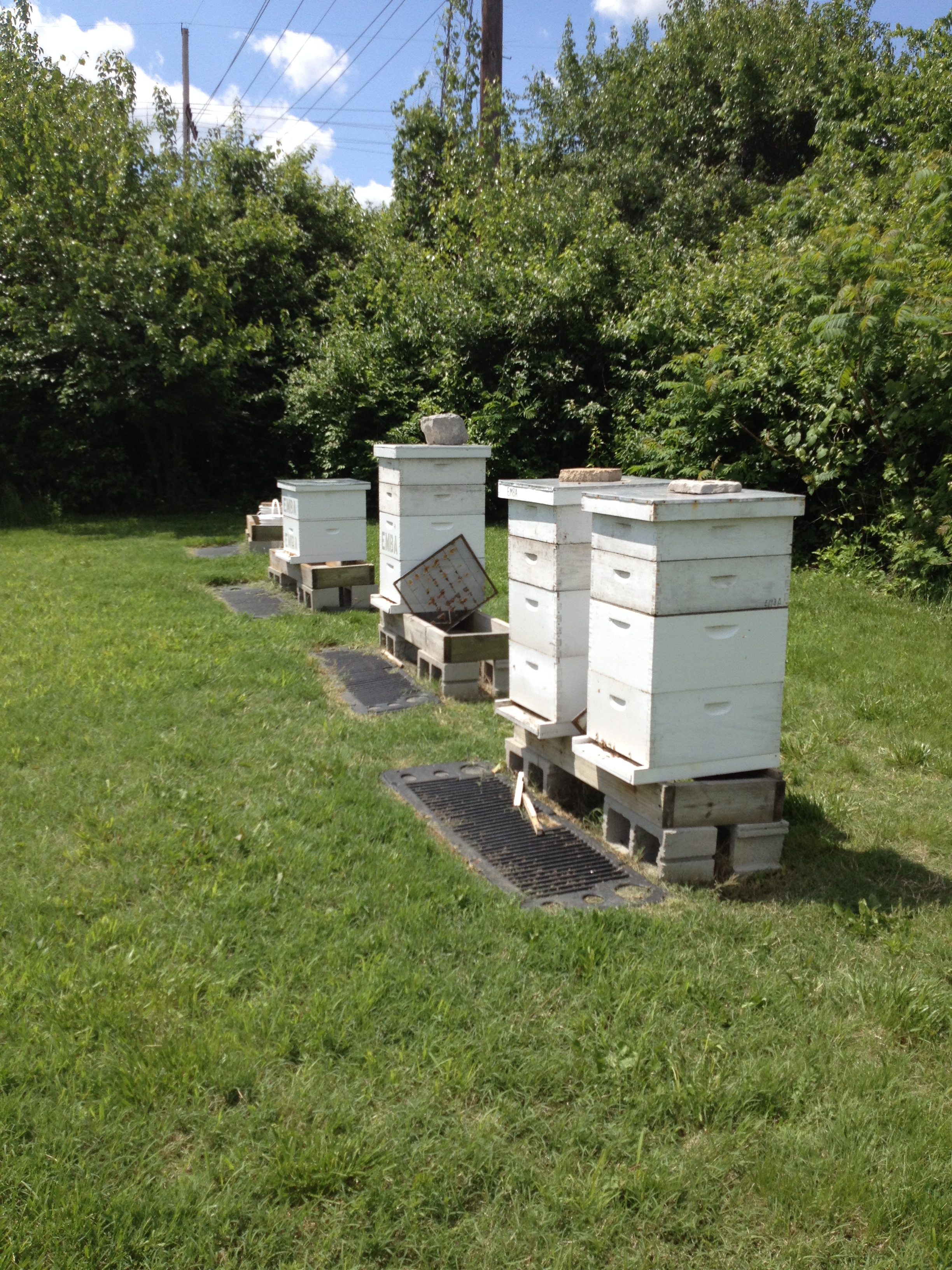
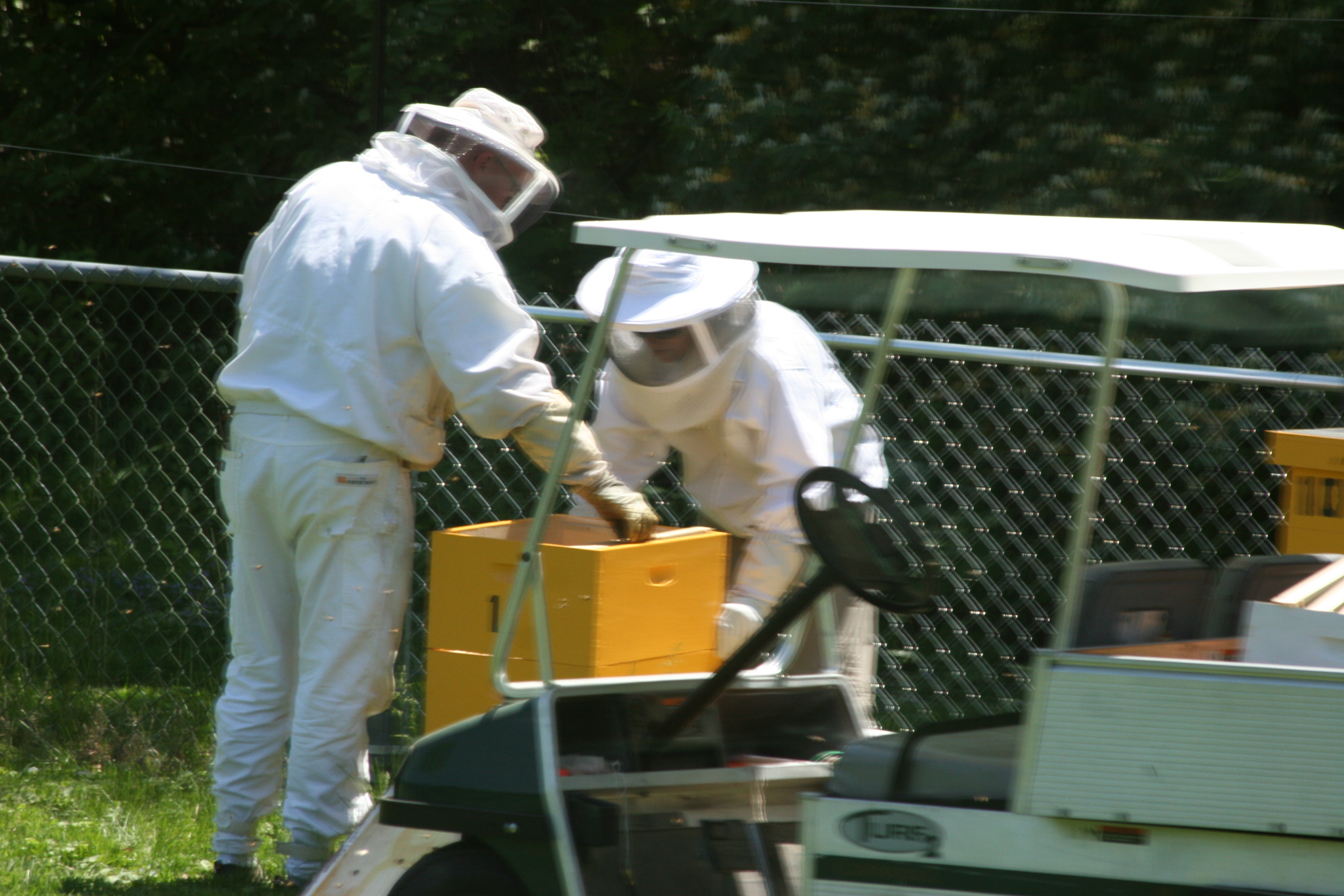
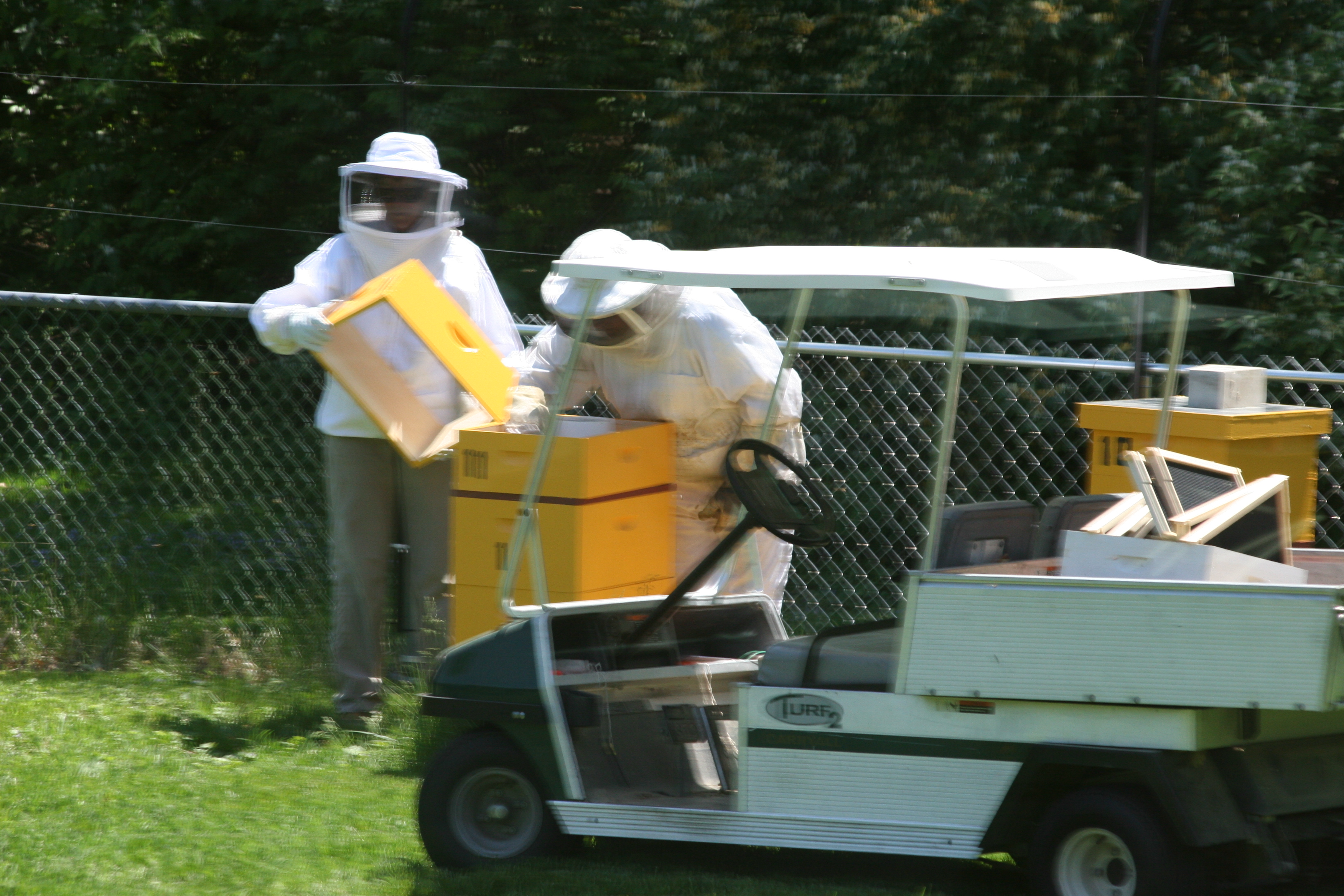
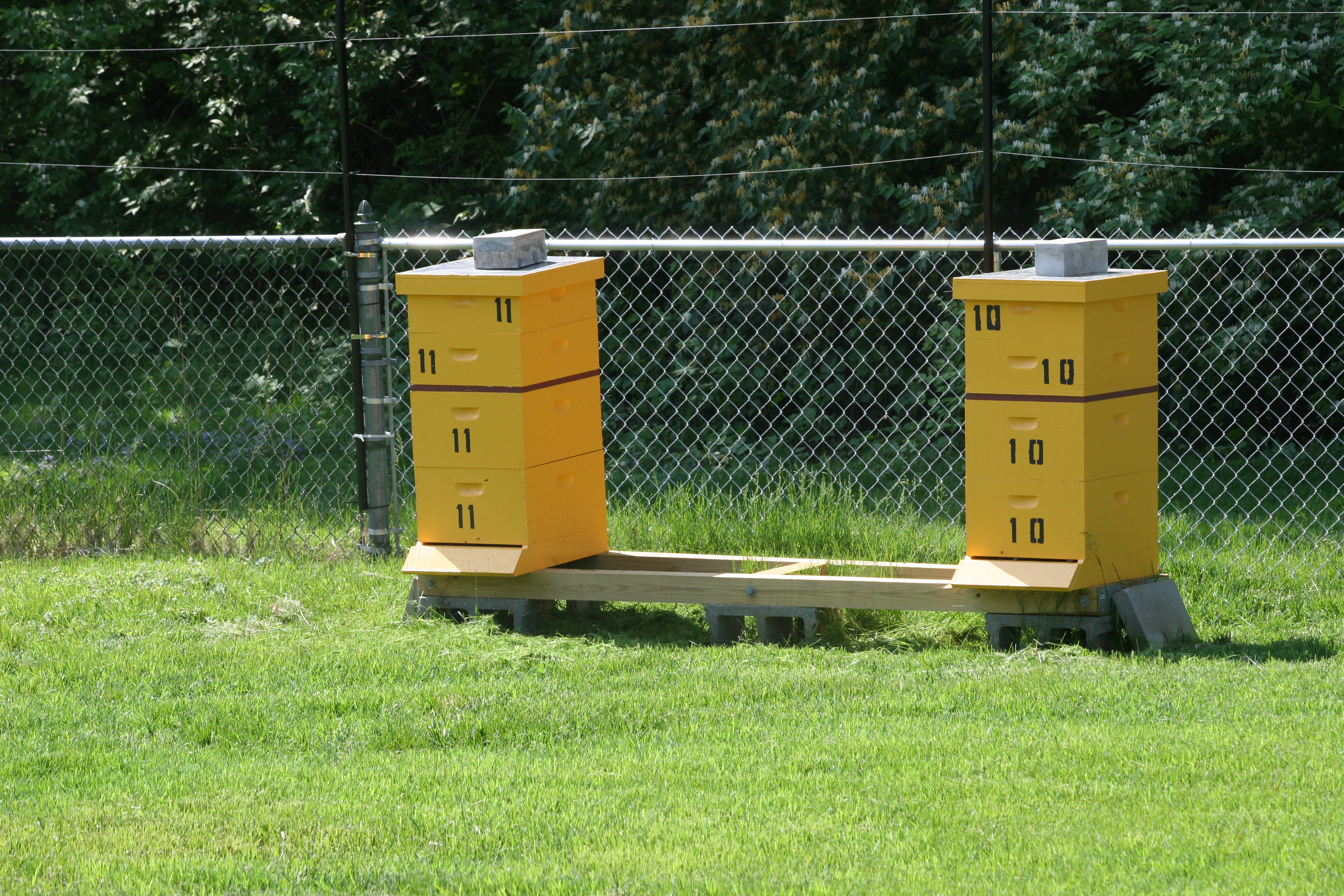
I’m not one to follow recipes with strictness but this was an exception. I was able to easily gather 16 pounds of 4 inch cucumbers from the recent harvest in order to make a batch for the 4 gallon crock. IMG_6496I scrubbed them up and cut the bloom end off of each one. I counted the ends and found it took exactly 120 fruits to make this happen. IMG_6504Then, I added some fresh dill from my herb garden.IMG_6498 I also peeled fresh garlic that was grown by a woman whose bees we care for. She was harvesting from her garden one day last week when Helen and I were making our rounds to the bee yards and she gave us both a head of garlic as well as some rabbit foot fern starts. (More on the ferns later). IMG_6463Fermented cucumbers turn into sour pickles with a marginal amount of ingredients and an even smaller degree of effort since there is no chopping or slicing to speak of…weren’t our ancestors smart! For my 16 pounds of cukes, I added 16 heads of dill, 2 cups of canning salt and only 1 cup of vinegar in addition to the garlic and 8 quarts of water. Here are the whole cukes which I added to the crock.IMG_6501I layered the spices, and here they are with the top layer. IMG_6499Then I added the brine which made everything float to the top…just like swimming in the ocean. IMG_6502This, of course is why you have a weighted lid. I put that in place and now, tick, tock, the waiting begins. I’ll check on these a couple of times a week for 3-4 weeks, removing any scum that forms on the top surface, while they are fermenting. If all goes well, I can store them in their original crock for 4-6 months but it is even easier to put my canning expertise to use and pack these into quart jars and put them through a hot water bath to store for future consumption. IMG_6503I’m now reading up on a similar process to make sauerkraut which I will make in the 3 gallon crock with the cabbages that are ready to pick. In the meantime, we are harvesting lots of zucchinis and green beans as well as tomatoes and eggplants galore. The potatoes are ready to dig. Wouldn’t it be nice if we could have a light rain before working on this chore to make it easier to get them out of the ground! The farm report as of yesterday pushed us over 500 pounds of produce in 2014 at a rate of 156% above last year at this date. Case in point, we have 4 times as many blueberries this year (54.5lbs) so far with some varieties still patiently waiting their turn to be harvested. IMG_6495The bee report this week is incredibly exciting for several different reasons. For one, Jurgen is back from Germany and is again the captain of the ship which is fortunate since we hit some rough waters yesterday. While he was gone, we noted that a hive in one of the bee yards was consistently inactive. It was a relatively young hive in a yard with 4 larger hives as well as 3 nucs, which are smaller start up colonies. Hive 12 in the photo was the inactive one but between it and hive 13 are the three smaller boxes – the nucs – that have only 5 frames in each. IMG_6453When Jurgen returned, he checked more thoroughly into hive 12 to see what was going on with it. He found the queen but she was not busy laying eggs and so he was planning to replace her this weekend with a queen from one of the nucs. Instead, when we arrived Saturday morning, we found that the bees from one of the other hives had attacked this weaker hive and had robbed them of their honey and killed most of the bees. What a crazy mess! We looked for the marked queen and couldn’t find her even tho she was present the day before so it is likely that she was killed by the attacking bees. So Jurgen decided this hive (whats left of it) had to be moved, along with the nucs, to another location. It just so happens that Seven Oaks was a good candidate to receive the new set up so we moved the hive this morning at 6am. This was rather involved since we had to shut the hives down and keep the bees inside during this process. Jurgen and Helen have some great equipment for carrying a hive from place to place. IMG_6505 We loaded the pickup and took off for Seven Oaks with the nearly defunct hive #12 as well as the three nucs. We moved hive 11 to the middle of the stand and added 12 to the end which follows the concept that hives on the ends thrive better than their neighbor in the middle. Hive 11 was already our strongest hive so this would give 10 and 12 on the outsides a better chance of growing stronger. IMG_1415We did another thorough search for the errant queen since we wanted to make sure she was not present before we added the queen from one of the nucs. IMG_1430It took us a while but we got the two deep brood boxes set into place and then added the bees from one of the queenless nucs. IMG_1483Then Jurgen showed us how to join two new mini colonies together. After we got the first nuc loaded into bottom boxes, he laid a single sheet of news paper on top and used his hive tool to cut slits in the paper before adding two more hive boxes on top of it. This paper barrier serves to keep the two colonies slightly separate until they get used to each other. The bees will eat through the paper (the slits get this started) to be with each other on a gradual basis before the paper dissolves and the two groups join into one. Into the top boxes, we unloaded the frames from one of the other nucs…this one was the one that had the active queen in it. IMG_1492Then we gave them some food since there was hardly any honey in their combs and put the inner and outer covers back on and we will hope that this little experiment ‘takes’. The other hives are young enough that they should allow this new hive to get settled in peace. IMG_1498 We then put the third nuc on the stand by itself to continue to develop. Jurgen was trying to get a queen to emerge from a queen cell in this one but it had not emerged for several weeks so it must have been a dud. Here is what it looked like after we removed it. IMG_6507Before all the turmoil of yesterday’s discovery of the bee robbing, we had the excitement of pulling the first honey super off of hive #11 in order to extract the first of Seven Oaks Honey! This was my first experience of pulling the honey supers off. This involves putting a vapor board on the top of the super which is sprayed with a liquid that makes the bees want to move down into a lower box. They don’t all move away so we use leaf blower to help some of them leave. IMG_6492Here is Jurgen carrying the Seven Oaks honey super to the truck. We took one from Seven Oaks and seven more from another bee yard yesterday. These weigh between 30-40 pounds each so it is a lot of work on a hot day when you are wearing a bee suit!IMG_1398The first Seven Oaks honey extraction took place today! The frames of honey were nearly perfect! Here are some after we uncapped them…aren’t they gorgeous!?! IMG_6514Helen and I were in charge during extraction time since Jurgen was glued to the World Cup game, cheering his home country to a win.IMG_6521Here is the honey that came off the Seven Oaks frames after it went thru the extractor.IMG_6516

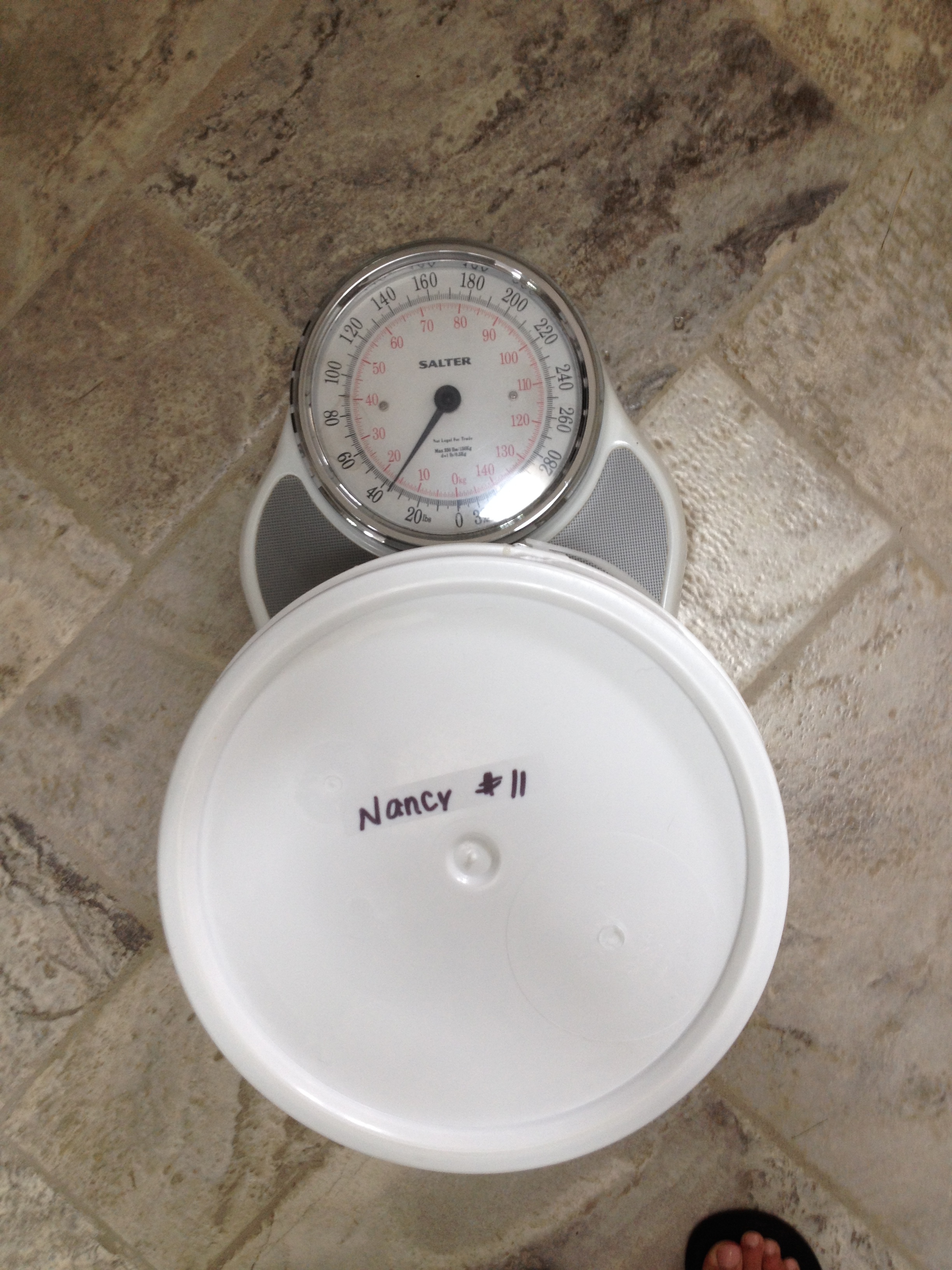
The grand bucket full measured 36 pounds of sweet nectar! Yeah! IMG_6523

While we were extracting honey from the Seven Oaks honey frames, Dave was busy digging potatoes among other items to harvest today. OMG, we are in serious harvest time! IMG_6524 As a final note, it has been  a very busy week at the farm but it has not been without the recognition of dear friends who recently passed from this life to the next. I was so blessed to know both Mickey and Laurie. RIP.

Unknown's avatar

Workin’ the Gherkins

So much has been happening at the farm since my last post! Dehydrating turnips seems like ages ago. I’ve been trying to accommodate the other harvest items that are pouring into my prep kitchen this time of year. Obviously, it doesn’t just ‘pour in’ since we are actively harvesting daily and then must immediately ‘accommodate’ it (wash, etc.) until we eat it or preserve it or hand it over to friends. We definitely know how to cook/prepare/eat it,  and I’ve been working on multiple methods to preserve it in various fashions but it is the sharing part that we really need to work on. That is the part of the equation that we want to accommodate but oddly it is the most difficult to fit with our schedule. I must work on a better way to get the produce shared with those who would like to enjoy our fresh fruits and vegetables. Our goal is to set up a CSA (Community Supported Agriculture) whereby we distribute set shares of produce to people who buy into our system either weekly, biweekly or monthly. We have used several friends as guinea pigs to help us learn the ins and outs of how this might happen in the future.

It should be simple, right? We have excess FRESH, produce. They want FRESH produce so we should be able to get a reliable system going. The challenges aren’t that great so I think it is just my mentality towards putting effort towards one more thing at a very busy time of year. I’ll work on a business plan when I have more idle time … I think I said that last year!

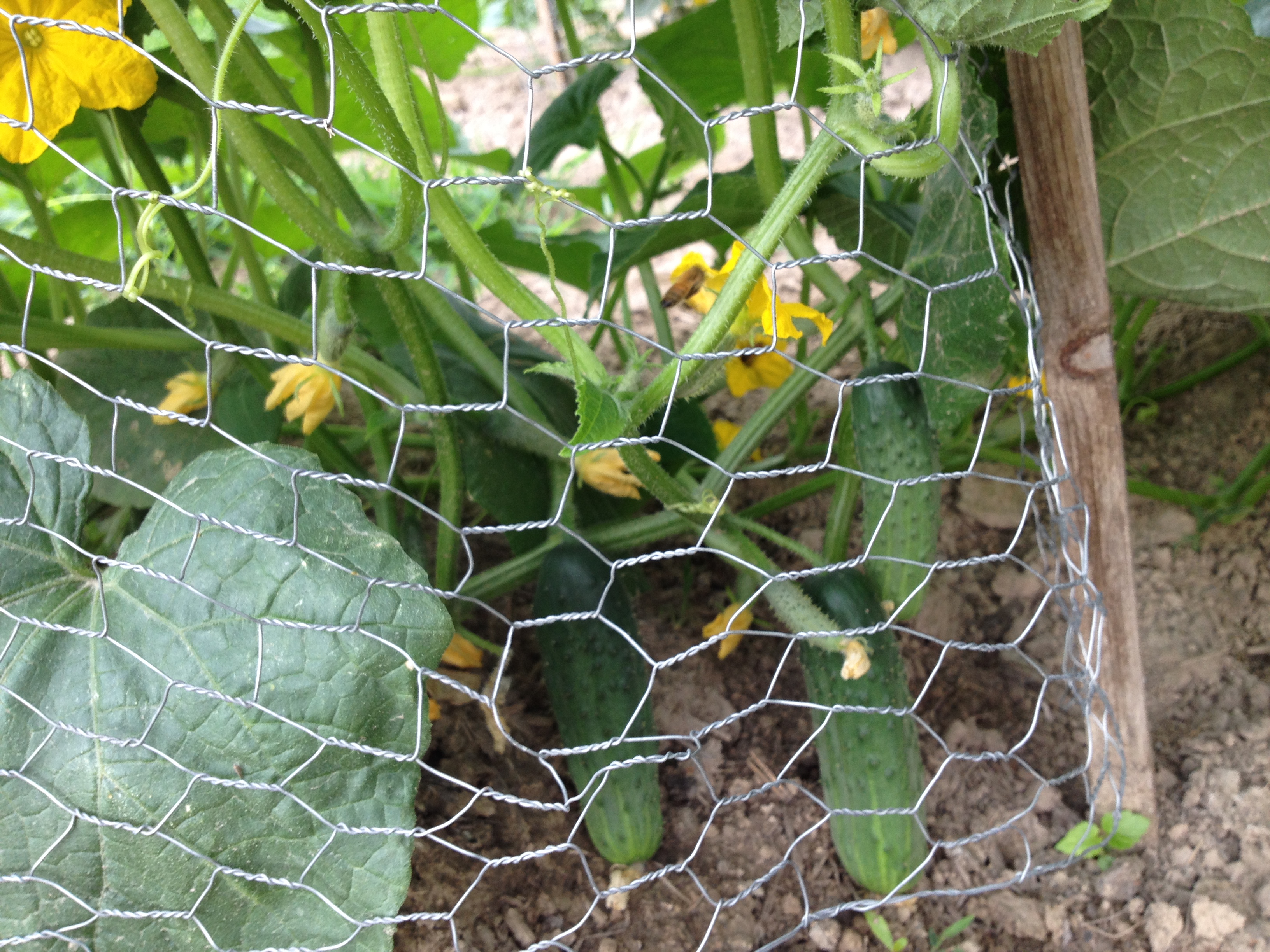
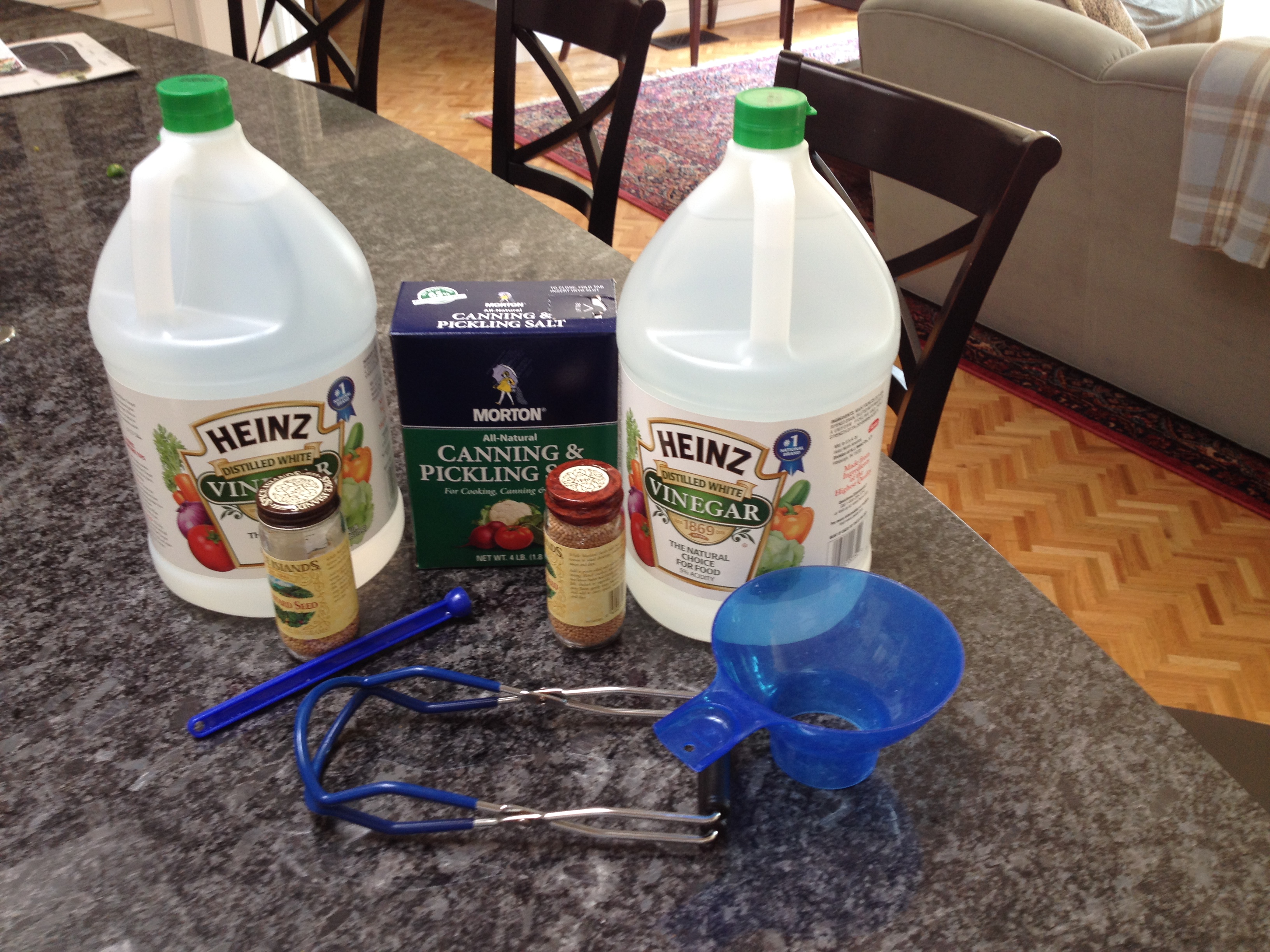
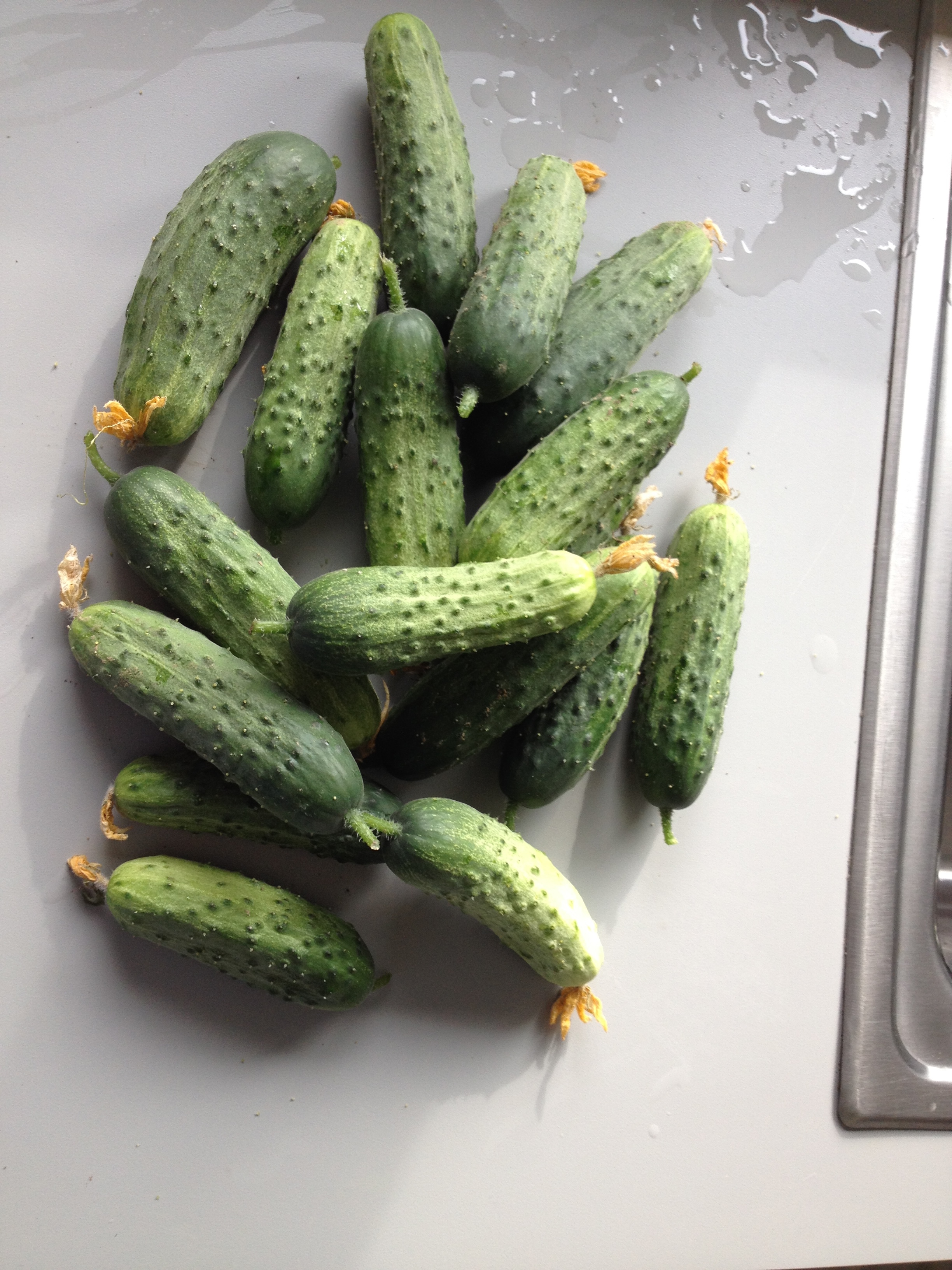
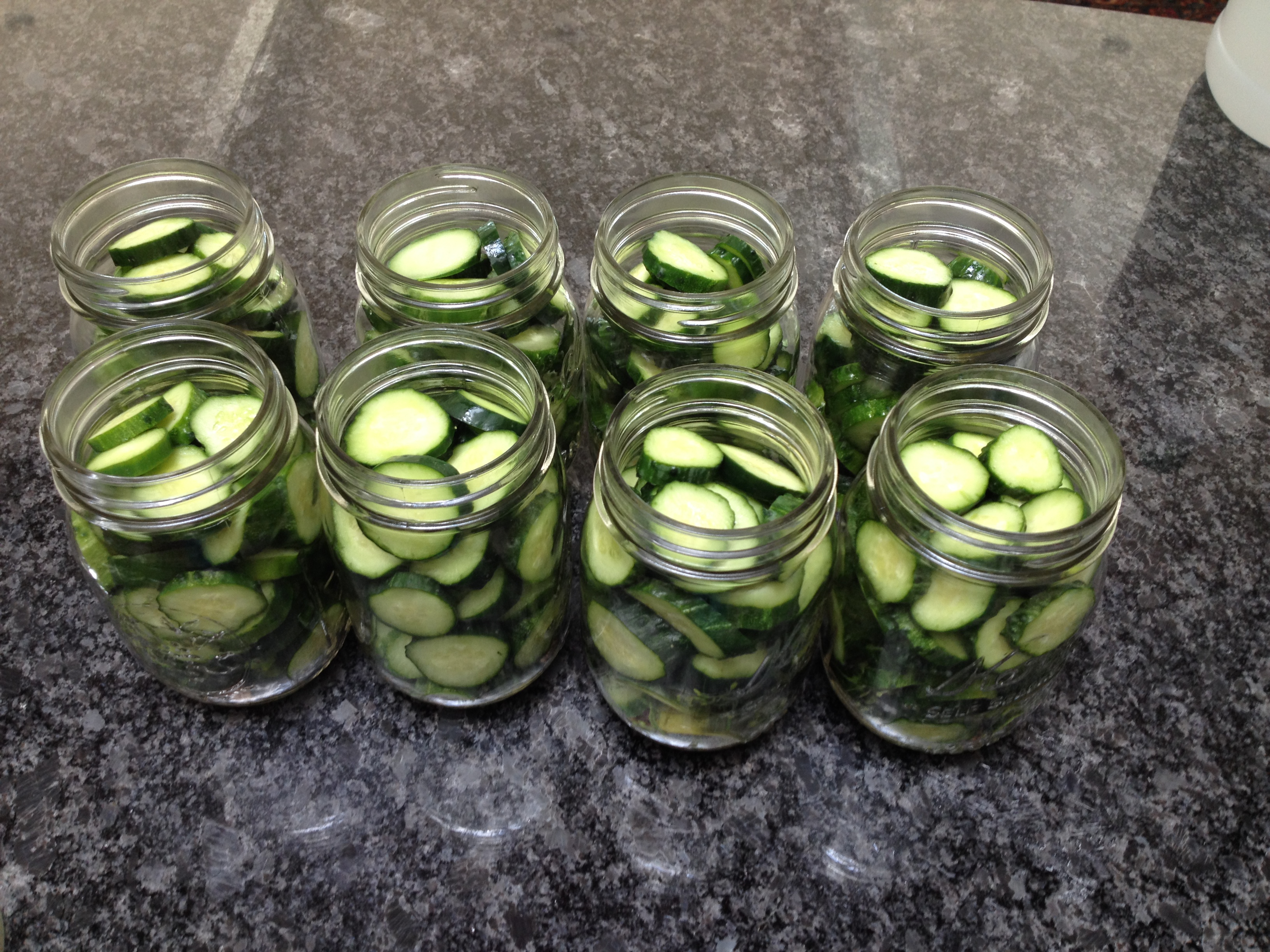
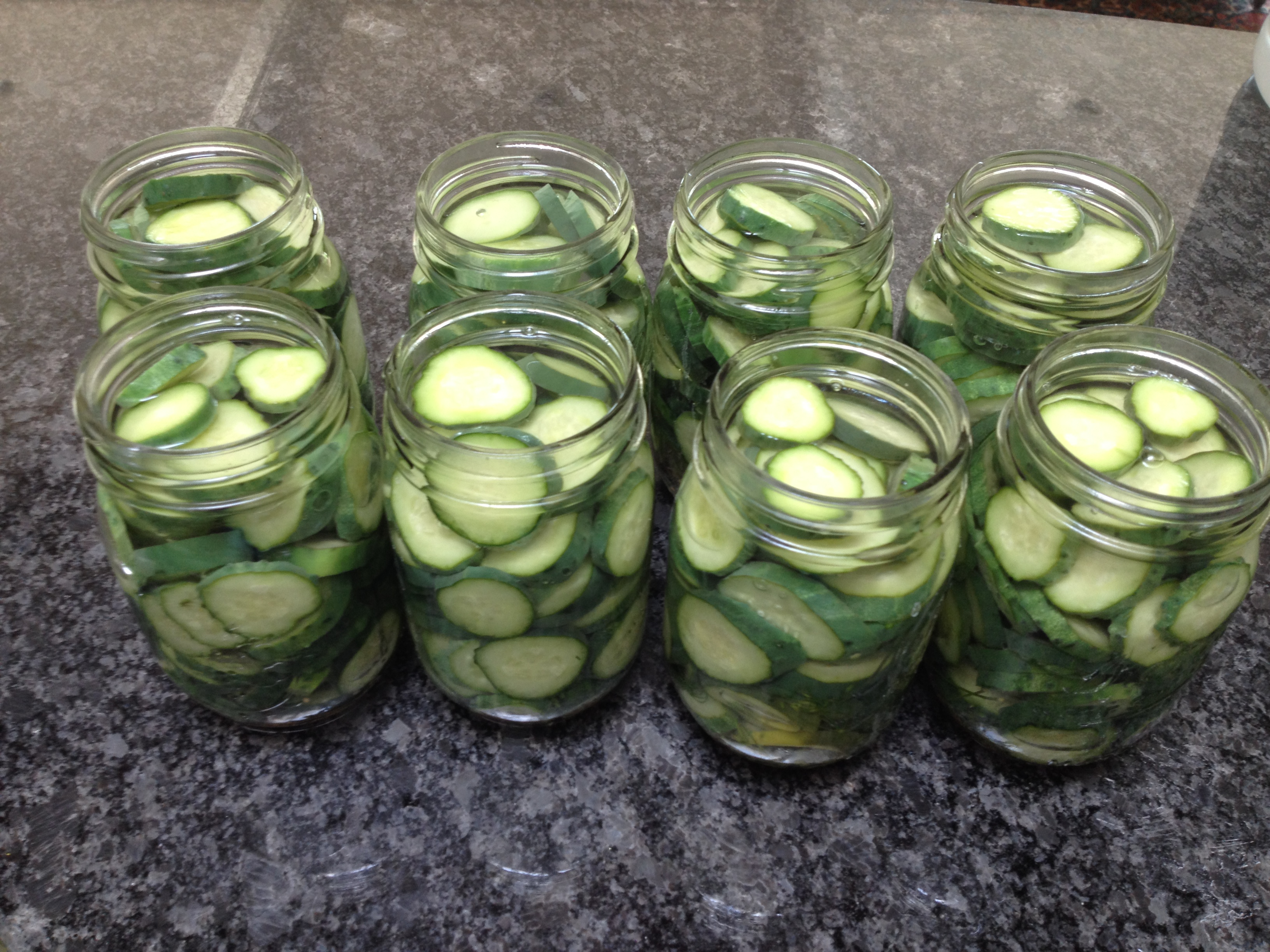
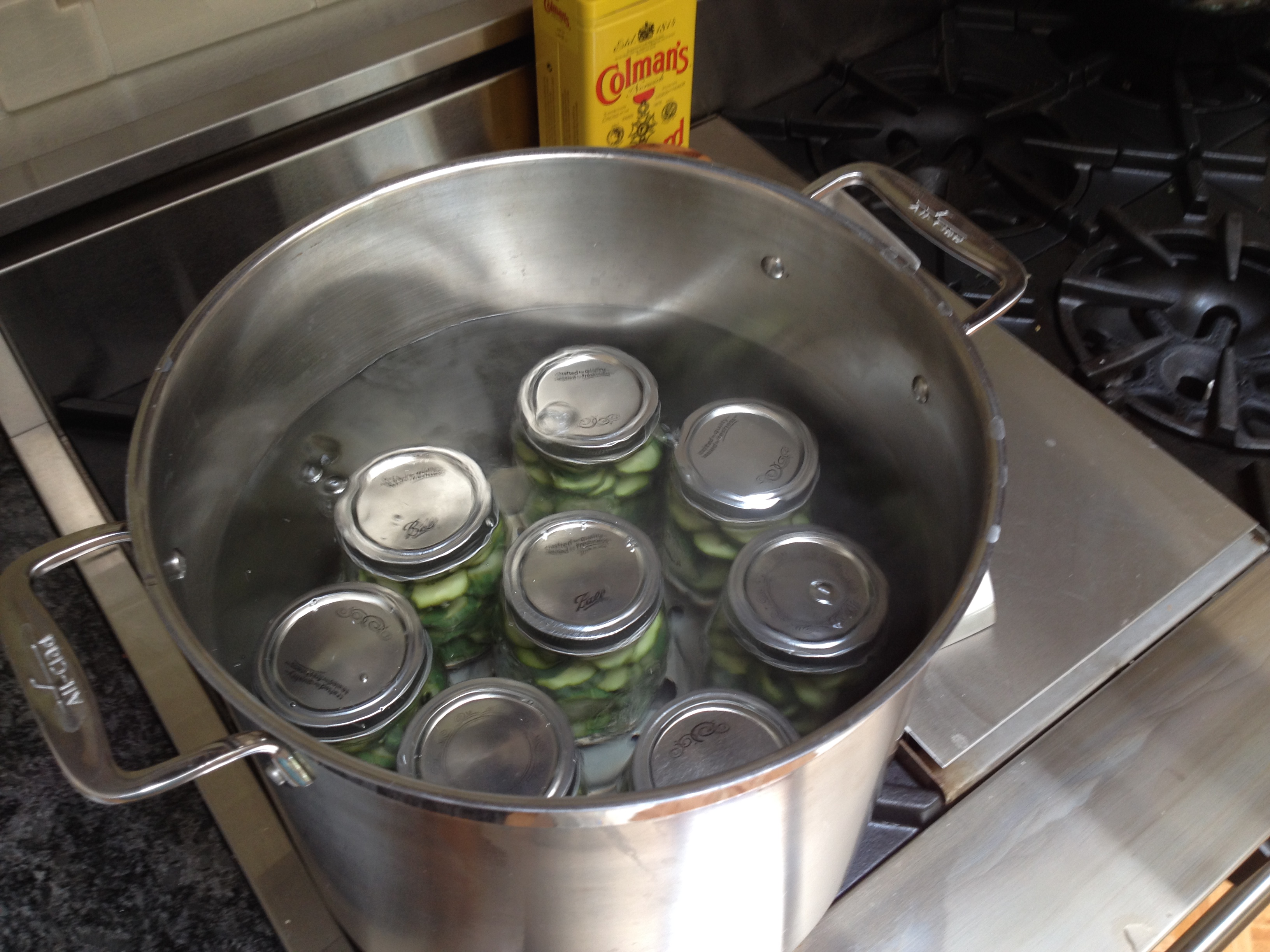
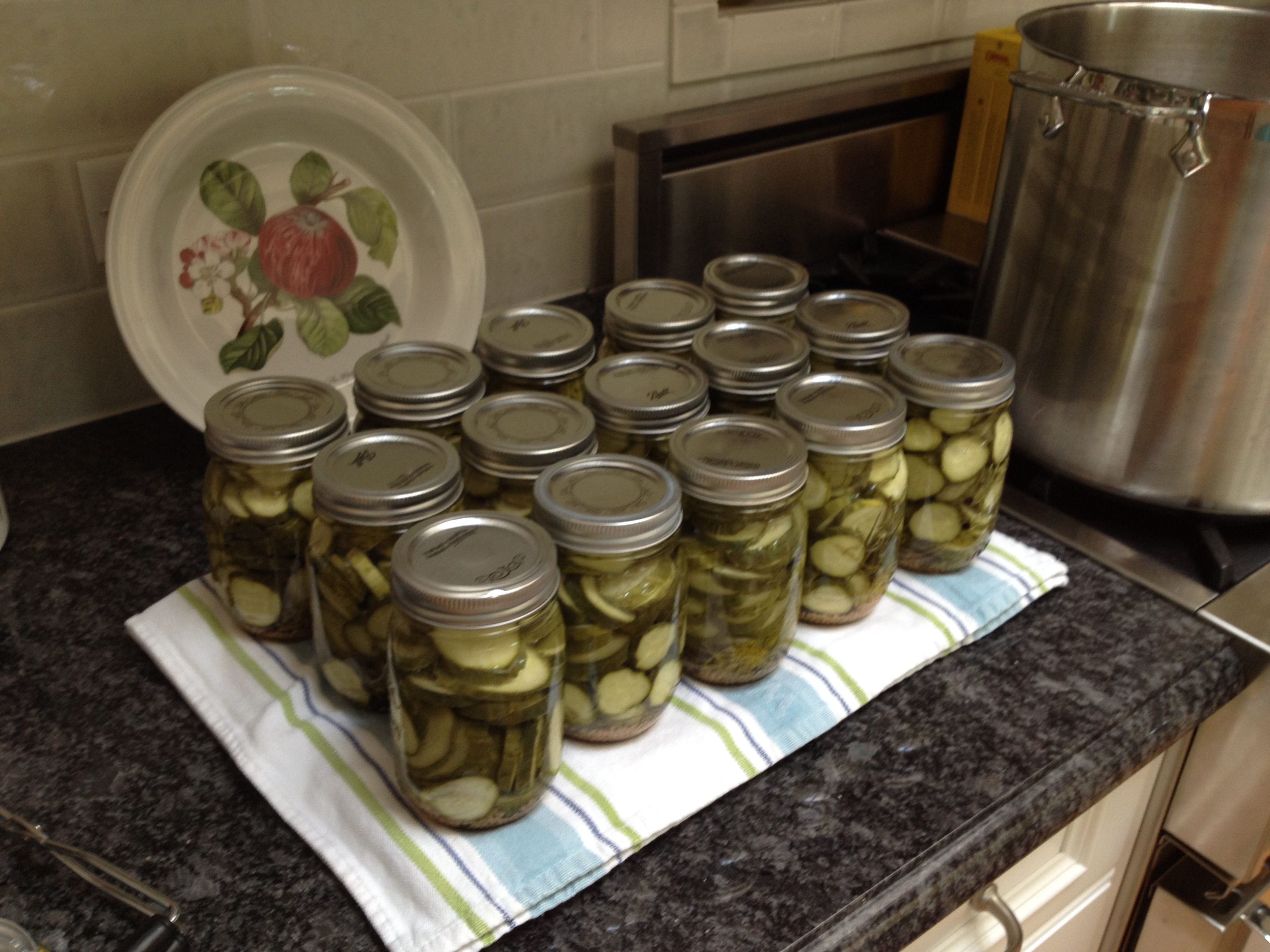
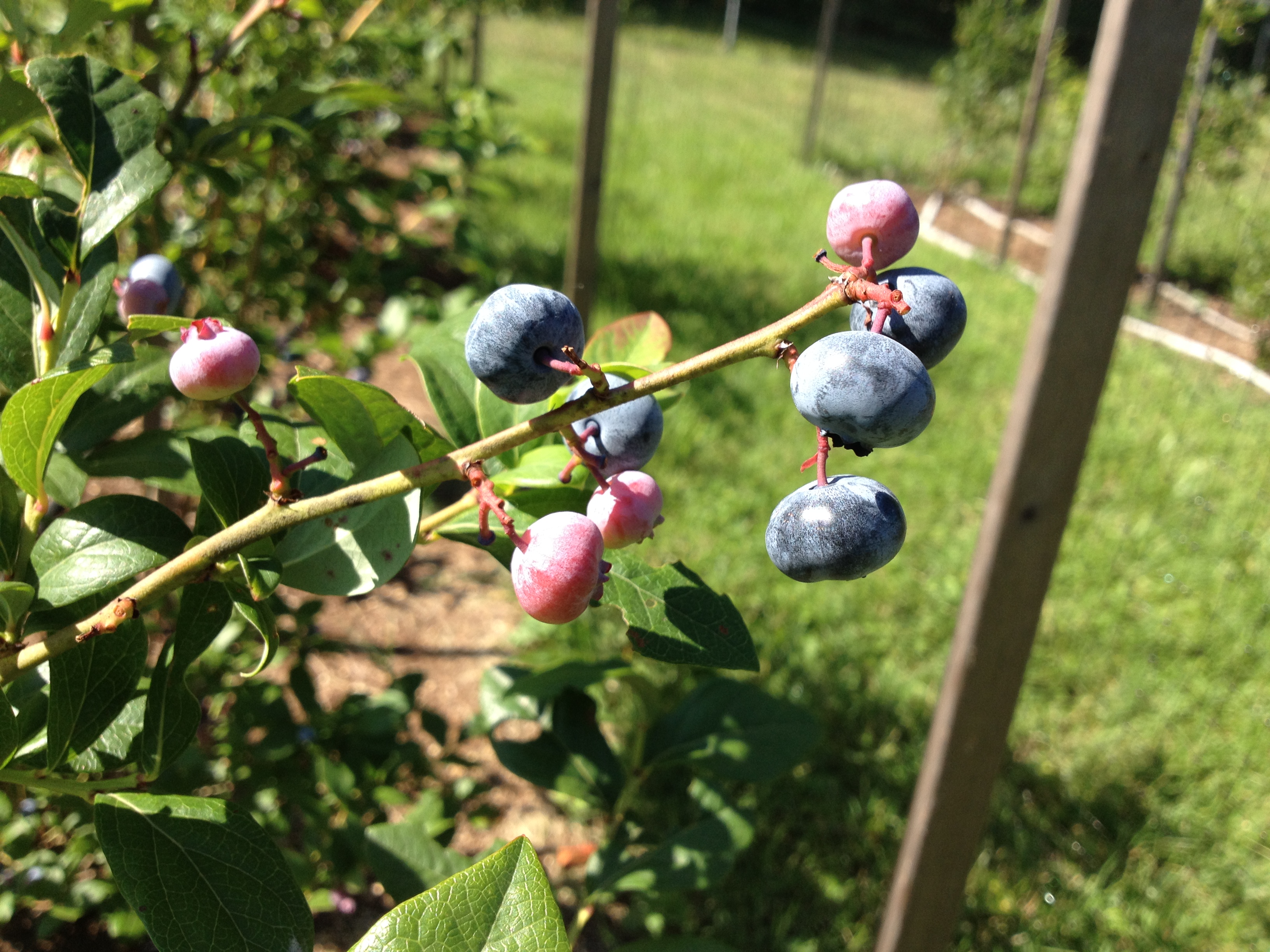
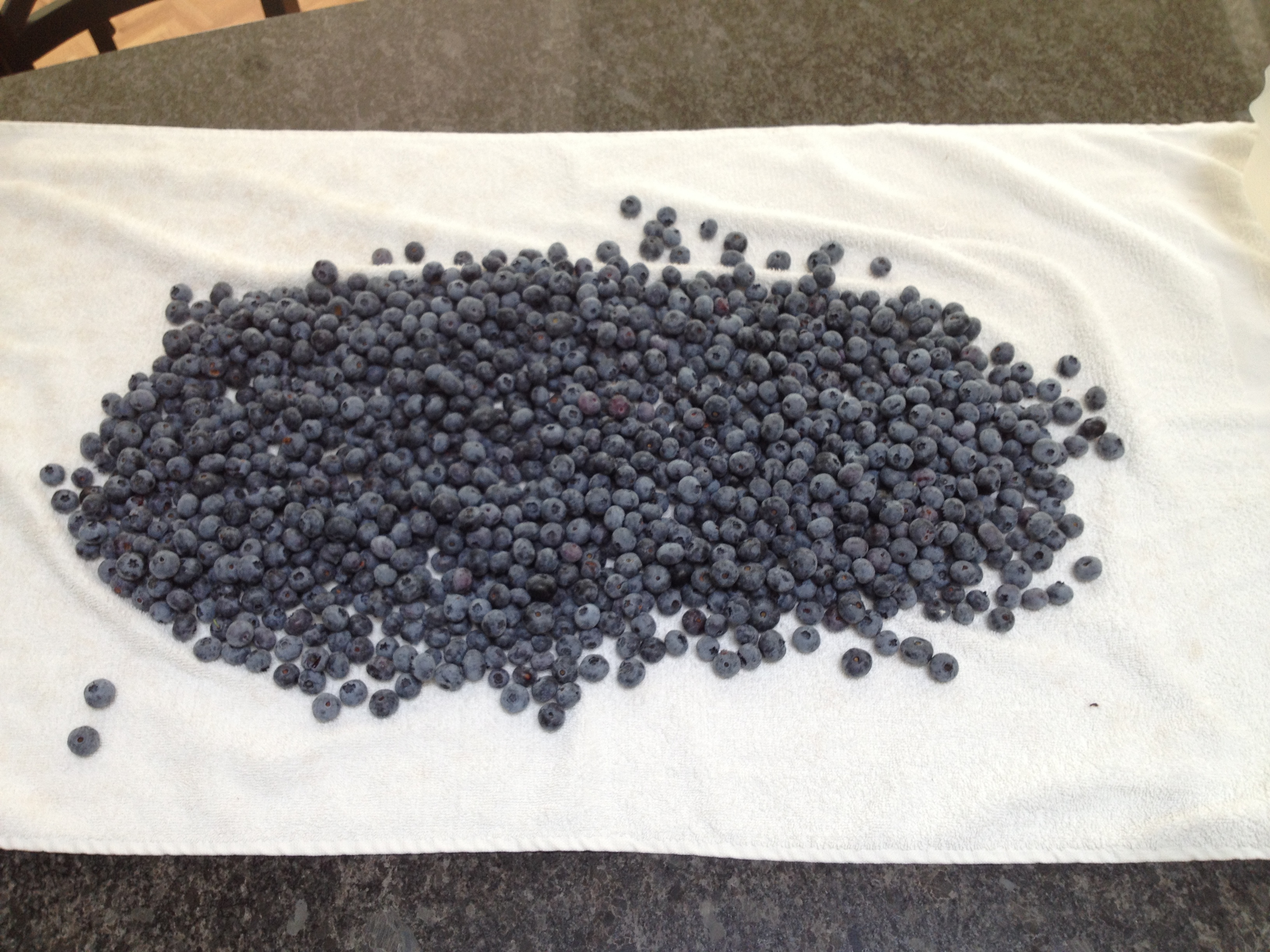
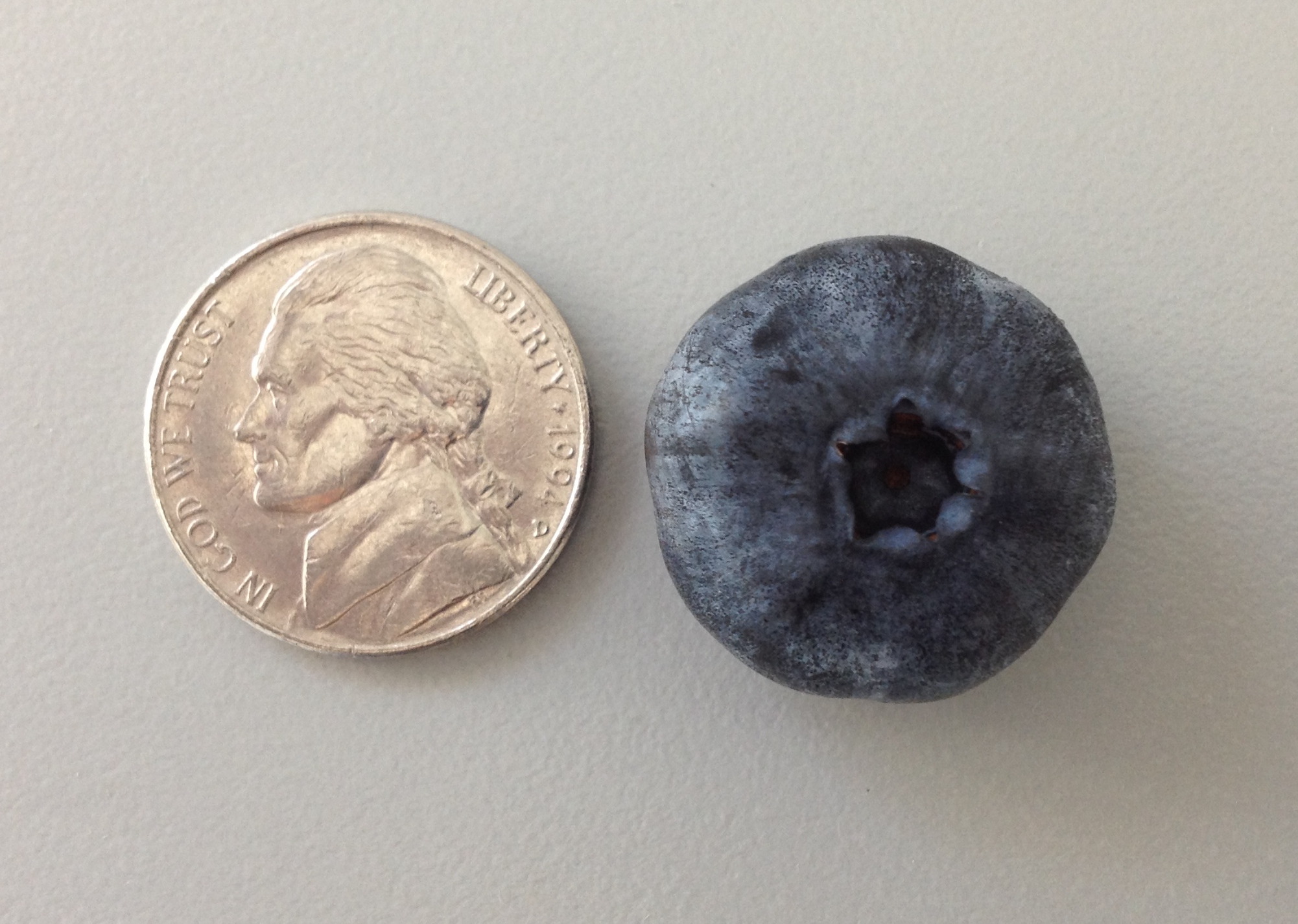
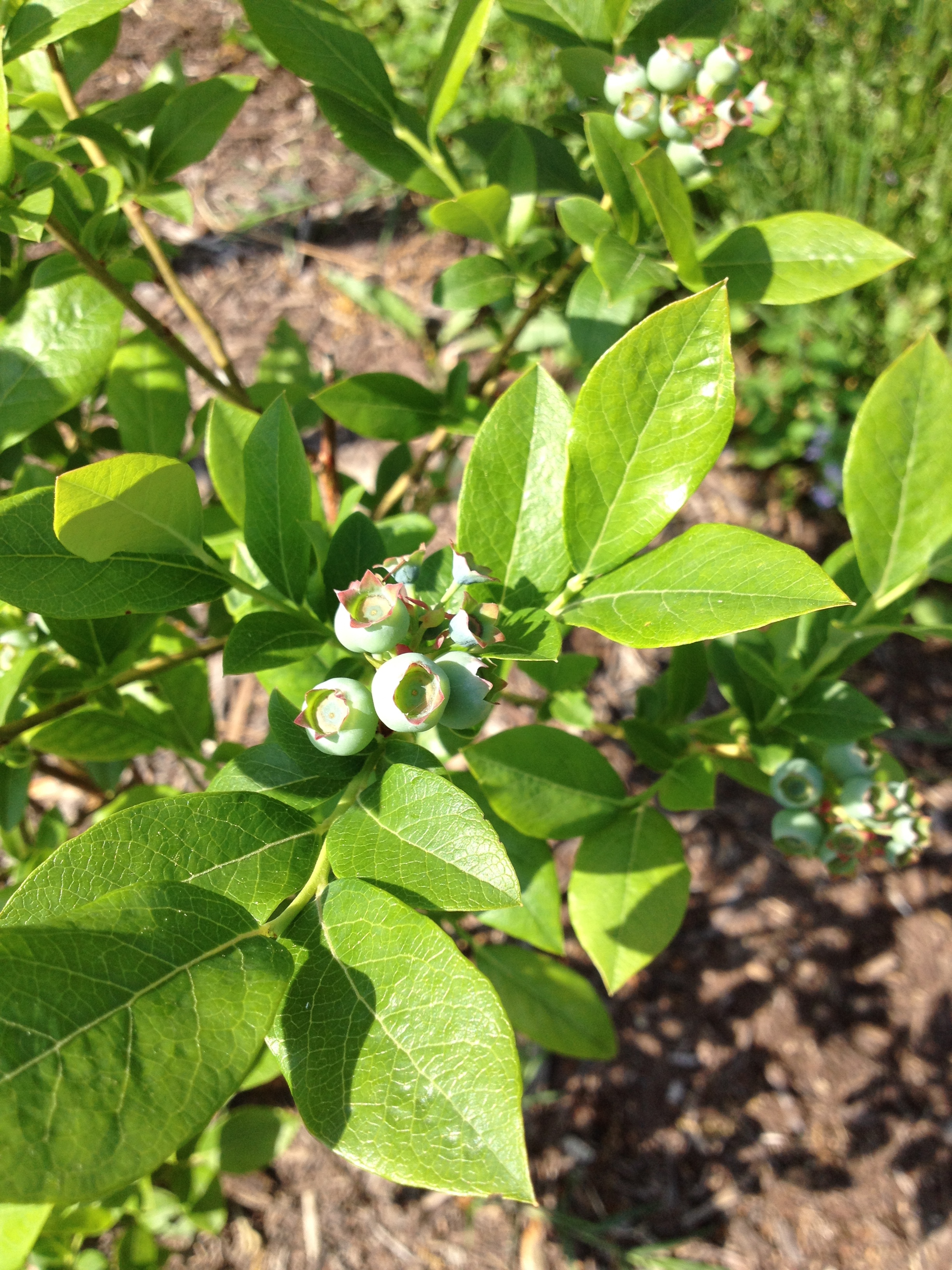
Dave, my number crunching hubby, has our yearly harvest weights on a spread sheet and presents me with a Seven Oaks Farm Report nearly every morning which reflects our latest daily harvest as well as cumulative YTD from the last two years as well as a comparison. This report also has a column of TOP CROPS (YTD) by weight. He bounced a sheet onto my desk this morning that indicates that the 2014 harvest is now 117% above last year’s at this point in time…405 lbs vs. 186 and this trend is continuing with yesterday’s harvest weighing in at twenty pounds! Inundated with the perfect sized cucumbers, I jumped in to make the first pickles of 2014. IMG_6442I was thrilled to have my own dill growing in my herb garden. IMG_6469  So with that I gathered the other basic ingredients for making hamburger dills. White vinegar, canning salt, mustard seed and whole black pepper corns are paired with the dill heads. IMG_6477Plus plenty of cukes! Of course you know you have FRESH cucumbers when the blossom is is still attached to the ends. IMG_6452They clean up nicely after some gentle scrubbing. IMG_6470There is nothing easier than making these yummy bites. The spices go into the bottoms of the freshly washed, hot jars followed by the sliced cucumbers.IMG_6474Then the boiling brine made from vinegar, water and canning salt is poured into the jars. This mixture immediately turns the cukes from bright green to a dull green color. IMG_6475I then wipe the rims of the jars, cap them with a two piece lid and pop them into a boiling water bath where they continue to process for 15 minutes. IMG_6476Out they come, a bit more of a yellow green. They will now sit to cure for 6-8 weeks in my pantry before we taste them. I made two batches using approximately 8.5 pounds of cucumbers. It is a good thing I started making these since Dave presented me with 10 more pounds from the garden that afternoon!IMG_6478 I’m also working up the blueberries which have surpassed last year’s meager 13.5 pounds as we are now over 50 pounds and the season isn’t even half over yet! I’m trying to do a better job of picking the ripest blueberries and not just everything that is blue. What I’ve learned is that really ripe berries will have red stems (they start out with green ones) and they tend to hang down rather than stand upright. IMG_6457Picking these is a challenge for most of the Sauerhoff family since the net height is at most 5 feet high, so we all have to stoop but I’m the least affected by this, meaning I’m the shortest of the gang. When Peter, the tallest was here last, he found that he could sit on the ground and reach up to pick quite comfortably. Blueberries are the easiest fruit to manage once they are out of the patch. I wash them and spread them out on a terry cloth towel to pick over and dry before freezing them in gallon sized bags. Of course we eat them fresh all day long but especially in the mornings on our cereal or with yogurt.  IMG_6482Are coins getting smaller?

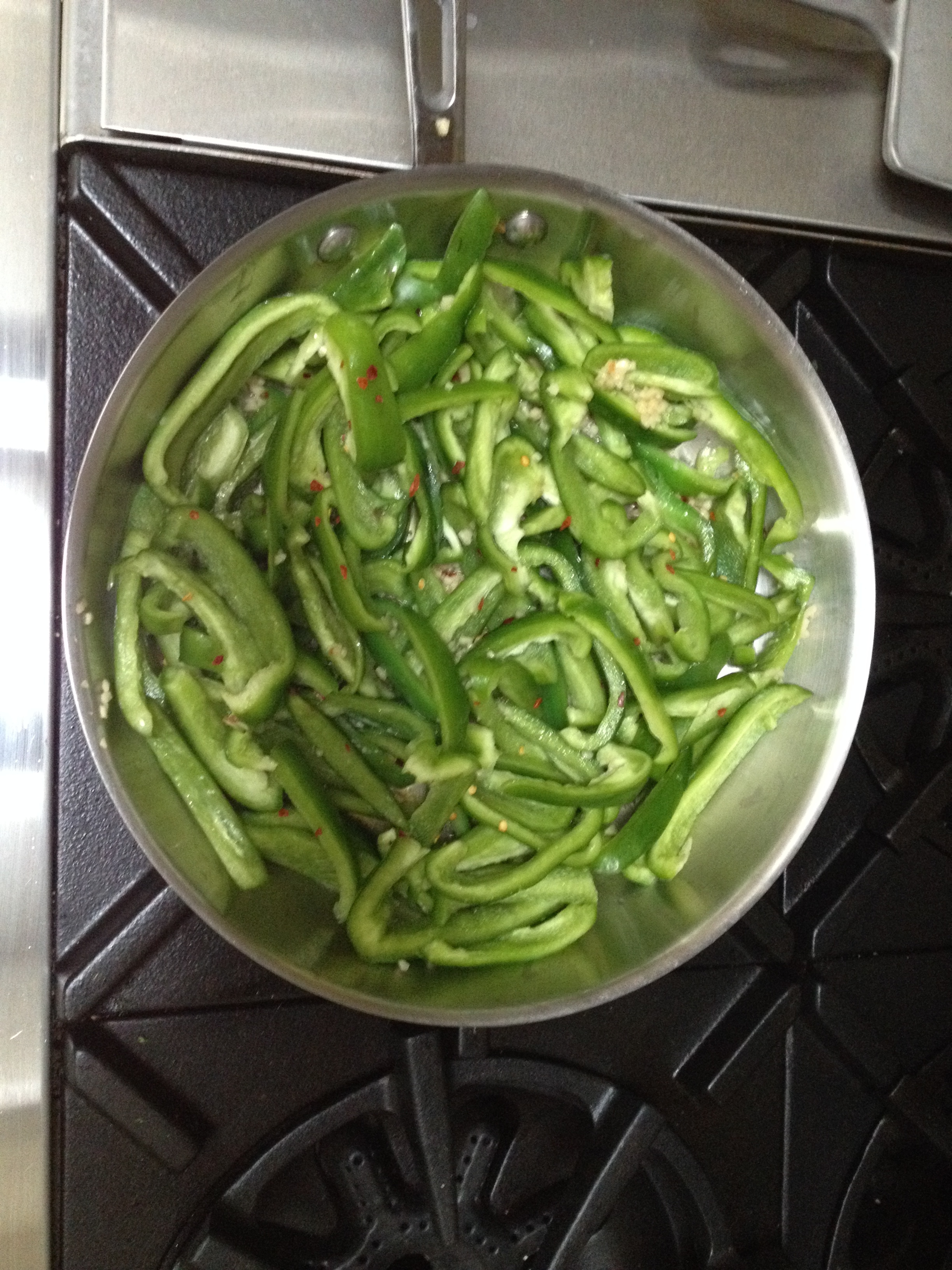
IMG_6483Last night I worked up 6 large green peppers as part of our dinner. I sauteed them with olive oil, garlic and dried red pepper in a skillet. Patricia Wells has a wonderful 3 pepper recipe for a pasta sauce in her book Trattoria. http://www.amazon.com/Patricia-Wells-Trattoria-Inspired-Restaurants/dp/0060936525  (The name of the recipe is Tagliatelle with Tricolor Peppers and Basil.) I didn’t have 3 colors of peppers so I just used all green and it was delish.  We ate this with another large batch of eggplant Parmesan that I prepared yesterday as well. With so many veggies, there was no need for the pasta! IMG_6481

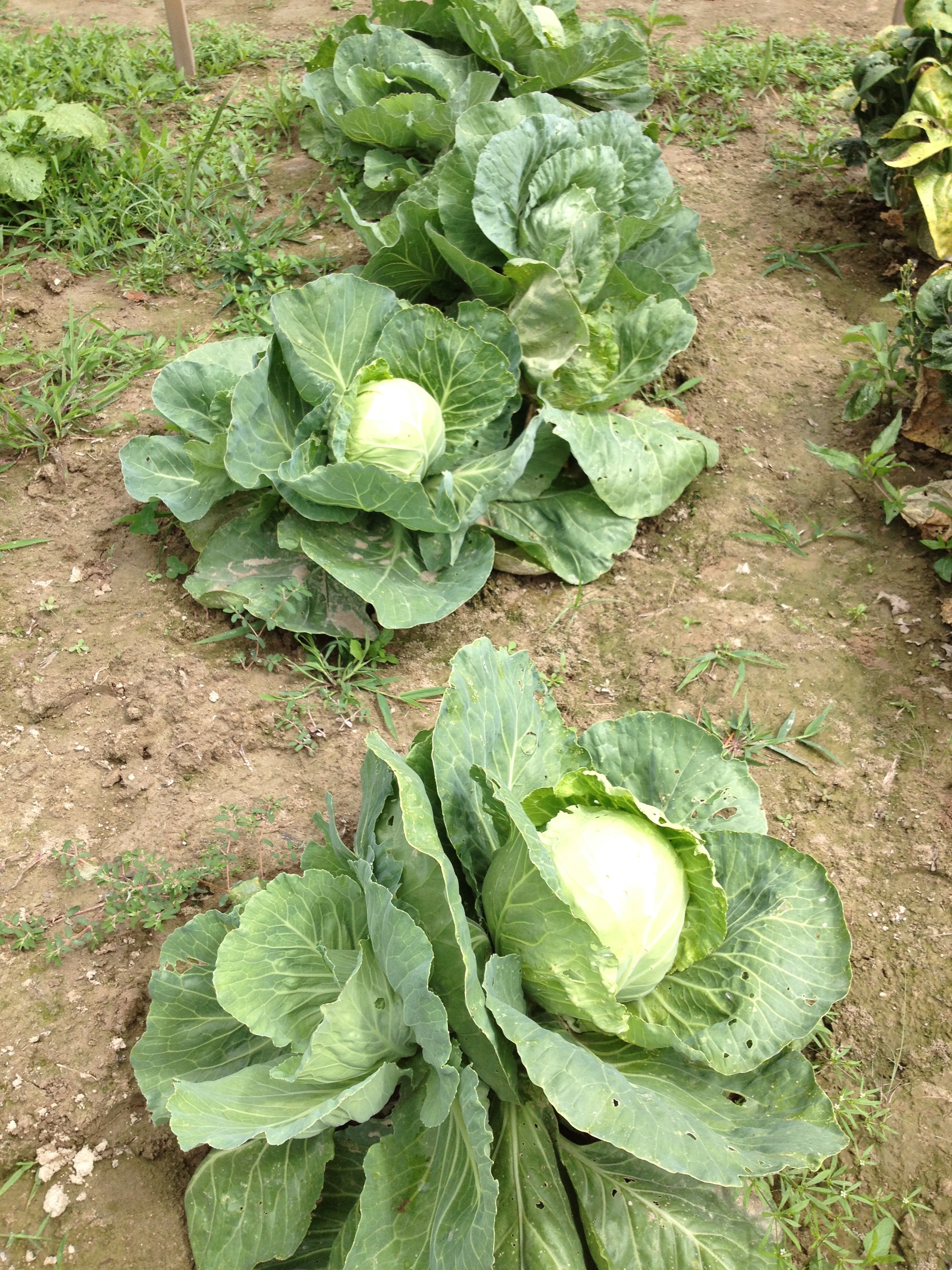
We’ve also picked some cabbages and are enjoying a nice slaw with our scallions, radishes and green pepper added to the cut up cabbage. IMG_6403

Time for the bee report: While Jurgen was away in Germany, I had three separate bee adventures without him which means I’ve been gaining valuable experience. His wife, Helen and I made our rounds one day and checked on the bee yards and fed the ones that were still getting syrup. These are the younger hives that are not really making honey for our consumption but rather just making it for their food next winter. We first made the syrup by heating sugar and water and added Honey Bee Healthy as a vitamin ingredient. Then we put it into feeding buckets or jars and distributed it to the hives. A week later, my friend, Joan Moore did the rounds with me in a borrowed bee veil. This is a good way to experiment with beekeeping and to find out if you like being around the bees. Joan was very calm and acted like an old pro. Best of all, we got to spend a productive morning together at all the bee yards. We discovered that the honey super on hive #11 is now fully capped so we gladly added another honey super to this very active hive. IMG_1314Here is a good article to give you an idea of how important beekeeping is for our future: http://online.wsj.com/articles/efforts-grow-to-take-the-sting-out-of-the-bee-die-off-1403886935

It won’t be long before there is another honey extraction weekend and this hive may be in the mix as it was not full of honey the last time. If you want honey from the first extraction (which is prized for it’s lightness and wonderful flavor) Helen and Jurgen still have some available and are selling it from their home. It is $10 per pound and they sell it in both one pound and half pound containers. Of course, I have Gherkins for sale as well!


Unknown's avatar

Harvest 2014 Begins!

Someone must have been listening to my rant about rain in the last posting since soon after that we had the perfect amounts of ‘farmer’ rain. One night last week we had a prolonged, gentle rain that measured  0.50 inches which continued later that day for another 0.12 inches. During the next day or two we got another 0.50 inches that really gave everything out in the fields a nice drink. For once, we were quite happy despite the cold weather that came with it. Brrr, May isn’t usually this cold…it was 39 degrees one morning! As usual, somethings (peas, radishes, spinach, lettuces, etc.) enjoyed the cool weather and other things (tomatoes, beans, peppers, eggplant) were just marching in place, waiting for some sun and a little more heat.

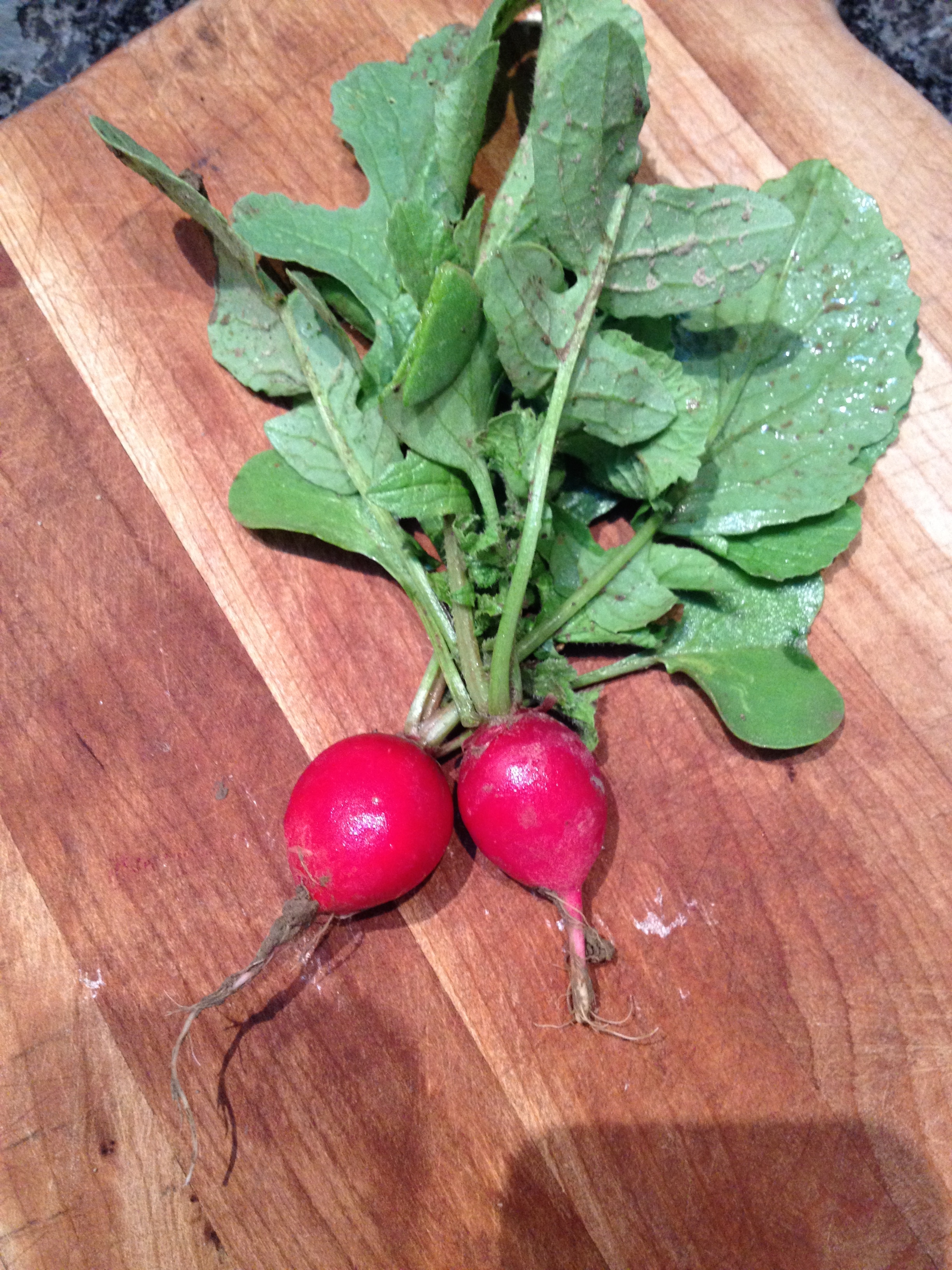
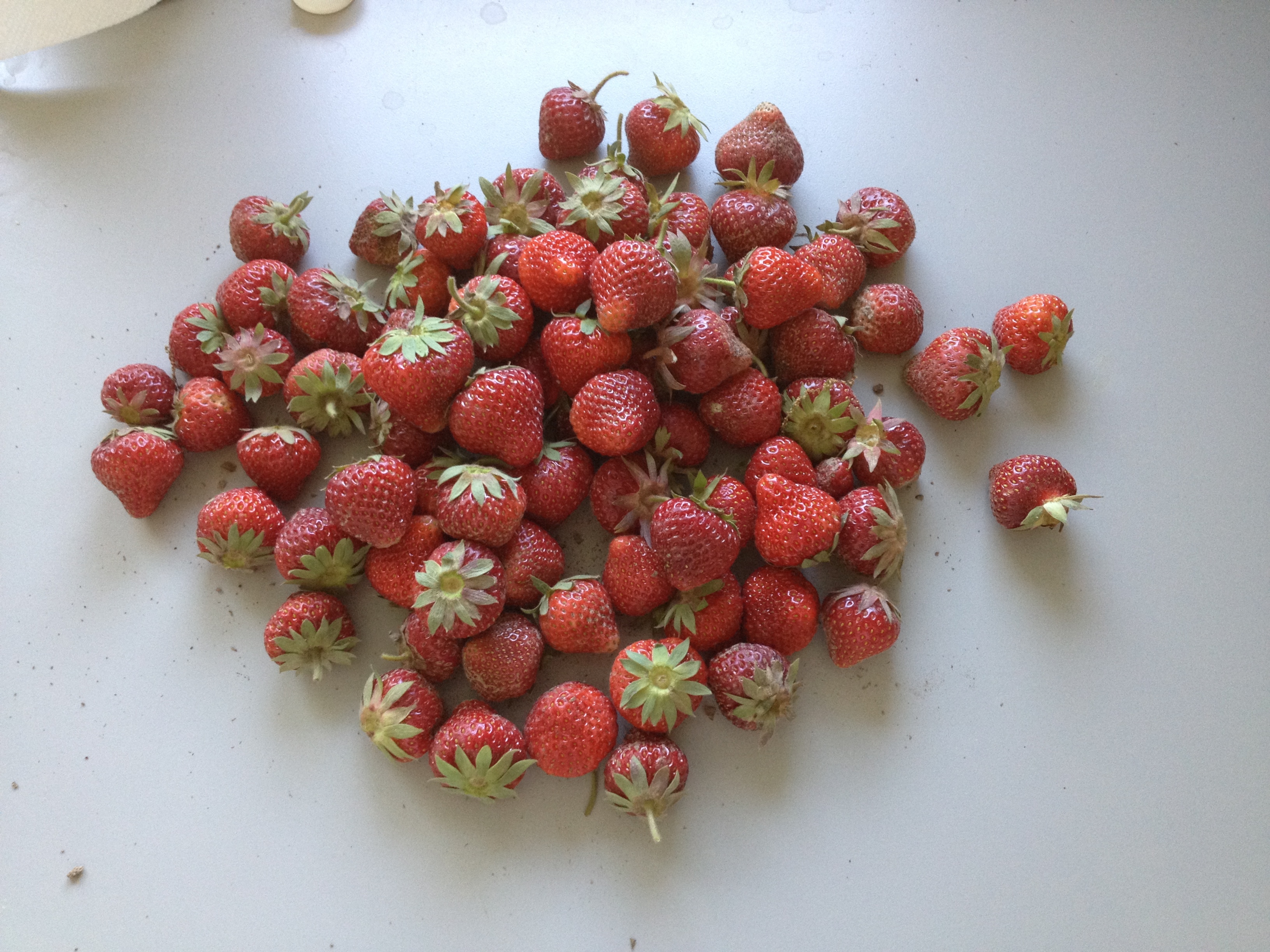
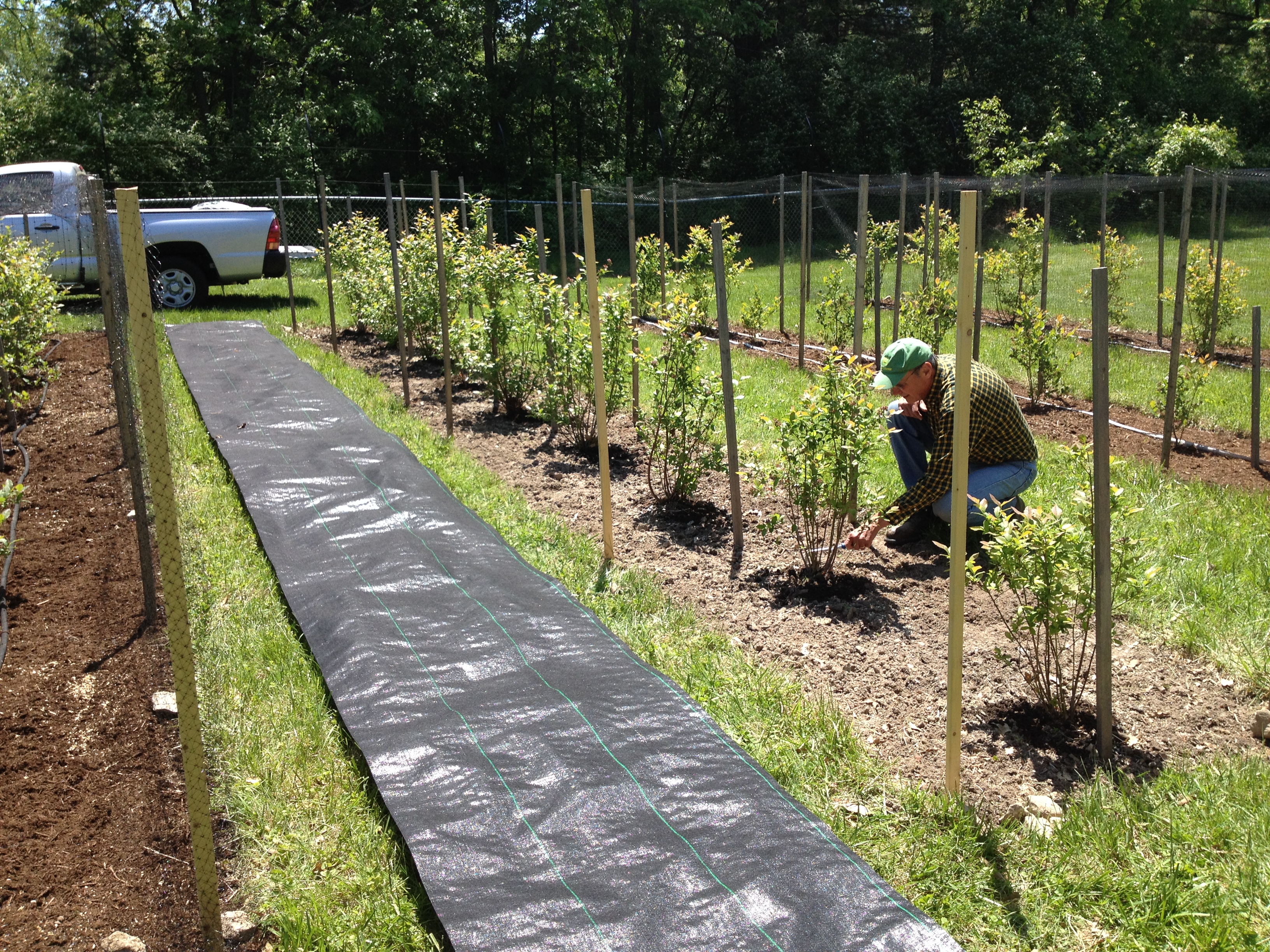
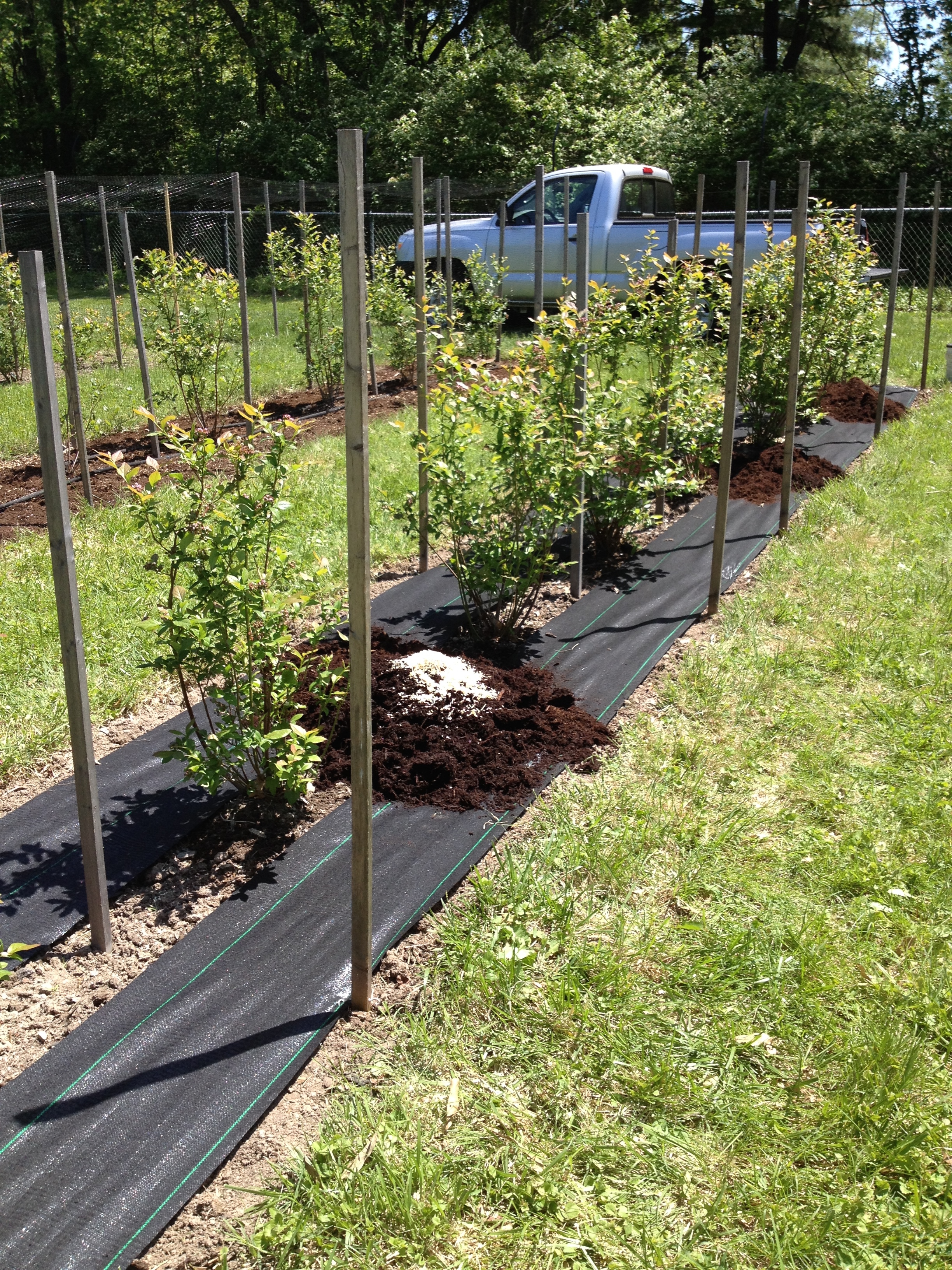
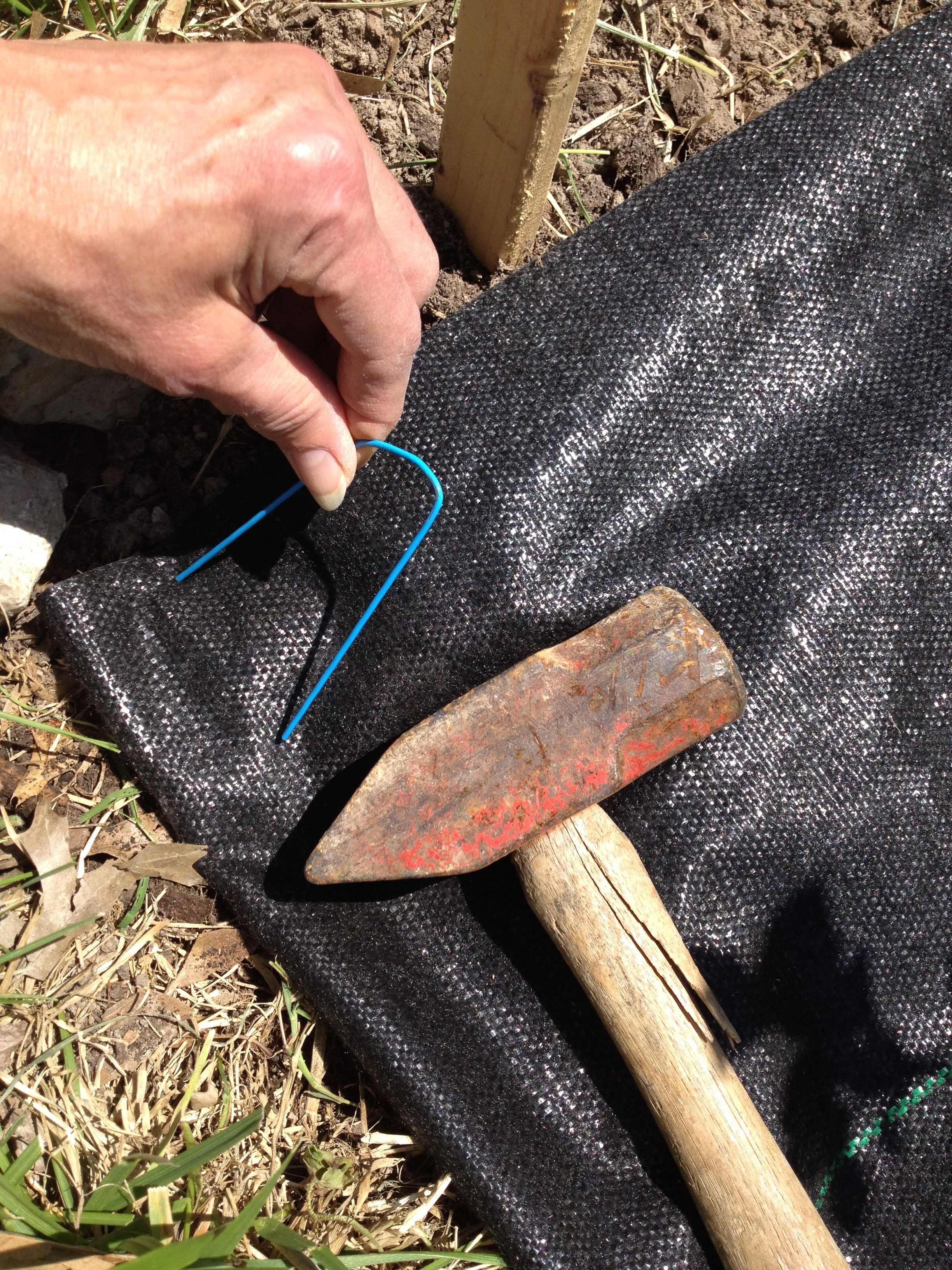
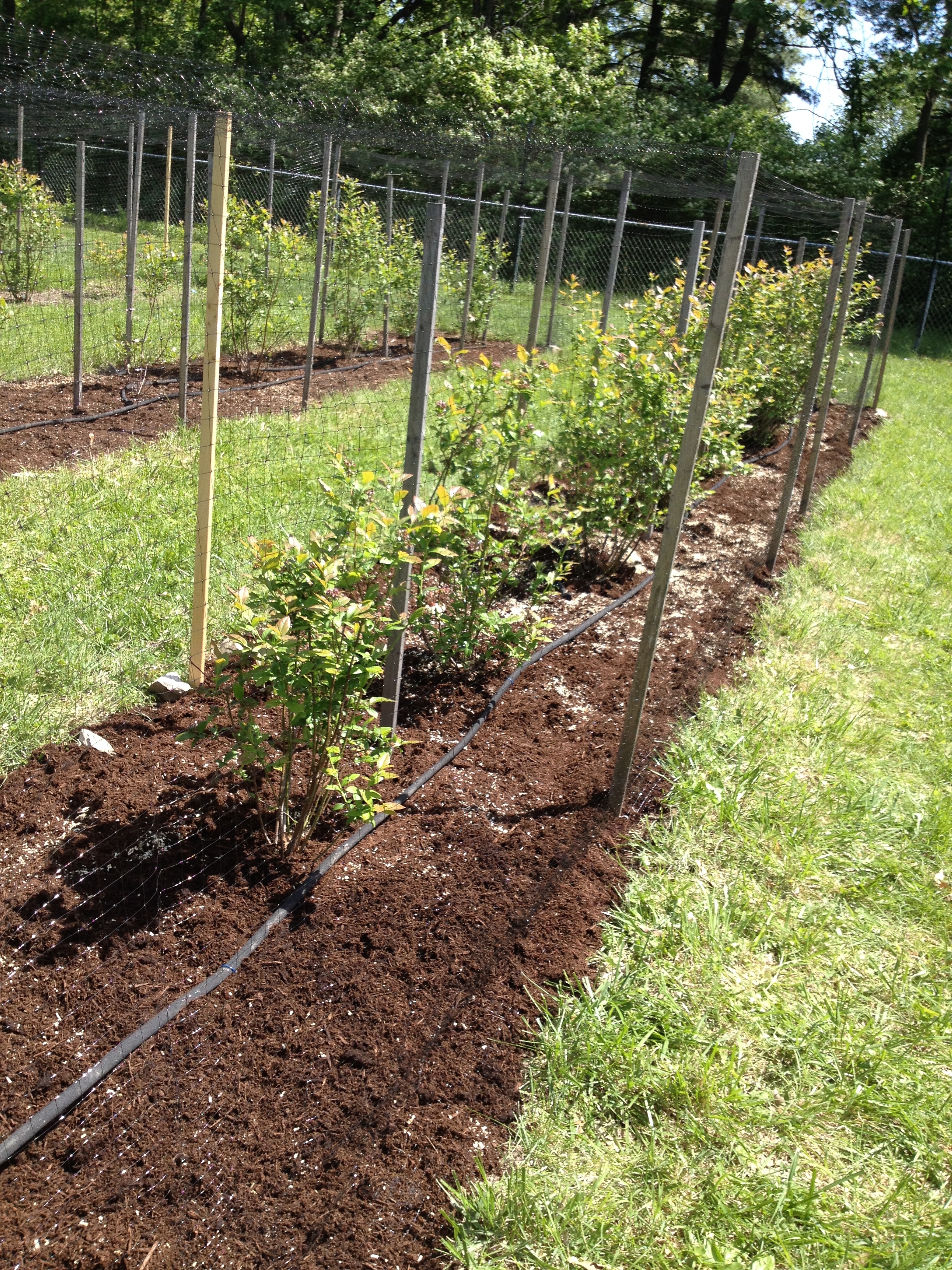
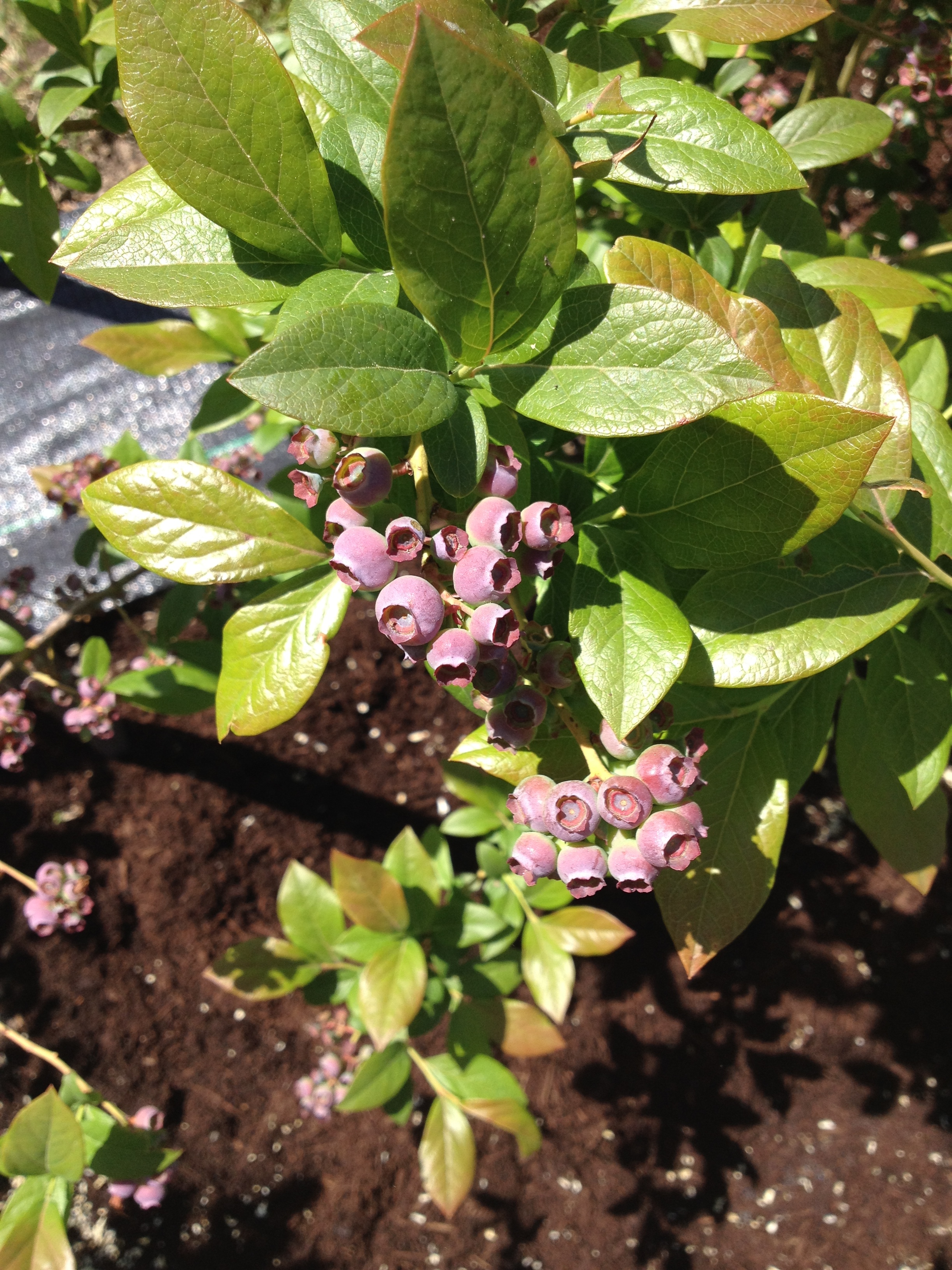
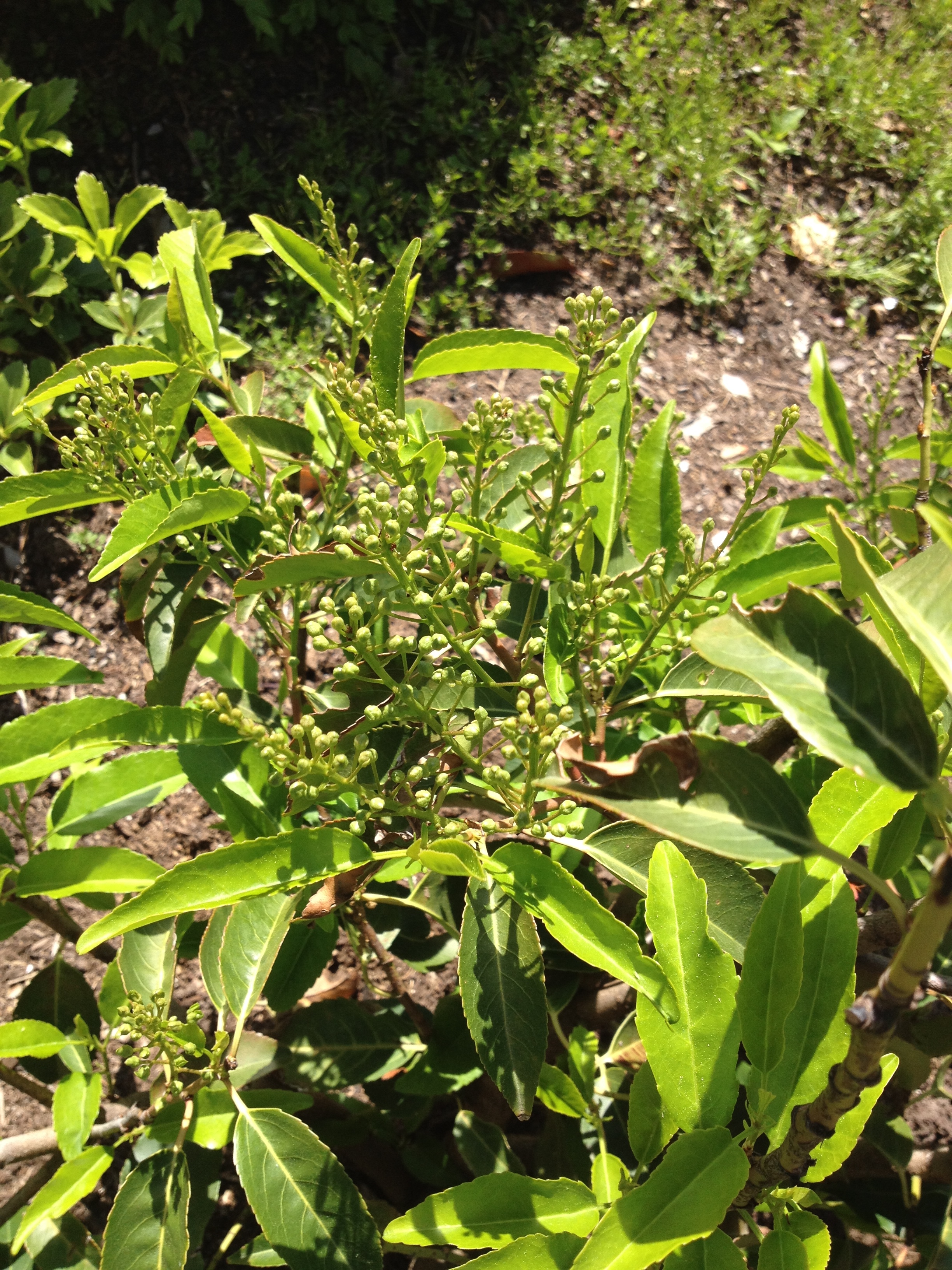
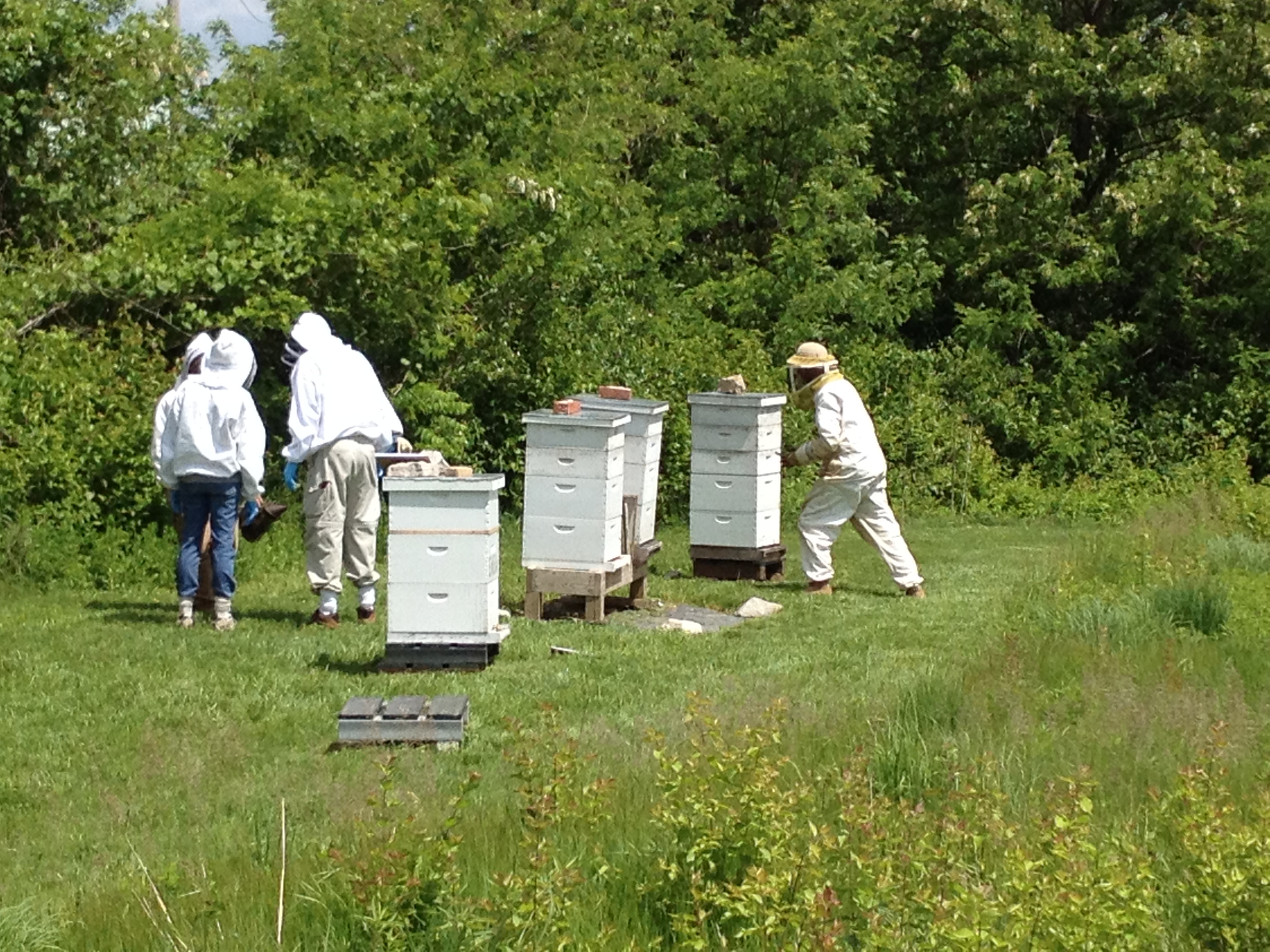
But I have GREAT NEWS! Seven Oaks Harvest 2014 has begun! It is modest by any measure but so far this week we have been enjoying the radishes – Burpee “Cherry Belle” – which are very sweet and round with a gentle flavor. We have been putting them into our salads but these are so nice we just slice them and eat them next to our sandwiches at lunch. We even put them into the fry pan for dinners…see bottom of blog! IMG_6014We also picked the first of the strawberries in the last two days and have just over two pounds to show for it but there are many, many more in the patch waiting to ripen. We will easily eat this quantity of fresh berries as they come in but I do have memories of last year with as many as 8-10 pounds a day (for 4-6 weeks) when I was challenged to just make jam, jam, jam (90 pints last year) or freeze gallon after gallon bags of whole berries which we enjoyed all the year since. Welcome, fresh strawberries!! IMG_6082The blueberries are not far behind! We have been working to renovate the five rows our 5 varieties: Blue Crop, Blue Ray, Jersey, Patriot and Elliott. Each year we do a thorough weeding and mulching and add agricultural sulpher since the berries like acidic soil. This year, our best producer, Blue Ray, needed a super, duper jump start. The reason for this is a bit embarrassing, but I’ll share the details if it will help anyone else in the same situation. When we first planted our blueberries, we followed all the berry books as well as the advice of Sean, from Stark Brothers, on what to do. We made our rows the width and length he suggested and spaced our plants accordingly. We were advised to put down landscape cloth on either side of the plants in 4 foot wide beds and then add 4″ of mulch on top, adding decomposing saw dust to the mix.  We started this treatment with our very best, strongest looking row, the Blue Rays, but we made our biggest mistake with that most precious row. We bought inferior landscape cloth! We didn’t know the difference, but we do now!!! The cloth we used for this first bed was so flimsy that it started to disintegrate immediately…in fact, it happened so fast that we didn’t buy it for the other rows. This year, we decided to replace the old cloth and re-do this row. So, we weeded extensively since the landscape cloth wasn’t helping much. Then we unfurled the replacement landscape cloth (the type we used in the other beds) and got it ready to cut in half to put on either side of the plants. This cloth says it is warrantied for 20 years of “normal use”. Well, I doubt that, but I’m keeping the paper work just in case!IMG_6051Here it is after we cut it an laid it on either side and started to add the mulch. The white “snow” on top of the mulch is some of the saw dust that we mixed into the mulch as advised. IMG_6059 It is important to note that we pin the landscape cloth into place. You can buy metal pins to secure it, but we have learned to make our own. We take a hanger and a metal cutter and snip the ends and the middle and make 3 pins per hanger. Here is how we make them. IMG_6058Here is how we install them with the help of the “Persuader” that nudges them in through the thick cloth and into the soft ground. IMG_6054After all the cloth is secured with pins and the width of the bed is mulched, we install our soaker hoses for the season which are also secured with hanger pins to keep them in place. At the end of the day, we put on a package of new bird netting and our best row of berries is fully renovated and popping with berries. IMG_6071There is a blue jay watching as work the berry patch. He seems to have a great interest in the blueberries and we joke that he is well matched to the food he most likes to eat? We hope that although we have peaked his interest in the ripening berries, we are also circumventing his access to the crop as we have – in the last week – now weeded, mulched and netted all rows save the one which is the last variety to ripen.  We can’t wait for our best crop yet! The pale purple color is only an indication of the deep blue that is yet to come!IMG_6064In other news about the farm, I’ve been continuing to carefully prune away the evidence from the damage of last year’s harsh winter. As you may recall, we installed a burlap wind break on the front landscaping, in an effort to protect the Portuguese Laurels. It is difficult to tell whether the burlap helped or not, but these laurels look a lot better than others we have seen around town this spring. The good news is that all of the plants survived, are putting out new growth and most even have evidence of buds for future blooms! IMG_6078Time for my favorite topic, the bee report. In am learning that May is a particularly busy time for beekeepers. I attended the local club’s monthly meeting last Wednesday evening and listened to a very interesting program about Nectar management, swarming and finally, the main speaker, Corey Stevens, who spoke on “Raising Queens for Backyard Beekeepers”. It was all very interesting, and I wrote notes in my bee book for two hours straight,  but I’m still a bit over stimulated with massive amounts of information that is all new to me. I gladly attended a workshop at the Monsanto bee yard on Saturday morning for beginning bee keepers. We had two good presenter/demonstrators who made it clear that there are no absolutes to beekeeping since everyone’s methods are unique. So it is good to get information from a variety of beekeepers. Here are the club’s 8 hives which are in the bee yard at the Danforth Center across from the main Monsanto campus. IMG_6032
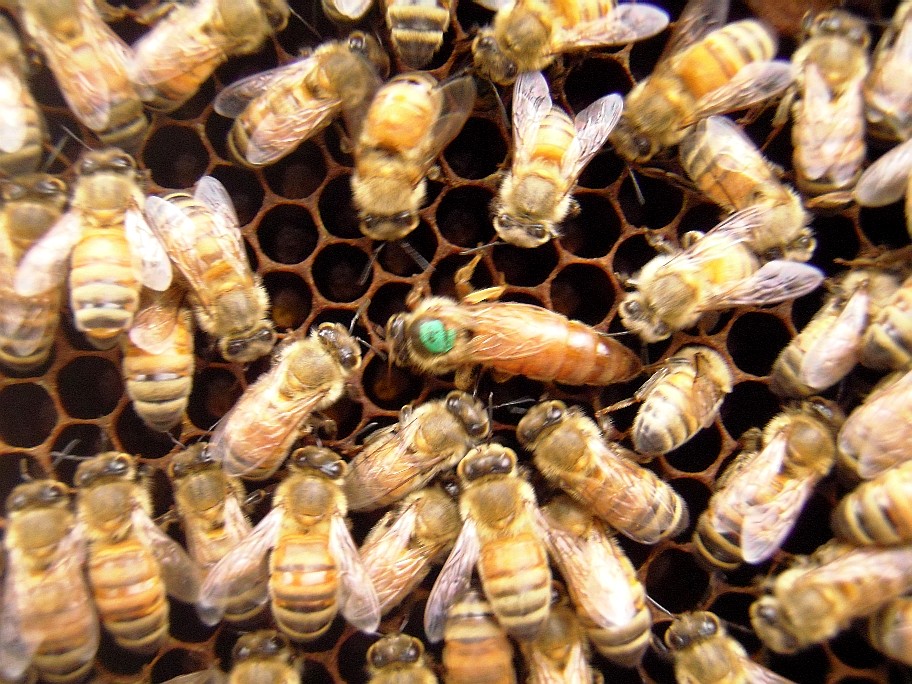
IMG_6033It was a chilly morning to open the hives but I learned a lot since part of the demonstration was to ‘marking’ the queen. You actually isolate the queen of each hive and put an ink mark on her back to make her more readily identifiable. There are 5 different colors used with this function in mind, with one color assigned to each calendar year in an effort to keep track of the age of your queen. This year is green, so we put a green spot on her back and then put her back into the hive. Now she will be a lot easier to identify since one of the tasks of a beekeeper is to check on the status of the queen in each hive. When you can identify that there are newly laid eggs and/or see the queen herself, you call that hive “Queen Right”. See how easy it is to spot her now?queen-rearing-006

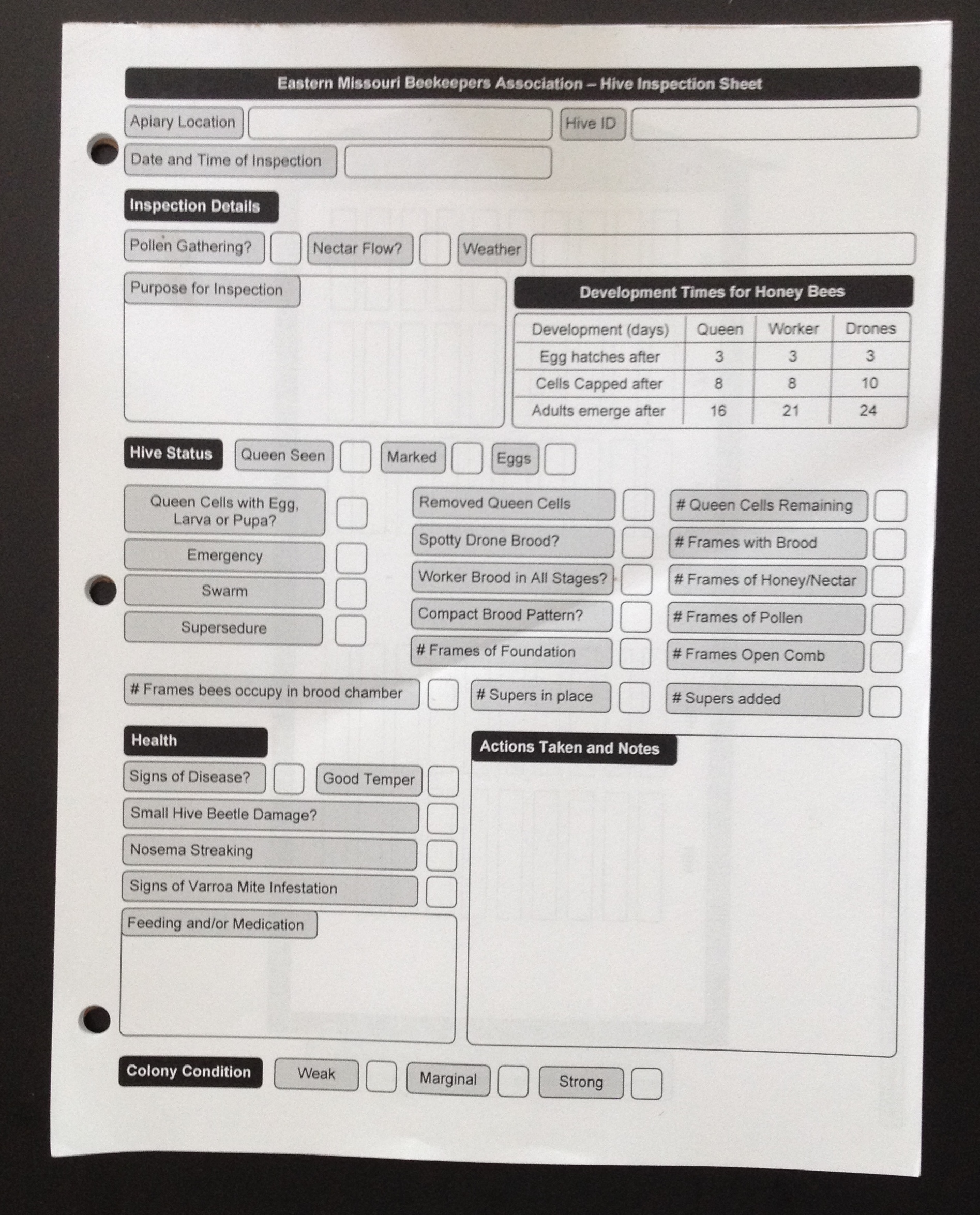
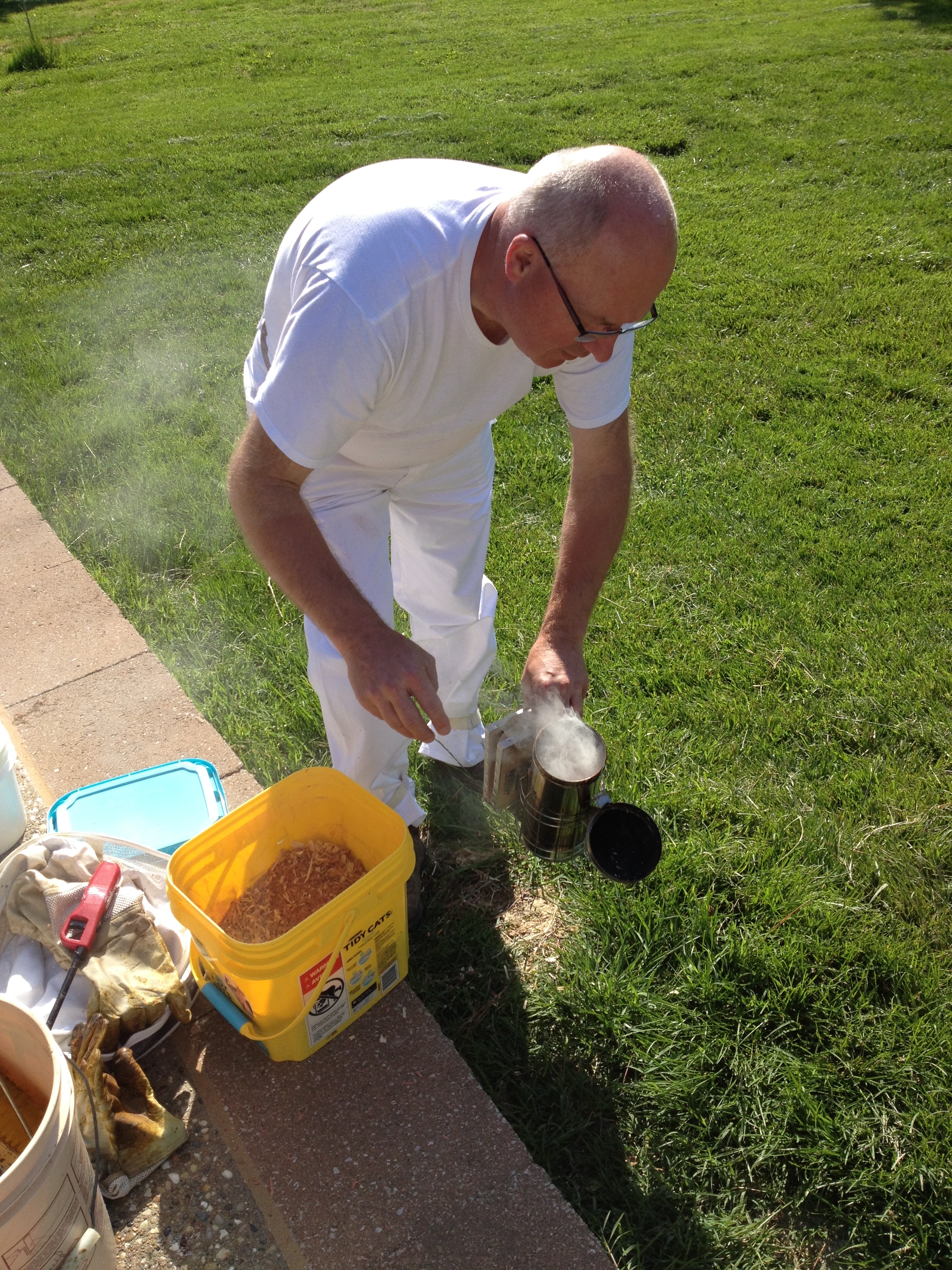
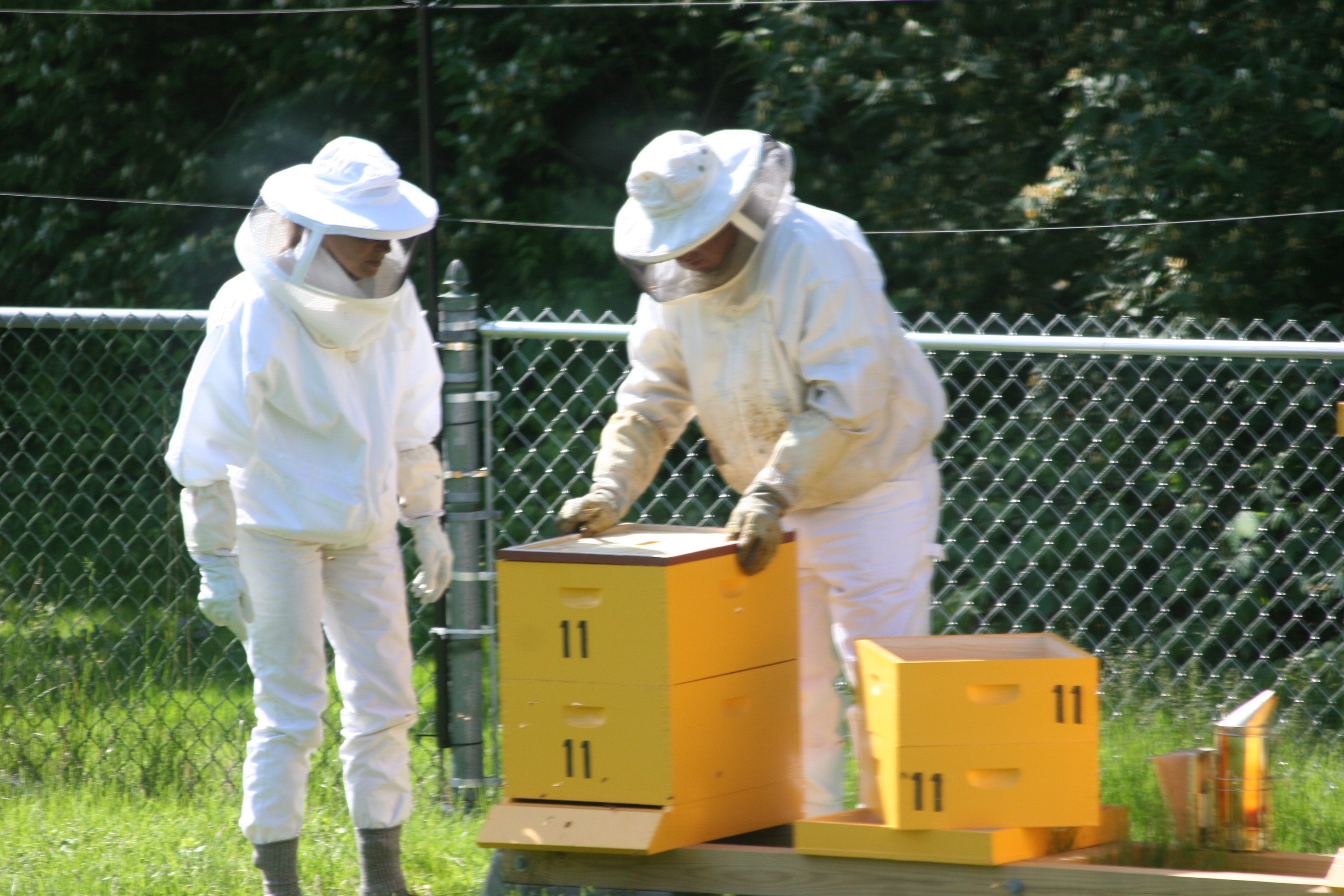
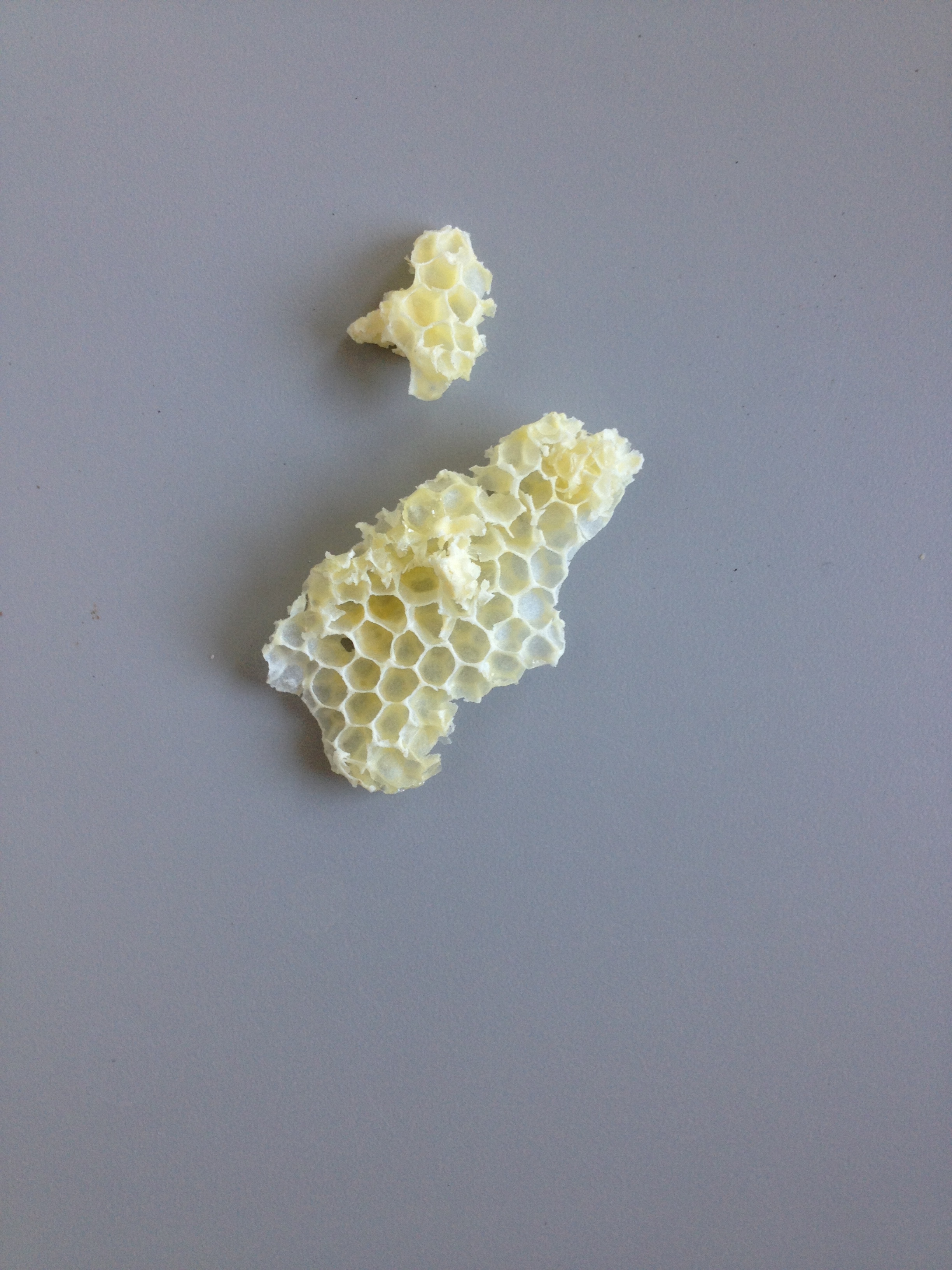
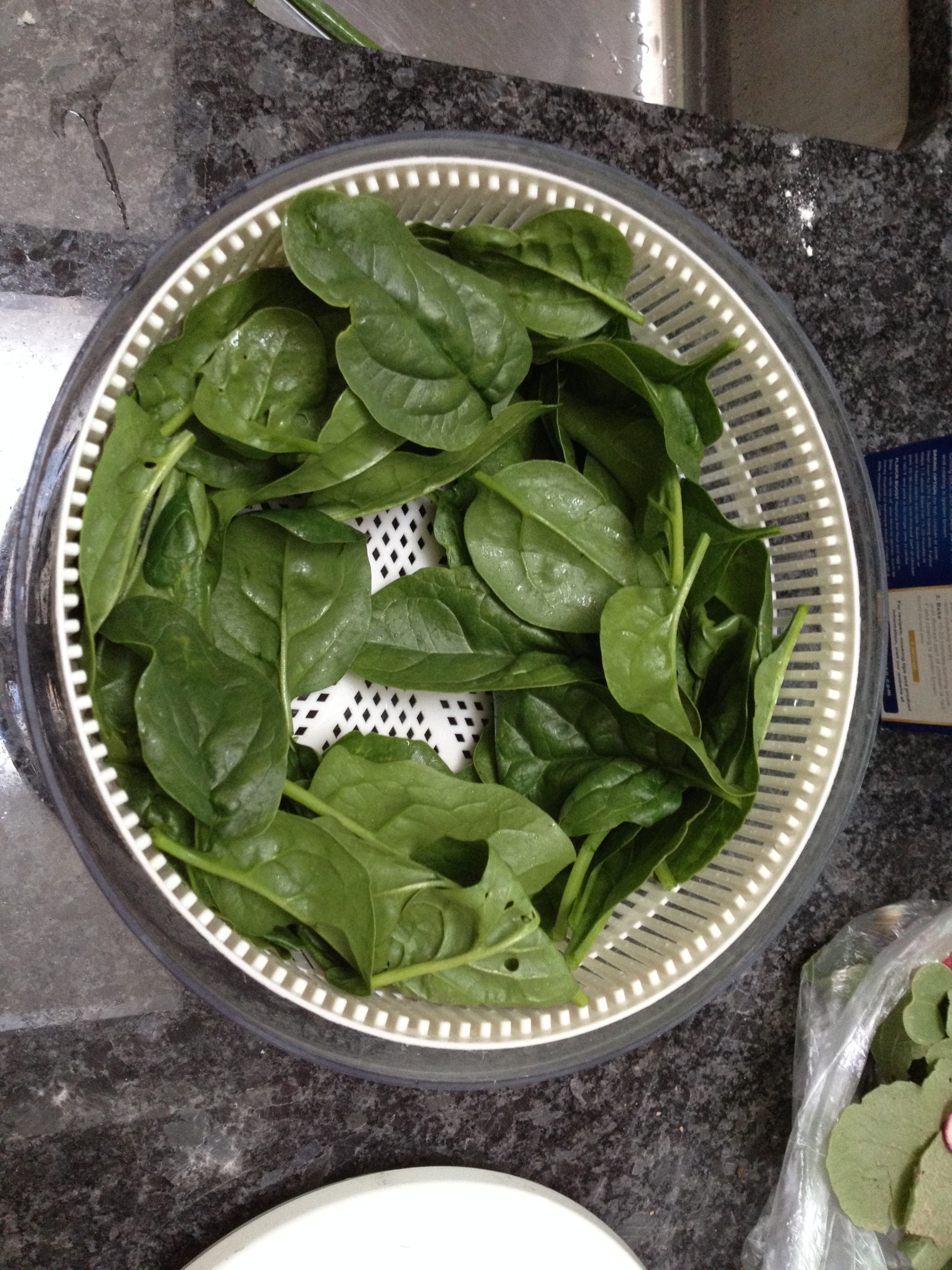
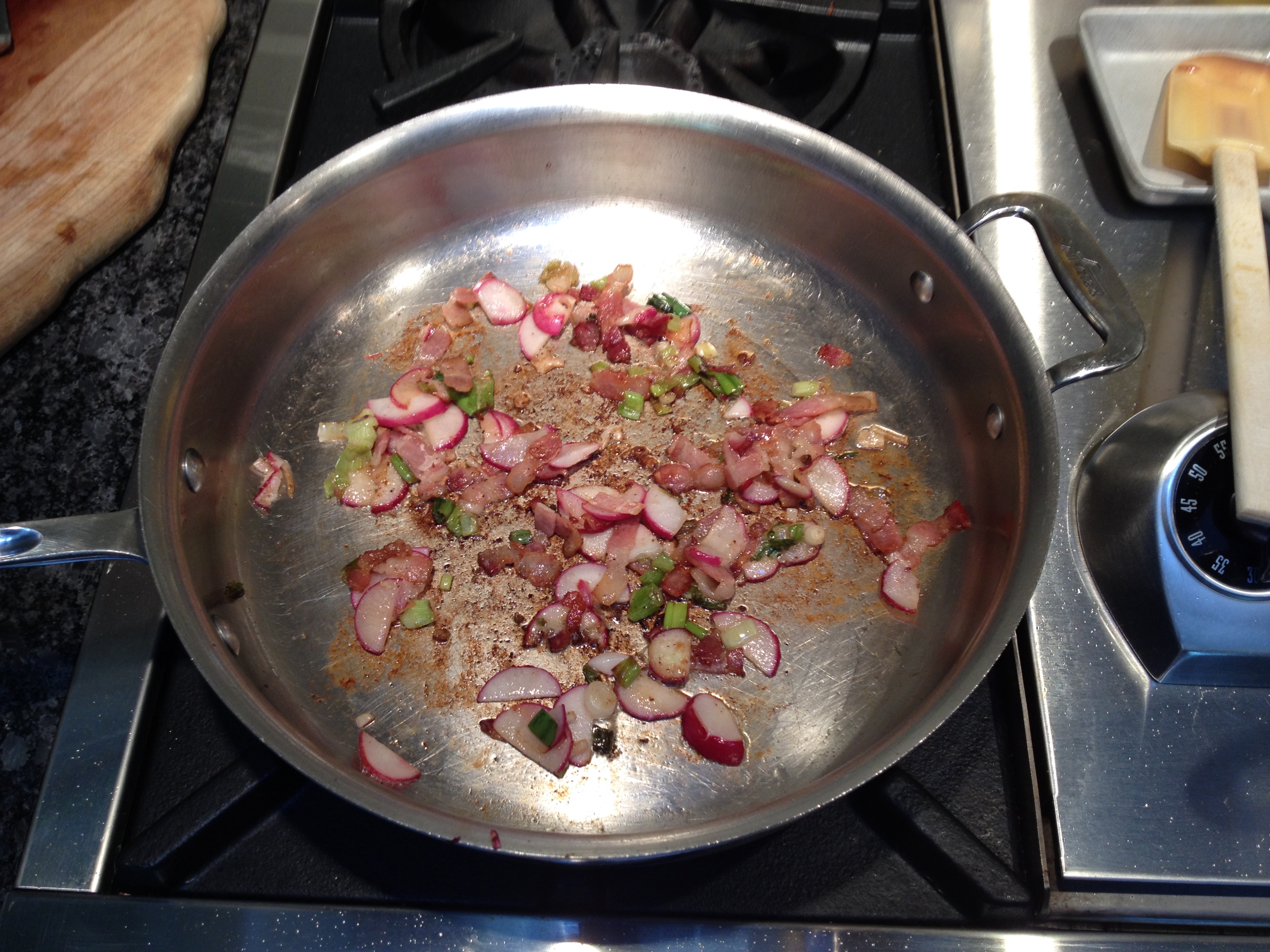
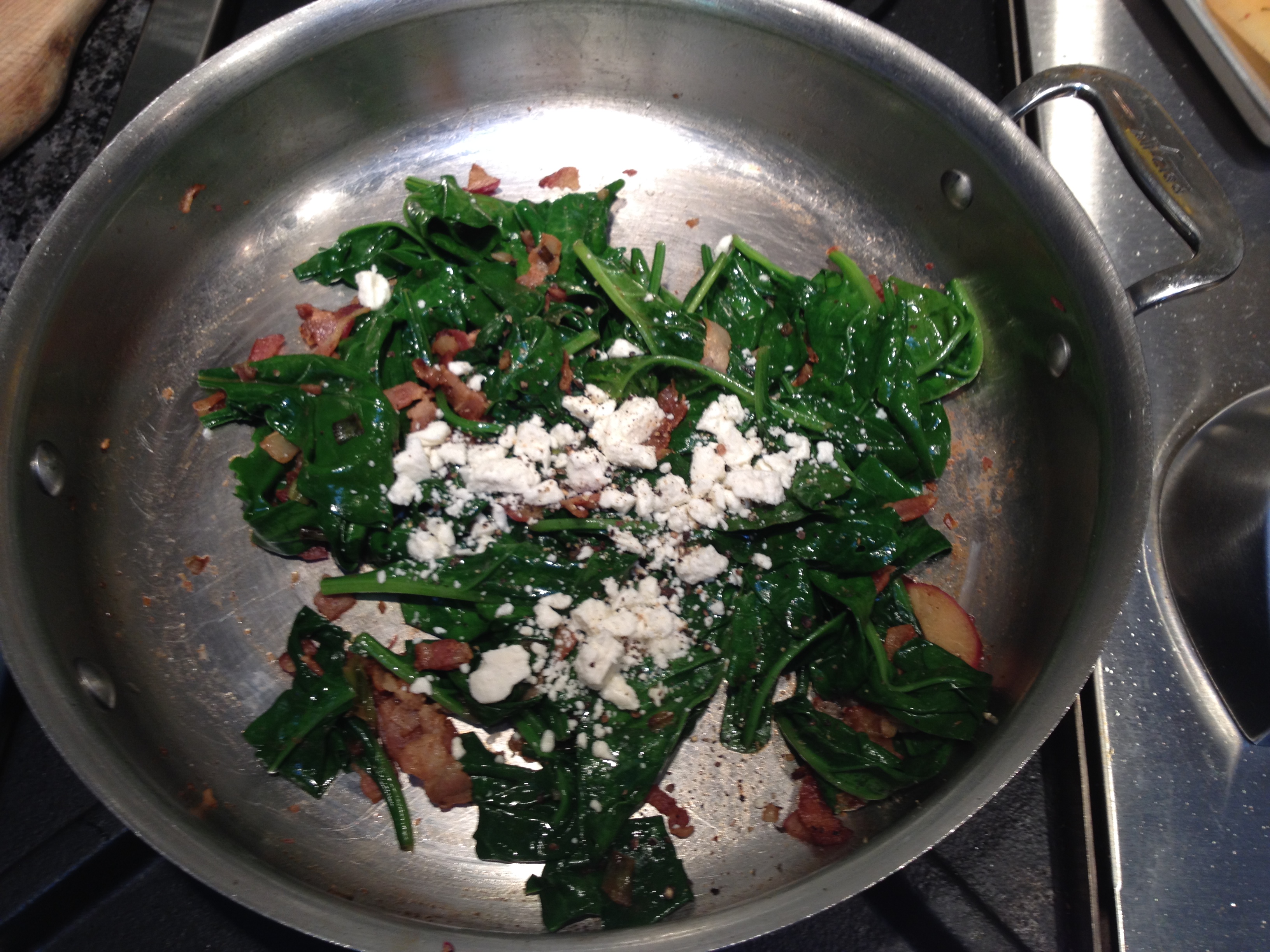
We were also given a tablet of Hive Inspection Sheets that the club produced to encourage good book keeping methods. I keep a composition book where I take notes on all the workshops and meetings I attend as well as the hive visits here, but this form does promote good record keeping so I will include it in my files as well. IMG_6092Jurgen also paid us a visit on Sunday morning for a hive inspection at the farm. He now tends 19 hives and plans to get some more soon so there is a possibility that we might add some more too which is exciting. He decided to use his smoker this time around so he demonstrated his lighting technique. He uses a combination of cedar and wood chips and has an extra large smoker so that he can light it once for a day of hive visits. IMG_6046He was pleased that the bees had started to work on the second deep box that was added last week on hive #10. He put one frame of brood in the upper chamber last week to encourage this activity and we saw evidence that they are drawing out the combs, making honey and also new eggs were present. So although we didn’t see the queen, this hive was ‘Queen Right’ due to the larvae present. When we inspected hive #11, the bees had not really started to work on the upper box of frames so we needed to check down in the first deep box to confirm that the queen was present. Jurgen found the queen right away and isolated her so that he could do some re-organization without the fear of damaging her. Every time you open a hive, there is some degree of bee fatality so you want to work very slowly and gently to insure that above all else, you do not damage your queen. So this time, he played a bit of musical chairs with the frames and made sure that one of the upper frames had brood in it. This will encourage the bees to ‘move to the second floor’ to work on filling out those frames. IMG_1060 2He also did some maintenance and removed wax comb from the edges of the frames so I got a nice little souvenir of the day…fresh beeswax! IMG_6073At the end of the day we rewarded ourselves with a dinner that included 3 types of freshly picked spinach that was sauteed with fresh radishes from the garden. Spinach…IMG_6086Added to the sauteed radish, scallion and bacon bits… IMG_6088Equals yummy with a bit of feta on top!!! This serving of iron will help us have the energy for another day’s work! IMG_6090

Unknown's avatar

The Birds and the Bees…How Appropriate for Mother’s Day!

We spent the last week furiously working in the yard and fields getting ready for what has been a false hope of some rain. I’m starting to think there should be at least two kinds of rain…one for picnickers and another one for farmers. The picnickers will report that it ‘rained’ if they experience a light drizzle under cloudy skies that may have put some dampness on their blanket. That is not rain! We experienced that last week when everyone was complaining about the rain but our rain gauge measured .26 inches after a day of precipitation. Then we were supposed to have a storm on Thursday but got nary a drop. Last night and today we were suppose to have rain but so far, we have had .02 inches and the skies are clearing, much to the delight of the picnickers.  The farmers need an inch a week, preferably not in a 15 minute span of time which also happened not too long ago. Wouldn’t it be lovely to get 1/2 an inch twice a week?

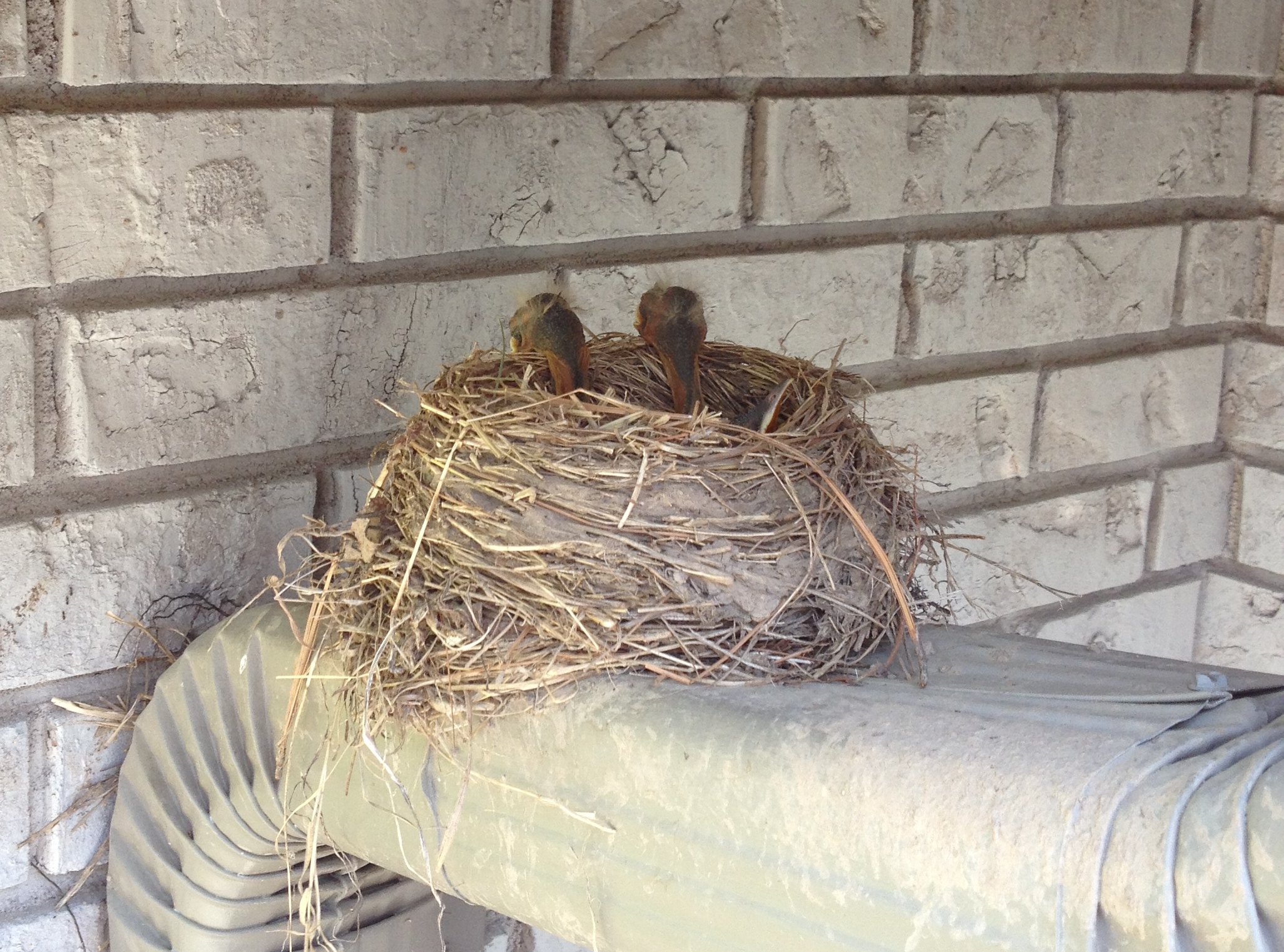
A good rain this time of year would certainly help the allergy sufferers who react to the spring pollens. Luckily, Dave and I are not particularly bothered by the pollens which is a good thing since Seven Oaks has its share of it! When the oak pollen drops there is so much of it that a gentle breeze will gather it in remarkable piles at the driveway’s edges. IMG_5923 The birds are appreciative of a gentle rain as well since it will bring the worms up to the surface and they can quickly bring home a fast food meal to their chicks. We are particularly enamored with the robin babies that hatched about a week ago at the front side entrance. There are three little babies who clamor for food when their parents return from foraging. They are not fully feathered yet and try to behave and hide when their mother is away so it is difficult to get a photo. Here are two of them showing me the backs of their necks with feathers so light on their heads that they look like fur. IMG_5945 The barn swallows at the front door are active too, having built their nest for the second year in a row in the same spot. I have not seen any babies yet but hope there is some activity in that direction soon so that the babies will be old enough to fly away by the time of the wedding which is now only six weeks away!

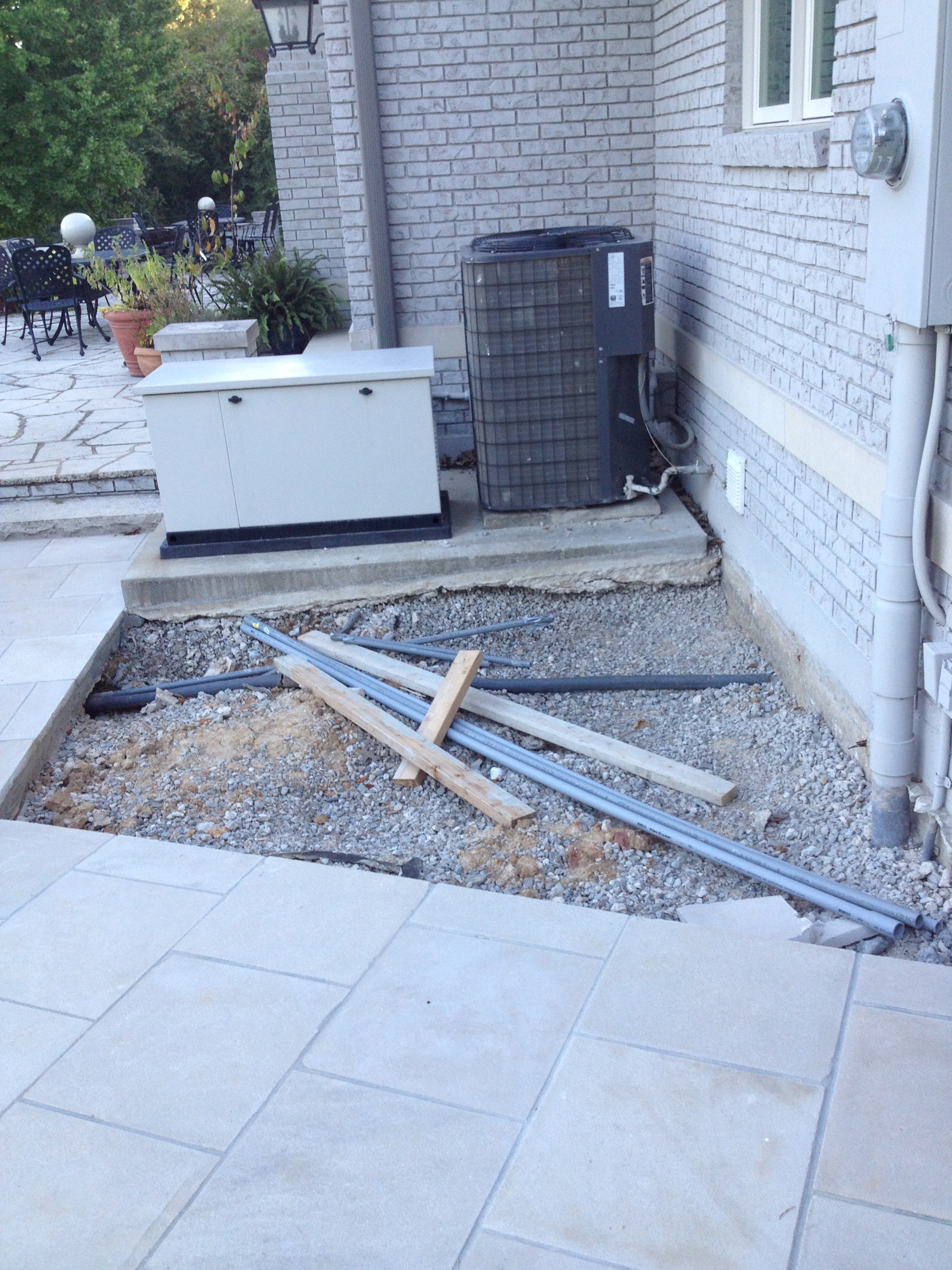
In preparation for the big day, we have finally gotten some new planting beds in order. Last fall when we were working on the new driveway we had the rear sidewalk reconfigured and it was then that I finally got rid of an expanse of hard-scape that always bugged me. It was no easy task to remove the stones that were laid on a concrete foundation, but at least the heavy machinery did all that work. This ‘opening’ allowed for the plumber and electrician to put in the gas piping and wiring for the outdoor grill area – how convenient! But it left me with all the rock and clay to deal with afterwards. IMG_4681  The setting isn’t that fabulous since the generator, one of the air-conditioners and the electrical meter are all located in the vicinity and require air circulation as well as room for maintenance but I figured I could greatly improve on the look and make a useful little herb garden out of the space. First, my friend Lucy came over and sat in the “hole” with me and we dug out countless buckets of rock and clay while we jabbered away on two recent afternoons. I then filled the space with 50% top soil and 50% compost and made sure it was mounded above grade so that it could settle some. I watered it for a couple of days to encourage the settling since I was eager to plant my herbs. I selected some flat stones from the rock pile (yes, we still have quite a collection of rock on pallets in back of the driveway) to form the design of my Parterre, which is the French word for “a level garden that is planted in sections or patterned compartments”.

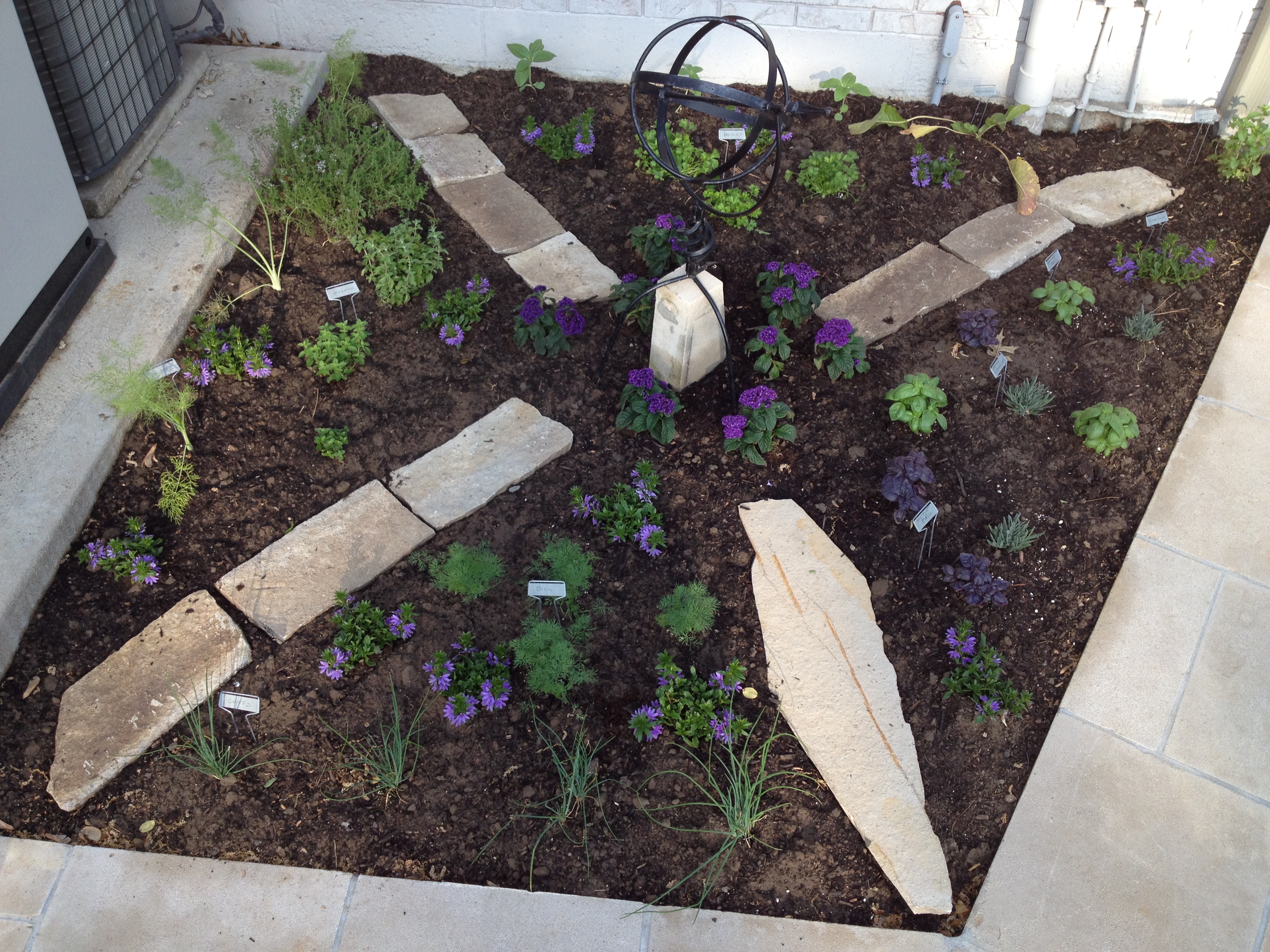
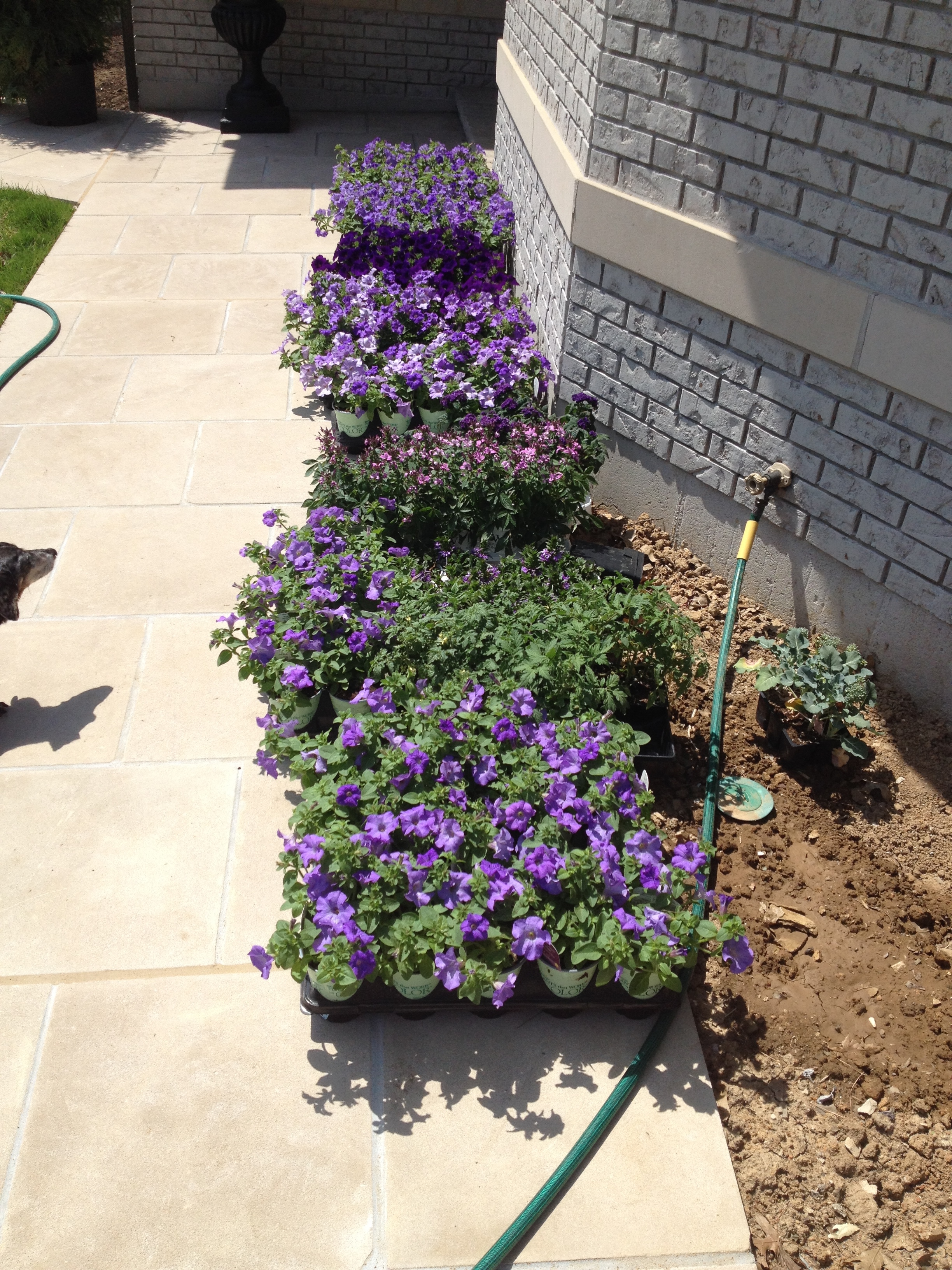
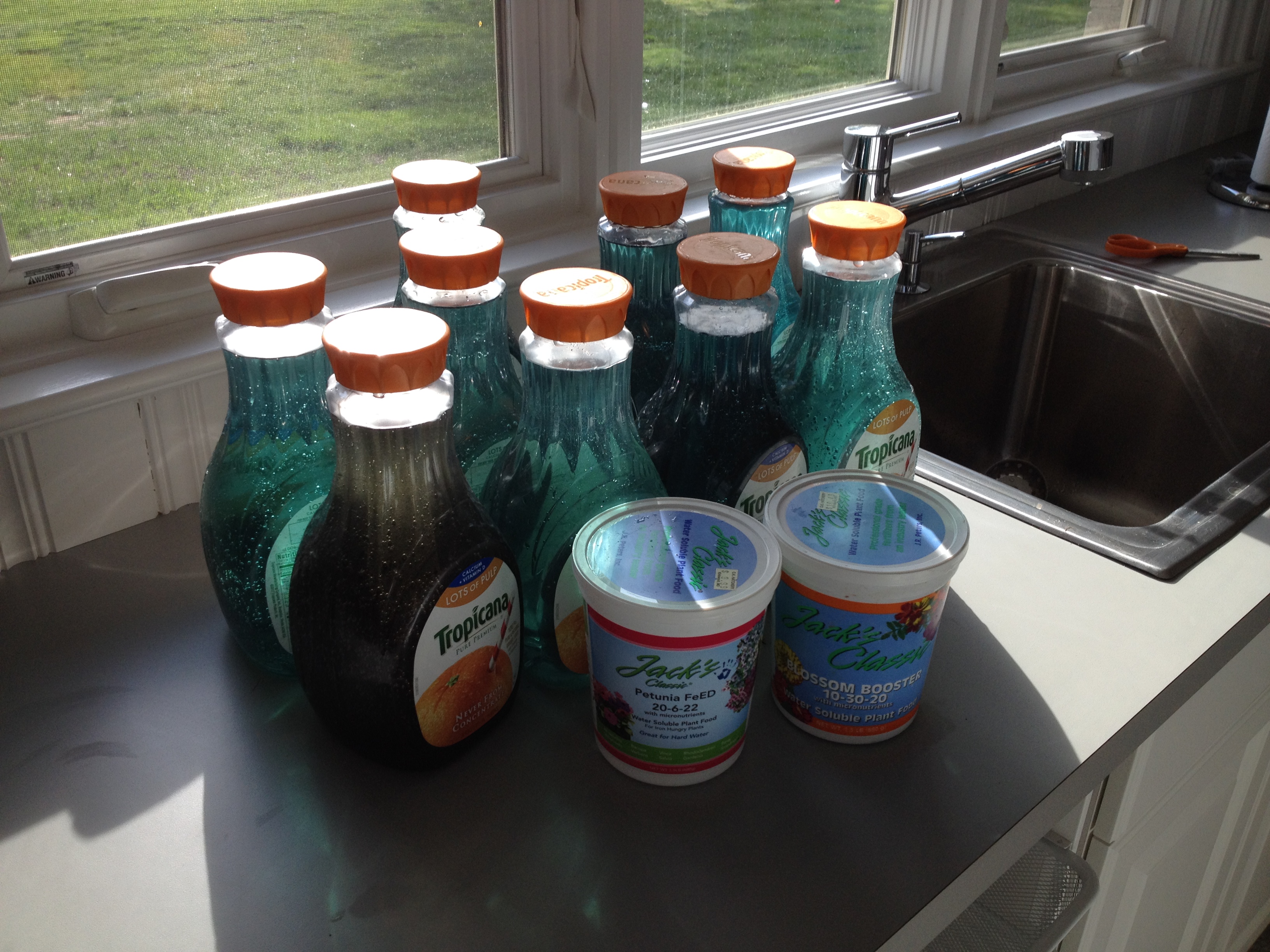
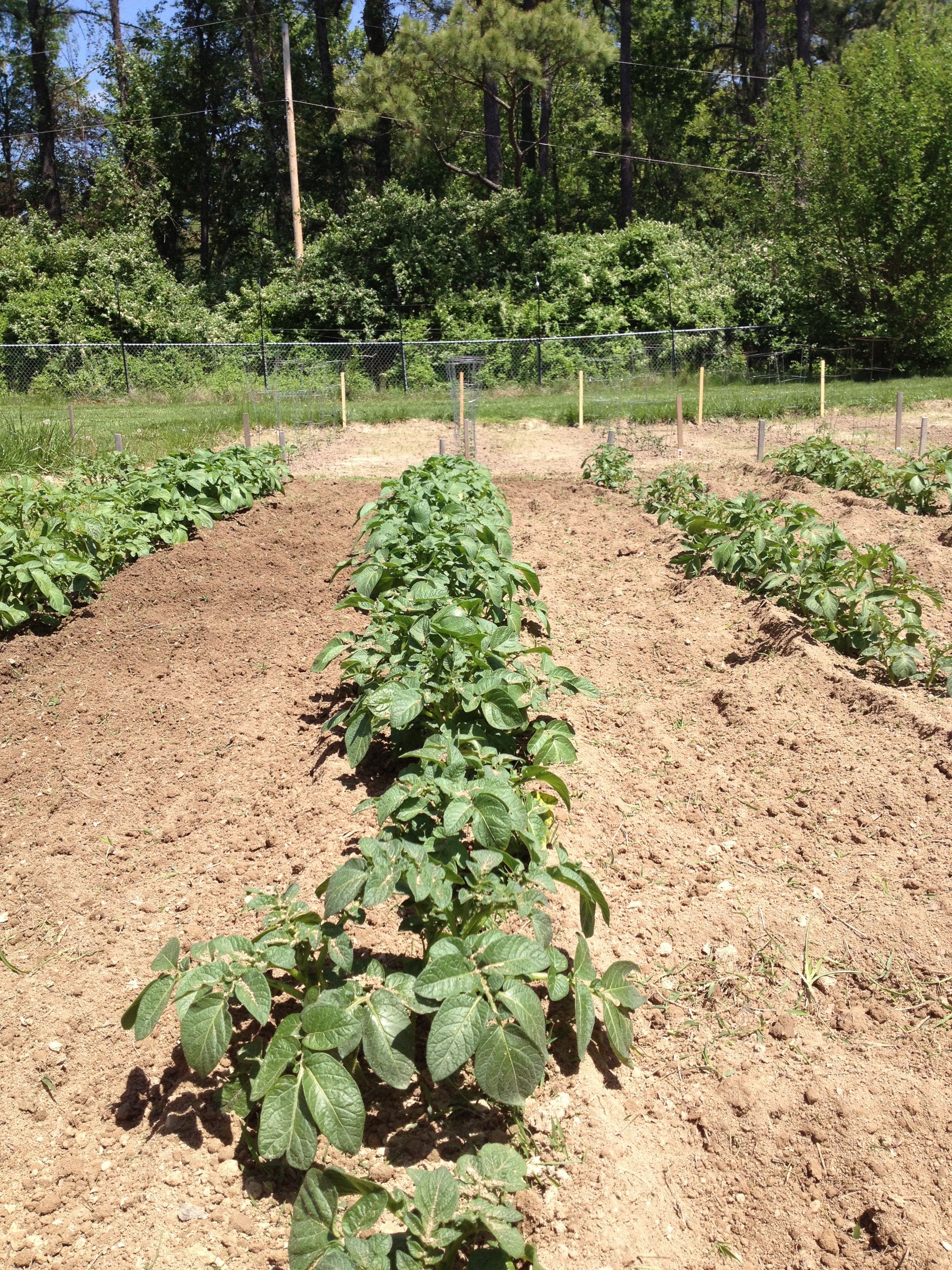
I used the stones as a design element as well as a way to step in this carefully prepared soil. I then placed a wrought iron feature in the middle and planted and assortment of herbs and some small, distracting flowers. I’m told the bees will be very attracted to the herbs but I must say I am too! I planted some of the usual suspects: a variety of basil, oregano, parsley, dill, chives, thyme, lavender, but also some plants that are new to me this year such as fennel, horseradish and spearmint. I’m on the look out for garlic which I would like to add and rosemary which the nursery was sold out of at the time I went shopping. IMG_5980     I also managed to plant all the awaiting petunias this week…106 in one day plus many others!  IMG_5921I feed my petunias like crazy so that they bloom their heads off all summer and mound over the pots to the point that you can’t see the pots anymore. This routine is daily and looks like this. I give the petunias two types of specialized food on alternating days. Here are my bottles of food ready to go. IMG_5918I worked on weeding and hilling the potatoes yesterday and they look incredibly healthy! IMG_5960

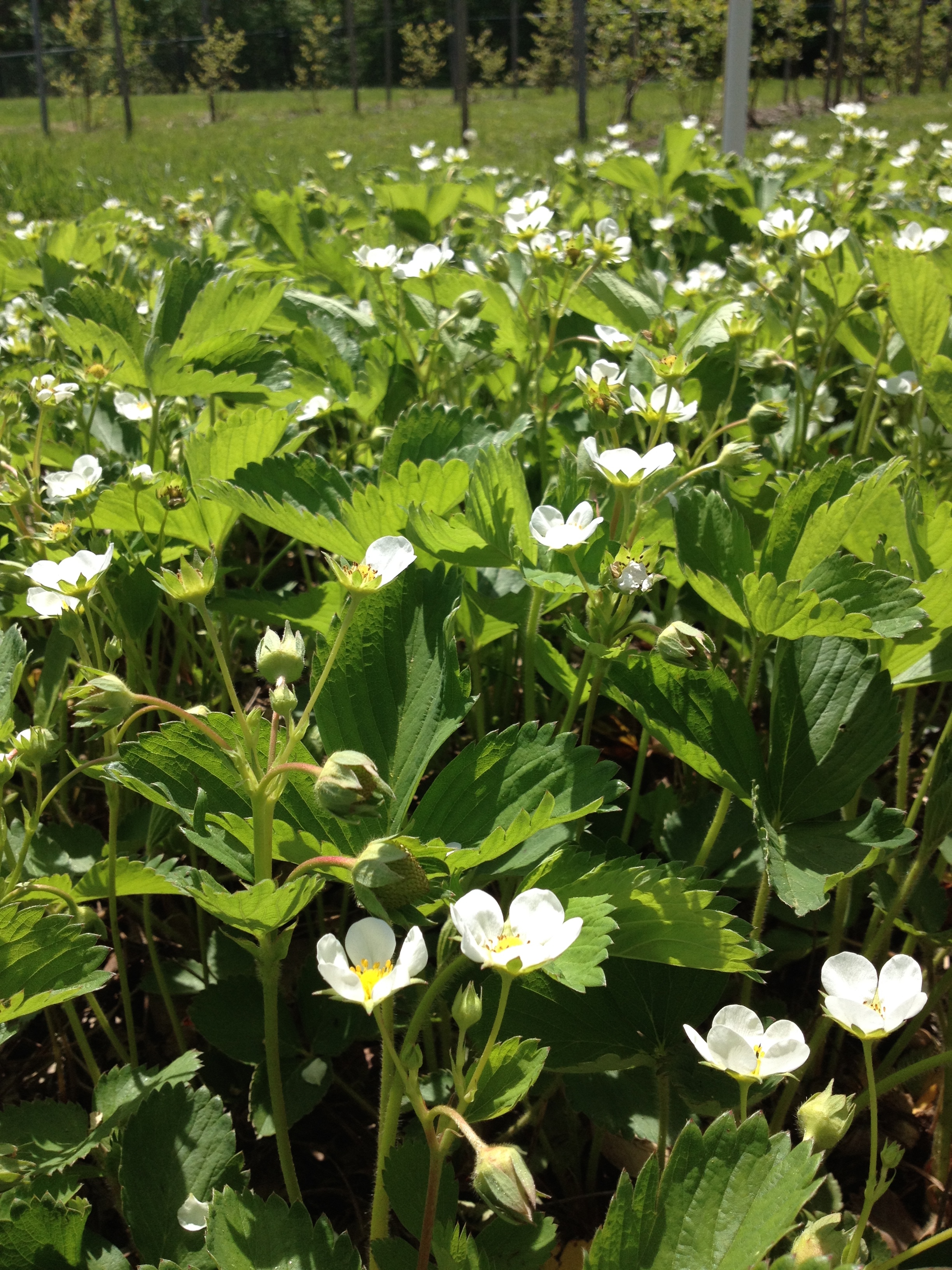
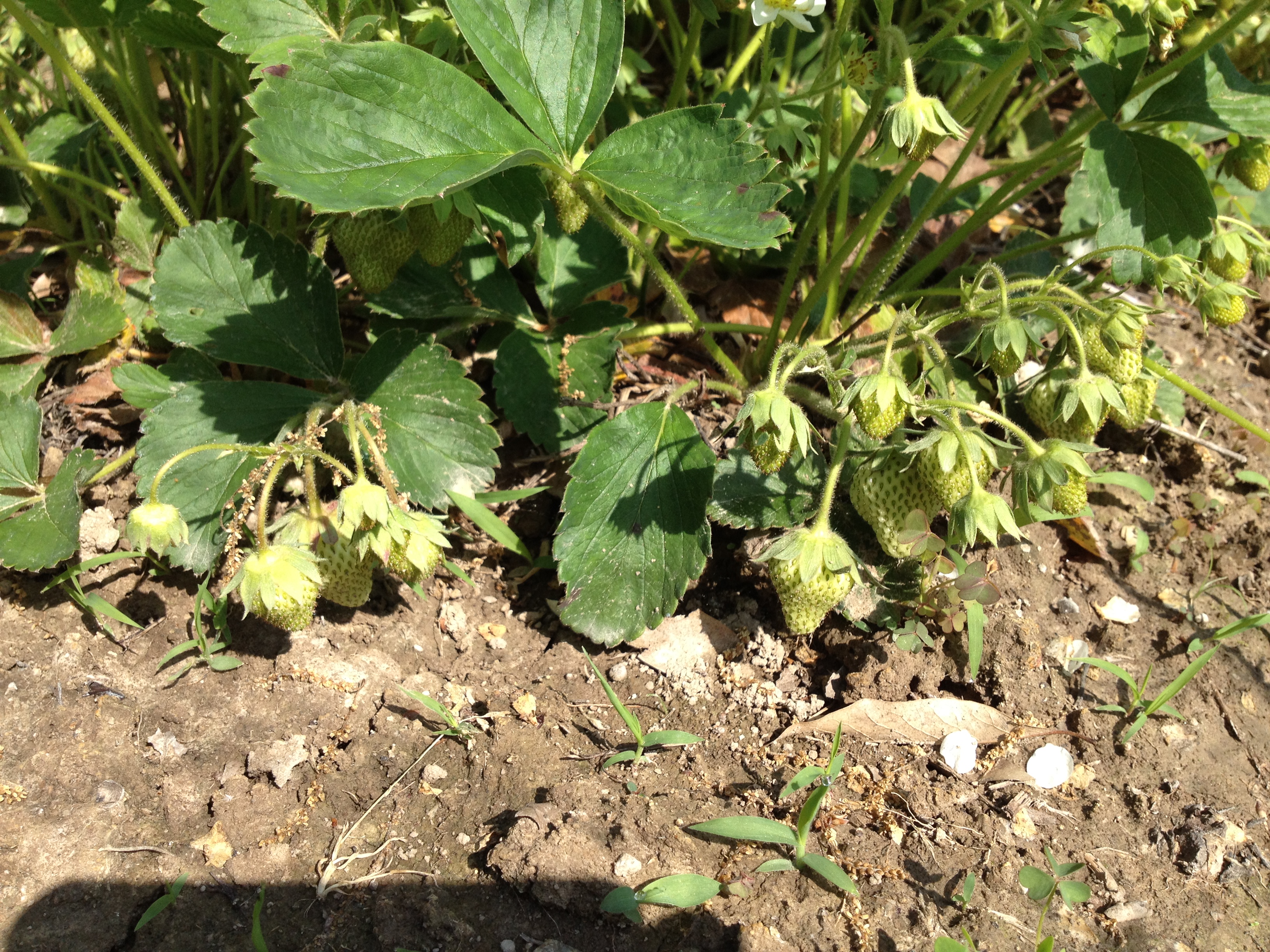
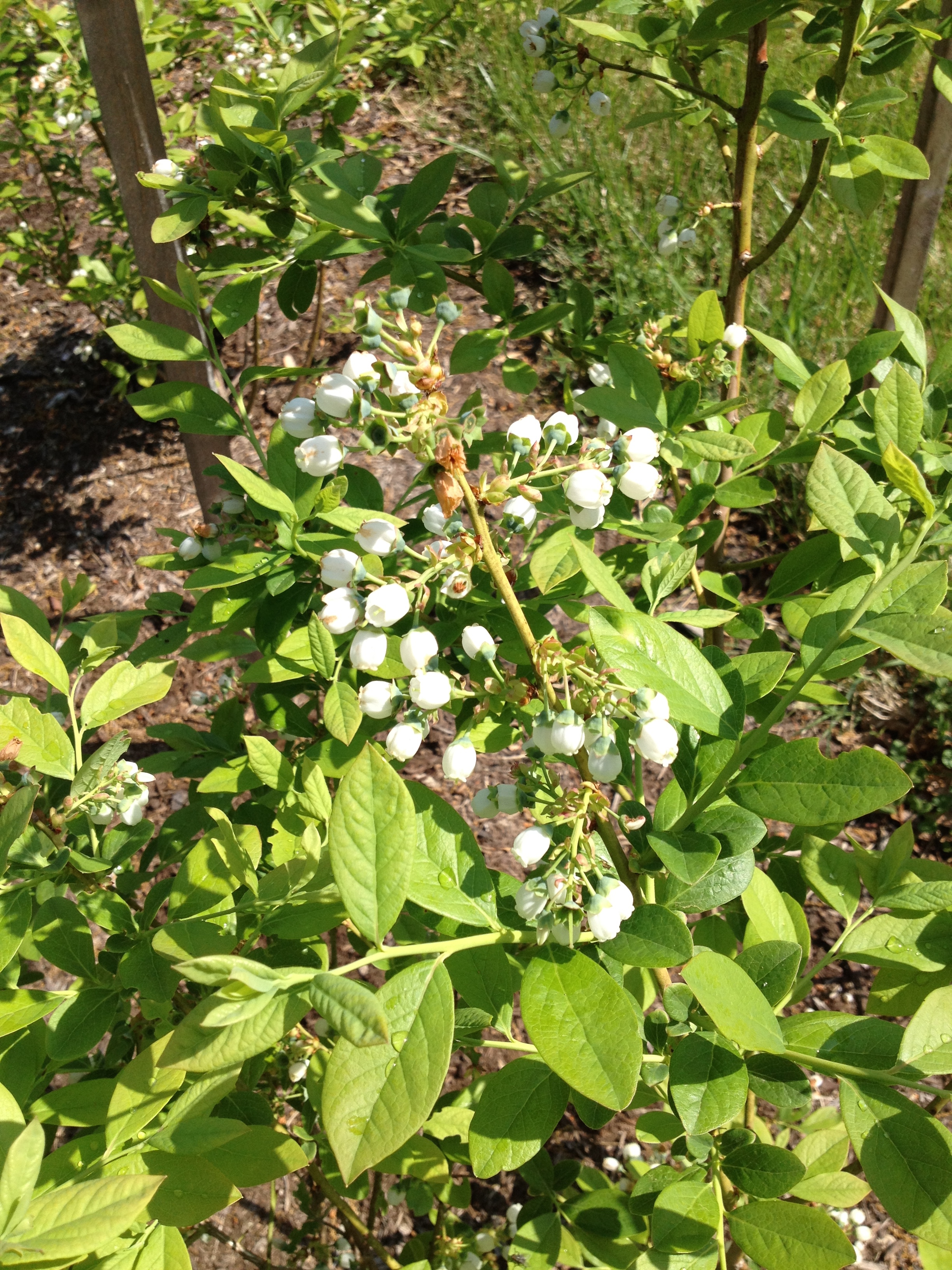
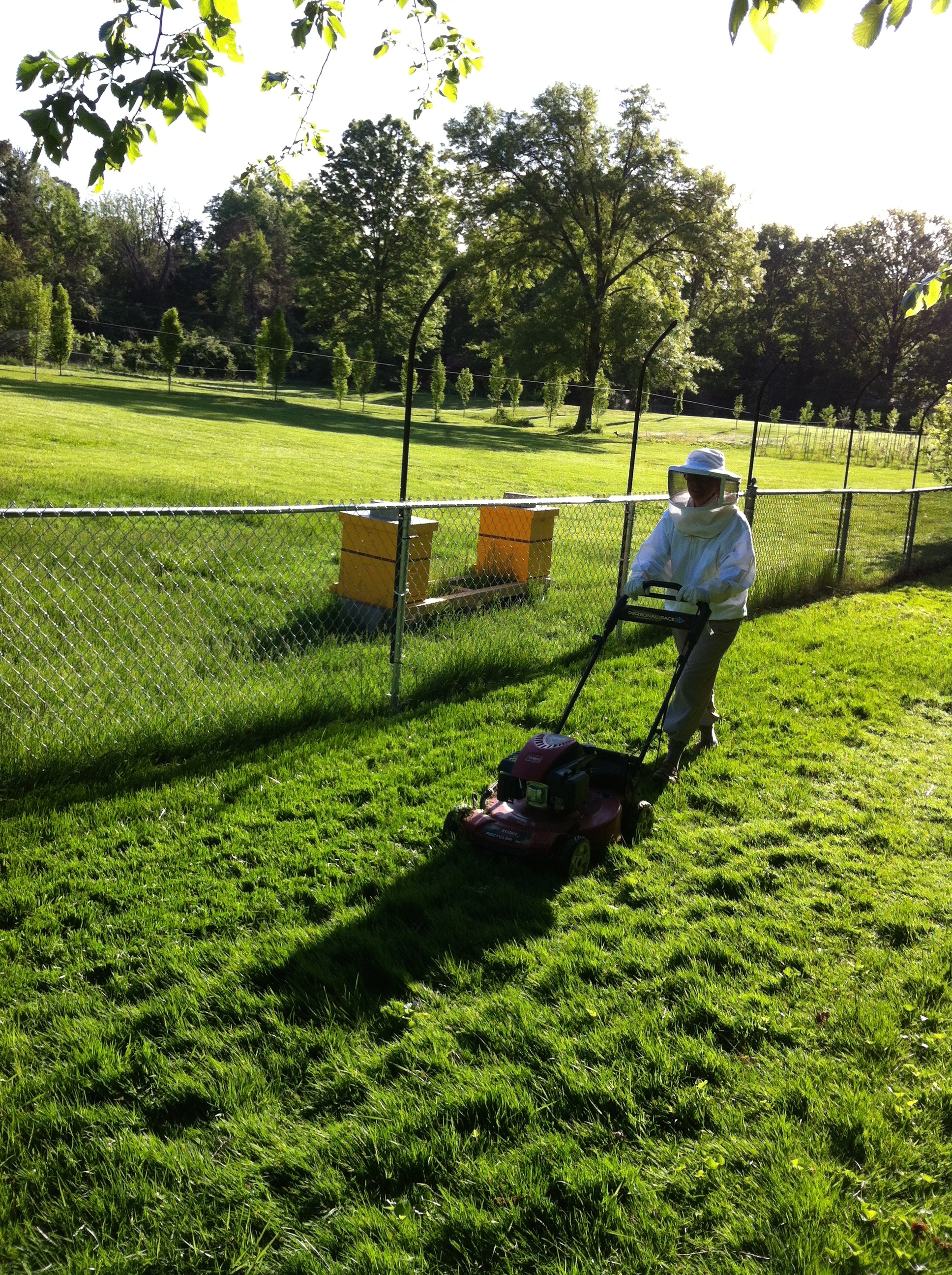
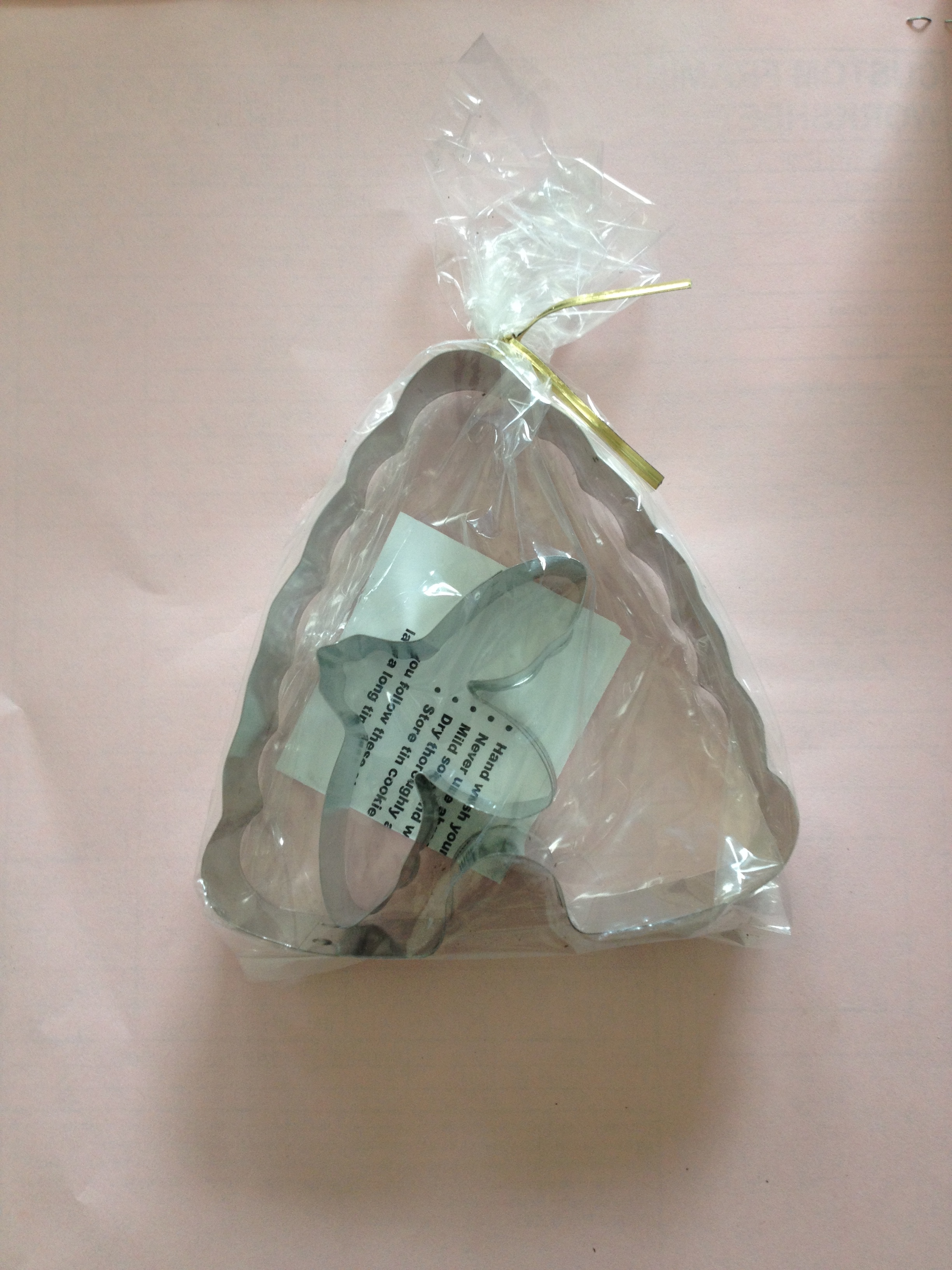
We also worked on the strawberries which have set on like mad and are waiting for some sun and heat to ripen. I spent one morning weeding out all the wild strawberries. Wild strawberries are not as cute as people think and can just take over like a weed once they get a foot hold. They are a real detriment to the patch and so I was glad to have a chance to pull them along with some other weeds. It looks like it will be a good season for strawberries! Last year we began picking on May 19th and it looks like we might have that same timing this year. I will be interested to see if we get as many fruits this year. It will be hard to top the nearly 160 pounds from last year’s harvest! IMG_5916Here are the berries that are setting on like crazy! IMG_5990I think the bees took their job quite seriously both in the strawberries and the blueberries! I have never seen so many blueberries in this patch, which could be due to the bees as well as the maturity of the plants. If you recall, we have 5 rows with a different variety in each row that ripen progressively so that we are not inundated with blueberries (is there such a concept?) which is why some rows are still flowering…  IMG_5994 While others are already developing nice clusters of fruits! IMG_5991Time for the bee update! It is always a highlight of our day when Jurgen comes to inspect the hives. If you recall, we were waiting to see if the re-queening that took place two weeks ago in hive #10 had worked or not. Jurgen did not want to disturb that hive last week so he was very pleased yesterday to find eggs being laid, meaning there is an active queen working the hive! Yeah! He showed me that the bees are filling out the existing frames quite nicely and had me feel the weight of one of them so that I can imagine how very heavy a box of frames full of honey will be in the fall. IMG_1017With good news about the queen and the nectar ‘running’ (meaning available for foraging), Jurgen came prepared to add more frames to the hives. When he did this, he sprayed the new frames with sugar water to attract the bees into the upper box. He wants them to start to work on developing these frames (making new combs) with the hopes of getting more honey in the fall. The other thing that he did was to take the restriction away from the entrance of the hive. Before this, the opening was just a couple of inches wide and now it is the entire width of the front of the hive. IMG_1022I took advantage of nice weather that morning to mow the area around the hive and Dave used the weed whacker today to further clean up the edges . photo 1Here are the cleaned up hives with the added boxes. IMG_1053Of course any honey that is harvested from these hives will belong to my bee mentors but just in case any comes our way, I am experimenting with some honey recipes.  Today I am making Rolled Honey Spice Cookies using my new cookie cutter which was a Mother’s Day gift from Kate. Can you guess what it is?  IMG_5937


Unknown's avatar

It Just Dawned on Me….

Everyone is complaining about the long, cold winter we have endured across the country but I don’t really think we have much to harp about here since during all the snow, ice and subzero temperatures we have had the advantage of our electricity and a roaring fireplace (or two). Perhaps a gas fireplace doesn’t really roar, but it is quite nice to linger close by while reading or knitting and look out the glass across the back of the house and admire the day, something we rarely have time to do when we are otherwise occupied outdoors the other 3 seasons of the year.

Here are some examples of a typical dawn as we sleepily sip coffee and watch the subtle changes in the morning sky. These were taken about 3 minutes apart from our back door.IMG_0920  IMG_0929

IMG_0943

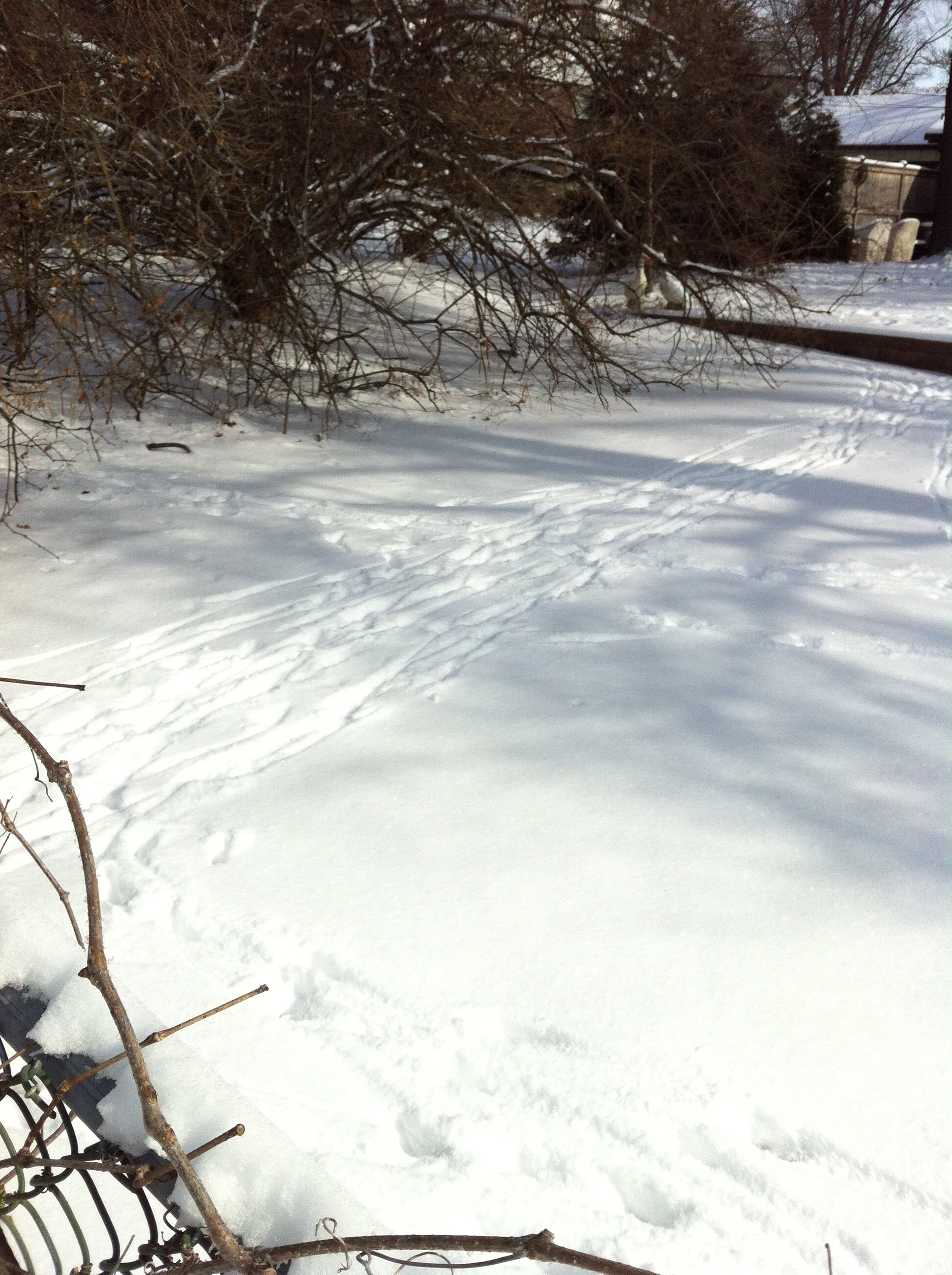
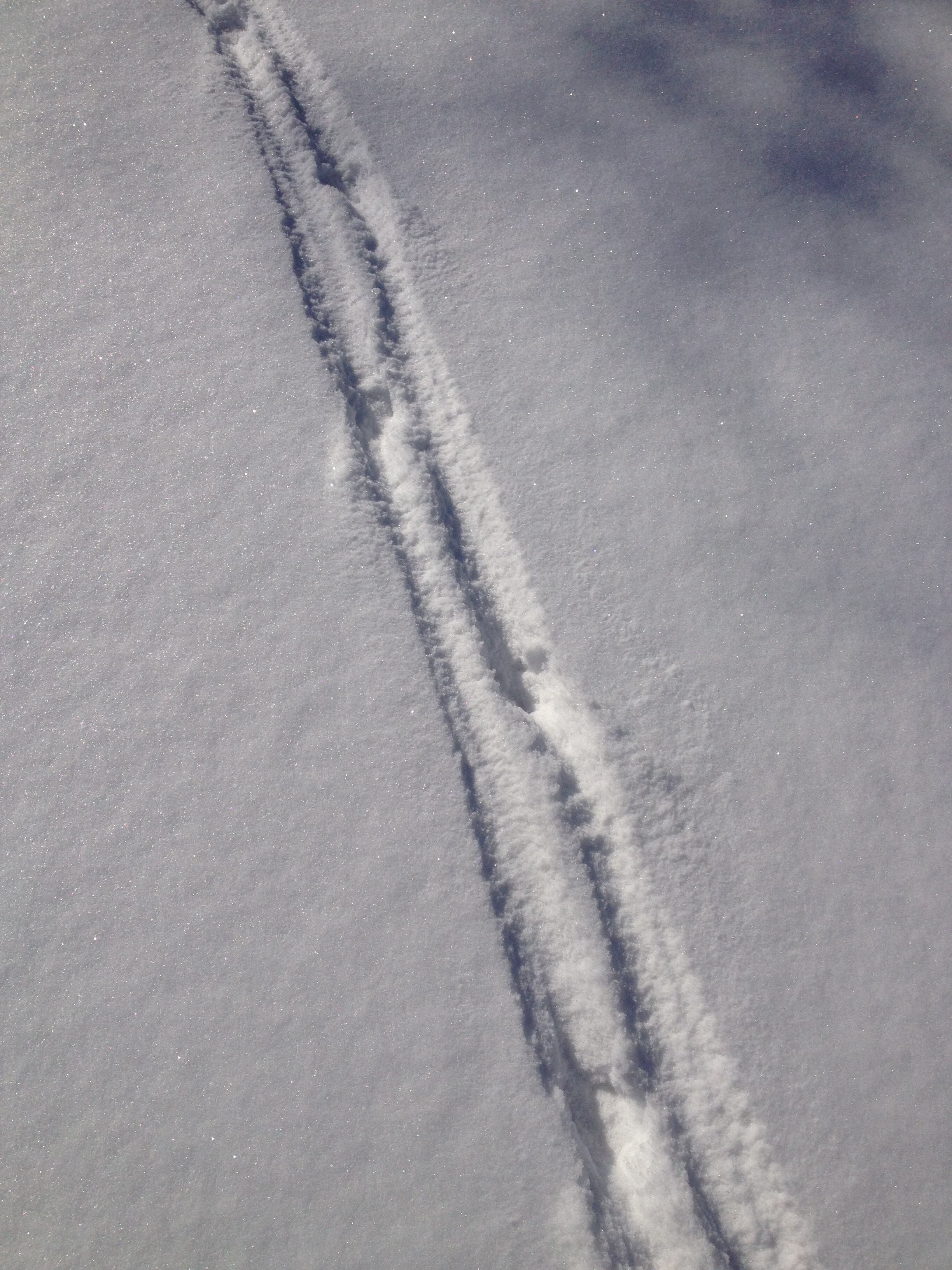
IMG_0948The old “red sky at morning, sailors take warning” adage was appropriate for the day as not many hours later it snowed and snowed! The best thing I can say about a nice deep snow is that we love to investigate the animal tracks that miraculously appear over night in a newly fallen snow. It certainly evokes an animal highway of sorts but the tracks can be difficult to photograph. Of course, that means that we just take all the more photos, trying for a better angle or better lighting. It is interesting to identify the various critters, but mostly we are seeing deer tracks.photo 5

photo 3

The good news is that the most recent tracks have been on the outside of the deer fence. In fact, they seem to be walking along the fence line and not attempting to cross into the orchard. Of course we had a significant break-in after my last posting when I spotted two medium sized bucks in the east side of the orchard, trying to figure out a way around the fence. The pair finally attempted to jump the “faux fence” and got caught on their way out the south side, tripping up miserably, and taking the pickets and strung wire along with them to the opposite side as I watched. One of the bucks took such a tumble that I thought he might have broken a leg! But after a moment, he was able to leap away, leaving us with quite a mess! There were 18 or so pickets down (a chain reaction) and lots of wire to reinstall, all in two degree weather!!! Ugh!

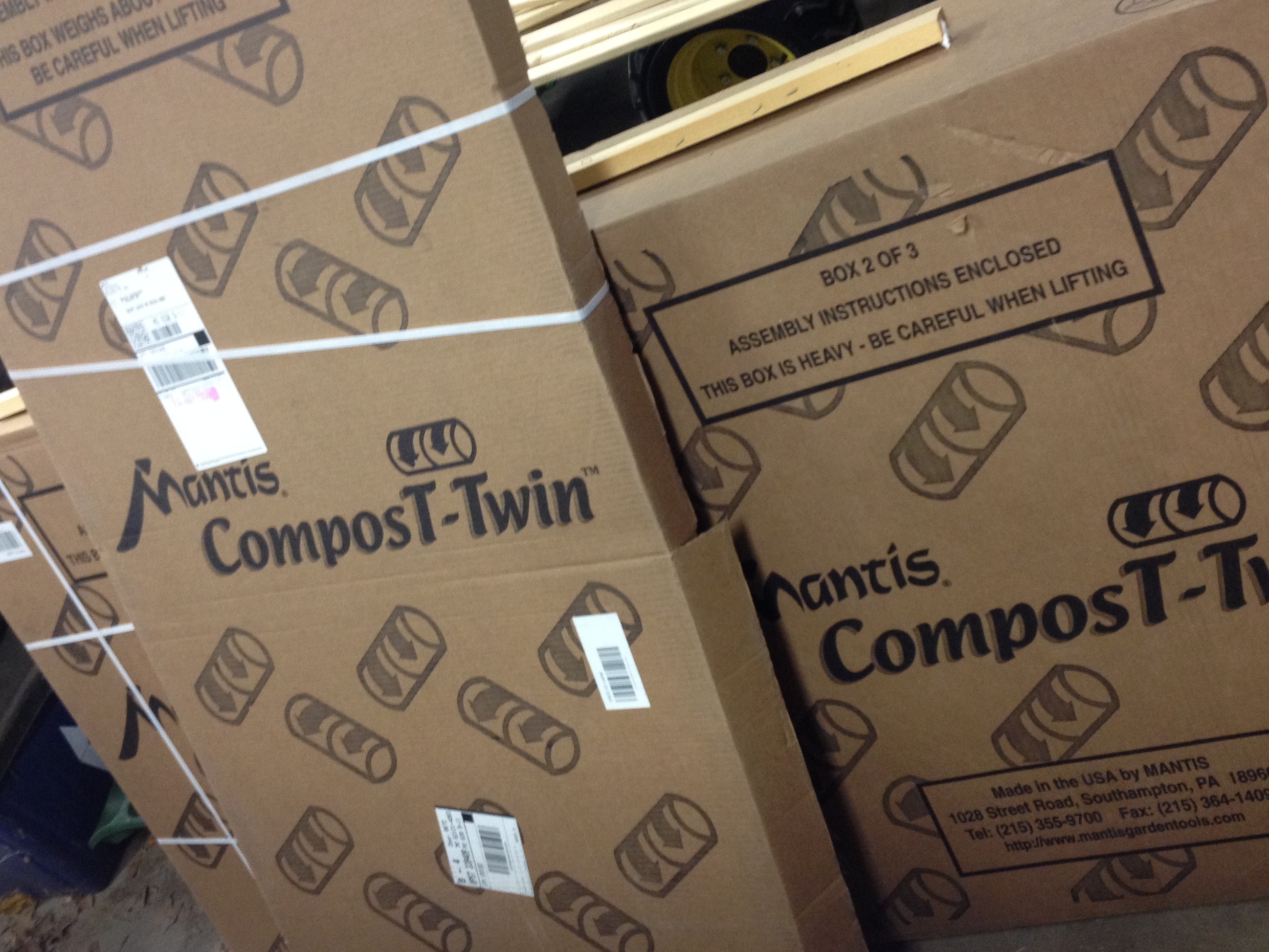
So it was with a little bit of dark fascination that I found these deer tracks interesting since I think that this fellow may be dragging something…like a leg???? I would gladly put him out of his misery! IMG_5267In other news, the composting equipment we ordered arrived at our door and is still sitting in the garage waiting for good weather before we put it together. IMG_5296

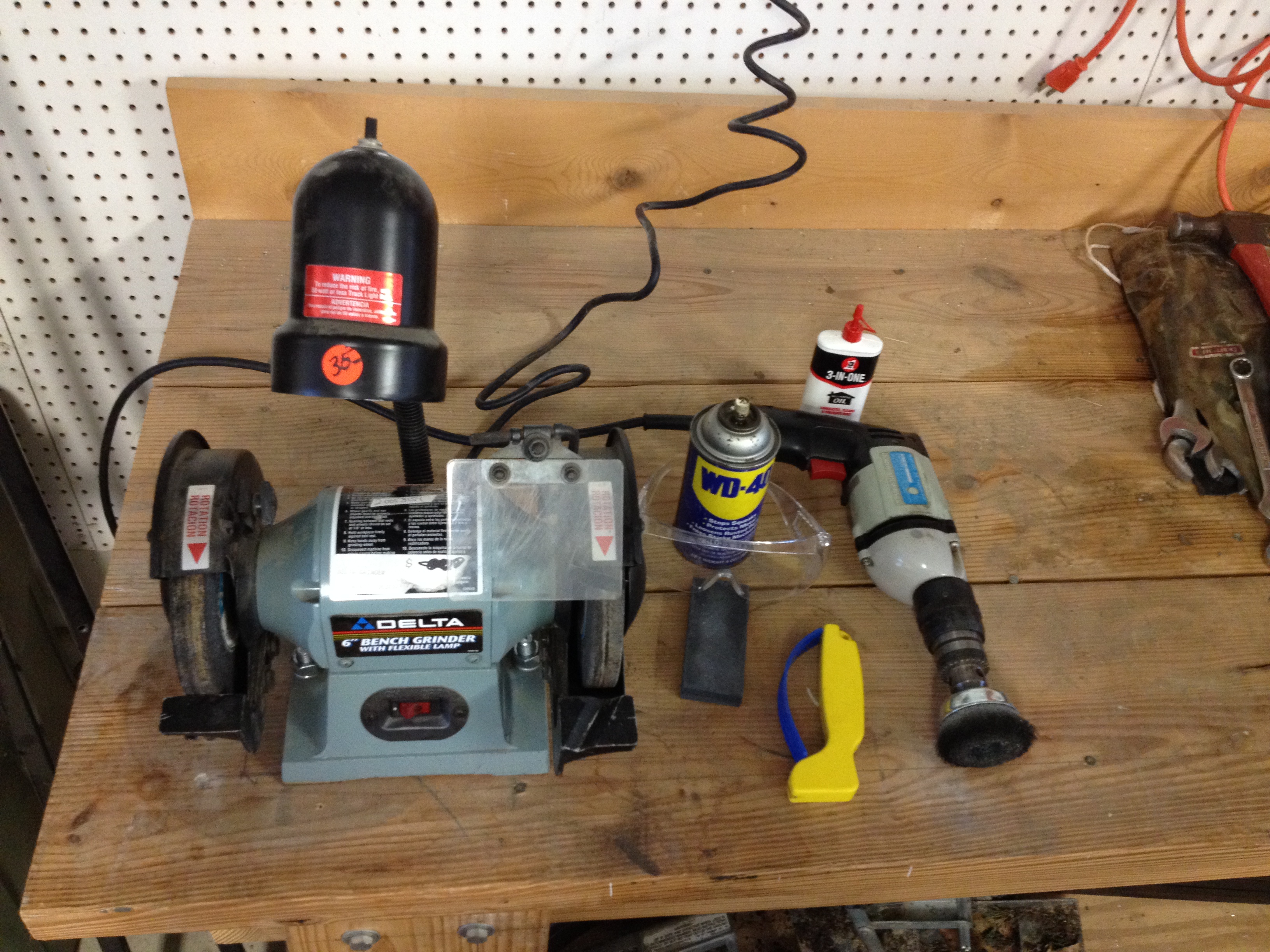
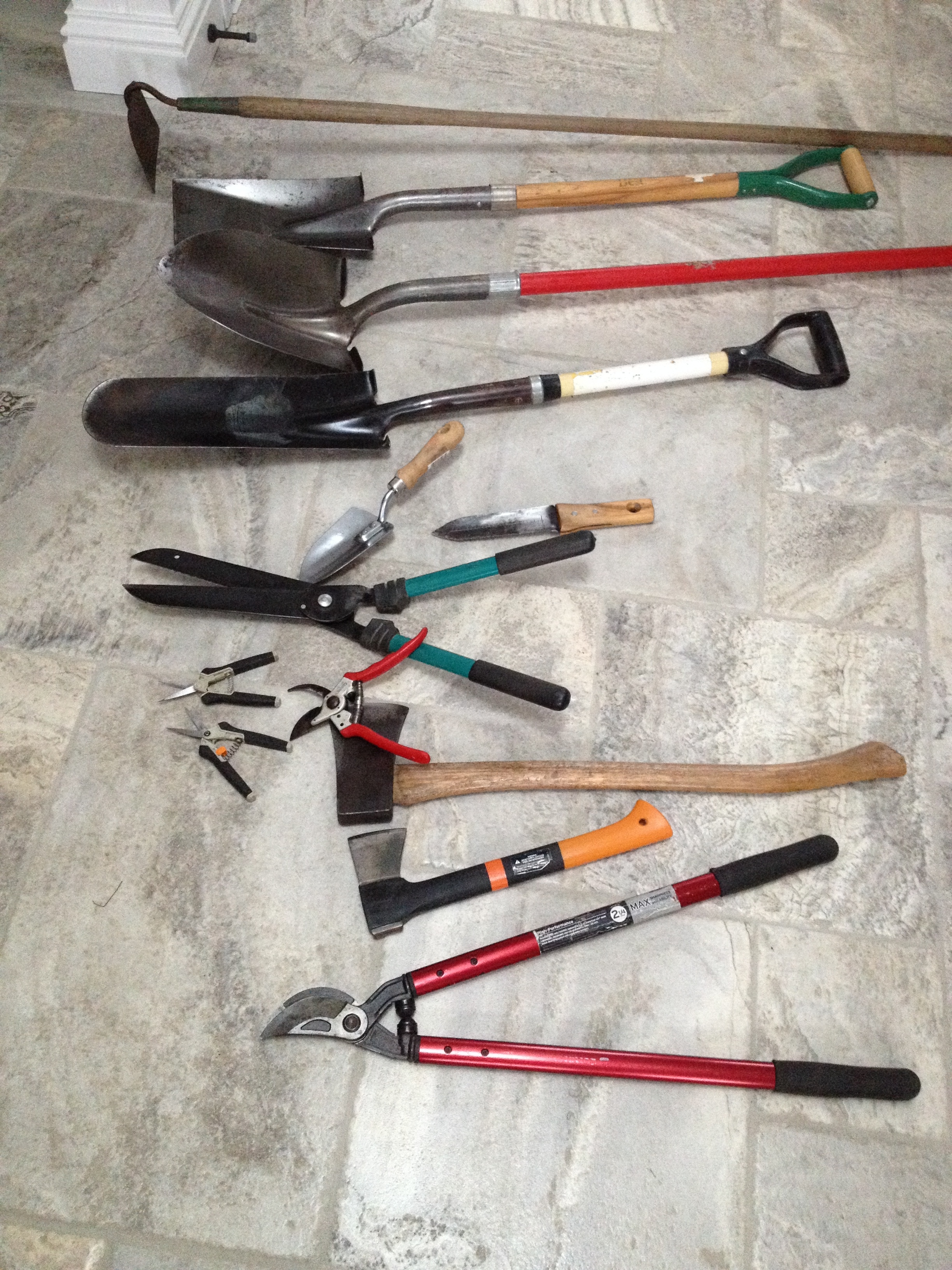
Seeds for the spring planting have been ordered as well as a couple of spare fruit trees to replace ones that look a little weak. We hope to get out and prune the orchard in the next month while the trees are still dormant and we will try apply the dormant oil spray (organic as can be!) before the first bit of green sprouts appear on the branches. Dave is continuing with the annual service on the big machinery but is doing a great job cleaning and sharpening tools with the bench grinder for the coming season. Here is his set up.IMG_5297

And here is what he has cleaned and sharpened so far. We hope to keep up with tool maintenance after this since we will be spoiled by all the sharp edges!IMG_5292

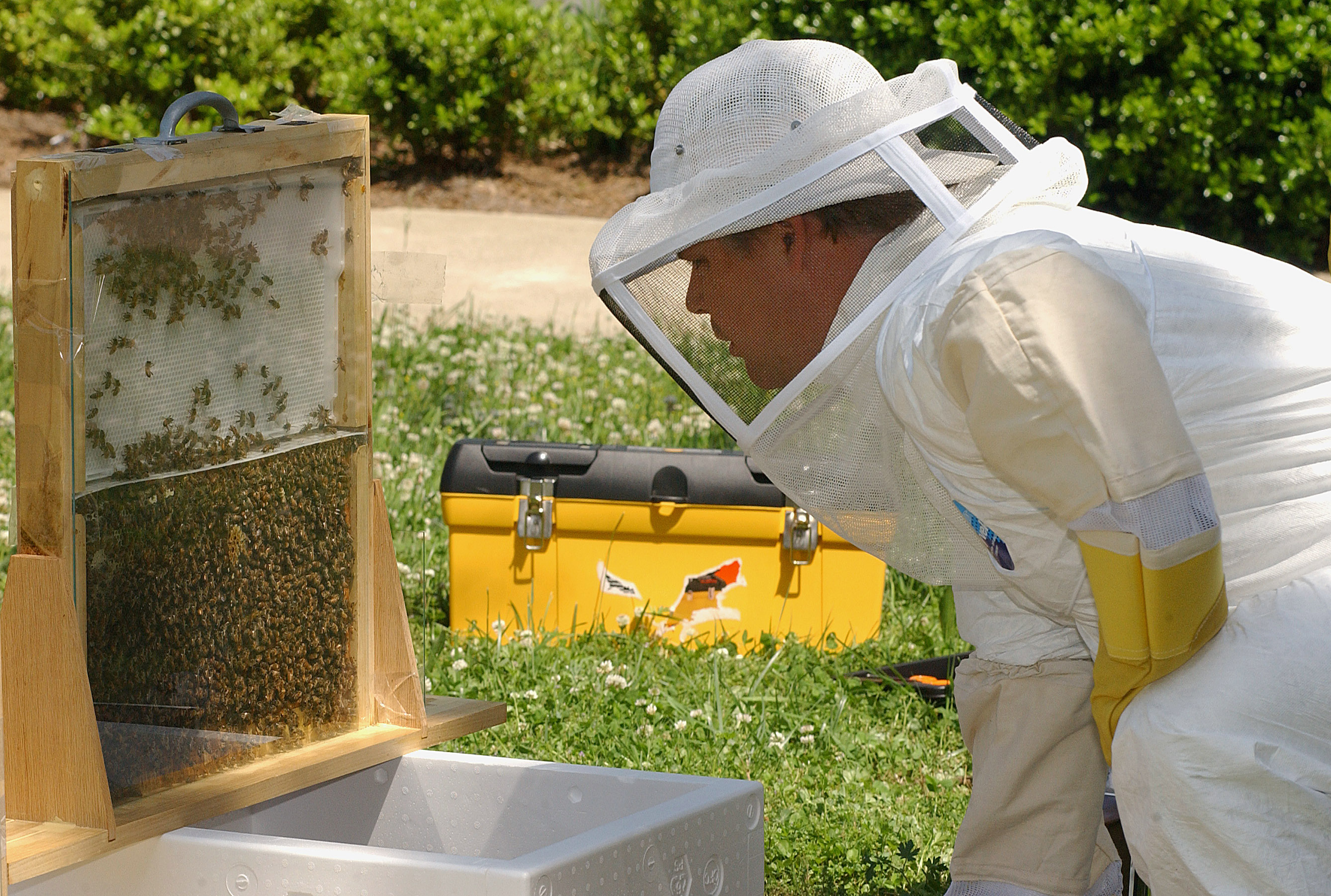
I attended a fabulous all day bee keeping workshop last weekend. It was a full day of lectures from apiary experts from all over the country with more than 200 people in attendance! I must say that I took copious notes from 8am until about 3:30pm when my eyes began to cross and I had to just listen for the rest of the day. I staggered out into the cold just after 5pm with lots of great information about bee keeping but I don’t think I could have taken in any additional details that day. The next lecture I am attending seems much more manageable since it will be only 3 hours long! Although we have been reading the bee books, the lecturers pointed out that the bees don’t read those books! One needs to develop an instinct for beekeeping so although reading and listening is enormously educational, there will be nothing quite so wonderful as learning more when the hives arrive. When that time comes, I hope we look like this
bees

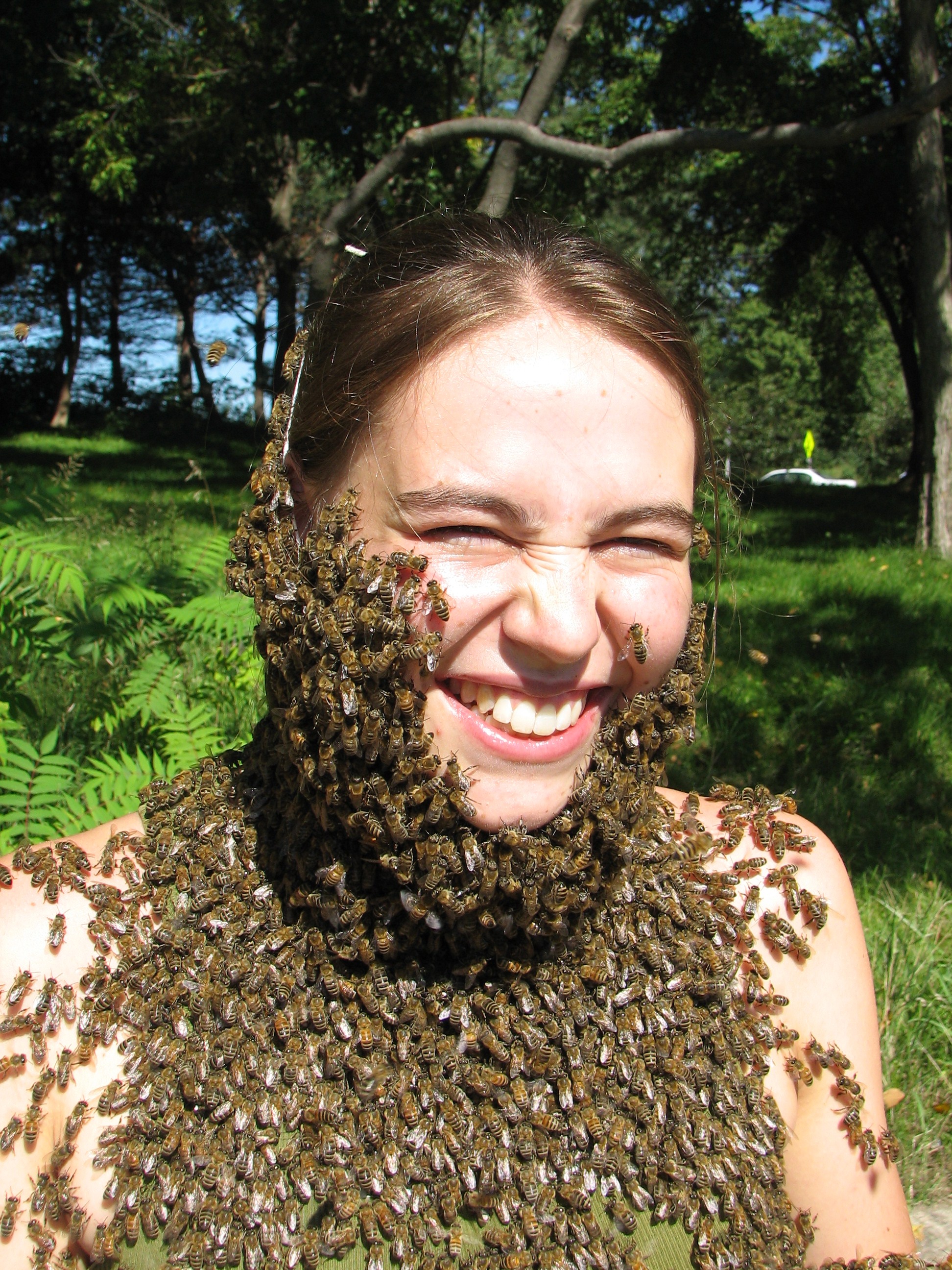
and not this! Yes, this is called a Bee Beard, a small trick with the queen in a little box that is around this gal’s neck! Apparently, nothing to worry about since the bees are more concerned with the queen than stinging the woman!4-Full-beard

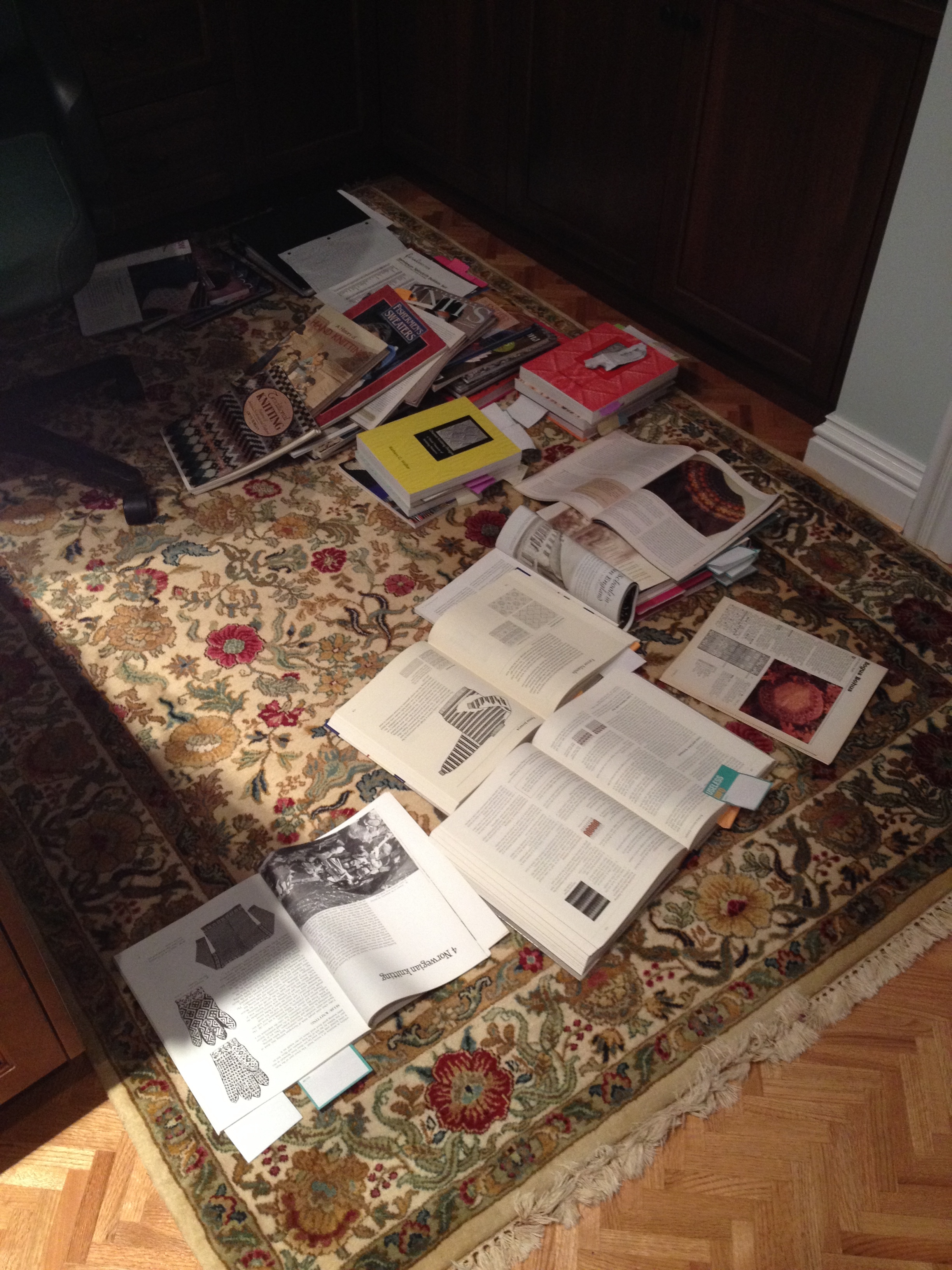
I’ve continued to keep myself busy with my last level of the Master’s Hand Knitting program and winter is a great time to work on it so I set my sites on getting all of the papers written and I have met that goal. I do make quite a mess in my office during the process but I now have 4 reports and 2 research papers, along with footnotes, outlines and bibliographies done! Yeah! Don’t get me started on all the types of fibers in out there or the Bohus Strickning Tradition! Here are the books at the foot of my desk…there was an equal pile surrounding my computer! I hope to get much of this finished up before it is time to get back in the fields this spring! Happy Valentine’s Day to All!IMG_5255

Unknown's avatar

A Post Holiday Greeting and News of Bees and Trees

Post-Holiday Greetings and Happy 50th Birthday to my sister, Julie!

We have been swamped during the past month with activities on all fronts including some travel for both of us ‘hither and yon’!  The house is all quiet now – the holiday visitors dearly welcomed but now departed – leaving us with a refrigerator chocked full of overly rich leftovers from days of cooking and celebrating! So I am now finding some moments to sit and reflect on the status of the farm over the past few weeks before the New Year is upon us.

I left off at the end of the last posting with the promise of a visit from my newest acquaintances – and future bee mentors – J&H (as I will refer to them in postings). They visited the farm on a bright, sunny, afternoon several weeks ago and took a little tour of the orchard, berry patches and fields. It is always interesting to introduce our property and its intended purpose to new visitors and get their reactions. Wouldn’t you know, beekeepers ask questions of a new ilk. In admiring the European Hornbeams (allée trees – Carpinus betulus), they immediately asked, “what type of tree is this, and more importantly, does it FLOWER?!”  Oh dear, I wish I could have said definitely ‘yes’ (I think I actually said ‘no’ at the time) but the flower is so small and inconspicuous that one never really thinks of this as a flowering tree. But, research confirms that it does have tiny white flowers in early spring which we will surely take note of this year and hope that the future bees find them too! Our visitors surveyed the landscape looking for elevation, screening, water sources, noise/motion interference and much more, I’m sure. I believe their greatest source of excitement came from learning that we don’t use herbicides or pesticides in our farming practice. (See links below.)

So after a nice visit, it was decided that J&H would initially introduce their hives to the farm next spring and mentor me in the art or science (which is it?) of beekeeping.  This way, I will be learning from someone who has prior experience with the nuances of apiary science instead of starting out with the trial and error method which can be not only costly but discouraging. J&H say that there is plenty of room for me (and/or all of us for that matter) to add many more hives here in the future, but this will be a wonderful way to get started. I am very, very excited about every aspect of this adventure but mostly for the future benefits of the orchard pollination. I have been keenly following international news of bees and will begin to attend the local beekeepers’ association meetings (there are currently 3 groups in our area) as well. I have added a category to the blog for beekeeping news! Here are some links related to the current plight of bees.

http://www.vegfriend.com/forum/topics/37-million-bees-found-dead-in-elmwood-ontario-canada-after-large-

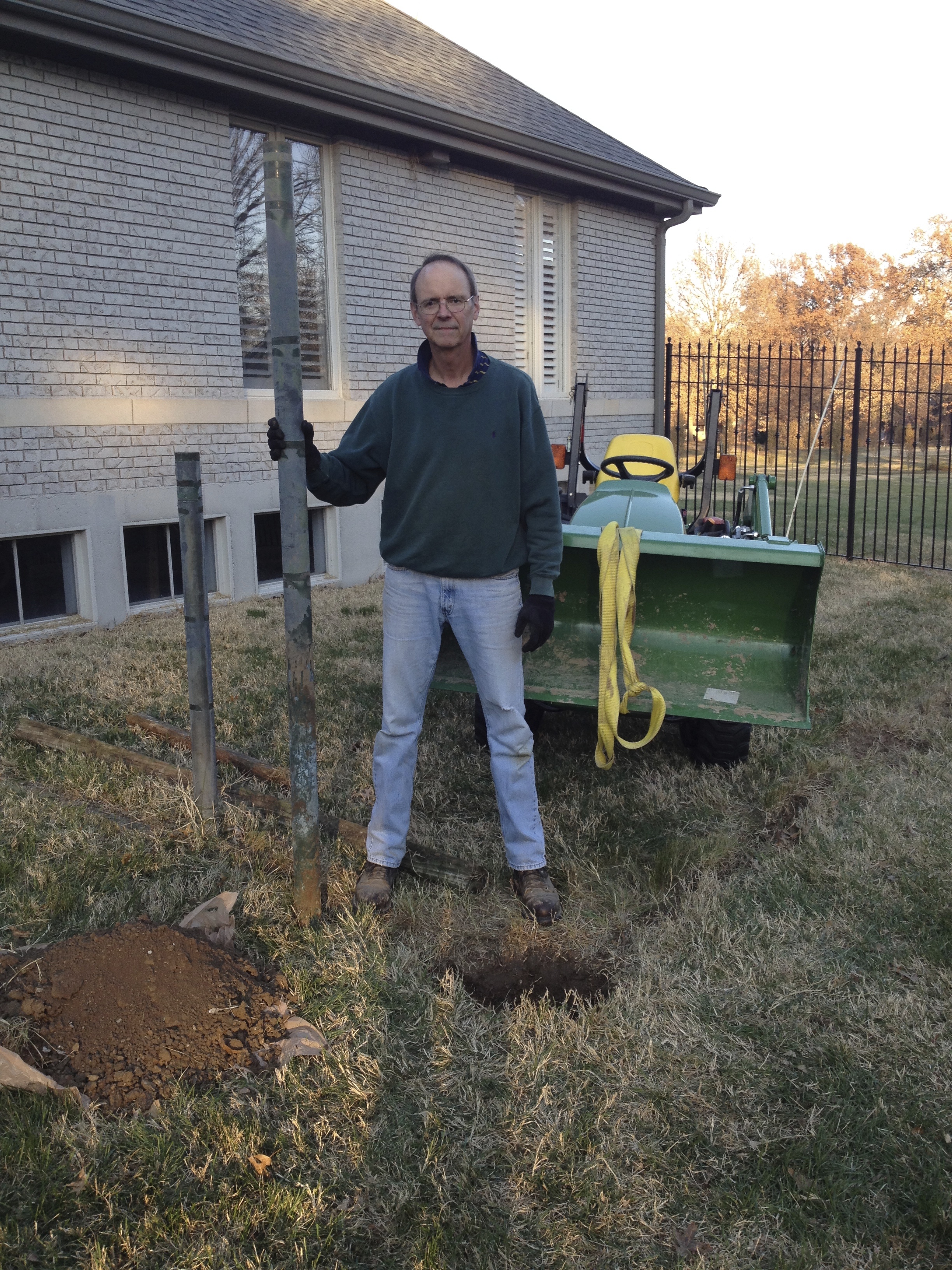
We have also been busy removing the fence posts left behind after our most recent fence project. We were not excited about the prospect of digging out these posts and our reticence was not unfounded. Dave dug and dug and finally engaged the brute force of the tractor to aid in nudging some of the posts from their spots. Please imagine this: what appeared to be four foot tall fence posts actually had and additional three feet buried and set in concrete. The resulting landscape when all posts were removed and holes filled, was quite satisfying to admire, but the effort was tremendous since many of the 4″ wide posts were also filled with concrete as well.IMG_5085
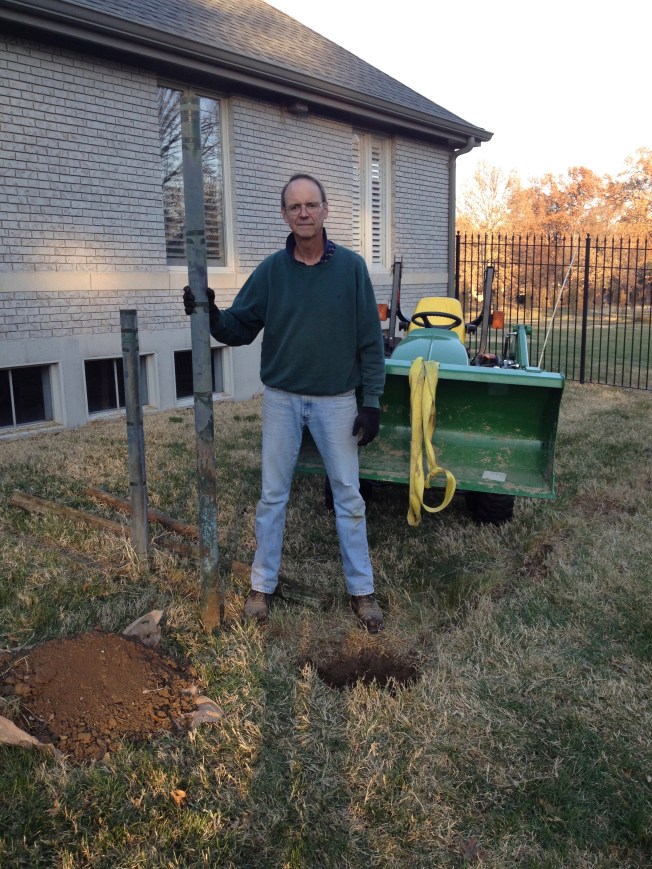
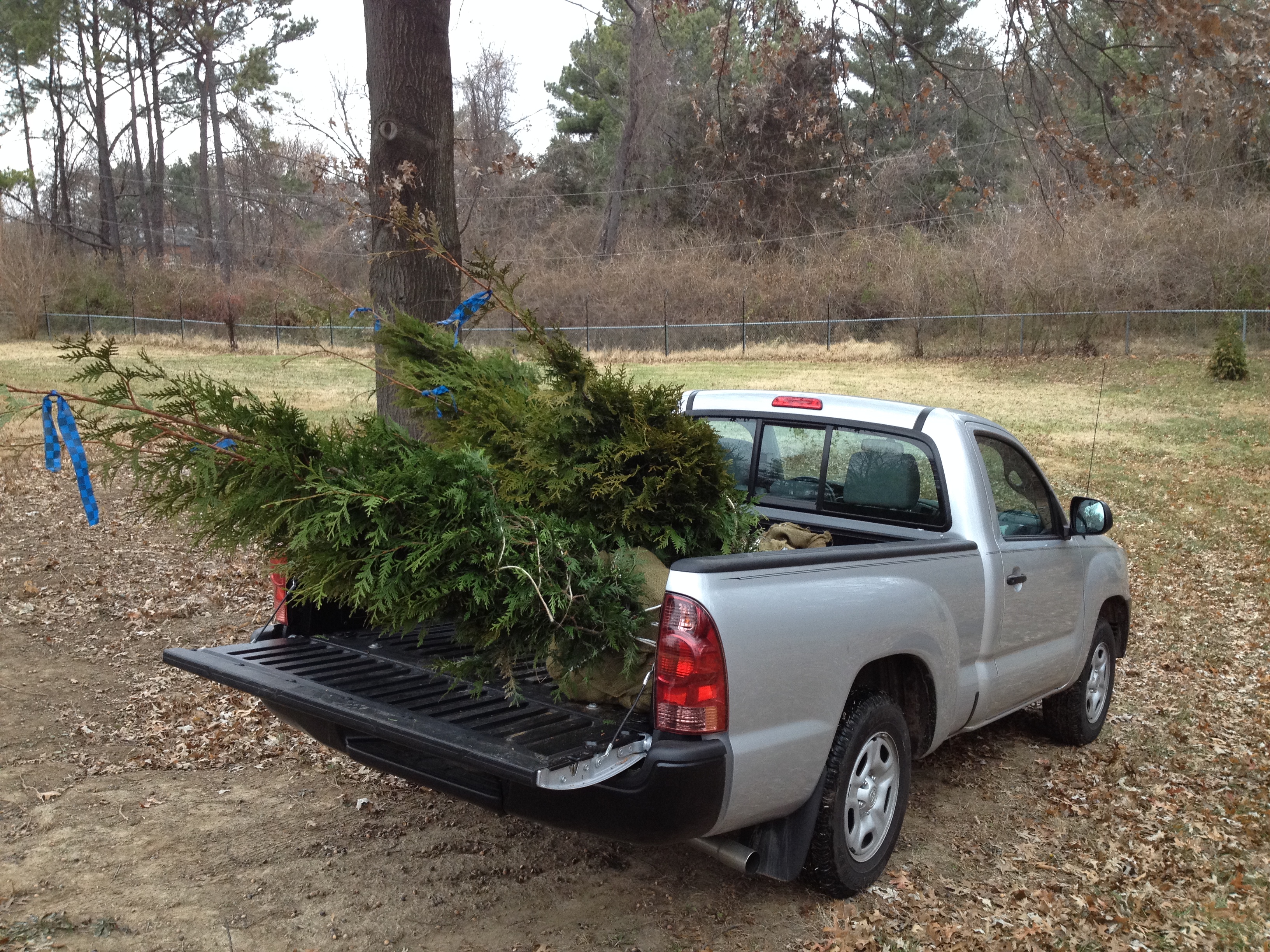
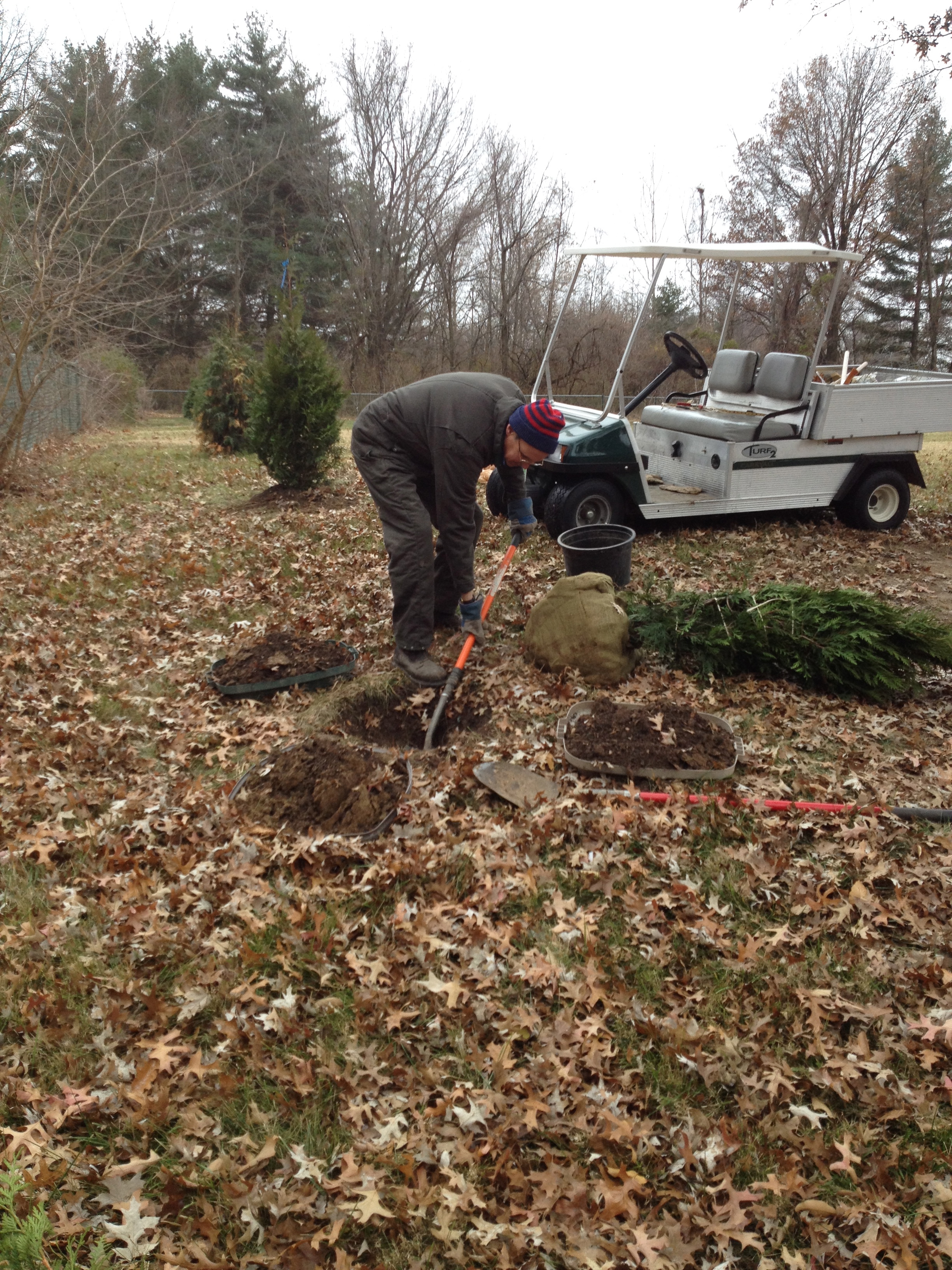
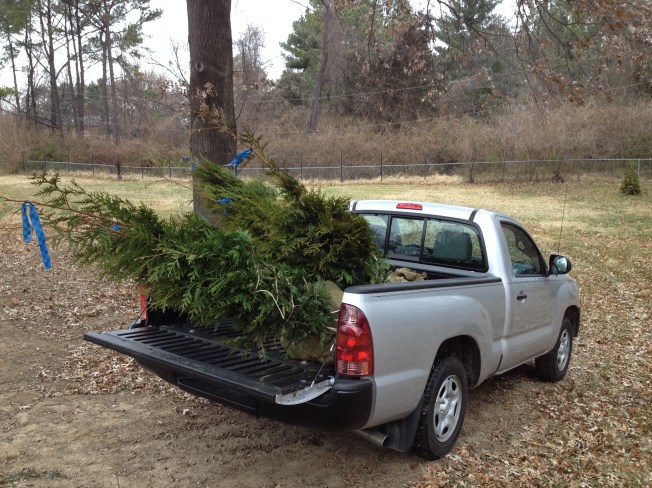
The fence post removal chores were completed in a relative warm weather snap which was unlike that in which we were planting more trees. The last of the Trident Maples were finally planted on one very cold day but Dave and I also attempted to replace some of the failed Green Giant Arborvitae that did not survive the trials of last year’s summer drought and heat. We ordered these trees to be dug from a tree farm associated with a local nursery. We picked up 6 large, balled specimens the day before a winter storm was to arrive here. We drove them directly to the back, eastern fence line and got to work immediately with a joint effort since the temps were dropping steadily and a light rain was turning into spits of sleet. IMG_5093
If we have learned nothing more, we have certainly figured out how to bundle up and work in multiple layers of warm clothing!IMG_5094
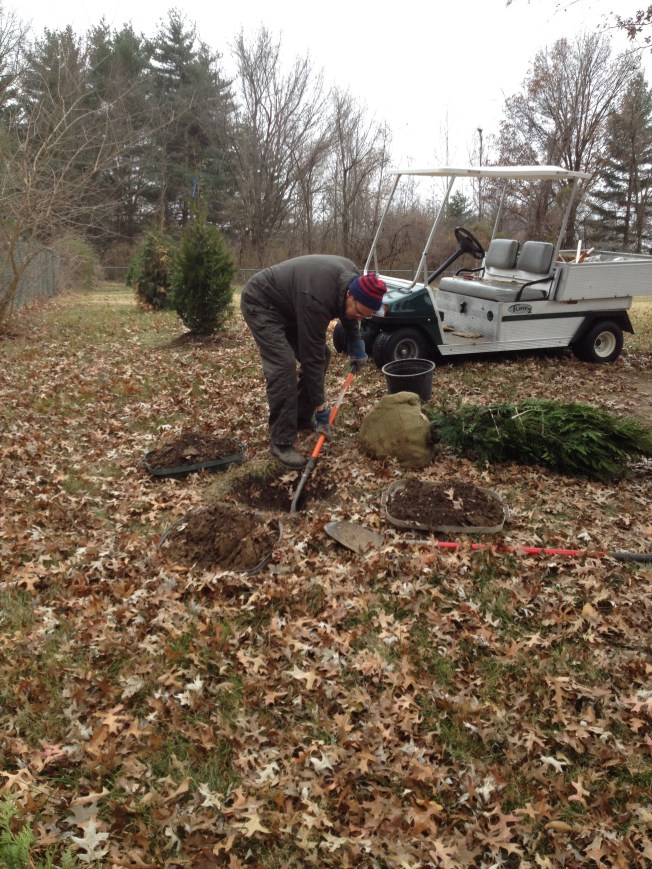
We were hurrying to get these planted before the predictions of more rainfall but the slight spits ceased as soon as we were done with the plantings so Dave hustled out with a bucket brigade of water (our orchard spigots are all tied to the irrigation system and so were unavailable for use at this point) in order to insure that the new trees were nestled in properly until our next rainfall. We look forward to the promise of up to 3 feet of growth per year on these trees!

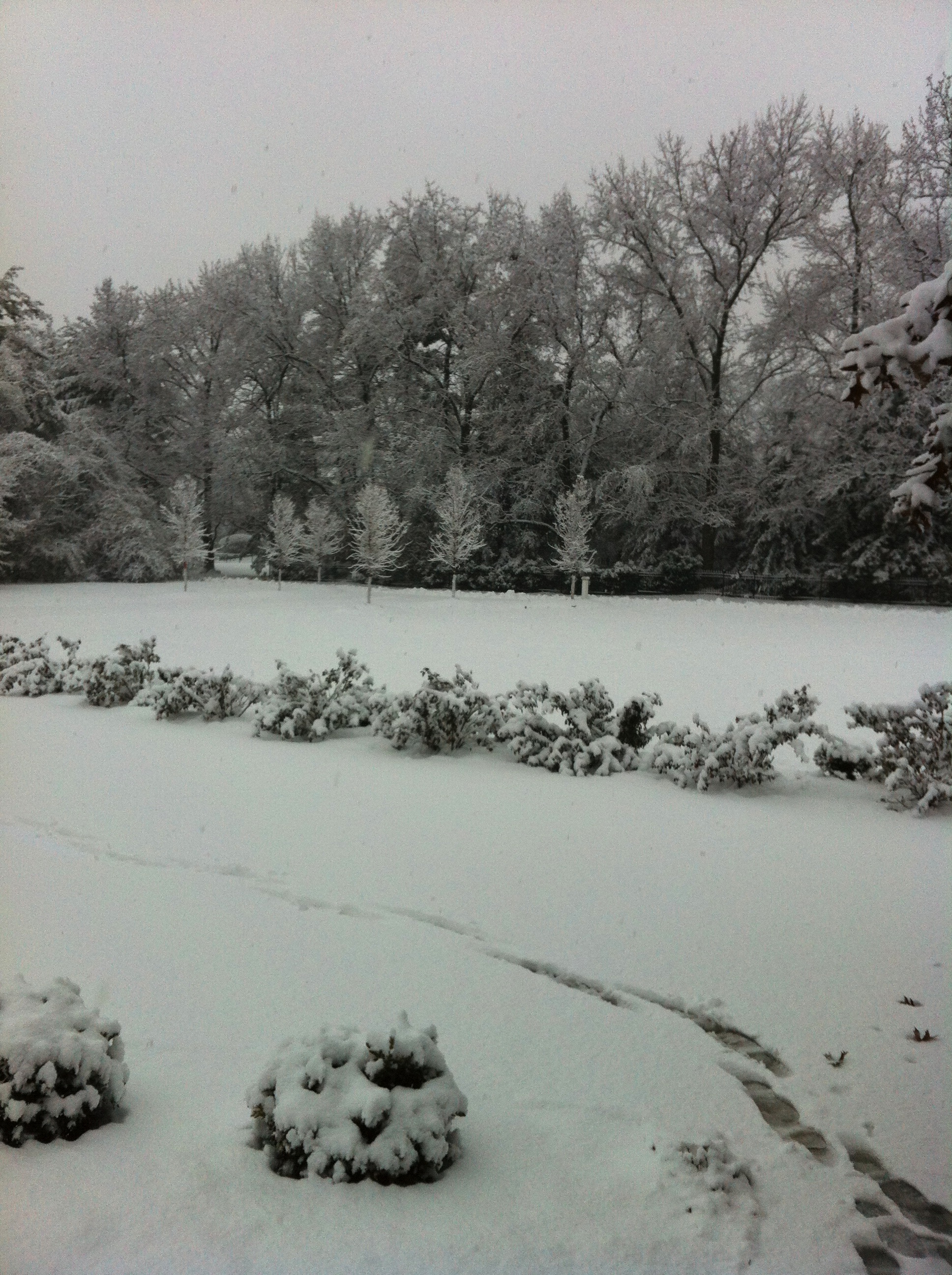
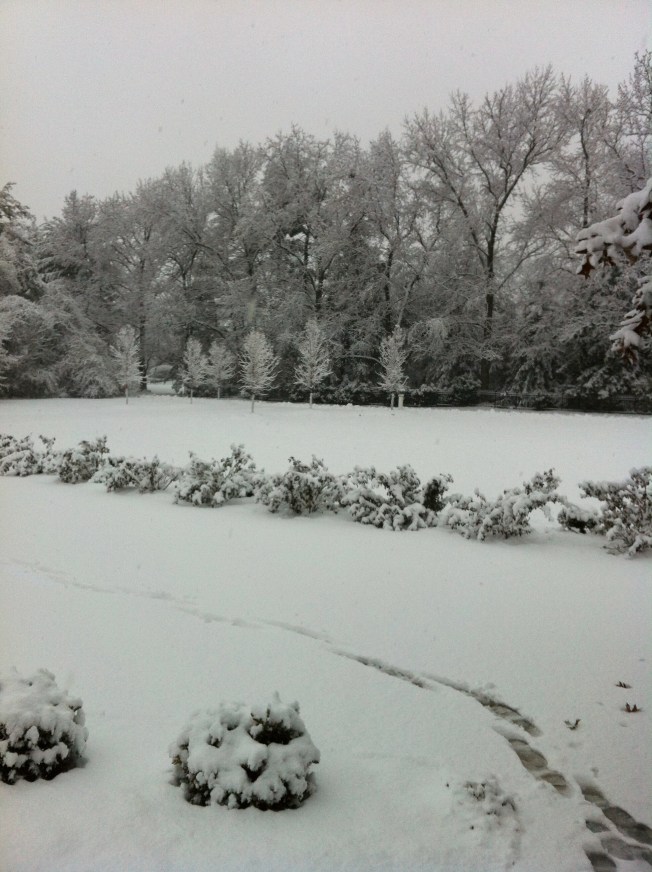
Since then, we did get a measurable snowfall which produced at least .75 inches of liquid precipitation, according to our measurements. Image 5
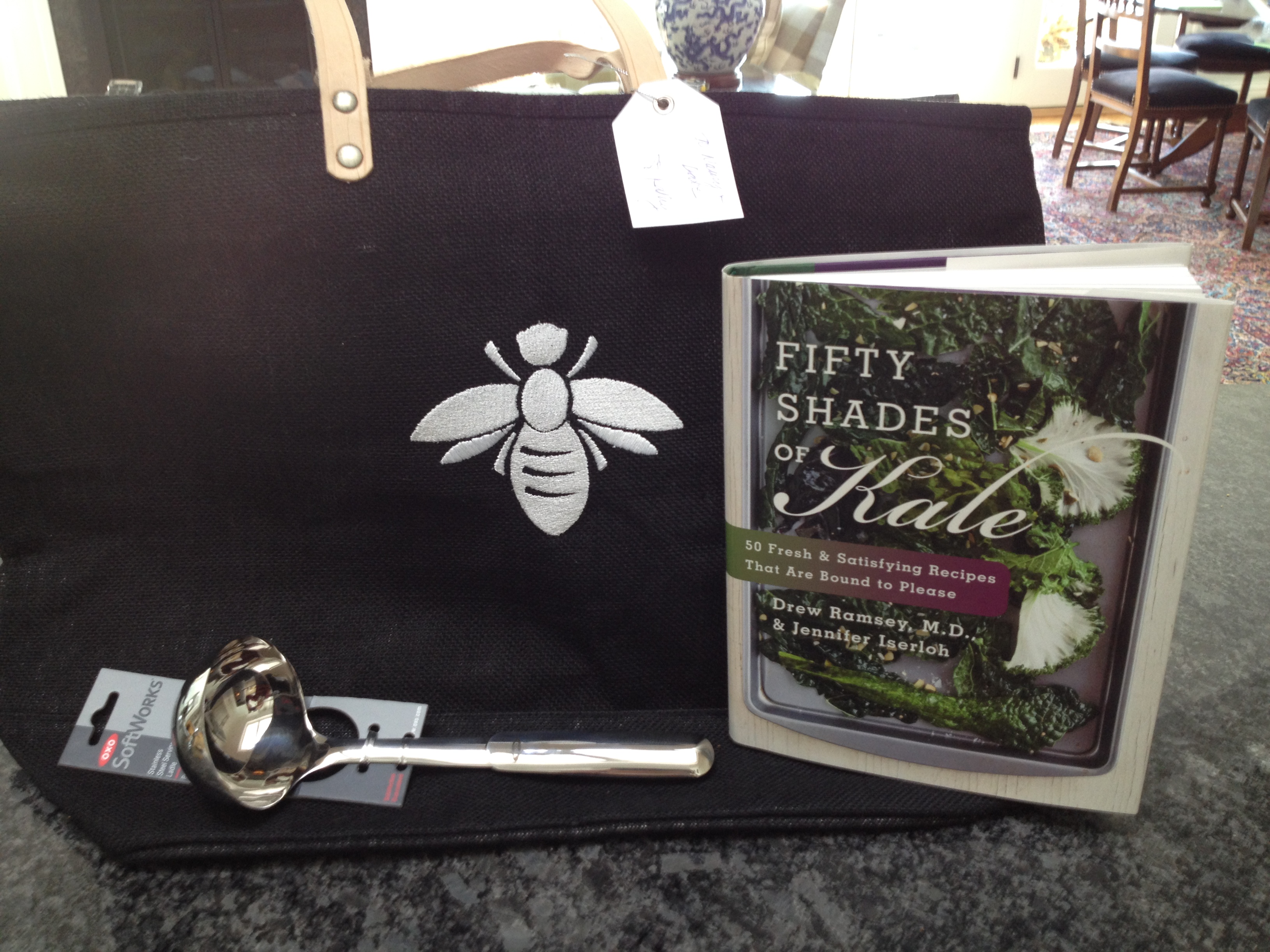
Fans of Seven Oaks Farm continue to amaze us with fun gifts. Our friend, Kathy Bussmann gladly played elf this year and delivered an assortment of items…a bee embroidered bag (spot on!) a new soup ladle (after I borrowed two from her earlier this fall) and a riotous book on the 50 uses for Kale (must see photo!) Goodness knows, we still have kale in the refrigerators since it produces so long into the winter and keeps so well!IMG_5105

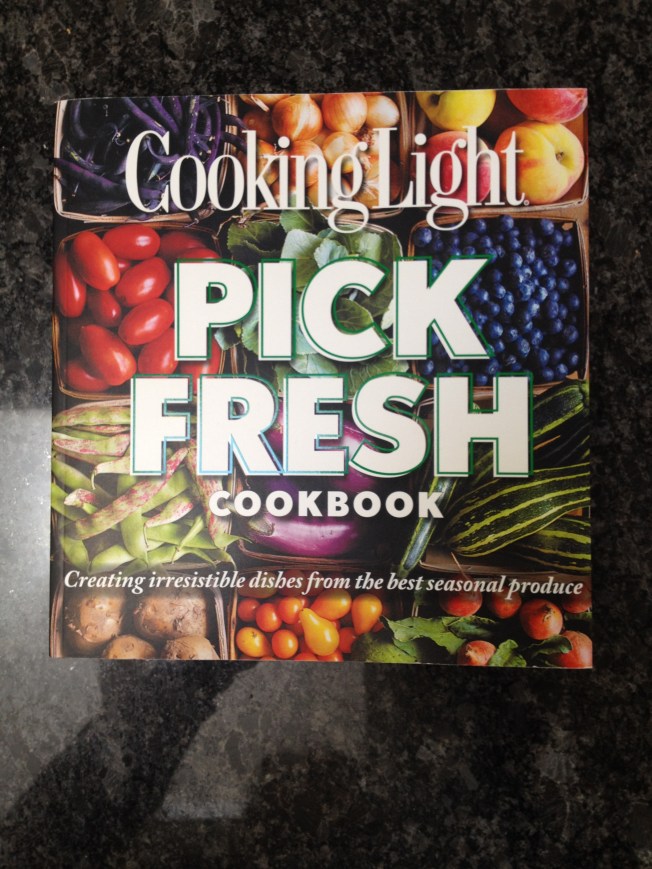
Our friend, Mule, recently returned some of our glass jars along with a wonderful collection of recipes from the Cooking Light magazine called the Pick Fresh Cookbook. I really like how this is organized in sections by the produce item so it is easy to see which recipes are options for a particular veggie!IMG_5107
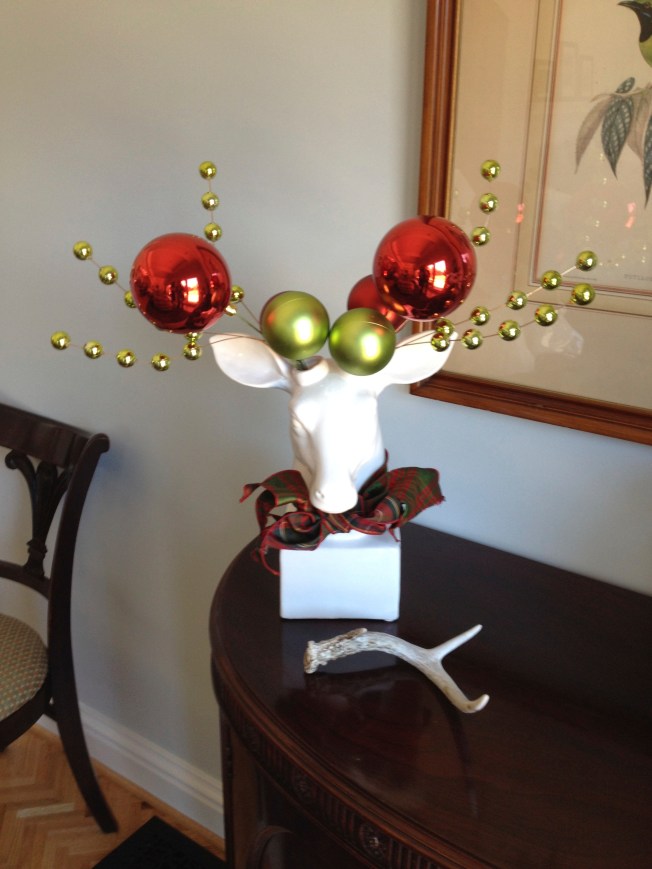
We continue to do battle with the deer and their growing annoyance and boldness in our area, but I had to use some humor for our latest example of XMAS decor. IMG_5030
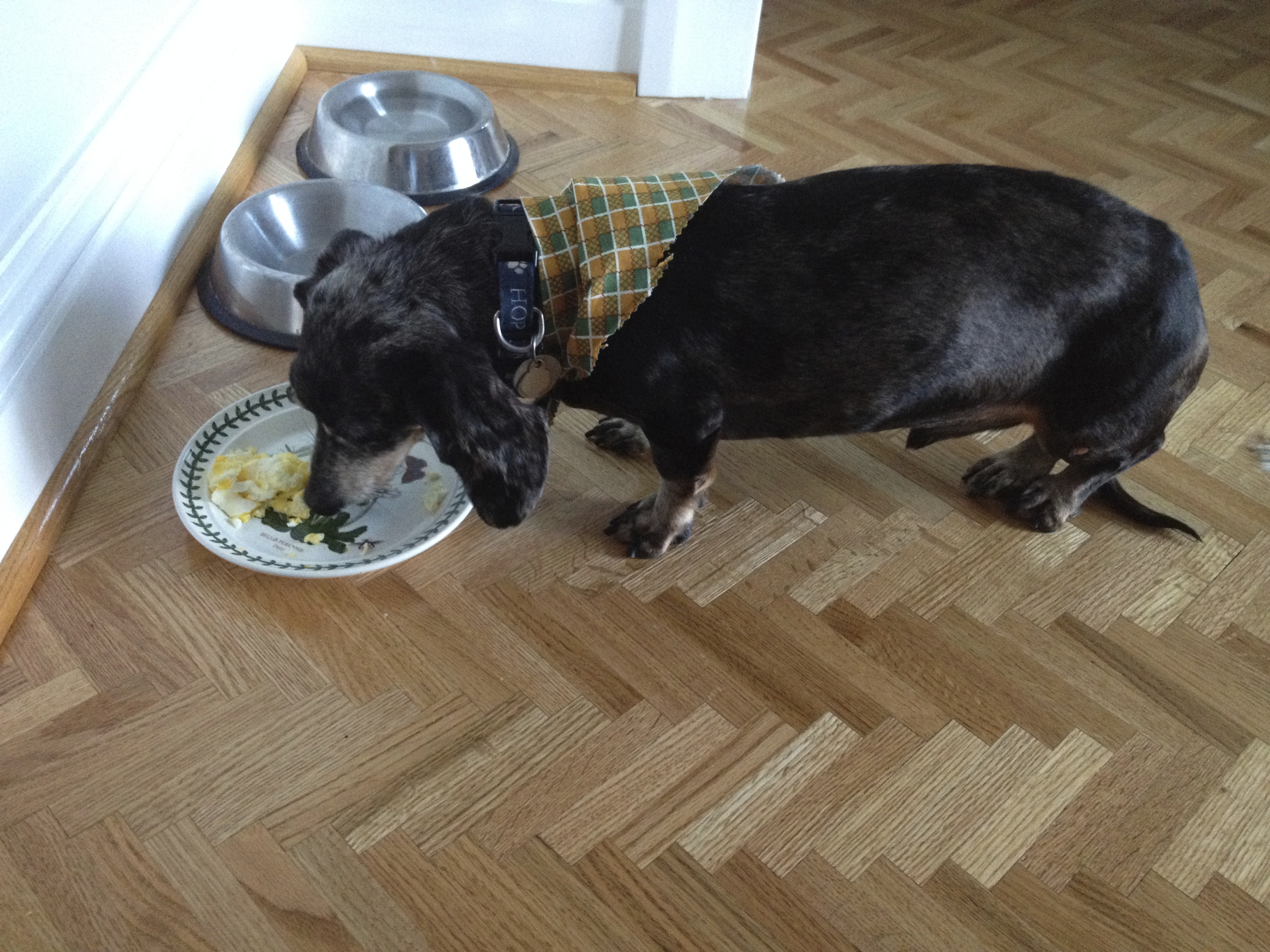
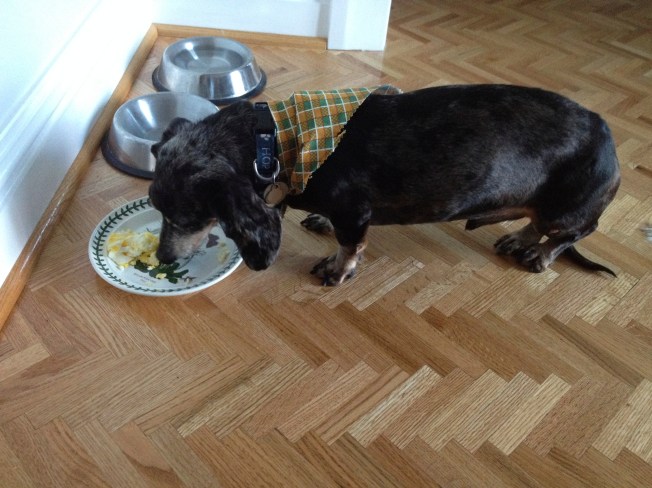
Our little Farley continues to have a great ability to heal. He had three broken teeth extracted recently and has rebounded nicely. Here he is with his mini kerchief from the vet while gingerly noshing on scrambled eggs (on my good dishes, no doubt!)IMG_5032
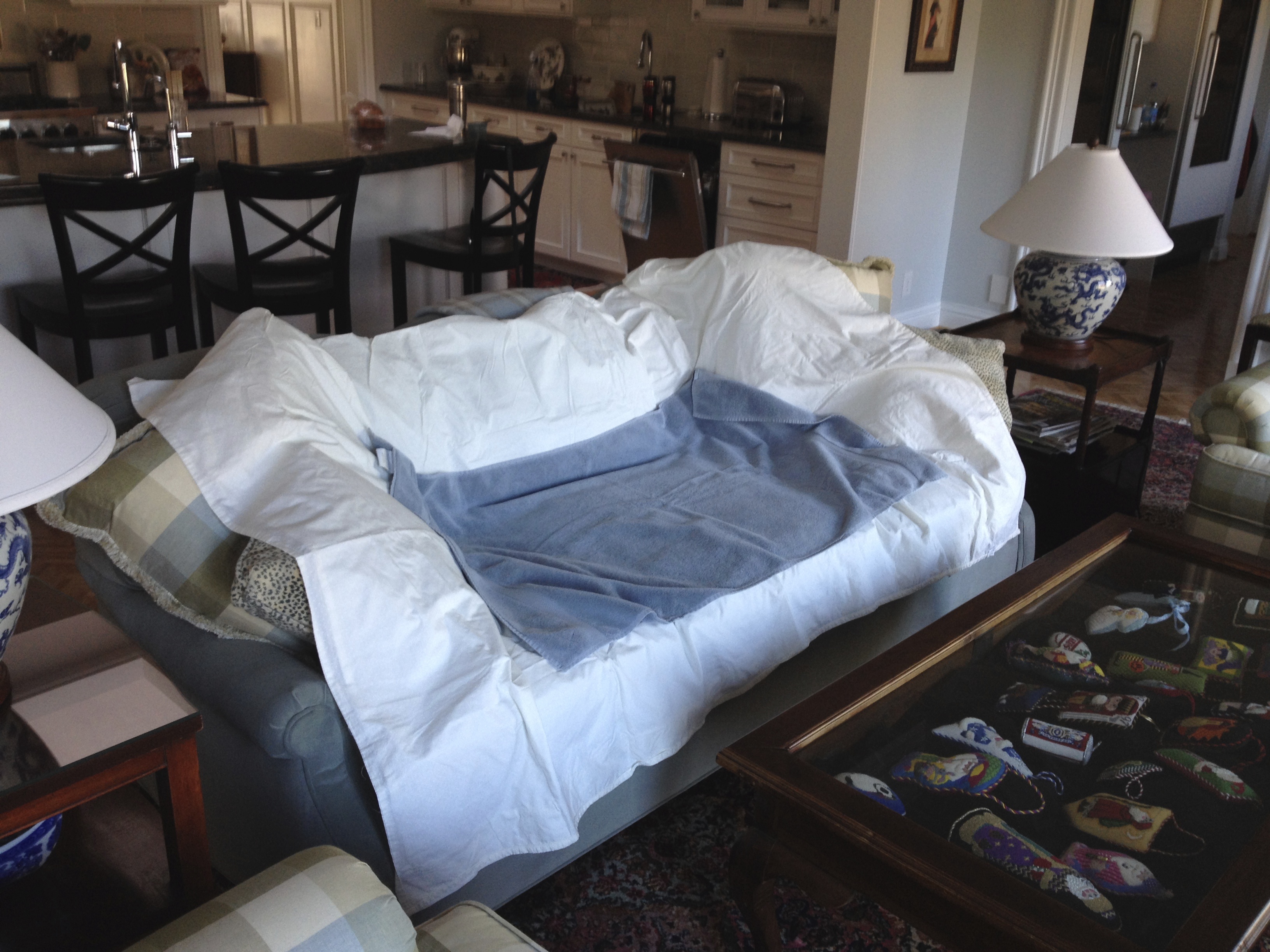
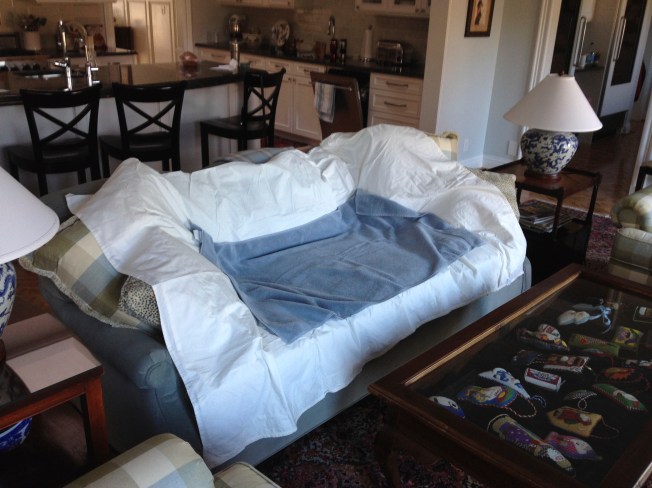
Here is the enlarged ‘bed’ that we made for him so that he could snuggle up with us on the couch without making a mess!IMG_5031
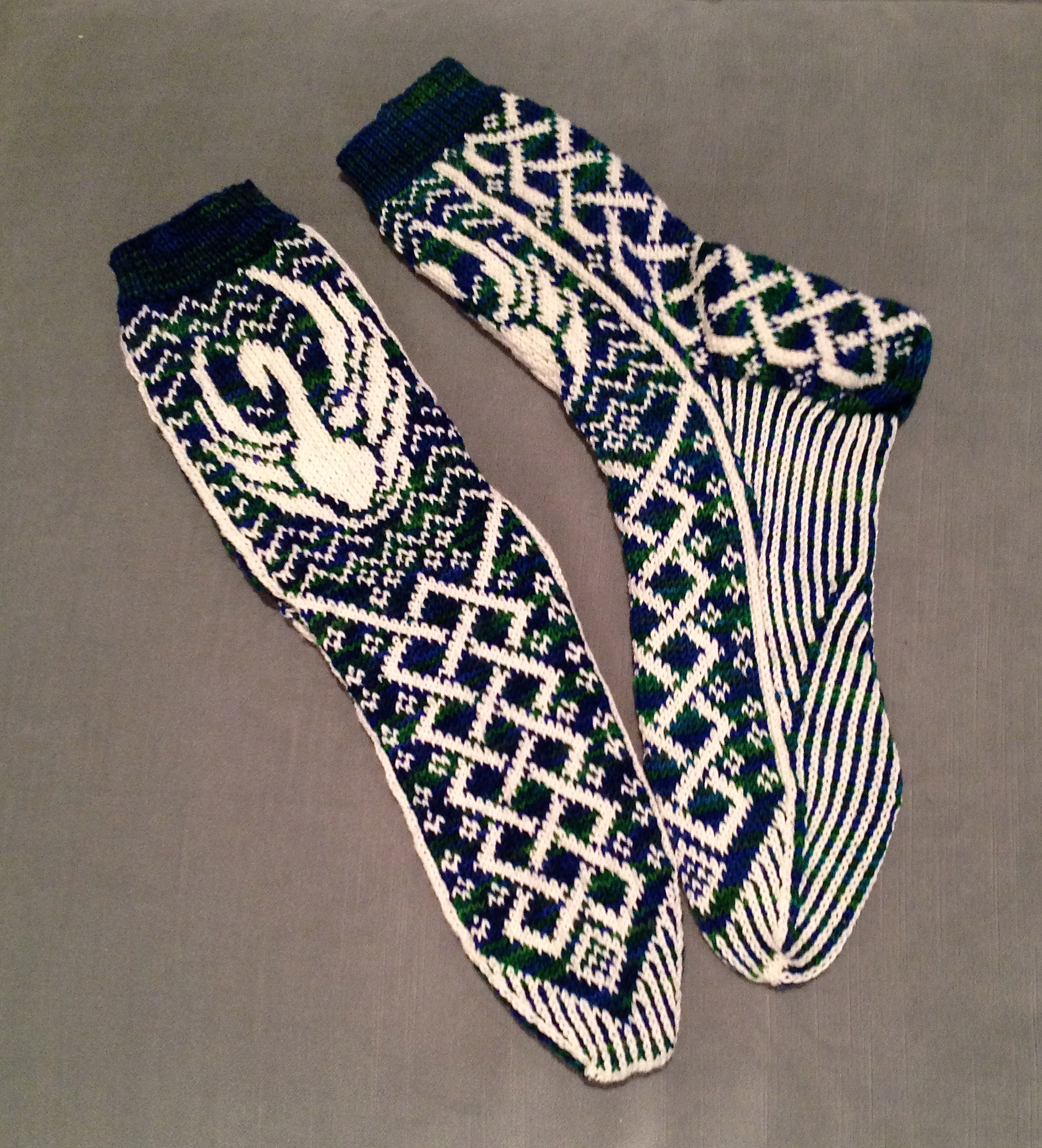
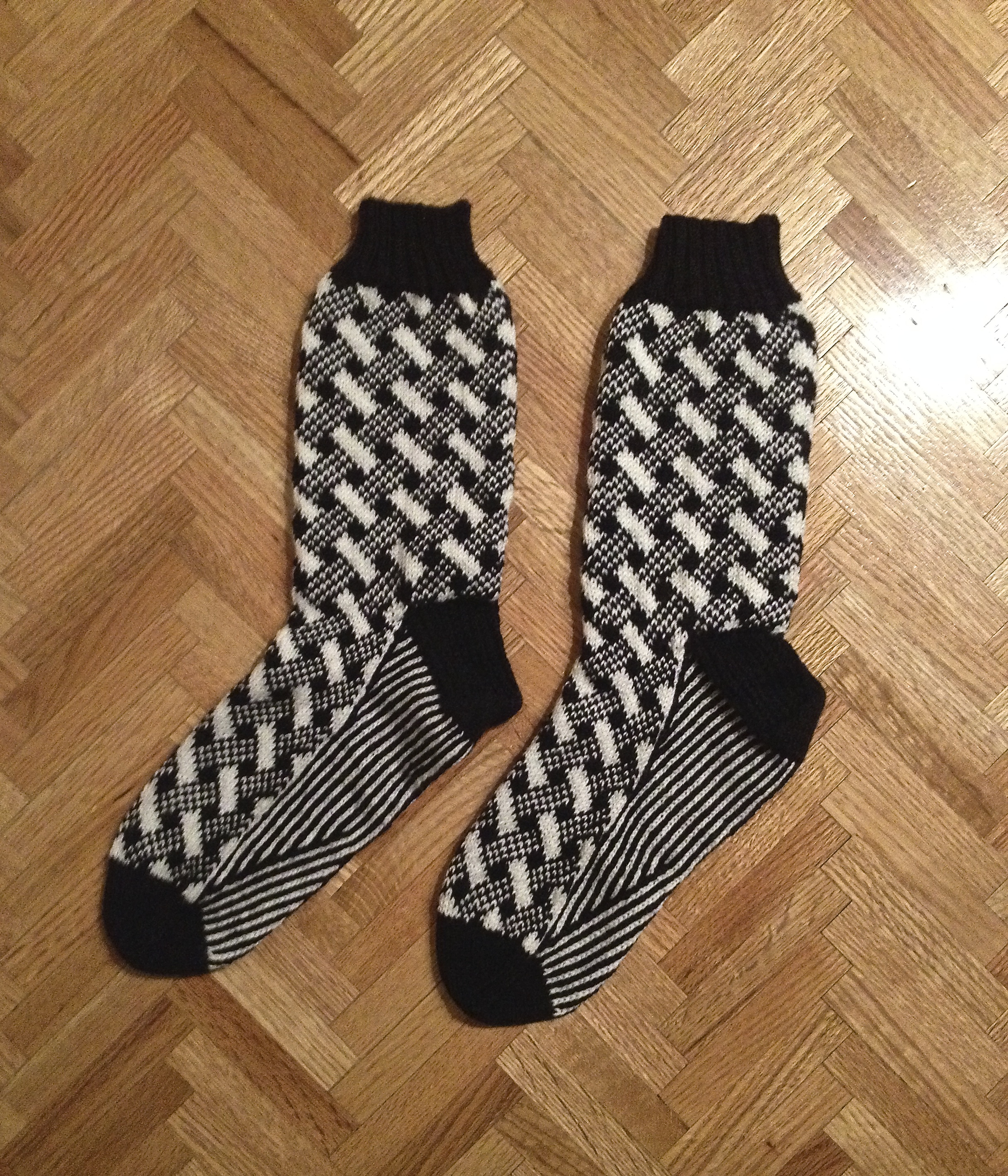
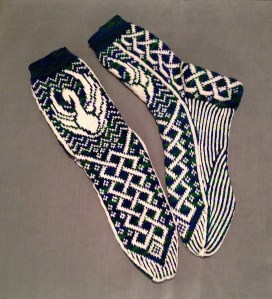
While trying to keep him quiet, I managed some more knitting, producing socks for Kate & IMG_5097 Peter. IMG_5027
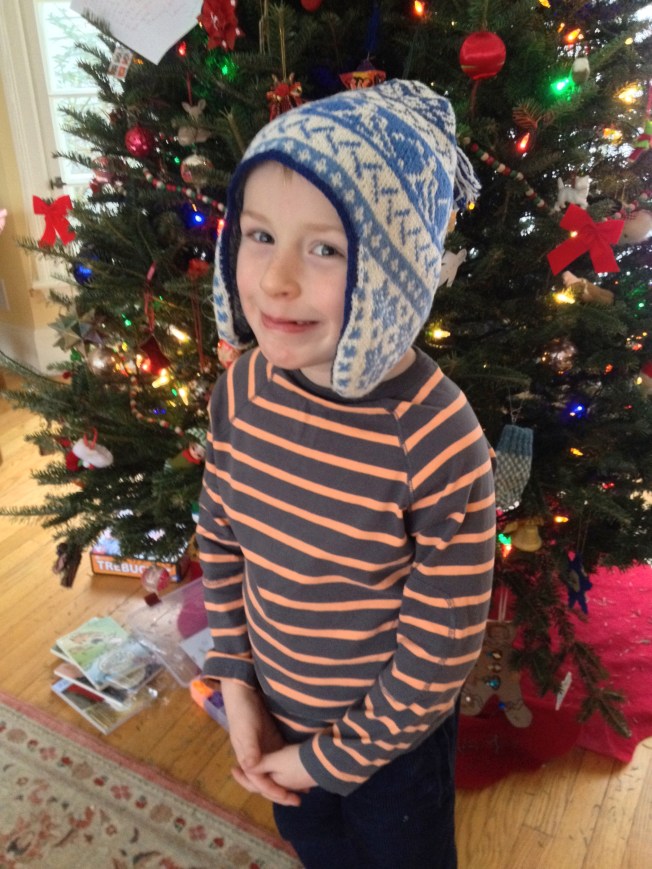
In the meantime, here is my nephew, Jack, in the Cross Country Ski hat that I knitted him. Image 2
So as I get ready to push the “publish post” button, Dave brought in the mail, and along with it, the first batch of seed catalogs for 2014!  And to think that we are still harvesting carrots (which we served for XMAS eve dinner) and some last bits of the hardy cold season crops, bringing us to a total harvest (so far) in 2013 of 1,652.81 pounds!